Transparency note: Some links in this article are affiliate links. As an Amazon Associate I earn from qualifying purchases at no extra cost to you. I research current product options and select suggestions based on relevance, availability, customer signals, and fit with the care problem discussed here.
How Often Spider Plants Actually Need Water
Figuring out exactly how often to water spider plant pots in our east-facing Aarhus apartment used to feel like a frustrating guessing game. We would give our first Chlorophytum comosum a drink whenever the top layer of soil felt dry.
A few weeks later, we were rewarded with yellowing leaves, mushy bases, and angry brown tips . The common advice to just “water when dry” completely misses the mark on how these specific plants actually function.
Joakim started digging into the biology and realized our fundamental mistake: we were treating it like a standard tropical houseplant. Spider plants actually possess thick, fleshy, tuberous roots.
According to botanical profiles from the NC State Extension , these specialized root systems act like underground water reservoirs. Keeping those biological storage tanks perpetually wet is a guaranteed death sentence.
When you add our hard, mineral-heavy Danish tap water to the equation, the plant was practically suffocating under osmotic stress.
Everything changed when Emilie stopped relying on the calendar and started testing the soil deeper down with her fingers. We also had to factor in our environment. Winter central heating crashes our indoor humidity, changing the drying timeline completely.
Once you dial in your how often to water spider plant care routine, everything gets easier. You stop reacting to dying leaves and start seeing massive growth, which inevitably means dealing with offshoots and propagation .
We are going to share the exact watering framework we use to keep our indoor jungle thriving. You will learn why building a healthy how often to water spider plant schedule depends heavily on whether you use terracotta or plastic pots.
We will also cover water chemistry, because municipal tap water treats these sensitive roots harshly. Whether you are checking out our master spider plant care guide or just trying to save one sad desk plant, getting the moisture level right is your first real hurdle.
To keep your indoor garden growing, how often to water spider plant roots ultimately comes down to reading the subtle physical signals we are about to show you.
What Happens When You Over or Underwater


Understanding the how often to water spider plant importance is the single biggest factor in keeping these classic houseplants alive. It might sound dramatic, but getting the watering frequency wrong is exactly how we killed our very first one.
We assumed all indoor plants needed a steady, predictable drink every Sunday morning. That assumption completely ignores the actual biology of the plant sitting in your living room.
The Tuberous Root Difference
Unlike many standard fibrous-rooted tropicals, spider plants have incredibly thick, fleshy, tuberous roots. We noticed this firsthand during our first messy repotting session on our kitchen floor. These chunky roots act as internal water reservoirs.
For this part of the guide, a researched product option that fits the job is:
Selected because this section is specifically about soil moisture meter use. Check Amazon for current price and availability.
They are quite literally built to survive periods of drought by storing moisture. When you prioritize your how often to water spider plant importance care, you are actually just respecting this built-in storage system.
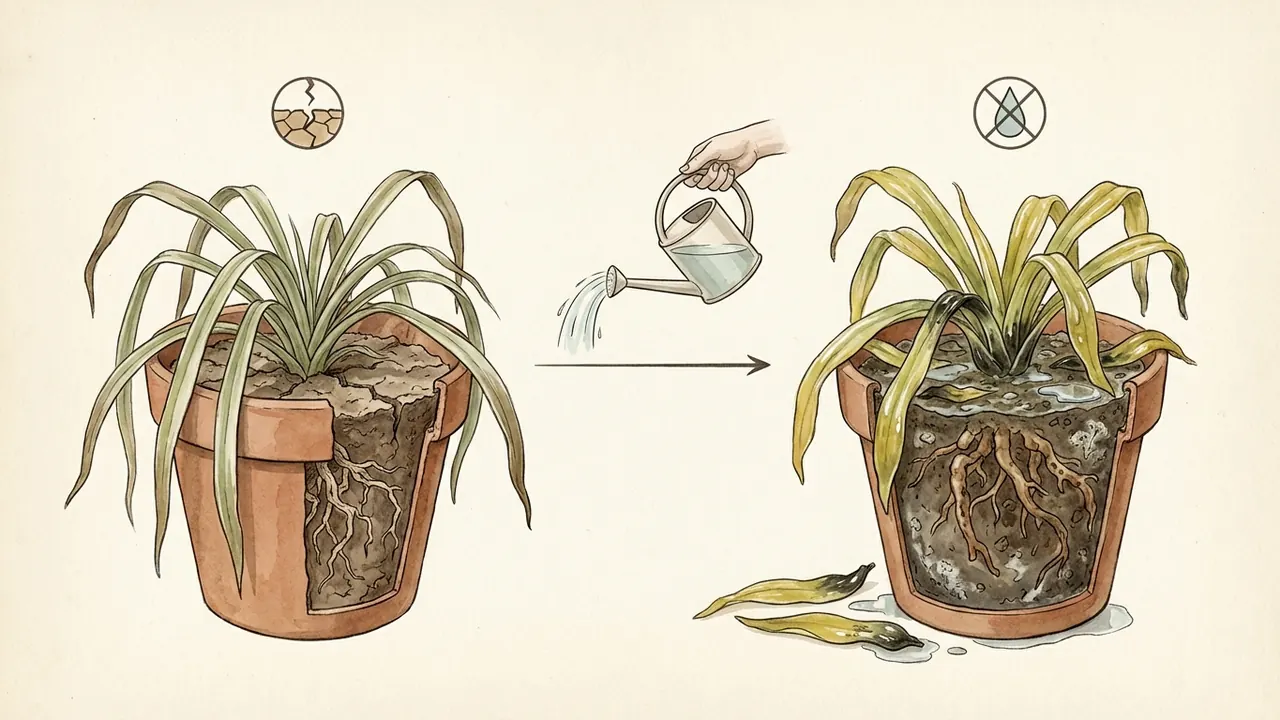
If you keep these fleshy roots perpetually wet, they drown. The lack of oxygen in soggy soil leads straight to root rot.
On the flip side, if you let them stay bone dry for weeks, the tubers shrivel up and the plant cannibalizes its own foliage to survive.
This severe moisture stress often shows up as brown tips , which many beginners mistakenly try to fix by adding even more water.
Adapting to Your Environment
Grasping the growing how often to water spider plant importance also means recognizing that your home environment constantly changes. In our east-facing Aarhus apartment, the seasonal shifts are brutal. During the dark Scandinavian winter, our spider plant barely photosynthesizes and needs drastically less water.
But when the district heating kicks in and our indoor humidity drops to 30 percent, the topsoil dries out incredibly fast.
You cannot rely on a strict weekly schedule. A healthy how often to water spider plant importance strategy relies on tactile feedback. You need to physically feel the soil or gauge the weight of the pot.
As noted in plant pathology resources like the Penn State Extension , avoiding constantly saturated soil is critical for preventing the fungal diseases that quickly wipe out these tuberous systems.
Nailing this precise moisture balance creates the strong foundation you need before moving on to more advanced steps in our master spider plant care guide .
How to Read Your Plant’s Thirst Signals


Figuring out the exact how often to water spider plant signs can feel like a guessing game at first, but the plant actually communicates quite clearly. The biggest mistake we made early on was watering on a strict schedule instead of reading the physical cues.
The most reliable fix for overwatering is removing the guesswork entirely:
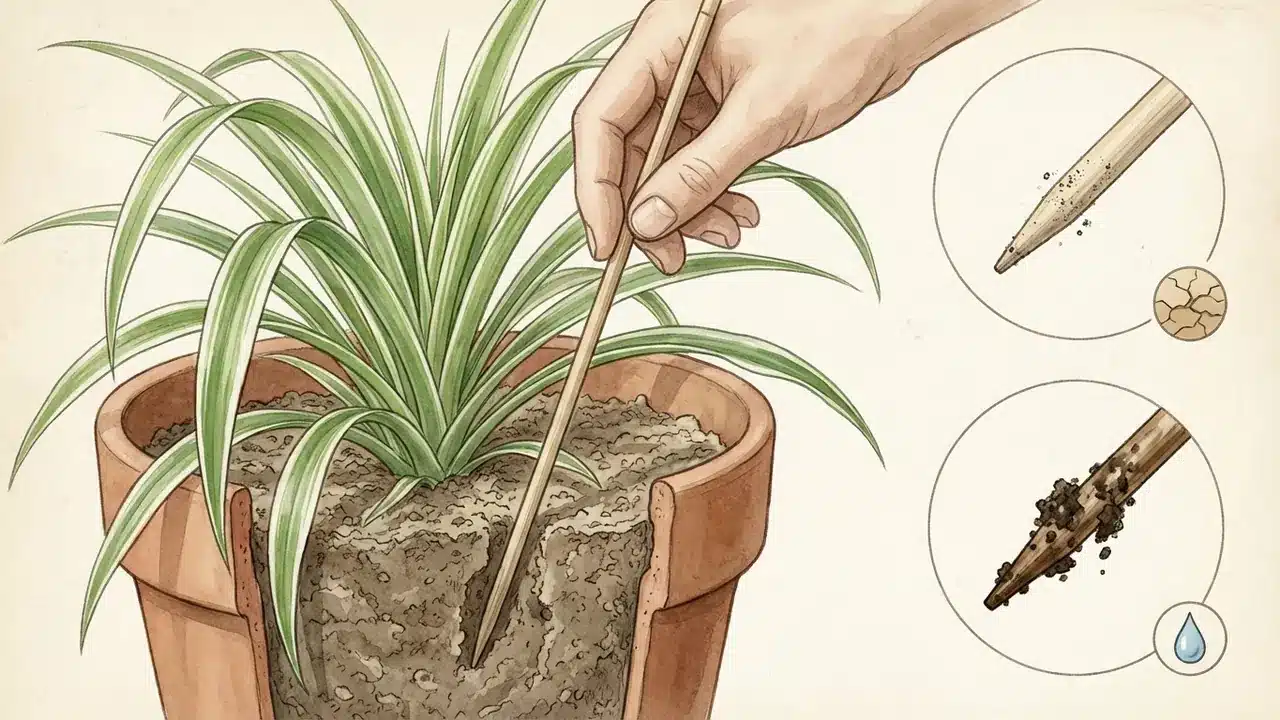
Insert it 2 inches deep before every watering. Tells you exactly what is happening at the root zone where rot actually starts.
When evaluating your growing how often to water spider plant signs, the most reliable indicators are visual. Before a spider plant gets crispy, the leaves will noticeably lose their structural bounce and begin to drape heavily over the edges of the pot.
The color also shifts. A fully hydrated plant is a bright, deep green. As the soil completely dries out, that color fades to a slightly pale, grayish-green tone.
Emilie spots this color change from across our living room now. It is your cue to physically check the soil.
The Finger Test and Tuberous Roots
Spider plants do not have typical, thin fibrous roots. They have thick, fleshy, tuberous root systems specifically designed to store water for long periods in their native environment. If you water them before those reserves are depleted, you invite disaster.
This is why watching for healthy how often to water spider plant signs is so critical. We always wait until the top two to three inches of soil are bone dry. Just stick your index finger into the potting mix.
If it feels cool or damp, walk away.
You can also gauge moisture by simply lifting the pot. We use lightweight plastic nursery pots slipped inside decorative ceramic covers. A freshly watered plant feels surprisingly heavy, while a thirsty plant feels almost hollow.
Mastering this weight trick is a foundational step in our master spider plant care guide .
Reading the Distress Signals
If you ignore the how often to water spider plant signs care becomes a rescue mission rather than a routine. Overwatering is far more destructive than underwatering. When those fleshy tubers sit in saturated soil, they quickly suffocate.
According to the Penn State Extension , constantly wet potting media is the primary driver of root rot and severe fungal diseases in these plants.
How do you know if you went too far? The first warning is often yellowing leaves at the base of the plant. Unlike the pale, grayish droop of a thirsty plant, an overwatered plant looks distinctly yellow and feels mushy near the soil line.
You might also notice an increase in brown tips , which happens because rotting roots can no longer transport water to the extremities of the leaves.
Finally, pay extra attention to your watering cadence during active growth. If your plant is actively pushing out offshoots for propagation, it is using a lot of energy. During the bright, long days of a Danish summer, a mother plant supporting multiple pups will drain its soil moisture noticeably faster than it does in the dark winter months.
The Soil Check Method (How We Water Ours)

Figuring out the exact how often to water spider plant steps can feel like a guessing game until you understand their root system. These plants have thick, fleshy, tuberous roots designed to hold onto water for long periods.
If you treat them like a thirsty tropical fern, they will quickly rot.
The core of building a healthy how often to water spider plant steps routine is waiting until the top two to three inches of soil are entirely dry before adding a single drop of moisture.
Step 1: The Finger Test
We never water on a rigid calendar schedule. Instead, Emilie thrusts a finger deep into the potting mix. If it feels even slightly damp or cool to the touch at that two-inch mark, wait.
Those thick root tubers are still holding plenty of reserves. Learning these growing how often to water spider plant steps saved our largest mother plant after we almost drowned it in its first plastic nursery pot.
Step 2: The Lift Test
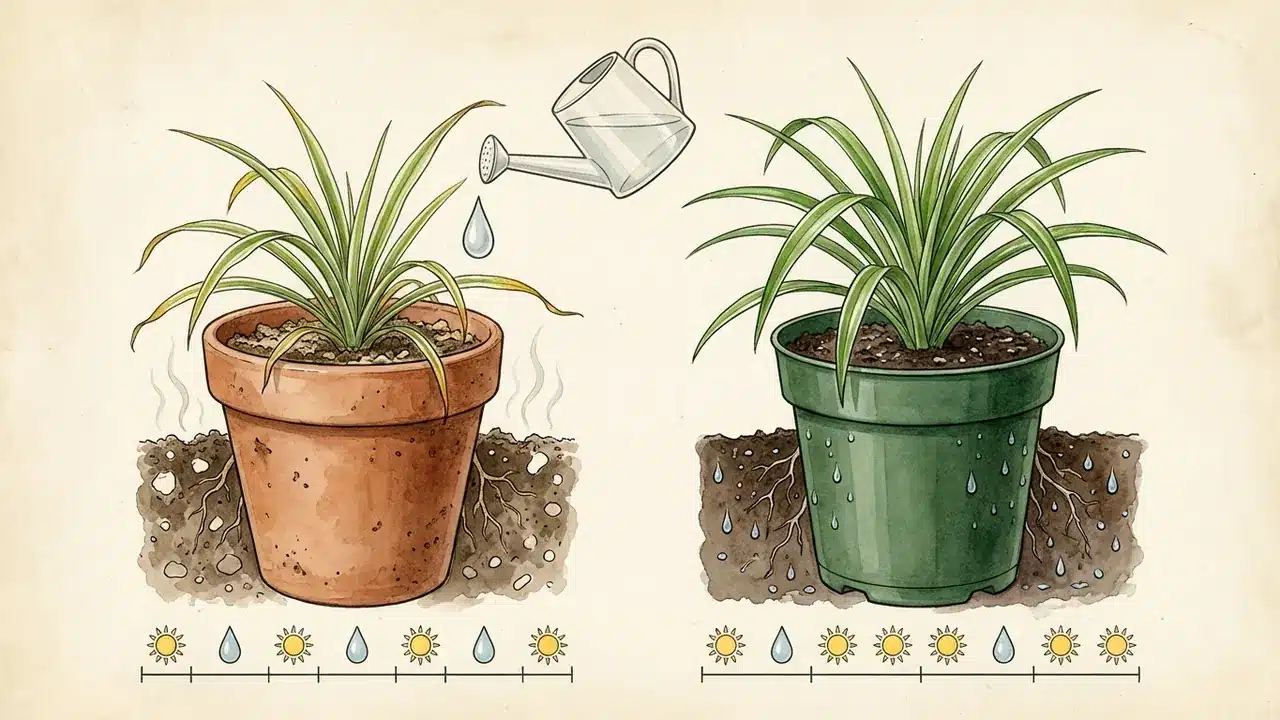
Pick up the pot to gauge its weight. A fully watered spider plant in a plastic container feels surprisingly heavy, while a dry one feels hollow and light. If you use unglazed terracotta, the moisture evaporates through the porous clay walls much faster.
We keep our windowsill spider plants in terracotta because our dark, humid Aarhus winters slow down evaporation drastically. A pot that takes seven days to dry out in July might take nearly three weeks in November.
Step 3: The Deep Flush
When it is finally time to water, do not just give the plant a little sip. Take it directly to the sink. We slowly pour room-temperature water over the soil until it runs freely out of the drainage holes.
Accumulated minerals cause severe osmotic stress, as documented by the plant pathology team at the Penn State Extension , so flushing the soil helps wash away excess fertilizer salts.
If your local tap water is heavily treated, this deep flush is crucial to prevent brown tips from forming on the leaves.
Step 4: Adjusting for Pups
Your watering rhythm will change dramatically when the plant enters active growth. When a mother plant pushes out long runners loaded with offshoots for propagation , its moisture demand spikes. You will notice the soil drying out days faster than usual.
Mastering this how often to water spider plant steps care process is all about observation and feeling the soil.
Once you nail this tactile rhythm, you can comfortably move into the more advanced feeding and lighting techniques covered in our master spider plant care guide .
Watering Habits That Cause Root Rot

Researching how often to water spider plant mistakes usually reveals the same vague advice to simply “water when dry.” That lack of specificity is exactly how we killed our first Chlorophytum comosum.
Standard guides gloss over the unique biology of this plant, leading you straight into a cycle of overwatering and root rot. By combining a bit of scientific understanding with tactile, hands-on observation, you can bypass the most common pitfalls that ruin these resilient plants.
Mistake 1: Ignoring the Tuberous Roots
One of the biggest growing how often to water spider plant mistakes is treating them like typical tropical houseplants with delicate, fibrous root systems. Spider plants actually have thick, fleshy, tuberous roots designed specifically to store water during periods of drought.
If you keep these built-in water reservoirs sitting in perpetually wet potting soil, they literally turn to mush. We learned the hard way that you must let the top two to three inches of soil become completely dry before adding a single drop of water.
According to plant pathology reports from the Penn State Extension , keeping the soil constantly saturated is the primary cause of fatal fungal root diseases in this species.
Mistake 2: Treating All Pots the Same
We used to water every plant in our Aarhus apartment on a strict Sunday schedule. That was a disaster. A healthy how often to water spider plant mistakes checklist always includes adjusting for your specific pot material.
We keep one plant in a highly porous, unglazed terracotta pot near a radiator, and another in a glazed ceramic pot in the bedroom. The terracotta wicks away moisture so incredibly fast that it requires water almost twice as often as the ceramic vessel.
If you are using standard plastic nursery pots, the soil will stay wet significantly longer. You cannot rely on a calendar. You have to physically sink your finger into the dirt to gauge the moisture level.
Mistake 3: Blaming Moisture When Chemistry is the Culprit
Standard how often to water spider plant mistakes care guides rarely mention the chemistry of what you are actually pouring into the soil. It is easy to blame your watering schedule when the ends of your leaves start dying off.
However, municipal tap water is often packed with fluoride and chloramine, compounds that this specific plant deeply resents. If your soil moisture feels perfect but you still see brown tips forming on the foliage, the issue is likely chemical buildup causing osmotic stress.
Flushing the soil with distilled water or pure rainwater is the fastest way to rule out chemical burn.
Mistake 4: Forgetting the Offshoots
Finally, watering demands shift wildly depending on what the plant is actively doing. During the dark Scandinavian winters, our plants barely photosynthesize and need a fraction of their normal water supply. Conversely, when the plant explodes with runners in May, it drinks aggressively.
We lost several promising pups to under-watering before Emilie realized that active propagation phases drain soil moisture rapidly. Dialing in these subtle environmental changes will drastically improve your success as you progress through our master spider plant care guide .
Seasonal Watering Adjustments
Mastering our how often to water spider plant tips changed everything for our indoor jungle. We used to treat these resilient guys like standard tropicals, watering them every time the top inch of soil felt dry. That was a mistake.
Finding a healthy how often to water spider plant tips baseline requires understanding their unique physiology. Beneath the soil, these plants have thick, fleshy, tuberous roots designed to store water like tiny reservoirs.
They handle a short drought brilliantly, but they rot quickly if kept constantly wet.
The Pot Lift Method Beats the Calendar
We completely abandoned our Sunday watering schedule. Instead, Emilie relies heavily on the physical weight of the pot. When a spider plant is actually thirsty, the pot will feel feather-light when you pick it up.
If there is any heft or resistance, we put it back down and wait a few more days. Joakim prefers to use a wooden skewer to check the soil depth.
We let the potting mix dry out completely at least two inches down before adding a single drop. Keeping the root zone constantly saturated is the fastest way to invite fungal pathogens, a problem frequently highlighted by researchers at the Penn State Extension .
Adjusting for the Potting Vessel
When sharing our growing how often to water spider plant tips with friends, we always ask what kind of pot they are using. The material dictates the drying timeline.
In our Aarhus apartment, we noticed that our unglazed terracotta pots breathe and dry out twice as fast as our glazed ceramics. If your plant is living in a standard plastic nursery pot, moisture is trapped against the roots for a much longer period.
We killed an early plant simply by applying a terracotta watering frequency to a plastic pot.
Managing Hard Water Chemistry
Our Danish tap water is notoriously hard and packed with minerals. Spider plants are highly sensitive to the fluoride and chloramines found in many municipal water treatments. These chemicals build up in the soil, causing severe osmotic stress in the roots.
This is almost always the true culprit behind those frustrating brown tips on the foliage. While letting tap water sit out overnight allows chlorine to evaporate, it does absolutely nothing to remove fluoride.
Switching to rainwater or distilled water will immediately upgrade your how often to water spider plant tips care regimen.
Factoring in Pups and Winter Gloom
Your watering rhythm must adapt to what the plant is actively doing. During the dark Scandinavian winter, our plants barely photosynthesize, and we sometimes stretch out our watering to every three or four weeks.
However, when the days get longer and the mother plant pushes out dozens of runners for propagation , its moisture demand skyrockets. A plant supporting active offshoots will drain its soil incredibly fast.
Dialing in these seasonal shifts is the final hurdle before tackling the more advanced techniques in our master spider plant care guide .
Setting Up a Foolproof Watering Routine

The secret to successful how often to water spider plant prevention lies entirely in understanding their unique root biology. Spider plants have thick, fleshy, tuberous roots that are biologically engineered to store water during long dry spells. If you water them on a strict weekly schedule like a typical tropical houseplant, you will inevitably drown them.
Early on, Emilie treated our very first spider plant exactly like our moisture-loving Calatheas. Within three weeks, the leaves turned yellow at the base and the soil smelled like a swamp.
Joakim started digging through botanical research and discovered those fat tubers act as built-in reservoirs. To prevent root rot, you must let the top two to three inches of soil dry out completely before you even think about picking up your watering can.
Choosing the Right Potting Setup
A huge part of growing how often to water spider plant prevention strategies involves your choice of vessel. The pot material dictates the drying timeline. In our Aarhus apartment, we strictly use unglazed terracotta for our spider plants.
The porous clay actively wicks excess moisture away from the root zone, creating a natural safety net against overwatering.
If you prefer the look of glazed ceramic or plastic pots, be warned. These materials lock moisture in. You will need to amend your potting soil with extra perlite or pumice to ensure rapid drainage, and you will water significantly less often than you would with terracotta.
Stopping Chemical Burn Before It Starts
A crucial element of how often to water spider plant prevention care is monitoring your water quality. Spider plants are notoriously bad at filtering out the heavy minerals and chemicals found in municipal tap water. According to the Penn State Extension, these plants suffer from severe osmotic stress when exposed to fluoride and chloramines.
This chemical buildup is the primary reason you get crispy brown tips on the leaves. Leaving your watering can out overnight does let some chlorine evaporate, but it does absolutely nothing to remove fluoride. We solved this issue by placing a bucket on our balcony to collect Danish rainwater, which flushes the soil perfectly without leaving toxic salts behind.
Adapting to Seasons and Offshoots
To maintain a healthy how often to water spider plant prevention routine, you have to adapt to your plant’s changing metabolism. During the dark Scandinavian winter, our spider plants receive barely 100 foot-candles of light on cloudy days. They stop growing, their water consumption plummets, and we sometimes go four weeks without watering.
Then spring arrives. The district heating turns off, the sun comes out, and the mother plant starts pushing out long runners loaded with pups for propagation . Supporting all those new offshoots requires massive amounts of energy and water.
You will notice the pot feeling feather-light just days after a deep soak. Trusting the tactile weight of the pot rather than a calendar is the best habit you can build as you apply the advanced techniques in our master spider plant care guide .
When Watering Problems Won’t Resolve
There comes a point where guessing simply is not enough, and you might find yourself searching for how often to water spider plant professional advice. We have definitely been there.
A few years ago, we nearly lost a massive mother plant because we completely misunderstood how its root system actually worked. We kept watering it on a strict weekly schedule.
We ignored the physical signs the plant was giving us until Emilie noticed the base of the stems felt distinctly squishy and smelled vaguely of swamp water.
That is when Joakim dug into the botanical research. Unlike standard fibrous-rooted tropicals, spider plants have thick, fleshy, tuberous roots specifically designed to store water during drought. Keeping them perpetually wet causes severe rot.
If the base of your plant is slimy, the leaves are turning a sickly yellow, and they pull away from the soil with zero resistance, you have a critical problem.
If you want to start growing how often to water spider plant professional quality plants, you have to look below the soil line and physically check those tubers.
Recognizing Chemical Toxicity vs. Moisture Issues
Sometimes the issue is not your watering frequency at all, but the chemistry of the water itself. If your soil moisture feels perfect but your plant is covered in severe brown tips , you are likely dealing with chemical toxicity.
Here in Aarhus, our hard tap water is packed with minerals. According to the plant pathology team at the Penn State Extension , fluoride and chloramines cause intense osmotic stress in spider plants.
If you are doing everything right but the foliage still looks terrible, you need to implement how often to water spider plant professional care strategies. Stop using tap water immediately. Flush the soil thoroughly with pure distilled water or collected rainwater.
This is the fastest, most effective diagnostic test you can run to rule out mineral burn.
Knowing When to Start Over
Do not beat yourself up if you lose a plant. The Scandinavian winter light deprivation makes watering incredibly tricky. When our building’s central heating kicks on, our apartment humidity plummets to 30 percent, completely altering the soil’s drying timeline.
Establishing a healthy how often to water spider plant professional routine means adapting to these brutal seasonal shifts.
However, if the entire root system has rotted out and the main plant is collapsing, it is time to admit defeat and salvage what you can. Snip off any surviving, healthy pups from the runners for propagation .
Discard the rotting mother plant and its soggy soil. Once you establish the new offshoots in fresh, well-draining soil, you can revisit the foundational rules in our master spider plant care guide to build a much better watering habit from day one.
Spider Plant How Often to Water FAQ
If you are searching for a how often to water spider plant faq, you probably just want a straight answer rather than vague instructions to “water when dry.” That is exactly the kind of generic advice that led us to rot the roots of our very first Chlorophytum comosum .
After losing a few plants to our own guesswork, we stopped relying on calendars and started looking at the plant’s biology. Here are the clear, data-backed answers to the most common watering questions.
Exactly how many inches deep should the soil be dry?
The foundation of any healthy how often to water spider plant faq answer comes down to root physiology. Spider plants do not have standard, thin fibrous roots. They have thick, fleshy, tuberous roots that are biologically engineered to store water for long periods of drought.
Because of these built-in water tanks, you must let the top two inches of the soil dry out completely before you even think about picking up a watering can.
Emilie measures this tactilely by pushing her index finger into the soil down to the second knuckle. If it feels even slightly cool or damp at her fingertip, we wait.
Why do the leaf tips get crispy when my soil moisture is perfect?
This is usually a water chemistry issue, not a frequency problem. The tap water in our Aarhus apartment is incredibly hard.
As noted by the plant pathology experts at the Penn State Extension , spider plants are exceptionally sensitive to fluoride and chloramines found in municipal water supplies. These chemicals travel through the roots and accumulate at the extremities of the foliage, causing severe osmotic stress.
If your watering rhythm is flawless but you are still battling brown tips , your tap water is likely the culprit. We used to let our watering cans sit out overnight to off-gas the chlorine, but that does absolutely nothing to remove fluoride.
Switching to distilled water or collected rainwater is the only permanent fix.
Does the plant require more water when it starts producing pups?
Yes, significantly more. A thorough growing how often to water spider plant faq must account for the massive energy drain of reproduction.
During the dark Scandinavian winter, our plants sit practically dormant in our east-facing windows, and we often go three to four weeks without watering them.
However, when spring arrives and the mother plant pushes out long runners loaded with offshoots for propagation , its metabolism shifts into overdrive. A spider plant supporting active pups will drain the moisture from its pot noticeably faster than a dormant plant.
How does my pot material change the watering frequency?
It completely alters the timeline. Building a successful how often to water spider plant faq care routine requires you to evaluate the vessel your plant lives in. We keep some of our plants in highly porous, unglazed terracotta and others in standard plastic nursery pots.
Terracotta actively wicks moisture away from the soil and evaporates it through the pot walls.
A spider plant in terracotta might need watering every eight days during the summer, while the exact same plant in a non-porous plastic pot might stay wet for over two weeks. Learn to lift the pot and gauge its physical weight.
Once you trust that tactile feedback, managing soil moisture becomes second nature, setting you up perfectly for the advanced techniques in our master spider plant care guide .
Recommended Spider Plant Essentials
Each product below was hand-picked after thorough research and testing.
The cheapest upgrade you can make to any potting mix. A handful per pot dramatically improves drainage and aeration.
Check Price → (paid link)
Complete liquid fertilizer with all 16 essential nutrients. The 7-9-5 ratio is dialled in for lush foliage plants.
Check Price → (paid link)
Accurate humidity and temperature monitor with Bluetooth logging. Know exactly what conditions your plants are living in.
Check Price → (paid link)
Measures light in foot-candles and lux. Takes the guesswork out of window placement and grow light positioning.
Check Price → (paid link)
Common Questions About How Often To Water Spider Plant
How often should I water my Spider Plant?
Water your Spider Plant every 1-2 weeks, allowing the top 1-2 inches of soil to dry out between waterings. They have thick, fleshy tuber roots that store water, making them highly drought-resistant. You should reduce the watering frequency during the fall and winter months.
Do Spider Plants need direct sunlight?
No, Spider Plants thrive best in bright, indirect sunlight. While they can tolerate low-light conditions, their growth will slow down, and they may not produce flowers or baby spiderettes. Always avoid direct, hot sunlight, as it can easily scorch and bleach their leaves.
Why are the tips of my Spider Plant’s leaves turning brown?
Brown leaf tips are commonly caused by a sensitivity to fluoride or chlorine in tap water, low humidity, or excessively dry soil. To prevent tip browning, water your plant with filtered, distilled, or rainwater, and keep it away from hot drafts or heating vents.
Are Spider Plants toxic to cats and dogs?
No, Spider Plants are completely non-toxic to cats and dogs according to the ASPCA. However, the plant contains chemical compounds that are mildly hallucinogenic to cats (similar to catnip). While safe, pets munching heavily on the crunchy leaves may experience mild digestive upset.
How do I propagate a Spider Plant?
Spider Plants are extremely easy to propagate using the offshoots, also known as ‘pups’ or ‘spiderettes’, that grow on their long stems. Simply snip a baby off the stem and place it in shallow water until the roots are about an inch long, or plant it directly into moist potting soil.
Do Spider Plants purify indoor air?
Yes, Spider Plants are highly effective at purifying indoor air. Studies, including those conducted by NASA, have shown they can absorb common household toxins and pollutants such as formaldehyde, xylene, benzene, and carbon monoxide.
Do Spider Plants like to be root-bound?
Yes, Spider Plants actually grow and produce their plantlets (babies) best when they are slightly pot-bound. However, because they grow quickly and their thick roots can easily become crowded, you should plan to repot them by going up one pot size every 1 to 2 years.
How often should I fertilize a Spider Plant?
Spider Plants do not require heavy feeding because their tubers efficiently store nutrients. Fertilize them sparingly—about once a month or every 4 to 6 weeks—during their active growing season in the spring and summer using a balanced, water-soluble fertilizer. Do not fertilize in fall and winter.
Should I water my Spider Plant from the top or the bottom?
It is best to water Spider Plants from the top. Because these plants are sensitive to minerals and salts like fluoride, watering from the top helps flush excess minerals out of the soil. Always ensure the pot has drainage holes and empty the saucer to prevent root rot.
Do Spider Plants produce flowers?
Yes, mature Spider Plants produce small, white, star-shaped flowers at the ends of their long, wiry stems. These flowers typically appear during the summer months when the plant receives adequate bright, indirect light.
Can Spider Plants be grown outdoors?
Yes. In warmer climates (Zones 9-11), they can be grown outdoors year-round as a ground cover in partly shaded areas. In cooler climates, they can be moved outdoors as annuals during the summer, provided they are kept out of direct sunlight.
Why is my Spider Plant not producing babies (spiderettes)?
If your Spider Plant isn’t producing babies, it likely needs more light or is planted in a pot that is too large. Spider Plants need bright, indirect sunlight to trigger the production of stems, and they prefer being slightly root-bound before sending out pups.