A practical ZZ plant care guide built around the dry-down, the light you actually have, and the warning signs worth investigating.
ZZ plant care is mostly a drainage and light decision. Give Zamioculcas zamiifolia bright indirect light when you want steadier growth, use a pot and mix that drain freely, and wait until the mix has dried well before watering again. Its thick underground rhizomes store water, so a wet pot is usually a bigger risk than a missed drink. Check the plant and soil before following a calendar.
How this guide was prepared
The care boundaries below are checked against NC State Extension, UF/IFAS, and the University of Connecticut Home & Garden Education Center. The page uses observations and conditional decisions rather than invented testing, fixed recovery dates, or a promise that every plant will respond the same way.
ZZ Plant Care at a Glance
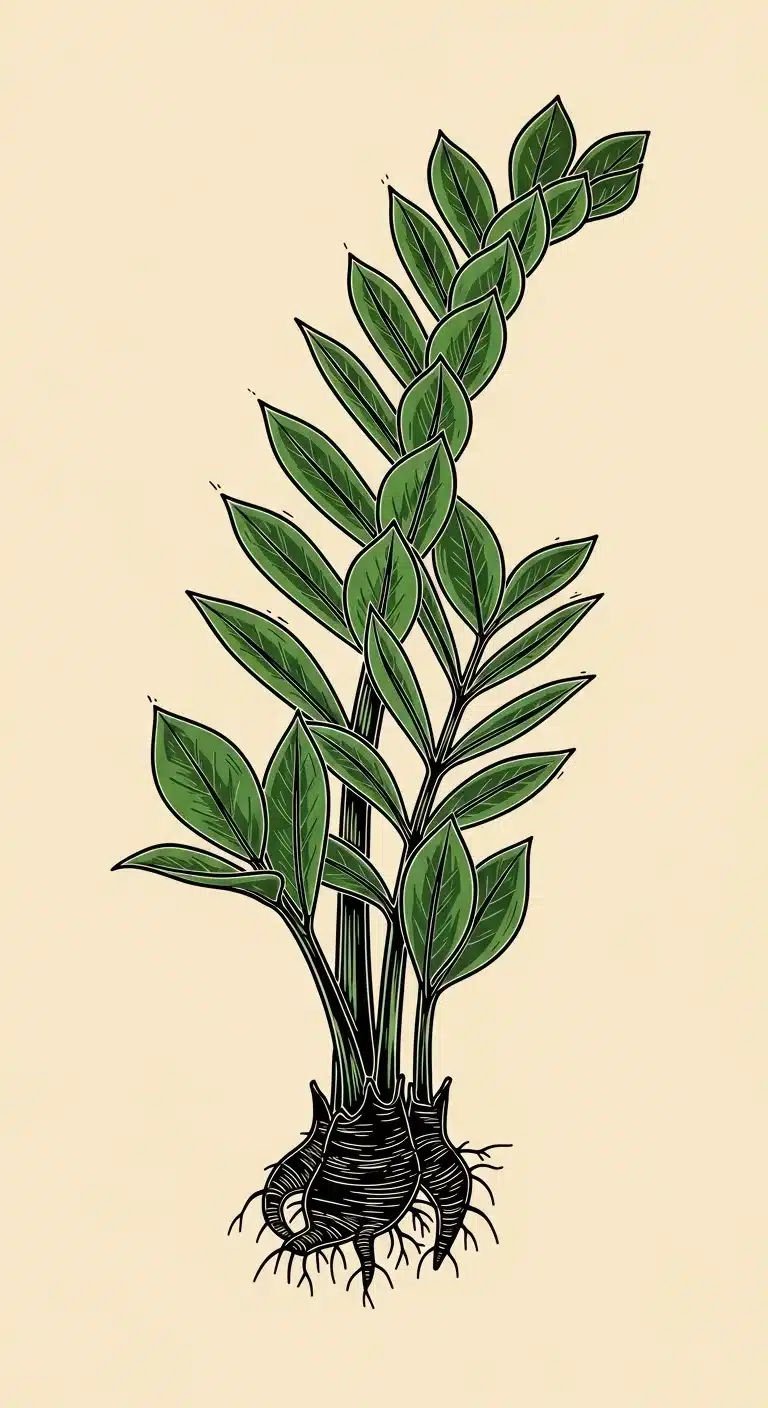
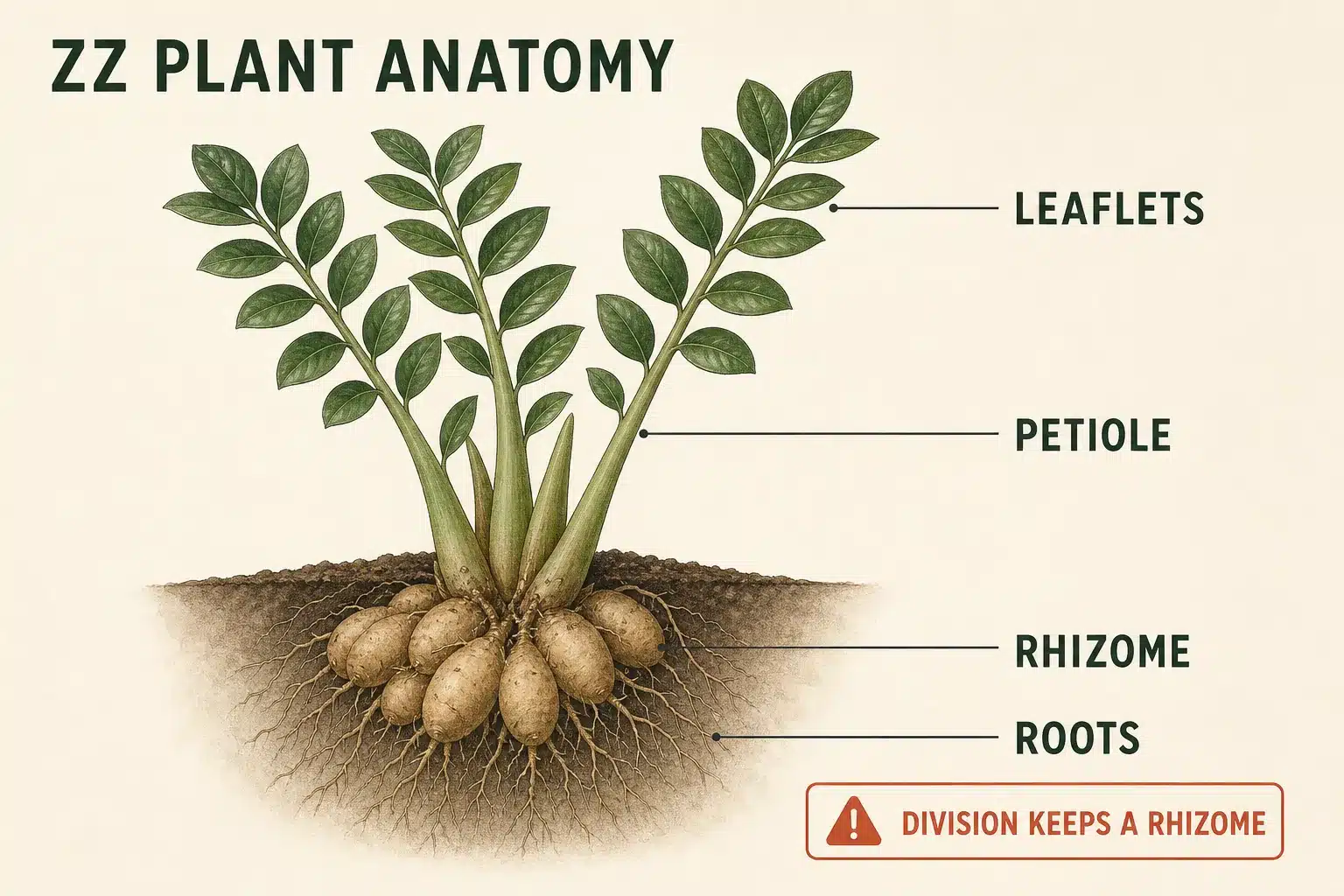
ZZ plants are stemless aroids: their upright leaf stalks rise directly from swollen rhizomes below the mix. That structure explains both their drought tolerance and their dislike of stagnant, wet soil.
| Care point | Useful indoor default | Inspect before changing it |
|---|---|---|
| Light | Bright, indirect light for stronger, more even growth; lower light is tolerated. | Direct sun whitening or browning, very slow growth, and whether usable light is actually limited. |
| Water | Water thoroughly, then let the mix dry well before watering again. | Pot weight, mix moisture below the surface, drainage, yellowing, and soft leaf stalks. |
| Soil and pot | Open, well-drained houseplant mix in a container with a drainage hole. | Roots circling tightly, a cracked or distorted pot, or mix that stays wet for too long. |
| Feeding | Occasional balanced houseplant fertilizer during active growth, following the label. | Whether the plant is growing and whether the mix is already dry and healthy. |
| Humidity | Normal household air is usually adequate; no misting ritual is required. | Cold drafts, heat vents, or a persistently wet root zone—not humidity alone. |
Light and Placement
Bright indirect light is the most useful placement target when you want a ZZ plant to grow with better pace and balanced form. A lower-light room can keep the plant alive, but growth may be slower and new leaf stalks may be less vigorous. A few feet back from a bright window, behind a sheer curtain, or under a suitable grow light is often easier to manage than a dark corner.
Protect the leaves from a sudden blast of direct midday sun. Pale, bleached, or brown patches on the window-facing side suggest excess intensity; move the plant farther from the glass and let it acclimate. If growth is sparse or very slow, compare the plant’s usable light and root-zone moisture before adding fertilizer or repotting; direction alone is not a reliable diagnosis.
Watering and Drainage
Water when the potting mix has dried well—not because a calendar says it is “ZZ day.” Push a finger or a wooden stick into the mix, lift the pot to compare its weight, and look at how quickly excess water leaves the drainage hole. When it is time, soak the mix evenly and let it drain completely. Empty a cachepot or saucer rather than leaving the rhizomes in standing water.
There is no universal two-week or one-month rule. A large pot in low light may stay wet much longer than a small pot near a bright window. In winter or during a cool, dim spell, the interval commonly stretches; in active growth or a warm, bright room, it may shorten. The plant’s condition and the mix are stronger signals than the date.
Soil, Pot, and Repotting
Choose a coarse, well-drained houseplant mix that does not compact into a wet block. A standard indoor mix amended for extra air space can work; the exact recipe matters less than reliable drainage and a pot with an open hole. Never use a decorative cachepot as the only container unless it drains.
Repot when roots and rhizomes have filled the container, the pot is splitting or tipping, the mix has broken down, or water behavior has changed sharply. Repot into the next practical pot size, not a large reservoir of new wet soil. Handle the rhizomes gently, set them at the same general depth, and wait for excess water to drain before returning the plant to its cover pot.
Temperature, Humidity, and Feeding
Keep ZZ plants warm and away from cold drafts, exterior doors, and heat that blasts the foliage. UF/IFAS lists warm indoor conditions and notes that injury risk rises below 50°F (10°C); use that as a boundary, not a target to chase. Ordinary household humidity is normally sufficient. Misting does not repair a waterlogged mix or compensate for poor light.
Feed only when the plant is actively growing and the root zone is healthy. Use a balanced houseplant fertilizer at the label’s indoor-plant rate; a slow-growing ZZ does not need a monthly push. Do not fertilize a plant that is declining in wet soil, badly dehydrated, or freshly disturbed until the underlying problem is stable.
Cleaning and pest checks
Wipe dust from broad leaflets with a clean, damp cloth when the surface is visibly coated; clean foliage is easier to inspect for scale, mealybugs, and sun damage. Treat this as an inspection step, not a cure. Check leaf undersides and petiole joints whenever a plant is moved, isolated, or showing sticky residue.
Common Problems: What to Inspect First
A symptom is a clue, not a diagnosis. Check the pattern, the root-zone moisture, recent changes, and light before making several changes at once.
| What you see | First check | Conservative next step |
|---|---|---|
| Several leaves yellow while the mix stays wet | Drainage, pot size, leaf-stalk firmness, and rhizome condition. | Pause watering; if leaf stalks or rhizomes are soft, move to a root inspection rather than adding feed. |
| One oldest lower leaflet yellows while the rest is firm | Whether it is isolated, old growth and the mix otherwise dries normally. | Monitor. Remove only when fully yellow and easy to detach; do not overhaul a healthy plant for one old leaflet. |
| Leaves bleach, curl, or brown on the window side | Direct sun and heat through glass. | Move to bright indirect light and remove only tissue that is fully damaged. |
| Growth stalls in a very dark room | Usable light and whether the plant has been kept too wet while barely growing. | Increase indirect light gradually; let the mix dry between waterings. |
| Leaf stalks or petiole bases wobble, darken, or smell sour | Wet mix, poor drainage, and rhizome firmness. | Stop watering and inspect roots/rhizomes. Do not treat a soft base as a normal “droop.” |
| Scale or sticky residue appears | Leaf undersides, petiole bases, and nearby plants. | Isolate the plant and identify the pest before selecting a treatment that fits the label. |
Pruning can tidy a damaged leaf stalk, but it cannot replace a light, drainage, or root-zone correction. Use the pattern and root-zone checks above before changing more than one care variable.
Toxicity and Household Boundaries
ZZ plants contain needle-like calcium oxalate crystals and should not be chewed. ASPCA includes ZZ among insoluble calcium oxalate houseplants; chewing can cause oral irritation, drooling, retching, vomiting, or swallowing difficulty. NC State Extension and the University of Connecticut both advise keeping the plant away from children and pets; the severity of a possible exposure depends on what was eaten and by whom. Wear gloves if the sap irritates your skin, wash after handling, and keep fallen leaflets out of reach. If a child or pet chews the plant, contact a medical professional, veterinarian, or poison-control service for case-specific advice. For symptom-by-symptom guidance, see the ZZ plant toxicity guide for cats and dogs.
Read the rhizome before you water again
ZZ plants can look unchanged while the root zone is moving in the wrong direction, because the swollen rhizomes hold water below the mix. Use three signals together:
- Pot weight: a pot that remains heavy for many days needs a drainage and mix check before more water.
- Leaf-stalk firmness: yellowing paired with soft tissue is more urgent than one older leaflet changing color on an otherwise firm plant.
- New growth: slow growth in a dim room is not a watering cue; improve usable light before increasing feed or moisture.
This rhizome-first check is the key distinction between a ZZ that is conserving water and one that is sitting in a wet root zone. Change one condition, then observe the next new growth rather than escalating every symptom at once.
Propagation Overview
ZZ plants can be propagated by dividing a plant with multiple rhizomes or by rooting leaf/leaflet material. The choice changes the waiting, moisture, and failure risks: division starts with an existing rhizome, while cuttings must form a new rhizome. Do not lift a healthy plant just to follow a trend, and do not promise a rooting date from a household setup. The ZZ plant propagation guide covers the methods and their evidence boundaries in detail.
Propagation choices follow the same structure: division keeps an existing rhizome, while whole-leaf/petiole and leaflet cuttings must form one. Choose the method from the material available, use a free-draining medium as the evidence-aligned default, and stop when tissue becomes soft or translucent.
ZZ Plant Care FAQ
How often should I water a ZZ plant?
Water after the mix has dried well and the pot drains freely. The interval changes with light, pot size, mix, temperature, and season, so inspect the plant instead of following a fixed calendar.
Can a ZZ plant grow in low light?
It tolerates lower light than many houseplants, but bright indirect light generally supports stronger, more balanced growth. Very low light can also slow drying, which raises the cost of overwatering.
Why are my ZZ plant leaves turning yellow?
Check whether the yellowing is isolated old growth or widespread, and compare it with mix moisture, leaf-stalk firmness, light, and recent changes. Wet soil plus soft tissue needs a root-zone inspection; one old leaflet on an otherwise firm plant may be normal aging.
Does a ZZ plant need misting?
No misting schedule is required for ordinary household humidity. Fix light, drainage, temperature, or watering based on what you can observe.
Are ZZ plants safe for cats and dogs?
No. Keep ZZ plants away from chewing pets and seek veterinary or poison-control advice after an exposure. “Tolerates neglect” is not the same as “safe to eat.”
Related ZZ Guides
- ZZ plant propagation: division, leaflets, and whole-leaf cuttings
- ZZ plant yellow leaves: diagnose the pattern before you water
- ZZ plant toxicity for cats and dogs
Sources
- NC State Extension: ZZ Plant, Zamioculcas zamiifolia
- University of Florida IFAS: Florida Foliage House Plant Care—ZZ Plant
- University of Connecticut Home & Garden Education Center: ZZ Plant
- Michigan State University study by Blanchard and Lopez, GMPRO (PDF copy hosted by Purdue)
- University of Maryland Extension Ask Extension: ZZ plant yellowing
- ASPCA: insoluble calcium oxalate plants and pet exposure