
📋 Quick Verdict: Peace Lily Care Summary
Wondering how to care for a peace lily quickly? Here is exactly what you need to know to keep your indoor plant thriving:
Transparency note: Some links in this article are affiliate links. As an Amazon Associate I earn from qualifying purchases at no extra cost to you. I research current product options and select suggestions based on relevance, availability, customer signals, and fit with the care problem discussed here.
- Light: Prefers bright, indirect sunlight (East-facing windows are ideal) but easily tolerates low light.
- Water: The ultimate “communicator.” Water thoroughly when the top inch of soil is dry, or the moment you see the leaves begin to droop.
- Soil: Needs a well-draining, peat-based potting mix to prevent root suffocation.
- Temperature: Keep it cozy between 68°F and 85°F. Protect it from cold winter drafts!
- Toxicity: Mildly toxic to cats and dogs. Keep out of reach of curious pets.
Introduction: How to Care for a Peace Lily Indoors
There is a quiet elegance to the Spathiphyllum that few other houseplants can rival. When we first started building our indoor jungle in our Aarhus apartment, this was our very first success story.
When repotting, the soil you choose matters more than the pot. This is what I always reach for:
A powerhouse blend with earthworm castings and bat guano. Perfect for hungry tropicals that want to grow big.
The most reliable fix for overwatering is removing the guesswork entirely:
Insert it 2 inches deep before every watering. Tells you exactly what is happening at the root zone where rot actually starts.
Mastering proper peace lily care brings not just lush, tropical foliage into your home, but a living symbol of tranquility. Native to the tropical forest floors of the Americas and Southeastern Asia, these plants are incredibly resilient.
Their iconic white “flowers” are actually modified leaves called spathes. To get those beautiful white blooms to appear, you have to replicate that tropical understory environment inside your living room.
In this comprehensive master guide, we will teach you the exact science of peace lily care indoors. We will cover optimal lighting, the “drench and drain” watering method, troubleshooting brown tips, and the best ways to multiply your collection.
Why Peace Lily Plant Care is Perfect for Beginners
The Peace Lily is an exceptional houseplant choice because of its unique ability to bloom in lower light and thrive in standard home temperatures. If you are learning peace lily plant care for the very first time, this is the most forgiving plant you can buy.
The Communicative Plant
One aspect of this plant that we absolutely love is its ability to “talk” to you. Unlike succulents that might rot silently in the corner, a thirsty peace lily will dramatically droop.
For this part of the guide, a researched product option that fits the job is:
Selected because this section is specifically about cactus and succulent mix use. Check Amazon for current price and availability.
It provides instant visual feedback. It quickly teaches beginners the rhythm of the soil, making it nearly impossible to accidentally dehydrate it to death.
Natural Air Purification & Safety
Beyond their stunning white bracts, these plants are hardworking additions to your living space. They quietly work to filter indoor air pollutants while looking completely effortless.
However, responsible ownership means considering pet safety. As noted by the North Carolina Extension, these plants contain calcium oxalate crystals, which cause mouth irritation in cats and dogs if chewed.
Peace Lily Light Requirements
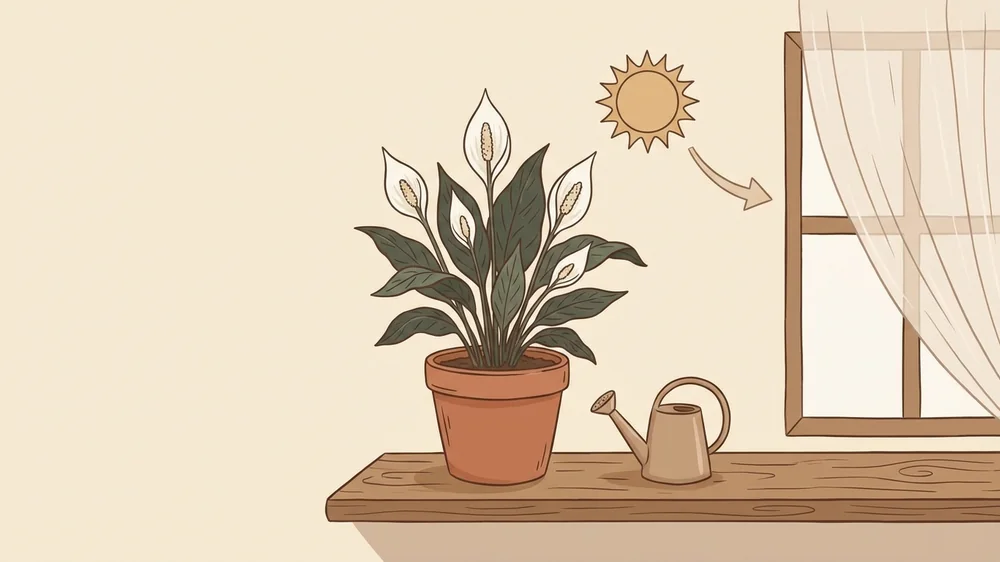
🌿 Emilie’s Pro Tip: The Bloom Secret
Many people mistakenly categorize the peace lily as a “no-light” plant. While they will survive in a dark corner, they will never flower there. If you want those iconic white spathes, you must give them bright, indirect light! Push them closer to an East-facing window to trigger the blooms.
To understand exactly how to care for a peace lily, we must look at its native tropical range. These plants evolved under a dense jungle canopy. Their leaves are adapted to dappled, indirect photons rather than harsh, direct solar radiation.
Placement for Optimal Photosynthesis
An East-facing window typically provides the most balanced light spectrum. It offers gentle morning intensity without the midday heat.
Direct mid-day sun (especially from a South window) will rapidly damage the cellular structure of the leaves. This photodamage often manifests as scorching, bleaching, or severe yellowing. If you must use a South or West exposure, place the plant at least 5 feet away from the glass to diffuse the intensity.
Diagnosing Light Issues
Incorrect lighting is a frequent variable in poor peace lily care outcomes. Insufficient light leads to leggy, stunted growth and a complete lack of flowers.
Conversely, excessive exposure causes aesthetic defects. If you observe crispy edges, investigate further. Often, what looks like sunburn can actually be brown tips caused by hard tap water or low humidity.
Watering Your Peace Lily (The “Drench” Method)
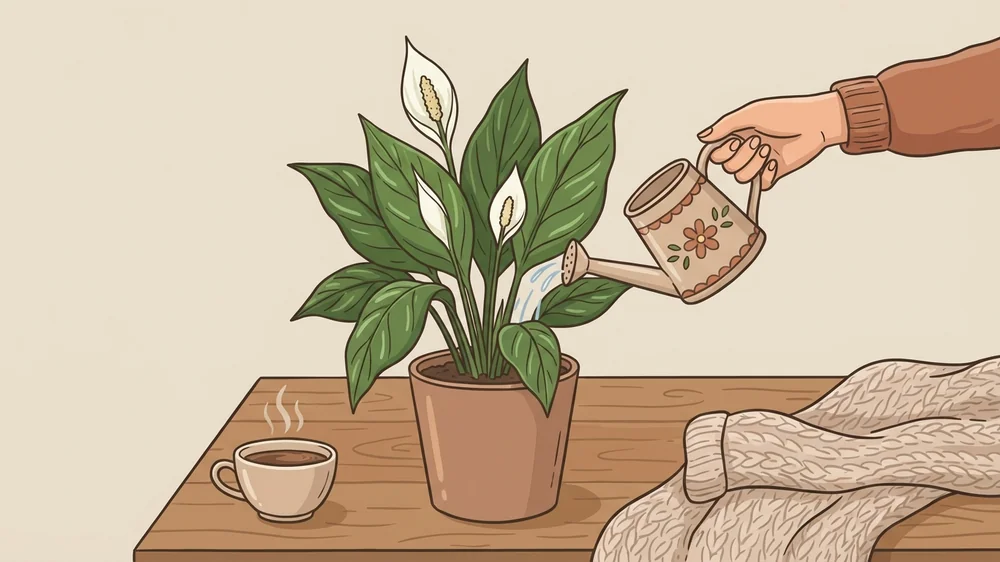
🧪 Joakim’s Science Corner: Turgor Pressure
Why do peace lilies faint? The plant relies on cellular water pressure, called turgor, to keep its stems upright. When the soil dries out, the cells deflate like tiny balloons, causing the dramatic droop. While it is fun to watch them bounce back, letting them collapse repeatedly stresses the root system. Aim to water them just before they faint!
To determine exactly how often to water, you must monitor the soil. Excellent peace lily plant care means irrigating when the top 1 to 2 inches (2.5 to 5 cm) of the soil feels dry to the touch.
Your watering frequency will fluctuate based on the seasons. In a warm room between 68°F and 85°F (20°C and 29°C) with bright light, evaporation accelerates, and you may need to water weekly.
Water Quality Matters
The chemical composition of your water is just as critical as the frequency. High concentrations of fluoride or chlorine found in standard tap water will disrupt the cellular integrity of the leaves.
This chemical burn is the number one cause of brown tips. If you live in an area with hard tap water (like we do in Denmark), switch to filtered water, distilled water, or collected rainwater.
📚 Want to learn more about Watering?
Read our deep-dive guide: The Peace Lily Watering Guide
Temperature & Humidity Requirements
To truly mimic the tropical understory where Spathiphyllum originates, aim for daytime temperatures between 68°F and 85°F (20°C and 29°C). Consistent warmth is a cornerstone of proper peace lily care indoors.
For this part of the guide, a researched product option that fits the job is:
Selected because this section is specifically about hygrometer use. Check Amazon for current price and availability.
Equally important is maintaining humidity levels above 50% to keep the foliage lush and glossy. If your indoor air is too dry, you will likely see aesthetic issues like crispy brown edges on the leaves.
Beware of Cold Drafts
These plants are highly sensitive to cold drafts and sudden thermal shifts. Ensure your room stays warmer than 55°F (13°C) at night.
Prolonged exposure to cold windowpanes or AC vents can permanently damage the cellular structure of the plant. Keep them at least 2 to 3 feet (60 to 90 cm) away from drafty doorways.
Soil & Fertilizer Needs
The foundation of successful peace lily care lies in the root zone. To facilitate proper nutrient uptake, the plant needs a porous, peat-based medium that maintains a slightly acidic pH between 5.5 and 6.5.
The fertilizer I have used consistently longer than any other:
Complete liquid fertilizer with all 16 essential nutrients. The 7-9-5 ratio is dialled in for lush foliage plants.
To create the ideal mechanical structure, mix standard indoor potting soil with heavy handfuls of perlite and orchid bark. This ensures rapid drainage, preventing the waterlogging that suffocates the plant’s delicate roots.
How to Fertilize Properly
For optimal growth, use a balanced liquid fertilizer (like a 20-20-20 NPK ratio). Apply this solution at one-quarter to one-half strength every six weeks during the active spring and summer growing seasons.
Never apply full-strength fertilizer to dry soil! Excessive fertilizer salts in the substrate will chemically burn the roots and cause necrosis on the leaf margins.
How to Propagate Peace Lily Plants
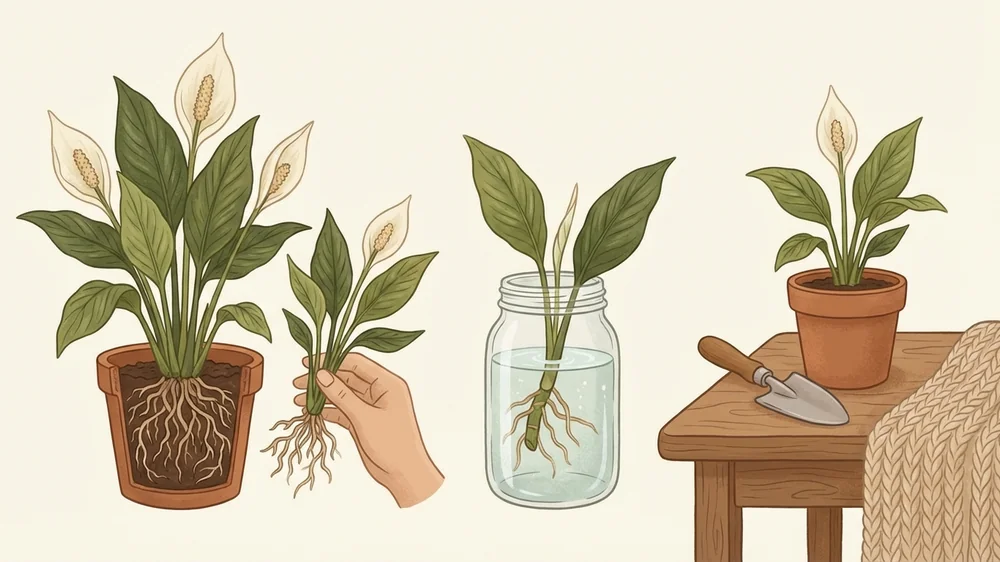
If you want to know how to care for a peace lily while multiplying your collection, you must learn rhizome division. Unlike pothos or philodendrons, you cannot simply snip a peace lily leaf and expect it to root in a glass of water.
Because it grows from underground stems called rhizomes, successful reproduction requires physically separating the root ball. Here is how to do it safely:
- Unpot the Plant: Carefully remove the mother plant from its container. Gently loosen the root ball and tease away the old soil.
- Find the Crowns: Identify the distinct clumps of stems rising from the central root mass. Look for sections that have at least three healthy leaves attached.
- Divide the Roots: Using your hands or a sterilized knife, separate these crowns. The thick roots are surprisingly resilient.
- Repot: Place the new divisions into appropriately sized pots filled with fresh, porous potting mix. Water thoroughly to settle the soil.
Place your newly divided plants in a warm area with bright, filtered light. You may notice some initial drooping, but this is standard transplant shock and usually resolves within a week.
Common Problems & Troubleshooting
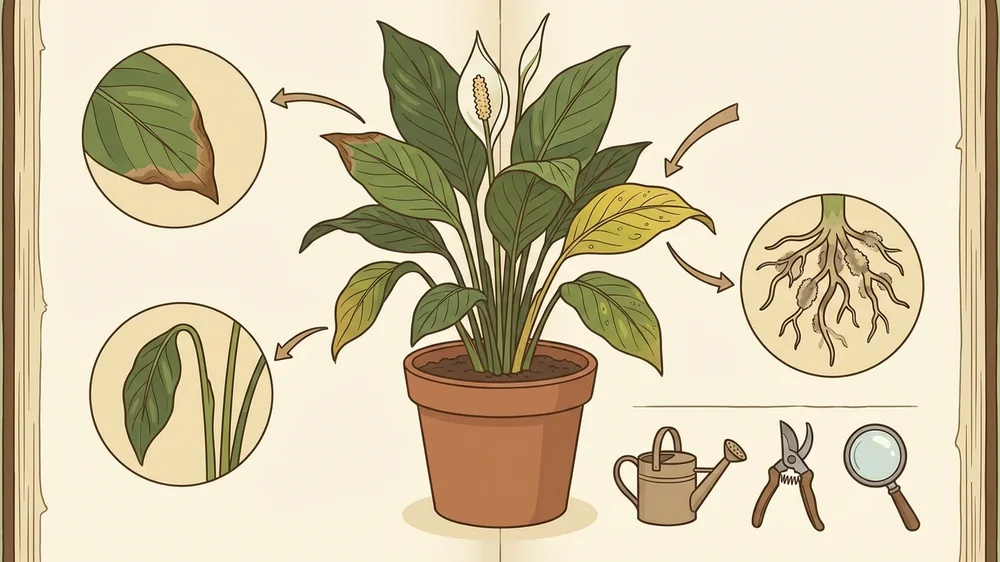
Even the most experienced gardeners encounter hiccups. Mastering peace lily plant care simply means learning to interpret the subtle distress signals your plant sends before they become permanent damage.
The Mystery of Brown Tips
The most frequent complaint we hear involves the sudden appearance of crispy, brown leaf edges. This is rarely a disease. It is almost always a physiological reaction to water quality or dry air.
Accumulation of chlorine and fluoride from tap water burns the leaf margins. To prevent this, switch to distilled water or collected rainwater. Additionally, if your home’s humidity drops below 40%, you will almost certainly see brown tips develop.
Yellowing and Drooping
If you notice leaves turning yellow, check your soil moisture immediately. While dramatic drooping indicates thirst, yellowing is a classic sign of overwatering or poor drainage.
For this part of the guide, a researched product option that fits the job is:
Selected because this section is specifically about potting mix use. Check Amazon for current price and availability.
Keeping the soil perpetually soggy is incredibly dangerous. Ensure your pot has drainage holes so excess water can escape. Note: If only the very bottom, oldest leaves are turning yellow, this is just natural aging!
Is the Peace Lily Toxic to Cats and Dogs?
Yes, the Peace Lily contains insoluble calcium oxalate crystals that are mildly toxic to both humans and pets. However, it is important to clarify a major biological distinction: it is not a true lily.
True lilies (Liliaceae) cause fatal kidney failure in felines. The Spathiphyllum (Araceae family) does not possess those renal-destroying compounds. The danger of a peace lily pet interaction is primarily painful mouth irritation.
When a leaf is chewed, microscopic needle-like crystals shoot into the soft tissues of the mouth. This causes immediate drooling, pawing at the face, and vomiting. Always elevate your plant on a high shelf or stand to keep it safely out of reach of curious animals.
Can a Peace Lily Live Outdoors?
Yes, you can move your peace lily outside for the summer, provided you replicate its native tropical environment. The natural humidity and fresh airflow often trigger a massive flush of vigorous growth.
Placement is critical. Direct midday sun will burn the foliage within hours. Locate a fully shaded area, such as a covered porch or under the canopy of a large tree.
Temperature swings are your biggest threat. Ensure night temperatures stay consistently above 60°F (15°C). Prolonged exposure to anything below 55°F (13°C) causes immediate cellular damage. Always bring it back inside before autumn arrives!
Peace Lily Varieties to Collect
You might assume there is only one type, but the range of peace lily varieties is astounding. From compact tabletop gems to massive floor-standing giants, there is a cultivar for every space.
- The Standards: Descendants of Spathiphyllum wallisii usually stay under 2 feet (60 cm) tall. These are the most reliable and forgiving plants for beginners.
- The Giants: If you want architectural drama, look for hybrids like ‘Sensation’. These impressive plants can reach heights of 4 to 6 feet (1.2 to 1.8 meters) and boast huge, deeply ribbed leaves.
- The Variegated: Cultivars like ‘Domino’ feature crinkled leaves with striking white streaks. Just be aware that their thinner leaves require higher humidity!
Recommended Peace Lily Essentials
Each product below was hand-picked after thorough research and testing.
The cheapest upgrade you can make to any potting mix. A handful per pot dramatically improves drainage and aeration.
Check Price → (paid link)
The long, narrow spout lets you water directly at the soil level without splashing leaves — keeps foliage dry and reduces fungal risk.
Check Price → (paid link)
Slow-release granules that feed for 6 months. Mix into the top of the soil and forget about fertilizing for half a year.
Check Price → (paid link)
Accurate humidity and temperature monitor with Bluetooth logging. Know exactly what conditions your plants are living in.
Check Price → (paid link)
Frequently Asked Questions About Peace Lily Care
Light affects growth and blooms: If your plant stays leafy but will not flower, check the dedicated Peace Lily light requirements guide before adding fertilizer.
How do you take care of a peace lily plant indoors?
Excellent peace lily care involves placing the plant in bright, indirect light and maintaining room temperatures between 68°F and 85°F (20°C to 29°C). Water thoroughly only when the top 1 to 2 inches (2.5 to 5 cm) of soil is dry, or the moment the leaves begin to slightly droop.
How to care for a sick peace lily that is dying?
The first step in rescuing your plant is checking the soil. If it is dense and soggy, root rot is the culprit; you must repot it into fresh, chunky soil immediately. If it is bone dry and severely wilted, a deep soak will usually revive it within hours. Proper peace lily care requires diagnosing the water level before adding any fertilizer, as feeding a sick plant can chemically burn the roots.
How to care for peace lily in winter?
Winter peace lily care requires a few seasonal adjustments. As daylight decreases, the plant’s metabolism slows down, meaning it drinks much less water. Allow the soil to dry out deeper between waterings. Protect it from cold drafts below 55°F (13°C) and keep it far away from drying radiator heat, which causes brown tips.
How do you take care of a peace lily outside?
You can move your plant outdoors in the summer as long as night temperatures stay consistently above 60°F (15°C). Outdoor peace lily care means keeping the plant in full, protective shade (like a covered patio or under a tree) because direct sun will quickly scorch the leaves. You will also need to water it more frequently due to wind and heat evaporation.
How do I care for a peace lily so it blooms?
The secret to getting blooms is maximizing indirect sunlight. While they survive in dark corners, optimal peace lily care requires bright, filtered light (like an East-facing window) to generate the energy needed to produce those iconic white spathes. Feed it a balanced liquid fertilizer every 6 weeks during the spring and summer to fuel the flowers.
Why are the tips of the leaves turning brown and crispy?
Brown tips are usually a sign of poor water quality. The plant is highly sensitive to chemicals found in tap water, specifically fluoride and chlorine. To fix your peace lily care routine, switch to distilled water, filtered water, or rainwater. Chronically low humidity (dry indoor air) will also cause the edges to crisp up.