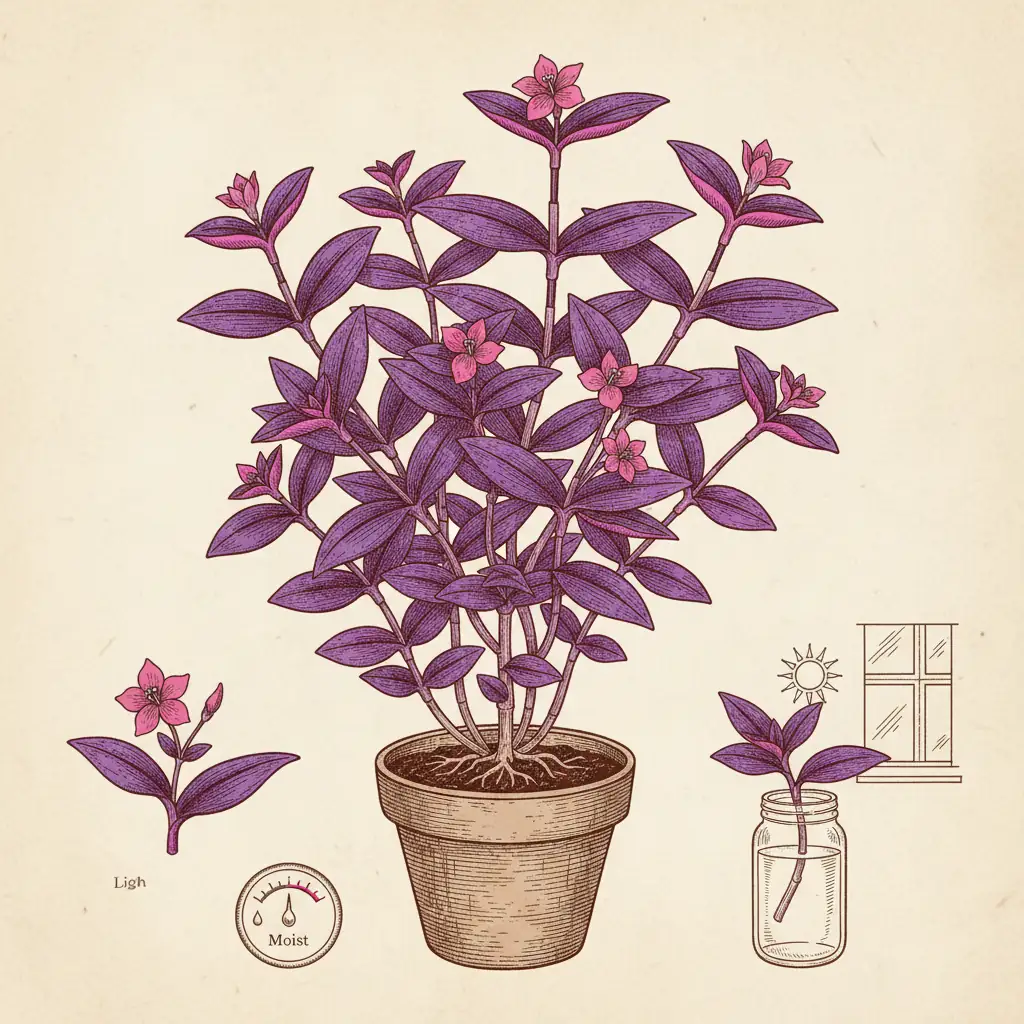
Purple heart plant care is simple once you understand what the plant is asking for: brighter light for deeper color, fast drainage for healthier roots, and regular pruning for bushy growth. Give it those three things first, then fine-tune water, feeding, repotting, and seasonal placement.
Some links are affiliate links. As an Amazon Associate I earn from qualifying purchases at no extra cost to you.
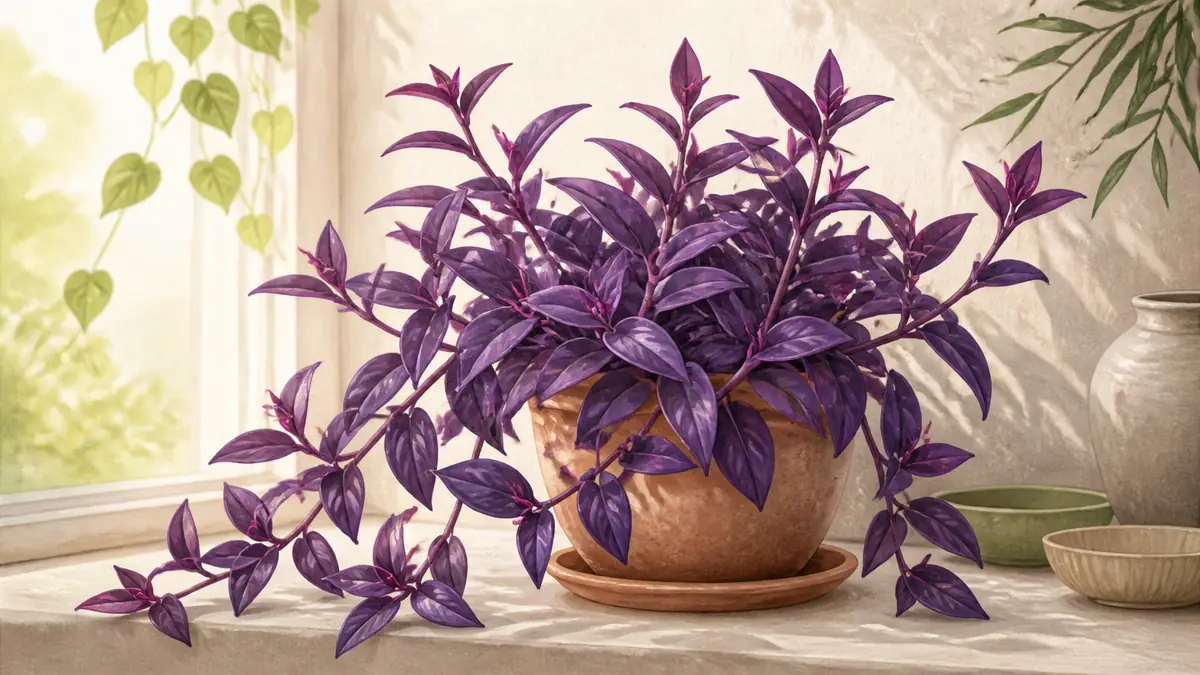
Purple heart plant, also sold as Tradescantia pallida (one of several wandering jew varieties), is forgiving, fast-growing, and easy to refresh from cuttings. The mistake that causes the most disappointment is treating it like a low-light foliage plant. It can survive in softer light, but it usually becomes greener, leggier, and less impressive.
Use this as the main care routine. If your plant is already losing color, use the purple heart turning green guide. If you want more plants from cuttings, use the purple heart propagation guide.
If the plant lives inside year-round, use the indoor purple heart plant guide. If you are growing it as a trailing display, use the purple heart hanging basket guide.
Quick Care Table
Start with the care area that matches the problem you see. Each row links to the full section below, so this table works like a quick diagnosis map.
| Care area | Best target | Common mistake | Go to |
|---|---|---|---|
| Color | Very bright light, introduced gradually | Keeping it in a dim corner | Light |
| Water | Water deeply, then let roots breathe | Watering by calendar | Watering |
| Soil | Loose mix with extra drainage | Dense soil in a cachepot | Soil |
| Shape | Pinch and prune above nodes | Letting every stem trail forever | Pruning |
| Outdoor color | Gradual move to stronger light | Sudden hot afternoon sun | Outdoor moves |
| Reset | Root healthy tips and restart | Trying to rescue bare old stems forever | Reset |
Purple Heart Care at a Glance
- Light: bright light; strongest color in more sun
- Water: let the top soil dry before watering again
- Soil: loose, well-draining potting mix
- Pruning: pinch regularly for fuller growth
- Temperature: keep warm; avoid cold nights
- Pet note: sap can irritate skin and pets
Looking to buy a healthy live plant online?

1-YEAR WARRANTY
Get a nursery-quality, well-rooted live Tradescantia Zebrina Wandering Dude shipped directly to your door. Backed by a best-in-class plant warranty so you can shop with confidence.
1. Give It Very Bright Light for Purple Color
Light is the care lever that controls how purple the plant looks. NC State Extension notes that full sun produces the best color development, while shade makes purple heart greener. That does not mean every indoor plant needs harsh all-day sun, but it does mean a dim room will not give you the color most people want.
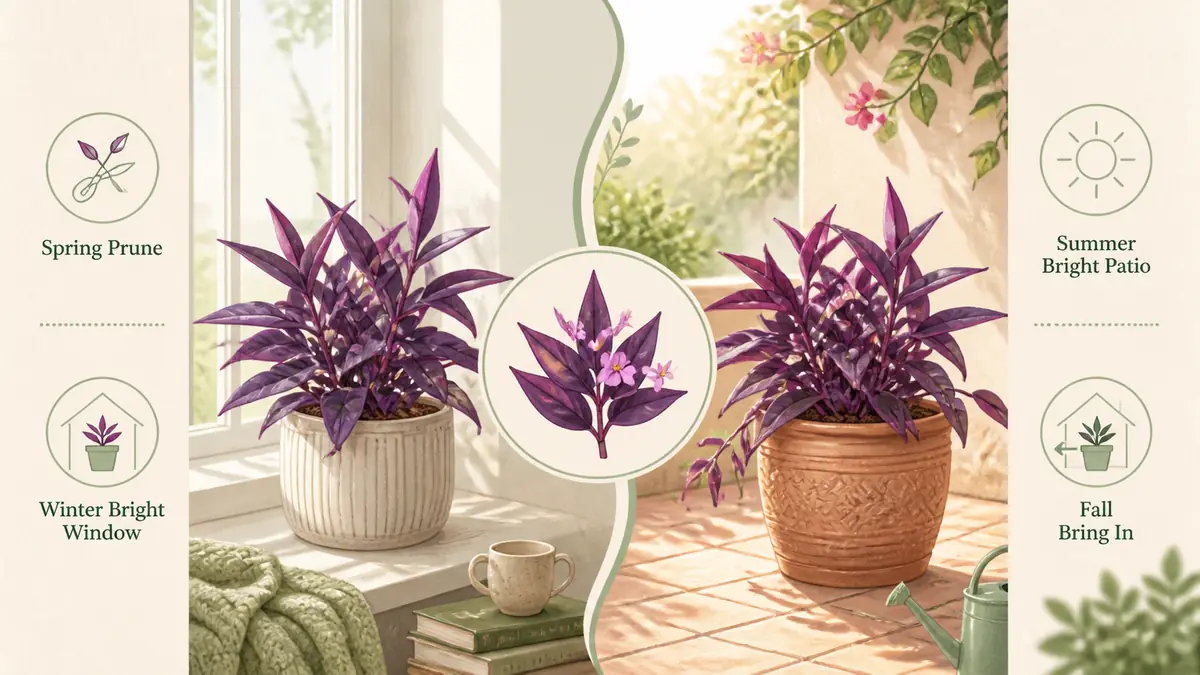
Indoors, the best spot is usually an east window, a very bright south or west window with some distance from hot glass, or a plant shelf with a strong grow light. Outdoors, morning sun is easier to manage than sudden afternoon sun, especially if the plant has been indoors.
Move a shaded plant brighter over several days. Watch the newest leaves, not the oldest leaves. Healthy new growth should come in shorter, tighter, and more purple once the light is right.
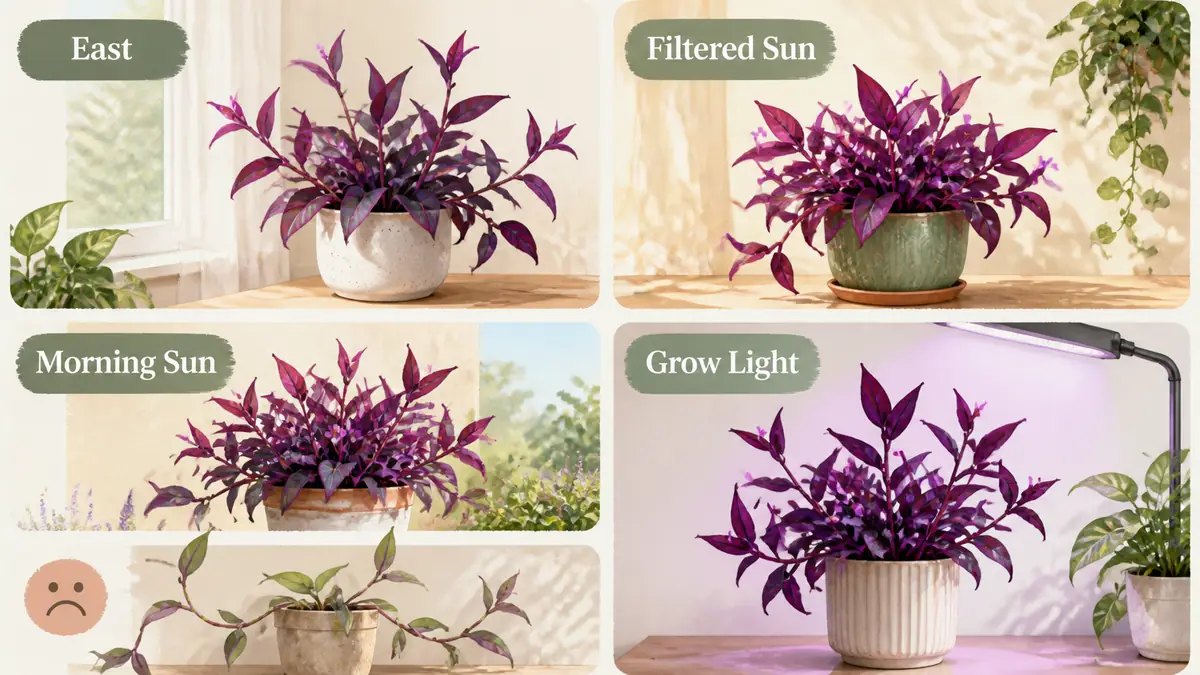
| Placement | How to use it | Watch for |
|---|---|---|
| East window | Give direct morning light and bright daytime exposure. | Usually safest indoors. |
| South or west window | Keep a little back from hot glass or use sheer filtering. | Sudden scorch on older leaves. |
| Grow light | Use when natural light is weak, especially in winter. | Weak bulbs placed too far away. |
| Outdoor patio | Start with morning sun or bright shade, then increase. | Crispy patches from sudden exposure. |
If your only available window keeps the plant green and stretched, a grow light can be a real solution rather than a luxury. Try the brightest free placement first, then add a light if the plant still cannot make compact purple growth.
Useful when your best window still produces green, stretched growth. It fits a standard lamp and gives purple heart a stronger indoor light source.
2. Water Deeply, Then Let the Pot Breathe
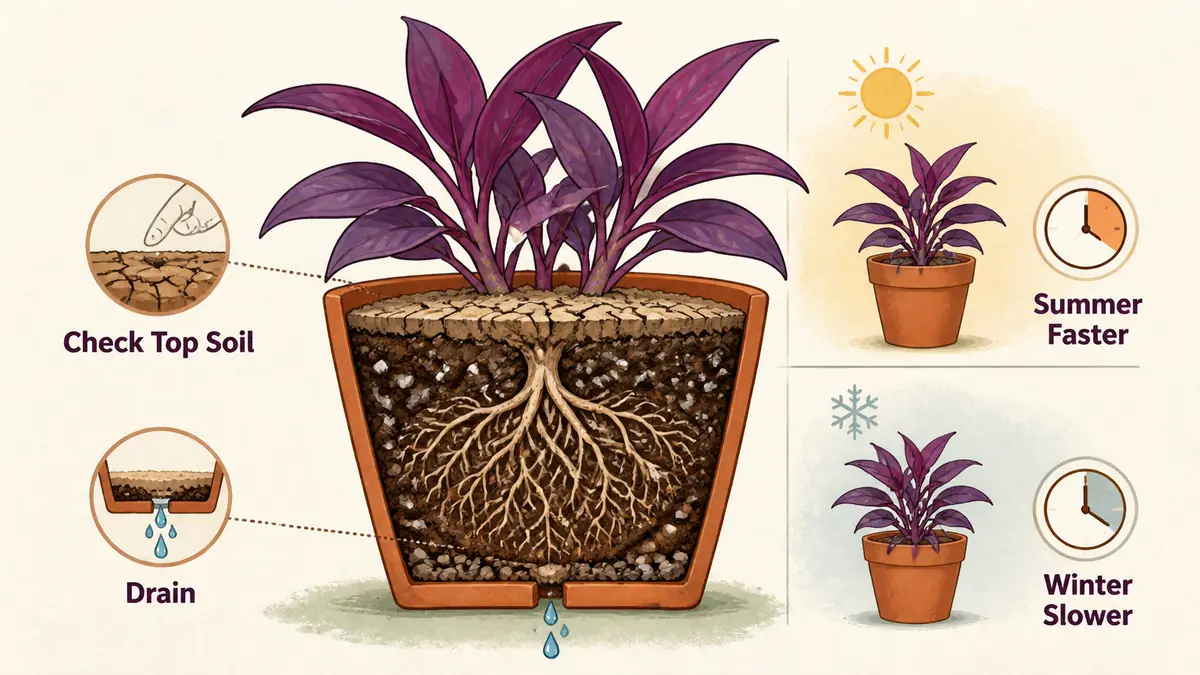
Purple heart handles some dryness better than soggy roots. Water until excess runs from the drainage hole, then empty the saucer or decorative outer pot. The goal is to wet the whole root ball, then let air return to the root zone.
Do not water on a fixed calendar. A plant in bright summer light may dry quickly, while the same pot in winter may stay damp for much longer. Use your finger or a wooden skewer to check the top inch or two of soil before watering again.
Watering problems usually show up as texture changes. Thirsty stems look limp but the pot feels light and the soil feels dry. Overwatered stems often feel soft, heavy, or dull while the soil is still wet.
3. Use a Light, Fast-Draining Potting Mix
A regular indoor potting mix can work if it drains well. If it stays wet for days, loosen it with perlite, pumice, or small bark pieces so the roots get more air. This matters most in indoor pots, cachepots, and hanging baskets that dry unevenly.
Choose a pot with a drainage hole. Decorative outer pots are fine, but never let the inner pot sit in standing water.
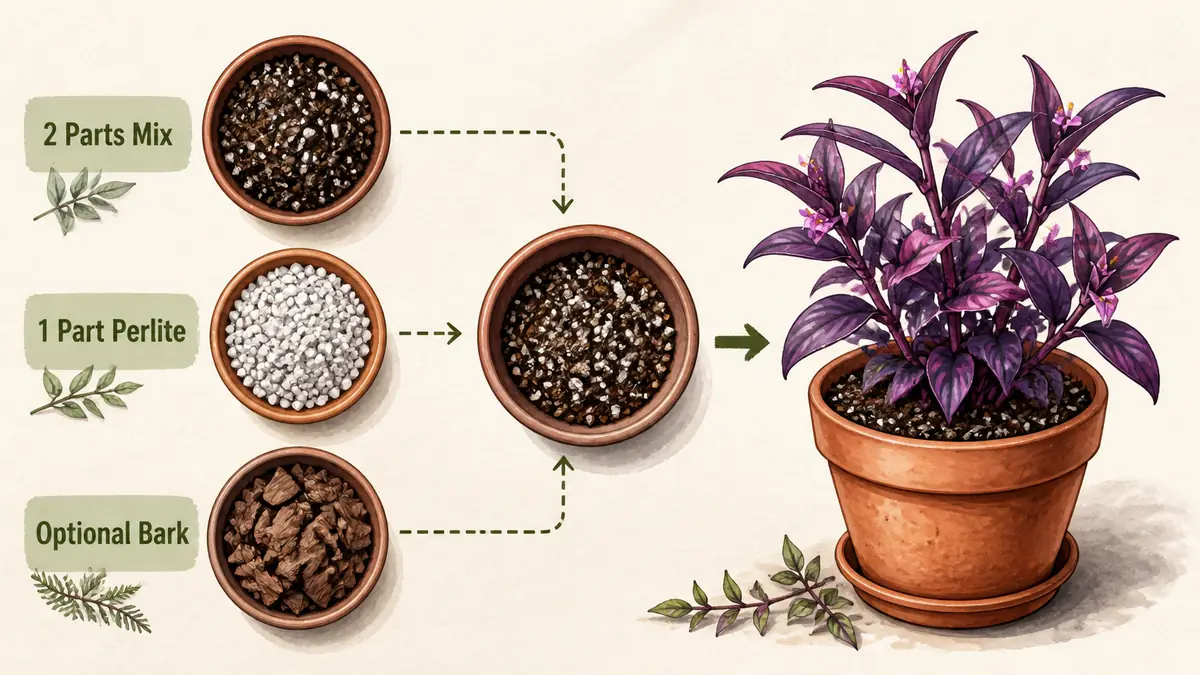
- Simple mix: 2 parts potting mix plus 1 part perlite or pumice.
- For wetter homes: add a small amount of bark for more air space.
- For hot outdoor pots: keep enough potting mix so the plant does not dry out every few hours.
- Avoid: heavy garden soil in containers.
A simple drainage upgrade when your potting mix stays wet too long. Mix a handful into regular potting soil for a lighter root zone.
4. Prune Above Nodes for Bushy Growth
Purple heart naturally trails. Without pruning, it can become long, bare at the base, and uneven. Pinching the tips sends energy into side shoots and makes the plant fuller.
Cut just above a node, which is the joint where a leaf meets the stem. That is where new side shoots are most likely to break. Focus first on pale, stretched, or awkward stems that are running outside the shape you want.
For a bushier pot, prune a little and often during active growth. For a tired plant with long bare stems, prune harder and root the best tips as insurance.
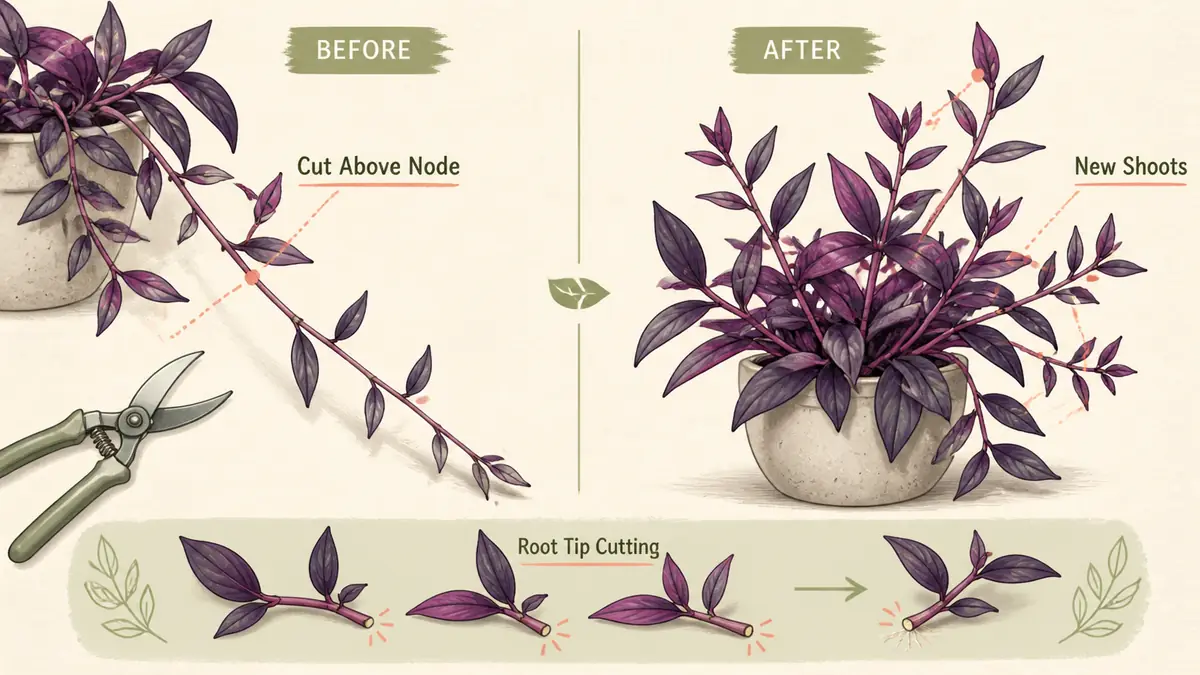
Useful for keeping purple heart bushy without crushing the fleshy stems. Clean cuts matter most when you are pruning above nodes.
5. Feed Lightly During Active Growth
Purple heart does not need heavy feeding to look good. During spring and summer, a diluted balanced houseplant fertilizer once a month is usually enough for potted plants. If the plant is outdoors in strong light and growing fast, it can use nutrients more quickly than a plant sitting indoors in winter light.
Skip fertilizer when the plant is cold, stressed, newly repotted, or sitting in low light. Feeding a low-light plant often creates more soft green growth, not better purple color.
If you use a liquid fertilizer, dilute it more than the label maximum at first. Purple heart grows fast, but it is not a heavy feeder like a hungry vegetable crop. Strong light and pruning usually improve the plant more than extra fertilizer.
6. Repot Only When Roots or Soil Ask for It
Repot when roots circle heavily, water runs straight through old soil, or the plant dries out too quickly even after a full watering. Move up only one pot size. A much larger pot can hold extra wet mix around the roots and slow the plant down.
If the plant is leggy but the roots look fine, pruning is better than repotting. A bigger pot will not fix a light problem, and it will not make bare stems magically fill back in.
Spring is usually the easiest time to repot because the plant is ready to grow. After repotting, keep the plant in bright but not punishing light for a few days and avoid fertilizing immediately.
7. Move It Outdoors Gradually for Stronger Color
Outdoor light can make purple heart dramatically richer. Start with bright shade or morning sun, then increase exposure gradually over a week or two. This is especially useful for plants that spent winter indoors and lost color.
Wisconsin Extension describes purple heart as a tender perennial often grown as an annual or houseplant in colder regions. NC State lists it for warm zones and notes container plants should be brought indoors for winter. Do not leave it outside during chilly nights.
A simple rule: if you would not want a tender houseplant outside overnight, do not leave purple heart outside either. Cold stress can dull, collapse, or damage the fleshy stems quickly.
8. Protect It From Cold, Pets, and Skin Irritation
Purple heart is not the best plant for a pet that chews houseplants. Its sap can also irritate sensitive skin, so wear gloves if pruning causes irritation for you.
Keep trailing stems out of reach and clean up cuttings after pruning. For a pet-focused breakdown, use the purple heart toxic to cats guide.
Cold is the other safety issue. The plant may be sold as tough because it grows fast outdoors in warm climates, but potted purple heart still needs warm conditions. Protect it before cold nights, not after the foliage has already collapsed.
9. Reset Leggy Plants With Cuttings Before They Decline
Even with good care, purple heart can age into long, woody, bare sections. That does not mean you failed. This plant is naturally easy to renew from stem tips.
When a plant has a bare base but healthy tips, take several purple tip cuttings, root them, and plant them back into the pot. This gives the pot a fuller crown instead of waiting for old bare stems to look young again.
Keep this reset separate from routine pruning. Routine pruning maintains shape. A reset rebuilds the plant when the shape has already gone too far.
Common Purple Heart Care Problems
Most care problems point back to light, water, pruning, or a sudden environment change. Use this section to decide which full guide or fix to use next.
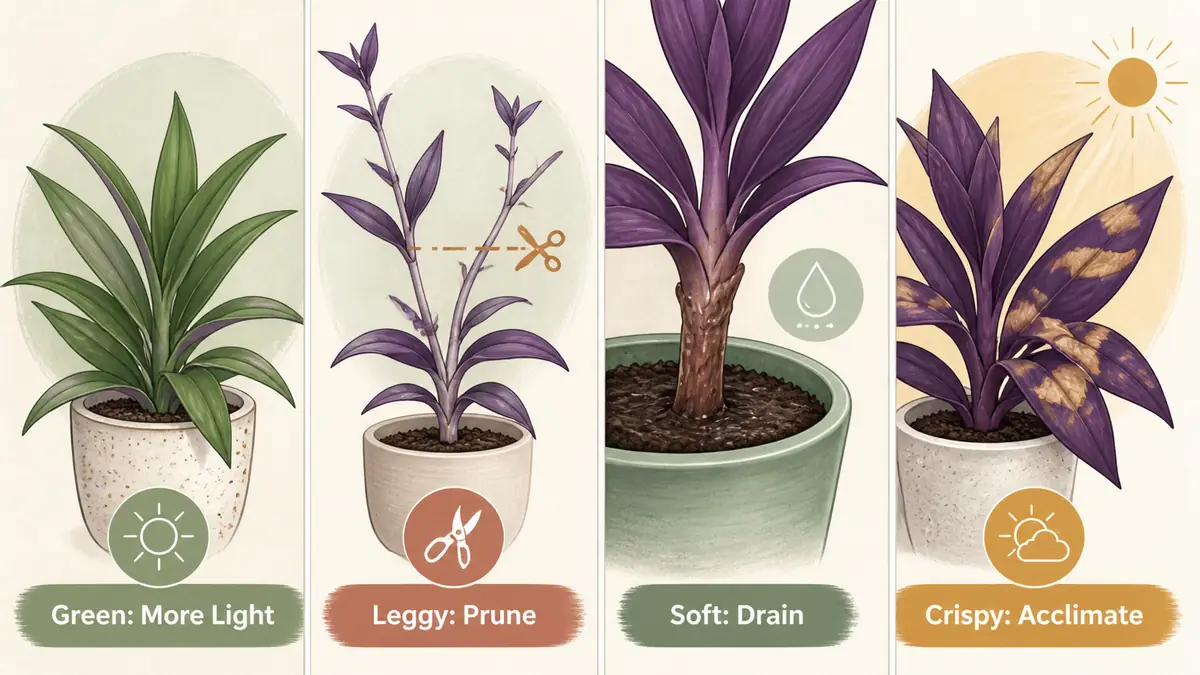
- Turning green: move brighter gradually and judge the newest growth. Use the purple heart turning green guide if color is your main issue.
- Leggy stems: prune above nodes and increase light. A hanging basket can trail, but it should not be thin and weak.
- Soft growth: check drainage, saucers, cachepots, and watering frequency before adding fertilizer.
- Crispy patches: reduce sudden hot sun and acclimate slowly, especially after moving outdoors.
- Bare base: prune hard in active growth and root fresh tips into the same pot.
Weekly and Seasonal Care Schedule
| Timing | What to do | Why it matters |
|---|---|---|
| Weekly in active growth | Check soil moisture, rotate the pot, and pinch awkward tips. | Keeps growth even and prevents long weak stems. |
| Monthly in spring and summer | Feed lightly if the plant is actively growing. | Supports new growth without forcing soft weak stems. |
| Spring | Repot only if roots or old soil make it necessary. | Fresh mix helps drainage and root health. |
| Summer | Use outdoor morning sun if you can acclimate safely. | Often improves purple color and compactness. |
| Fall | Bring containers in before cold nights. | Protects fleshy stems from cold stress. |
| Winter | Use your brightest indoor spot and water less often. | Lower light slows drying and growth. |
FAQ
- Is purple heart plant easy to care for?
- Yes. It is forgiving and fast-growing, but it needs enough light and regular pruning to stay compact and deeply purple.
- How often should I water purple heart?
- Water when the top soil has dried, then let the pot drain fully. Do not water on a fixed calendar if the soil is still wet.
- Can purple heart grow indoors?
- Yes, but indoor plants need the brightest spot you can give them. Low light usually makes the plant greener and leggier.
- Why is my purple heart plant turning green?
- The most common cause is not enough light. Improve light gradually and judge the new growth after a few weeks.
- Does purple heart like to be root bound?
- It can tolerate a snug pot, but it should not be trapped in exhausted soil or a root mass that dries instantly. Repot only one size larger when needed.
- Can I grow purple heart in a hanging basket?
- Yes. Hanging baskets suit the trailing stems, but pruning is still needed if you want a full top instead of long bare vines. See the purple heart hanging basket guide for basket setup.
- Should I mist purple heart?
- No. Misting is not necessary. Better light, drainage, and pruning matter more than humidity for this plant.
- How do I make purple heart bushier?
- Prune or pinch just above nodes during active growth, then give the plant enough light so the new shoots stay compact.