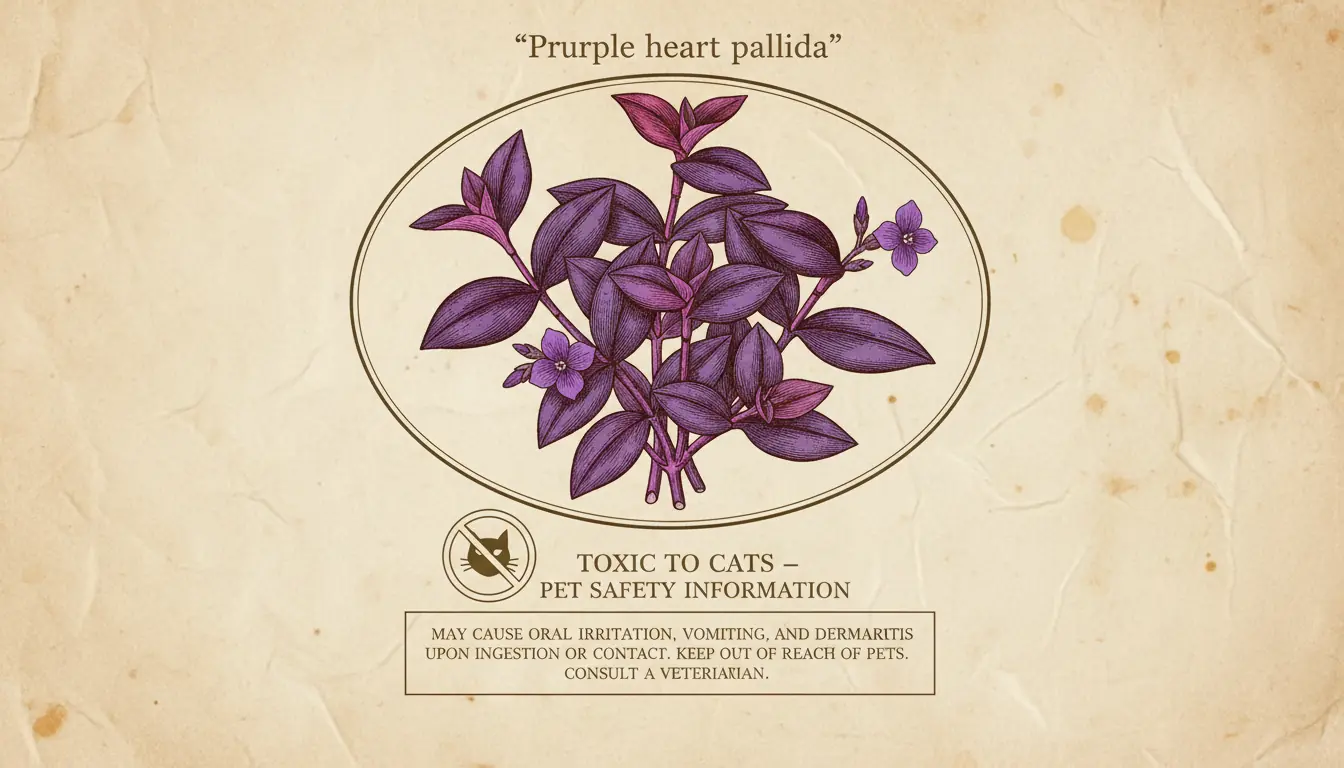
Yes, purple heart (Tradescantia pallida) is mildly toxic to cats. NC State Extension says eating it can irritate the mouth and stomach of pets and its sap can redden skin, and the ASPCA lists the closely related inch plant (Tradescantia fluminensis) as toxic to cats and dogs. Signs are usually mild, but call your vet if your cat chewed it.
NC State Extension rates the poison severity of Tradescantia pallida as low, and University of Wisconsin Extension notes that the juice from leaves or stems may cause skin redness and irritation in some people and dogs.
For a cat, the practical answer is simple: do not test it. If your cat has chewed purple heart and shows drooling, vomiting, pawing at the mouth, repeated swallowing, or unusual behavior, call your veterinarian or a pet poison helpline.
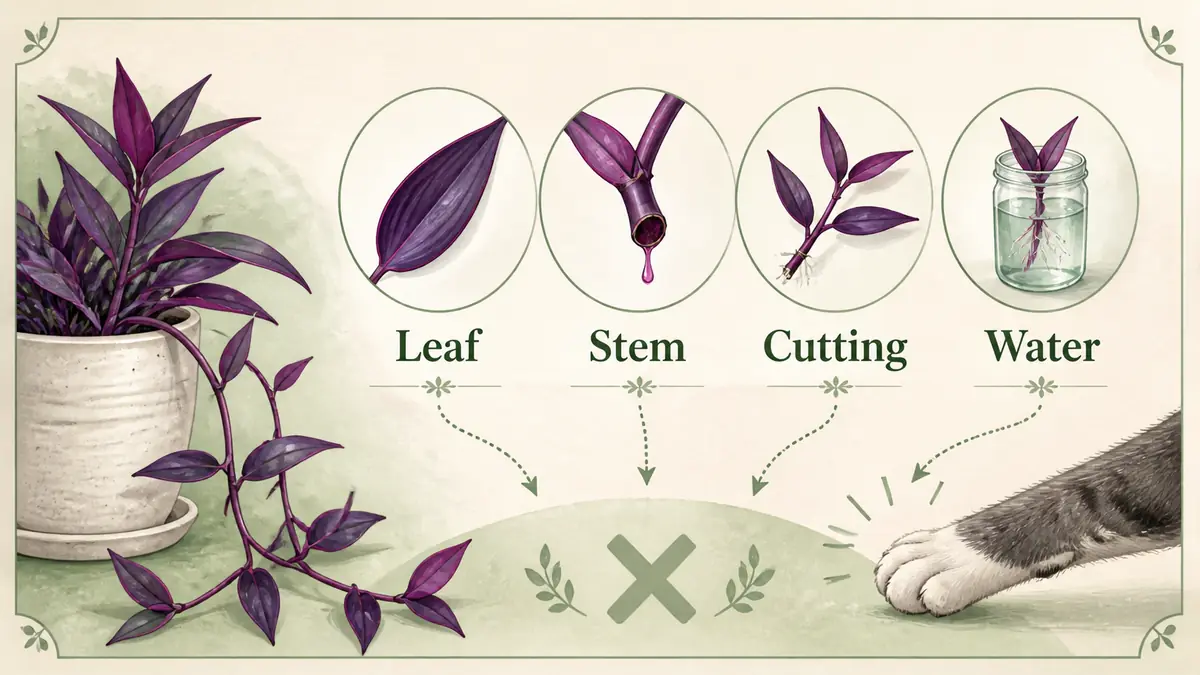
That makes this a placement and cleanup problem as much as a plant-identification problem. The trailing stems, broken leaves, and fresh cuttings are usually easier for a cat to reach than the pot itself.
Quick Safety Table
| Situation | Risk level | First action | When to call |
|---|---|---|---|
| Cat only sniffed the plant | Low | Move the plant higher and watch | If symptoms appear |
| Cat chewed a leaf or stem | Meaningful irritation risk | Remove plant pieces and rinse mouth area if safe | Call vet/poison helpline |
| Cat is drooling or vomiting | Higher concern | Do not wait for it to pass | Call promptly |
| Cuttings are on the floor | Preventable risk | Clean them up now | If any were chewed |
1. Know Why Purple Heart Is a Risk for Cats
Purple heart is not a plant to leave within reach of a chewing cat. The fleshy stems break easily, and the trailing habit puts leaves exactly where cats can bat or bite them.
The documented risk is irritation, not severe poisoning: NC State rates purple heart as a low-severity plant whose sap and plant material can irritate skin, mouth, and stomach.
Still, mild does not mean harmless. A cat with mouth irritation can drool, paw, gag, vomit, or refuse food. Small pets also vary in sensitivity.
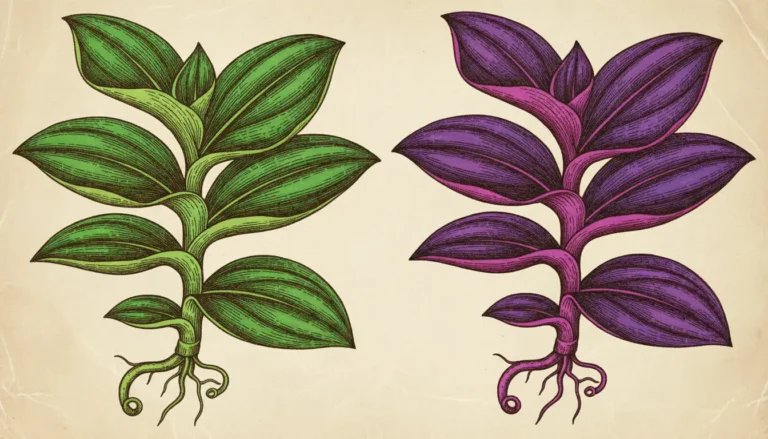
If you are not sure the plant is purple heart, compare the plant before making care decisions. Purple heart usually has lance-shaped purple leaves on fleshy trailing stems. If the plant looks different, identify it first because toxicity advice can change by species.
Do not rely on a common name alone. “Purple heart” should usually mean Tradescantia pallida, but stores and plant swaps sometimes label purple trailing plants loosely. A clear photo of the plant helps a vet or poison specialist give better advice.
2. Watch for Mouth, Drooling, and Stomach Symptoms
After chewing, watch the mouth first. Pawing at the mouth, lip licking, drooling, repeated swallowing, or gagging can point to irritation.
Vomiting, reduced appetite, or hiding can also happen after a cat eats plant material. These signs are not specific to purple heart, so do not diagnose at home if symptoms continue.
| Sign | What it may mean | What to do |
|---|---|---|
| Drooling or lip licking | Mouth irritation | Call for advice if it follows chewing |
| Vomiting | Plant material irritated the stomach or another issue is present | Call your vet, especially if repeated |
| Pawing at mouth | Oral discomfort | Remove plant access and call if it continues |
| Normal behavior | No obvious reaction yet | Monitor and prevent another bite |
Keep notes for the first few hours: when chewing happened, what part was eaten, whether the cat vomited, and whether drinking or eating changes. Those details are more useful than guessing a severity level from memory later.
3. Move the Plant Before You Test Your Cat
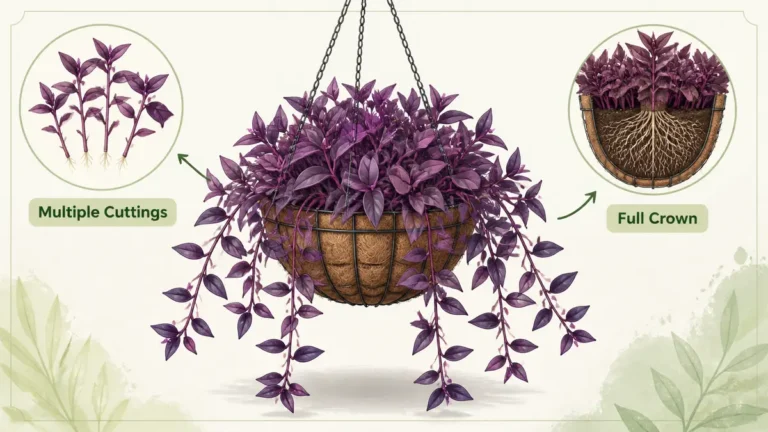
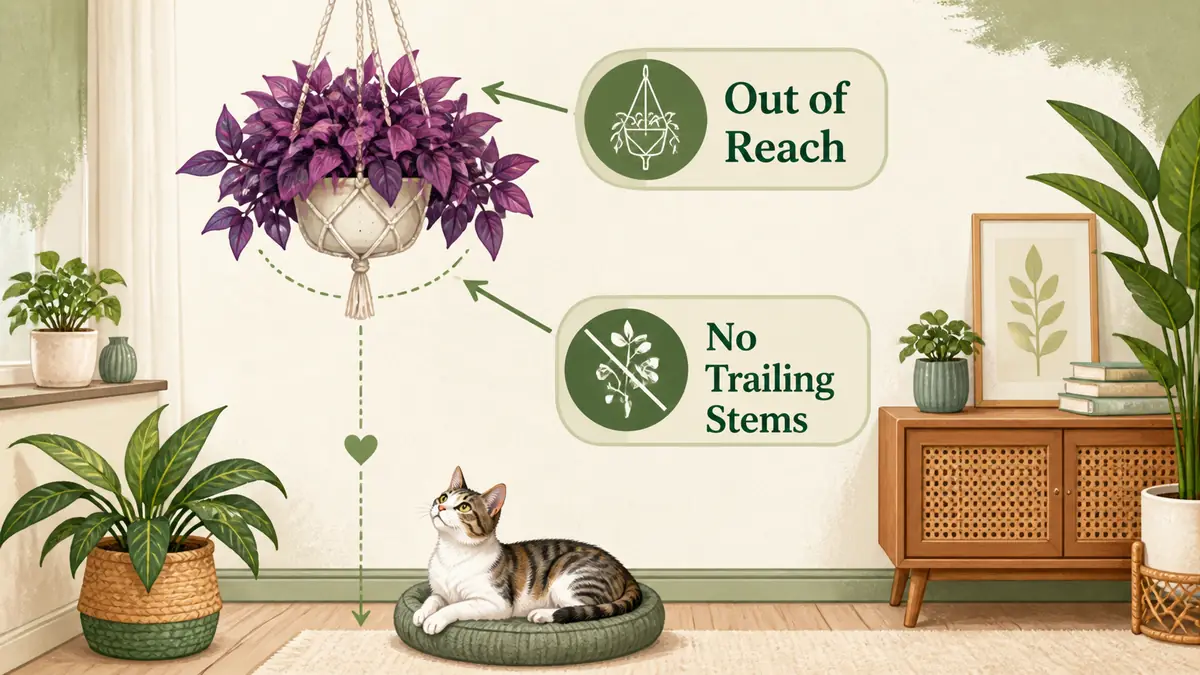
The best safety step is placement. Put purple heart in a room the cat cannot access, in a high hanging spot the cat truly cannot reach, or outside during warm safe weather.
Do not assume a shelf is safe if the stems trail down. Cats do not need to reach the pot; they only need to reach one dangling stem.
- Good placement: behind a closed door, outside in warm safe weather, or high enough that no stem trails within reach.
- Weak placement: open shelf, windowsill, low hanging basket, or plant stand near furniture.
- High-risk home: a cat that already chews spider plants, pothos, or grass-like leaves.
- Best decision: remove the plant from reachable rooms if chewing is a known habit.
Look at the room from the cat’s path, not from your standing height. A plant can seem out of reach until you notice the nearby chair, window ledge, bookcase, or trailing stem that creates a route.
If you want to keep purple heart for its color, use it in a controlled plant room, a closed office, or an outdoor warm-season container. Do not make it the low coffee-table plant in a cat home.
4. Clean Up Cuttings, Pruned Stems, and Water
Pruning creates the most common avoidable exposure. Pick up every cutting, broken leaf, and rooted stem section before the cat notices them.
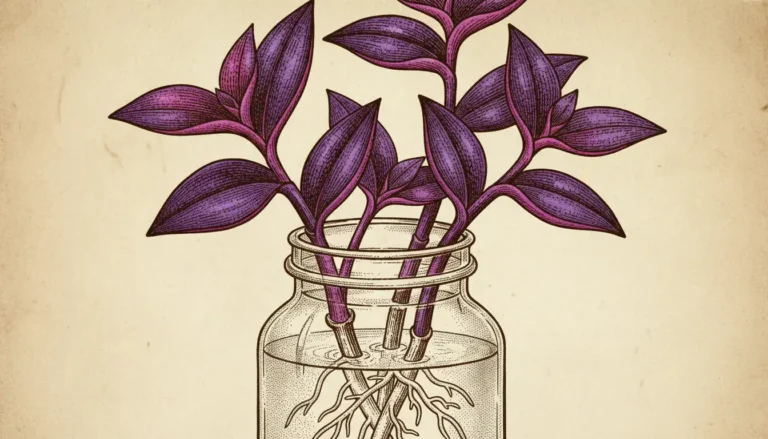
If you propagate in water, keep the jar behind a closed door. A cat can knock it over, drink from it, or pull out the cutting.
Make cleanup part of the pruning routine. Put cuttings directly into a propagation jar or the trash, then wipe the surface where sap touched. If you have sensitive skin, gloves are sensible because the sap can irritate some people too.
Propagation jars deserve the same rules as the main plant. Keep them behind a closed door, label them if other people care for the home, and do not leave fresh stems on counters where a cat jumps.
5. Call a Vet or Poison Helpline if Symptoms Appear
If your cat chewed the plant and seems normal, call your vet for case-specific advice. If symptoms are visible, call promptly instead of searching for home remedies.
If your cat or dog chewed it: remove any plant pieces from the mouth only if you can do so safely, offer fresh water, and call your veterinarian. For advice any time in the US, contact the ASPCA Animal Poison Control Center at (888) 426-4435 or Pet Poison Helpline at (855) 764-7661 (a consultation fee may apply). Go to an emergency veterinary hospital right away for trouble breathing, swelling of the face or tongue, repeated vomiting, or collapse.
Do not force vomiting unless a veterinarian tells you to. Do not give oils, milk, salt, or internet remedies. Tell the vet the plant name, the amount you think was eaten, and when it happened.
Take a photo of the plant and save a small sample out of reach if identification is uncertain. Useful details for the call include the cat’s weight, the time of chewing, the plant part eaten, and any symptoms you have seen.
| Before the call | Why it helps |
|---|---|
| Photo of the whole plant and close-up leaf | Helps confirm identification |
| Estimated amount eaten | Helps the vet judge exposure |
| Time since chewing | Changes monitoring advice |
| Current symptoms | Separates watchful waiting from urgent care |
Safer Choices for Pet Homes
If your cat chews plants often, choose a different display plant for reachable areas. Keep purple heart only where access is controlled, or use a non-chewing household zone for purple plants.
If you keep it, use the purple heart plant care guide for normal care and the indoor purple heart guide for safer indoor placement decisions.
Dogs and children deserve the same common-sense placement. The practical household rule is the same for every pet and child: do not leave irritating plant material where curious mouths can reach it.
For propagation, safety is even easier to forget because cuttings look harmless. Keep jars, loose stems, and fresh prunings away from pets until they are rooted, planted, or discarded.
The best pet-home system is simple: reachable plants must be pet-appropriate, and risky plants must be truly unreachable. Anything in between depends on perfect behavior from a curious animal, which is not a reliable safety plan.
What I Would Do in a Cat Home
If the cat has never chewed plants, I would still keep purple heart above reach and trim trails before they become tempting. If the cat has chewed any houseplant before, I would keep purple heart out of shared rooms.
If you love the plant and cannot create a safe spot, grow it outdoors during warm weather or give cuttings to a no-pet household. The plant is easy to replace; a preventable exposure is not worth the display.
More Pet-Safety Plant Guides
Comparing plants for a home with pets? These guides cover the same question for other common houseplants.
FAQ
- Is purple heart plant toxic to cats?
- Yes, it is mildly toxic. NC State Extension notes that eating purple heart can irritate a pet’s mouth and stomach and that its sap can irritate skin, and the ASPCA lists the related inch plant (Tradescantia fluminensis) as toxic to cats and dogs with dermatitis as the listed sign. Cases are usually mild, but call a vet if your cat chewed it.
- Is purple heart toxic to dogs?
- Yes, treat it the same way. NC State Extension’s mouth and stomach warning applies to pets generally, the ASPCA lists the related inch plant as toxic to dogs, and University of Wisconsin Extension notes the juice may irritate the skin of some people and dogs. Keep it out of reach and call a vet if your dog chews it.
- What should I do if my cat eats purple heart?
- Remove the plant, check for mouth or stomach symptoms, and call your veterinarian or a pet poison helpline for advice.
- Can purple heart irritate skin?
- Yes. Wisconsin Extension notes the juice from leaves or stems may cause skin redness and irritation in some people and dogs.
- Are purple heart cuttings risky too?
- Yes. Fresh cuttings contain the same plant material and should be kept away from pets.
- Should I keep purple heart if I have cats?
- Only if you can keep it completely out of reach. If your cat chews plants, choose a safer reachable plant.