Purple heart plant propagation is easiest from stem cuttings. Take a healthy tip with nodes, remove the lower leaves, and root it in water, soil, or directly back into the mother pot.
Transparency note: Some links in this article are affiliate links. As an Amazon Associate I earn from qualifying purchases at no extra cost to you. Products are included only when they fit the care problem being discussed.
Wisconsin Extension says purple heart is easily propagated from cuttings and that a node can root in soil or water. That is why this plant is so useful when an older pot gets leggy: you can rebuild it from the healthy tips.
The reader value here is choosing the right method for your situation. Water is easiest to watch, soil makes a stronger transition, and division only makes sense when you already have a large rooted clump.
Before you cut, decide what problem you are solving. If you want to save a stretched indoor plant, take the best purple tips and improve the light. If you want a fuller pot, root several short cuttings and plant them close together. If you only want one backup plant, two or three cuttings are enough.
Do not propagate from the weakest part of the plant just because it is the part you want to remove. The cutting carries the quality of the stem you choose. Firm tips with clear nodes root more reliably than thin, pale, water-stressed growth.
Quick Method Picker
| Method | Best for | What to watch | Go to |
|---|---|---|---|
| Water cuttings | Beginners who want to see roots | Do not keep leaves underwater | Water method |
| Soil cuttings | Fuller pots and fewer transplant stalls | Keep mix lightly moist, not soggy | Soil method |
| Division or replanting | Large outdoor clumps or crowded pots | Keep rooted pieces warm and drained | Division |
Looking to buy a healthy live plant online?

1-YEAR WARRANTY
Get a nursery-quality, well-rooted live Tradescantia Zebrina Wandering Dude shipped directly to your door. Backed by a best-in-class plant warranty so you can shop with confidence.
1. Choose Healthy Stems With Real Nodes
A good cutting has a firm stem, several healthy leaves, and at least one node that can sit below water or soil. Skip mushy, cold-damaged, or very pale green stems if you have better purple tips available.
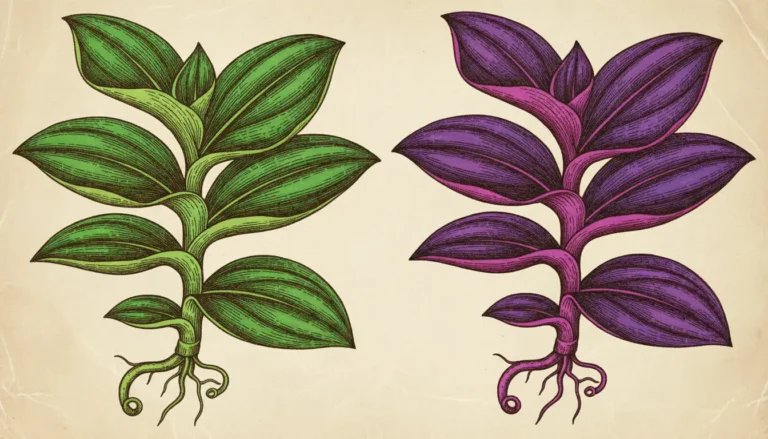
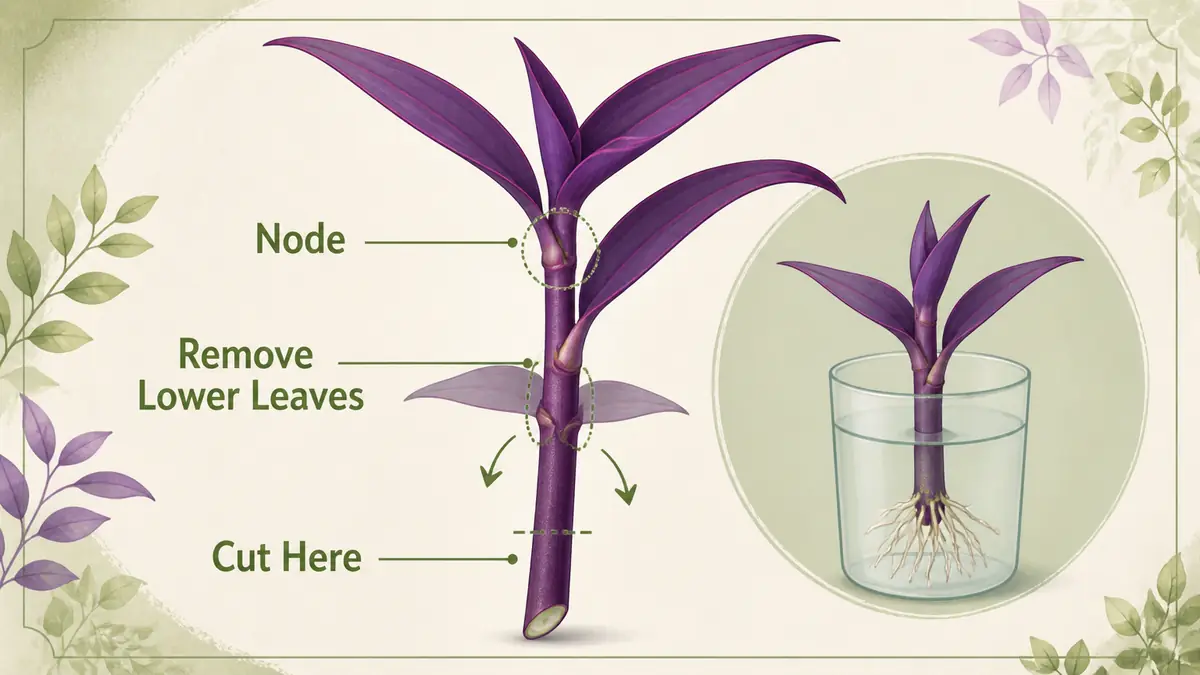
Cuttings root from nodes, not from a random bare stem section. Look for the small joint where a leaf attaches. Cut about 1/4 to 1/2 inch below that point so the node is easy to place into water or mix.
Use clean snips because purple heart stems are fleshy. A crushed cutting can rot before roots start.
| Cutting choice | Use it? | Why |
|---|---|---|
| Firm purple tip with 2-4 nodes | Best choice | Enough nodes for roots and new growth |
| Long green stretched stem | Only if no better tips exist | It may root, but it does not fix the light issue |
| Soft or blackened stem | No | Rot risk is already high |
| Fresh pruning tip | Yes | Best way to reuse routine pruning |
Remove leaves from the lower node before rooting. Leaves underwater or buried in wet mix break down quickly and can rot the cutting from the base.
If you are taking cuttings from a long trailing stem, do not make one very long cutting. Make several shorter cuttings instead. Each cutting should have its own node below the water or soil and enough leaf surface above it to keep growing.
| Goal | Cutting count | Best length | Best timing |
|---|---|---|---|
| One backup plant | 2-3 cuttings | 3-5 inches | Any warm bright week |
| Fuller small pot | 4-6 cuttings | 3-4 inches | After a pruning session |
| Rebuild a leggy pot | 6-10 cuttings | Short healthy tips | Spring or summer is easiest |
| Save a weak plant | Only the firmest tips | Whatever healthy growth remains | Before stems turn soft |
You can use any clean sharp scissors. Dedicated snips are useful if you propagate often because they make cleaner cuts on fleshy stems.
Sharp, spring-loaded, and precise. Makes clean cuts that heal fast — essential for propagating without crushing the stem.
2. Method 1: Root Stem Cuttings in Water
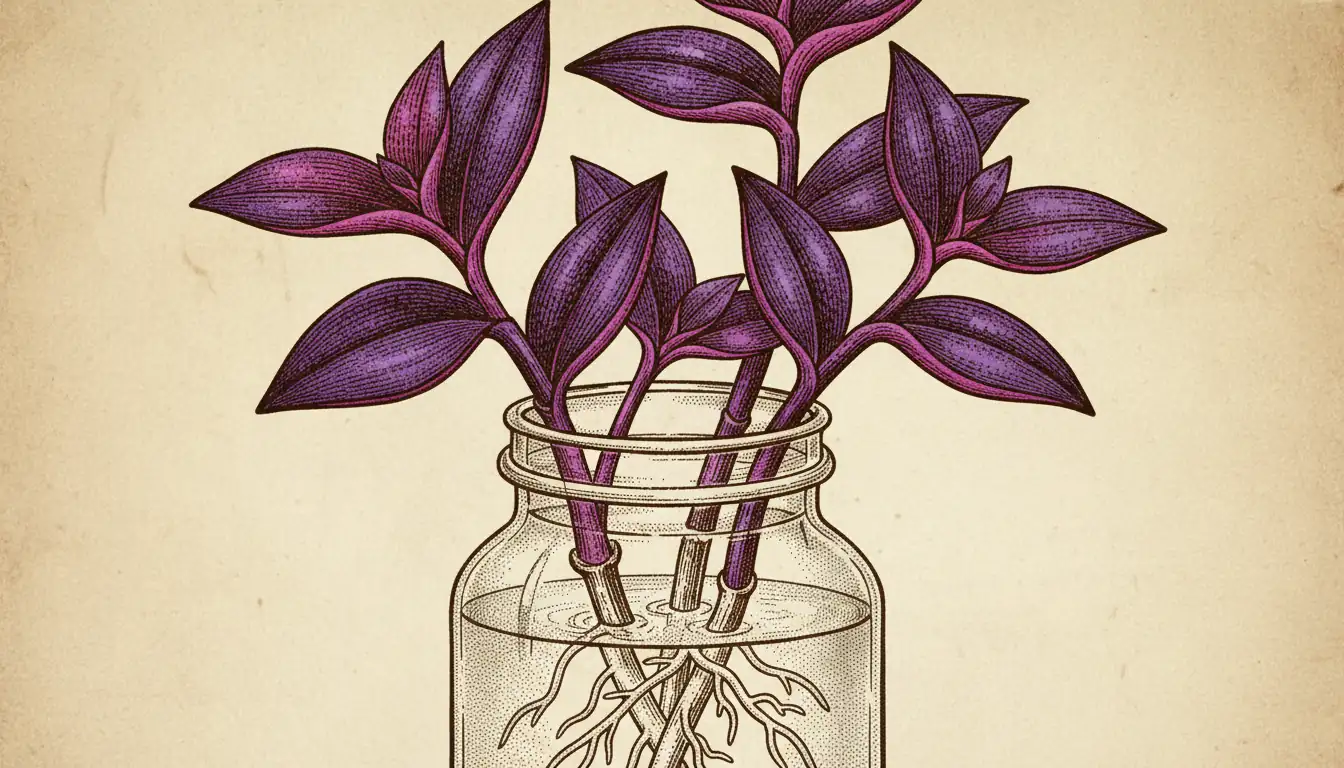
Water propagation is the easiest method to monitor. Place the lower node in a clean jar of room-temperature water and keep the leaves above the water line.
- Cut a 3-5 inch healthy tip.
- Remove the lower leaves from the part that will sit in water.
- Submerge one or two nodes, not the leaves.
- Place the jar in bright indirect light.
- Change water every few days or when it looks cloudy.
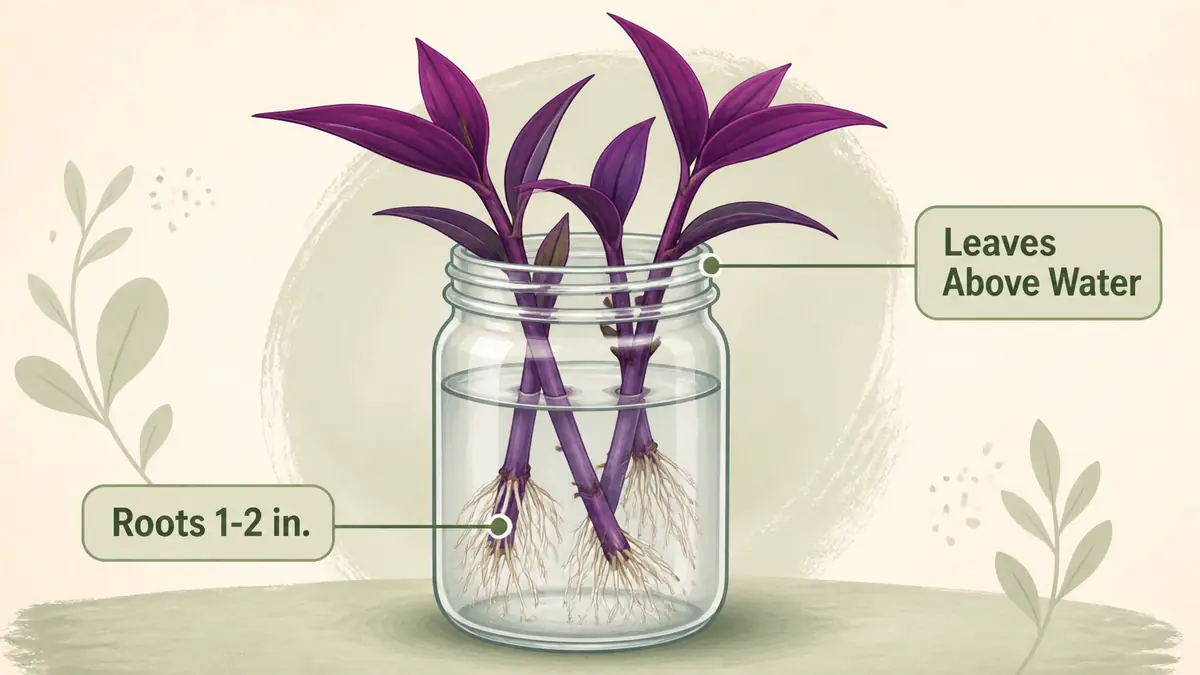
Wait until roots are about 1-2 inches long before potting. Tiny roots can work, but they break easily. Very long water roots can tangle and struggle when moved into soil.
When you move a water-rooted cutting into soil, keep the mix lightly moist for the first week. The cutting has to switch from water roots to soil life. If you pot it into bone-dry mix and forget it, the new roots can shrivel before they adapt.
Use a small pot for the first planting. A big pot holds too much wet mix around a tiny root system. Several cuttings in one small pot usually look better than one cutting alone in a large pot.
After potting water-rooted cuttings, do not tug on them to check progress. New roots are fragile. Judge success by firm stems and new tip growth over the next one to three weeks.
3. Method 2: Root Cuttings Directly in Soil
Soil propagation is better when your goal is a fuller pot. Instead of rooting cuttings separately, you can place several tips around the mother plant and let them fill the top.
- Fill a small pot with light, barely moist potting mix.
- Make holes first so the stems are not scraped.
- Insert one or two nodes below the mix.
- Firm gently around the stem.
- Keep bright, warm, and lightly moist until new growth appears.
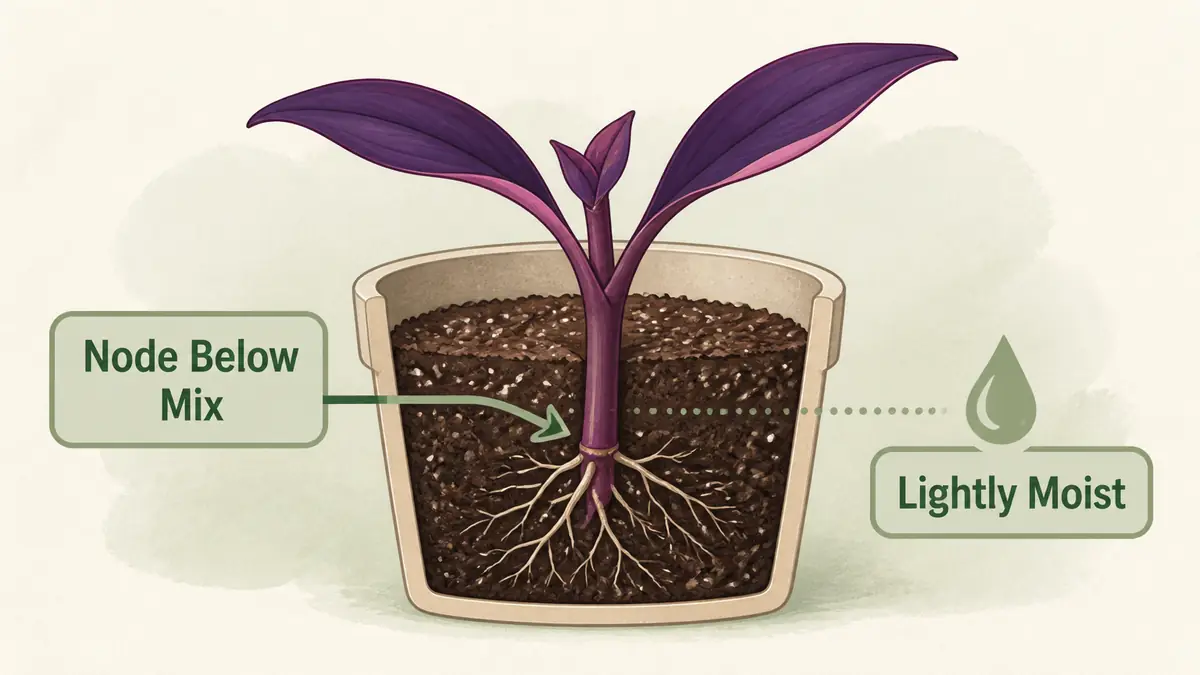
The mix should feel like a wrung-out sponge, not wet mud. If the stem turns black or collapses, the cutting was too wet, too cold, or damaged at the cut.
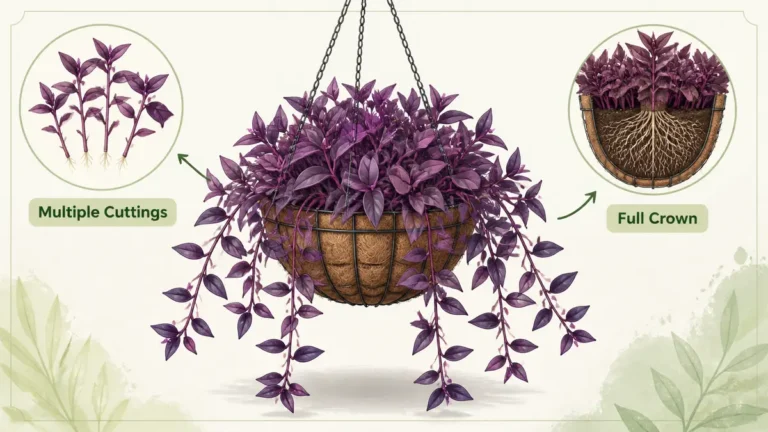
For a fuller pot, place three to seven cuttings around the crown depending on pot size. Space them far enough apart that leaves are not stacked on top of each other, but close enough that new growth fills gaps.
Direct soil propagation is also the best method after pruning a hanging basket. You can insert healthy tips into the top of the basket so the plant becomes fuller instead of shorter.
If you are filling gaps in the mother pot, water the pot first, then make the holes and insert the cuttings. Dry crusty mix can scrape the stem, while soaked heavy mix can seal around it with too little air.
4. Method 3: Divide or Replant Rooted Sections
Division is less common indoors, but it works when a pot has multiple rooted stems or an outdoor planting has spread. Lift a rooted section with its own stems and roots, then replant it at the same depth.
Do not divide a weak single-stem houseplant. Take cuttings instead. Division is for plants that already have rooted growth to spare.
After replanting, give bright light without harsh shock and keep the root zone just lightly moist while the section settles.
If a divided section wilts for the first day, do not drown it. Check that the mix is lightly moist, keep it warm, and protect it from harsh sun while roots reconnect with the new pot.
Outdoor rooted pieces may look tougher than indoor cuttings, but the same rule applies: keep the original root zone intact when possible. The more roots you keep attached, the faster the section resumes growth.
5. Fix Common Purple Heart Propagation Problems
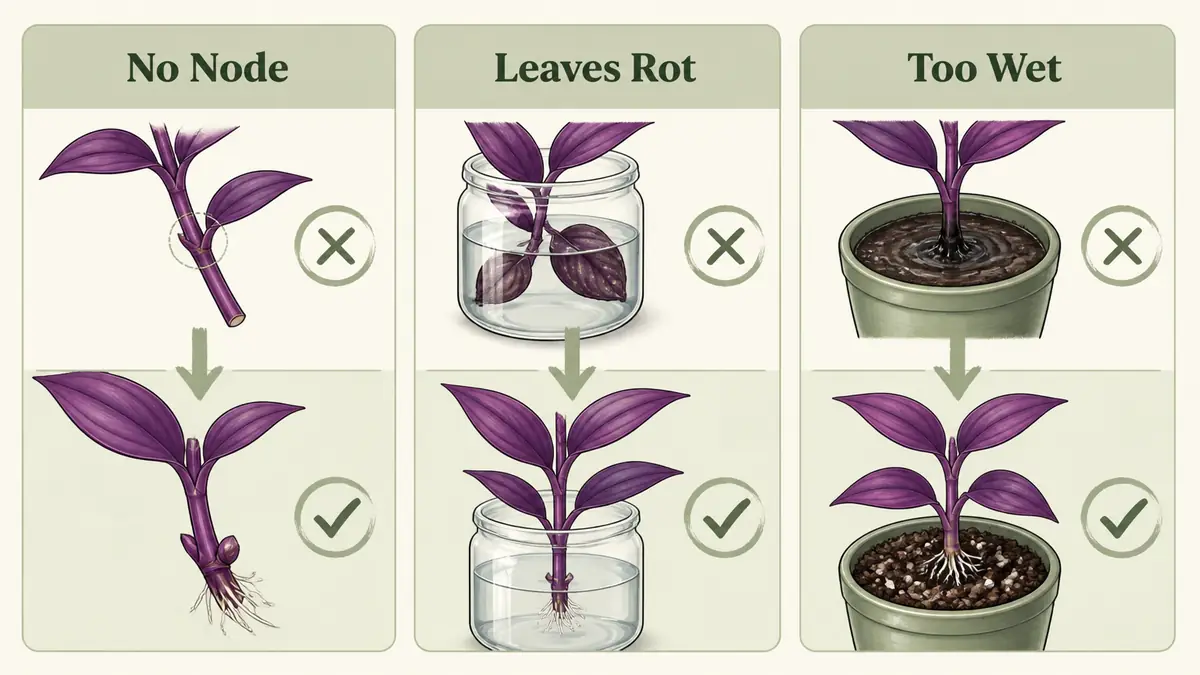
Most failures come from three causes: no node below the surface, leaves rotting in water, or soil that stays too wet. The fix is usually simple once you match the symptom.
| Problem | Likely cause | Fix |
|---|---|---|
| Cutting wilts the same day | Too much leaf surface or hot sun | Move to bright indirect light and remove lower leaves |
| Stem turns black | Wet, cold, or crushed cutting | Take a fresh cutting with clean snips |
| No roots after two weeks | Cool room or weak light | Move warmer and brighter, not into harsh sun |
| Roots grew but plant stalls after potting | Water roots shocked by dry soil | Keep mix lightly moist for the first week |
If you propagate in winter and cuttings sit still for weeks, warmth is often the missing piece. Bottom heat is optional, but it can help slow cuttings root more consistently.
Purple heart usually roots without extras. Bottom heat is only worth considering when winter rooms are cool and cuttings keep stalling.
Bottom heat speeds up rooting significantly, especially in winter. Keeps the root zone at the ideal 75–85°F without heating the whole room.
Do not make more weak plants
If the mother plant is green because it sits in low light, every new cutting needs a better light plan. Propagation creates more plants, but it does not solve the original placement problem.
When to start over
If more than half the cuttings have black bases, cloudy water, or limp leaves, discard the failed pieces and restart with fresher tips. Trying to rescue rotting cuttings usually wastes more time than taking clean new ones.
6. Aftercare for Rooted Cuttings
New cuttings need bright light right away, but they do not need heavy fertilizer. Give them a week or two to settle, then treat them like a small version of the main plant.
Pinch the first long tips once the cuttings start growing. That early pruning creates a fuller pot instead of a few long vines.
For the first month, keep the goal simple: steady light, modest moisture, and no constant handling. Once the cuttings produce new leaves, you can start shaping them like the parent plant.
Do not fertilize immediately after potting small cuttings. Wait until you see new growth, then feed lightly during active growth if the plant has enough light to use it.
Keep pets away from fresh cuttings and propagation jars. The purple heart toxic to cats guide explains why loose stems and cuttings matter in pet homes.
For the full routine after rooting, use the purple heart plant care guide. If your cuttings keep turning green indoors, check the purple heart turning green guide before blaming propagation. If the new pot will live inside year-round, use the indoor purple heart plant guide for light placement.
FAQ
- Can purple heart root in water?
- Yes. Place at least one node below the water line and keep leaves above the water.
- How long do purple heart cuttings take to root?
- In warm bright conditions, roots often appear in one to three weeks. Cool rooms can take longer.
- Can I put purple heart cuttings straight into soil?
- Yes. Soil cuttings work well if the mix is light and only lightly moist.
- Where do I cut a purple heart plant for propagation?
- Cut just below a node on a healthy tip. The node is the part that needs contact with water or soil.
- Should I use rooting hormone on purple heart?
- It is optional. Purple heart roots easily, so warmth, nodes, and clean cuts matter more.