An indoor purple heart plant can stay purple, but only if the light is stronger than a typical room corner. Treat it like a bright-window plant, then use pruning and watering to keep it compact.
Transparency note: Some links in this article are affiliate links. As an Amazon Associate I earn from qualifying purchases at no extra cost to you. Products are included only when they fit the care problem being discussed.
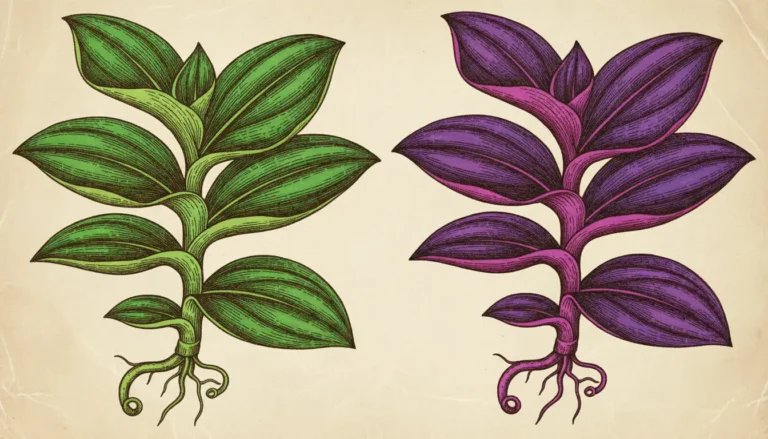
The indoor mistake is simple: the plant survives in lower light, so it looks fine for a while, then slowly turns greener and longer. Wisconsin Extension notes that shade makes purple heart greener than sun-grown plants. Striped wandering jew fades the same way, so compare its Tradescantia light requirements if you grow both.
This indoor guide stays focused on houseplant conditions. For the full outdoor and seasonal routine, use the main purple heart plant care guide.
The main indoor decision is whether your window can carry the plant without help. If new growth is compact and purple, keep the setup. If new growth is green and stretched, change the light before you change fertilizer, pot size, or humidity.
Think of indoor care as a loop: place it bright, water only after the pot starts drying, prune before stems get bare, then rotate the plant so every side gets usable light.
Indoor Placement Snapshot
| Indoor setup | Best use | Distance target | Risk |
|---|---|---|---|
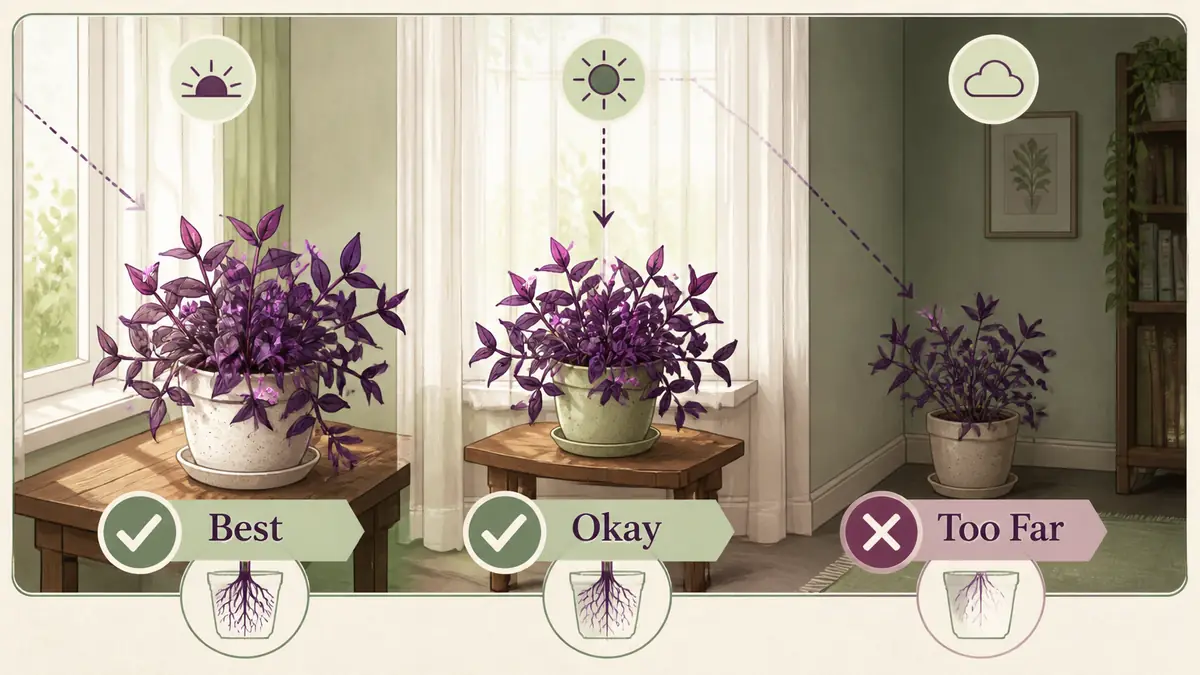
| East window | Easy morning light | Within 1-2 feet | Usually low risk |
| South or west window | Strongest natural light | 1-4 feet depending on heat | Can scorch against hot glass |
| Grow light bulb | Dark rooms or winter | 8-14 inches above foliage | Too weak if placed far away |
| Plant shelf strip light | Several small pots | 6-10 inches above foliage | Needs enough daily hours |
1. Put It in the Brightest Safe Window
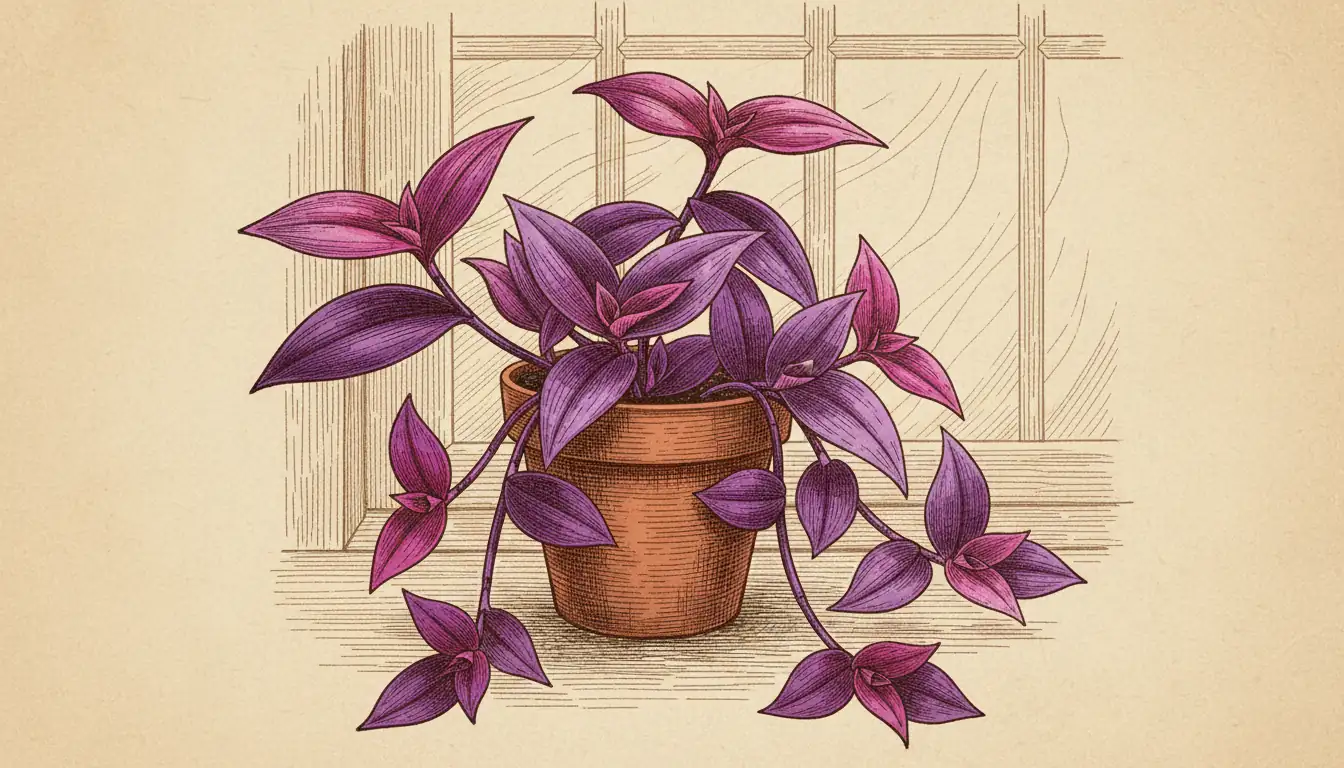
Indoor purple heart needs a real light position, not just a visible place. Start near an east window or a bright south or west window, then watch new growth.
If new stems are short and purple, the placement is working. If new stems are pale, green, and stretched, the plant is too far from usable light.
Keep leaves from touching hot glass. A few inches of air gap can prevent scorch while still giving strong light.
- Good indoor sign: new leaves are smaller, tighter, and purple.
- Weak indoor sign: long gaps form between leaves.
- Too much sudden sun: tan crispy patches appear on exposed leaves.
- Simple fix: move closer in stages and rotate weekly.
Measure the plant response, not the room. A living room can feel bright while the plant shelf receives weak light after curtains, screens, and distance from the glass.
A practical test is to photograph the same stem once a week from the same angle. If the new spaces between leaves are getting longer, the plant is still reaching. If the tips stay tighter and darker, the placement is improving.
Looking to buy a healthy live plant online?

1-YEAR WARRANTY
Get a nursery-quality, well-rooted live Tradescantia Zebrina Wandering Dude shipped directly to your door. Backed by a best-in-class plant warranty so you can shop with confidence.
2. Use a Grow Light When Windows Are Too Weak
A grow light is useful when every window produces green stretched growth. Use it as a placement fix, not as decoration.
For a strong bulb, start 8-14 inches above the top of the plant for 10-12 hours a day. For shelf strips, start 6-10 inches above the foliage. Raise the light if leaves bleach or curl upward.
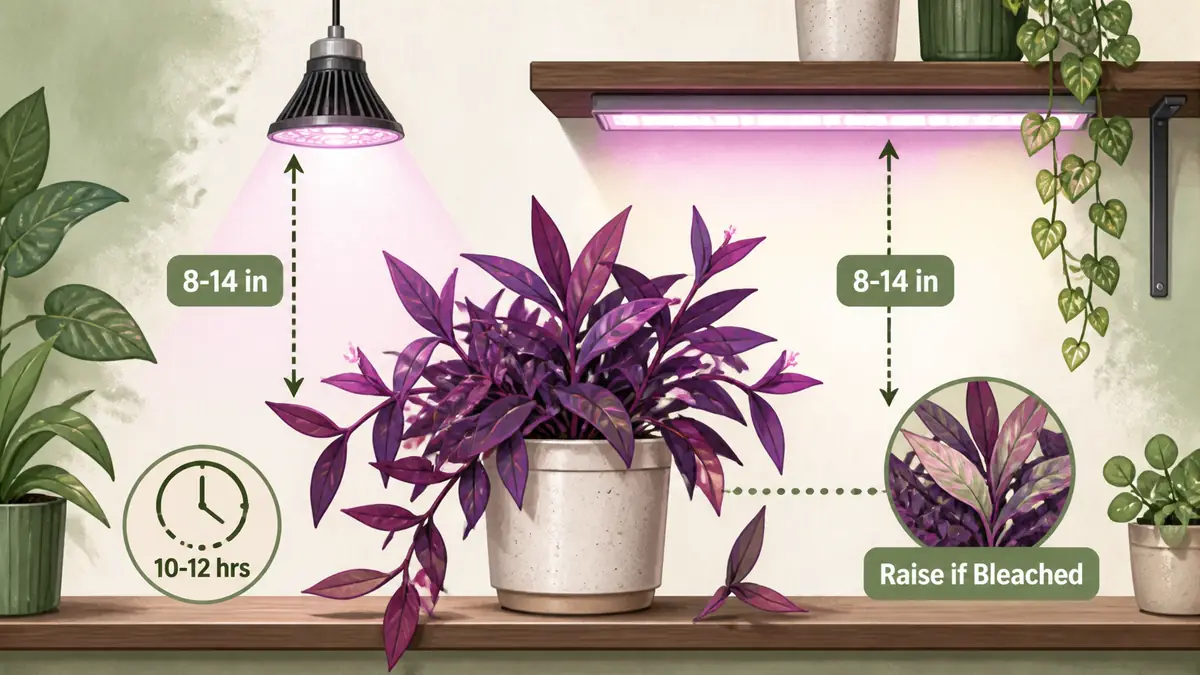
If the best window still gives weak green growth, a stronger grow bulb is the most direct fix.
Fits a standard lamp but delivers intense, full-spectrum light. Powerful enough for large floor plants in dark corners.
A grow light should change the way the plant grows. If stems are still long after three to four weeks, the light is probably too weak, too far away, or running for too few hours.
Do not leave a grow light on all day and night. Purple heart still benefits from a normal dark period. A simple timer is often better than trying to remember the schedule manually.
| Grow-light result | Likely meaning | Next move |
|---|---|---|
| New growth still green | Light too weak or too far away | Lower the light a few inches or extend to 12 hours |
| Leaves bleach or curl upward | Light too close or too intense | Raise the light and watch new leaves |
| One side is purple | Uneven exposure | Rotate the pot weekly |
| Plant dries much faster | More light increased water use | Check soil more often, not on autopilot |
3. Water Less Often Than Outdoor Plants
Indoor pots dry more slowly than outdoor baskets in sun and wind. Water deeply, then wait until the top inch or two of soil dries before watering again.
Do not let the nursery pot sit inside runoff. Cachepots hide water, and purple heart roots can stay wet long after the top looks dry.
Use pot weight as a cue. A dry pot feels noticeably lighter. A heavy pot with soft stems is telling you to wait.
| Indoor season | Watering cue | Common mistake |
|---|---|---|
| Spring/summer | Top soil dries faster and growth is active | Letting the pot dry bone-dry every time |
| Fall/winter | Pot stays heavy longer | Keeping the summer schedule |
| Under grow lights | Drying depends on light distance and room heat | Watering before checking the mix |
If you are unsure, wait one more day and check again. Purple heart is more forgiving of slight dryness than a pot that never gets air back into the root zone.
Do not use a fixed weekly schedule unless your room is extremely consistent. A plant under a bright grow light can dry twice as fast as the same plant in a cool window.
4. Prune Every Two to Four Weeks for Bushiness
Indoors, purple heart often trails before it branches. Pinch or prune the longest tips every two to four weeks during active growth.
Cut above a node and rotate the pot after pruning. That gives new side shoots better light and keeps one side from stretching toward the window.
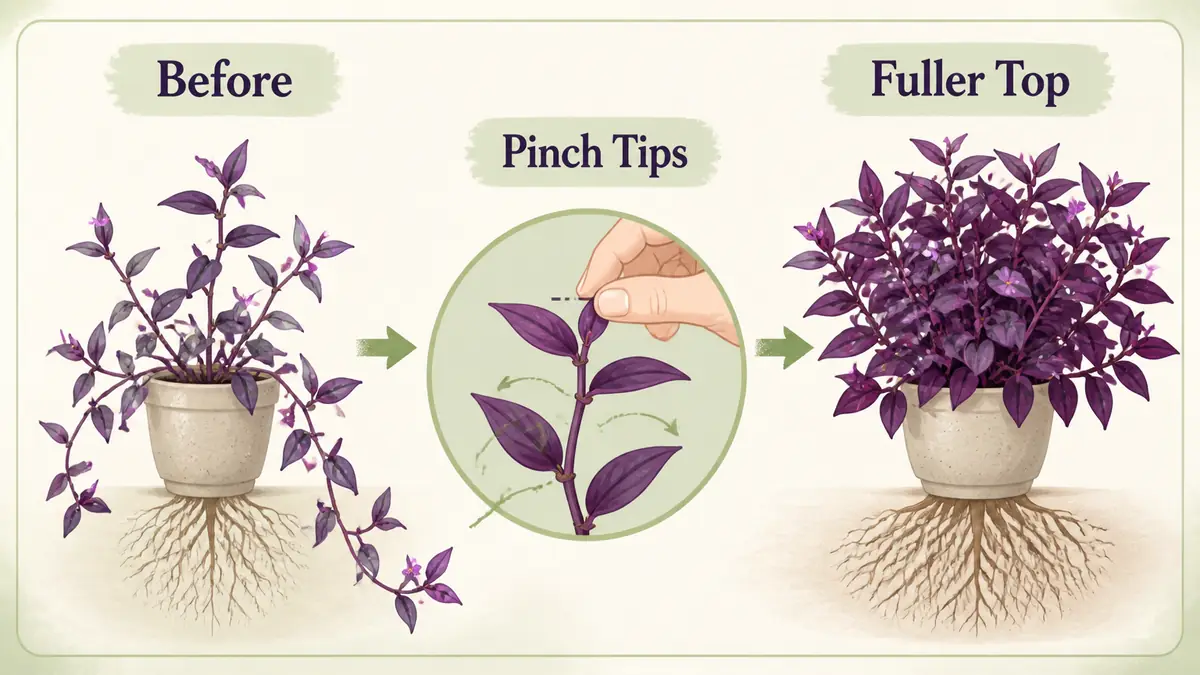
Do not wait until every stem is bare. Indoor purple heart looks best when pruning is maintenance, not emergency repair. A few small cuts every month are easier on the plant than one hard reset after the pot is already thin.
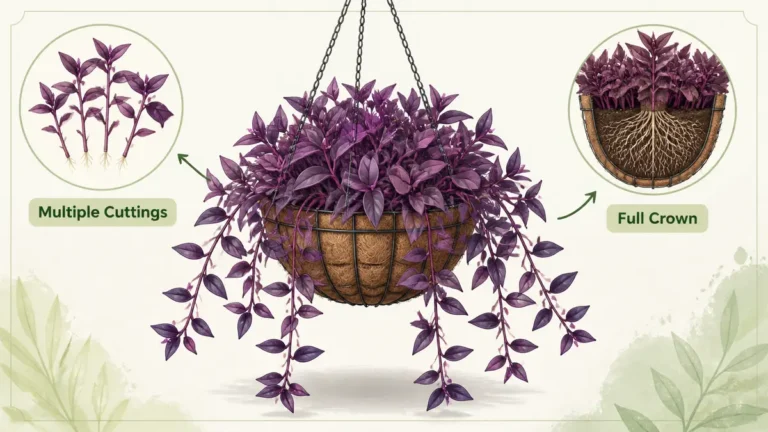
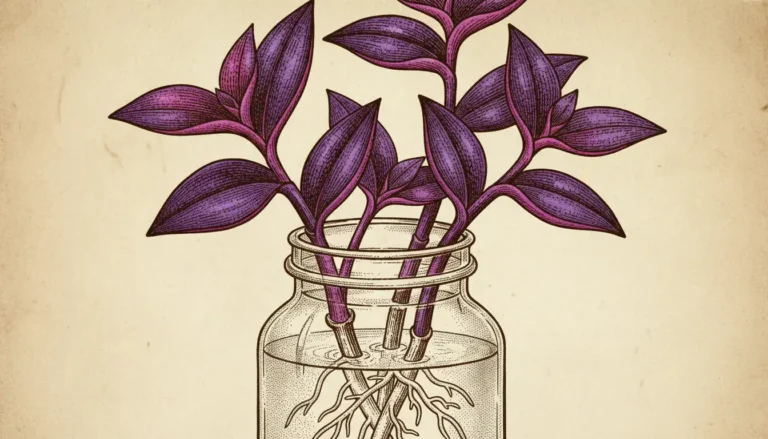
Root the best purple tips if you want a fuller pot. Place rooted cuttings back into empty spaces at the top so the plant fills from the crown instead of only trailing from the edge.
If the plant is already bare at the top, prune in stages. Cut the worst stems first, root the best tips, and add them back to the pot. Once new growth starts, shorten the remaining long stems.
5. Keep the Soil Light and the Pot Drained
Use a loose indoor potting mix with extra perlite or pumice if your mix stays wet. A drainage hole matters more than a pretty outer pot.
If the plant dries instantly, roots may be crowded or the mix may be old. Repot one size larger in spring, then prune to rebuild the shape.
If your indoor pot stays wet for days, perlite is a simple mix-in before you replace the whole setup.
The cheapest upgrade you can make to any potting mix. A handful per pot dramatically improves drainage and aeration.
Repotting is not a color fix. A bigger pot will not make a green plant purple if the light is weak. Repot only when roots or old soil are causing a real water problem.
Use the smallest pot that comfortably holds the roots. Oversized pots stay wet too long indoors, especially when the plant is not yet growing strongly.
6. Watch for Indoor Pests and Sticky Growth
Purple heart has few serious pest problems, but Wisconsin Extension notes scale and mealybugs can occur. Check the leaf joints and undersides when growth looks sticky, dusty, or distorted.
Isolate the plant if you see pests. Wipe small patches first and avoid heavy spraying in poor air movement unless the label supports indoor use.
Check pests during pruning, because your hands are already on the stems. Look where leaves wrap around stems and where new tips cluster. Catching a small patch early is much easier than treating a whole trailing plant later.
Sticky residue, white cottony patches, or raised brown bumps are signs to pause propagation and isolate the plant. Do not spread cuttings from a pesty plant into clean pots.
7. Move It Outdoors and Back Indoors Gradually
Outdoor summer light can improve color, but move the plant gradually. Start with bright shade or morning sun before stronger exposure.
Bring containers back before cold nights. Purple heart is a warm-climate tender plant, and cold stress can collapse fleshy stems quickly.
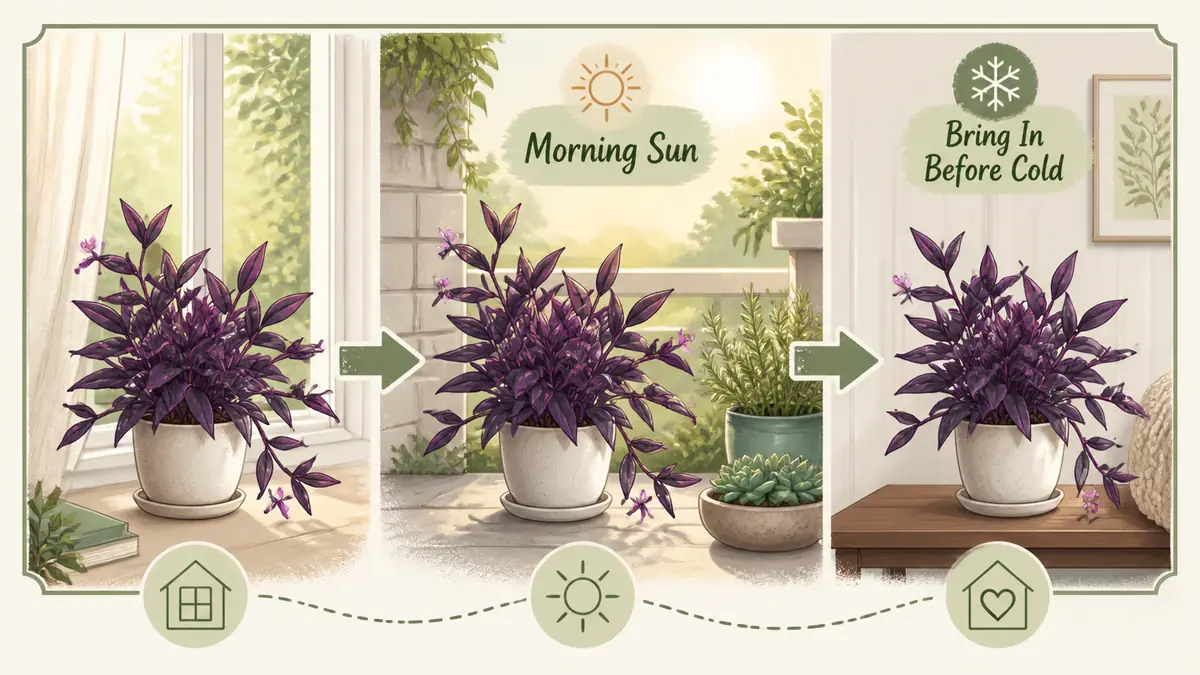
Before bringing the plant back indoors, inspect stems and leaf joints. Outdoor time can improve color, but you do not want to carry pests back onto a plant shelf.
Simple Monthly Indoor Routine
Once the setup is working, keep the routine boring. Check light response weekly, water only after checking soil and pot weight, prune the longest stems every two to four weeks, and inspect pests during pruning.
Every month, ask one question: is the newest growth better than the oldest growth? If yes, stay consistent. If no, adjust light first, then watering, then pruning.
If the plant is improving but still not perfect, do not change everything at once. Move it slightly brighter, wait for new growth, then decide whether pruning or watering needs the next adjustment.
If indoor color is your main issue, use the purple heart turning green guide. If pruning creates healthy tips, root them with the propagation guide. If pets can reach trailing stems indoors, read the purple heart toxic to cats guide before choosing a shelf or hanging spot.
FAQ
- Can purple heart plant grow indoors?
- Yes. It grows indoors if it gets very bright light and a pot that drains well.
- Why is my indoor purple heart plant green?
- The usual cause is weak light. Move it closer to a bright window or add a grow light and judge the new growth.
- How often should I water indoor purple heart?
- Water when the top inch or two of soil is dry, then let the pot drain fully.
- Should I mist indoor purple heart?
- No. Misting is not the fix. Light, drainage, and pruning matter more.
- Can indoor purple heart trail from a shelf?
- Yes, but prune the top regularly so it stays full instead of becoming long and bare.