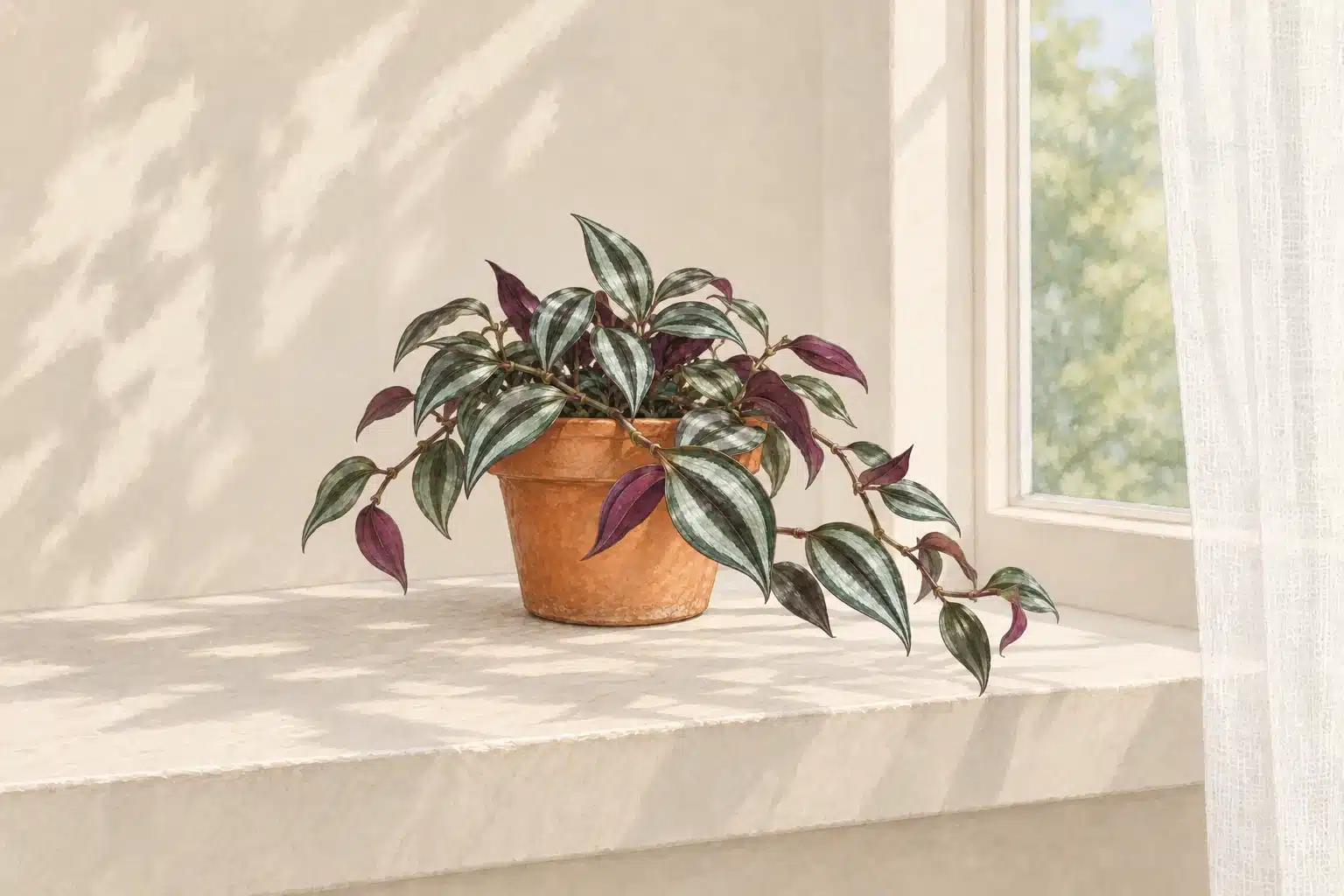
Wandering jew light requirements depend on which Tradescantia you have. For the silver-striped Tradescantia zebrina, start with bright, filtered indoor light, such as an unobstructed east-facing window. Use an existing sheer curtain if strong afternoon sun reaches the leaves. If new stems stretch in a dim spot, try a brighter position; if color washes out after stronger sun, reduce that exposure. Judge the change by new growth, not color alone.
Wandering jew light requirements: which plant and what light?
Tradescantia zebrina needs bright indoor light or filtered sun; low light can reduce color and lower-leaf retention. Confirm the plant before applying that advice: zebrina typically has two silvery upper-leaf bands and purple undersides. If the label is unclear, use the Tradescantia varieties guide before applying species-specific advice.
Also called inch plant or wandering dude, zebrina differs from green-leaved T. fluminensis and purple heart (T. pallida), as University of Wisconsin–Madison Extension explains. Plants sold as Nanouk are not interchangeable with zebrina either.
NC State Extension’s zebrina profile recommends filtered sun and notes that low light can lead to lower-leaf loss and reduced color. Think of bright, filtered light as a bright position where the leaves are protected from excessive direct sun. It does not mean a dark shelf somewhere in a sunny room.
Start with the windows and curtains you already have. There is no need to buy a lamp before checking whether a brighter existing position works. The extension sources used here do not establish a single zebrina-specific indoor lux or PPFD target, so this guide does not prescribe one.
Which window should you try first?
An unobstructed east-facing window is a useful starting point for zebrina. Check the light reaching the leaves before relying on direction alone: roofs, trees, neighboring buildings, screens and curtains can reduce exposure. As University of Maryland Extension explains, weather and season also change indoor light, so compare the actual conditions at the plant.
| Available window | First placement to try | What to check |
|---|---|---|
| East-facing | A bright position near the window, with morning light. | Check whether trees or a roof block the light, and whether the leaves receive stronger direct sun than expected. |
| South- or west-facing | A bright position with an existing sheer curtain if intense direct sun reaches the leaves. | Watch the afternoon exposure. Adjust the curtain or position if bleaching or dry patches appear after the move. |
| North-facing | The brightest unobstructed position available. | Check new stem spacing and leaf retention. A north window is not automatically unusable, but a shaded one may provide too little light. |
| Any heavily shaded window | Compare it with another existing window before buying equipment. | Look from the plant’s position: is there open sky, or mostly a wall, roof or dense foliage? |

Observe the spot in the morning and afternoon before settling on it. There is no universal distance in feet or inches that makes a window suitable: moving back reduces light, but the starting exposure varies. The goal is a bright position with manageable direct sun, followed by a check of how the plant grows there.
Faded leaves or stretched stems: what should you change?
If new stems stretch in a dim position, try a brighter existing spot; if fading follows stronger sun, reduce that exposure. Color alone cannot distinguish too little light from too much. University of Minnesota Extension identifies long leaf-node spacing and leaf loss as low-light clues, and bleaching or scorching as possible excess-light responses.
| What you observe | What makes light a plausible cause? | One first action | What to recheck |
|---|---|---|---|
| New stems have wider leaf gaps and weaker color | Recent dimmer light | Try a brighter existing spot; avoid an abrupt jump into strong sun. | Compare the next stem section with older stretched growth. |
| Color looks washed out after a move into stronger sun | The change followed increased exposure, especially in a warm southern setting. | Filter the direct sun or move to a sheltered bright position. | Watch for further fading or damage, and assess the appearance of new leaves. |
| Pale or dry brown patches appear after a sudden sun increase | The exposed leaves received substantially more direct light than before. | Reduce that direct exposure while retaining bright light. | Check whether additional patches develop. Do not use a damaged old leaf as the only recovery measure. |
| Older vines are sparse, but new tips have close leaf spacing | The whole plant’s shape may reflect old growth and normal straggliness rather than a current light shortage. | Keep the suitable placement and consider trimming the long vines. | Check the new tips separately from the older bare lengths. |
For a useful comparison, photograph a growing tip and note the date, window and recent move. Change one light variable at a time. Compare new growth once there is enough to assess; the sources do not support a guaranteed recovery deadline. A new position does not shorten stem sections that have already stretched.
Zebrina can become straggly even without a new lighting mistake. University of Wisconsin–Madison Extension describes trimming and renewing containers with tip cuttings. Use our wandering jew propagation guide for the separate rooting task. Wear gloves if you are sensitive to the sap, which can irritate skin.
Can zebrina take direct sun outdoors?
Some direct sun can suit zebrina, but the appropriate exposure depends on the setting. Wisconsin Extension reports stronger color in full sun in the Midwest and color washout in warmer southern locations. Start an indoor-grown plant in outdoor light shade and acclimate it gradually; neither observation supports moving it straight into strong sun.
Florida guidance has another context: UF/IFAS’s legacy Zebrina pendula landscape profile recommends partial to deep shade for outdoor groundcover. Wisconsin identifies Zebrina pendula as a former name of T. zebrina. That Florida landscape advice is not a reason to put an indoor pot in a dark corner.
| Setting | Practical starting decision |
|---|---|
| Indoors in a US home | Use bright, filtered light and evaluate the actual window exposure. |
| Summer container in the Midwest | Start in light shade and acclimate gradually. Stronger sun may enhance color, but an indoor-grown plant should not be moved straight into it. |
| Hot southern outdoor position | Begin with sheltered light shade and watch for color washout or damage before increasing sun. |
Move an indoor plant outside only after local frost danger has passed. Increase exposure gradually rather than following a fixed two-day or one-week schedule. Pause the increase if damage appears. Keep it in a container and prevent discarded stems from rooting outdoors: UF/IFAS flags this plant as invasive and not recommended for Florida landscapes. This guide does not recommend planting it as groundcover.
What changes in winter, and when can a grow light help?
Recheck your window as winter days shorten, especially in northern US homes. Try a brighter existing position or open an unnecessary curtain, while protecting leaves from excessive direct sun. Consider supplemental lighting only when available window positions still do not support satisfactory new growth; assess intensity, total light hours and fixture distance separately.
A grow light has three separate considerations. A timer controls duration; it does not tell you how much light reaches the leaves.
- Intensity: Check the fixture’s output and coverage information. Wattage measures energy use, while visible brightness does not fully describe plant-usable light.
- Duration: University of Minnesota Extension gives 12–14 total light hours per day as general foliage-houseplant guidance. Treat that as a starting point, not a zebrina-specific minimum or a promise of restored color. Count the daylight period when planning supplemental hours and retain a nightly dark period.
- Distance: Follow the actual fixture’s mounting and clearance instructions. Light at the leaves changes with distance, so one bulb’s setup cannot supply a universal hanging height for every lamp.

After a lighting change, watch new leaf spacing, color and any fresh bleaching. Also check the soil rather than carrying over a weekly watering schedule: plants in lower light generally use less water, and a brighter position may change how quickly the pot dries. For the broader watering and maintenance routine, see the wandering jew care guide.
A purchase is optional. A brighter existing window or an already suitable light may solve the problem. No particular bulb is recommended here because its exact output, compatible fixture and safe setup would need to match your space.
Questions about wandering jew light and placement
Where is the best place to put a wandering jew plant?
For Tradescantia zebrina, start near a bright, unobstructed east-facing window. Filter intense afternoon sun at south- or west-facing windows with an existing sheer curtain if needed. Check the light reaching the leaves and compare new stem spacing after a move; window direction alone cannot establish a suitable position.
Does wandering jew do well indoors?
Yes, Tradescantia zebrina can grow indoors in bright, filtered light. A dim corner may lead to reduced color and lower-leaf loss, so judge the location by new growth rather than survival alone. Reassess the same window in winter, when shorter days can reduce the light available to the plant.
What kills wandering jew plants?
Soggy soil can cause root and stem rot in Tradescantia zebrina, according to NC State Extension. Very low light and sudden exposure to strong sun can also harm growth or foliage; fading alone does not identify the cause. Check soil moisture and exposure history before treating every decline as a need for more sun.
How often do you water a wandering jew?
Water Tradescantia zebrina according to soil moisture rather than a fixed weekly schedule, allowing the soil to dry between waterings, as NC State Extension advises. Plants in lower light generally use less water, so recheck the pot after a lighting change. See the wandering jew care guide for broader maintenance.
Sources
- NC State Extension: Tradescantia zebrina — filtered sun, low-light responses, watering and rot.
- University of Wisconsin–Madison Extension: Tradescantia zebrina — identification, regional sun response and outdoor acclimation.
- University of Maryland Extension: Lighting Indoor Plants — window conditions and excessive direct light.
- University of Minnesota Extension: Lighting for indoor plants and starting seeds — light symptoms and general foliage-houseplant lighting guidance.
- UF/IFAS: legacy Zebrina pendula profile — Florida landscape shade and invasiveness context.


