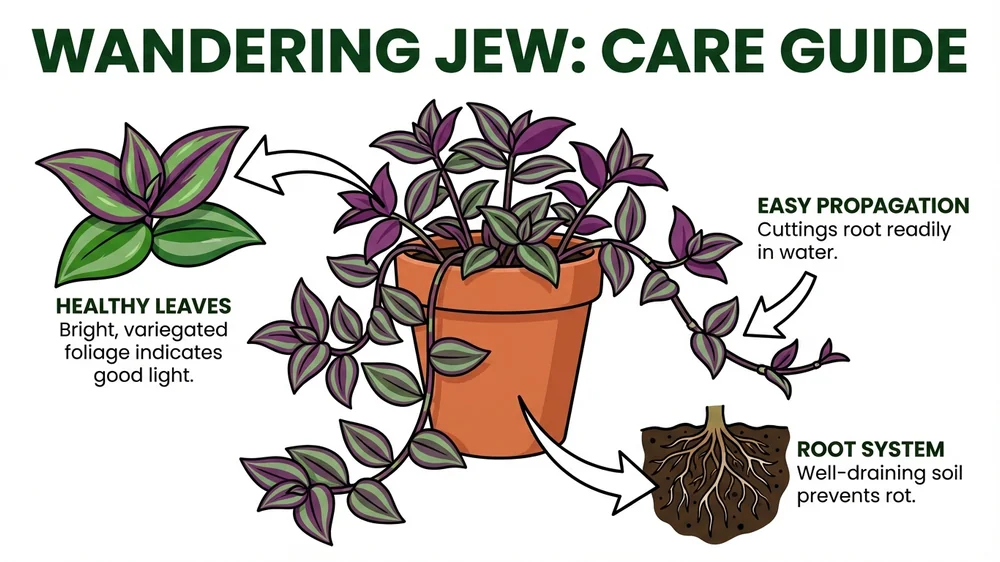
Looking to buy a healthy live plant online?

1-YEAR WARRANTY
Get a nursery-quality, well-rooted live Tradescantia Zebrina Wandering Dude shipped directly to your door. Backed by a best-in-class plant warranty so you can shop with confidence.
Growing Wandering Jew Indoors: Room-by-Room Guide (2026)
Why Wandering Jew Thrives Indoors
When Emilie first brought home a small purple cutting, we did not fully realize the amazing indoor wandering jew benefits. Fast forward a few months, and that single stem had practically taken over our living room bookcase.
For this part of the guide, a researched product option that fits the job is:
Selected because this section is specifically about pruning snips use. Check Amazon for current price and availability.
Growing Wandering Jew indoors is surprisingly easy because it adapts rapidly to average apartment conditions. According to botanical garden archives, these plants originate in tropical climates, yet they survive our dry Aarhus central heating perfectly.
To experience the best growing indoor wandering jew benefits, it comes down to balancing biology and daily habits. Joakim researched the plant’s ideal humidity levels, while Emilie spent weeks testing different indoor wandering jew benefits care routines.
We will walk you through exactly how to maintain those rich colors and prevent the stems from dropping leaves. From soil moisture to light hacks that beat dark Danish winters, you will soon master this wandering jew houseplant.
If your plant is not getting enough natural light, this in a standard floor lamp changes everything:
Fits a standard lamp but delivers intense, full-spectrum light. Powerful enough for large floor plants in dark corners.
If your plant has been in the same soil for 2+ years, it is time to upgrade:
A powerhouse blend with earthworm castings and bat guano. Perfect for hungry tropicals that want to grow big.
📚 Want to learn more about Wandering Jew?
Read our deep-dive guide: Wandering Jew Care Guide
Best Rooms for Your Wandering Jew
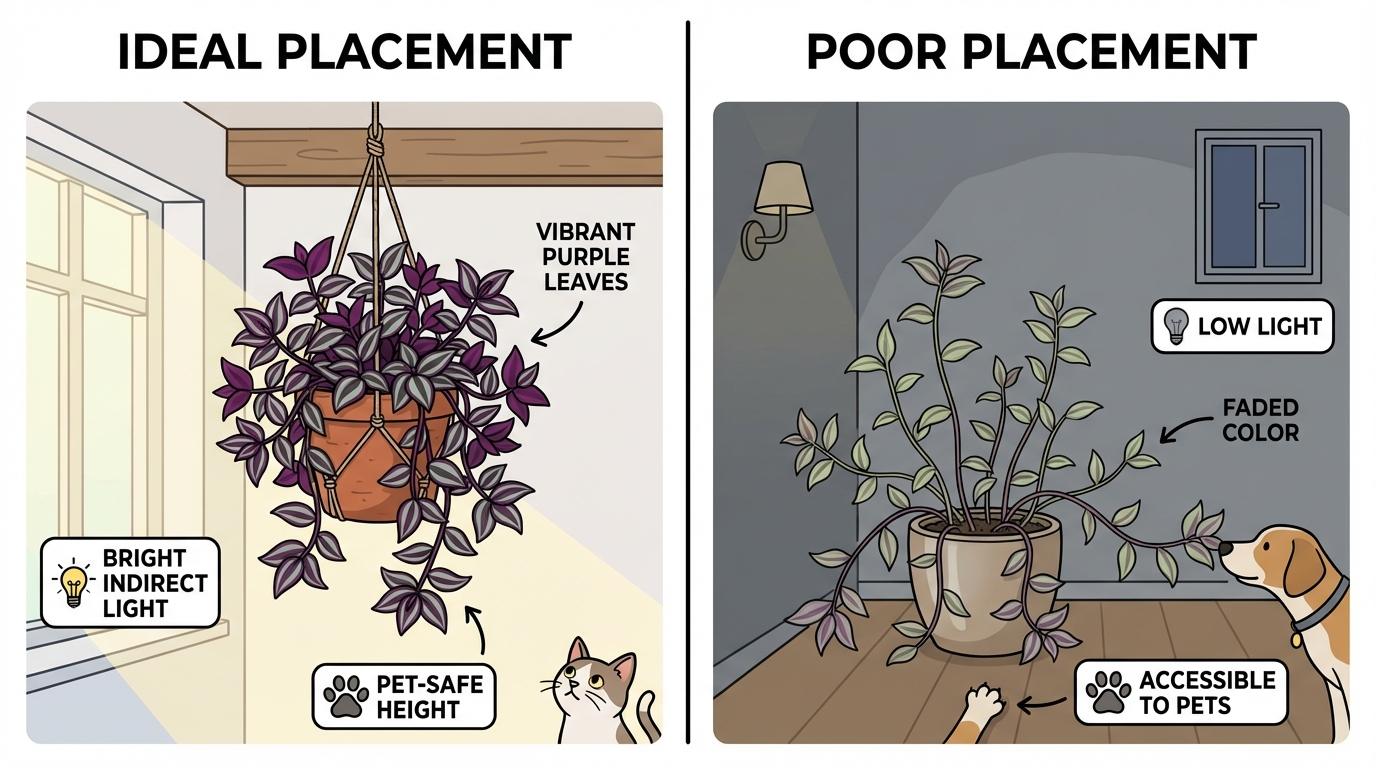
Figuring out exactly where to put wandering jew indoors is the most important decision you will make. An indoor wandering jew thrives best in a bright living room or home office that gets plenty of morning sun.
When deciding where to put wandering jew indoors, care routines become much easier if the plant gets enough indirect sun. In our east-facing Aarhus apartment, the morning sunlight hits our living room perfectly.
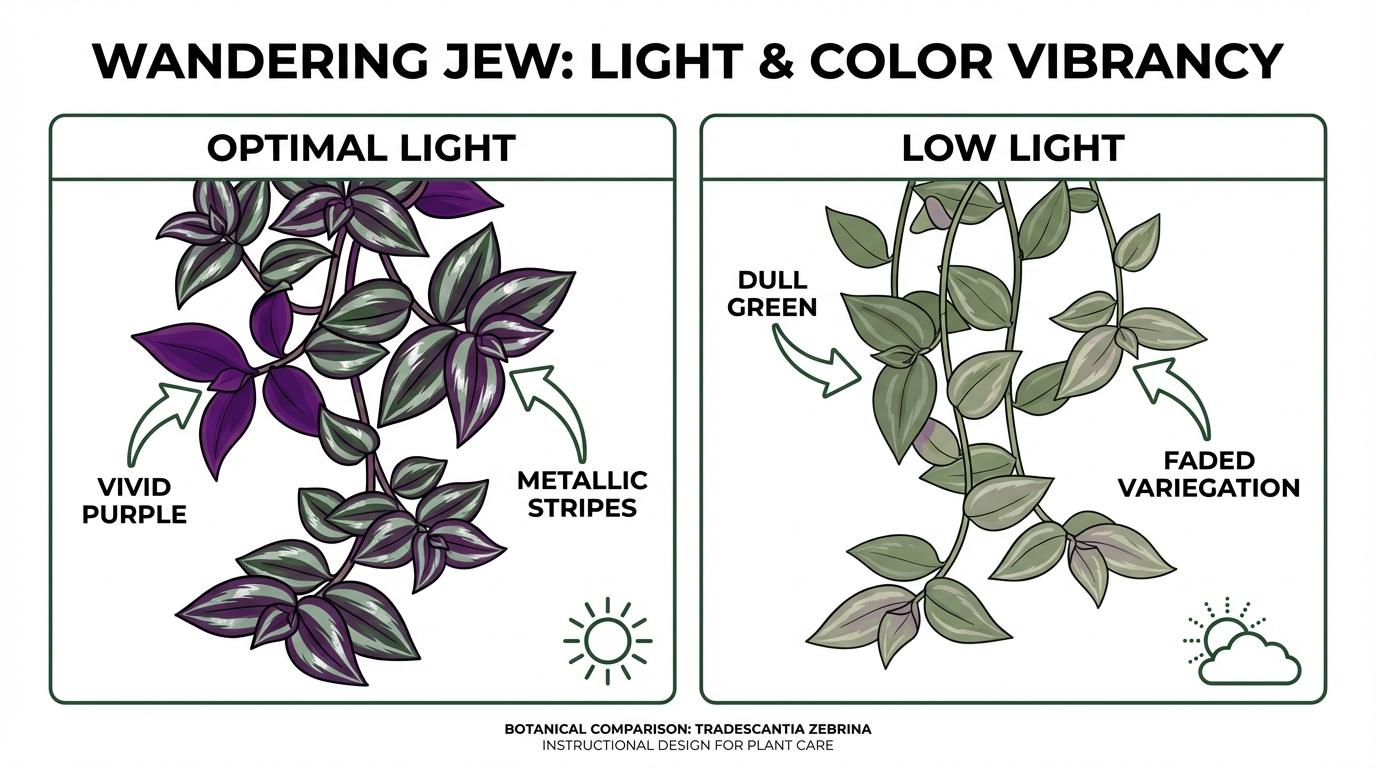
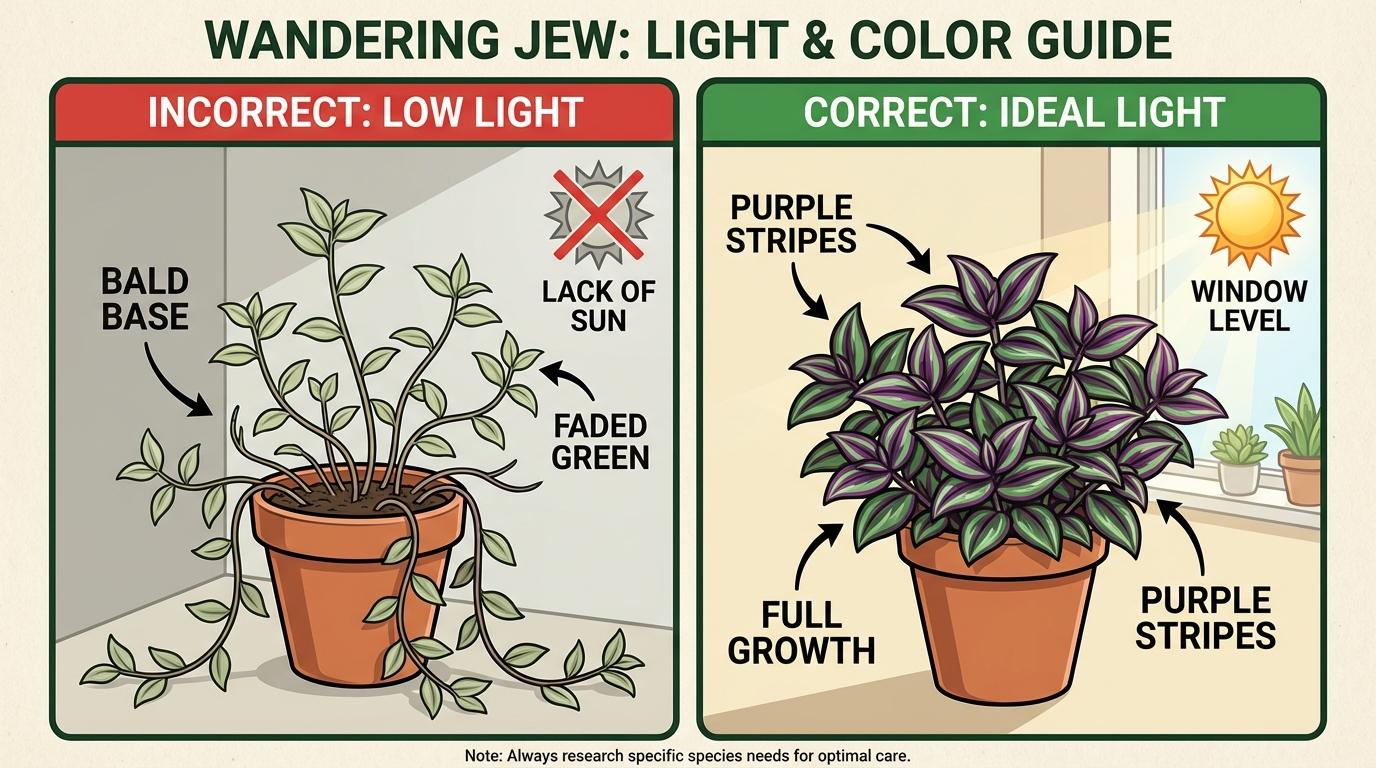
This bright spot triggers the anthocyanin pigmentation in the leaves. Horticultural research shows this chemical process is what keeps those deep, metallic purple colors looking sharp. Without proper light, the leaves quickly fade to a dull green.
Balancing Humidity and Window Space
For successful growing, where to put wandering jew indoors is a decision that affects both light and humidity. Bathrooms often have great moisture from daily showers, but most Danish apartments lack the bright bathroom windows this plant craves.
For this part of the guide, a researched product option that fits the job is:
Selected because this section is specifically about humidifier use. Check Amazon for current price and availability.
To keep the leaves healthy, where to put wandering jew indoors matters far more than your watering schedule. We learned this the hard way after a Wandering Jew went completely bald at the base while sitting in a dark hallway.
High Shelves and Hanging Baskets
When bringing your collection indoors, you must also consider your pets. We keep our trailing plants on high bookshelves in our living room to keep everyone safe.
When growing wandering jew indoors, you never want this wandering jew houseplant trailing down to the floor. Because of its mild toxicity, a hanging planter in a bright kitchen window is a fantastic, pet-safe option that keeps the stems away from curious cats.
📚 Want to learn more about Wandering Jew?
Read our deep-dive guide: Wandering Jew Care Guide
Indoor Humidity Requirements and Hacks
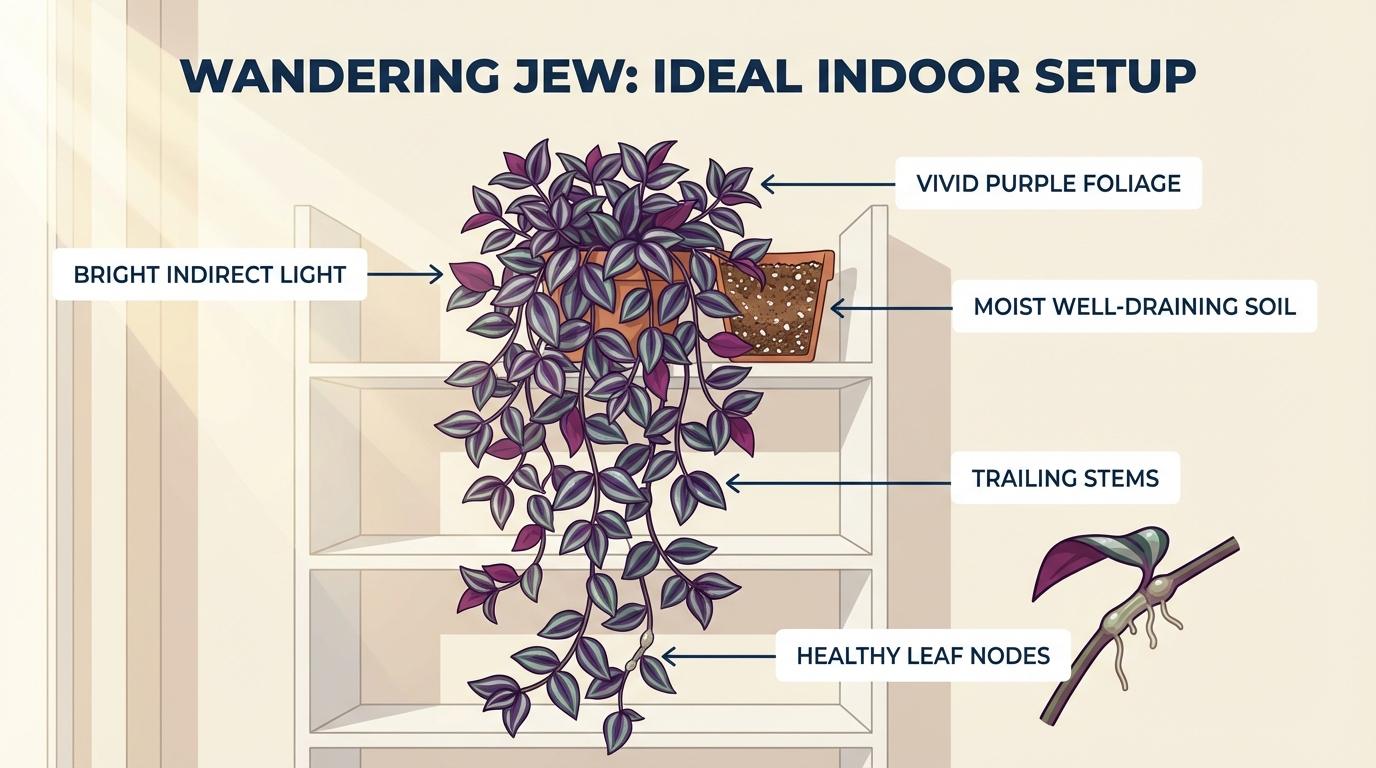
Managing wandering jew humidity indoors can feel tricky, especially during long winters when central heating dries out the air. According to botanical research from NC State University, these tropical plants naturally thrive in highly humid environments.
However, an indoor wandering jew is surprisingly adaptable. Joakim checked our apartment’s digital hygrometer and found our Wandering Jew thrives when we keep the room between 50 and 70 percent humidity.
When the levels drop below 40 percent in our Aarhus apartment, Emilie usually notices the leaves changing texture. The plant loses its soft feel and quickly starts developing dry, papery edges.
Reading the Leaves for Moisture Clues
The first sign that your growing wandering jew humidity indoors routine needs tweaking is brown, crispy tips on the older leaves. It is the plant’s way of conserving its internal moisture.
For this part of the guide, a researched product option that fits the job is:
Selected because this section is specifically about soil moisture meter use. Check Amazon for current price and availability.
We actually killed our very first wandering jew houseplant by confusing low humidity with dry soil. We watered it heavily to compensate for the brown tips, which ultimately led to root rot.
Instead of reaching for the watering can, check the soil with your finger first. If the top two inches feel damp but the leaves are crisping, you are definitely facing a humidity problem.
Practical Hacks for the Danish Winter
To maintain a healthy wandering jew humidity indoors, you need to raise the moisture directly around the plant. We strongly advise against misting, as water sitting on the leaves easily causes fungal leaf spots.
Instead, wandering jew humidity indoors care is much easier and safer with a simple pebble tray. We fill a shallow saucer with small stones, add water just below the top layer, and set the pot directly on the dry stones.
Grouping plants together is another incredibly effective trick for growing wandering jew indoors. By clustering our Tradescantia next to ferns and pothos, they create a shared microclimate that traps evaporating moisture in the air.
Finally, if you have a bathroom window that provides enough bright light, consider moving your plant there. The daily steam from your morning showers naturally replicates the humid tropical environment this trailing favorite craves.
Keeping Colors Vivid in Indoor Light
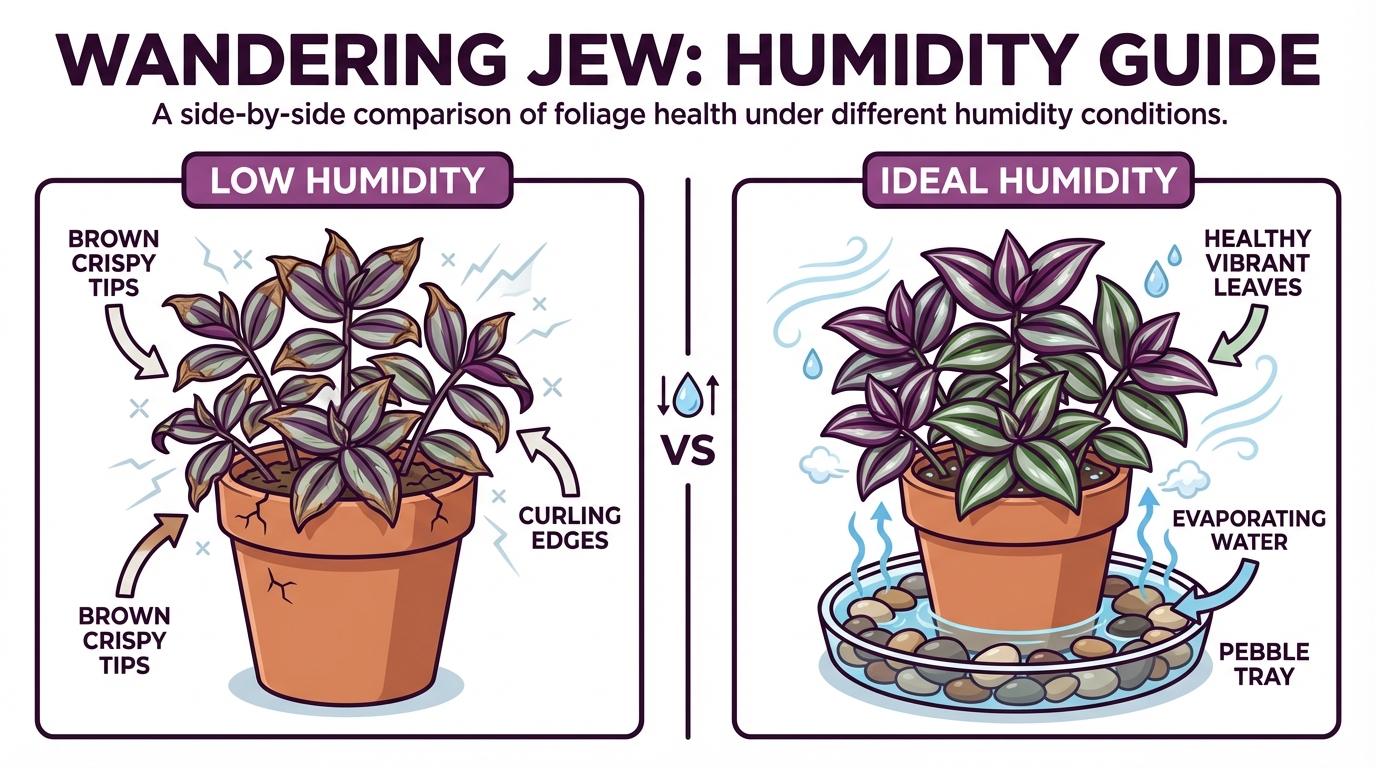
If you notice your wandering jew losing purple color indoors, you are not alone. It is the most common issue we face during our dark Aarhus winters. The metallic stripes need specific energy to maintain their bold appearance.
Joakim dug into the biology and found that those deep purple hues are caused by pigments called anthocyanins. When light levels drop below 10,000 lux, the plant stops producing these pigments to prioritize green chlorophyll instead.
This means growing wandering jew indoors requires strategic placement. During our first winter, Emilie watched our brightest trailing vine turn completely dull green. We quickly realized that proper wandering jew losing purple color indoors care means moving the plant directly into an east-facing window.
Supplemental Winter Lighting
Research from horticultural garden archives confirms that intense, indirect sun is the primary driver for variegation. To keep a healthy wandering jew losing purple color indoors is an issue you must actively prevent with supplemental lighting.
If you find yourself growing wandering jew losing purple color indoors, you should also wipe the dust off the leaves. A dusty leaf cannot absorb the sun effectively. Emilie does this gently with a damp microfiber cloth every other Sunday.
A dull plant will not recover its old colors, but the new growth will return to a deep purple once conditions improve. As a resilient wandering jew houseplant, it bounces back surprisingly fast. Just keep an eye on your indoor wandering jew as the seasons change.
📚 Want to learn more about Wandering Jew light?
Read our deep-dive guide: light requirements
Best Pots and Hanging Baskets
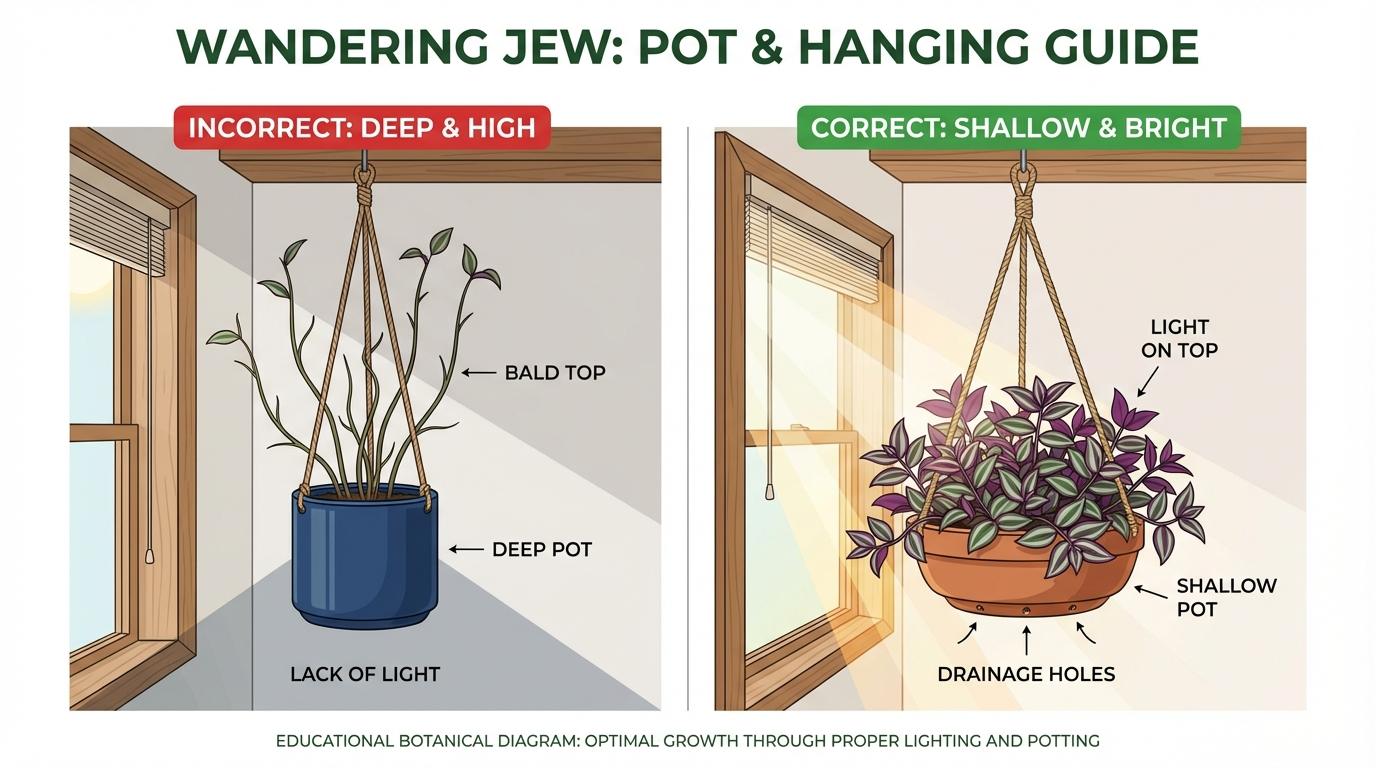
Choosing the right setup for a best pot wandering jew hanging basket relies entirely on its shallow root system. As a trailing plant, it spreads sideways across the soil rather than digging deep taproots.
When we first started growing wandering jew indoors, we used a deep ceramic pot. The bottom soil stayed wet for weeks, leading to mild root rot, while the top dried out much too fast.
The ideal indoor wandering jew container is wide and shallow. Botanical garden archives emphasize that excellent drainage is critical for survival. Azalea pots or standard nursery pots placed inside decorative planters work perfectly for this Wandering Jew.
Material Choices for Your Planter
Material choices matter if you want a healthy best pot wandering jew hanging basket. Terracotta breathes and dries out quickly, which is fantastic if you tend to overwater your plants.
However, our Aarhus apartment gets quite dry in the winter because of central heating. To simplify our best pot wandering jew hanging basket care, we actually prefer standard plastic nursery pots with heavy drainage holes.
We slip the plastic pot directly into a macrame hanger or a sealed decorative pot. This keeps the soil evenly moist and makes watering this fast-growing wandering jew houseplant incredibly easy.
The Hanging Setup
Suspending your plant solves two common problems at once: light exposure and mild toxicity. Growing best pot wandering jew hanging basket arrangements keeps the colorful, trailing leaves safely away from our cat.
There is one major catch with suspended planters. If you hang them too close to the ceiling, the top of the soil receives no direct sun, causing the stems to go totally bald at the base.
Always hang the pot at or slightly below window level so the sun hits the topsoil. If the top does get bare, simply snip a few trailing stems and propagate them directly back into the dirt to fill it out.
Indoor Watering Schedule by Season
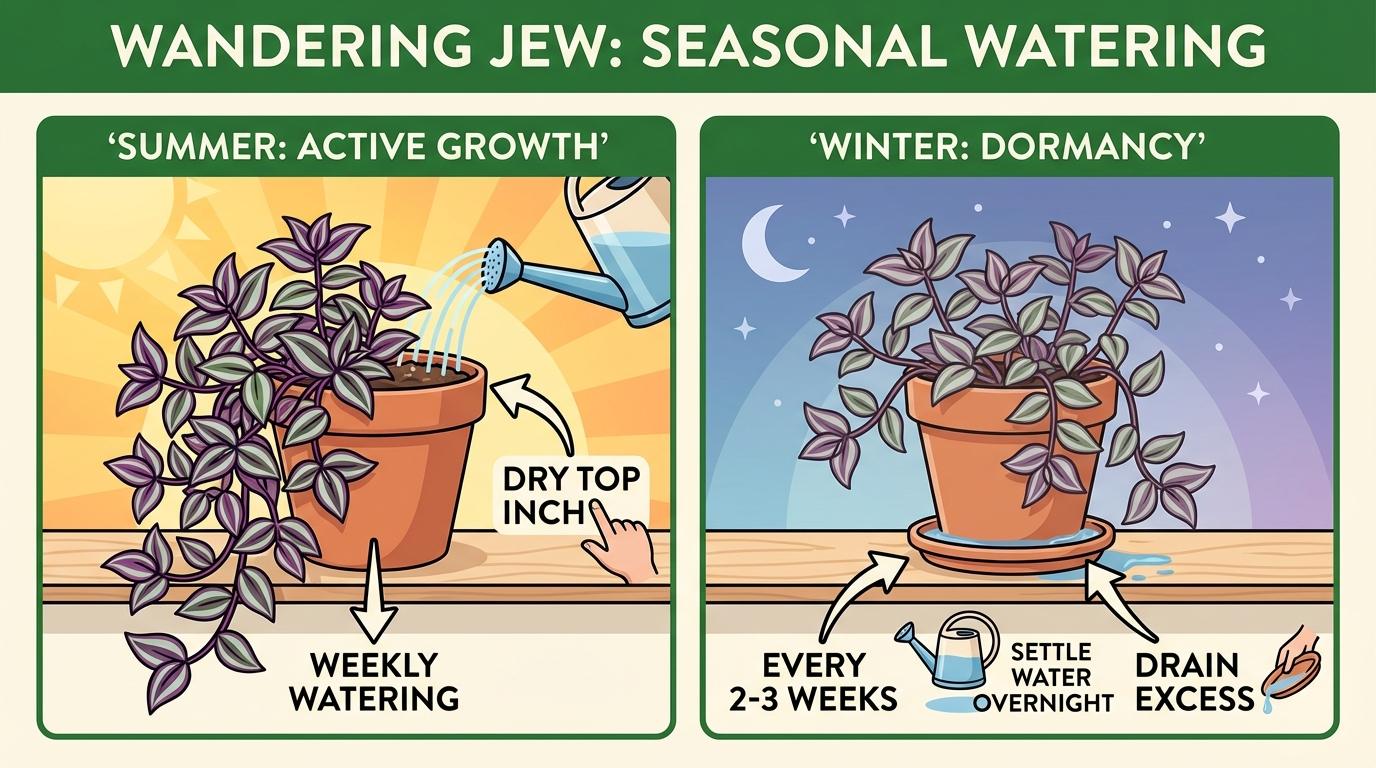
Getting your wandering jew indoor watering schedule right means adapting to the changing seasons. When growing indoors, this plant drinks heavily from April to August. We water ours thoroughly once a week during these active months.
Emilie always checks the top inch of soil with her finger before reaching for the watering can. The soil should feel completely dry. If you add water while the topsoil is still wet, your Wandering Jew is at high risk for root rot.
Adjusting for the Winter Months
Maintaining a healthy wandering jew indoor watering schedule changes dramatically when autumn arrives. As the light drops in our dark Aarhus apartment, the plant stops growing. It uses far less moisture.
By November, we stretch our routine to every two or three weeks. Part of proper wandering jew indoor watering schedule care is learning to ignore the calendar. You must let the pot dry out almost completely during the winter.
A tricky part of your growing wandering jew indoor watering schedule is water quality. Danish tap water is notoriously hard and full of calcium. We leave our watering can out overnight to let some minerals settle before soaking this wandering jew houseplant.
According to horticultural garden archives, these plants tolerate minor droughts much better than soggy soil. However, when your central heating kicks on, keep a close eye on the pot. Hot radiators dry out the dirt faster than you might expect.
If the lower leaves look crispy, your indoor wandering jew simply needs a slightly heavier pour. Always let the excess water drain completely out of the bottom to keep the delicate root system safe.
Common Indoor Problems and Solutions
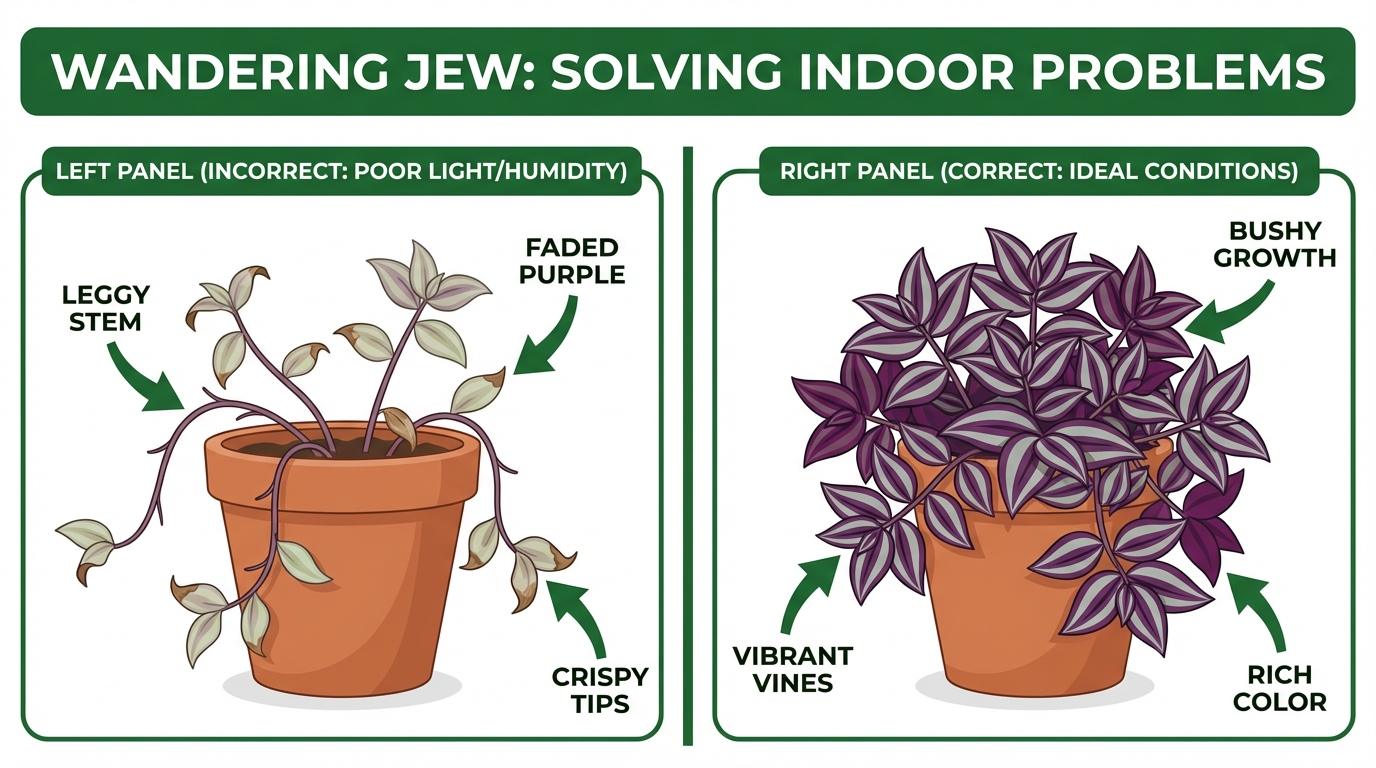
One of the most frequent wandering jew indoor problems leggy stems, happens to almost everyone. When we first brought our Wandering Jew indoors, it looked full and bushy. By December, the base was completely bald.
The Balding Base
This bare base is a classic symptom of starvation. During our dark Danish winters, finding a solution for wandering jew indoor problems leggy care usually means buying a supplemental grow lamp. Stems stretching for light drop their older leaves to conserve energy.
According to horticultural garden archives, these vigorous plants need intense indirect sun to maintain dense foliage. If you are growing wandering jew indoor problems leggy vines will inevitably happen if the topsoil is shaded by the pot.
To keep a healthy wandering jew indoor problems leggy growth must be managed with frequent pruning. While handling the sap, be mindful of its mild toxicity. We simply snip the bare vines and propagate them directly back into the dirt.
Clean cuts matter — a crushed stem invites rot and disease. These snips make clean cuts every time:
Sharp, spring-loaded, and precise. Makes clean cuts that heal fast — essential for propagating without crushing the stem.
Fading Purple Colors
Another common issue when growing wandering jew indoors is losing that iconic metallic stripe. Joakim measured our living room sun and found it was far below the 400 foot-candles required to keep the deep purple pigmentation intact.
We solved this by moving our wandering jew houseplant directly into our brightest east-facing window. The new leaves quickly emerged with their rich colors completely restored. Just remember to wipe the dust off the foliage so they can absorb the sun.
Crispy Brown Leaf Tips
If your indoor wandering jew develops dry, crispy tips, you are likely dealing with a humidity crash or hard water. Our Aarhus apartment radiators dry the air out significantly from November to March.
We fix this by placing the pot on a shallow pebble tray filled with water. We also let our tap water sit out overnight before soaking the dirt. This allows the heavy minerals to settle, protecting the delicate roots from chemical burns.
Indoor vs Outdoor Growing: Key Differences
Understanding the differences of wandering jew indoors vs outdoors comes down to environmental control. Outside, these trailing plants explode with rapid growth in the summer. Inside, you must carefully manage their specific daily needs.
When growing wandering jew indoors, you dictate the climate completely. This makes keeping them indoors much safer from sudden temperature drops. We keep our Aarhus apartment around 20°C year-round, which is perfect.
The main trade-off with an indoor wandering jew is often a lack of intense sun. Without enough light, your Wandering Jew will quickly lose its deep purple stripes and become thin.
The Summer Balcony
Maintaining a healthy wandering jew indoors vs outdoors is easier if you take advantage of the warmer months. According to horticultural research, these herbaceous perennials thrive in warm, humid outdoor air.
We usually move a few pots out to our balcony in late June. Joakim tracks the overnight weather, ensuring the temperatures never drop below 10°C. The fresh air makes the stems grow incredibly dense.
However, growing wandering jew indoors vs outdoors requires careful timing in Denmark. The short Scandinavian summer ends quickly, and an unexpected early autumn frost will severely damage the delicate leaves.
Making the Transition
Proper wandering jew indoors vs outdoors care means you cannot simply carry the pot back inside. You must thoroughly check the soil and foliage for pests before moving the plant into your living room.
Emilie always inspects under the leaves for hidden bugs. We give the entire plant a gentle shower in the bathtub to wash off any outdoor dirt before placing it back on our bookshelf.
Once safely back inside, your wandering jew houseplant will naturally slow its growth. Simply reduce your watering schedule slightly to match the darker winter months and enjoy the colorful foliage.
Decorating with Wandering Jew
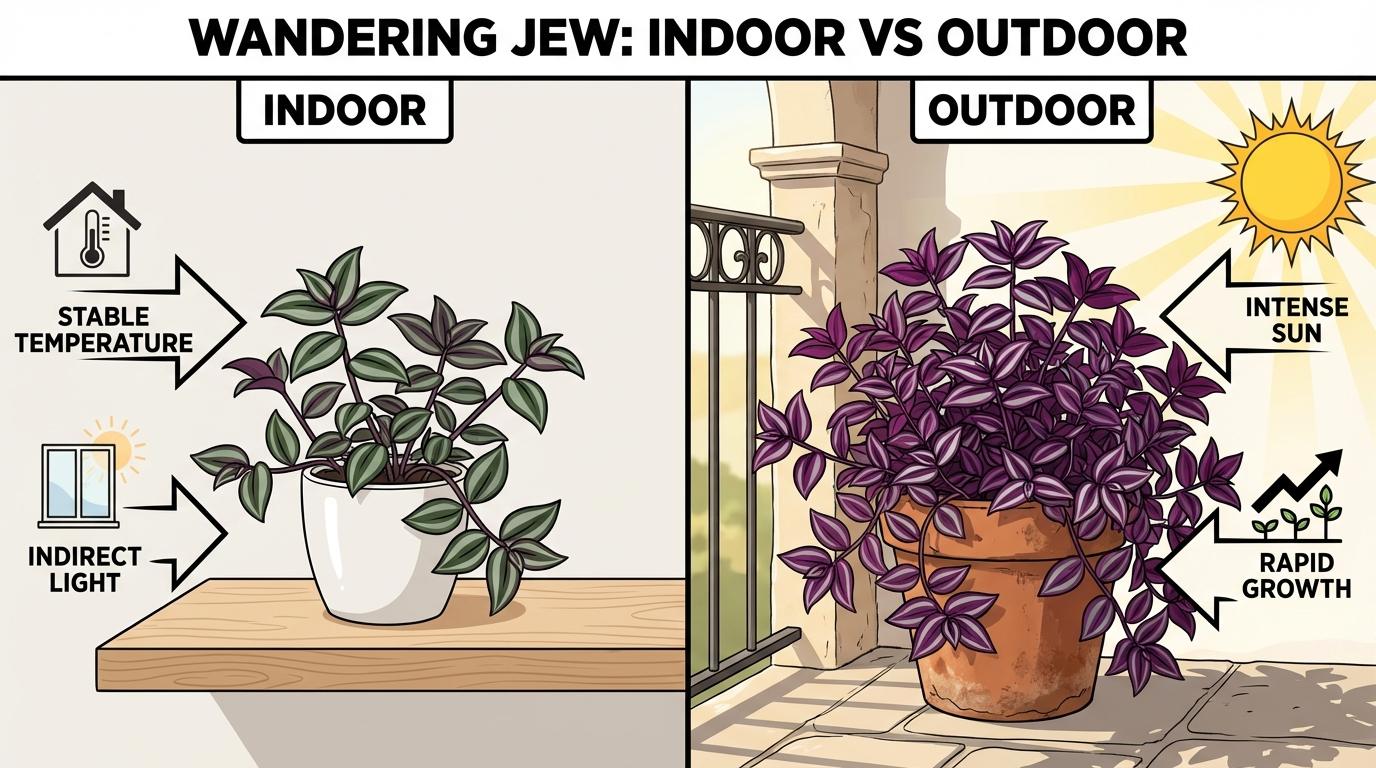
Finding practical wandering jew plant decor ideas often starts with managing the fast growth. In our small Aarhus apartment, we rely on vertical space to display this wandering jew houseplant beautifully without losing floor space.
Hanging Baskets in Windows
Most growing wandering jew plant decor ideas feature hanging pots, but exact placement matters. According to botanical garden archives, these stems need intense indirect light to maintain their metallic purple stripes.
If you hang the pot too close to the ceiling, the topsoil stays in complete shadow. We lost an early Wandering Jew to severe balding at the base because the top crown received absolutely zero sun.
For healthy wandering jew plant decor ideas, simply lower the planter down to window level. This ensures the morning sun actually hits the top dirt, which encourages dense top growth rather than bare vines.
Bookshelf Trailing
Another fantastic option for an indoor wandering jew is styling it on a tall bookshelf. Emilie loves letting the purple foliage naturally cascade down over our favorite books in the living room.
This high placement also simplifies your wandering jew plant decor ideas care if you own pets. Because of its mild toxicity, keeping the trailing vines up high protects both your plant and any curious animals.
Creating a Plant Cluster
When growing wandering jew indoors, grouping it with other humidity-loving species creates a striking visual display. We sit our pot next to ferns and pothos on a mid-century wooden plant stand.
This specific arrangement serves a biological purpose, too. The clustered pots trap evaporating moisture together, creating a helpful microclimate that protects the delicate leaves from the dry heat of our Danish winter radiators.
📚 Want to learn more about Wandering Jew?
Read our deep-dive guide: Wandering Jew Care Guide
What I Use for Wandering Jew
Products I have personally researched and recommend.
The cheapest upgrade you can make to any potting mix. A handful per pot dramatically improves drainage and aeration.
Check Price → (paid link)
The long, narrow spout lets you water directly at the soil level without splashing leaves — keeps foliage dry and reduces fungal risk.
Check Price → (paid link)
Slow-release granules that feed for 6 months. Mix into the top of the soil and forget about fertilizing for half a year.
Check Price → (paid link)
Accurate humidity and temperature monitor with Bluetooth logging. Know exactly what conditions your plants are living in.
Check Price → (paid link)
Common Questions About Indoor Wandering Jew
Is the Wandering Jew plant toxic to cats and dogs?
Yes, the Wandering Jew plant (Tradescantia zebrina) is mildly toxic to cats and dogs [1.3]. The sap contains calcium oxalate crystals that can cause mouth irritation, excessive drooling, and vomiting if ingested. Skin contact with the plant’s sap can also lead to a dermatitis-like rash and severe itching in pets.
Why is the plant called ‘Wandering Jew’?
The plant’s common name derives from a 13th-century Christian myth about a Jewish man who allegedly mocked Jesus on his way to the crucifixion and was cursed to wander the Earth until the Second Coming. The plant received this name due to its vigorous, trailing growth habit and its ability to easily spread and root across surfaces.
What are the alternative names for the Wandering Jew plant?
Because the traditional name is rooted in an anti-Semitic medieval legend, many botanists, plant nurseries, and enthusiasts now prefer using its scientific name, Tradescantia zebrina. Popular alternative common names include ‘Wandering Dude,’ ‘Inch Plant,’ and ‘Spiderwort’.
What kind of light does a Wandering Jew plant need to thrive?
Wandering Jew plants thrive in bright, indirect sunlight, such as near an east or west-facing window. While bright indirect light keeps their purple and silver stripes vibrant, direct midday sun can scorch the leaves, and too little light will cause the foliage to lose its color and the plant to become leggy.
How often should you water a Wandering Jew plant?
These plants require moderate watering and prefer evenly moist soil that isn’t completely saturated. A general rule is to water the plant when the top half-inch to an inch of soil feels dry. Ensure the pot has proper drainage holes to prevent root rot, and reduce watering frequency during the winter months.
How do you make a Wandering Jew plant bushier?
Because Wandering Jew plants naturally grow as trailing vines, they can become thin and ‘leggy’ over time. To encourage a denser, bushier appearance, regularly pinch or prune the stems just above a leaf node. You can stick these pinched cuttings back into the top of the pot’s soil to fill out the top of the plant.
Can the Wandering Jew plant grow outdoors?
Yes, it can be grown outdoors as a ground cover in warm climates (USDA hardiness zones 9 through 11). They prefer temperatures between 60 and 80 degrees Fahrenheit and partial shade. However, gardeners should be cautious, as the plant spreads very quickly and is considered an invasive species in subtropical regions like the southern United States.
Does the Wandering Jew plant produce flowers?
Yes, although the plant is primarily cultivated for its striking striped foliage, it does produce small, three-petaled flowers. Depending on the exact Tradescantia variety, the delicate blooms can be lavender, purplish-pink, or white. They can bloom year-round under bright light, though flowers are most common in late spring or summer.
What is the best type of soil for a Wandering Jew plant?
The plant prefers a lightweight, well-draining soil mix. A standard houseplant potting mix works perfectly, as long as it doesn’t leave the soil too soggy. To improve drainage and lower the risk of root rot, you can amend standard potting soil with equal parts perlite, coarse sand, or compost.
Why are the leaves on my Wandering Jew plant curling and drying out?
Curling, dry, or crispy leaves are generally a sign that the plant is underwatered or exposed to too much direct sunlight. Wandering Jew plants also prefer humid environments; if the indoor air is too dry, particularly in winter, leaf edges may brown. Increasing watering frequency slightly and using a humidifier can resolve this issue.
How do you propagate a Wandering Jew plant?
The Wandering Jew is one of the easiest houseplants to propagate. Simply take a stem cutting that is at least an inch long and includes a leaf node.
You can place the cutting directly into moist potting soil or root it in a glass of water. It roots rapidly, allowing you to grow a full plant in just a few months.
What pests commonly affect the Wandering Jew plant?
While generally resistant to pests, Wandering Jew plants can sometimes attract spider mites and aphids. Spider mites prefer warm, dry areas, so regularly misting the plant can help deter them. Aphids often target new growth; infestations can be managed by pinching off the affected stems, washing the leaves, or applying a natural insecticide.
Who is the ‘Wandering Jew’ in historical folklore?
In 13th-century European mythology, the Wandering Jew (often named Ahasuerus) is a mythical immortal figure. According to the legend, he was a Jewish shoemaker or tradesman who taunted Jesus on the way to the Crucifixion and was subsequently cursed to walk the Earth until the Second Coming. This folklore was historically used to spread anti-Semitic sentiments and justify the mistreatment of Jewish communities.


