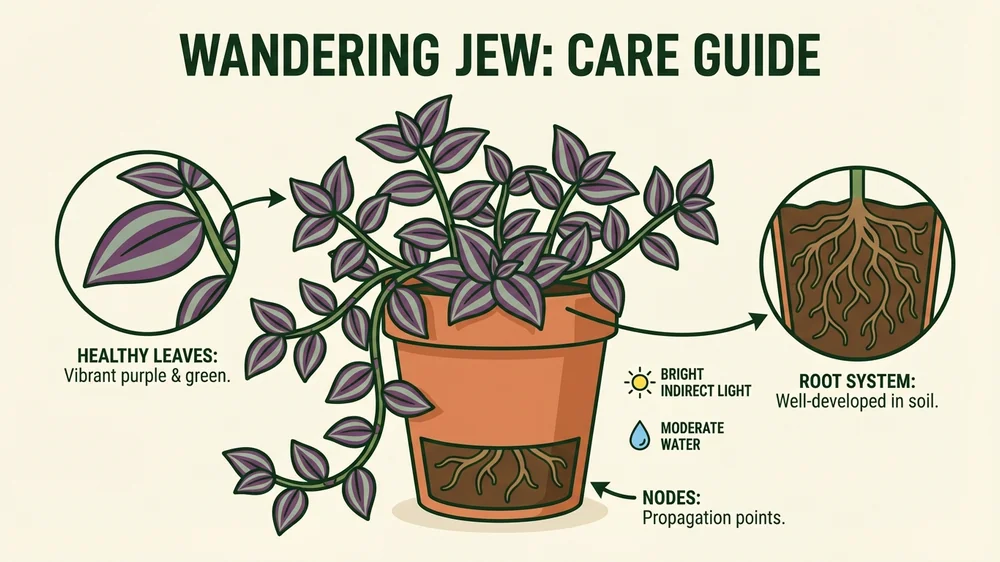
Wandering Jew Propagation
⬅️ Navigate back: Back to Wandering Jew Care Guide
Wandering Jew propagation is one of the easiest ways to turn one trailing Tradescantia plant into several full, healthy houseplants.
The stems root quickly from their nodes, which means a simple cutting can become a new plant with very little equipment.
If your plant has become long, thin, or bare near the base, propagation is also the easiest way to refresh it. Instead of trying to rescue every old stem, you can root the healthy tips and plant them back together for a fuller pot.
Transparency note: Some links in this article are affiliate links. As an Amazon Associate I earn from qualifying purchases at no extra cost to you. I only include product suggestions when they fit the task being discussed.
Quick answer: To propagate Wandering Jew, cut a healthy 4 to 6 inch (10 to 15 cm) stem just below a node, remove the lower leaves, and place the bare node in water or moist potting soil. Most cuttings root within 1 to 2 weeks in warm, bright conditions.
This guide covers water propagation, soil propagation, division, where to cut, common mistakes, aftercare, and the optional tools that can make the process easier.
Wandering Jew Propagation Quick Reference
- Best method: Stem cuttings
- Easiest method: Water propagation
- Strongest roots: Soil propagation
- Best season: Spring to early summer
- Rooting time: Usually 1 to 2 weeks
- Cutting size: 4 to 6 inches (10 to 15 cm)
- Ideal temperature: 70°F to 80°F (21°C to 27°C)
- Most important detail: Always include at least one node
Looking to buy a healthy live plant online?

1-YEAR WARRANTY
Get a nursery-quality, well-rooted live Tradescantia Zebrina Wandering Dude shipped directly to your door. Backed by a best-in-class plant warranty so you can shop with confidence.
Why Wandering Jew Cuttings Root So Fast
Wandering Jew plants, also sold as Inch Plant, Wandering Dude, or Tradescantia, grow with soft trailing stems that naturally root wherever they touch moisture or soil.
That growth habit makes wandering jew propagation much easier than propagating many slower houseplants.
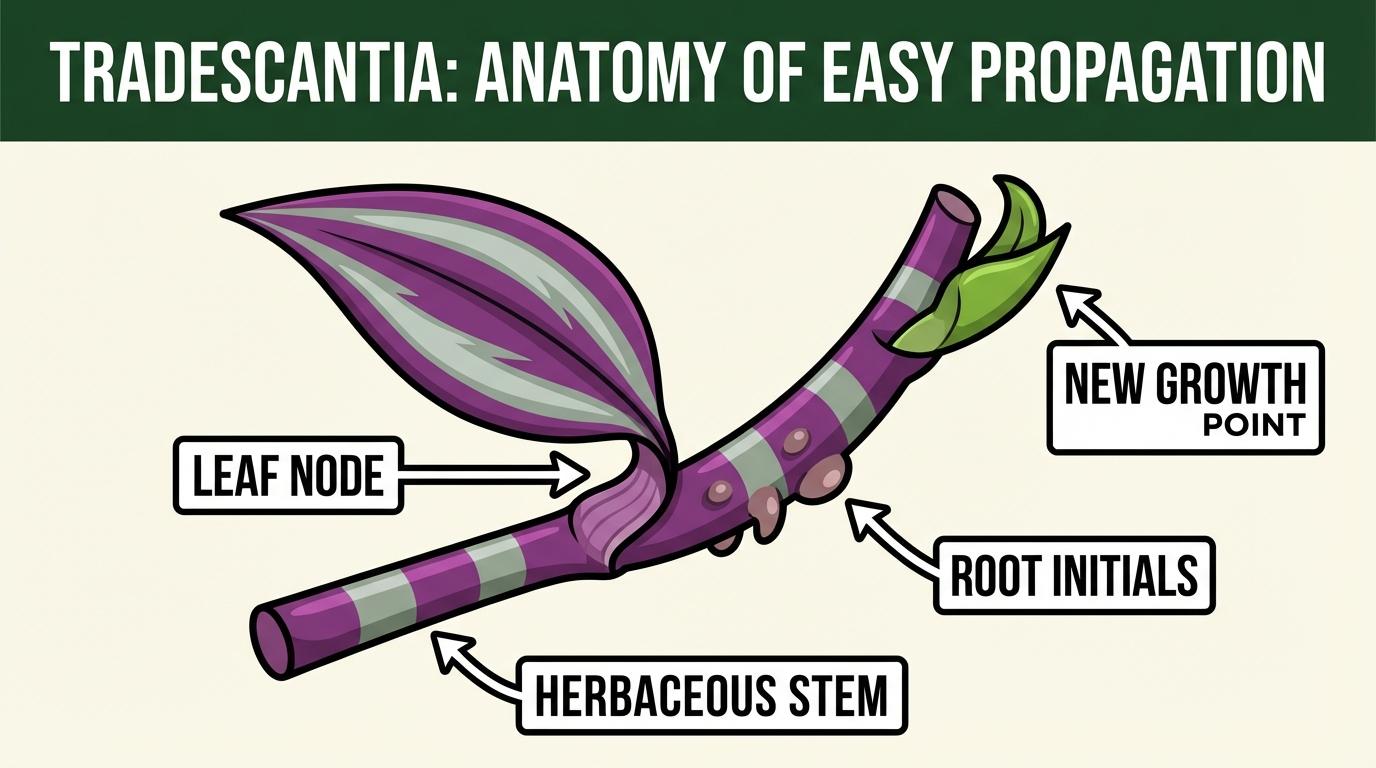
Each node along the stem can produce new roots. A node is the small joint where a leaf attaches to the vine. When that node touches water or damp potting mix, it can begin forming roots.
This is why even a small cutting can become a new plant quickly.
Propagation is also useful for maintenance. Older Tradescantia stems often become thin, stretched, or bare near the soil line. Rooting fresh cuttings and planting several back into the same pot is the simplest way to keep the plant looking full.
Want the full care guide?
Read our complete Wandering Jew Plant Care Guide for light, watering, pruning, soil, and troubleshooting tips.
Water vs Soil Wandering Jew Propagation
You can root Wandering Jew cuttings in either water or soil. Both methods work, but they are useful for slightly different reasons.
| Method | Main Benefit | Downside | Best For |
|---|---|---|---|
| Water propagation | You can see roots forming | Roots must adapt when moved to soil | Beginners and visual tracking |
| Soil propagation | Roots form directly in potting mix | Harder to see progress | Stronger long-term plants |
| Division | Creates mature plants immediately | Only works on large, established plants | Overgrown pots |
If you are new to wandering jew propagation, start with water. It is simple, forgiving, and lets you see exactly when roots appear.
If you already feel comfortable with cuttings, soil propagation is often better for long-term growth because the roots develop directly in the medium where they will keep growing.
When to Propagate Wandering Jew for Fastest Rooting
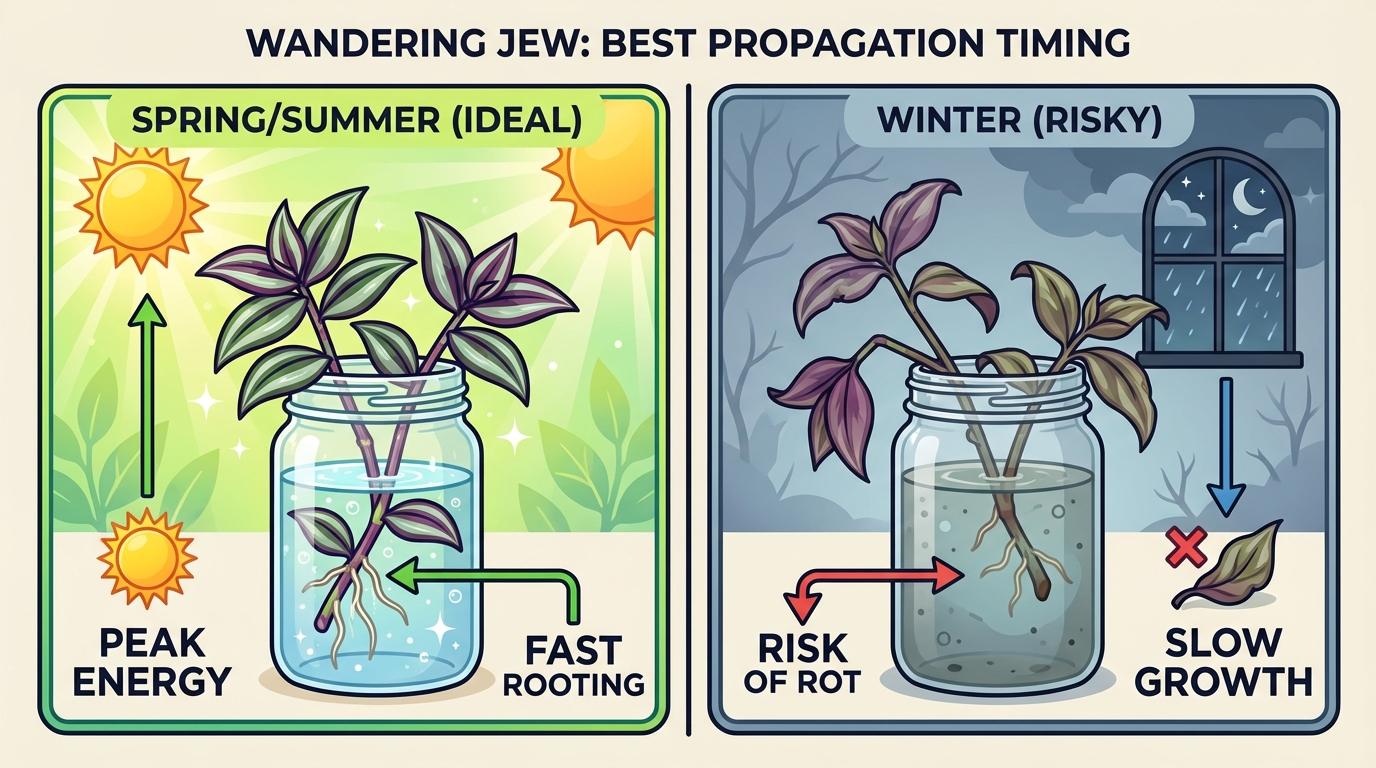
The best time to propagate Wandering Jew is spring through early summer, when the plant is actively growing.
During this period, the stems are stronger, light levels are better, and cuttings usually root faster.
Most healthy cuttings root best around 70°F to 80°F (21°C to 27°C). Cooler rooms can slow the process down.
You can still propagate in fall or winter if you need to save a struggling plant, but expect slower rooting. The main winter risks are cold water, low light, and wet soil that stays damp too long.
If you propagate during darker months, keep the cuttings warm, place them in bright indirect light, and avoid letting the soil become soggy.
How to Propagate Wandering Jew in Water
Water propagation is the easiest method for beginners because you can watch the roots develop through the glass.
Healthy cuttings often show tiny white roots within 3 to 7 days, though 1 to 2 weeks is a more realistic general expectation.
Step 1: Take a Healthy Cutting
Choose a healthy stem that is about 4 to 6 inches (10 to 15 cm) long.
Look for firm leaves, strong color, and at least one visible node. Avoid yellowing, mushy, shriveled, or damaged stems.
Use clean scissors or pruning snips to cut just below a node. The node is where new roots will form.
Step 2: Remove the Lower Leaves
Pinch off the leaves from the lower part of the cutting so at least one node is bare.
This step is important. Leaves that sit underwater usually rot, cloud the water, and can cause the cutting to turn mushy.
Keep only a few healthy leaves at the top of the cutting.
Step 3: Place the Cutting in Water
Place the bare node into a clean jar or glass of water.
The node should sit underwater, but the leaves should stay above the waterline.
Put the jar in bright indirect light. Avoid hot direct afternoon sun, which can overheat the water and stress the cutting.
Change the water every few days to keep it fresh.
Step 4: Move Rooted Cuttings Into Soil
Move the cutting into potting soil once the roots are about 1 to 2 inches (2.5 to 5 cm) long.
Do not leave water cuttings in the jar for months if your goal is a strong houseplant. Long water roots can struggle when they are suddenly moved into soil.
For a fuller pot, plant several rooted cuttings together instead of using only one stem.
How to Propagate Wandering Jew in Soil
Soil propagation is slightly less satisfying to watch, but it often produces stronger long-term plants.
The cutting forms roots directly in potting mix, so there is no water-to-soil transition later.
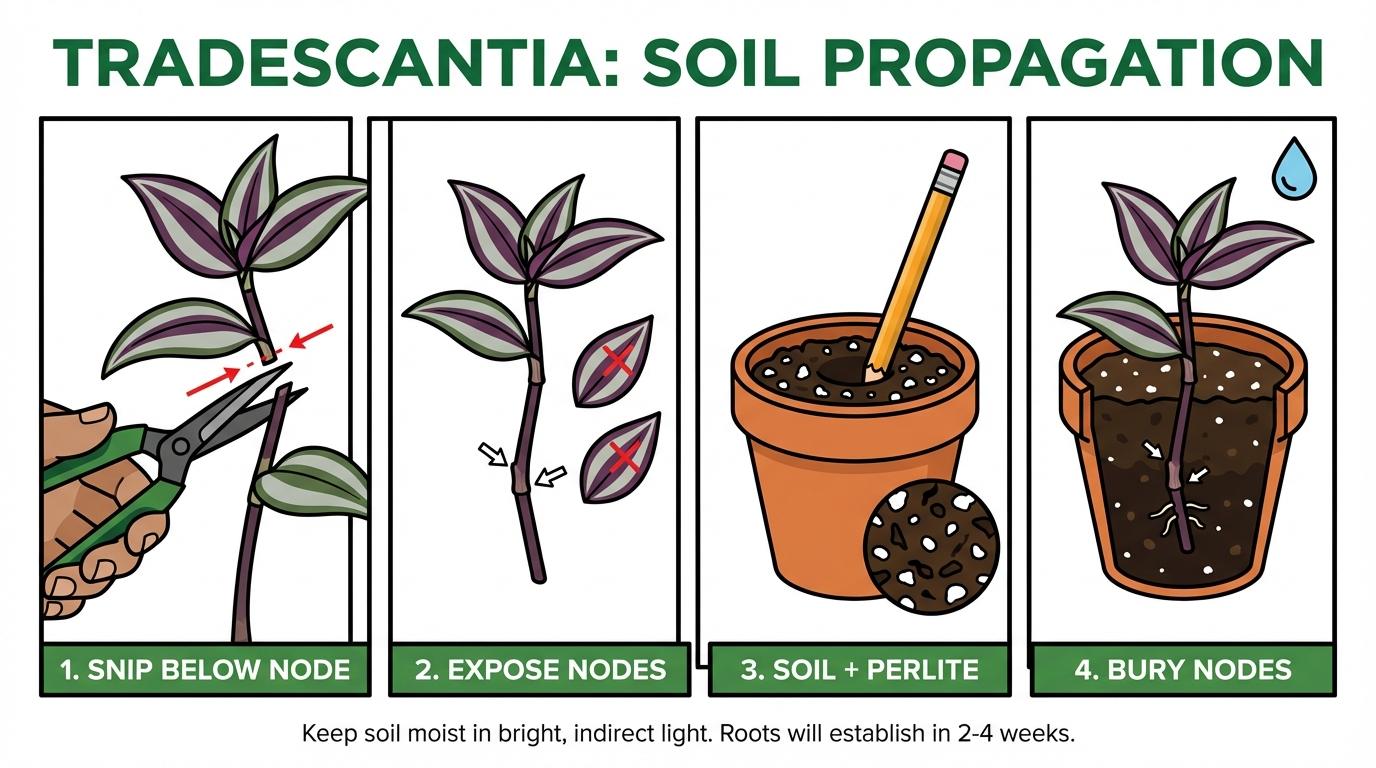
Step 1: Take Several Stem Cuttings
Take several healthy 4 to 6 inch (10 to 15 cm) stem cuttings.
Each cutting should include at least one node that can sit below the soil surface.
For a full-looking plant, use five or more cuttings in the same pot.
Step 2: Use a Well-Draining Potting Mix
Use a light indoor potting mix that drains well.
A standard houseplant potting soil mixed with perlite works well because it holds some moisture while still allowing oxygen around the stems.
Avoid heavy, soggy soil. Wet soil around soft Tradescantia stems can cause rot before roots have time to form.
Step 3: Plant the Cuttings
Make a small hole in the potting mix with your finger, a pencil, or a chopstick.
Insert the cutting so at least one bare node sits under the soil surface.
Firm the mix gently around the stem so it stands upright.
Step 4: Keep the Soil Lightly Moist
Water lightly after planting to settle the mix around the stems.
For the first 1 to 2 weeks, keep the soil slightly moist but never soggy.
You will know the cutting is rooting when you see fresh growth at the tip or feel slight resistance when you gently tug the stem.
How to Divide an Overgrown Wandering Jew
Division is best for a mature Wandering Jew plant that has filled its pot with roots and stems.
Unlike stem cuttings, division gives you established sections immediately. Each section already has roots attached, so recovery is usually faster than starting from a single cutting.
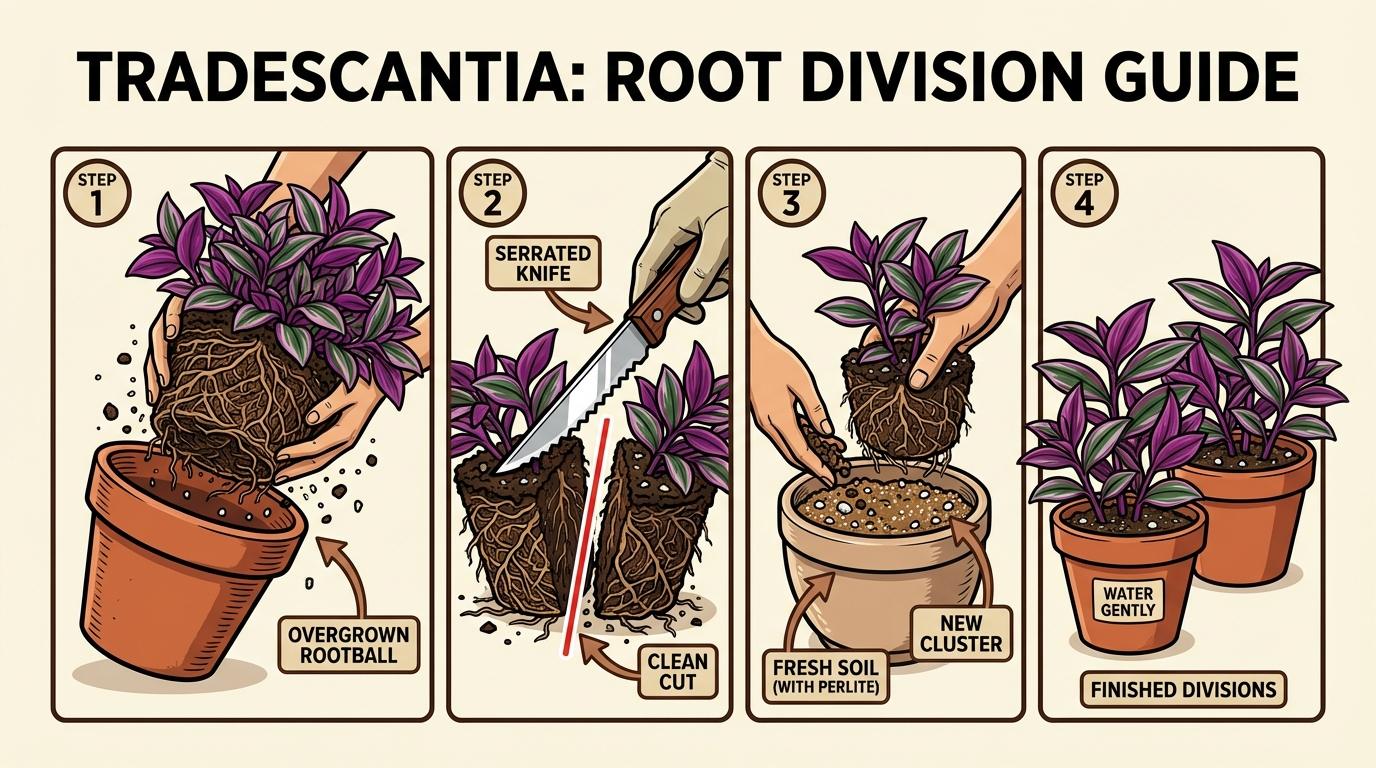
Step 1: Remove the Plant From Its Pot
Slide the plant gently out of its container.
If the rootball is tight, squeeze the pot sides or loosen around the edge first.
Set the plant on its side and remove loose old soil so you can see the rooted sections more clearly.
Step 2: Separate the Rootball
Look for natural clusters of stems with roots attached.
Some sections may pull apart by hand. Dense rootballs may need a clean knife to divide them.
Try to keep each division large enough to recover quickly. A good section should have several stems and a healthy amount of roots.
Step 3: Repot Each Section
Place each division into a fresh pot with well-draining potting mix.
Keep the plant at roughly the same depth it was growing before.
Do not bury the stems too deeply, because buried soft stems are more likely to rot.
Step 4: Water and Let It Recover
Water thoroughly after repotting to settle the mix around the roots.
Some drooping is normal for a few days after division.
Keep the plant in bright indirect light and avoid fertilizing immediately while the roots recover.
Where to Cut Wandering Jew for Propagation
The most important part of wandering jew propagation is cutting near a healthy node.
Nodes are the small joints where leaves attach to the stem. These nodes contain the tissue that can produce new roots.
If a cutting has no node, it usually will not root properly.
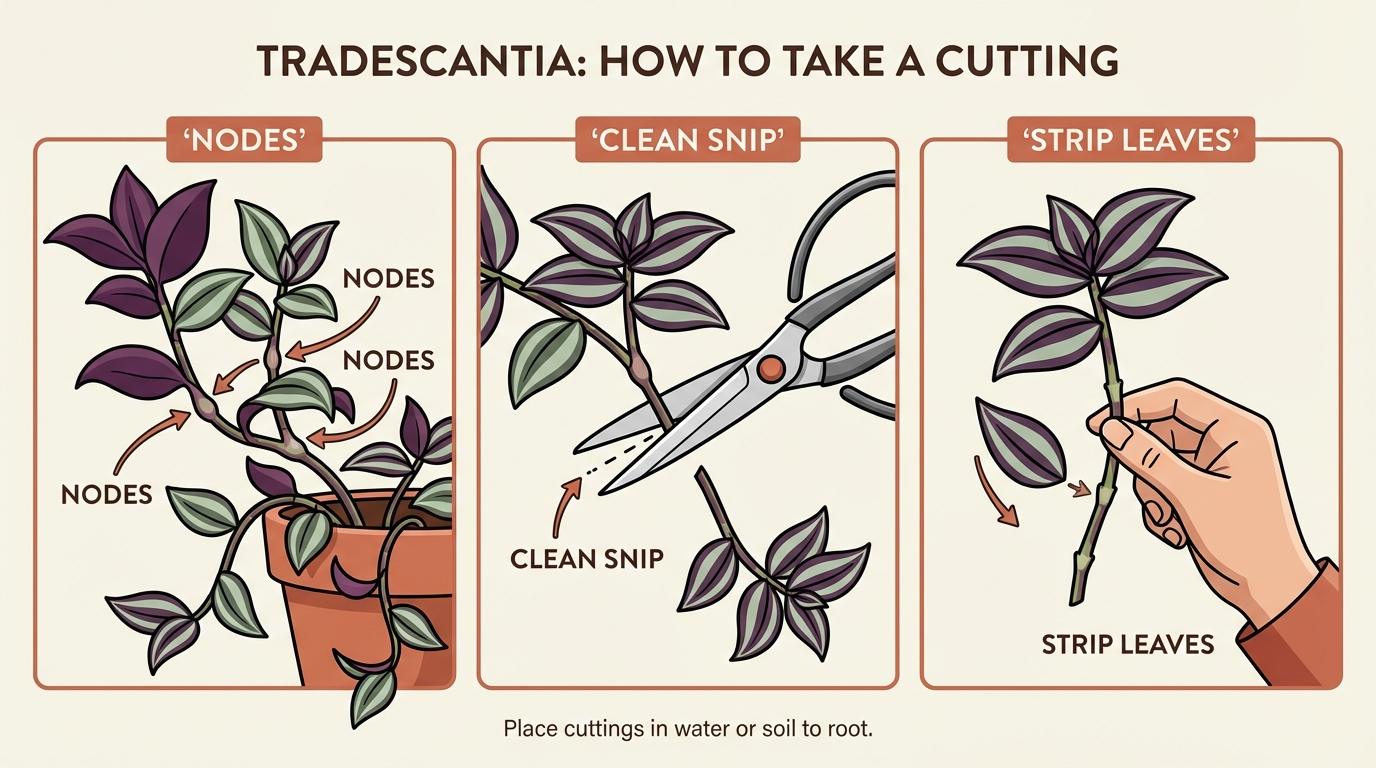
Choose Firm, Healthy Growth
Pick stems with firm leaves and strong color.
Avoid weak, yellow, mushy, or dried-out stems. Healthy cuttings root faster and are less likely to rot.
Cut Just Below a Node
Use clean, sharp scissors or pruning snips.
Cut about ¼ to ½ inch (0.6 to 1.3 cm) below a node.
A clean cut is better than a crushed or torn stem because damaged tissue is more likely to rot.
Remove Leaves From the Bottom Nodes
After cutting, remove the lower leaves.
The bare node should touch the water or potting soil directly. Leaves should not be submerged or buried.
This one step prevents many of the most common propagation failures.
Wandering Jew Propagation Timeline
Wandering Jew cuttings can root quickly, but exact timing depends on temperature, light, cutting health, and the propagation method.
| Time After Cutting | What Usually Happens | What to Do |
|---|---|---|
| Days 1 to 3 | The cutting may look slightly tired but should stay firm. | Keep it warm and in bright indirect light. |
| Days 3 to 7 | Tiny white roots may begin to appear in water. | Keep water clean and leaves above the waterline. |
| Days 7 to 14 | Roots usually lengthen noticeably. | Prepare potting mix once roots reach 1 to 2 inches (2.5 to 5 cm). |
| Weeks 2 to 4 | New leaf growth may appear after planting. | Keep soil lightly moist while roots settle. |
If a cutting still looks firm after two weeks but has not rooted much, it may simply need more warmth or light.
Common Wandering Jew Propagation Mistakes
Wandering Jew is forgiving, but propagation can still fail if the cutting rots, dries out, or does not receive enough light.
Most problems come from buried leaves, dirty water, cold rooms, soggy soil, or waiting too long to move water-rooted cuttings into soil.
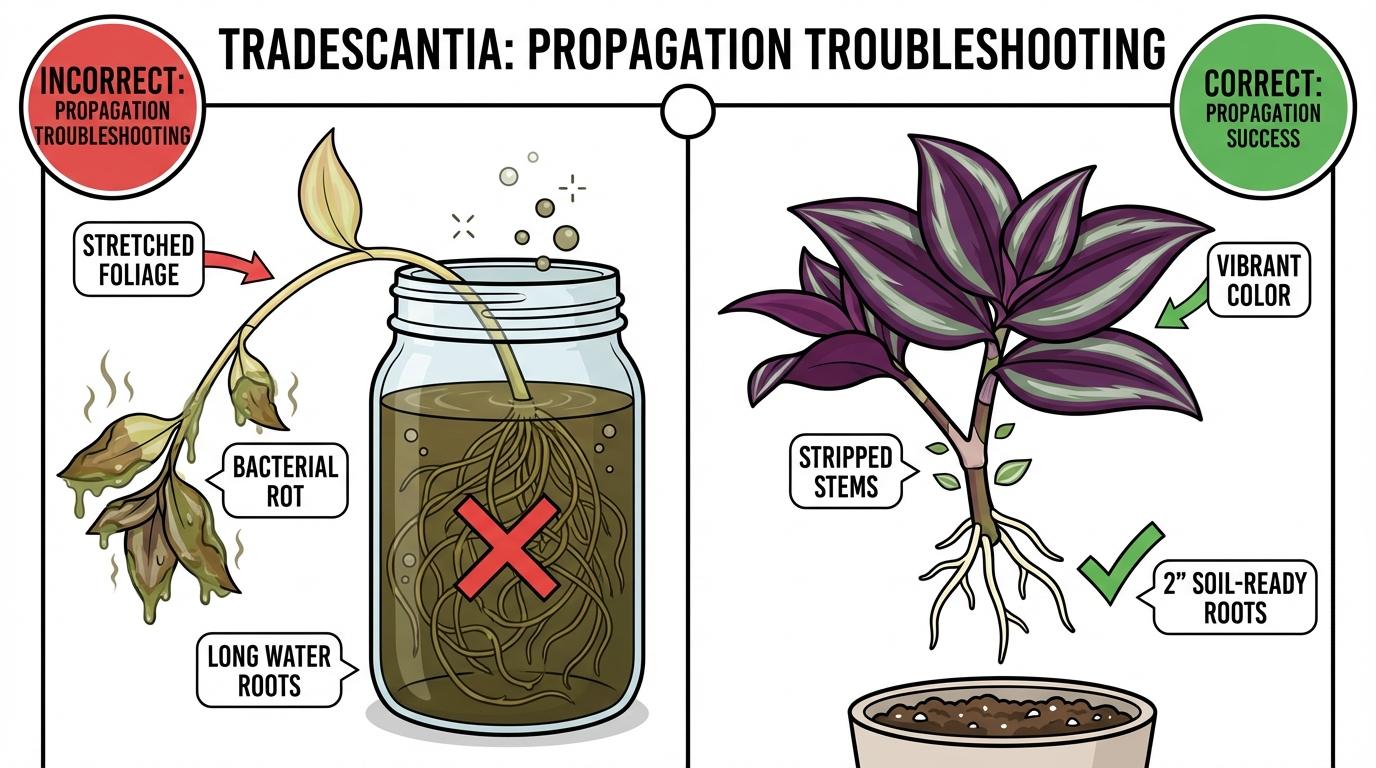
Mistake 1: Leaving Leaves Underwater
Leaves that sit in water usually rot quickly.
Rotting leaves can make the water cloudy, smell bad, and spread decay into the stem.
Always remove lower leaves before placing the cutting in water.
Mistake 2: Using Soggy Soil
Moist soil helps cuttings root. Soggy soil causes rot.
Use a light potting mix with drainage and water only enough to keep the medium slightly moist.
Mistake 3: Propagating in Too Little Light
Low light slows rooting and can produce pale, stretched growth.
Place cuttings in bright indirect light. Avoid harsh direct afternoon sun until the plant is established.
Mistake 4: Leaving Water Cuttings Too Long
Water-rooted cuttings should be moved into soil once roots are about 1 to 2 inches (2.5 to 5 cm) long.
If they stay in water for too long, they may struggle when moved into potting mix.
Mistake 5: Fertilizing Too Early
Fresh cuttings do not need fertilizer right away.
Wait until you see steady new growth before feeding. Too much fertilizer too soon can stress young roots.
How to Care for Wandering Jew Cuttings After Rooting
After rooting, new cuttings need gentle care while they adjust to potting soil.
The goal is to keep them lightly moist, warm, and well lit without overwatering or overfeeding.
Keep Soil Lightly Moist
Fresh roots dry out faster than established roots.
For the first couple of weeks after planting, check the soil regularly and water when the top layer starts to feel barely dry.
Do not let the pot sit in standing water.
Give Bright Indirect Light
Place new cuttings in bright indirect light.
Too little light causes weak, pale growth. Too much direct sun can scorch tender leaves before the roots are fully established.
Wait Before Feeding
Do not fertilize immediately after planting fresh cuttings.
Wait until the plant has settled and is producing new growth. Then use a diluted balanced houseplant fertilizer during the active growing season.
Pinch for a Fuller Plant
Once the cutting starts growing, pinch off the tip to encourage branching.
This small habit helps prevent long, bare vines and creates a fuller plant over time.
Optional Tools That Make Wandering Jew Propagation Easier
You do not need many supplies for wandering jew propagation. Clean scissors, water, potting mix, and bright indirect light are enough.
These optional tools are most useful if you propagate often, grow in low light, or struggle with rot.
✂️ Sharp Snips
Clean cuts reduce stem damage and help prevent rot.
🌱 Perlite
Improves drainage and airflow around soft stems.
💡 Grow Light
Helps cuttings stay compact in darker rooms or winter conditions.
🌡️ Heat Mat
Optional bottom heat can speed up rooting in cool rooms.
Frequently Asked Questions About Wandering Jew Propagation
- How long does Wandering Jew propagation take?
- Most healthy cuttings root within 1 to 2 weeks. In warm, bright conditions, roots may appear in only a few days.
- Can you propagate Wandering Jew in water?
- Yes. Place a stem cutting with at least one bare node in clean water. Keep the leaves above the waterline and change the water every few days.
- Can you propagate Wandering Jew directly in soil?
- Yes. Soil propagation works well because the cutting grows roots directly in the medium where it will continue growing.
- Where do you cut Wandering Jew for propagation?
- Cut just below a node. The node is the small joint where leaves attach to the stem, and it is where new roots form.
- Do Wandering Jew cuttings need rooting hormone?
- No. Wandering Jew usually roots easily without rooting hormone. It can be used as an optional boost, but it is not required.
- Why is my Wandering Jew cutting rotting?
- Rot usually happens when lower leaves are submerged or buried, the water is dirty, or the soil stays too wet. Remove lower leaves and keep the setup clean.
- When should I move water cuttings into soil?
- Move them when roots are about 1 to 2 inches (2.5 to 5 cm) long. Waiting too long can make the roots less adaptable to soil.
- Can I propagate Wandering Jew in winter?
- Yes, but it is slower. Use bright indirect light, warmth, clean water, or an airy potting mix to reduce the risk of rot.
- How many cuttings should I plant in one pot?
- Plant several cuttings together if you want a full plant. Five to eight cuttings in one pot usually creates a much bushier look than a single cutting.
- Is Wandering Jew toxic to cats and dogs?
- Tradescantia can irritate pets if chewed or brushed against. Keep the plant out of reach of cats and dogs, especially when propagating loose cuttings.
Related Wandering Jew Guides
For general care, start with our Wandering Jew Plant Care Guide.
You may also find these guides useful:
- Is Wandering Jew Toxic to Cats?
- Wandering Jew Varieties
- Wandering Jew Light Requirements
- Growing Wandering Jew Indoors
Editorial Sources
- NC State Extension: Tradescantia zebrina
- University of Wisconsin-Madison Division of Extension: Wandering Jew, Tradescantia zebrina


