Looking to buy a healthy live plant online?

1-YEAR WARRANTY
Get a nursery-quality, well-rooted live Tradescantia Zebrina Wandering Dude shipped directly to your door. Backed by a best-in-class plant warranty so you can shop with confidence.
What Is a Wandering Jew Plant? (Name, Origins & Debate)
The controversy surrounding the wandering jew plant name often surprises new houseplant owners. When Emilie bought our first trailing purple beauty at a local Aarhus market, we quickly realized this famous plant is going through a massive identity crisis.
Transparency note: Some links in this article are affiliate links. As an Amazon Associate I earn from qualifying purchases at no extra cost to you. I research current product options and select suggestions based on relevance, availability, customer signals, and fit with the care problem discussed here.
Botanically, this genus is known as Tradescantia, with Tradescantia zebrina being the most common indoor species. Today, most botanical institutions have actively phased out the historical wandering jew plant name because of its anti-Semitic origins.
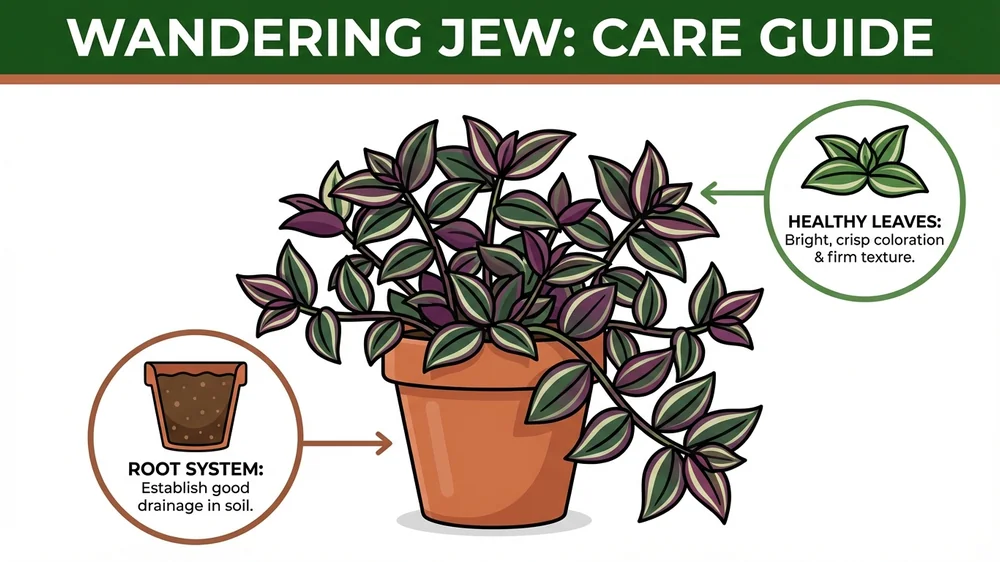
You will now frequently see it sold at nurseries as the Wandering Dude, Inch Plant, or simply Tradescantia. No matter what label is on the nursery pot, wandering jew plant care is incredibly rewarding once you understand its native habits.
Native to Mexico and Central America, these fast-growing vines naturally creep along the forest floor. They root quickly wherever their stems touch the soil. Bringing them indoors means we regularly propagate top cuttings to mimic this constant ground-cover spread.
Searching online for wandering jew plant name care often brings up very vague advice. However, actually growing wandering jew plant name varieties successfully requires understanding how they react to specific light thresholds and dry central heating.
In this wandering jew care guide, we will share our exact apartment-tested routine for tradescantia care. We will cover the tactile feel of the right soil, preventing crispy leaves, and keeping a healthy wandering jew plant name thriving on your windowsill.
📚 Want to learn more about Wandering Jew?
Read our deep-dive guide: Wandering Jew Guide
Wandering Jew Varieties Worth Growing
There are several distinct Wandering Jew varieties you can grow, though you will often see them labeled in plant shops as Tradescantia, Inch Plant, or Wandering Dude today. Many botanical institutions have rightfully phased out the historical common name.
When we started filling our Aarhus apartment with plants, we quickly realized the different types respond differently to indoor environments. Growing wandering jew varieties successfully means understanding their unique biological traits.
Tradescantia zebrina (The Classic Striped Type)
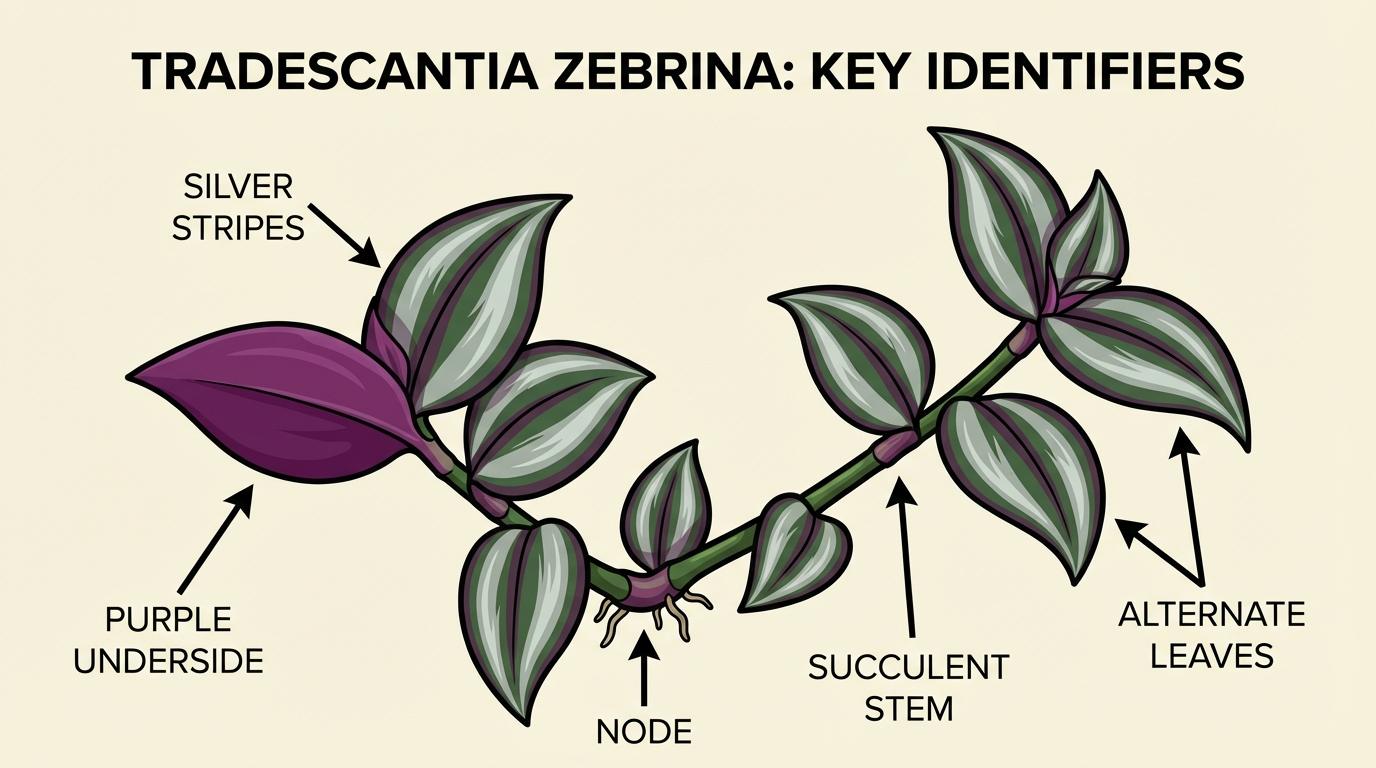
This is the most common type you will find. The leaves feature beautiful silver stripes with deep purple undersides. We have a huge one hanging in our living room right now.
That deep purple color comes from anthocyanin, a pigment the plant produces to protect itself from UV rays. If you give it poor light, the leaves turn completely green. We use a basic grow light during the dark Danish winters to keep those colors strong.
Tradescantia fluminensis (The White-Striped Trailer)
If you want a brighter look, this variety features green leaves with crisp white stripes. It grows incredibly fast. In our experience, it is also the quickest to look messy if neglected.
Mastering tradescantia care is crucial here. Proper wandering jew varieties care prevents the plant from losing its white stripes. If it reverts to solid green to maximize photosynthesis, you must move it closer to a window immediately to maintain healthy wandering jew varieties.
Tradescantia pallida (Purple Heart)
This plant looks completely different from the others. It has long, narrow leaves that are solid, bold purple from top to bottom. The stems are thick but quite fragile, so handle them carefully.
While testing routines for our wandering jew care guide, we discovered this type is surprisingly drought tolerant. Keep in mind that all these plants contain sap that can irritate skin. They are mildly toxic to cats and dogs, so keep them out of reach.
The Secret to Full Plants
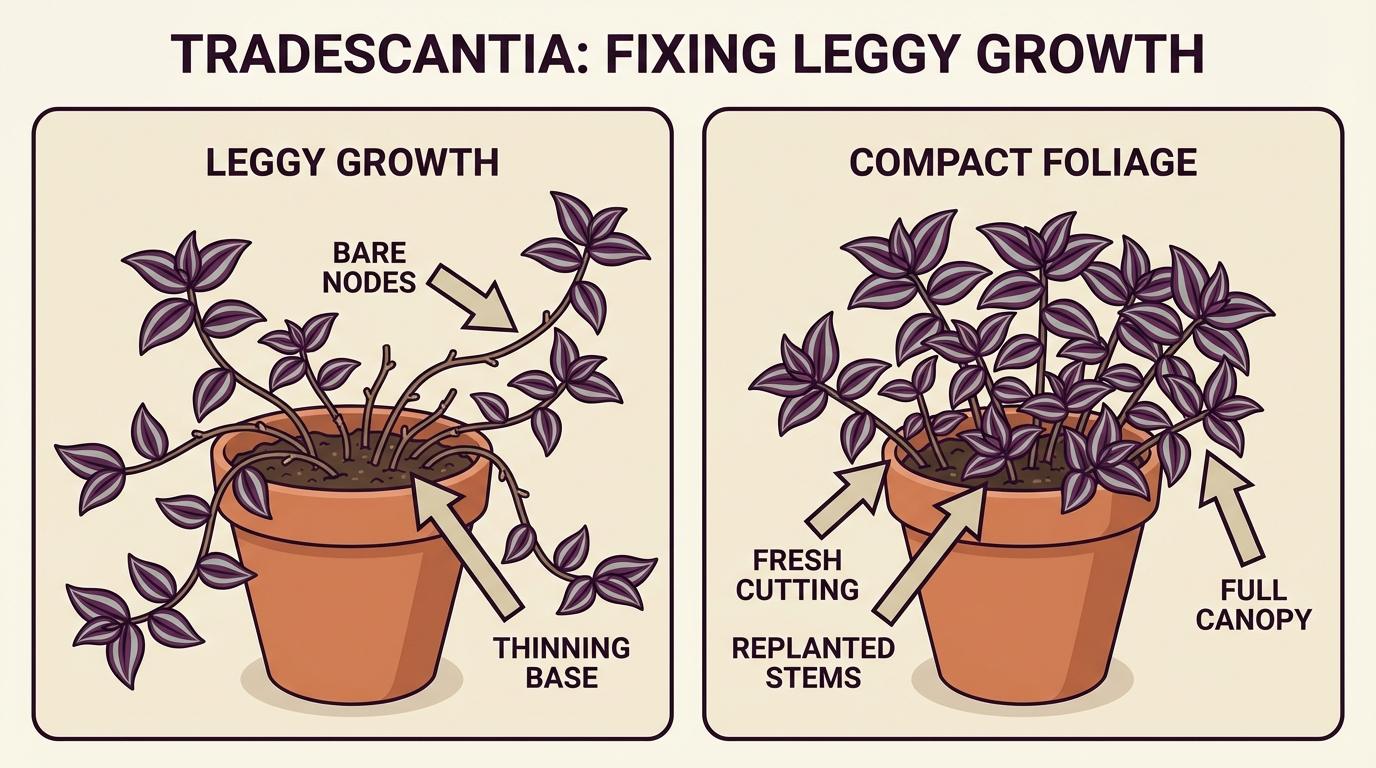
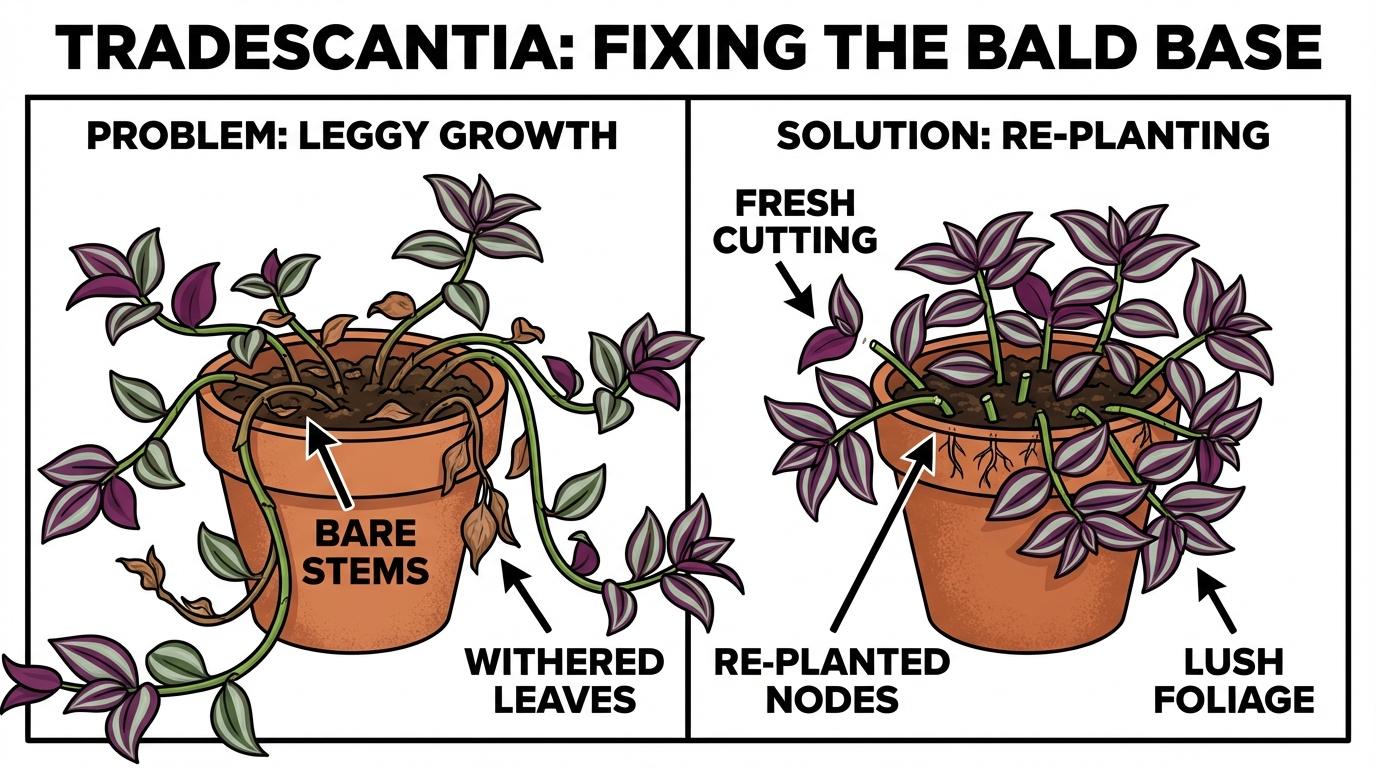
No matter which type you choose, they all share one frustrating trait. As the Wisconsin Horticulture Extension explains, older leaves naturally die off the base over time. You will inevitably end up with bare stems near the soil.
For this part of the guide, a researched product option that fits the job is:
Selected because this section is specifically about pruning snips use. Check Amazon for current price and availability.
We fix this by relying heavily on propagation. Whenever we grow these vines indoors, we regularly snip the leggy ends off. We simply poke those fresh cuttings straight back into the mother pot to hide the bald spots.
📚 Want to learn more about Wandering Jew?
Read our deep-dive guide: Wandering Jew Guide
Light Requirements for Wandering Jew
Figuring out the exact wandering jew light requirements is the single biggest factor in keeping those famous purple stripes. If you place your plant in a dark corner, it will quickly lose its distinctive color.
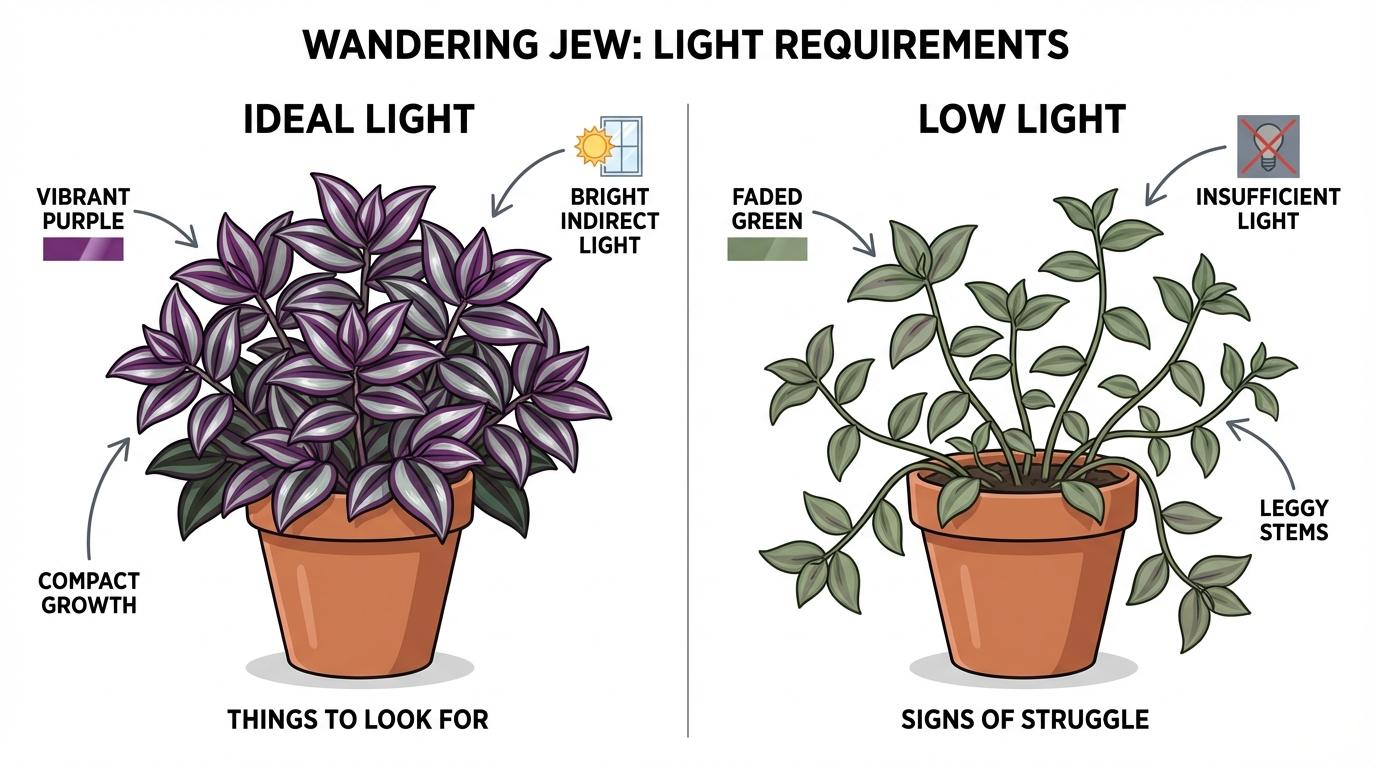
We learned this the hard way during our first dark Danish winter. The lack of sunlight caused our plant to turn completely green. It turns out, the purple pigment, called anthocyanin, acts like plant sunscreen against UV rays.
When researching growing wandering jew light requirements, you quickly learn about this protective pigment. As noted by NC State Extension, without enough light, the plant produces more green chlorophyll to survive. It is a smart botanical mechanism, but it ruins the look.
Finding the Right Spot
After moving our pot around our Aarhus apartment, we finally found the sweet spot. An east-facing windowsill gives the plant bright, indirect morning sun without scorching the delicate leaves.
If you want a healthy wandering jew light requirements need to stay consistent. Direct, intense afternoon sun will actually bleach the leaves and crisp the edges.
During the winter months, we supplement with a basic LED grow light. Keeping the artificial light on for about 10 to 12 hours a day prevents the stems from stretching out and looking sparse.
Signs Your Plant Needs More Light
Assessing wandering jew light requirements care involves reading your plant’s daily signals. Here is what you should look out for:
- Fading purple stripes that slowly turn solid green.
- Long stretches of bare stem between each new leaf.
- Smaller leaf size overall compared to older growth.
Part of proper wandering jew plant care means moving the pot closer to a window if you spot these signs. A quick distance adjustment is often all it takes to bring the color back.
Including proper lighting in your overall tradescantia care routine makes everything else much easier. In fact, following a solid wandering jew care guide always starts with placing the plant in the right window first.
📚 Want to learn more about Wandering Jew?
Read our deep-dive guide: Wandering Jew Guide
If your plant is not getting enough natural light, this in a standard floor lamp changes everything:
Fits a standard lamp but delivers intense, full-spectrum light. Powerful enough for large floor plants in dark corners.
How Often to Water Wandering Jew
Knowing exactly how often to water wandering jew depends entirely on the season and your soil mix. As a general rule, we water ours every seven to ten days during the active growing season. You want to let the top inch or two of soil dry out completely before giving it another drink.
When you are growing, how often to water wandering jew vines should be determined by touch rather than a strict calendar. In our drafty Aarhus apartment, the central heating dries out pots much faster in winter than in the mild summer.
The Tactile Soil Test
To keep the root system healthy, how often to water wandering jew plants relies on a basic finger test. Emilie simply pokes a finger into the top two inches of the potting mix. If the soil feels damp or cool to the touch, we wait a few more days.
If the soil feels dry and dusty, it is time for a thorough soak. When deciding how often to water wandering jew care routines must adapt to these physical signals to prevent accidental root rot.
Bottom Watering Prevents Rot
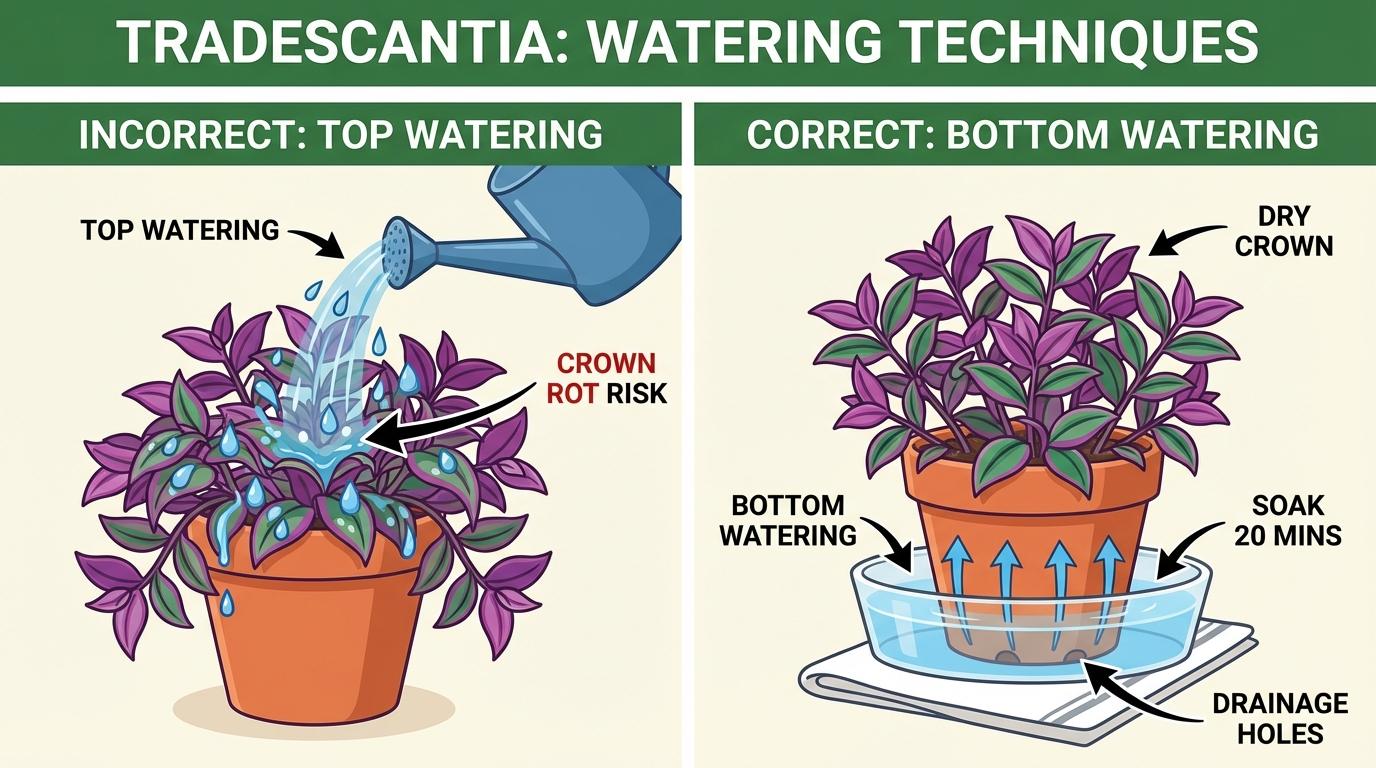
When we first brought these vines indoors, we made the mistake of watering them from the top. We quickly learned that the tiny hairs on their leaves physically trap moisture. If water sits on the foliage, the plant becomes highly susceptible to fungal leaf-spot diseases and crown rot.
Because of this botanical quirk, our approach to tradescantia care relies entirely on bottom watering. We fill a bowl with lukewarm water and let the pot soak it up through the drainage holes for about twenty minutes.
This method keeps the delicate crown completely dry. Following a reliable wandering jew care guide means ensuring the root ball gets saturated safely without ever wetting the leaves.
Adjusting for Danish Winters
During our dark Scandinavian winters, plant growth slows down dramatically. You will need to stretch the time between waterings to every two or three weeks to accommodate the extreme lack of light.
Always use lukewarm water to avoid shocking the roots. Cold tap water straight from the sink can cause sudden leaf drop, ruining an otherwise thriving wandering jew. Proper wandering jew plant care means respecting their tropical origins, even when it is freezing outside.
📚 Want to learn more about Wandering Jew?
Read our deep-dive guide: Wandering Jew Guide
Best Soil Mix for Wandering Jew
Finding the right wandering jew soil mix changed everything for us. Early on, we almost lost our first plant to root rot because we used dense, cheap potting soil from a local supermarket.
For this part of the guide, a researched product option that fits the job is:
Selected because this section is specifically about potting mix use. Check Amazon for current price and availability.
These plants are highly susceptible to crown rot if their delicate roots sit in boggy conditions. Any effective wandering jew plant care routine must start with a base that drains quickly.
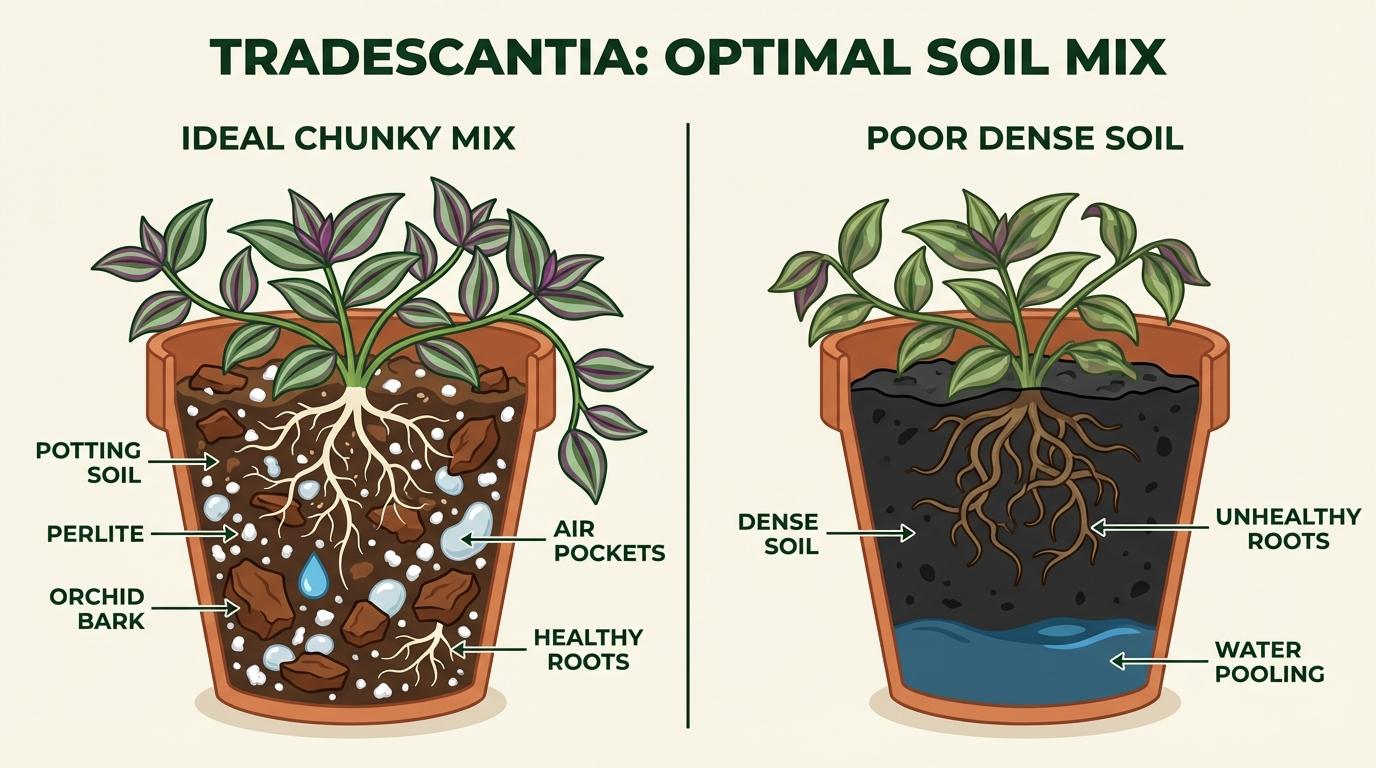
To ensure a healthy wandering jew soil mix, we developed a simple recipe for our Aarhus apartment. We combine two parts standard indoor potting soil with one part perlite and one part orchid bark.
When you squeeze a handful of this mix, it should feel chunky and spring back instantly. This airy texture prevents the soil from compacting over time, which is crucial for tradescantia care.
Adapting for Indoor Environments
Successfully growing wandering jew soil mix indoors requires extra attention to drainage, especially during cold Danish winters. Central heating dries the top layer out quickly, but dense dirt can stay dangerously wet below.
The Penn State Extension points out that poor drainage is the primary cause of root rot in houseplants. Adding plenty of perlite creates vital air pockets that keep the root system oxygenated.
If you plan to propagate your stem cuttings directly into a pot, starting them in this chunky blend gives tiny new roots room to breathe. Proper wandering jew soil mix care prevents unexpected stem rot entirely.
A reliable wandering jew care guide will always emphasize that good drainage equals healthy leaves. Once we perfected this well-draining base, our plants stopped dropping soft, yellow leaves and exploded with new growth.
📚 Want to learn more about Wandering Jew?
Read our deep-dive guide: Wandering Jew Guide
If your plant has been in the same soil for 2+ years, it is time to upgrade:
A powerhouse blend with earthworm castings and bat guano. Perfect for hungry tropicals that want to grow big.
Temperature and Humidity Needs
When it comes to understanding wandering jew temperature humidity, our Danish apartment presents a classic challenge. We keep our home around 20°C (68°F), which is perfectly fine for these tropical trailing vines. The real struggle starts when winter hits and the radiators turn on.
For this part of the guide, a researched product option that fits the job is:
Selected because this section is specifically about hygrometer use. Check Amazon for current price and availability.
Central heating completely destroys our indoor air moisture, often dropping it below 30 percent. We learned the hard way about proper wandering jew temperature humidity care when Emilie noticed the tips of our oldest plant turning brown and crispy.
Joakim bought a cheap digital hygrometer and found that growing wandering jew temperature humidity levels ideally need to sit between 40 and 50 percent. A solid wandering jew care guide will tell you they tolerate average room conditions, but they definitely prefer slightly more moisture.
The Problem with Misting
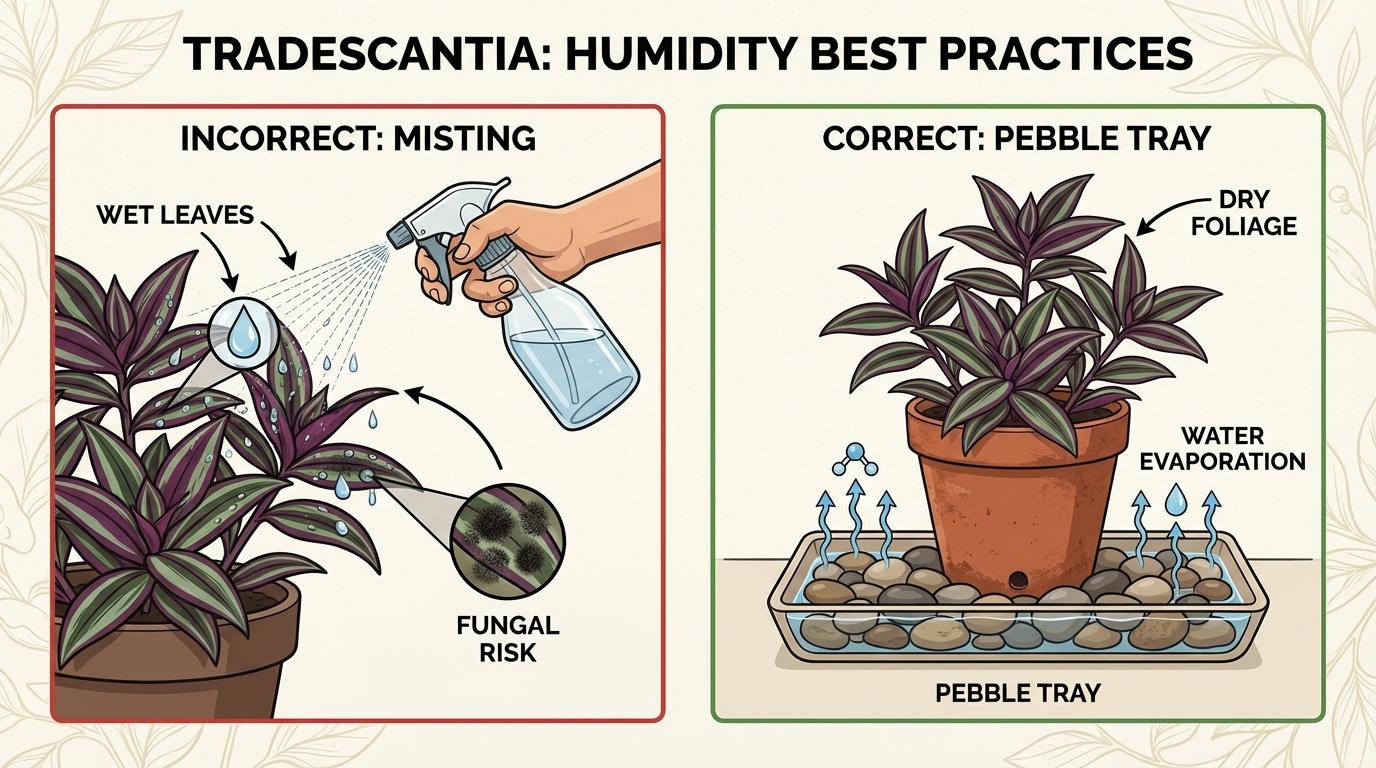
Many people suggest spraying the leaves to boost moisture, but please do not do this. Tradescantia leaves are covered in tiny hairs that trap water droplets against the surface.
For this part of the guide, a researched product option that fits the job is:
Selected because this section is specifically about neem oil spray use. Check Amazon for current price and availability.
According to the Wisconsin Horticulture Extension, wet foliage invites dangerous fungal leaf-spot diseases. If water sits in the crown of the plant, it will quickly lead to severe stem rot.
Instead of misting, we place our pots on pebble trays filled with water. As the water evaporates, it creates a small, humid microclimate directly around the leaves without ever getting them wet.
For plants that need 60%+ humidity, a proper humidifier beats any other method:
6L tank that runs 24–60 hours per fill. Quiet, cool-mist, and large enough to raise humidity in a whole room.
Dealing with Cold Drafts
Maintaining a healthy wandering jew temperature humidity balance also means watching out for cold window drafts. While they handle our normal room temperatures beautifully, anything below 10°C (50°F) will damage the delicate stems.
We always pull our pots slightly away from the cold glass during January and February. Keeping them warm indoors while still providing enough light is a constant balancing act.
If you group your plants close together, they will actually share moisture through transpiration. This simple trick has become a staple in our overall tradescantia care routine during the dry winter months.
How to Fertilize Wandering Jew
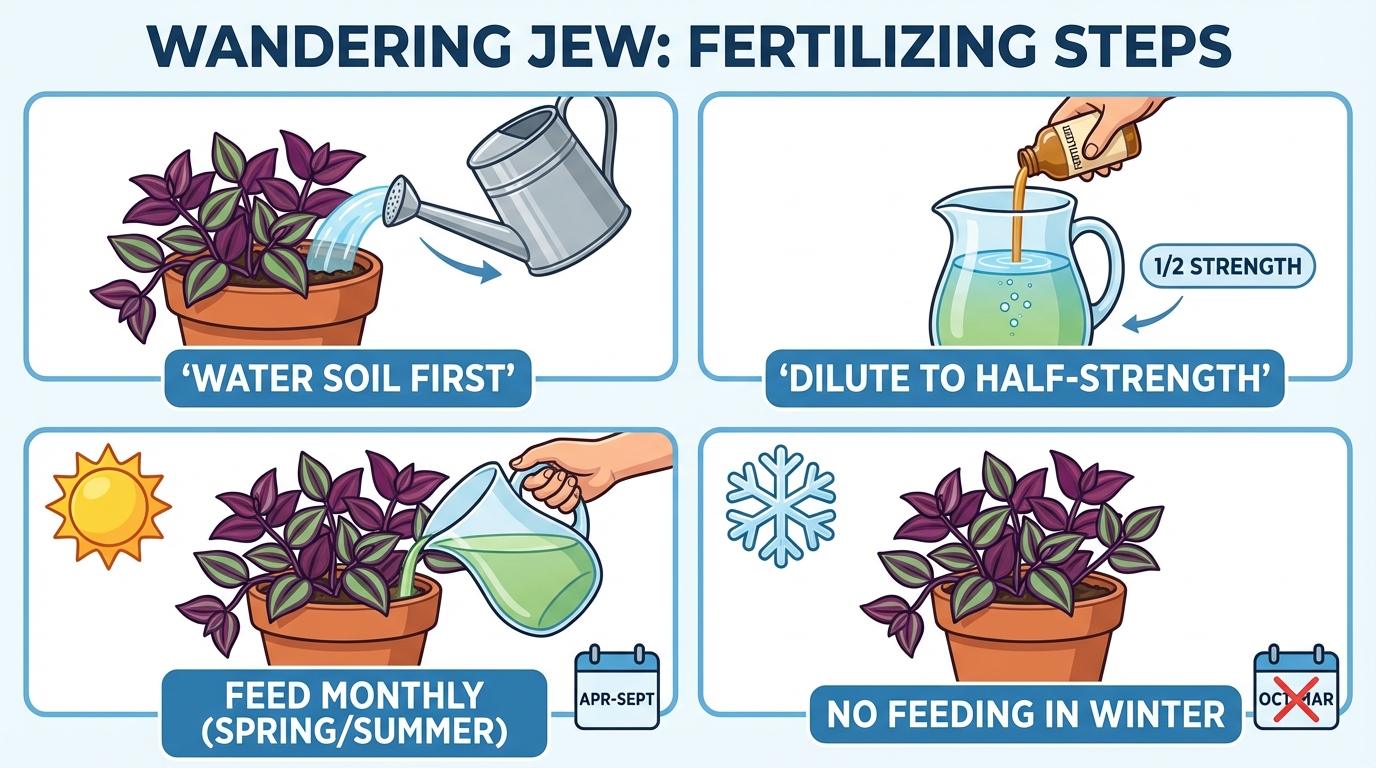
Getting your wandering jew fertilizer routine right is actually quite simple for most varieties. We feed ours once a month during the spring and summer using a basic liquid houseplant fertilizer. You want a high-nitrogen formula to support all those rapidly growing leaves.
In our early days of growing, wandering jew fertilizer was whatever cheap liquid we found at the local supermarket. Joakim started reading up on plant nutrition and learned that foliage-heavy houseplants thrive on a 3-1-2 NPK ratio. That specific nitrogen bump is exactly what fuels the rapid leaf production.
Because we live in Denmark, our winters are incredibly dark. We completely stop feeding our plants from October to March. Giving a healthy wandering jew fertilizer dose during these low-light months just leads to weak, spindly stems because the plant cannot photosynthesize properly.
Choosing the Right Nutrients
According to the University of Florida IFAS Extension, these fast-growing vines are heavy feeders when actively producing new foliage. We always dilute our standard liquid plant food to half strength to prevent chemical burns on the roots. This simple wandering jew fertilizer care habit stops the leaf tips from turning crispy.
We always water our plants thoroughly before applying any plant food. Pouring nutrients directly onto dry soil is a fast way to damage the delicate root system. Making this pre-watering rule a strict habit is a core part of our overall tradescantia care routine.
The fertilizer I have used consistently longer than any other:
Complete liquid fertilizer with all 16 essential nutrients. The 7-9-5 ratio is dialled in for lush foliage plants.
Recognizing Over-Fertilization
It is very easy to get carried away when feeding your plants indoors. If you notice a white, crusty salt buildup on the soil surface, you are definitely giving them too much. You might also see sudden leaf drop, which Emilie experienced firsthand after being slightly too generous with the feeding can.
To fix this, we place the pot in our sink and flush the soil with lukewarm water for a few minutes to wash away the excess salts. A reliable wandering jew care guide will always remind you that under-feeding is much safer than over-feeding.
Once your plant recovers and is actively growing again, you will probably need to propagate the long stems. Regular pruning combined with steady, light feeding keeps the stems dense and hides those inevitable bald spots near the soil.
📚 Want to learn more about Wandering Jew?
Read our deep-dive guide: Wandering Jew Guide
How to Propagate Wandering Jew
Figuring out how to propagate wandering jew is the single most important skill for keeping this plant looking full. Because older leaves naturally die off near the soil over time, multiplying your plant is a constant necessity.
Early on, Emilie tried pinning long vines directly to the top of the dirt, but they just rotted. Joakim dug into a solid wandering jew care guide and found that taking tip cuttings is actually the most reliable method for tradescantia care.
Water vs. Soil Methods
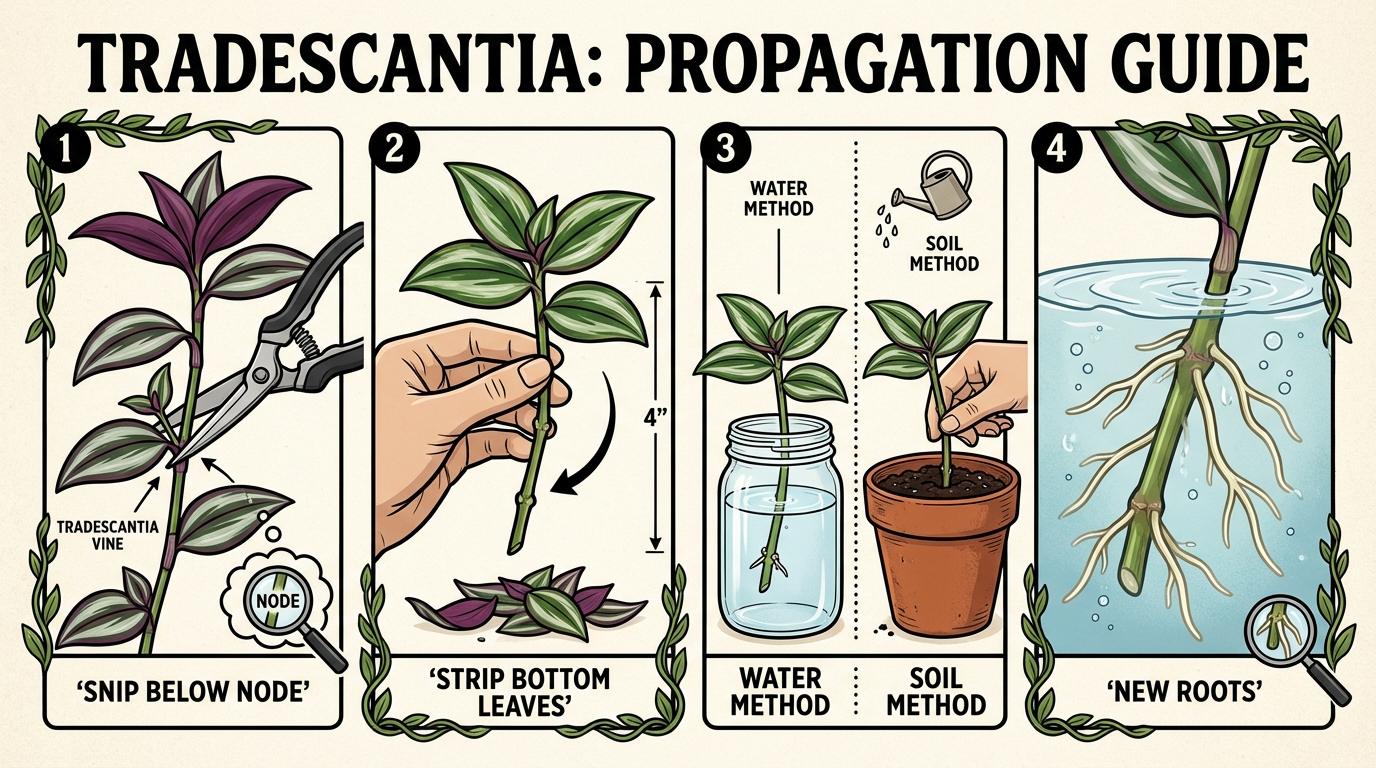
We usually start by snipping off a four-inch piece of healthy stem just below a leaf node. We strip the bottom leaves and drop the stem into a simple glass of tap water.
In our Aarhus apartment, these glasses sit right on our bright east-facing windowsill. Successfully growing how to propagate wandering jew cuttings requires decent light to trigger fast rooting.
You can also skip the water entirely. Sometimes, we just propagate fresh cuttings directly back into the mother pot to hide those inevitable bald spots.
According to the Wisconsin Horticulture Extension, this plant roots so aggressively that soil propagation works almost immediately if the dirt is kept slightly moist.
Maintaining Your New Cuttings
Mastering how to propagate wandering jew care routines means keeping the new soil warm. Cold winter drafts from Danish windows will stall root growth completely.
Once the roots establish, your focus shifts to maintaining a healthy how to propagate wandering jew project. This simply means giving the young root system time to settle before applying any fertilizer, which is a staple of good wandering jew plant care.
Whether you are expanding your collection indoors or sharing cuttings with friends, regular pruning keeps everything tidy. Consistently trimming the ends is the best tradescantia care habit to avoid dreaded stringy stems.
📚 Want to learn more about Wandering Jew?
Read our deep-dive guide: Wandering Jew Guide
Pruning and Maintenance for Bushier Growth
If you want a full, thick pot, mastering wandering jew pruning is absolutely essential. Most articles vaguely suggest pinching back stems, but they gloss over a frustrating biological reality.
As these vines grow longer indoors, the older leaves near the soil will inevitably dry up and fall off. No amount of wandering jew plant care can stop this natural aging process. You will eventually be left with bare, leggy stems at the base.
We spent our first year watching our own plant grow long and stringy before we figured it out. We quickly learned that the secret to healthy wandering jew pruning is actually continuous, aggressive trimming.
The Continuous Chop and Prop Method
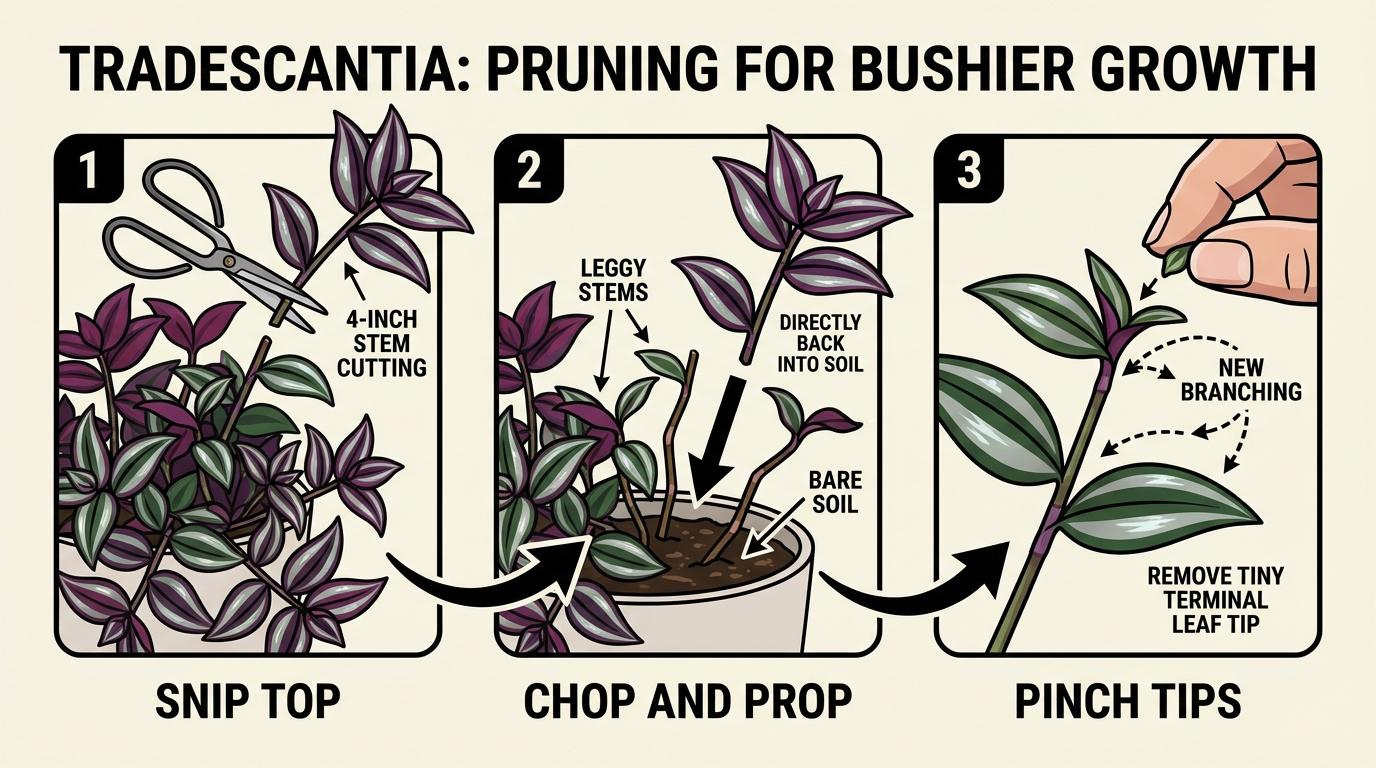
Whenever our vines stretch more than a foot over the pot edge, we grab our sterile scissors. We snip off the top three to four inches of the healthy stem.
Instead of starting a new pot, we simply propagate these fresh cuttings by poking them directly back into the mother plant’s soil. According to the Wisconsin Horticulture Extension, these stems root aggressively in moist dirt.
This technique instantly hides the bald spots near the crown. Consistent growing wandering jew pruning care turns a sparse vine into a dense, compact houseplant.
Pinching for Branching
Between major haircuts, we practice simple pinching to encourage lateral growth. You literally use your fingers to pinch off the newest tiny leaf tips at the end of a vine.
Removing the tip forces the plant to push energy backward, creating two new branches where there was only one. This biological response is a crucial part of our tradescantia care routine for maximizing fullness.
Remember that trimming alone cannot fix everything. If your plant is not getting enough light, especially during our dark Danish winters, the new growth will still stretch out and look weak.
A reliable wandering jew care guide always combines routine haircuts with adequate sun exposure. If you make this wandering jew pruning care a monthly habit, your plant will reward you with thick, cascading stems.
Clean cuts matter — a crushed stem invites rot and disease. These snips make clean cuts every time:
Sharp, spring-loaded, and precise. Makes clean cuts that heal fast — essential for propagating without crushing the stem.
Common Problems and How to Fix Them
Dealing with wandering jew problems is much easier when you understand how this plant behaves in nature. Before fixing anything, we want to note that the botanical community is shifting toward names like Tradescantia, Inch Plant, or Wandering Dude due to the historical name’s anti-Semitic origins.
We still use the older term occasionally so people can find this wandering jew care guide, but we highly prefer Tradescantia. Let us walk through the most common growing wandering jew problems you will face in your home.
The Inevitable Bald Base
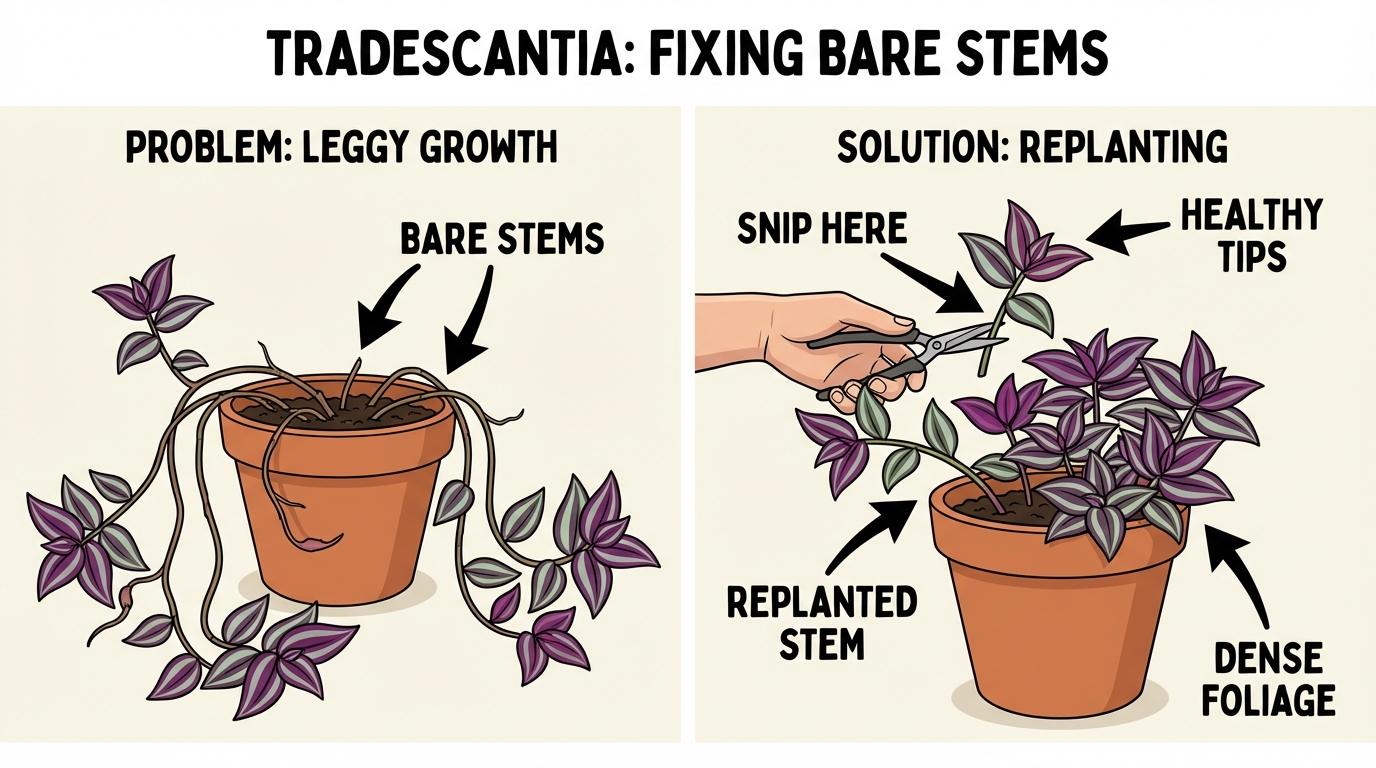
The most frequent healthy wandering jew problems involve stems getting completely bare near the soil line. Many people think they are doing something terrible when the lowest leaves crisp up and drop off.
The truth is that older leaves naturally die off over time. You cannot stop this biological process. To maintain a full pot indoors, you must continuously propagate your healthy top cuttings.
We just snip the ends off and stick them straight back into the bare dirt. This endless cycle of trimming and replanting is the only real way to keep your plant looking thick and bushy.
Fading Colors and Reversion
If your dark purple stripes are turning solid green, you are facing a classic light issue. Generic advice just says to move the pot, but the science behind this is actually fascinating.
The purple pigment, called anthocyanin, acts like a botanical sunscreen. The University of Florida IFAS Extension notes that plants produce these pigments to protect their vulnerable leaves from intense UV rays.
When stuck in a dark corner, especially during our gloomy Aarhus winters, it stops producing that purple shield. Instead, chlorophyll takes over completely to maximize whatever little sun it can find.
Proper wandering jew problems care means moving the pot closer to an east or west-facing window. A few weeks of better sunlight usually brings the striking colors right back, which is a cornerstone of basic wandering jew plant care.
Fungal Leaf Spot and Crown Rot
Many houseplant owners mistakenly mist their tradescantia to boost humidity. This is a fast track to severe fungal infections and crown rot.
If you look closely at the leaves, you will notice tiny hairs covering the surface. These delicate hairs trap sitting water droplets against the plant tissue, creating a perfect breeding ground for fungal spores.
After destroying one of our favorite varieties this way, we completely stopped misting. Good tradescantia care relies entirely on bottom watering to keep the fuzzy foliage totally dry.
If you spot brown, mushy spots on the leaves, cut the affected stems off immediately. Wash your hands afterward, as the sap is mildly toxic to cats and humans, and can cause mild skin irritation.
Is Wandering Jew Toxic to Cats and Dogs?
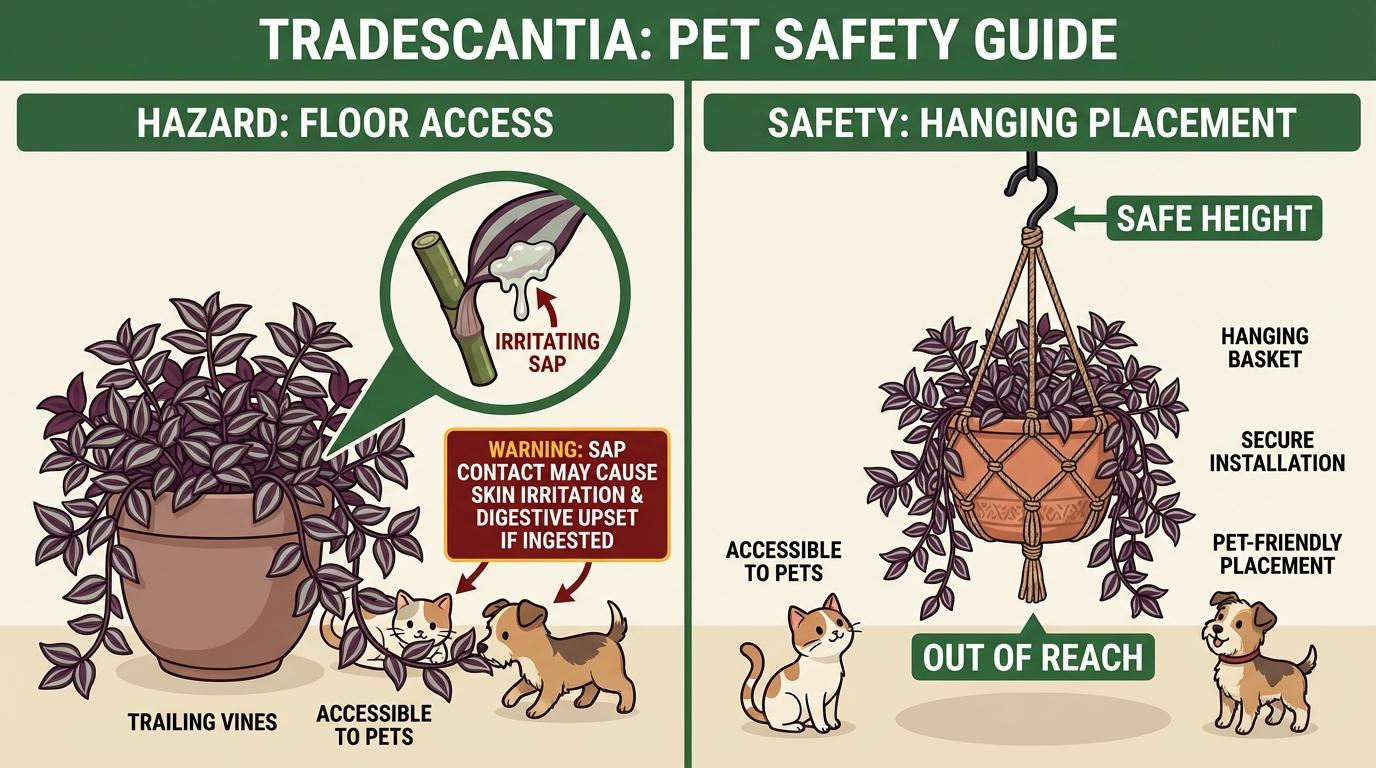
The short answer is yes. According to the ASPCA, this plant is mildly toxic to both felines and canines. The main issue lies in the plant sap, which causes skin dermatitis and upset stomachs.
We always cover this early in our wandering jew care guide because the hazard is often misunderstood. It is not fatal, but chewing on the leaves will give your pet an itchy mouth and a very unhappy digestive system.
Emilie actually learned about this sap firsthand. While she was taking cuttings to propagate our oldest plant, the clear liquid gave her a mild, itchy rash. The exact same irritation happens to curious animals.
Keeping Pets Safe Indoors
If you are searching for wandering jew toxic to cats information, do not panic. You can still keep these beautiful trailing vines in your home. We simply hang our pots from the ceiling in our Aarhus apartment.
Information about growing wandering jew toxic to cats safely is requested often. The solution is simple: keeping them high up on floating shelves ensures your pets cannot reach the long stems as they trail downward.
If a pet does nibble a fallen leaf, watch for redness around their mouth or sudden vomiting. Proper wandering jew toxic to cats care involves quickly sweeping up any older, crispy leaves that naturally drop to the floor.
Handling the Plant Safely
Whether you own one plant or collect several varieties, every good tradescantia care routine should include washing your hands immediately after pruning. We always wipe down our counter if any sap drips during trimming.
Maintaining a healthy wandering jew toxic to cats environment is entirely manageable. Just treat the plant with respect, give it plenty of light safely out of reach, and enjoy the striking colors without worry.
📚 Want to learn more about Wandering Jew?
Read our deep-dive guide: Wandering Jew Guide
Repotting Your Wandering Jew
Mastering the process of repotting wandering jew plants is surprisingly different from handling other houseplants. Because these fast-growing vines naturally lose their older base leaves over time, simply moving them to a larger pot rarely solves a sparse appearance.
A standard wandering jew care guide often tells you to repot every spring. In our experience growing them indoors in Aarhus, we actually prefer to restart the plant entirely by taking top cuttings rather than repotting an old, bald rootball.
If you do decide to keep the original root system, wait until roots are actively poking through the bottom drainage holes. Healthy repotting wandering jew routines should only happen when the plant is genuinely rootbound.
Choosing the Right Soil Mix
Proper wandering jew plant care requires excellent drainage. Danish tap water is quite hard, and our winter central heating dries out the topsoil quickly while the bottom remains soggy.
After losing a few plants to root rot, we switched to a simple mixture of 60 percent standard potting soil and 40 percent chunky perlite. This creates vital air pockets that let the roots breathe.
Using this light, airy mix is the foundation of good repotting wandering jew care. It prevents the dense, wet conditions that lead to fungal issues and sudden stem collapse.
The Repotting Process
When moving your plant, choose a pot only one size larger than the current one. Squeezing a small rootball into a massive pot holds too much water, which stalls growth.
Emilie always uses this time to tackle the bald base, which the Wisconsin Horticulture Extension notes is a natural aging process for these vines. We simply snip off the longest stems and propagate them directly into the fresh soil around the old crown.
This combined approach of transplanting and pruning is our secret to a full, cascading pot. It turns a messy chore into an essential tradescantia care technique.
Anyone focused on growing repotting wandering jew skills will quickly learn that these vines are extremely resilient. Just give the fresh soil a thorough bottom-watering, place it in bright light, and watch the new roots take hold.
📚 Want to learn more about Wandering Jew?
Read our deep-dive guide: Wandering Jew Guide
What I Use for Wandering Jew
Products I have personally researched and recommend.
The cheapest upgrade you can make to any potting mix. A handful per pot dramatically improves drainage and aeration.
Check Price → (paid link)
The long, narrow spout lets you water directly at the soil level without splashing leaves — keeps foliage dry and reduces fungal risk.
Check Price → (paid link)
Slow-release granules that feed for 6 months. Mix into the top of the soil and forget about fertilizing for half a year.
Check Price → (paid link)
Accurate humidity and temperature monitor with Bluetooth logging. Know exactly what conditions your plants are living in.
Check Price → (paid link)
Common Questions About Wandering Jew Plant Care
Why is the plant called “Wandering Jew” and is the name offensive?
The name “Wandering Jew” references a medieval myth about a Jewish man who supposedly mocked Jesus during the crucifixion and was cursed to wander the earth until the Second Coming.
The fast-growing Tradescantia plant was given this common name due to its rapid, “wandering” growth habit. Today, the name is widely considered offensive and xenophobic because of its roots in anti-Semitic folklore, which was historically used to justify persecution.
As a result, many plant enthusiasts now refer to it as the “Wandering Dude,” “Inch Plant,” or by its scientific name, Tradescantia zebrina.
How much light does a Wandering Jew plant need?
Wandering Jew plants (Tradescantia) thrive in bright, indirect sunlight and ideally need 6 to 8 hours of filtered light daily. If the plant does not receive enough light, its vibrant purple, pink, and silver striped foliage will fade to dull green. However, you should avoid placing it in harsh, direct sunlight, as this can scorch the delicate leaves and cause brown, crispy edges.
How do I make my Wandering Jew plant bushy?
By nature, Tradescantia plants have a creeping, trailing growth habit that can cause them to become “leggy” or sparse over time. To make the plant bushier, routinely pinch off or prune the stem tips.
Pruning forces the plant to send out two new shoots from just below the pinched area. You can also replant the pinched cuttings directly into the top of the pot to fill in sparse gaps.
Are Wandering Jew plants toxic to cats and dogs?
While not lethally toxic, Wandering Jew plants can cause irritation for pets. Ingesting the leaves can lead to mild digestive upset in cats and dogs. Additionally, the plant’s sap can cause skin irritation or allergic dermatitis when pets brush against it.
It is highly recommended to keep the plant out of reach, such as in a hanging basket.
Can a Wandering Jew plant grow outdoors?
Yes, Tradescantia can be grown outdoors year-round if you live in USDA plant hardiness zones 9 through 11. They prefer warm temperatures between 60°F and 80°F and partial shade.
In warm climates, they are often used as a lush ground cover because their low-trailing vines cascade easily over large areas. Because they are sensitive to frost, they must be brought indoors if temperatures drop below freezing.
How often should I water a Wandering Jew plant?
Wandering Jew plants require moderate watering. They prefer their soil to be kept consistently moist but never completely saturated or soggy, which can quickly lead to root rot.
A good rule of thumb is to water the plant when the top few inches of the soil feel dry to the touch. You may need to reduce watering frequency during the winter months.
Does the Wandering Jew plant bloom indoors?
While Tradescantia species are primarily grown for their striking foliage, they can produce small, delicate, three-petaled flowers in shades of pink, purple, or white. Blooming indoors is somewhat rare but possible if the plant is provided with optimal conditions, specifically plenty of bright, indirect light and consistent care during the spring and summer growing seasons.
What kind of soil is best for a Wandering Jew plant?
Wandering Jew plants prefer lightweight, well-draining soil with a slightly acidic pH (5.0 to 6.0). A standard indoor houseplant potting mix works well, provided it drains efficiently to prevent the roots from sitting in water. You can create an ideal custom mix by blending equal parts potting soil, compost, and perlite or coarse sand to ensure excellent aeration and drainage.
How do you propagate a Wandering Jew plant?
Tradescantia is famous for being one of the easiest houseplants to propagate. Simply take a healthy stem cutting that is a few inches long and includes at least one leaf node.
You can place the cutting directly into moist potting soil or let it root in a jar of water. When rooting in water, visible roots will usually develop within just a few weeks, after which the cutting can be transferred to a pot.
Why are the leaves on my Wandering Jew losing their color?
Fading foliage or a loss of the plant’s signature purple and silver variegation is almost always a sign that it is not getting enough light. In low-light or fully shaded conditions, the leaves will revert to a solid, dull green color. To restore its striking colors, simply move the plant to a location that receives plenty of bright, indirect sunlight.
Is the Wandering Jew plant considered invasive?
Yes, in many tropical and subtropical regions of the world, Tradescantia zebrina and its relatives are classified as invasive species when planted outdoors. Because they grow rapidly, spread easily via creeping stems, and can root from almost any broken stem fragment, they can quickly overtake native vegetation. If planting them outdoors in warm climates, it is best to keep them contained in pots or raised beds.
Does a Wandering Jew plant do well in the shade?
While Tradescantia can survive in partial shade—especially outdoors in hot climates—it does not thrive in heavy shade or low-light indoor environments. Without sufficient bright, filtered light, the plant will become spindly and “leggy” (stretching out with large gaps between the leaves) and will lose its vibrant, variegated colors.
How fast does a Wandering Jew plant grow?
Wandering Jew plants are exceptionally fast growers, which is why a common alternative name for the plant is the “Inch Plant.” Under ideal conditions—which include bright indirect light, warm temperatures, and adequate soil moisture—their trailing stems can grow roughly an inch per week, quickly filling out hanging baskets and trailing over shelves.
How often should you prune a Wandering Jew plant?
Prune whenever the vines get leggy or bare, usually every few weeks during active growth. Regular trimming keeps the plant fuller and encourages branching near the crown instead of long, sparse runners.