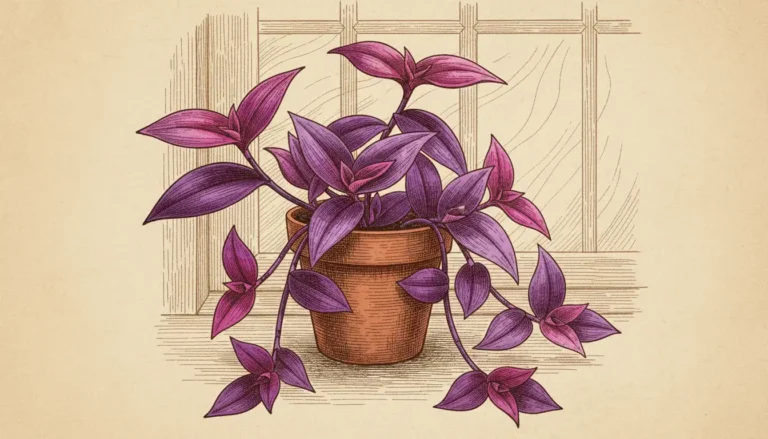
A purple heart plant hanging basket looks best when the top stays full and the stems trail from strong new growth, not from a few bare vines. Build the basket around light, drainage, and regular pinching.
Transparency note: Some links in this article are affiliate links. As an Amazon Associate I earn from qualifying purchases at no extra cost to you. Products are included only when they fit the care problem being discussed.
Purple heart is naturally trailing, and Wisconsin Extension lists it as useful in hanging baskets and mixed containers. The trick is keeping the crown full while letting selected stems spill over the edge.
This guide is for basket shape and trailing use. For broad care, use the purple heart plant care guide. For cuttings, use the propagation guide.
The biggest basket mistake is judging success by stem length alone. Long stems can still look thin, green, and bare at the top. A good basket has light reaching the crown, repeated tip pruning, and enough rooted starts to cover the soil surface.
Build the basket like a living refill system. Every time you pinch healthy tips, you can root or tuck them back into thin areas. That turns routine pruning into a way to keep the basket young.
Quick Basket Setup
| Basket decision | Best choice | Why it matters |
|---|---|---|
| Light | Bright window, morning sun, or strong grow light | Keeps trailing growth purple and compact |
| Pot | Drainage holes and manageable size | Prevents wet heavy root zones |
| Soil | Loose mix with extra perlite | Baskets dry unevenly |
| Pruning | Pinch every 2-3 weeks in growth | Keeps the top from going bare |

1. Start With Several Cuttings, Not One Long Stem
A full basket starts with multiple growing points. One long stem can trail, but it will not fill the top of the basket by itself.
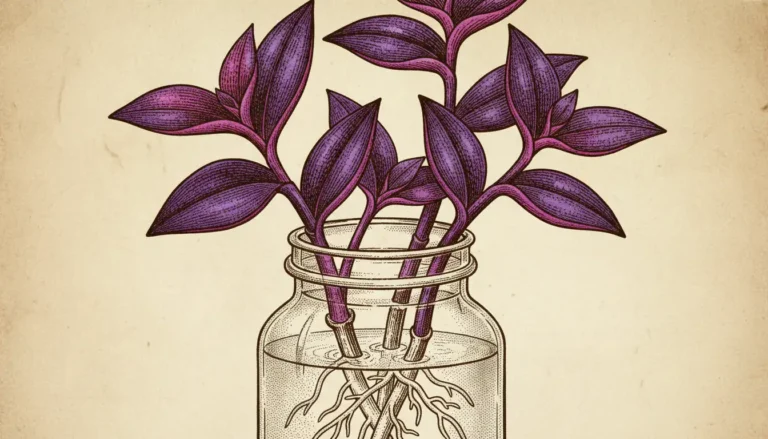
Plant several rooted cuttings around the rim and a few closer to the center. That gives the basket a fuller crown and creates trailing growth from several directions.
For a small basket, start with at least five rooted tips. For a wider basket, use seven to twelve. The goal is not crowding the plant forever; it is creating enough starting points that the top does not look empty.
If you are rebuilding an old basket, do not keep every bare vine just because it is long. Save the healthy tips, remove the weakest bare sections, and restart the crown.
Plant the cuttings in a loose ring rather than one clump in the middle. The center cuttings cover the crown, while rim cuttings create the first trails. This gives the basket shape from the start.
If some cuttings are freshly rooted and some are older, put the strongest rooted pieces near the edge. They will handle trailing sooner, while smaller starts can fill the top.
Looking to buy a healthy live plant online?

1-YEAR WARRANTY
Tradescantia pallida ‘Purpurea’ is a stunning trailing plant with deep violet leaves and small pink flowers. Perfect for hanging baskets in bright, indirect light.
2. Give the Basket Bright Light for Purple Trails
Low light makes basket stems longer, greener, and weaker. Hang the basket where the whole top gets light, not only the side facing the window.
Rotate indoor baskets weekly. If only one side gets light, the back side thins out and the basket starts looking flat.

| Placement | Best use | Watch for |
|---|---|---|
| Bright east window | Indoor basket with morning light | One-sided growth if never rotated |
| Filtered south/west window | Stronger color indoors | Scorch if leaves touch hot glass |
| Outdoor morning sun | Summer color boost | Wind snapping stems |
| Dim corner hook | Decor only | Green thin trails |
If the perfect hook is too dark, it is not the perfect hook. Purple heart can hang there for decoration, but it will not stay full and purple for long without stronger light.
For indoor baskets, check the top of the plant. Many baskets fail because the trails get window light but the crown sits in shade above the window line. Lower the hook or add a grow light if the top keeps thinning.
3. Use a Light Draining Mix So the Basket Does Not Stay Wet
Hanging baskets can be tricky because the edges dry faster than the center. Use a light mix that drains well but still holds enough moisture for active growth.
A simple mix is regular potting mix with added perlite or pumice. Avoid dense garden soil, especially in a basket that hangs indoors.
A loose mix matters more in hanging baskets because the root zone can dry unevenly while the center still holds water.
The cheapest upgrade you can make to any potting mix. A handful per pot dramatically improves drainage and aeration.
Check the basket after watering. If water runs around the edge and the center stays dry, the mix may have pulled away from the sides. Soak more slowly until the whole root zone is evenly moist, then let it drain.
If the basket stays heavy for days, the center may be too wet. Improve drainage before adding more cuttings, because new stems will struggle in stale wet mix.
A practical basket mix is two parts quality potting mix to one part perlite or pumice. If your home is very dry and bright, you can use slightly less drainage material; if the basket hangs indoors in cooler air, err lighter.
4. Pinch the Top Every Two to Three Weeks
Pinching is the difference between a full basket and a few long strands. During active growth, pinch the longest tips every two to three weeks.
Cut just above nodes and use healthy tips as new cuttings. Plant those cuttings back into thin areas so the basket improves instead of just getting shorter.

Clean snips are useful if you are regularly pinching and replanting tips into the basket.
Sharp, spring-loaded, and precise. Makes clean cuts that heal fast — essential for propagating without crushing the stem.
Do not pinch every stem to the same length. A natural basket has some shorter crown growth and some longer trails. Cut the stems that are making the plant look uneven, bare, or weak.
When you cut, look for the direction of the node. New growth often follows the node position, so pruning can help guide the plant back over the basket edge.
Use the pinch-and-fill method: pinch one or two long tips, remove the lower leaves, and tuck the tips into thin top spots. Over time, the basket becomes denser instead of older and longer.
5. Water by Weight, Not by Calendar
Lift the basket slightly before watering. A dry basket feels much lighter, while a wet basket still has weight even if the surface looks dry.
Water thoroughly, let it drain, and never let an indoor hanging basket drip into a closed decorative cover full of runoff.

- Too dry: limp stems, very light basket, dry mix pulling from edges.
- Too wet: heavy basket, soft stems, damp center that never dries.
- Good rhythm: water fully, drain fully, then wait for a lighter basket.
- After pruning: keep steady moisture but do not soak new cuttings.
After watering, wait a few minutes and lift again. If the basket still feels extremely heavy and water sits in the saucer or cover, empty the runoff and give the roots air.
6. Move Outdoors Slowly for Stronger Color
Outdoor morning sun can make purple heart baskets much richer in color. Move gradually from indoor light to bright shade, then to morning sun.
Watch wind exposure. Purple heart stems are fleshy and can snap if a basket swings hard. Choose a sheltered patio spot before using a breezy hook.
Bring baskets back before cold nights. A hanging basket exposes the plant to air movement on all sides, so cold stress can hit faster than it does in a sheltered pot against the house.
A simple acclimation plan is three to five days in bright shade, then morning sun only, then longer exposure if the leaves stay firm. If crispy patches appear, step back to gentler light.
7. Fix Bare Tops, Long Vines, and Green Stems
A bare top means the basket needs pruning and replanting, not just more trailing length. Cut healthy tips, root or insert them into the top, and increase light.
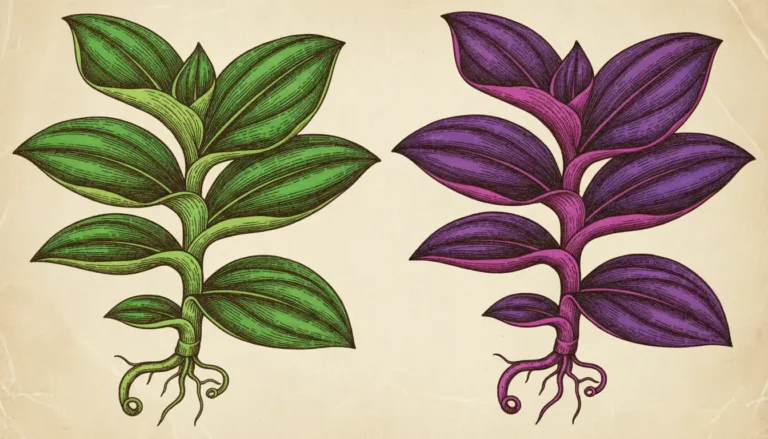
Long green stems usually need brighter light. Soft stems usually need better drainage. Crispy patches usually mean the basket was moved into sun too fast.
| Basket problem | Likely cause | Best fix |
|---|---|---|
| Bare crown | Not enough pruning or top light | Pinch tips and replant cuttings into crown |
| Long green trails | Weak light | Move brighter and rotate weekly |
| Soft stems | Wet center or poor drainage | Let drain, lighten mix, reduce watering |
| Crispy patches | Sun change was too sudden | Return to morning sun and acclimate slower |
If the basket has a few healthy purple tips and many bare stems, reset it rather than trimming tiny bits forever. Cut the good tips, root or tuck them into the crown, then remove the oldest bare vines once replacement growth starts.
Monthly Basket Maintenance Plan
Once a month, rotate the basket, pinch the longest stems, check that water is reaching the center, and add rooted tips to thin spots. This is faster than waiting until the whole basket needs rescue.
In winter, reduce expectations. Shorter days usually mean slower growth, less water use, and fewer new purple trails. Keep the plant healthy, then rebuild shape when brighter growth returns.
If color is the main issue, use the purple heart turning green guide. If the basket is indoors, use the indoor purple heart guide for placement details.
Keep hanging stems away from pets that chew plants. If that is a concern in your home, read the purple heart toxic to cats guide before choosing a hanging height.
FAQ
- Is purple heart good for hanging baskets?
- Yes. Its trailing stems suit baskets, but the top needs regular pinching to stay full.
- How do I make a purple heart hanging basket fuller?
- Start with several cuttings, give strong light, and pinch the top every two to three weeks during active growth.
- Why is my hanging purple heart bare on top?
- The usual causes are not enough top light, no pinching, or old stems that need to be replaced with cuttings.
- Can a purple heart hanging basket grow indoors?
- Yes, if it gets a very bright window or a grow light. A dim hanging spot usually makes it green and thin.
- How often should I water a purple heart hanging basket?
- Water when the basket feels lighter and the top mix has dried. Drain fully after watering.