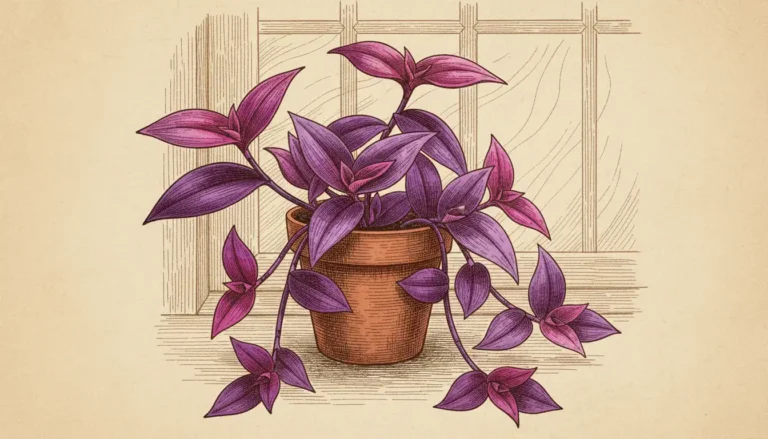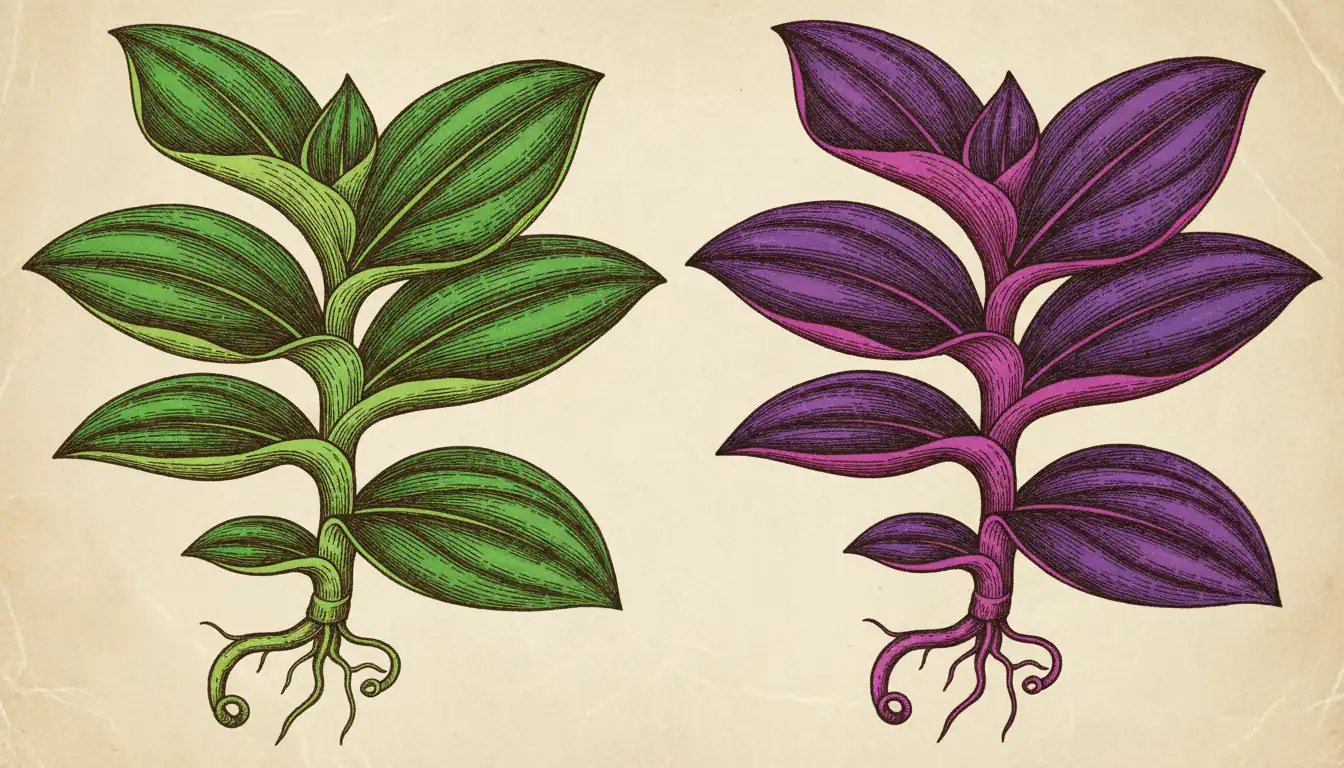
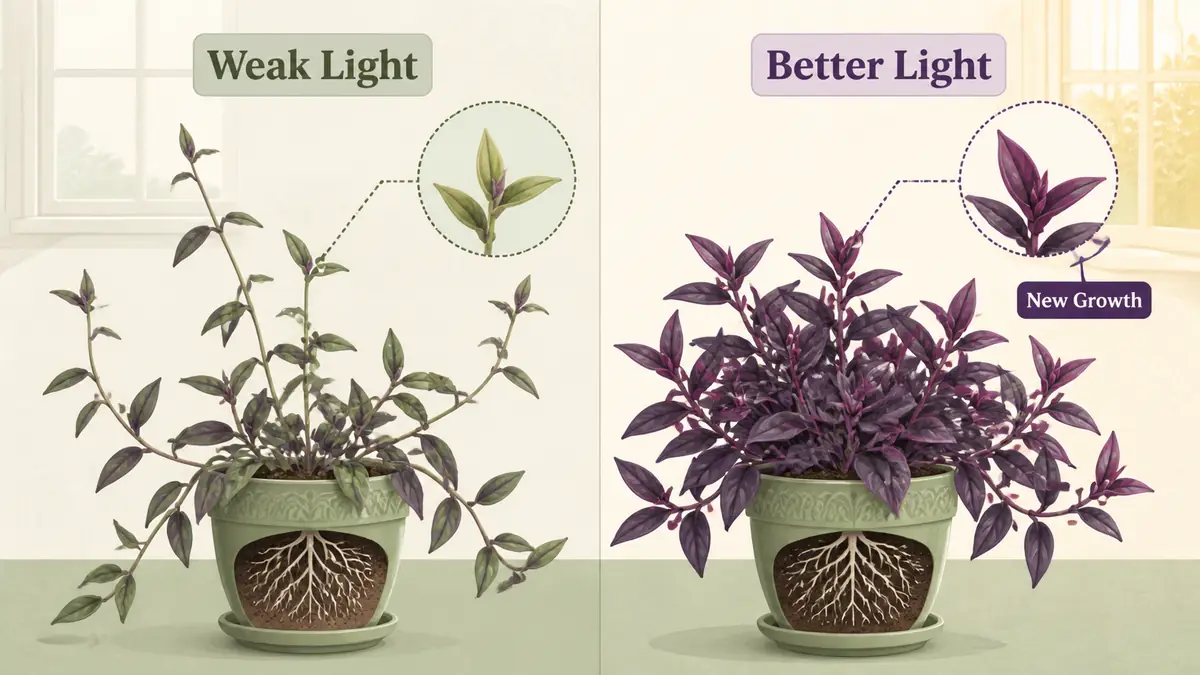
A purple heart plant turning green is usually asking for more usable light, cleaner pruning, or a drier root zone. Fix those in that order, then judge the color of new growth over the next two to four weeks.
Transparency note: Some links in this article are affiliate links. As an Amazon Associate I earn from qualifying purchases at no extra cost to you. Products are included only when they fit the care problem being discussed.
Do not panic-cut the whole plant or flood it with fertilizer. Purple heart color is mostly a light response. NC State Extension notes that full sun gives the best color development, while shade makes the plant greener. Striped wandering jew loses its color the same way, so check the wandering jew light requirements if you grow both.
The practical goal is not to turn every old leaf purple again. It is to make the next stems shorter, firmer, and deeper purple. Old green leaves can stay green until you prune them out.
Quick Diagnosis: Why Purple Heart Turns Green
Use this table before changing everything at once. Pick the row that matches the newest growth, because new growth tells you what the plant is experiencing now.
| What you see | Likely cause | First fix | When to judge it |
|---|---|---|---|
| New stems are green and stretched | Light is too weak | Move brighter over 7-10 days | 2-4 weeks of new growth |
| Plant is green, soft, and soil stays wet | Roots are short on air | Let the top soil dry and drain fully | 1-3 watering cycles |
| Long purple stems have green bare sections | Old shaded growth | Prune back to nodes | 2-5 weeks |
| Leaves look pale or crispy after outdoor move | Sun shock | Back down to morning sun | 7-14 days |
The table is also the order of operations. Fix light first because it controls color most directly. Fix pruning second because stretched stems will not become compact just because the plant moved brighter. Fix water third because wet roots can keep new growth soft even when the light improves.
If two symptoms happen together, choose the safer fix first. A green plant with wet soil should not be moved into hot sun while the roots are struggling. Let the pot dry into a healthier rhythm, then increase light in stages.
Looking to buy a healthy live plant online?

1-YEAR WARRANTY
Get a nursery-quality, well-rooted live Tradescantia Zebrina Wandering Dude shipped directly to your door. Backed by a best-in-class plant warranty so you can shop with confidence.
1. Move It Into Brighter Light Gradually
The fastest fix is brighter light, but the safest fix is brighter light in stages. Move the plant closer to the window for a few days, then reassess before giving it stronger direct sun.
Indoors, start within 1-3 feet of an east window or near a bright south or west window where leaves do not press against hot glass. If the window is filtered by a porch, trees, tint, or blinds, the plant may need to sit closer than you expect.
With a grow light, place the foliage about 8-14 inches below a strong bulb or 6-10 inches below a shelf strip light, then run it for 10-12 hours. If leaves bleach or curl upward, raise the light or shorten the schedule.
| Light setup | Start here | Adjust if |
|---|---|---|
| East window | 1-2 feet from the glass | New growth still stretches after 3 weeks |
| South or west window | 2-4 feet back or filtered | Leaves get tan crispy patches |
| Grow bulb | 8-14 inches above foliage | Leaves bleach, curl, or heat builds up |
| Shelf strip light | 6-10 inches above foliage | Growth leans or spacing stays long |
Reader test
Hold your hand where the plant sits at midday. A crisp shadow usually means strong usable light. A vague shadow means the spot may be bright to your eyes but still weak for purple color.
Do not use room brightness as the test. Human eyes adjust to dim rooms; plants do not. A room can feel sunny while the actual plant shelf is too far from the window to support deep purple growth.
Try every free window fix first. If the newest growth still comes in green and stretched, a stronger grow bulb can solve the actual light problem.
Fits a standard lamp but delivers intense, full-spectrum light. Powerful enough for large floor plants in dark corners.
2. Prune Green or Leggy Stems Back to a Node
Pruning does two jobs: it removes weak green growth and gives the plant a reason to branch. Cut just above a node, which is the joint where a leaf meets the stem.
For a stressed plant, remove about one-third of the worst stems first. If the plant is healthy but ugly, you can prune harder during active growth and root the best tips back into the pot.
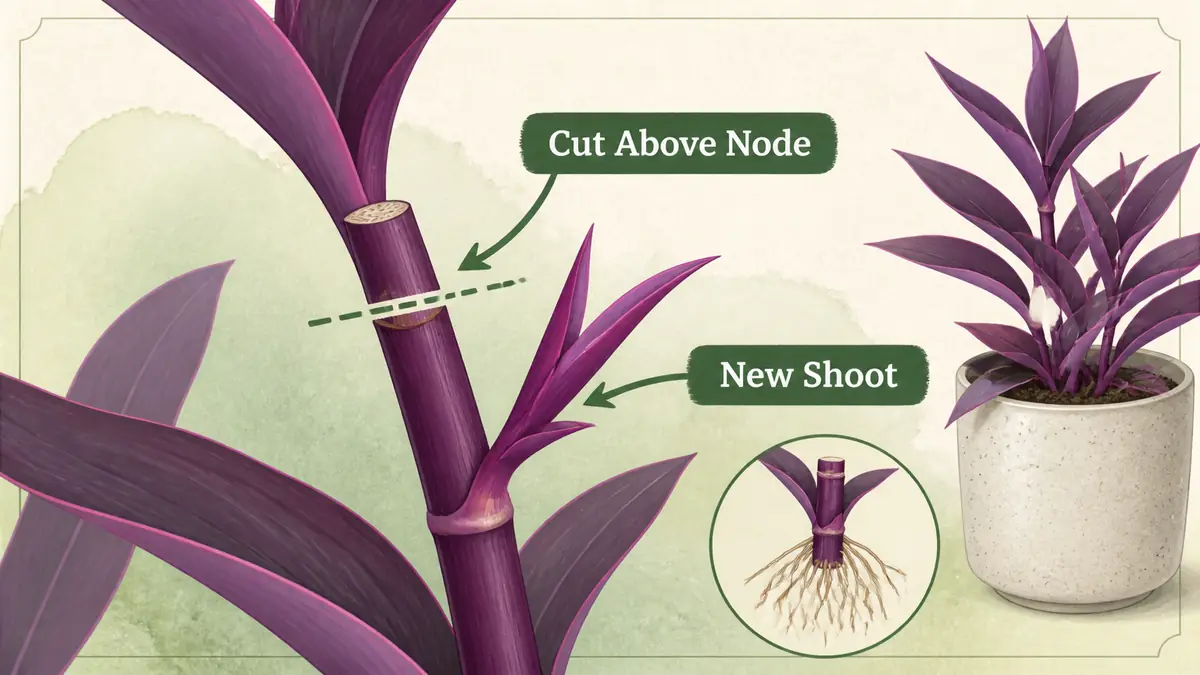
Repeat light pruning every two to three weeks while the plant is actively growing. That rhythm keeps the top fuller and prevents one or two stems from taking over the whole pot.
Use the removed tips as a diagnostic too. Firm purple tips are good candidates for propagation. Pale, thin, floppy tips are usually proof that the plant needs more light before you try to make a new pot from it.
If the plant has only a few leaves left, prune less. Move it brighter first, wait for new growth, then cut back another section. The goal is controlled regrowth, not stripping the plant while it is already weak.
3. Stop Overwatering Before Roots Stay Wet
Wet roots do not make better color. If the pot stays damp, new growth often looks soft and green because the roots are not getting enough air.
Water deeply, then let the pot drain. Wait until the top inch or two of mix is dry before watering again. A heavy pot, sour smell, or soft stems means you should slow down before adding anything else.
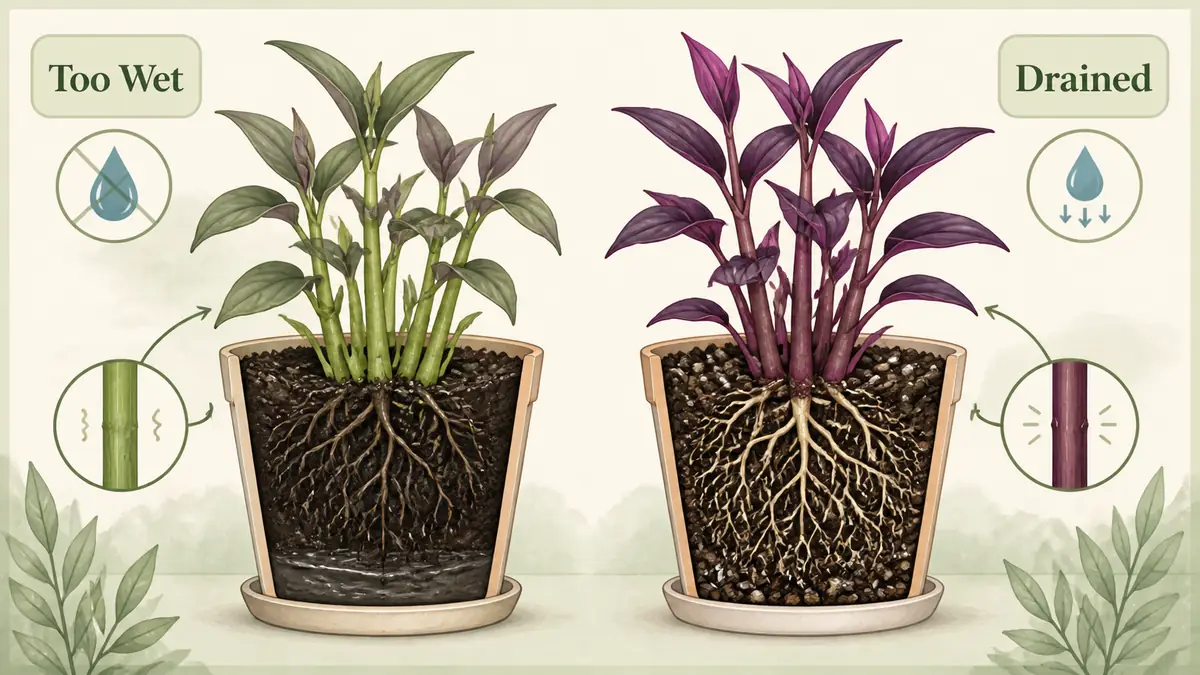
If the plant sits inside a decorative cachepot, pull the nursery pot out after watering and dump any runoff. A hidden pool of water can undo every other fix.
- If the pot feels heavy: wait, even if the surface looks pale.
- If the top is dry but the bottom is wet: improve drainage before watering more often.
- If stems are soft at the base: check roots before fertilizing.
- If the pot has no drainage hole: move the plant to a draining inner pot.
When light improves, the plant may use water faster. That does not mean you should start watering by calendar. It means you should check the soil more often while the plant adjusts.
4. Use Outdoor Light Carefully Without Scorching
Outdoor light can restore deeper color quickly, but sudden exposure can scorch indoor leaves. Start with bright shade or morning sun, then increase exposure over one to two weeks.
Use outdoor light only when nights are warm. NC State lists purple heart as hardy in USDA Zones 10-11 and notes container plants should be brought indoors for winter. Cold nights are not a color treatment.
If leaves show tan crispy patches after the move, back the plant away from afternoon sun. Keep the brighter placement, but make the change slower.
| Outdoor week | Placement | What to watch |
|---|---|---|
| Days 1-3 | Bright shade or one hour of morning sun | Wilting, bleaching, crispy patches |
| Days 4-7 | Two to three hours of morning sun | Firmer purple tips |
| Week 2 | Longer morning sun if leaves stay firm | Avoid sudden hot afternoon exposure |
Wind matters in baskets and patio pots. Purple heart stems are fleshy and snap more easily than woody stems. A sheltered bright spot is better than a brighter hook where the plant swings all afternoon.
5. Give New Growth Time to Turn Purple Again
The new tips are the scorecard. In active growth, expect a visible difference in two to four weeks. In winter, it may take longer because the plant is growing more slowly.
If new growth is purple but old leaves remain green, the fix worked. Prune out old sections gradually instead of restarting the whole plant.
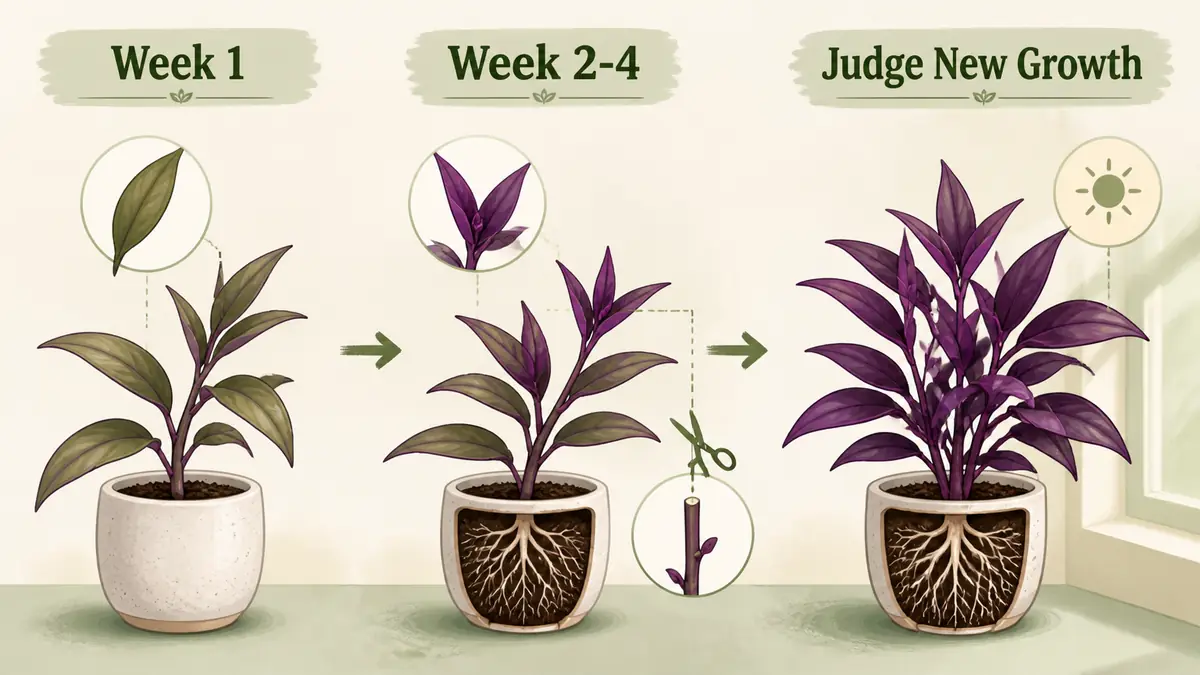
If the newest growth is still green after four weeks in stronger light, check three things: the light may still be too far away, the soil may stay wet too long, or the plant may be too cold to grow strongly.
Do not score the plant on one leaf. Look at the newest three to five tips. If most of them are shorter and more purple, stay consistent. If all of them are still green and stretched, the fix did not go far enough.
Recovery also depends on season. A plant moved brighter in May can respond quickly. The same plant moved in January may need a grow light or more patience because indoor winter light is weaker and days are shorter.
| After the fix | Good sign | Bad sign |
|---|---|---|
| Week 1 | Leaves stay firm | Scorch or stem collapse |
| Weeks 2-4 | New tips are deeper purple | New tips stay green and long |
| After pruning | Side shoots appear near nodes | Cut stems blacken or soften |
When to Reset the Plant Instead of Waiting
Sometimes the best color fix is a reset. If the plant has a few healthy purple tips but most stems are bare, woody, or pale green, keep the good tips and rebuild the pot from cuttings.
Use this reset only when the plant is actively growing and you can give the new cuttings bright light. Cutting everything back in a cold dim room usually creates a slower recovery, not a better plant.
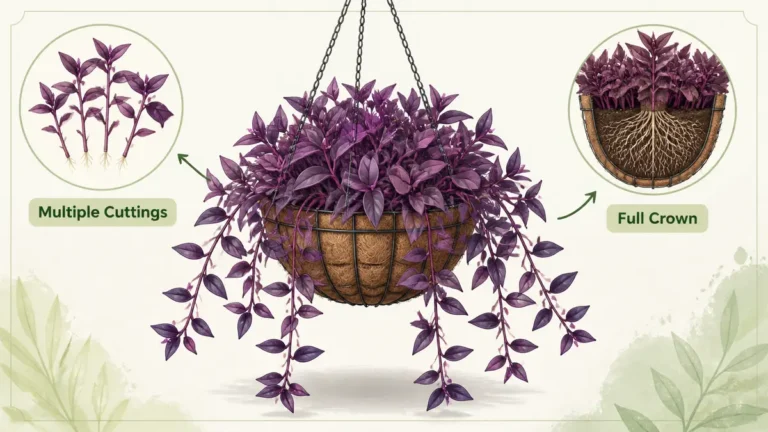
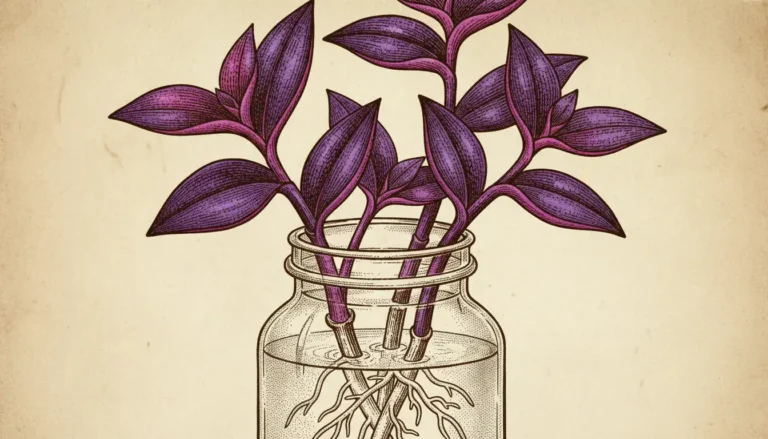
The reset method is simple: take several firm purple tips, root them, and plant them back into the same pot or a fresh small pot. That gives you new growth at the crown instead of waiting for old bare stems to become attractive again.
If you are not sure whether to prune or propagate, ask one question: does this stem still have healthy leaves near the base? If yes, prune and wait. If no, use the tip as a cutting and replace the bare section.
What to Do This Week
- Move the plant to a brighter position for 7-10 days.
- Prune the weakest green stems back to nodes.
- Let the pot drain fully and avoid watering again while soil is wet.
- Watch only new growth for color improvement.
- Use the full purple heart plant care guide once the color is improving.
If the plant lives indoors year-round, the indoor purple heart plant guide will help with window and grow-light setup. If you prune healthy tips, the purple heart propagation guide shows how to root them instead of throwing them away.
FAQ
- Will green purple heart leaves turn purple again?
- Old leaves may stay green. Judge the fix by new growth, then prune older green sections gradually.
- How much light does a purple heart plant need for color?
- Give the brightest safe light you can. Indoors, that usually means a close bright window or a grow light rather than the middle of a room.
- Can too much water make purple heart green?
- Water is not the main color trigger, but wet roots can make growth soft and weak. Fix drainage before adding fertilizer.
- How long does it take to get purple color back?
- In active growth, expect the newest stems to improve in two to four weeks. Winter recovery can be slower.
- Should I fertilize a green purple heart plant?
- Not first. Improve light, pruning, and drainage before feeding. Fertilizer cannot replace light.