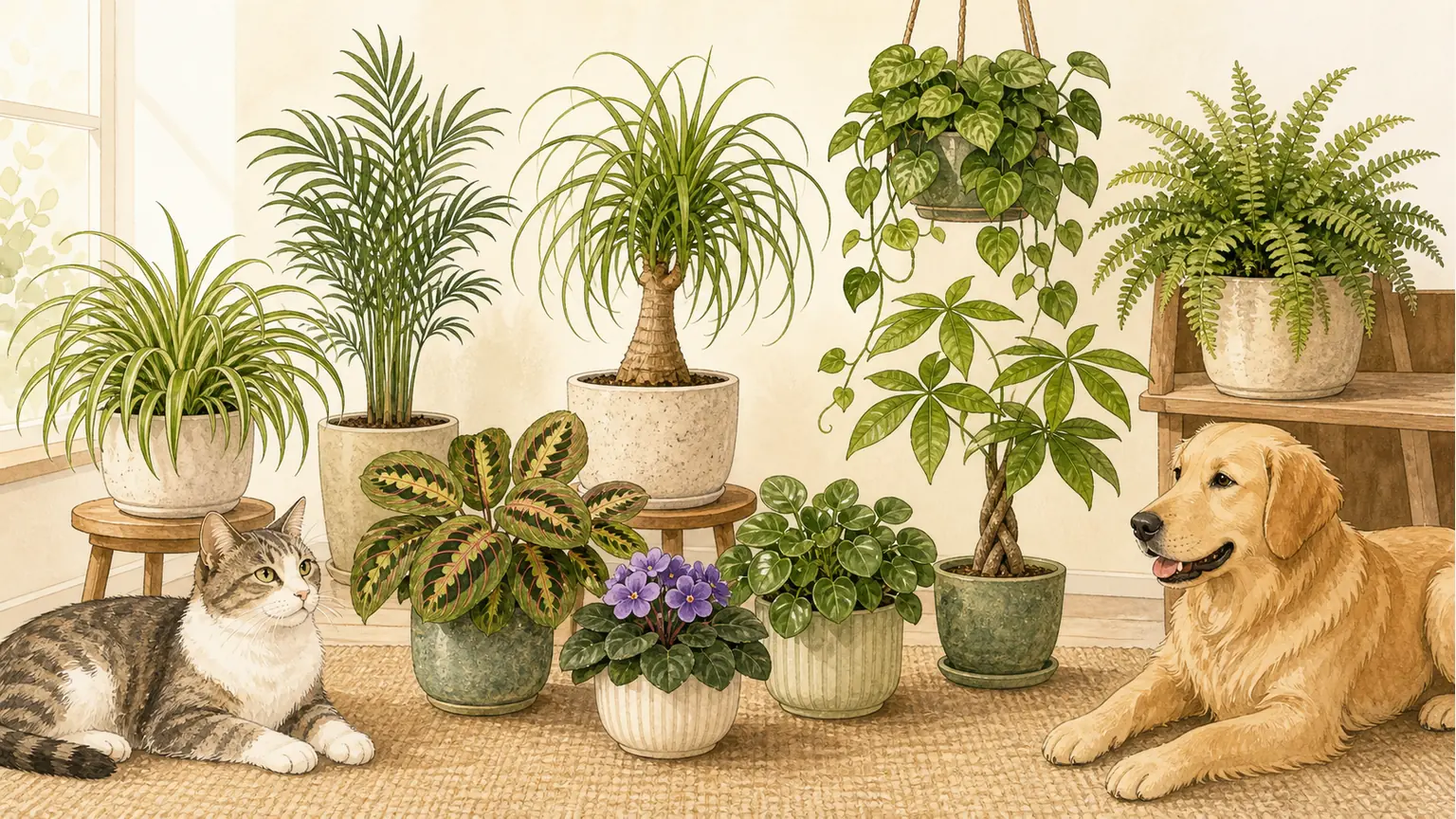
The best pet-safe indoor plants are ASPCA-listed non-toxic choices such as Spider Plant, Parlor Palm, Ponytail Palm, Baby Rubber Plant, Hoya, Cast Iron Plant, Prayer Plant, Calathea, Boston Fern, African Violet, Nerve Plant, Lipstick Plant, Money Tree, and Phalaenopsis Orchid. They are better choices for homes with cats and dogs than pothos, philodendron, peace lily, snake plant, ZZ plant, aloe, jade plant, sago palm, or true lilies.
Use this guide as a safer plant shortlist, not permission to let pets graze. Pet-safe means lower risk, not edible or risk-free. The right pick still depends on light, watering habits, pot stability, and whether your pet chews leaves or digs in soil.
Source note: Pet-safety claims in this guide are tied to individual ASPCA toxic and non-toxic plant listings where possible. Care guidance is checked against university extension resources including Missouri Extension houseplant care guidance and Illinois Extension lighting guidance. Generated visuals are educational illustrations, not real plant photographs.
Affiliate disclosure: This article includes paid links. As an Amazon Associate, The Plant Manual may earn from qualifying purchases. We may also earn through partner programs, including Plant Addicts through Awin, when you buy through our links at no extra cost to you.
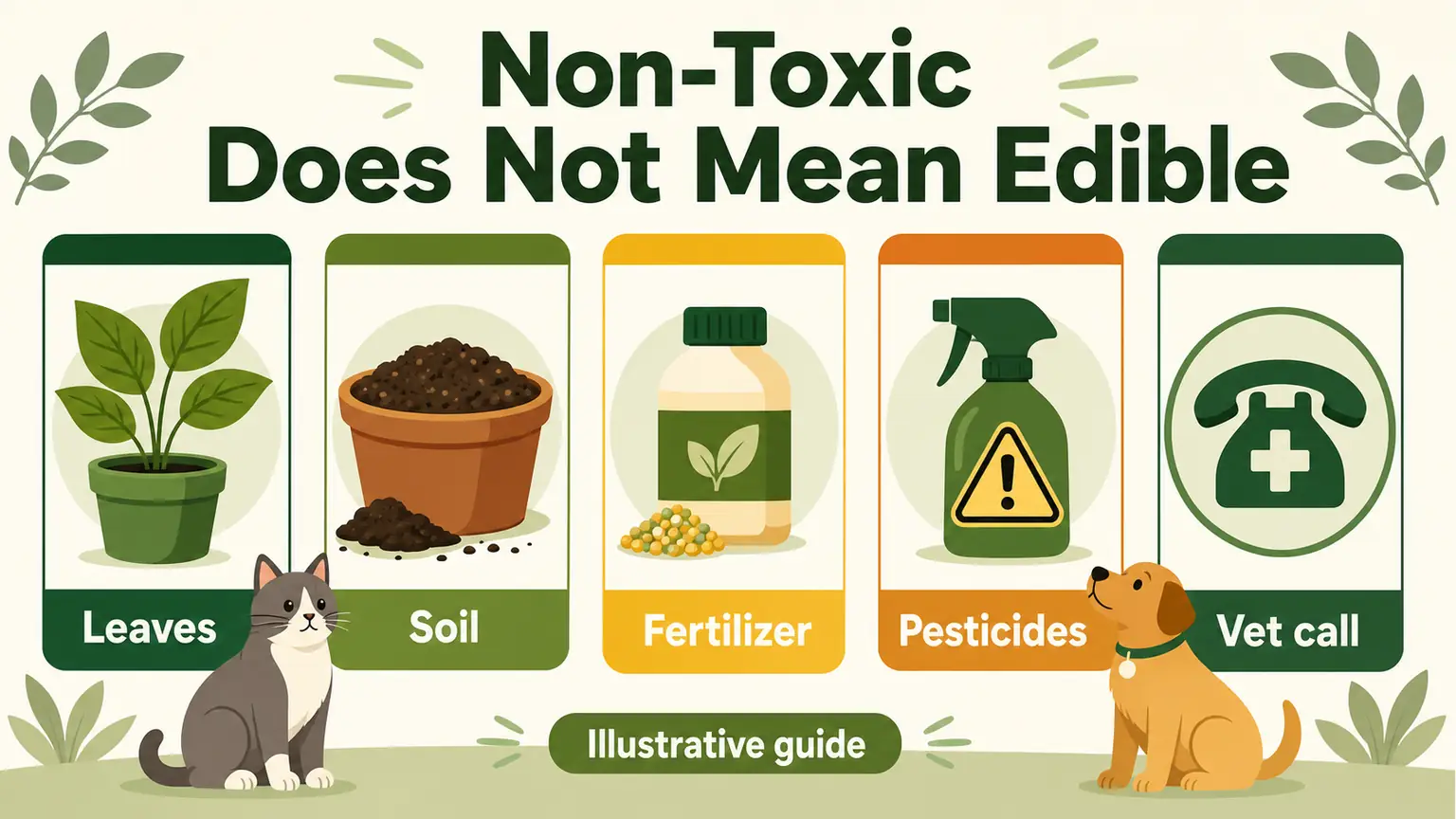
Non-toxic does not mean edible
Even ASPCA-listed non-toxic plants can cause stomach upset if a pet eats a lot of leaves. Soil, fertilizer, pesticides, systemic insecticides, and saucer water are separate risks. If your pet has repeated vomiting, diarrhea, drooling, lethargy, breathing trouble, or you are not sure what was eaten, call your veterinarian or a pet poison-control service.
Quick picks
- Best overall: Spider Plant
- Best low-light tolerant: Cast Iron Plant
- Best bright-room pick: Ponytail Palm
- Best tabletop plant: Baby Rubber Plant
- Best hanging plant: Hoya or Lipstick Plant
- Best small indoor tree: Money Tree
Quick Picker: Best Pet-Safe Indoor Plants by Room and Pet Behavior
Start with the situation that matches your home. A cat that bats dangling leaves needs a different setup than a dog that bumps floor pots.
| Plant | Best use | Light | Care level | Pet note |
|---|---|---|---|---|
| Spider Plant | hanging baskets, shelves, and curious cats | Bright indirect to medium light | Easy | ASPCA lists spider plant as non-toxic to cats and dogs. |
| Parlor Palm | classic tabletop foliage | Medium to bright indirect light; tolerates lower light | Easy to moderate | ASPCA lists parlor palm as non-toxic to cats and dogs. |
| Ponytail Palm | bright rooms and forgetful waterers | Bright indirect light to some gentle direct indoor sun | Easy | ASPCA lists Beaucarnea recurvata under bottle palm and non-toxic to cats and dogs. |
| Baby Rubber Plant | desks, shelves, and small apartments | Medium to bright indirect light | Easy | ASPCA lists baby rubber plant as non-toxic to cats and dogs. |
| Hoya / Wax Plant | bright hanging shelves | Bright indirect light; some gentle morning sun is useful | Easy to moderate | ASPCA lists wax plant as non-toxic to cats and dogs. |
| Cast Iron Plant | lower-light corners | Low to medium indirect light | Easy | ASPCA lists cast iron plant as non-toxic to cats and dogs. |
| Prayer Plant | colorful tabletops with careful watering | Medium to bright indirect light | Moderate | ASPCA lists prayer plant as non-toxic to cats and dogs. |
| Calathea | patterned leaves in pet homes | Medium to bright filtered light | Moderate to fussy | ASPCA lists calathea as non-toxic to cats and dogs. |
| Boston Fern | bright bathrooms and humid rooms | Bright indirect to medium light | Moderate | ASPCA lists Boston fern as non-toxic to cats and dogs. |
| Staghorn Fern | wall mounts and high pet-safe placement | Bright indirect light | Moderate | ASPCA lists common staghorn fern as non-toxic to cats and dogs. |
| African Violet | small flowering tabletops | Bright indirect light | Moderate | ASPCA lists African violet as non-toxic to cats and dogs. |
| Nerve Plant | small terrariums and tabletops | Medium to bright indirect light | Moderate | ASPCA lists nerve plant as non-toxic to cats and dogs. |
| Lipstick Plant | pet-safer hanging color | Bright indirect light | Moderate | ASPCA lists lipstick plant as non-toxic to cats and dogs. |
| Money Tree | a pet-safer small tree | Bright indirect light | Easy to moderate | ASPCA lists money tree as non-toxic to cats and dogs. |
| Phalaenopsis Orchid | pet-safe flowers | Bright indirect light | Moderate | ASPCA lists phalaenopsis orchid as non-toxic to cats and dogs. |
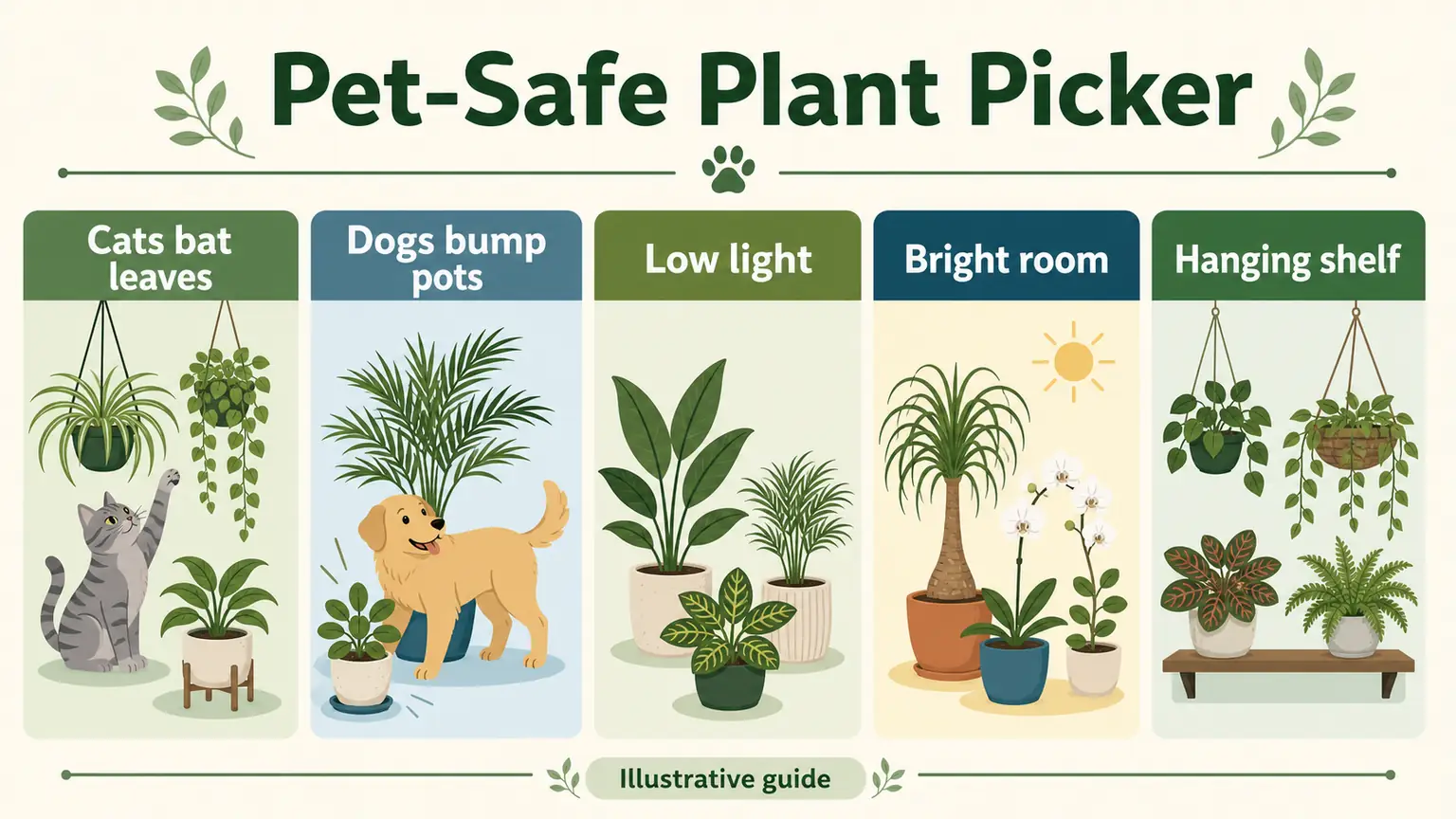
Which Pet-Safe Plant Should You Choose?
The safest plant choice is the one your pet is least likely to chew, knock over, or dig in. Use placement and plant habit together.
| Situation | Best choices | Why |
|---|---|---|
| Cats bat dangling leaves | Spider Plant, Hoya, Lipstick Plant | Use hanging baskets or high shelves so the plant is not a toy. |
| Dogs sniff or bump floor pots | Money Tree, Cast Iron Plant, Parlor Palm | Use stable heavy pots and avoid loose saucer water. |
| Lower-light room | Cast Iron Plant, Parlor Palm | They tolerate lower light better than most colorful plants. |
| Bright room | Ponytail Palm, Hoya, Phalaenopsis Orchid | They handle brighter indoor light without needing constant watering. |
| Small desk or shelf | Baby Rubber Plant, Nerve Plant, African Violet | Compact plants are easier to move out of reach. |
| Beginner-friendly pet-safe pick | Spider Plant or Ponytail Palm | They combine non-toxic listings with forgiving care. |
| Flowers without lilies | African Violet, Lipstick Plant, Phalaenopsis Orchid | Better flowering options for homes with pets. |
15 Best Pet-Safe Indoor Plants for Cats and Dogs
These are ranked for a mix of pet-safety sourcing, usefulness indoors, availability, and realistic care difficulty. The notes are intentionally conservative because this is pet-safety content.
1. Spider Plant
Best for: hanging baskets, shelves, and curious cats. Light: Bright indirect to medium light. Care level: Easy.
Chlorophytum comosum. Spider plant is the best first pick for many pet homes because it grows quickly, looks good in a hanging basket, and has a clean ASPCA non-toxic listing.
Give it bright indirect light for fuller growth. It will tolerate medium light, but the plantlets and arching leaves are stronger when the room is not dim.
Pet-safety note
ASPCA lists spider plant as non-toxic to cats and dogs. Source: ASPCA Spider Plant. Non-toxic does not mean edible, so still prevent chewing where you can.
Placement tip
Cats may still bat or chew the strappy leaves. Non-toxic does not mean you should let the plant become a snack.
Looking to buy this pet-safer live plant online?

A curly spider plant that works well in hanging planters and pet-aware rooms.
2. Parlor Palm
Best for: classic tabletop foliage. Light: Medium to bright indirect light; tolerates lower light. Care level: Easy to moderate.
Chamaedorea elegans. Parlor palm is a good pet-safe choice when you want soft palm-like foliage without starting with a large, expensive floor plant.
Use it where light is steady but not harsh. Thin fronds can brown in hot direct sun or when the plant dries repeatedly.
Pet-safety note
ASPCA lists parlor palm as non-toxic to cats and dogs. Source: ASPCA Parlor Palm. Non-toxic does not mean edible, so still prevent chewing where you can.
Placement tip
It is slower than pothos or spider plant. Slow growth is normal, not a reason to overwater.
Looking to buy this pet-safer live plant online?
A compact palm-style houseplant with a clean ASPCA non-toxic listing.
3. Ponytail Palm
Best for: bright rooms and forgetful waterers. Light: Bright indirect light to some gentle direct indoor sun. Care level: Easy.
Beaucarnea recurvata. Ponytail palm looks like a small sculptural tree but stores water in its swollen base, which makes it forgiving in dry homes.
Place it in one of your brighter spots and use a pot with drainage. Treat it more like a dry-tolerant succulent than a moisture-loving palm.
Pet-safety note
ASPCA lists Beaucarnea recurvata under bottle palm and non-toxic to cats and dogs. Source: ASPCA Bottle Palm. Non-toxic does not mean edible, so still prevent chewing where you can.
Placement tip
Do not water it like a fern. Frequent watering is the bigger risk.
Looking to buy this pet-safer live plant online?
A dry-tolerant, pet-safer plant for bright rooms and sunny shelves.
4. Baby Rubber Plant
Best for: desks, shelves, and small apartments. Light: Medium to bright indirect light. Care level: Easy.
Peperomia obtusifolia. Baby rubber plant gives pet owners a compact, glossy-leaved plant without the size or toxicity concerns of many larger rubber-plant lookalikes.
Keep it in a small draining pot. The thick leaves store some moisture, so it does not want a large wet container.
Pet-safety note
ASPCA lists baby rubber plant as non-toxic to cats and dogs. Source: ASPCA Baby Rubber Plant. Non-toxic does not mean edible, so still prevent chewing where you can.
Placement tip
Do not confuse baby rubber plant with rubber plant, Ficus elastica, which is a different plant and not the same safety call.
Looking to buy this pet-safer live plant online?
A compact peperomia choice for shelves, desks, and small pet-aware spaces.
5. Hoya / Wax Plant
Best for: bright hanging shelves. Light: Bright indirect light; some gentle morning sun is useful. Care level: Easy to moderate.
Hoya carnosa and related Hoya spp.. Hoya is a good pet-safer vine when you want something slower and sturdier than pothos.
Give it bright light and a chunky, draining mix. Many hoyas are slow at first, then settle into steady trailing or climbing growth.
Pet-safety note
ASPCA lists wax plant as non-toxic to cats and dogs. Source: ASPCA Wax Plant. Non-toxic does not mean edible, so still prevent chewing where you can.
Placement tip
Do not judge hoya by speed. Slow growth does not automatically mean it needs more water.
Looking to buy this pet-safer live plant online?
A wax plant option for bright shelves and hanging planters in pet-aware homes.
6. Cast Iron Plant
Best for: lower-light corners. Light: Low to medium indirect light. Care level: Easy.
Aspidistra elatior. Cast iron plant is not flashy, but it is one of the best lower-light pet-safe choices for people who want durability over fast growth.
Use it in a room with real but modest light. Wipe dust from the wide leaves so the plant can use the light it gets.
Pet-safety note
ASPCA lists cast iron plant as non-toxic to cats and dogs. Source: ASPCA Cast Iron Plant. Non-toxic does not mean edible, so still prevent chewing where you can.
Placement tip
Do not expect quick new leaves. Slow, steady growth is normal.
Looking to buy this pet-safer live plant online?
A tough, slower-growing pet-safer foliage plant for lower-light rooms.
7. Prayer Plant
Best for: colorful tabletops with careful watering. Light: Medium to bright indirect light. Care level: Moderate.
Maranta leuconeura. Prayer plant is a pet-safe pick for people who want patterned leaves that fold up at night, but it is less forgiving than spider plant or parlor palm.
Use filtered light, steady moisture, and avoid hot direct sun. If your tap water is very mineral-heavy, leaf edges may brown.
Pet-safety note
ASPCA lists prayer plant as non-toxic to cats and dogs. Source: ASPCA Prayer Plant. Non-toxic does not mean edible, so still prevent chewing where you can.
Placement tip
Do not buy it as a first plant if you already struggle with watering consistency.
Looking to buy this pet-safer live plant online?
A broader Plant Addicts category for patterned prayer-plant relatives and calathea-style foliage.
8. Calathea
Best for: patterned leaves in pet homes. Light: Medium to bright filtered light. Care level: Moderate to fussy.
Calathea / Goeppertia spp.. Calathea earns a place because pet owners often want colorful foliage, but it should be chosen with honest expectations.
Give it filtered light, stable room temperatures, and more consistent moisture than a pothos or ZZ plant would need.
Pet-safety note
ASPCA lists calathea as non-toxic to cats and dogs. Source: ASPCA Calathea. Non-toxic does not mean edible, so still prevent chewing where you can.
Placement tip
Do not put it in harsh sun or a dry draft. Pet-safe does not automatically mean beginner-friendly.
9. Boston Fern
Best for: bright bathrooms and humid rooms. Light: Bright indirect to medium light. Care level: Moderate.
Nephrolepis exaltata. Boston fern is a classic pet-safer choice for humid rooms where crisping leaves are less likely.
It wants more moisture than most beginner plants. A bathroom with a bright window can be better than a dry living-room shelf.
Pet-safety note
ASPCA lists Boston fern as non-toxic to cats and dogs. Source: ASPCA Boston Fern. Non-toxic does not mean edible, so still prevent chewing where you can.
Placement tip
Do not let the pot dry completely again and again. Ferns are less forgiving of hard dry-down.
Looking to buy this pet-safer live plant online?
A classic pet-safer fern for bright bathrooms and humid rooms.
10. Staghorn Fern
Best for: wall mounts and high pet-safe placement. Light: Bright indirect light. Care level: Moderate.
Platycerium bifurcatum. Staghorn fern is useful because it can live mounted on a wall, which helps keep plant material away from pets that chew low leaves.
Give it bright indirect light and learn the watering rhythm for mounted plants. It is not a set-it-and-forget-it plant.
Pet-safety note
ASPCA lists common staghorn fern as non-toxic to cats and dogs. Source: ASPCA Common Staghorn Fern. Non-toxic does not mean edible, so still prevent chewing where you can.
Placement tip
Do not place a mounted fern where dripping water will damage the wall or where pets can jump to it easily.
Looking to buy this pet-safer live plant online?
A pet-safer mounted fern option for bright wall displays.
11. African Violet
Best for: small flowering tabletops. Light: Bright indirect light. Care level: Moderate.
Saintpaulia ionantha. African violet is a good pet-safe option when you want flowers indoors without choosing a risky bouquet or lily.
Use bright indirect light and water carefully near the soil rather than soaking the crown. Small pots are normal.
Pet-safety note
ASPCA lists African violet as non-toxic to cats and dogs. Source: ASPCA African Violet. Non-toxic does not mean edible, so still prevent chewing where you can.
Placement tip
Do not place it in a dark corner and expect repeat blooms.
12. Nerve Plant
Best for: small terrariums and tabletops. Light: Medium to bright indirect light. Care level: Moderate.
Fittonia albivenis. Nerve plant is a small pet-safer pick with strong leaf patterning, but it is better for people who like checking plants often.
It wilts dramatically when dry and usually prefers steadier moisture. Smaller pots dry fast, so check before the leaves collapse.
Pet-safety note
ASPCA lists nerve plant as non-toxic to cats and dogs. Source: ASPCA Nerve Plant. Non-toxic does not mean edible, so still prevent chewing where you can.
Placement tip
Do not choose it if you want a neglect-tolerant plant.
Looking to buy this pet-safer live plant online?
A category option for small patterned pet-safer foliage plants.
13. Lipstick Plant
Best for: pet-safer hanging color. Light: Bright indirect light. Care level: Moderate.
Aeschynanthus humilis. Lipstick plant is a useful alternative to toxic trailing plants when you want hanging growth and occasional flowers.
Give it bright indirect light and avoid constantly wet soil. It is easier in a warm, bright room than in a dim corner.
Pet-safety note
ASPCA lists lipstick plant as non-toxic to cats and dogs. Source: ASPCA Lipstick Plant. Non-toxic does not mean edible, so still prevent chewing where you can.
Placement tip
Do not expect blooms in poor light.
Looking to buy this pet-safer live plant online?
A pet-safer hanging plant option with trailing growth and colorful blooms.
14. Money Tree
Best for: a pet-safer small tree. Light: Bright indirect light. Care level: Easy to moderate.
Pachira aquatica. Money tree is one of the better pet-safe choices if you want a small indoor tree instead of another tabletop plant.
Use bright indirect light and avoid letting the pot stay wet at the bottom. Rotate the plant so the canopy grows evenly.
Pet-safety note
ASPCA lists money tree as non-toxic to cats and dogs. Source: ASPCA Money Tree. Non-toxic does not mean edible, so still prevent chewing where you can.
Placement tip
Do not confuse it with jade plant, sometimes called money plant, which is not the same pet-safety answer.
Looking to buy this pet-safer live plant online?
A pet-safer small indoor tree for bright indirect light.
15. Phalaenopsis Orchid
Best for: pet-safe flowers. Light: Bright indirect light. Care level: Moderate.
Phalaenopsis spp.. Phalaenopsis orchid is a pet-safe flowering option for people who want blooms but do not want lilies or risky cut flowers around pets.
It grows in orchid bark, not standard potting soil. Water thoroughly, then let the bark drain and approach dryness before watering again.
Pet-safety note
ASPCA lists phalaenopsis orchid as non-toxic to cats and dogs. Source: ASPCA Phalaenopsis Orchid. Non-toxic does not mean edible, so still prevent chewing where you can.
Placement tip
Do not treat orchid care like pothos care. The potting medium and watering rhythm are different.
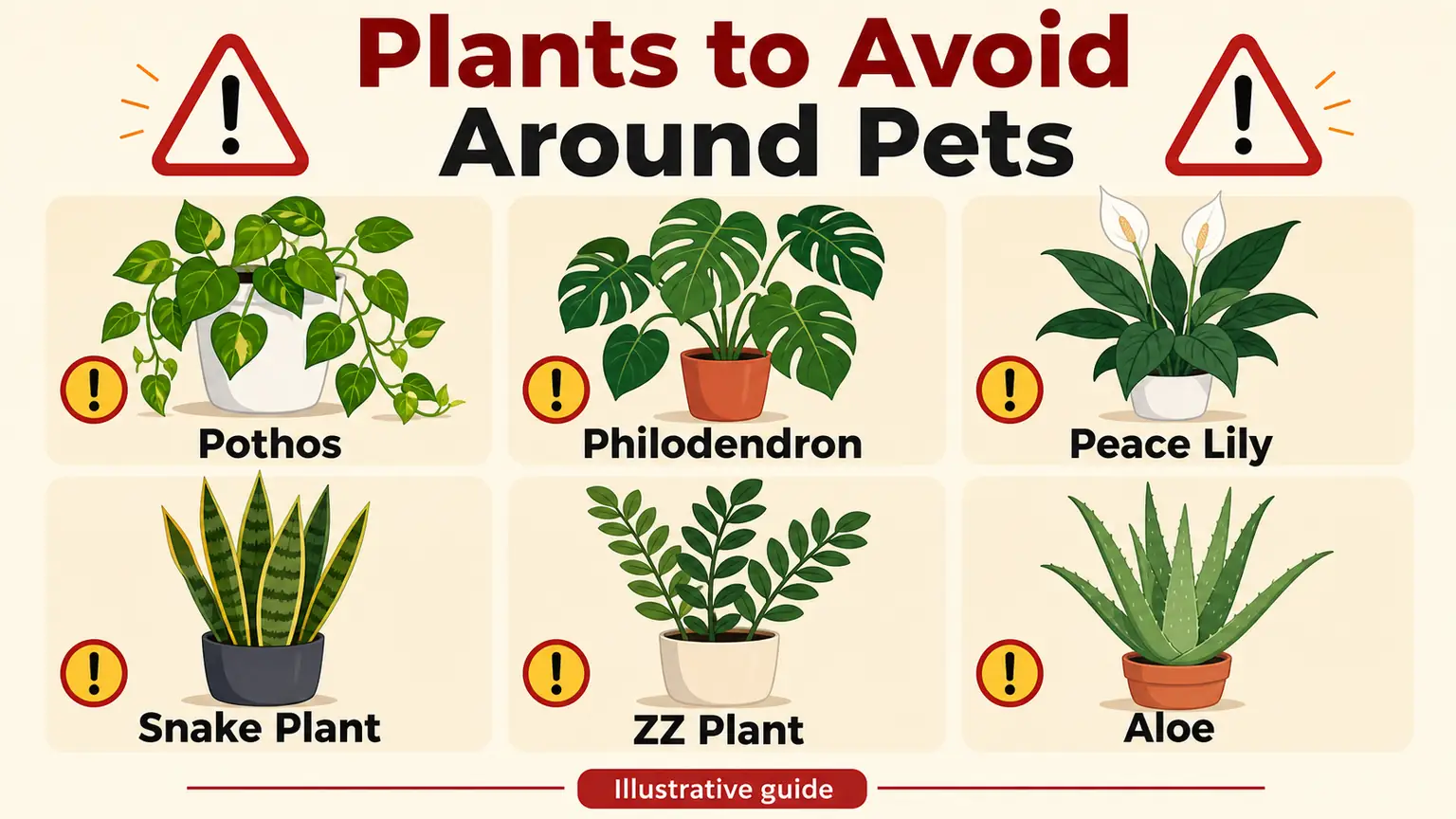
Popular Indoor Plants Pet Owners Should Avoid or Keep Out of Reach
This section matters because many of the easiest and most popular houseplants are not pet-safe. If your pet chews leaves, do not assume a plant belongs in this guide just because it is common in plant shops.
Common keep-away plants
- Pothos: Common trailing plant, but ASPCA lists golden pothos as toxic to cats and dogs.
- Philodendron: Many types contain insoluble calcium oxalates and should be kept away from chewing pets.
- Monstera: Popular, but not a pet-safe foliage choice.
- Peace Lily: Not a true lily, but still a common pet-irritating houseplant.
- Snake Plant: Tough for beginners, but not a pet-safe pick.
- ZZ Plant: Good in low light, but not a pet-safe choice.
- Aloe Vera: Useful plant for people, but unsafe for cats and dogs if eaten.
- Jade Plant: Bright-window succulent, but not pet-safe.
- Sago Palm: High-risk plant for pets; avoid in pet homes.
- True Lilies: Especially dangerous for cats; avoid bringing them indoors around cats.
What to Do if Your Pet Chews a Plant
- Move the plant away so your pet cannot keep eating it.
- Identify the plant by common name and scientific name if possible. A photo of the tag helps.
- Check what else was involved: soil, fertilizer, pesticide, systemic insecticide, saucer water, or decorative moss.
- Watch for symptoms such as repeated vomiting, diarrhea, drooling, pawing at the mouth, lethargy, tremors, or breathing trouble.
- Call your veterinarian or a pet poison-control service if symptoms appear, the plant is unknown, or a toxic plant may have been eaten.
How to Place Indoor Plants in a Pet Home
Plant choice matters, but placement does a lot of the safety work. A non-toxic plant in a wobbly pot can still create problems if it spills soil, breaks ceramic, or encourages chewing.
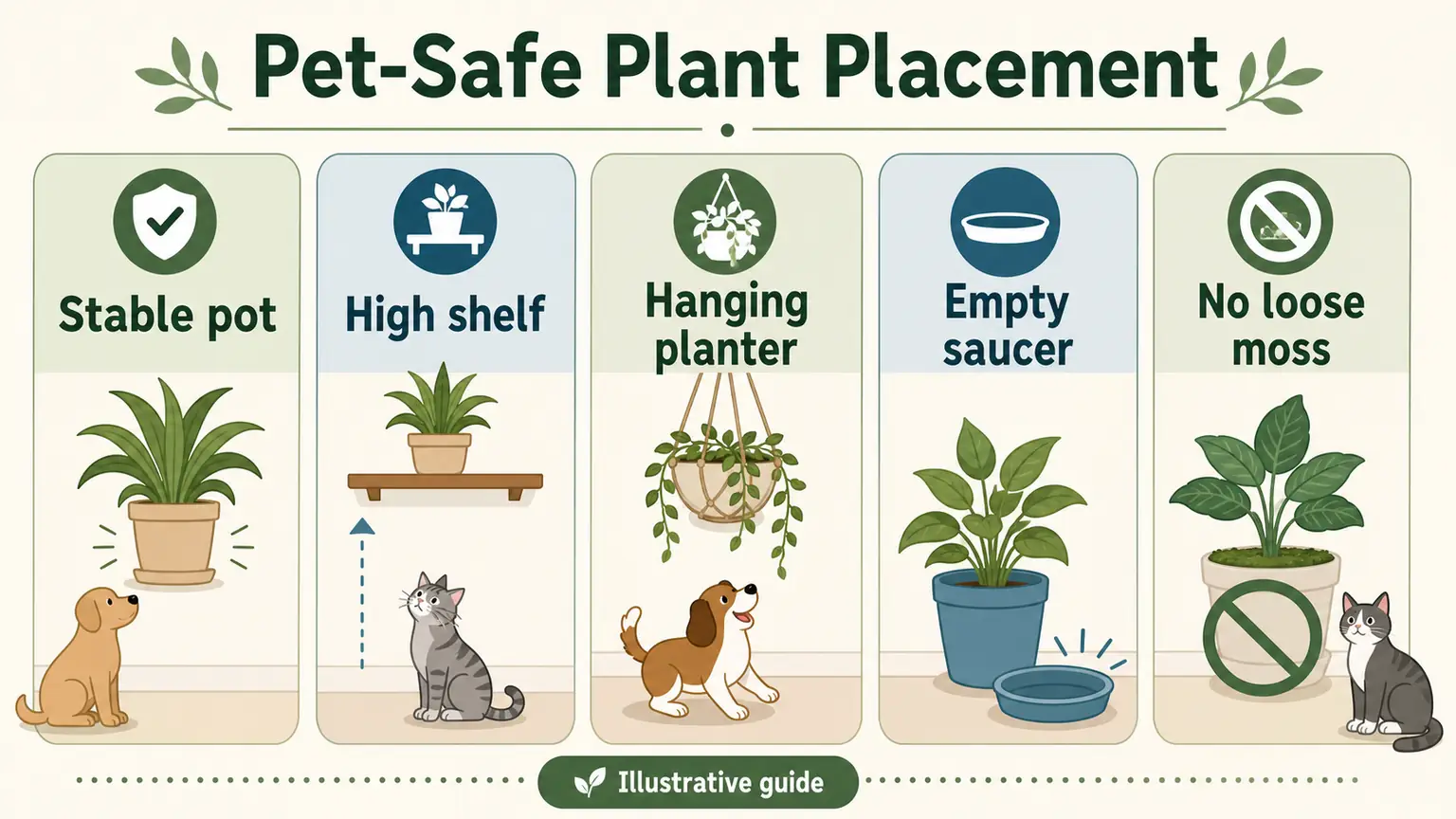
Pet-aware placement rules
- Use stable pots for floor plants, especially around dogs.
- Use hanging planters or high shelves for cats that bat leaves.
- Empty saucers so pets do not drink fertilizer or stale runoff water.
- Avoid decorative moss if your pet digs or chews.
- Quarantine new plants until you check for pests and confirm the plant ID.
More Indoor Plant Guides
Use these next if you are still choosing by room, light, or risk:
- best indoor plants for beginners
- best low-light indoor plants
- best bright light indoor plants
- pothos plant care if you want a popular trailing plant, but note that pothos is not pet-safe if chewed.
- is spider plant toxic to cats?
- hibiscus toxicity to cats and dogs
- is prayer plant toxic to cats?
Pet-safer flowers: African violet is a useful flowering option for many pet homes, but non-toxic does not mean edible. See the full African violet care guide for watering, soil, and bloom care.
FAQ
What indoor plant is safest for cats and dogs?
No houseplant is completely risk-free if a pet eats enough of it, but spider plant, parlor palm, ponytail palm, baby rubber plant, cast iron plant, prayer plant, calathea, Boston fern, African violet, and money tree have ASPCA non-toxic listings.
Does non-toxic mean my pet can eat the plant?
No. Non-toxic means serious poisoning is not expected from the plant itself, but chewing plant material can still cause vomiting or stomach upset. Soil, fertilizer, pesticides, and saucer water are separate risks.
What pet-safe plant is easiest for beginners?
Spider plant, ponytail palm, parlor palm, and baby rubber plant are the easiest starting points for many pet homes because they combine useful non-toxic listings with relatively forgiving care.
Which pet-safe plant works in lower light?
Cast iron plant and parlor palm are better lower-light choices than most colorful pet-safe plants. Growth will still be slower in dim rooms.
What should I do if my pet eats a plant?
Remove the plant, identify it by common and scientific name if possible, check whether soil or chemicals were involved, and contact your veterinarian or a pet poison-control service if symptoms appear or you are unsure.
Holiday plant note
If you are comparing seasonal plants, read whether Christmas cactus is toxic to cats and dogs before placing holiday planters near pets.
Sources
- ASPCA Toxic and Non-Toxic Plants database
- Missouri Extension: Caring for Houseplants
- Illinois Extension: Lighting for Houseplants
- Individual ASPCA plant pages cited in the sections above include spider plant, parlor palm, bottle palm / ponytail palm, baby rubber plant, wax plant, cast iron plant, prayer plant, calathea, Boston fern, common staghorn fern, African violet, nerve plant, lipstick plant, money tree, and phalaenopsis orchid.


