The best bright light indoor plants are the ones that match your exact window, not just the phrase “sunny room.” For direct indoor sun, start with plants such as jade, aloe, ponytail palm, desert rose, yucca, and citrus after acclimation. For bright filtered light, choose Bird of Paradise, croton, rubber plant, fiddle leaf fig, String of Pearls, or hoya. Most tropical foliage plants want strong light, but not hot glass and sudden afternoon sun.
Use this guide if you have a south-facing window, west-facing room, sunroom, bright shelf, or a spot where low-light plants keep bleaching, drooping, or drying too fast. The goal is to help you choose a plant that actually uses the light you have.
Source note: Light guidance is checked against Illinois Extension houseplant lighting guidance, Missouri Extension houseplant care guidance, UMN Extension guidance on houseplant sun scorch, and UMN Extension succulent guidance. Pet-safety labels are conservative and checked against ASPCA plant-safety resources, including exact listings where available; verify the exact plant if your pet is likely to chew. Generated visuals are educational illustrations, not proof photos.
Affiliate disclosure: This article includes paid links. As an Amazon Associate, The Plant Manual may earn from qualifying purchases. We may also earn through partner programs, including Plant Addicts through Awin, when you buy through our links at no extra cost to you.
Pet-safety note before buying
Pet-safer does not mean edible. ASPCA lists Ponytail Palm and Wax Plant, commonly sold as hoya, as non-toxic to cats and dogs. Still keep plants from being chewed, especially in homes with pets that eat leaves.
Use extra caution with jade, aloe, Bird of Paradise, croton, ficus/rubber plant, Fiddle Leaf Fig, String of Pearls, Desert Rose, yucca, and citrus. Those are treated as keep-out-of-reach plants in this guide, and chemical sprays, fertilizer, soil additives, and large amounts of any plant material are separate risks.
Bright-room pick: If you want the tall glossy look, check fiddle leaf fig light and care before buying; it needs a brighter, steadier spot than many foliage plants.
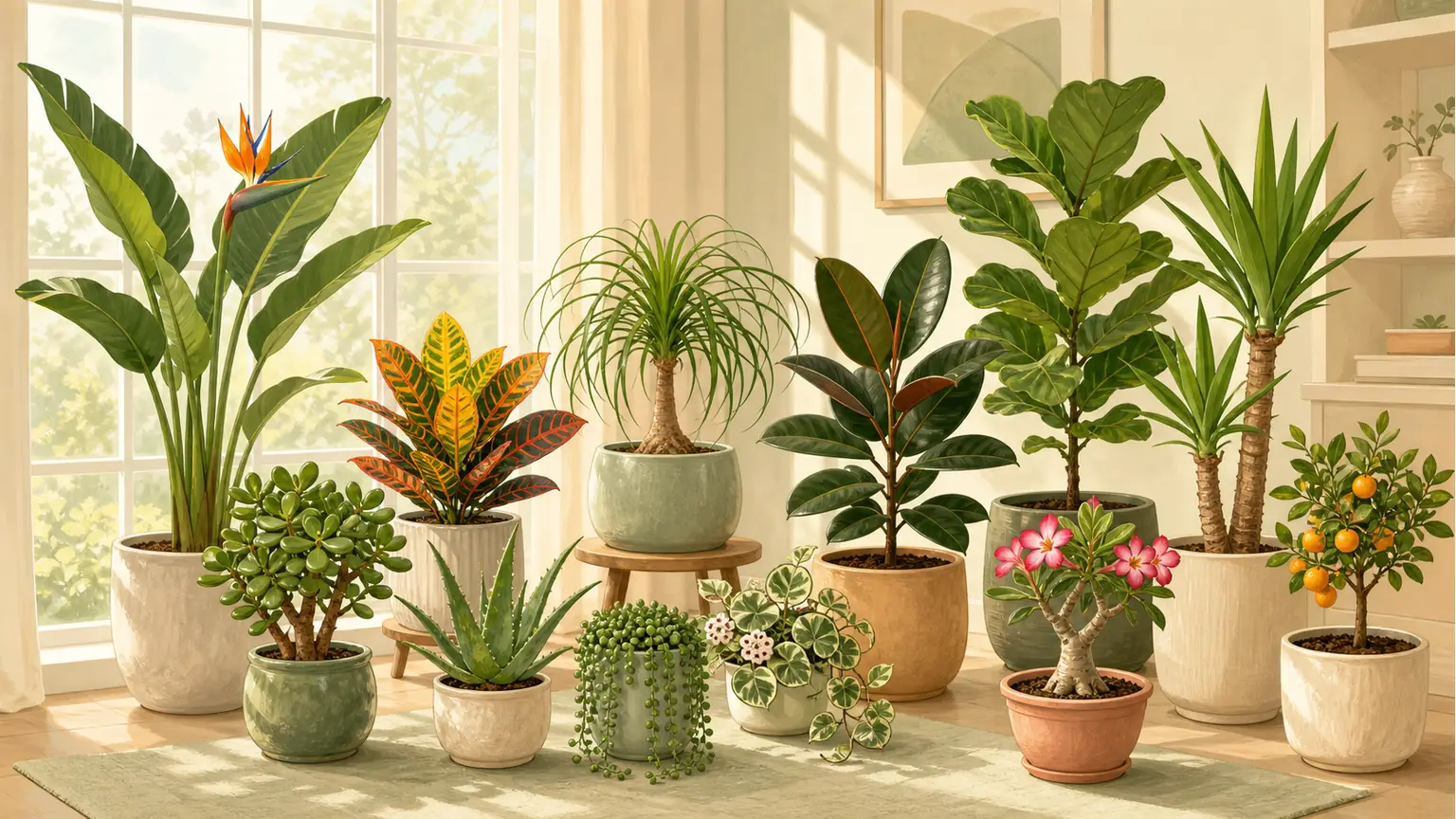
Quick bright-light rule
- Bright indirect: strong light without sun rays sitting on the leaves.
- Direct indoor sun: sun rays hit the leaves through the window.
- Best windows: south and west are strongest; east is gentler.
- Main risk: sudden sun scorch after a plant was grown in lower light.
- Best beginner pick: Ponytail Palm or Jade Plant.
- Best pet-safer pick: Ponytail Palm or Hoya.
Quick Picker: Which Bright Light Plant Should You Choose?
If you want the fastest answer, use the table first. Then read the plant section for the tradeoffs, especially direct sun tolerance and pet safety.
| Plant | Best placement | Direct sun tolerance | Care level | Pet safety | Best use |
|---|---|---|---|---|---|
| Bird of Paradise | Right beside a very bright south or west window, after acclimation. | Can take direct indoor sun after a gradual move. | Moderate | Not pet-safe; keep away from cats and dogs. | large statement corners |
| Jade Plant | Directly in front of a south or west window, or in very bright indirect light. | One of the better direct-sun candidates indoors. | Easy | Not pet-safe; ASPCA lists jade as toxic to cats and dogs. | sunny windowsills and beginners |
| Aloe Vera | A south or east window with very bright light; protect from the harshest sudden afternoon sun. | Likes strong light but can scorch if moved abruptly. | Easy | Not pet-safe; keep away from chewing pets. | hot sunny sills and dry homes |
| Croton | Bright filtered light close to a window; morning sun is safer than harsh afternoon sun. | Strong bright light, but protect from sudden harsh sun. | Moderate | Not pet-safe; the sap and leaves can irritate. | bold color in bright rooms |
| Ponytail Palm | Bright direct to bright indirect light, especially near south, west, or east windows. | Handles strong indoor light well. | Easy | Pet-safer; commonly listed as non-toxic, but do not encourage chewing. | pet-safer bright windows and low maintenance |
| Rubber Plant | Bright indirect light, with gentle morning sun if acclimated. | Filtered bright light is safer than harsh direct sun. | Easy to moderate | Not pet-safe; ficus sap can irritate skin and pets. | upright glossy foliage |
| Fiddle Leaf Fig | Very bright indirect light near a large window; stable gentle sun can work after acclimation. | Bright filtered light is safer than direct afternoon sun. | Moderate to fussy | Not pet-safe; ficus sap can irritate. | designer statement spaces |
| String of Pearls | Very bright light near a window; some gentle direct sun after acclimation. | Needs stronger light than many trailing plants. | Moderate | Not pet-safe; keep trailing stems away from pets. | bright hanging baskets and shelves |
| Hoya | Bright filtered light close to a window; avoid harsh hot glass. | Bright indirect light; some varieties take gentle sun. | Easy to moderate | Pet-safer; still keep plants from being chewed. | pet-safer trailing shelves |
| Desert Rose | Your brightest south or southeast window with warmth. | Needs direct sun to perform well indoors. | Moderate | Not pet-safe and not child-safe; all parts are poisonous. | flowering direct-sun windows |
| Yucca Cane | Bright direct or bright indirect light in a roomy corner. | Handles strong light, but still acclimate gradually. | Easy | Not pet-safe; yucca is listed as toxic to cats and dogs. | dry bright corners |
| Citrus Tree | The brightest window you have, ideally south-facing, often with winter grow-light support. | Needs very strong light; direct indoor sun is usually helpful. | Moderate | Keep away from pets; citrus plant material and oils can irritate. | fruiting plants and sunrooms |
What “Bright Light” Means Indoors
Bright light indoors is not one single condition. Illinois Extension separates high or bright light from direct light, and Missouri Extension notes that south windows usually provide the brightest and longest indoor exposure. In plain terms: a plant directly at the glass in a south window gets a very different experience than a plant five feet back in the same room.
Bright indirect light means the room is clearly bright, but the sun is not sitting directly on the leaves for hours. Direct indoor sun means the sunbeam actually lands on the plant. Some succulents and desert-adapted plants like that. Many tropical foliage plants only tolerate it after gradual acclimation, or only in morning light.
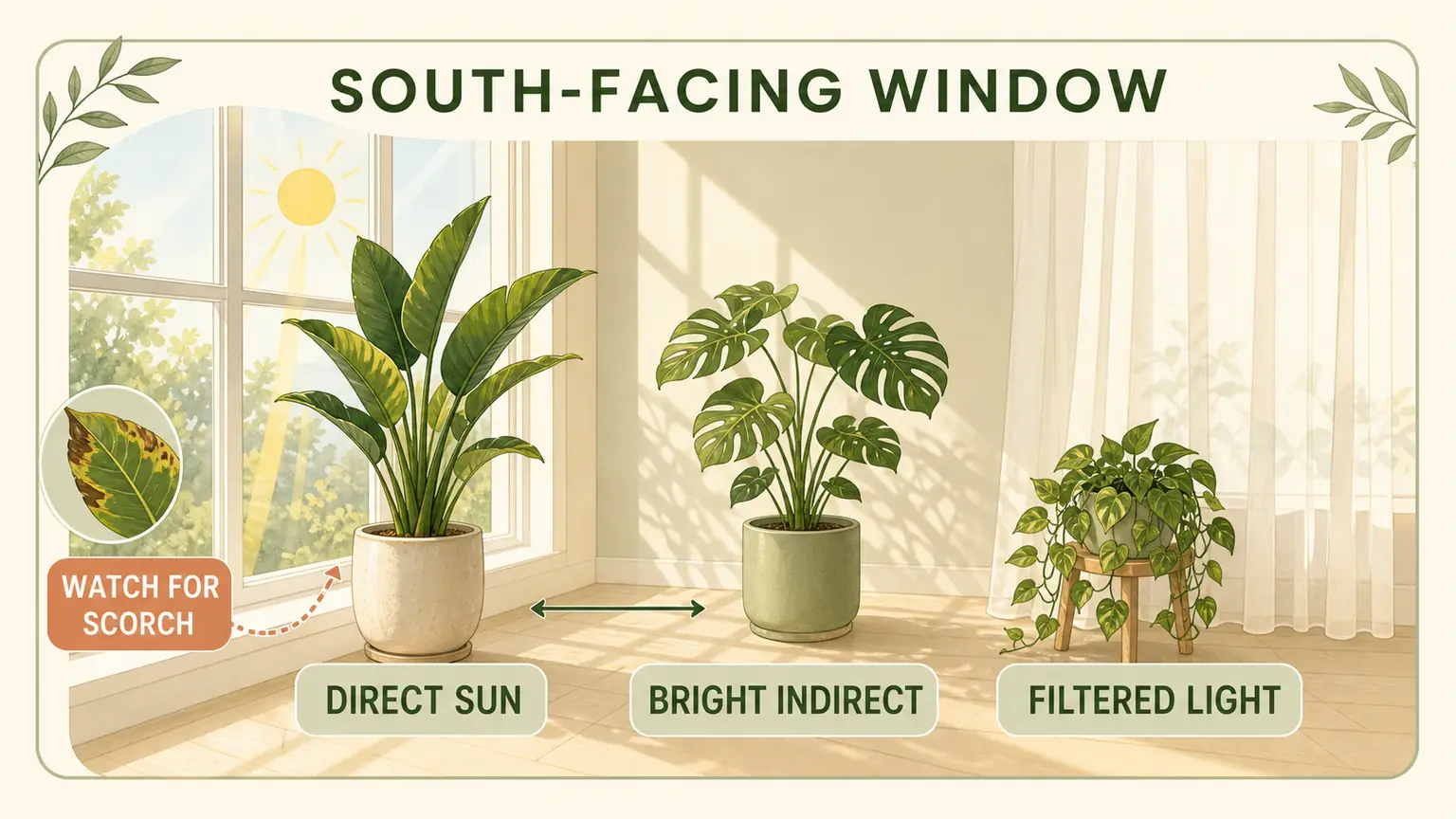
Do not move plants into harsh sun in one day
A plant that grew in a nursery, shipping box, shaded store shelf, or dim room can scorch quickly when moved straight into strong direct light. Move it closer over several days, watch the leaf surfaces, and use a sheer curtain if the window gets hot afternoon sun.
How to acclimate a plant to direct indoor sun
- Start in bright indirect light for a few days so the plant is not adjusting to new light and a new room at the same time.
- Add gentle sun first, preferably morning sun or filtered late-day sun, before trying hotter afternoon exposure.
- Increase exposure gradually over 7-14 days instead of moving the pot straight against hot glass.
- Watch the newest exposed leaves for pale patches, tan crisping, or curling toward the midrib.
- Move back one step if scorch appears. Damaged tissue will not turn green again, but new growth can adapt.
12 Best Bright Light Indoor Plants
The list below is intentionally mixed. Some plants are true sunny-window candidates, while others are better in bright filtered light. That split is what makes the article useful: you can match the plant to the room instead of guessing from a generic “bright light” label.
1. Bird of Paradise
Best for: large statement corners. Best placement: Right beside a very bright south or west window, after acclimation.
Strelitzia reginae Bird of Paradise is the bright-room plant for people who want one large, architectural focal point instead of several small pots. Its upright paddle leaves make a sunny living room or sunroom feel intentional, not cluttered.
Give it your strongest indoor light and rotate the pot so the plant does not lean hard toward one side. Water when the top few inches of mix have dried, then let the pot drain fully. It likes consistency: a stable bright spot is better than moving it from room to room.
Bright-light note
Can take direct indoor sun after a gradual move. Do not move a low-light nursery plant straight into hot afternoon sun. Give it brighter exposure over a week or two so leaves can adjust.
Pet note: Not pet-safe; keep away from cats and dogs.
Looking to buy a healthy live plant online?

CHECK RETAILER DETAILS
A strong live-plant fit for bright rooms where you want height, broad leaves, and a cleaner floor-plant shape.
2. Jade Plant
Best for: sunny windowsills and beginners. Best placement: Directly in front of a south or west window, or in very bright indirect light.
Crassula ovata Jade is one of the cleanest choices for a sunny sill because it actually benefits from strong light. In enough light, the stems stay compact and the plant slowly develops a small tree-like shape.
Use a pot with drainage, keep the mix fast-draining, and let the soil dry well between waterings. A jade plant in bright light still fails if it sits in wet soil.
Bright-light note
One of the better direct-sun candidates indoors. The main mistake is treating it like a tropical foliage plant. Jade wants brighter light and drier roots than pothos, peace lily, or calathea.
Pet note: Not pet-safe; ASPCA lists jade as toxic to cats and dogs.
Looking to buy a healthy live plant online?
CHECK RETAILER DETAILS
An exact live-plant option for readers who want a compact, bright-window succulent rather than a generic tropical foliage plant.
3. Aloe Vera
Best for: hot sunny sills and dry homes. Best placement: A south or east window with very bright light; protect from the harshest sudden afternoon sun.
Aloe barbadensis Aloe is a practical bright-light plant because it is compact, sculptural, and built for drier conditions. It is a better sunny-window choice than most soft-leaf tropical houseplants.
Let the potting mix dry thoroughly before watering again. If the leaves stretch, flop, or lean toward the glass, the plant probably wants more light. If leaves bleach or brown on the window side, reduce direct exposure.
Bright-light note
Likes strong light but can scorch if moved abruptly.. Avoid using heavy, moisture-retentive soil. Aloe roots need air and fast drainage.
Pet note: Not pet-safe; keep away from chewing pets.
Looking to buy a healthy live plant online?
CHECK RETAILER DETAILS
A low-care live succulent for a bright sill where tropical foliage plants would dry or scorch too easily.
4. Croton
Best for: bold color in bright rooms. Best placement: Bright filtered light close to a window; morning sun is safer than harsh afternoon sun.
Codiaeum variegatum Croton earns its place because its color depends on light. If you want red, yellow, orange, and green foliage indoors, a dim room is the wrong place. A bright room is where croton makes sense.
Keep it warm, avoid cold drafts, and water when the top layer has started to dry. Crotons can drop leaves after a move, so judge it over weeks, not one day after bringing it home.
Bright-light note
Strong bright light, but protect from sudden harsh sun.. Do not press croton against hot glass. The plant wants brightness, but leaf scorch and stress are common when the move is too abrupt.
Pet note: Not pet-safe; the sap and leaves can irritate.
Looking to buy a healthy live plant online?
CHECK RETAILER DETAILS
A specific colorful croton option for bright filtered rooms where the goal is bold foliage color.
5. Ponytail Palm
Best for: pet-safer bright windows and low maintenance. Best placement: Bright direct to bright indirect light, especially near south, west, or east windows.
Beaucarnea recurvata Ponytail Palm is the best bright-light pick when you want something forgiving and pet-safer. The swollen base stores water, so it is much less needy than many leafy tropical plants.
Put it in a bright spot and water only after the mix has dried. It is slow-growing, so it works well where you want shape and texture without constant pruning.
Bright-light note
Handles strong indoor light well.. The biggest risk is overwatering. Bright light helps, but it does not make soggy soil safe.
Pet note: Pet-safer; commonly listed as non-toxic, but do not encourage chewing.
Looking to buy a healthy live plant online?
CHECK RETAILER DETAILS
A strong live-plant fit for bright rooms where you want a pet-safer, beginner-friendly floor or tabletop plant.
6. Rubber Plant
Best for: upright glossy foliage. Best placement: Bright indirect light, with gentle morning sun if acclimated.
Ficus elastica Rubber Plant is a good bright-room choice when you want bigger leaves but do not want the drama of a fiddle leaf fig. Variegated forms such as Tineke need brighter light to keep their cream and green pattern strong.
Give it a stable bright spot, wipe dust from the leaves, and water after the top of the mix dries. Rotate it monthly so the trunk and canopy stay balanced.
Bright-light note
Filtered bright light is safer than harsh direct sun.. Avoid hot afternoon glass, especially on variegated leaves. Bright indirect light is usually the better target.
Pet note: Not pet-safe; ficus sap can irritate skin and pets.
Looking to buy a healthy live plant online?
CHECK RETAILER DETAILS
A variegated ficus option for bright indirect rooms where a plain green plant would feel too quiet.
7. Fiddle Leaf Fig
Best for: designer statement spaces. Best placement: Very bright indirect light near a large window; stable gentle sun can work after acclimation.
Ficus lyrata Fiddle Leaf Fig belongs in this list because it is often placed too far from windows. It looks like a decor plant, but it performs best as a high-light plant with stable care.
Keep it close to a bright window, rotate occasionally, and avoid sudden changes. Water deeply after the upper mix dries, then let the pot drain. Brown edges, leaf drop, and leaning often trace back to unstable light or watering.
Bright-light note
Bright filtered light is safer than direct afternoon sun.. Do not buy this as the easiest plant on the list. It is a good bright-room plant, but not the most forgiving one.
Pet note: Not pet-safe; ficus sap can irritate.
Looking to buy a healthy live plant online?
CHECK RETAILER DETAILS
A specific live-plant option for readers who want a large, sculptural bright-room ficus and can provide stable care.
8. String of Pearls
Best for: bright hanging baskets and shelves. Best placement: Very bright light near a window; some gentle direct sun after acclimation.
Curio rowleyanus String of Pearls is a bright-light trailing plant, not a dim-corner vine. In low light, the beads can stretch, shrink, or space out. In a bright window, the plant has a much better chance of staying dense.
Use a hanging pot with drainage and let the mix dry well between waterings. Keep the crown from staying wet, and rotate the basket so one side does not stretch.
Bright-light note
Needs stronger light than many trailing plants.. This is not a beginner-proof pothos substitute. It needs brighter light and much more careful watering.
Pet note: Not pet-safe; keep trailing stems away from pets.
Looking to buy a healthy live plant online?
CHECK RETAILER DETAILS
An exact trailing succulent option for bright hanging baskets where ordinary trailing foliage would not get enough light.
9. Hoya
Best for: pet-safer trailing shelves. Best placement: Bright filtered light close to a window; avoid harsh hot glass.
Hoya spp. Hoya is the softer answer to String of Pearls. It still appreciates strong light, but its waxy leaves and trailing habit make it easier to place on shelves, plant stands, or hanging baskets.
Give hoya bright filtered light, an airy mix, and time to dry between waterings. More light usually improves growth and can help mature plants flower, but harsh sun can still scorch leaves.
Bright-light note
Bright indirect light; some varieties take gentle sun.. Do not keep moving a hoya around while it is trying to bud. Stable light matters.
Pet note: Pet-safer; still keep plants from being chewed.
Looking to buy a healthy live plant online?
CHECK RETAILER DETAILS
A classic hoya option for bright shelves, hanging baskets, and readers who want a pet-safer trailing plant.
10. Desert Rose
Best for: flowering direct-sun windows. Best placement: Your brightest south or southeast window with warmth.
Adenium obesum Desert Rose is the brightest-window specialist on this list. It has a swollen base, a bonsai-like shape, and the potential for flowers, but only if the light is strong enough.
Treat it like a succulent shrub: strong light, warmth, a gritty mix, and careful watering. It should dry between waterings and stay much drier when growth slows.
Bright-light note
Needs direct sun to perform well indoors. Skip this plant in homes with chewing pets or young children. It is beautiful, but the safety risk is real.
Pet note: Not pet-safe and not child-safe; all parts are poisonous.
Looking to buy a healthy live plant online?
CHECK RETAILER DETAILS
A live-plant option for readers with a truly bright, warm window who want flowers and sculptural succulent growth.
11. Yucca Cane
Best for: dry bright corners. Best placement: Bright direct or bright indirect light in a roomy corner.
Yucca elephantipes and related Yucca spp. Yucca Cane is useful when you want a dry-tolerant upright plant for a bright corner. It has a sharper desert look than Bird of Paradise or Fiddle Leaf Fig.
Use sharp drainage, avoid oversized pots, and let the soil dry well. Bright light helps the canes stay sturdy, but soggy soil can still rot roots.
Bright-light note
Handles strong light, but still acclimate gradually.. The leaf tips can be sharp and the plant is not a good match for pets that chew foliage.
Pet note: Not pet-safe; yucca is listed as toxic to cats and dogs.
12. Citrus Tree
Best for: fruiting plants and sunrooms. Best placement: The brightest window you have, ideally south-facing, often with winter grow-light support.
Citrus spp. A small citrus tree is the most demanding plant here, but also one of the most rewarding. If your bright room is closer to a sunroom than a normal corner, citrus can make sense.
Give citrus as much light as possible, steady watering, and good drainage. If winter light drops hard, expect slower growth unless you supplement with a grow light.
Bright-light note
Needs very strong light; direct indoor sun is usually helpful.. Do not buy citrus for a merely bright-looking room across from a window. It needs real measurable light to flower or fruit indoors.
Pet note: Keep away from pets; citrus plant material and oils can irritate.
Looking to buy a healthy live plant online?
CHECK RETAILER DETAILS
A specific lemon tree option for readers with a true sunroom, patio window, or high-light indoor setup.
Best Bright Light Plants by Use Case
| Goal | Best pick | Why it fits |
|---|---|---|
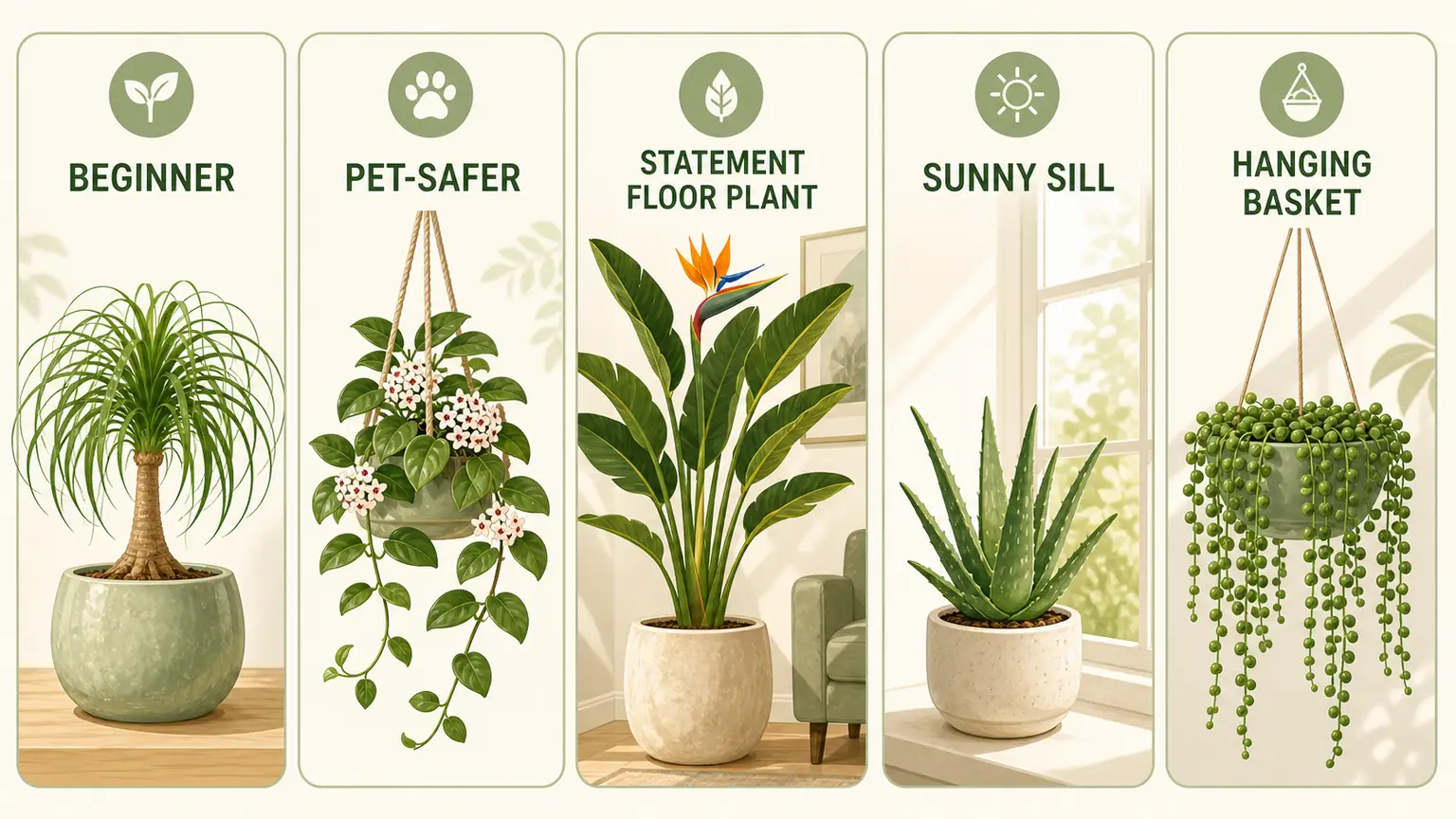
| Best for beginners | Ponytail Palm or Jade Plant | Both tolerate dry-down better than most leafy tropicals. |
| Best statement floor plant | Bird of Paradise | Large upright leaves make a bright corner look intentional. |
| Best pet-safer option | Ponytail Palm or Hoya | Better choices than jade, aloe, ficus, yucca, or desert rose in homes with pets. |
| Best sunny windowsill plant | Jade Plant or Aloe Vera | Compact succulents that can use strong light when acclimated. |
| Best hanging plant | Hoya or String of Pearls | Hoya is more forgiving; String of Pearls needs stronger light and drier care. |
| Best flowering or fruiting choice | Desert Rose or Citrus | Both need real bright exposure, warmth, and careful watering. |
Plants to Avoid in Harsh Direct Sun
Some houseplants are good in a bright room but poor choices for a hard sunbeam at the glass. If the leaf is thin, soft, or adapted to forest-floor light, use bright filtered light instead of direct afternoon sun.
| Plant or group | Why harsh sun is risky | Better placement |
|---|---|---|
| Calathea and prayer plants | Thin leaves often bleach, curl, or crisp in direct afternoon sun. | Bright filtered light behind a sheer curtain or a few feet back. |
| Fittonia | Soft foliage wilts and scorches quickly when heat and light spike. | Bright indirect light with steady moisture. |
| Peace Lily | It can handle brightness, but direct hot sun usually causes pale or burned patches. | Medium to bright indirect light. |
| Ferns | Many indoor ferns dry and crisp faster than they can replace water. | Bright indirect light with higher humidity. |
| Anthurium | Strong direct sun can mark the leaves and shorten bloom display. | Bright indirect light close to a window, not pressed against glass. |
| Pothos | Bright light helps growth and variegation, but harsh direct sun can bleach leaves. | Bright indirect light or filtered sun. |
Bright-Light Mistakes That Hurt Indoor Plants
More light is not automatically safer. It changes how fast the pot dries, how hot leaves get, and how quickly the plant can use water. These are the mistakes to avoid.

Four common mistakes
- Moving too fast: a sudden jump from dim light to direct sun can scorch leaves.
- Watering by habit: bright rooms dry pots faster, but every pot still needs a soil check.
- Hot glass contact: leaves pressed against a sunny window can overheat.
- Wrong plant choice: calathea, fittonia, and many ferns usually prefer filtered light, not harsh sun.

More Indoor Plant Guides
Use these next if you are matching plants to a real room:
FAQ
What is the best indoor plant for a sunny window?
For a sunny windowsill, choose a plant that can actually use direct indoor sun after acclimation, such as Jade Plant, Aloe Vera, Ponytail Palm, Desert Rose, or a small citrus tree. For big floor-plant impact, Bird of Paradise is better a little off the glass in very bright light.
Can pothos grow in bright light?
Yes, pothos grows well in bright indirect light, but it is not the best choice for harsh direct sun. If your room is very bright, use pothos a few feet back from the window or behind a sheer curtain.
Which bright light indoor plants are safest around pets?
ASPCA lists Ponytail Palm and Wax Plant, commonly sold as hoya, as non-toxic to cats and dogs. They are better pet-safer choices than jade, aloe, ficus, yucca, croton, String of Pearls, citrus, or desert rose. Even non-toxic plants can cause stomach upset if pets eat enough plant material, so keep plants out of chewing range.
Do bright light plants need more water?
Sometimes, but not automatically. Bright rooms can dry pots faster, yet succulents and ponytail palms still need dry-down time. Check the soil and pot weight instead of watering only because the plant is near a sunny window.
What are signs of too much sun on indoor plants?
Watch for pale bleached patches, tan crispy spots, leaf edges browning on the window-facing side, sudden wilting near hot glass, or leaves curling away from the light. Move the plant back or filter the sun if you see those signs.
Are bright light and direct sun the same thing?
No. Bright light can be indirect, filtered, or direct. Many houseplants thrive in bright indirect light but scorch in direct afternoon sun. The difference is whether sun rays actually land on the leaves.
Sources
- Illinois Extension: Lighting for Houseplants
- Missouri Extension: Caring for Houseplants
- Missouri Extension: Lighting Indoor Houseplants
- University of Minnesota Extension: When Houseplants Go Outside
- University of Minnesota Extension: Tips for Growing Succulents in Containers
- ASPCA: Toxic and Non-Toxic Plants database
- ASPCA pet-safer examples used in this guide: Ponytail Palm and Wax Plant / Hoya.
- ASPCA caution examples used in this guide: Jade Plant, Aloe, Bird of Paradise, Croton, Rubber Plant / Ficus, String of Pearls, Desert Rose, Yucca, and Citrus.


