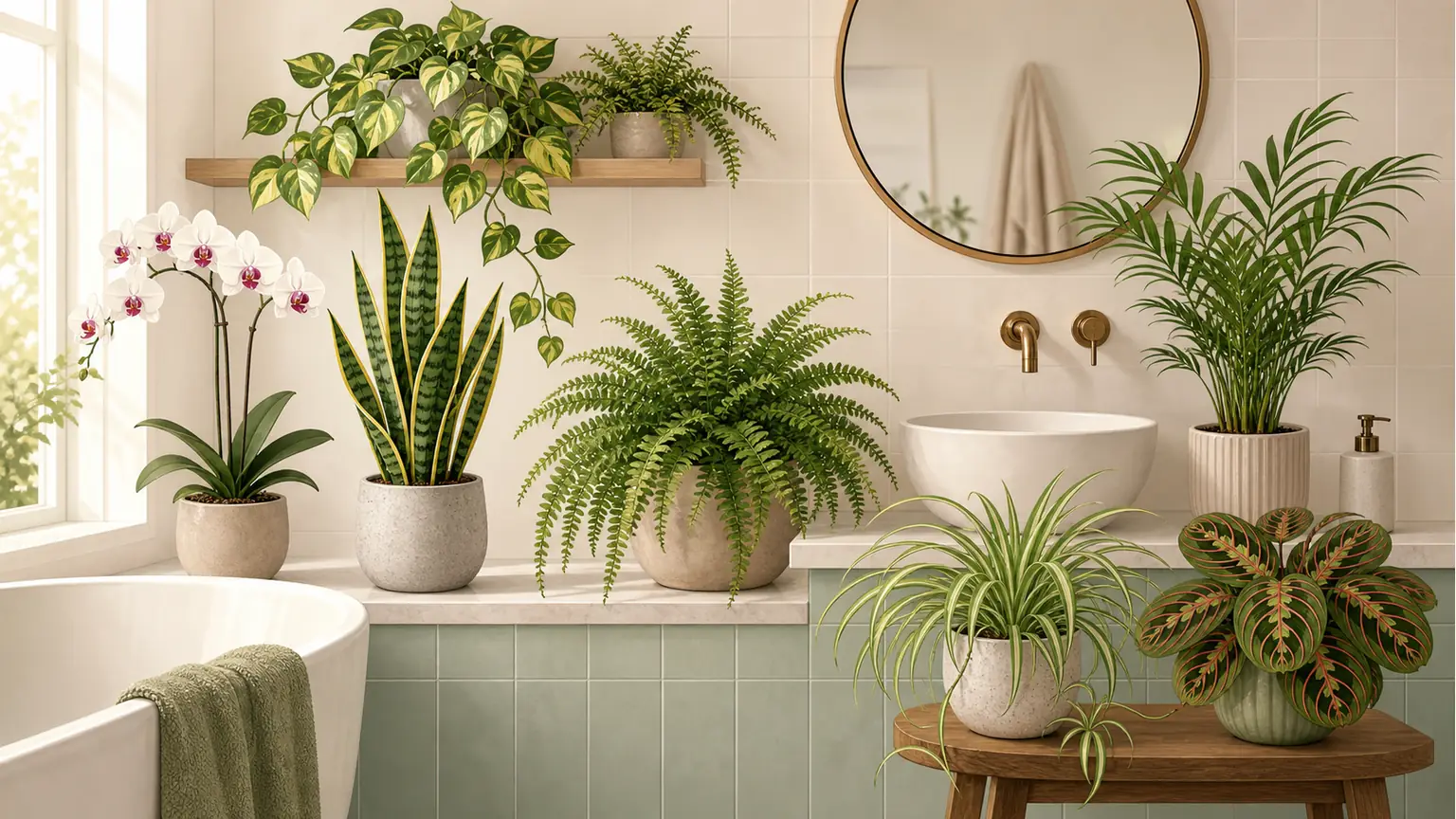
A bathroom plant guide for real homes: humid rooms, low-light corners, bright windows, shower-adjacent shelves, pet-aware spaces, and windowless bathrooms that need a light plan.
The best plants for bathroom spaces are the ones that match the room’s light first, then its humidity. Pothos, spider plant, Boston fern, prayer plant, parlor palm, cast iron plant, and snake plant can all work, but not in the same bathroom. A bright bathroom can support orchids, hoya, and ferns. A low-light bathroom needs tougher foliage. A windowless bathroom needs a grow light or plant rotation.
Affiliate disclosure: This article contains paid links. The Plant Manual may earn from qualifying purchases at no extra cost to you. Product cards are included only where they solve a specific bathroom plant setup problem.
Source note
This guide uses extension sources for light, indoor plant selection, humidity, and grow-light principles. Pet-safety notes use ASPCA toxicity references where available. Product cards are editorial role matches, not hands-on tests, and retailer availability can change.
Sources used: Illinois Extension: Lighting for Houseplants; Maryland Extension: Selecting Indoor Plants; University of Minnesota Extension: Growing Plants Indoors Under LED Lights; Penn State Extension: Humidity and Houseplants; ASPCA: Toxic and Non-Toxic Plants.
Important: no-window bathrooms are different
A bathroom with no window is not a low-light room. It is a no-light room unless you add a grow light. Do not expect pothos, snake plant, or ZZ plant to thrive in darkness just because they tolerate low light elsewhere.
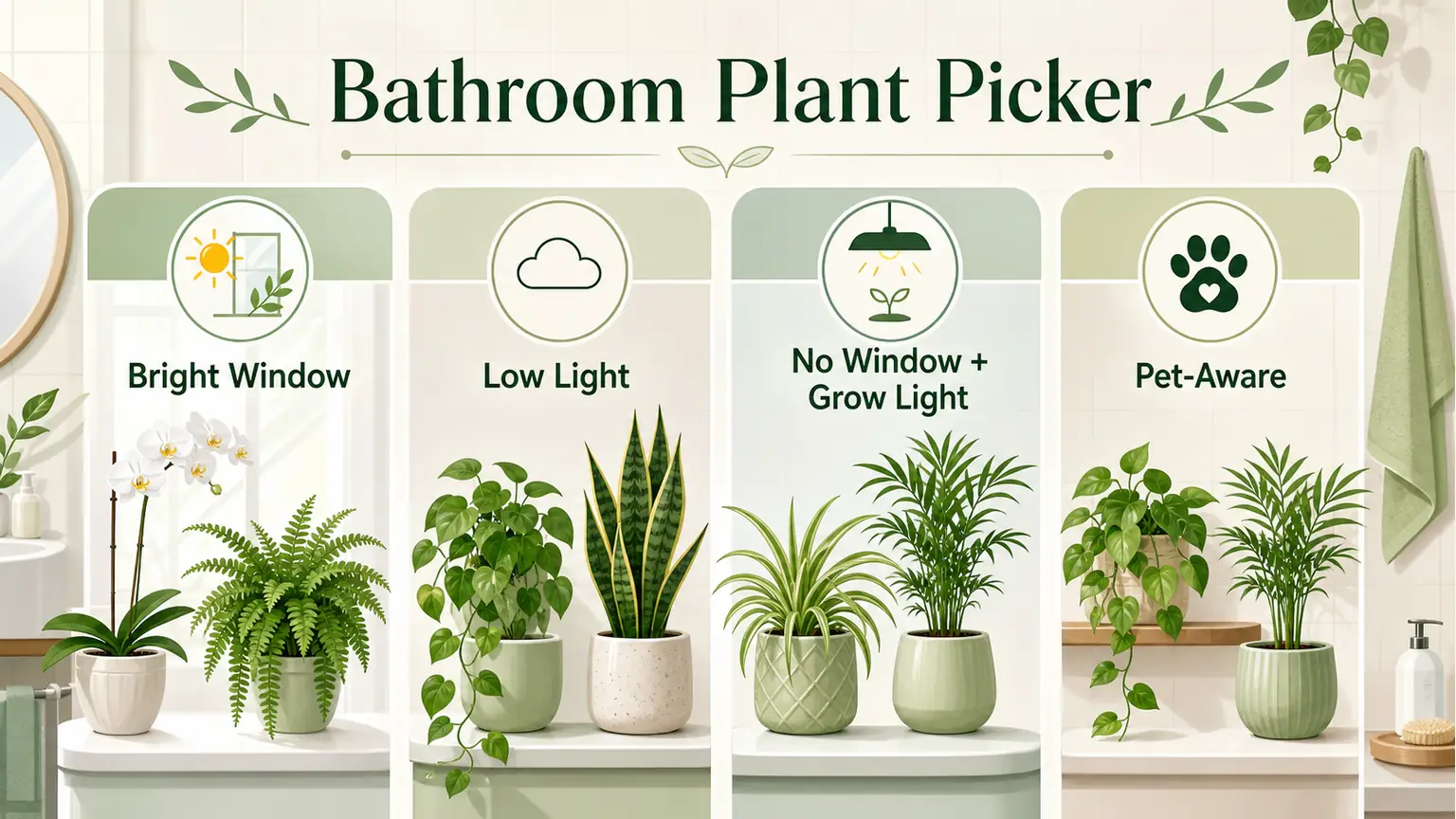
Quick Picker: Best Plants for Your Bathroom
| Plant | Best bathroom type | Light | Humidity fit | Pet note | Care |
|---|---|---|---|---|---|
| Pothos | Low to bright indirect light | Low to bright indirect light; better growth near a window or grow light | Handles normal bathroom humidity well | Toxic to cats and dogs if chewed | Easy |
| Snake Plant | Low to bright indirect light | Tolerates lower light but grows slowly; brighter indirect light is better | Does not need high humidity | Toxic to cats and dogs if chewed | Very easy |
| Spider Plant | Medium to bright indirect light | Medium to bright indirect light | Comfortable in normal to slightly humid rooms | ASPCA-listed non-toxic to cats and dogs | Easy |
| Boston Fern | Bright indirect to medium light | Bright indirect or filtered light; avoid a dark corner | Likes higher humidity | ASPCA-listed non-toxic to cats and dogs | Moderate |
| Bird’s Nest Fern | Medium to bright indirect light | Medium to bright indirect light; no harsh direct sun | Likes humidity but needs airflow | Generally treated as pet-safer, but verify exact species if pets chew | Moderate |
| Prayer Plant | Medium to bright indirect light | Medium to bright indirect light | Likes steady humidity | ASPCA-listed non-toxic to cats and dogs | Moderate |
| Calathea | Medium indirect light | Medium indirect light; avoid harsh sun | Likes humidity and stable moisture | Many calatheas are considered pet-safer, but confirm the exact plant | Moderate to fussy |
| Peace Lily | Medium indirect to low light | Medium indirect light is best; tolerates lower light with fewer flowers | Likes moderate to higher humidity | Toxic to cats and dogs if chewed | Easy to moderate |
| ZZ Plant | Low to bright indirect light | Tolerates low light; better growth in medium to bright indirect light | Does not need humidity | Toxic/irritating if chewed | Very easy |
| Cast Iron Plant | Low to medium indirect light | Low to medium indirect light | Tolerates average humidity | ASPCA-listed non-toxic to cats and dogs | Easy but slow |
| Parlor Palm | Medium to bright indirect light | Medium indirect light; tolerates lower light | Likes moderate humidity | ASPCA-listed non-toxic to cats and dogs | Easy to moderate |
| Heartleaf Philodendron | Low to bright indirect light | Low to bright indirect light; fuller growth with more light | Handles normal to humid rooms | Toxic to cats and dogs if chewed | Easy |
| Hoya | Bright indirect light | Bright indirect light; gentle morning sun can help | Tolerates normal to slightly humid rooms | ASPCA lists wax plant as non-toxic to cats and dogs | Easy to moderate |
| Phalaenopsis Orchid | Bright indirect light | Bright indirect light; avoid hot direct sun | Likes moderate humidity and airflow | ASPCA lists many orchids as non-toxic, but verify the exact orchid | Moderate |
| Pothos in Water | Medium to bright indirect light or grow light | Medium to bright indirect light; no true darkness | Water culture avoids soggy soil but still needs clean water | Toxic to cats and dogs if chewed | Easy |
How to Choose a Bathroom Plant
Start with light. Bathroom humidity can help ferns, prayer plants, calatheas, and orchids, but humidity cannot replace photosynthesis. A plant that sits in a dark bathroom will slowly use stored energy and decline.
Bathroom plant rule of thumb
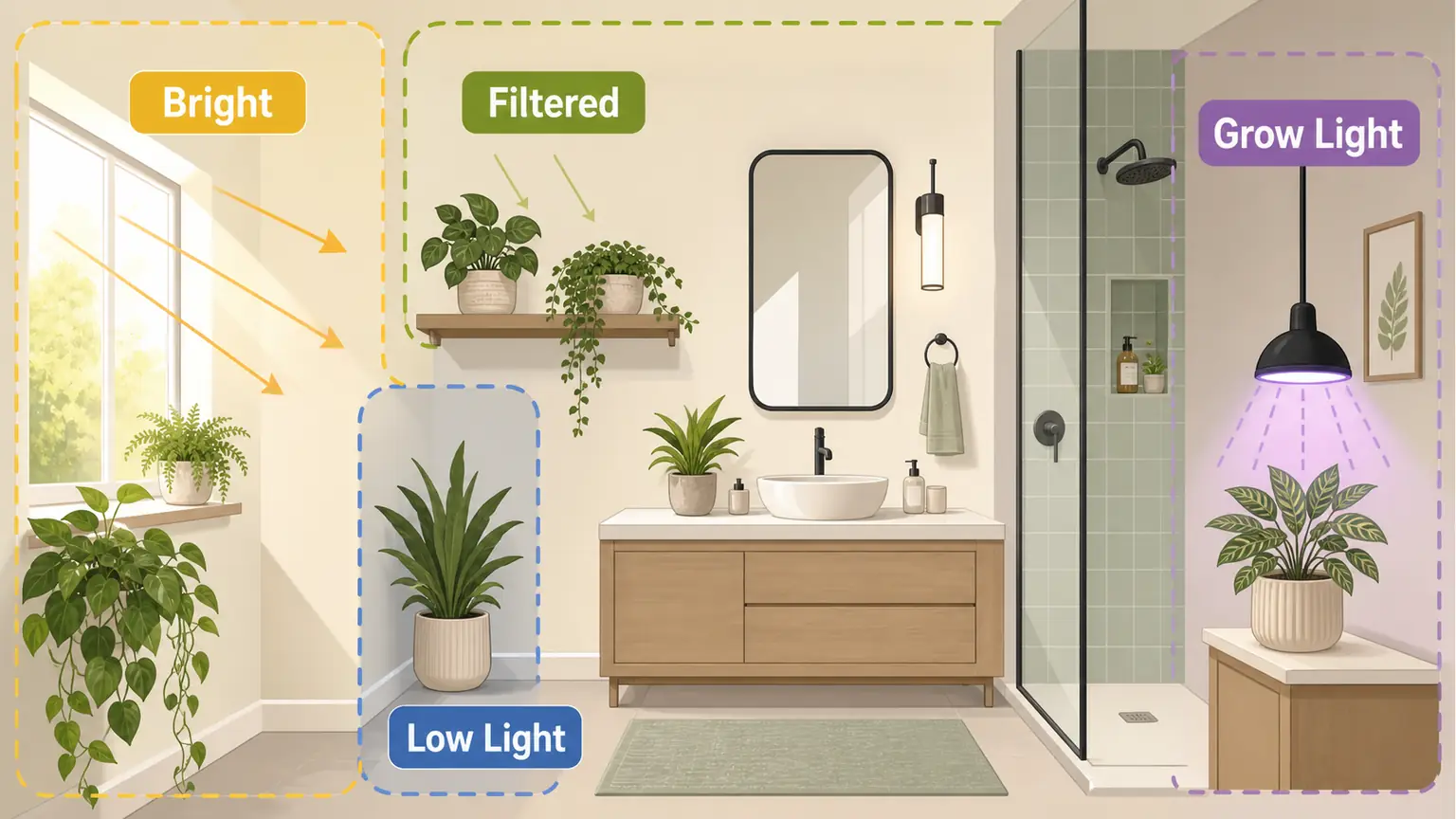
- Bright window: orchid, hoya, fern, pothos, spider plant.
- Filtered light: prayer plant, calathea, parlor palm, peace lily.
- Lower light: cast iron plant, snake plant, ZZ plant, pothos.
- No window: grow light, plant rotation, or no living plant.
Best Plants for Bathrooms With Windows
Bathrooms with windows are the easiest to plant well. Filtered or bright indirect light lets you use more attractive humidity-loving plants without forcing them into survival mode.
Best choices: Boston fern, bird’s nest fern, orchid, hoya, spider plant, pothos, prayer plant, and parlor palm.
Best Plants for Low-Light Bathrooms
For a lower-light bathroom, choose plants that tolerate modest light and slower growth. This is where cast iron plant, snake plant, ZZ plant, pothos, and peace lily make more sense than citrus, succulents, or most flowering plants.
If the room is dim but not dark, place the plant as close to the light source as the room allows and rotate it every few weeks so it does not lean hard toward the window.
What to Do in a Windowless Bathroom
A windowless bathroom needs a grow light if you want a living plant to stay there long term. Plant rotation can work for a small cutting or a tough plant, but it is a compromise, not a care plan.
Use a simple grow bulb or small fixture on a timer, and keep electrical safety in mind around sinks, tubs, and shower spray.
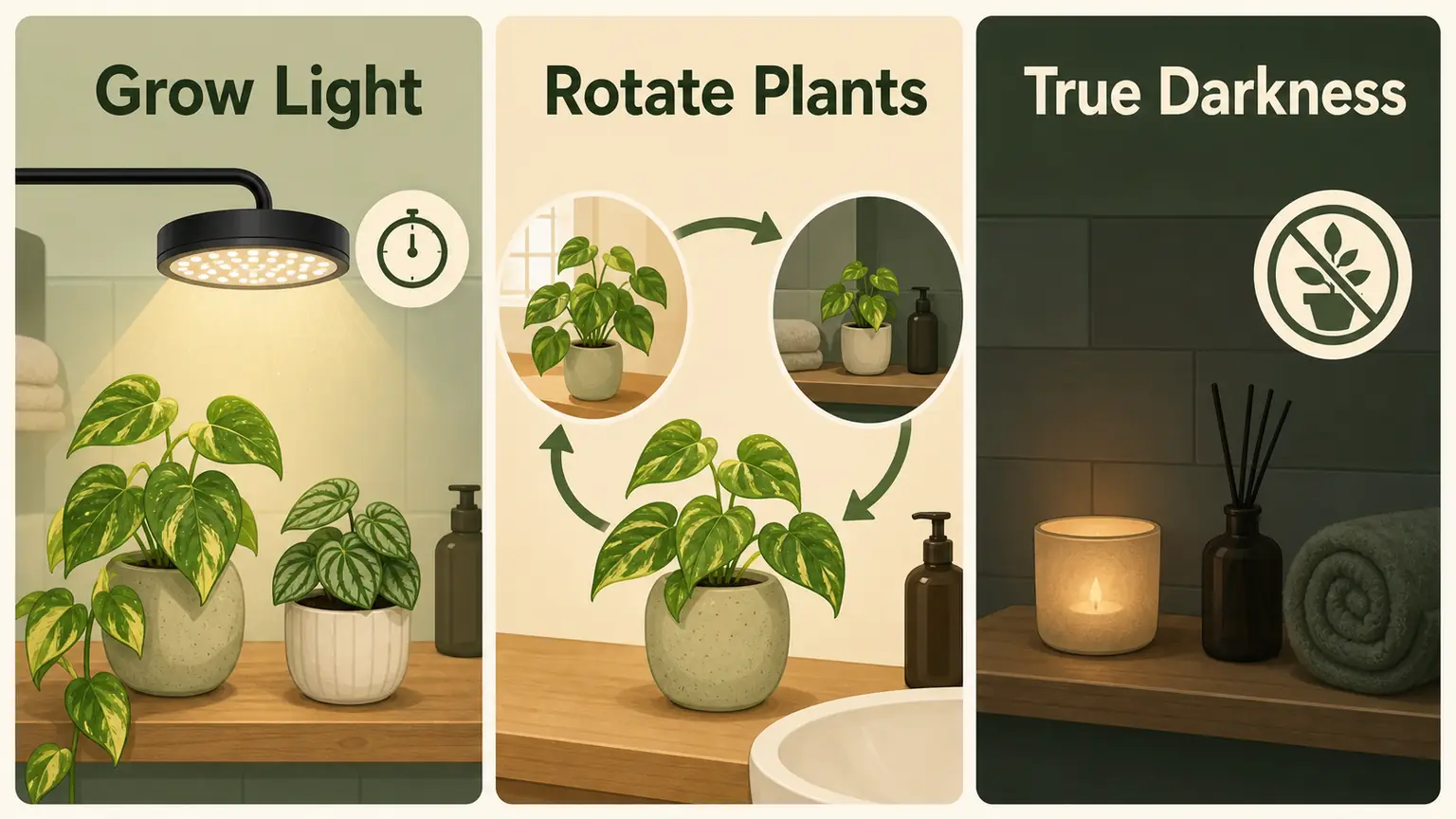
Use this only if: your bathroom has no usable window and you still want to keep a living plant there.
A simple grow bulb can turn a dark shelf into a usable plant spot if it is placed close enough and run on a steady schedule.
Skip it if: you have a bright window already, or the bathroom outlet placement would make a light unsafe.
Plants That Like Humidity Still Need Drainage
Bathroom humidity can reduce crispy edges on ferns, marantas, and calatheas, but it does not mean the roots should stay wet. In fact, pots may dry more slowly in humid rooms, especially inside decorative cachepots.
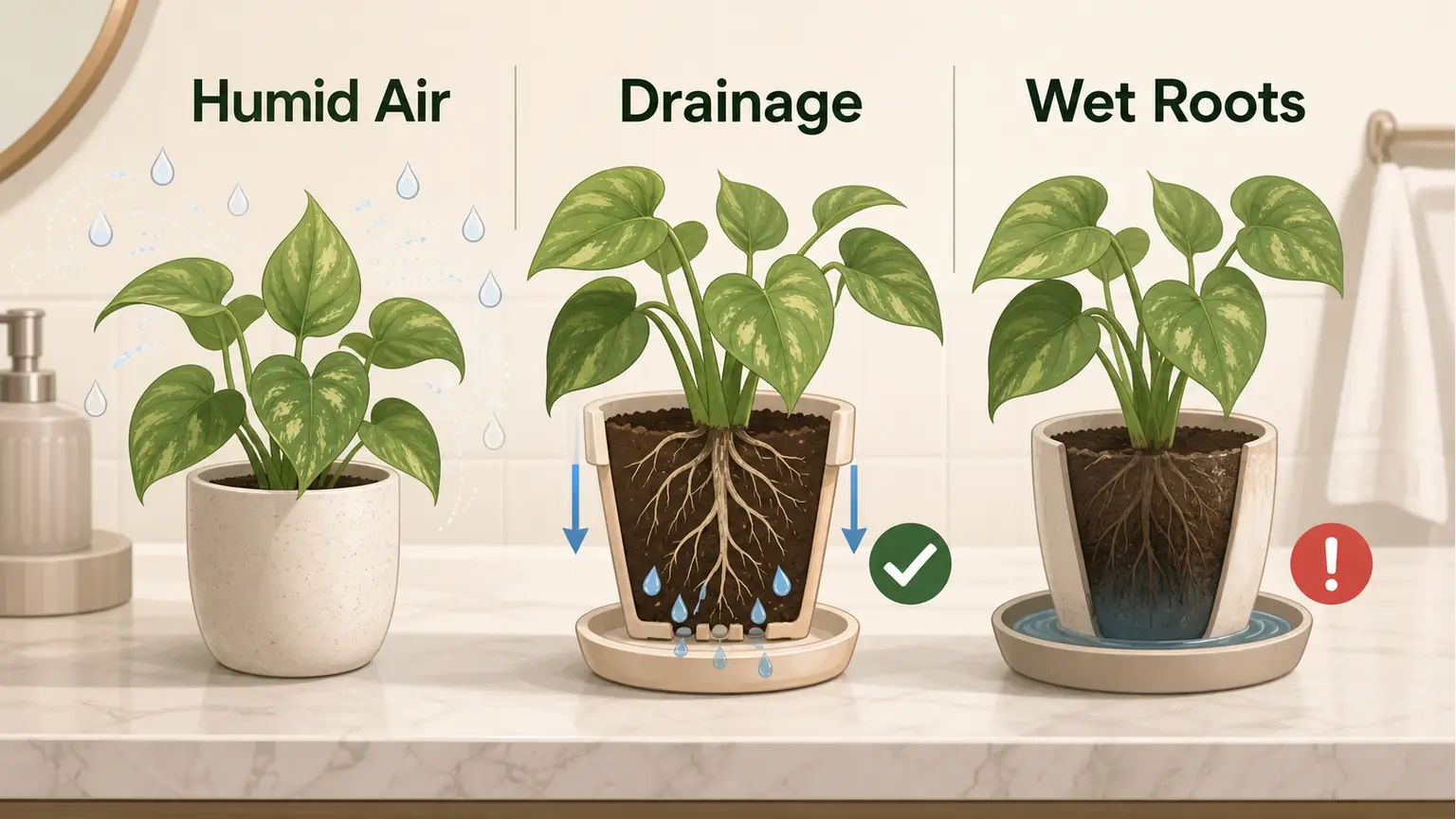
Water the pot, not the room
Check the actual potting mix before watering. A humid room can make leaves look happier while the root zone is still too wet.
Use this only if: you tend to water bathroom plants on autopilot because the room feels humid.
A basic probe can slow you down before watering, but it should be treated as a second opinion, not a schedule.
Skip it if: you use tiny pots or chunky mixes where a probe can misread; pot weight and finger checks may be enough.
Best Bathroom Plants by Situation
| Situation | Best pick | Why |
|---|---|---|
| Best overall bathroom plant | Pothos | Forgiving, trailing, and flexible if the room has usable light. |
| Best pet-safer bathroom plant | Spider Plant | ASPCA-listed non-toxic and easy to hang out of reach. |
| Best humid bathroom plant | Boston Fern | Likes humid air, but still needs filtered light and drainage. |
| Best low-light bathroom plant | Cast Iron Plant | Slow, tough, and better suited to dimmer rooms than most showy plants. |
| Best dry guest bathroom plant | Snake Plant | Handles neglect better than moisture-loving ferns. |
| Best bright vanity plant | Orchid or Hoya | Both prefer bright indirect light and good airflow. |
| Best windowless bathroom setup | Grow light + Pothos or Spider Plant | No living plant should be expected to thrive in true darkness. |
The 15 Best Bathroom Plants
1. Pothos (Epipremnum aureum)
Best for: beginner bathrooms with shelves.
Pothos is the safest first pick for many bathrooms because it tolerates ordinary home conditions, trails well from shelves, and recovers from small care mistakes.
Bathroom care: Use it near a window, on a bright shelf, or under a grow light. Let the top part of the soil dry before watering again; do not water just because the room feels humid.
Watch out: Keep it away from pets that chew. In a truly windowless bathroom, pothos needs a grow light or regular rotation to a brighter room.
Looking to buy this live bathroom plant online?

A flexible trailing pothos for bathroom shelves, bright vanities, or low-light rooms with support from a nearby window.
2. Snake Plant (Dracaena trifasciata)
Best for: dry guest bathrooms.
Snake plant works best in bathrooms that are not constantly wet: guest baths, powder rooms, or bright bathrooms where you want upright structure.
Bathroom care: Use a draining pot and let the mix dry well. Bathrooms can trick people into overwatering snake plants because the air feels damp.
Watch out: Avoid placing it in splash zones or saucers with standing water. It is drought-tolerant, not wet-root tolerant.
Looking to buy this live bathroom plant online?
An upright bathroom plant for readers who want structure and low watering needs.
3. Spider Plant (Chlorophytum comosum)
Best for: pet-safer hanging baskets.
Spider plant is one of the better bathroom choices for pet-aware homes because it can hang out of the way and has a clean ASPCA non-toxic listing.
Bathroom care: Give it a hanging basket or shelf where the arching leaves have room. Water when the top inch starts to dry.
Watch out: Cats may still play with or chew the leaves. Non-toxic does not mean edible.
Looking to buy this live bathroom plant online?
A curly spider plant option for hanging bathroom planters and pet-aware homes.
4. Boston Fern (Nephrolepis exaltata)
Best for: humid bathrooms with a window.
Boston fern is a classic bathroom plant because it appreciates higher humidity, but it still needs real light and steady moisture.
Bathroom care: Put it near a filtered window or bright vanity, not in total shade. Keep the root ball lightly moist and remove crispy fronds as they age.
Watch out: Do not hang it directly inside the shower spray. Humid air is helpful; waterlogged soil is not.
Looking to buy this live bathroom plant online?
A humidity-loving fern for bathrooms with real filtered light.
5. Bird’s Nest Fern (Asplenium nidus)
Best for: filtered-light bathrooms.
Bird’s nest fern gives the bathroom a clean tropical look without the shedding mess of some fern types.
Bathroom care: Water around the soil rather than dumping water into the center crown. Keep it near filtered light and away from hot glass.
Watch out: Poor airflow plus wet crowns can cause trouble. It wants humid air, not a constantly wet center.
6. Prayer Plant (Maranta leuconeura)
Best for: warm humid bathrooms.
Prayer plant can do well in a warm bathroom because it appreciates steadier humidity than many dry living rooms provide.
Bathroom care: Keep it out of direct sun and avoid letting the pot fully dry for long. It is best for someone willing to check moisture regularly.
Watch out: Do not choose it for a cold, drafty bathroom. Marantas are more sensitive than pothos or snake plant.
Looking to buy this live bathroom plant online?
A humidity-friendly prayer plant for warm bathrooms with medium indirect light.
7. Calathea (Goeppertia spp.)
Best for: decorative humid bathrooms.
Calathea earns a place because bathrooms can reduce one of its biggest frustrations: dry air and crispy edges.
Bathroom care: Choose this only if your bathroom stays warm and has real indirect light. Keep moisture steady, but do not let the pot sit in water.
Watch out: Calathea is not the easiest bathroom plant. If your room is cold, dark, or irregularly watered, choose pothos or spider plant instead.
8. Peace Lily (Spathiphyllum spp.)
Best for: soft filtered light.
Peace lily fits humid bathrooms with filtered light because it tolerates lower-light interiors better than many flowering houseplants.
Bathroom care: Keep it in a draining pot and water when the leaves begin to soften or the upper mix dries. It can wilt dramatically, then recover after watering.
Watch out: Do not use it where pets chew plants. Also, low light may keep it alive but will not encourage many flowers.
Looking to buy this live bathroom plant online?
A filtered-light bathroom plant for readers who want glossy leaves and occasional white blooms.
9. ZZ Plant (Zamioculcas zamiifolia)
Best for: low-maintenance bathrooms.
ZZ plant is a good bathroom choice when you want something sculptural and low-maintenance, especially in a powder room that is not constantly steamy.
Bathroom care: Let the soil dry well before watering. Its thick rhizomes store water, so bathroom humidity does not mean it needs extra drinks.
Watch out: Avoid it for pets that chew and avoid splash zones where the pot stays damp.
Looking to buy this live bathroom plant online?
A tough, upright bathroom plant for lower-maintenance rooms with real but modest light.
10. Cast Iron Plant (Aspidistra elatior)
Best for: lower-light bathrooms.
Cast iron plant is one of the better choices for lower-light bathrooms where you want a plant that does not demand constant attention.
Bathroom care: Use it as a floor or corner plant if there is still some usable light. Let the top few inches dry before watering again.
Watch out: It grows slowly. Do not fertilize or overwater just because it is not producing fast new leaves.
Looking to buy this live bathroom plant online?
A slower-growing, pet-safer foliage plant for lower-light bathroom corners.
11. Parlor Palm (Chamaedorea elegans)
Best for: pet-safer tabletops.
Parlor palm gives a soft tropical look in bathrooms without becoming as large as majesty palm or bird of paradise.
Bathroom care: Place it near indirect light and keep the soil lightly moist. Thin leaflets can brown if the plant dries hard and repeatedly.
Watch out: Avoid hot direct sun through glass. It is a gentle bathroom plant, not a harsh-sun plant.
Looking to buy this live bathroom plant online?
A compact palm-style plant for pet-aware bathrooms and bright shelves.
12. Heartleaf Philodendron (Philodendron hederaceum)
Best for: trailing shelves.
Heartleaf philodendron is similar to pothos in use: trailing, forgiving, and good for shelves where the vines can soften a bathroom edge.
Bathroom care: Let the top part of the soil dry and keep it out of harsh sun. Bright indirect light keeps growth fuller.
Watch out: Do not use it in pet-accessible spots. It is a calcium oxalate plant like pothos.
Looking to buy this live bathroom plant online?
A trailing bathroom shelf plant for homes without chewing pets.
13. Hoya (Hoya carnosa and related Hoya spp.)
Best for: bright bathroom shelves.
Hoya is a good bathroom plant when the room has brighter light and you want a slower, sturdier trailing plant than pothos.
Bathroom care: Use a small draining pot and avoid overwatering. Hoyas like airy roots and usually prefer to dry partly between waterings.
Watch out: Low-light bathrooms usually are not enough for strong hoya growth or blooms.
Looking to buy this live bathroom plant online?
A bright-bathroom shelf plant for readers who want a slower pet-safer trailing option.
14. Phalaenopsis Orchid (Phalaenopsis spp.)
Best for: bright vanity counters.
A moth orchid can work beautifully on a bright bathroom vanity because bathrooms often offer the humidity orchids enjoy.
Bathroom care: Use orchid bark, not regular potting soil, and keep the crown from sitting wet. Good airflow matters.
Watch out: Do not place it where shower spray collects in the crown or where the pot sits in standing water.
15. Pothos in Water (Epipremnum aureum)
Best for: small bathroom shelves.
Pothos in water can be useful in small bathrooms because it removes the potting-soil mess and fits narrow ledges.
Bathroom care: Refresh the water, rinse the container, and keep at least one node below water. Move it closer to light if growth stalls.
Watch out: Water culture does not solve no-light conditions. If the bathroom is dark, add a grow light or rotate the cutting to a brighter room.
Plants to Avoid in Bathrooms
Some houseplants can survive in bathrooms, but they are usually poor fits for the room’s light, airflow, or moisture pattern.
- Cactus and most succulents: they usually want more direct light and drier air than bathrooms provide.
- Citrus trees: they need very bright light and strong airflow.
- Fiddle leaf fig: inconsistent drafts, low light, and cramped bathrooms are a bad match.
- Majesty palm: beautiful, but often too large and light-hungry for ordinary bathrooms.
- Any pet-toxic plant at pet height: bathroom placement does not make pothos, peace lily, philodendron, or snake plant pet-safe.
Where to Place Plants Around Sinks, Tubs, and Showers
Use shelves, windowsills, plant stands, and vanity corners where the plant gets light without sitting in standing water. Keep foliage away from direct shower spray, hot glass, cold vents, and spots where towels knock leaves around.
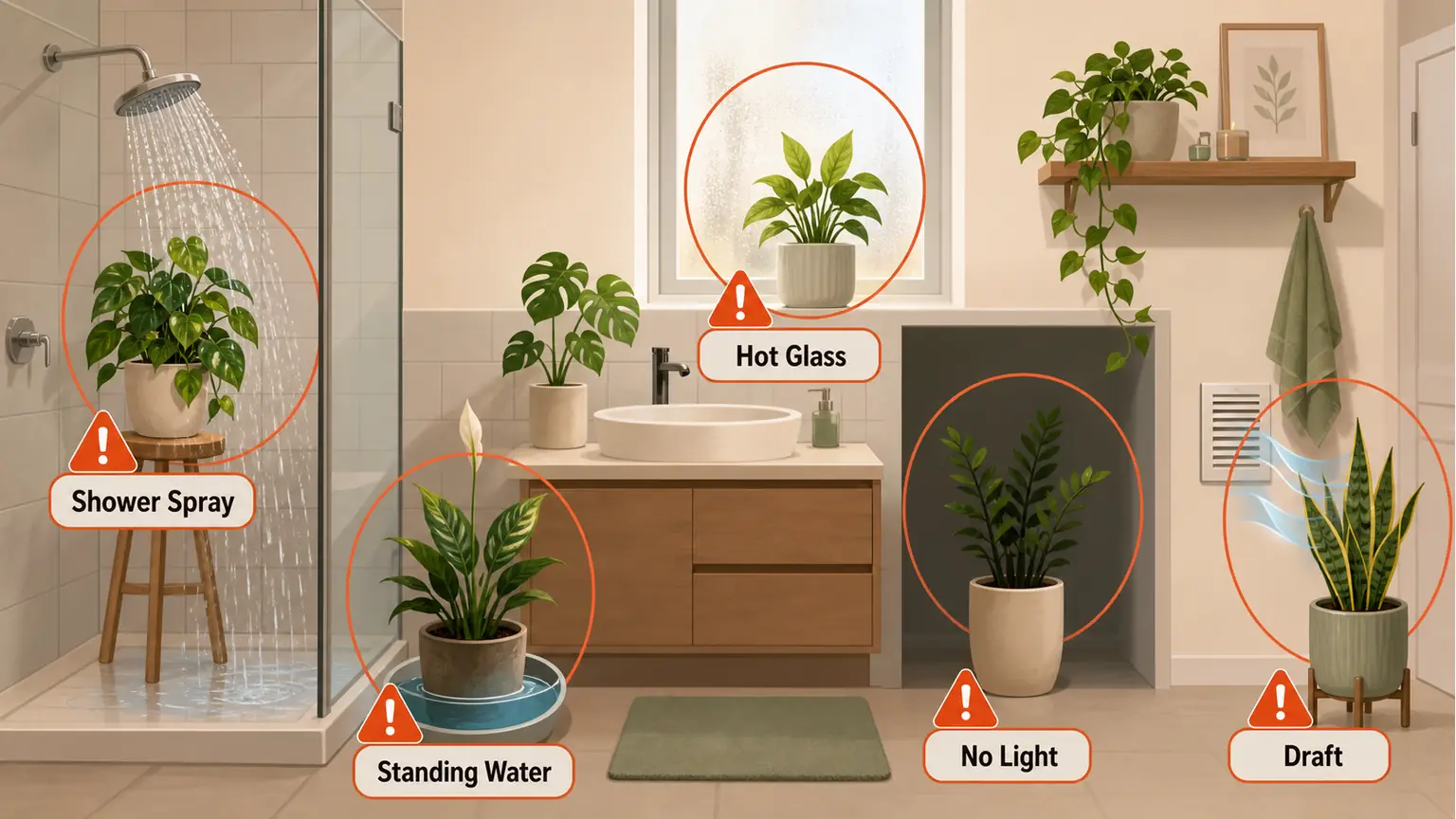
Common Bathroom Plant Mistakes
- Calling darkness low light: no living plant thrives in true darkness.
- Watering by humidity: humid air does not tell you whether the soil is dry.
- Putting pots inside the shower: most plants prefer humid air over direct spray.
- Ignoring pet access: trailing vines can be tempting to cats and dogs.
- Using cachepots without checking water: decorative pots can hide standing water.
More Indoor Plant Guides
For bathroom placement: Peace Lily can work in humidity, but it still needs usable light. See the guide to peace lily in a bathroom with indirect light.
FAQ
Sources


