A practical buyer guide for houseplant owners who want fewer watering mistakes, fewer root-rot surprises, and less guessing.
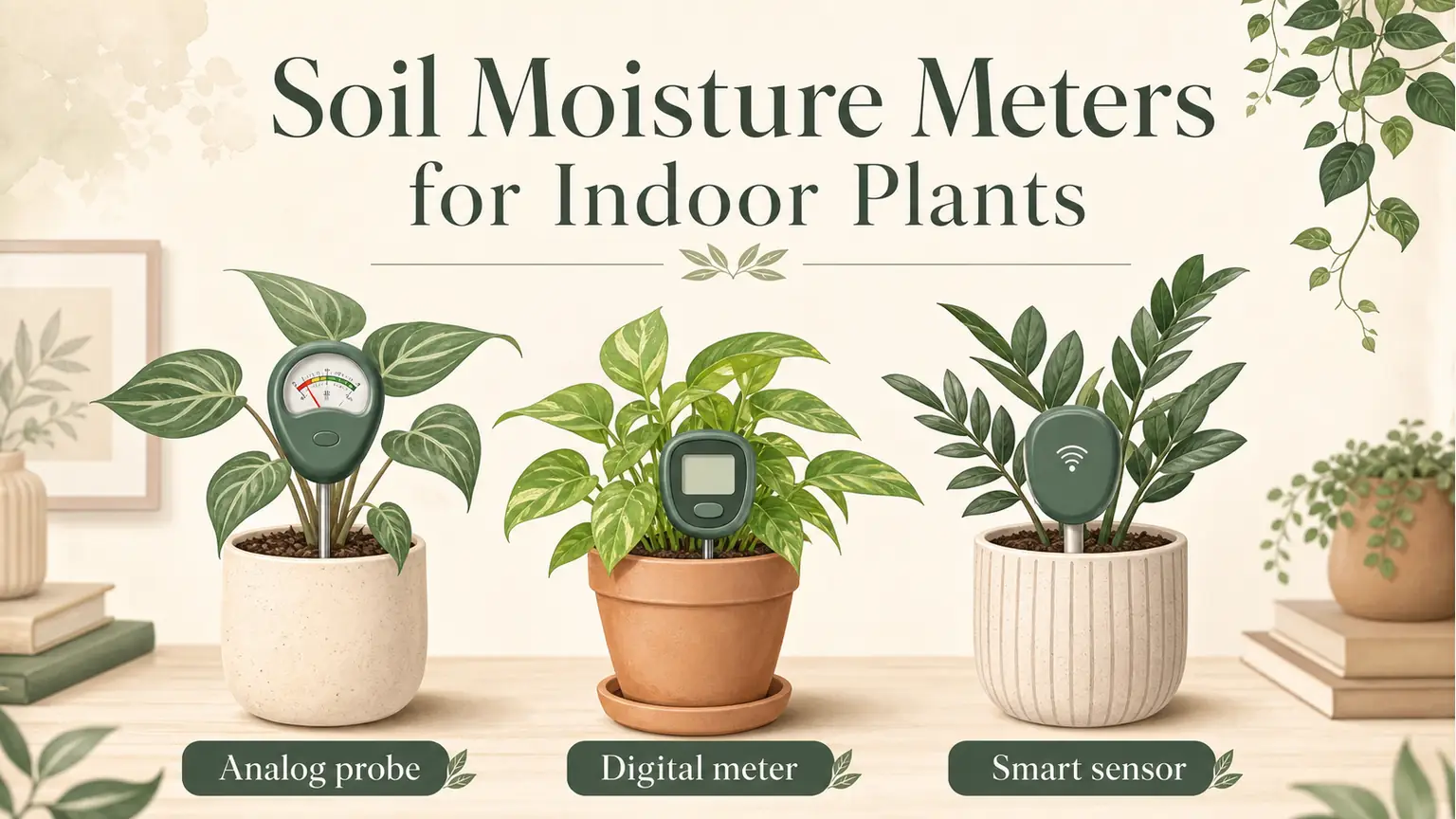
The best soil moisture meter for most indoor plants is a simple analog probe if you use it as a second opinion, not as a watering schedule. For large floor plants, choose a longer probe. For people who want reminders or app tracking, a smart sensor can help, but it adds setup and maintenance. The most important rule is this: a meter tells you what one spot in the pot feels like. It does not understand your plant, soil mix, roots, drainage, or season.
Affiliate disclosure: This article contains paid links. As an Amazon Associate, The Plant Manual may earn from qualifying purchases at no extra cost to you. Product suggestions are included only where they solve a specific watering or setup problem.
Source and testing note
This guide uses extension sources for watering principles and root-zone care, including Maryland Extension, Illinois Extension, and Missouri Extension. Product picks are editorial role matches based on product fit and Amazon API data, not hands-on lab tests. We do not display static prices or ratings because they can change.
Quick Picker: Which Moisture Meter Fits Your Plants?
| Your setup | Best meter type | Why it fits | Watch out for |
|---|---|---|---|
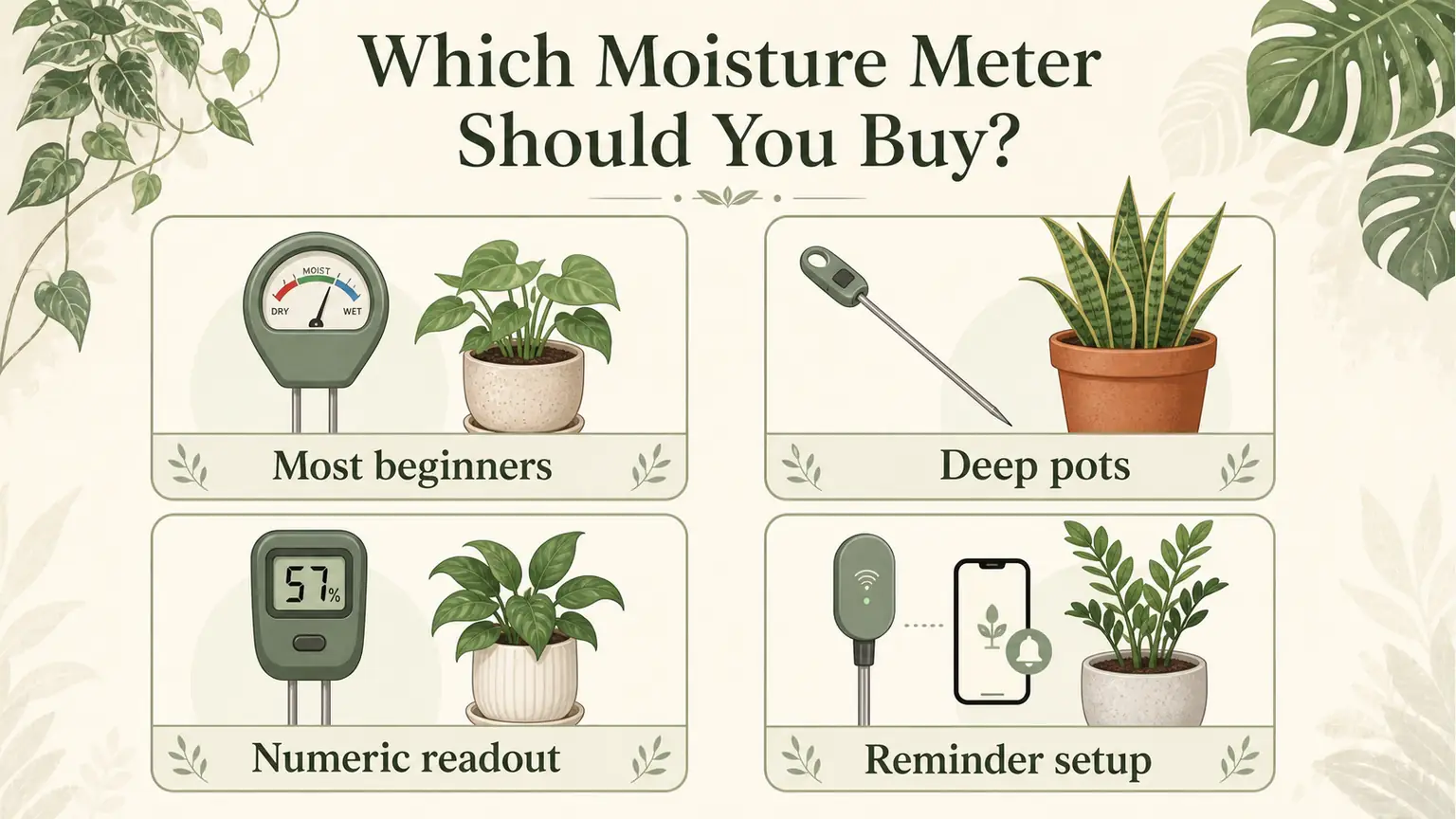
| Most beginner houseplants | Simple analog probe | Fast dry/moist/wet feedback without apps or batteries. | Probe one spot only; compare with pot weight. |
| Large floor plants | Long probe | Reaches deeper than the dry surface layer. | Too much probe for small pots. |
| Reader who wants a screen | Digital meter | Easier readout than a small analog dial. | Extra numbers do not automatically mean better watering. |
| Many plants or travel | Smart sensor | Can track or remind you when you forget which pot dries first. | Apps, batteries, hubs, and calibration can become chores. |
| You want rough light/pH checks too | 3-in-1 meter | Convenient for rough comparisons. | Do not use cheap combo pH readings for serious soil decisions. |
| Tiny nursery pots | No meter first | Pot weight and surface feel are often safer. | A probe can disturb roots or hit the pot wall. |
Do not buy a meter to ignore the plant
A moisture meter is most useful when it slows you down before watering. It should not replace checking drainage, pot weight, leaf symptoms, season, and whether the plant actually likes drying between waterings.
Best Simple Soil Moisture Meter for Most Houseplants
A simple analog probe is the right starting point for most readers. It is quick, cheap enough to be realistic, and easy to understand: dry, moist, or wet. That is enough for many pothos, philodendron, peace lily, money tree, snake plant, spider plant, and beginner foliage setups.
The mistake is treating the number as an instruction. Use it as a check. If the meter says wet but the pot is light, test another spot. If it says dry but the lower pot still feels heavy, wait.
Use this if you want one simple probe for normal houseplant pots and do not need an app or numeric display.
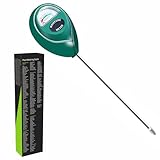
This is the classic simple analog job: quick dry/moist/wet feedback when a finger check is not enough.
Skip it if: Skip it for very tiny pots, thick woody rootballs, or chunky mixes where the probe only hits bark pockets.
Best Long-Probe Moisture Meter for Large Pots
Large floor plants are where surface checks fail most often. The top inch can dry while the lower root zone stays wet for days. That is especially common in deep nursery pots, decorative cachepots, and large planters with dense soil.
A longer probe helps you check deeper before watering again. This is useful for money trees, fiddle leaf figs, bird of paradise, large monstera, and any plant where lifting the pot is not realistic.
Use this if your main problem is checking large floor plants, deep nursery pots, or heavy planters.

A longer probe is useful when the surface dries before the lower root zone does.
Skip it if: Skip it for small tabletop pots where a long probe can disturb roots or hit the pot bottom.
How to Use a Soil Moisture Meter Without Damaging Roots
Push the probe in gently near the edge of the root ball, not straight through the thickest stem base. Wait for the reading to settle, then test a second spot if the pot is large or the mix is chunky. Wipe the probe after use so old sap, fertilizer salts, or soil film do not affect the next check.
Do not force the probe through thick roots. If the probe hits resistance, pull it back and try a different angle.

Best Digital Soil Moisture Meter
A digital meter makes sense if you dislike small analog dials or want one screen for moisture, temperature, and rough environmental checks. The benefit is readability. The risk is false precision.
If a digital meter gives you a number, do not treat that number as a universal watering rule. A snake plant and a fern can show similar readings but need different decisions.
Use this if you prefer a screen and numeric-style feedback instead of a color dial.

A digital meter can be easier to read in dim rooms and may feel more precise than a simple analog dial.
Skip it if: Skip it if you only need a quick moisture check; extra readings can create false confidence.
Best Smart Soil Moisture Sensor
A smart sensor is not necessary for most plant owners. It becomes more useful if you have many plants, travel often, forget which pots dry fastest, or want a reminder system. The tradeoff is complexity: apps, batteries, hubs, and placement matter.
Use a smart sensor as a pattern tracker, not as an automatic watering command. If the plant looks stressed but the app says everything is fine, believe the plant and check manually.
Use this only if reminders and monitoring matter more than simplicity.

A smart sensor can help when you travel, manage many plants, or forget which pots dry fastest.
Skip it if: Skip it if you do not want app setup, hub requirements, batteries, or another device to maintain.
Best 3-in-1 Soil Moisture Meter
Combo meters are tempting because they promise moisture, light, and pH in one tool. For houseplants, use this category mainly for moisture and rough light comparisons. Treat low-cost pH readings cautiously; real pH decisions need a proper soil test or a more controlled method.
This type can still be useful for beginners who want one simple tool and understand its limits.
Use this only if you want a basic moisture meter with rough light and pH checks in the same tool.

A 3-in-1 meter can be useful for quick comparisons, but the moisture reading is the main reason to buy it.
Skip it if: Skip it if you need accurate pH testing; use a proper soil test for real pH decisions.
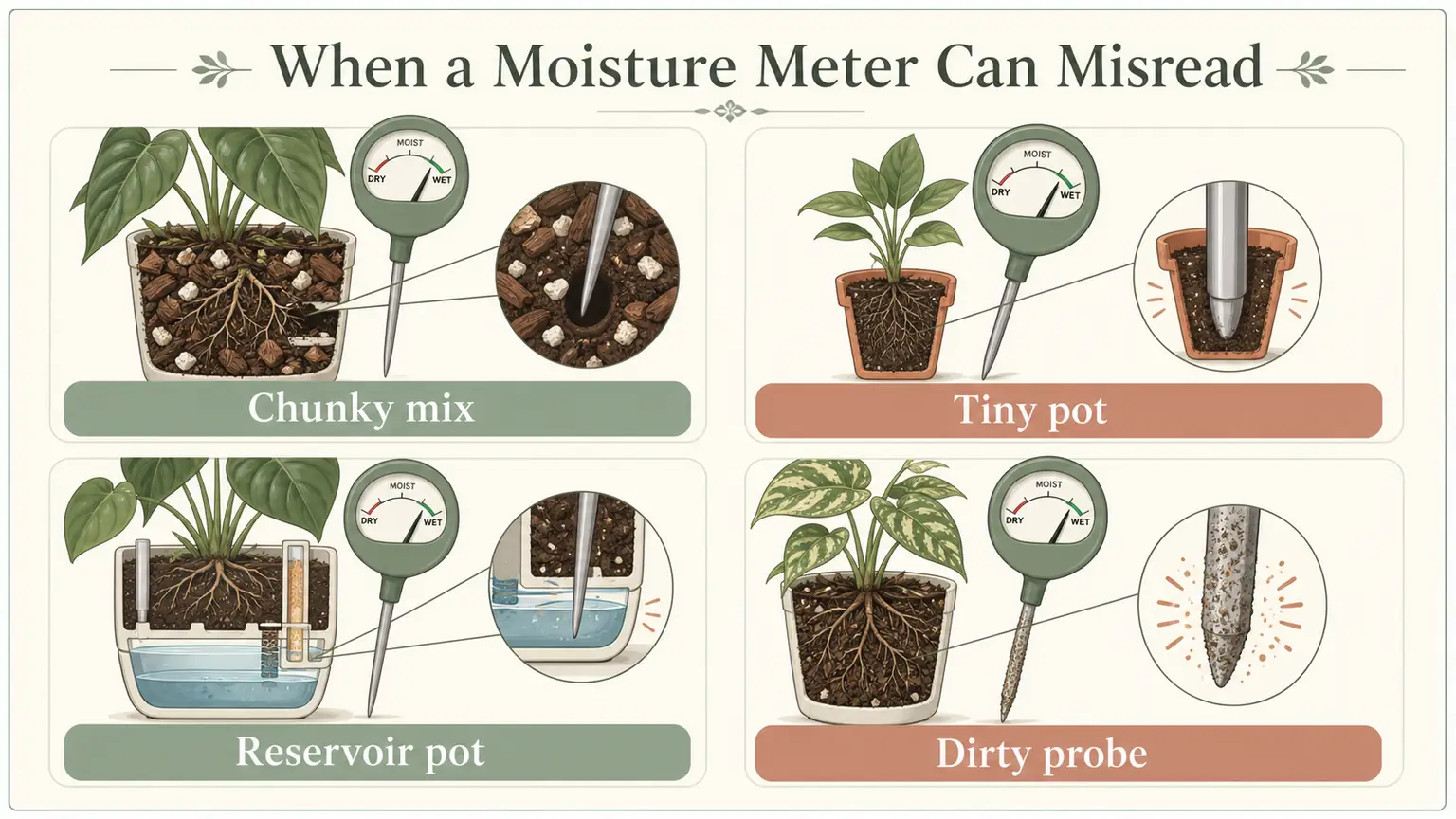
When Soil Moisture Meters Can Misread
Moisture meters fail most often when the potting mix is uneven. A chunky aroid mix may have wet bark pieces and dry air pockets. A tiny pot may not give the probe enough room. A self-watering pot can have a wet reservoir below a drier upper root zone. A dirty probe can also drag old residue into the next reading.
If the result does not match the plant, check another spot and use a second signal: pot weight, drainage, leaf texture, recent watering, and whether the plant is actively growing.
Moisture Meter Readings by Plant Type
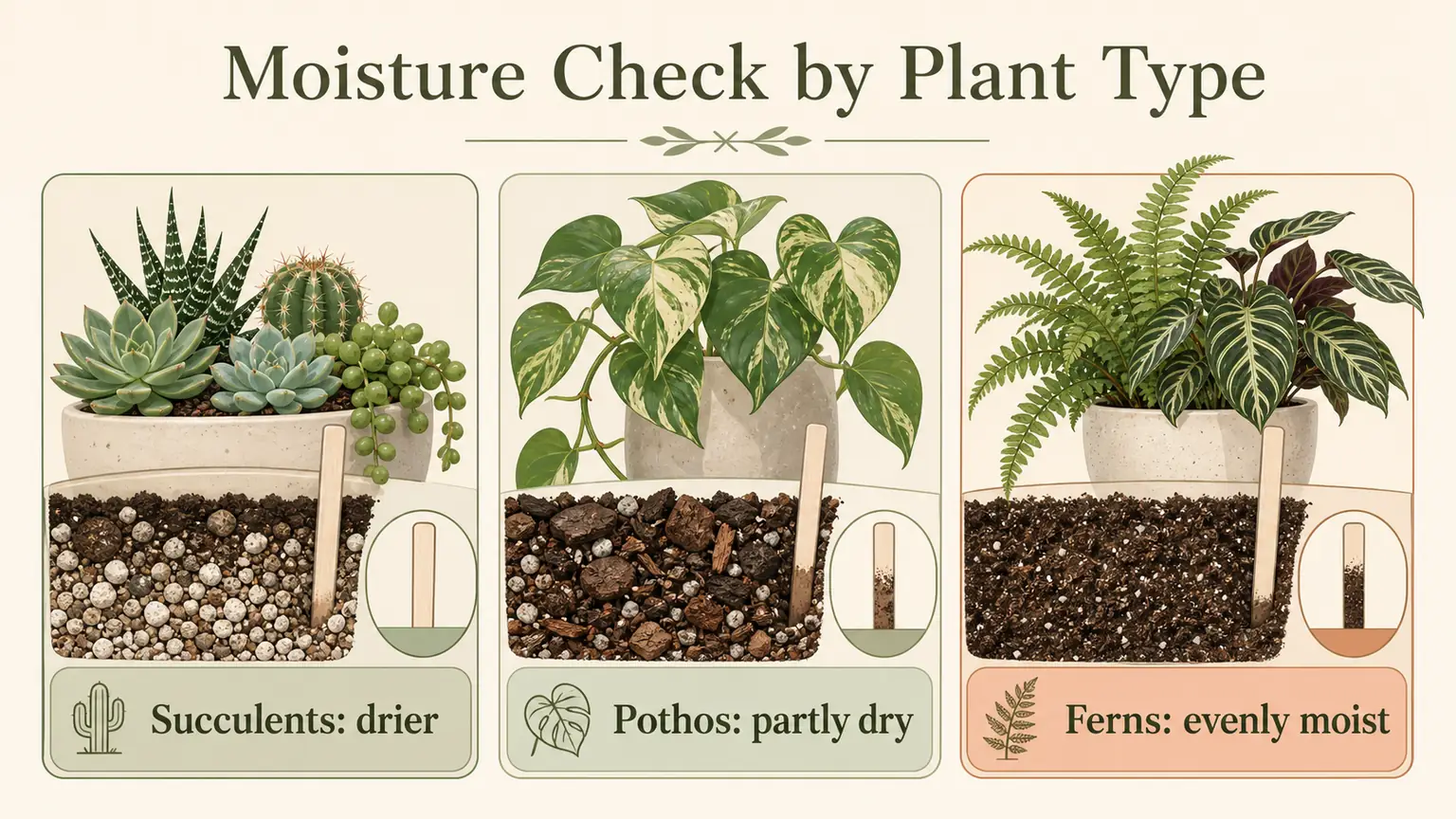
The same reading does not mean the same thing for every plant. A succulent usually wants more dry-down than a pothos. A fern or calathea may resent sitting bone dry. A snake plant can rot if you water every time the top surface looks dry.
Use the meter to understand the root zone, then apply the plant’s actual preference.
| Plant group | Better watering decision | Meter warning |
|---|---|---|
| Succulents and snake plants | Let the mix dry more thoroughly before watering. | A slightly moist lower pot may mean wait. |
| Pothos and many aroids | Water after the upper mix dries and the deeper root zone is no longer wet. | Chunky mix may need two probe spots. |
| Peace lily and ferns | Avoid long bone-dry periods, but do not keep the pot swampy. | Check before dramatic wilting becomes routine. |
| Large floor plants | Check deeper before watering because the surface dries first. | Oversized pots can stay wet at the bottom. |
When You Do Not Need a Soil Moisture Meter
You may not need a meter for tiny pots, plants in clear nursery cups, or plants you can lift easily. Pot weight is often more reliable than a probe for small containers. You also do not need a meter if the actual problem is poor drainage, a pot with no hole, compacted soil, cold roots, or a plant sitting inside a wet cachepot.
Better free check
Lift the pot after watering, then lift it again when the plant is ready for water. That weight difference teaches you more than a single meter reading.
Common Moisture Meter Mistakes
- Testing only the surface. The root zone matters more than the top dusting of soil.
- Watering every time the dial says dry. Some plants prefer dry; others do not.
- Leaving a simple probe in the pot. Most analog probes are for quick checks, not permanent placement.
- Forcing the probe through roots. If it hits resistance, change angle.
- Ignoring drainage. A meter cannot fix a pot with no drainage hole or a compacted mix.
- Trusting pH claims too much. Cheap combo meters are not a replacement for real soil testing.
A moisture meter works best when the potting mix is appropriate; start with our best soil for indoor plants guide if your soil stays wet too long.
More Indoor Plant Guides
If you are solving a watering problem, these guides connect the meter advice to specific plant symptoms:
FAQ
Are soil moisture meters accurate for indoor plants?
They are useful as a second opinion, but not perfect. Chunky potting mix, tiny pots, dry pockets, dirty probes, and self-watering reservoirs can all cause misleading readings.
Should I water when the meter says dry?
Use the reading with the plant type and pot setup. Succulents often prefer a dry reading before watering, while ferns and some tropical foliage plants should not stay bone dry for long.
Can I leave a moisture meter in the soil?
Most simple probe meters are meant for quick checks, not permanent placement. Smart sensors are designed differently, but still need maintenance and occasional sanity checks.
Do moisture meters work in chunky aroid mix?
They can help, but chunky bark and perlite can create dry pockets around the probe. Test a few spots and compare the result with pot weight and leaf symptoms.
What is the best moisture meter for pothos?
For most pothos in standard pots, a simple analog probe is enough. Let the top part of the mix dry, then check deeper before watering again.
Do I need a moisture meter for small pots?
Often, no. Tiny pots are easier to check by weight and surface feel, and a probe can disturb the root ball.