Snake Plant Yellow Leaves? 5 Reasons & How to Fix It
Your complete diagnostic guide to why your Sansevieria’s leaves are turning yellow and how to save your plant.
Transparency note: Some links in this article are affiliate links. As an Amazon Associate I earn from qualifying purchases at no extra cost to you. I research current product options and select suggestions based on relevance, availability, customer signals, and fit with the care problem discussed here.
It’s a frustrating moment for any plant owner: you notice one of your snake plant’s yellow leaves, and panic sets in. While the Snake Plant (also known as Sansevieria or Mother-in-Law’s Tongue) is famously resilient, seeing yellowing foliage is its most direct way of telling you that something is wrong. The great news is that the problem is almost always simple to diagnose and fix.
This comprehensive guide will walk you through every common cause for a snake plant turning yellow. We’ll explore the #1 culprit (overwatering), analyze specific symptoms like soft vs. dry leaves, and provide clear, actionable solutions to save your plant. For a complete overview of all care topics, you can always refer to our main Snake Plant Complete Care Guide.
The most reliable fix for overwatering is removing the guesswork entirely:
Insert it 2 inches deep before every watering. Tells you exactly what is happening at the root zone where rot actually starts.
Looking to buy a healthy live plant online?

1-YEAR WARRANTY
Get a nursery-quality, well-rooted live Snake Plant shipped directly to your door. Backed by a best-in-class plant warranty so you can shop with confidence.
Is it a Problem (Yellow Leaf) or a Feature (Yellow Edge)?
Before you diagnose a problem, it’s crucial to know if your plant is supposed to have yellow on it. Many users searching for “snake plant with yellow edges” are actually identifying a variety, not a problem.
- A Problem (Unwanted Yellowing): A once-healthy green leaf begins to turn a sickly, soft, or crispy yellow. This guide will solve the problem of unwanted snake plant yellow leaves.
- A Feature (Variegation): The plant has clean, distinct, and healthy-looking yellow stripes along its edges. This is the beautiful Dracaena trifasciata ‘Laurentii’ variety, and it is perfectly healthy.
Cause #1: Overwatering (Soft, Mushy Yellow Leaves)
If your snake plant has yellow leaves, start your investigation here. Overwatering is responsible for over 90% of cases. Snake Plants are succulents with roots designed for dry conditions. When the soil stays wet for too long, the roots suffocate and begin to develop root rot, a fungal disease that prevents them from sending water and nutrients to the leaves. A lack of natural light is a primary trigger for leaf yellowing because photosynthesis slows down. Consult our guide on low-light indoor plants to optimize your setup.
For this part of the guide, a researched product option that fits the job is:
Selected because this section is specifically about cactus and succulent mix use. Check Amazon for current price and availability.
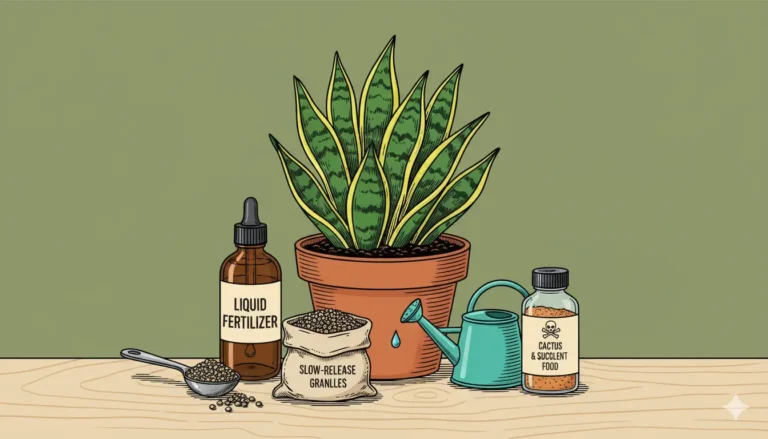
Nutrient deficiency is a common cause of yellowing. A complete liquid feed often turns it around fast:
Complete liquid fertilizer with all 16 essential nutrients. The 7-9-5 ratio is dialled in for lush foliage plants.
The best way to prevent root rot happening again is to switch to a fast-draining mix:
The #1 rated gritty mix. Mimics the rocky, dry soil these plants grow in naturally — root rot becomes nearly impossible.
What an Overwatered Snake Plant Looks Like:
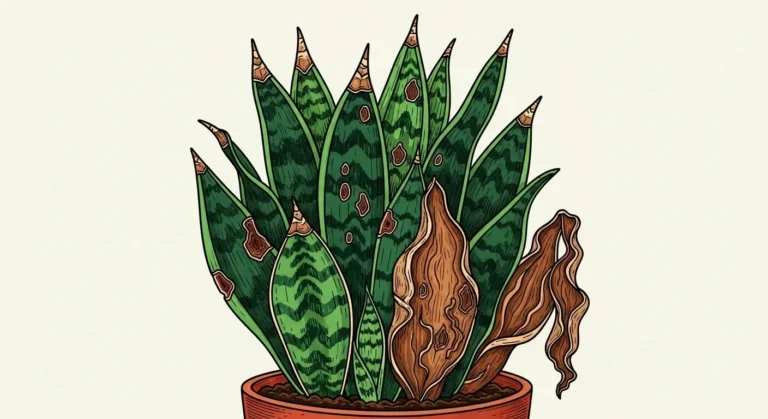
- The most telling symptom is snake plant leaves turning yellow and soft; they will feel mushy or limp to the touch.
- The yellowing often starts from the bottom of the snake plant, with the yellow leaves at the base appearing first. This is a classic sign.
- You might detect a foul, musty, or swampy smell coming from the soil.
- The base of the plant may be brown and squishy (a snake plant yellow base is a major red flag for rot).
- The entire yellow leaf will fall over easily, unable to support its own weight.
How to Save an Overwatered Snake Plant:
- Stop watering immediately.
- Gently remove the plant from its pot and brush away the wet soil to inspect the roots. Healthy roots are firm and white or orange; rotted roots are brown/black, mushy, and may smell bad.
- Perform a Root Rot “Surgery”: Using a sterile knife, cut away every single soft or black root. Be aggressive – any rot left behind will spread.
- Repot into Dry, Appropriate Soil: This is non-negotiable. Replant in a pot with excellent drainage using a fast-draining soil mix. For detailed instructions on the perfect soil, see our Best Soil for a Snake Plant Guide.
Cause #2: Severe Underwatering (Dry, Crispy Yellow Leaves)
Though they are drought-tolerant, it is possible to underwater a Snake Plant. If the plant is left completely dry for too long, it will begin to sacrifice its oldest leaves to conserve moisture for the rest of the plant.
Symptoms of Underwatering:
- You will see snake plant leaves turning yellow and dry. They will feel thin and crispy to the touch, not soft.
- The leaves may look wrinkled, shriveled, or feel leathery.
- The entire leaf blade might start to curl inwards.
- The soil will be bone-dry and may have pulled away from the sides of the pot.
The Solution:
The fix is to give the plant a deep, thorough watering. The best method is “bottom watering.” Place the pot in a sink with a few inches of water and let it absorb moisture through the drainage hole for 45-60 minutes. Then, let it drain completely before putting it back.
Cause #3: Pest Infestations Causing Yellow Spots
Pests can suck the sap from the leaves, leaving behind a pattern of damage that looks like yellow spots or patches.
Symptoms of Pests:
- You see a yellow spot on your snake plant, or multiple small, irregular spots, rather than the whole leaf turning yellow.
- You may see fine webbing on the plant (spider mites).
- Look for tiny, white, cottony masses in the plant’s crevices (mealybugs).
The Solution:
Isolate the plant immediately. Use a cotton swab dipped in rubbing alcohol to wipe off visible pests. For a larger infestation, spray the plant thoroughly with insecticidal soap. For complete instructions, visit our .
Cause #4: Nutrient Deficiency
This is a rare cause. However, if a plant has been in the same soil for many years, it may become depleted of nutrients, leading to pale or yellowed leaves.
Symptoms of Nutrient Deficiency:
- The leaves turn a pale, washed-out yellow or lime green.
- Growth is completely stalled.
The Solution:
Feed the plant with a balanced liquid fertilizer diluted to half-strength, but only during the spring or summer. For detailed instructions, read our How to Fertilize Snake Plant Guide.
Cause #5: Natural Aging (Senescence)
Sometimes, a yellow leaf is not a cause for alarm. It is normal for a plant to shed its oldest leaves to direct energy to new growth.
Symptoms of Natural Aging:
- It is only one or two of the oldest, outermost leaves turning yellow.
- The rest of the plant looks perfectly healthy.
The Solution:
You can let the leaf fall off on its own or snip it off at the base with clean scissors. This is not a sign of unhealthy snake plant yellow leaves, but a normal life cycle.
Answering Your Questions About Snake Plant Yellow Leaves
Should I cut the yellow leaves off my snake plant?
Yes, in most cases, you should. Once a snake plant leaf has turned significantly yellow, it will not turn green again. Pruning it off allows the plant to focus its energy on new growth and prevents any potential rot from spreading. Use a clean, sharp pair of scissors and cut the leaf off as close to the soil line as possible.
Can yellow snake plant leaves turn green again?
No, they cannot. The yellowing process (chlorosis) signifies that the chlorophyll in the leaf has died. Your goal is not to save the yellow leaf, but to diagnose the problem correctly to save the rest of the plant.
What if only the tips of the leaves are yellow?
A snake plant with yellow tips is usually a sign of underwatering or, more commonly, a buildup of salt and minerals from tap water. Try watering more consistently (but not more often) and consider using filtered or distilled water. You can trim the yellow tips off for cosmetic reasons. For a deeper dive, read our guide on Why Your Snake Plant Has Brown Tips.
Does this apply to my Bird’s Nest or Cylindrical Snake Plant?
Yes, absolutely. While the varieties look different, their biology is the same. A bird’s nest snake plant with leaves turning yellow or a cylindrical snake plant yellowing will be suffering from one of the five causes listed above – most likely overwatering.
Back to Green and Healthy
By correctly diagnosing the symptoms – paying close attention to whether a yellow leaf is soft, dry, or just at the base – you can easily solve the mystery of my snake plant is turning yellow. In almost every case, adjusting your watering habits and ensuring your plant is in fast-draining soil is the key to long-term success with your Sansevieria.
For more expert advice, consult authoritative resources like the Missouri Botanical Garden Plant Finder. Then, return to our main Snake Plant Complete Care Guide for more essential tips.