Best Time for Snake Plant Propagation
Timing dramatically impacts your snake plant propagation success. We learned this the hard way after attempting winter propagation that took 12 frustrating weeks with minimal results.
The sweet spot for snake plant propagation is spring through early summer (April-July in the Northern Hemisphere). Here’s why this window is so powerful:
- Faster metabolism: Warmer temperatures and longer daylight trigger active growth mode
- Roots develop 2-3x faster: What takes 3-4 weeks in May might take 10-12 weeks in December
- Reduced rot risk: Warm, dry conditions slow bacterial and fungal growth
- Stronger natural light: No need for grow lights or worry about leggy growth
Can you do snake plant propagation in winter? Absolutely. We’ve succeeded year-round. Just expect slower progress, exercise extra vigilance about overwatering, and consider a heat mat to maintain soil temperatures above 65°F (18°C).
Method 1: Division – The Most Reliable Snake Plant Propagation Method
If we could only teach you one snake plant propagation technique, it would be division. This method works almost 100% of the time and is the ONLY way to guarantee your variegated ‘Laurentii’ babies keep those gorgeous yellow stripes.
Division is simply separating a mature plant into sections – each with existing roots. You’re giving each section independence, not asking it to create roots from scratch. This is how snake plant propagation happens naturally in the wild.
Quick Division Steps
Step 1: Remove your plant from its pot. Brush away soil to reveal the thick, white rhizomes connecting different sections.
Step 2: Identify natural breaking points. Each new section needs at least 3 leaves and a chunk of rhizome with roots attached.
Step 3: Make clean cuts through rhizomes with a sterilized knife. Don’t saw – one decisive cut.
Step 4: Let divisions air-dry for 2-4 hours to form a protective callus (optional but highly recommended).
Step 5: Pot each division in fresh, well-draining soil. Water lightly – just a few tablespoons (30-45 ml) – then don’t water again for 7-10 days.
Success rate: 95%+ because you’re working with established plants that already have roots and stored energy.
Method 2: Leaf Cuttings in Water – Best for Beginners
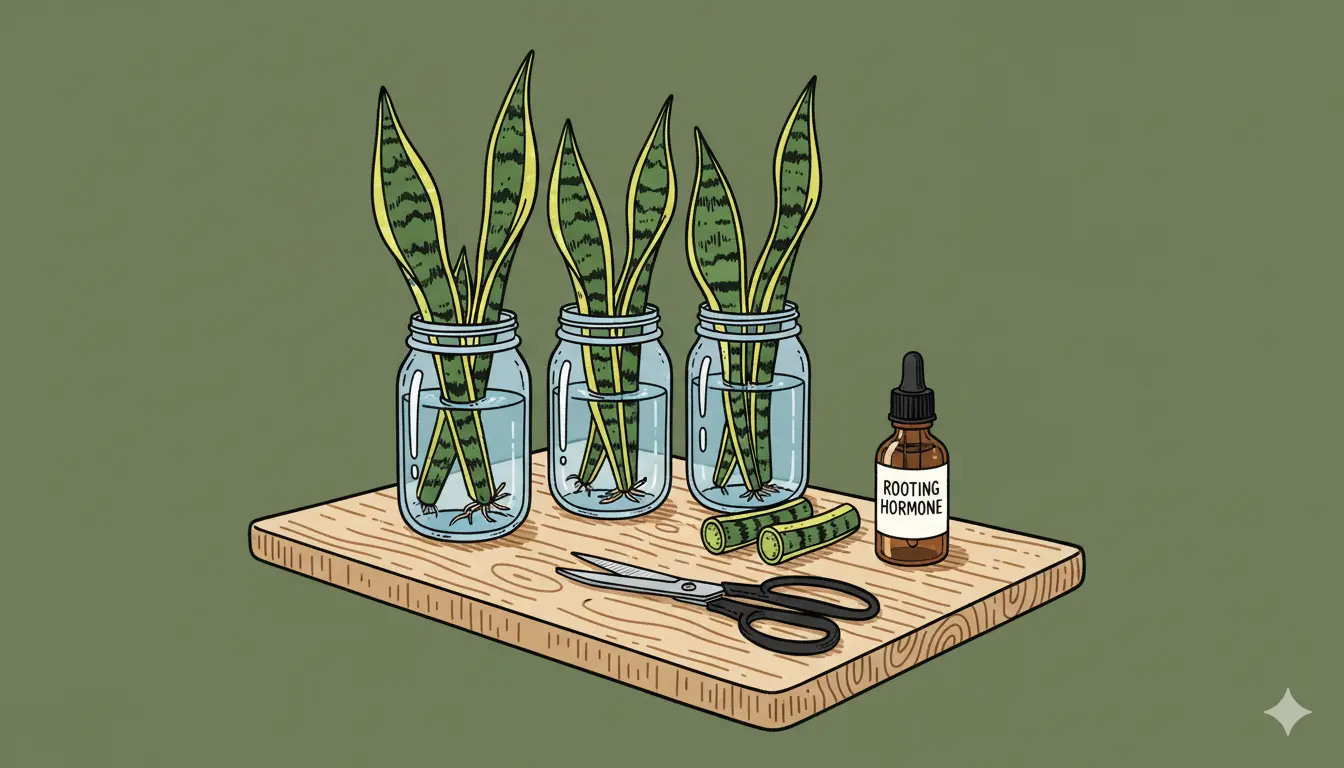
Water snake plant propagation is mesmerizing to watch. There’s something magical about seeing tiny white root nubs emerge from a leaf sitting in a jar on your windowsill. This is our favorite method for curious beginners who want visual proof that snake plant propagation works.
The catch? Variegated varieties will produce solid green babies. But for educational joy and desk appeal, this propagate snake plant in water method is unbeatable.
Water Propagation Steps
Step 1: Cut a healthy leaf into 3-4 inch (7.5-10 cm) sections. Immediately mark the bottom of each piece – polarity matters! Bottom produces roots; top produces shoots. Mix them up and nothing happens.
Step 2: Let cuttings callus for 24-48 hours on a paper towel in a warm, dry spot.
Step 3: Place cuttings marked-end-down in 1-2 inches (2.5-5 cm) of room-temperature water. Only the bottom half-inch (1 cm) should be submerged.
Step 4: Position in bright, indirect light – 3-4 feet (90-120 cm) from a south window or directly in an east window.
Step 5: Change water every 5-7 days. If it gets cloudy or smells funky, change it immediately.
Step 6: Wait 2-8 weeks for roots. Once roots are 1-2 inches (2.5-5 cm) long, transplant to soil.
Pro Tip: Add a tiny piece of activated charcoal to your water jar. It keeps water fresh for 10-14 days and dramatically cuts rot rates during snake plant propagation.
Success rate: 70-80% (mainly fails due to forgotten water changes)
Method 3: Leaf Cuttings in Soil – Set It and Forget It
Direct soil snake plant propagation is perfect for the “plant it and walk away” type. Roots develop in their permanent home with no transition shock.
Soil Propagation Steps
Step 1: Prepare cuttings exactly like the water method – 3-4 inch (7.5-10 cm) sections, marked for polarity, calloused for 24-48 hours.
Step 2: Optional: Dip the bottom ½ inch in rooting hormone powder. This accelerates snake plant propagation by 7-10 days.
Step 3: Insert cuttings 1 inch (2.5 cm) deep in well-draining soil (50% cactus mix, 50% perlite).
Step 4: Water only when the top 2-3 inches (5-7.5 cm) are completely dry – typically every 2-3 weeks. This is where most people fail. When in doubt, wait another week.
Step 5: After 4-6 weeks, cuttings will feel anchored and new growth emerges from the base.
Success rate: 75-85% (depends entirely on avoiding overwatering)
Snake plants need gritty, fast-draining soil — especially newly propagated ones. Use a gritty, fast-draining mix for propagated Sansevieria:
Cuttings root much faster with bottom heat. Especially useful in winter when room temperatures slow everything down:
USEFUL TOOL
VIVOSUN Seedling Heat Mat
Bottom heat speeds up rooting significantly, especially in winter. Keeps the root zone at the ideal 75–85°F without heating the whole room.
Check Price on Amazon →
(paid link)
For taking cuttings, you need a sharp blade that does not crush the stem. These are my go-to:
EDITOR’S PICK
Fiskars Micro-Tip Pruning Snips
Sharp, spring-loaded, and precise. Makes clean cuts that heal fast — essential for propagating without crushing the stem.
Check Price on Amazon →
(paid link)
Transparency note: Some links in this article are affiliate links. As an Amazon Associate I earn from qualifying purchases — at no extra cost to you. I only recommend products I have personally researched and believe are useful.
TOP RATED
Bonsai Jack Succulent & Cactus Soil
The #1 rated gritty mix. Mimics the rocky, dry soil these plants grow in naturally — root rot becomes nearly impossible.
Check Price on Amazon →
(paid link)
Method 4: Rhizome Cuttings – The Pro Secret
This snake plant propagation method is what professional growers use. You’re working with the plant’s natural underground highway system – those chunky rhizomes designed to spread and produce new plants.
Rhizome Propagation Steps
Step 1: Expose rhizomes by removing the plant from its pot. Look for firm, white rhizomes at least 3-4 inches (7.5-10 cm) long.
Step 2: Cut rhizome into 2-3 inch (5-7.5 cm) sections with a sterilized knife. Each piece needs at least one growth point (small bump).
Step 3: Let sections air-dry for 24 hours to callus.
Step 4: Plant rhizomes horizontally on soil surface, then cover with ½ inch of mix. Growth points should face upward.
Step 5: Water very lightly just to settle soil. Don’t water again until new shoots appear (rhizomes have stored moisture).
Step 6: New shoots emerge in 3-6 weeks. Once 2-3 inches (5-7.5 cm) tall, begin normal watering.
Success rate: 80-90% because this mimics how snake plant propagation happens in the wild
The Variegation Truth You Must Know
Here’s what crushed us during our first snake plant propagation attempts: leaf cuttings from variegated plants will almost always produce solid green offspring.
Why? Variegation is a genetic mutation in the plant’s meristem tissue (growth points), not in leaf cells. When you propagate from a leaf, you’re not including meristem tissue – the new plant reverts to the ancestral green form.
How to preserve variegation:
- Use division: Keeps original meristem intact – 100% variegation guarantee
- Use rhizome cuttings with pups: If the rhizome section includes a variegated growth point, variegation is preserved
- Avoid leaf cuttings: For ‘Laurentii’, ‘Moonshine’, or ‘Gold Hahnii’, skip water and soil methods unless you’re okay with green babies
According to the Missouri Botanical Garden, this variegation loss is normal plant genetics – not a failure of your snake plant propagation technique.
Caring for Newly Propagated Snake Plants
Once your snake plant propagation has rooted, proper aftercare ensures babies grow into robust plants.
Light
Place propagations 3-4 feet (90-120 cm) from a south or west window, or directly in an east window. While mature plants tolerate low light, propagations need energy to establish roots. See: Snake Plant Light Requirements.
Water
Young plants are MORE susceptible to root rot. Wait until soil is 100% dry before watering. Check 2-3 inches (5-7.5 cm) deep – not just the surface. Expect to water every 3-4 weeks in summer, 4-8 weeks in winter. Read: Snake Plant Watering: 7 Essential Tips.
Soil
Use fast-draining mix: 40% cactus potting mix, 30% perlite, 30% coarse sand. Learn more: Best Soil for Snake Plant.
Fertilizer
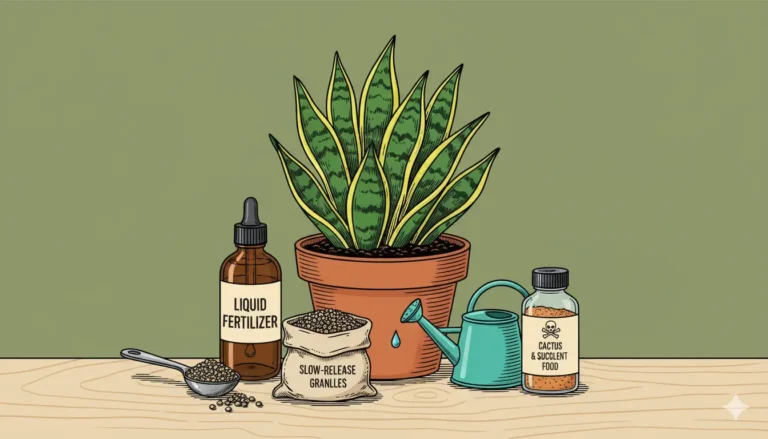
Wait 2-3 months before fertilizing. Then feed monthly in spring/summer with half-strength balanced liquid fertilizer.
Common Snake Plant Propagation Problems
Cuttings Are Rotting
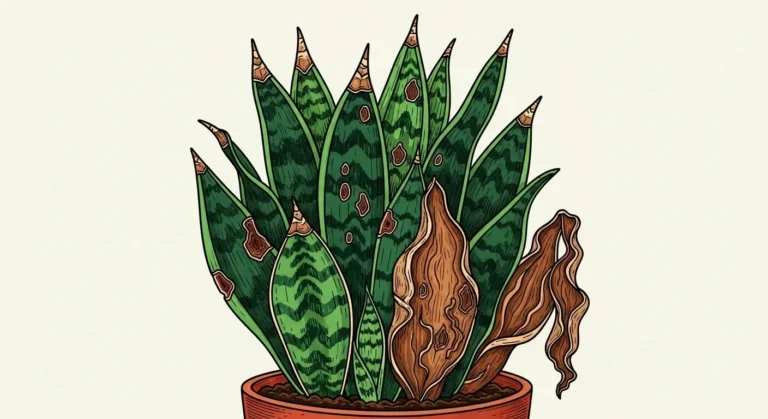
Main cause: Overwatering. Solution: Cut away rot, let tissue callus 48 hours, use grittier soil, water less frequently, move to warmer location (70-75°F / 21-24°C).
No Roots After 8+ Weeks
Main cause: Insufficient light or wrong season. Solution: Move to brighter location, increase temperature, double-check polarity isn’t upside down, be patient – some varieties take 10-12 weeks.
Yellow Leaves on Propagations
Main cause: Overwatering leading to root rot. Solution: Let soil dry completely, inspect roots for rot (brown/mushy), reduce watering frequency by 50%. Full guide: Snake Plant Yellow Leaves: Causes and Solutions.
Brown, Crispy Tips
Main cause: Inconsistent watering or tap water minerals. Solution: Use filtered water, let tap water sit 24 hours before using, establish consistent watering schedule. Details: Why Your Snake Plant Has Brown Tips.
Now go ahead – make that first cut. We’re rooting for you!