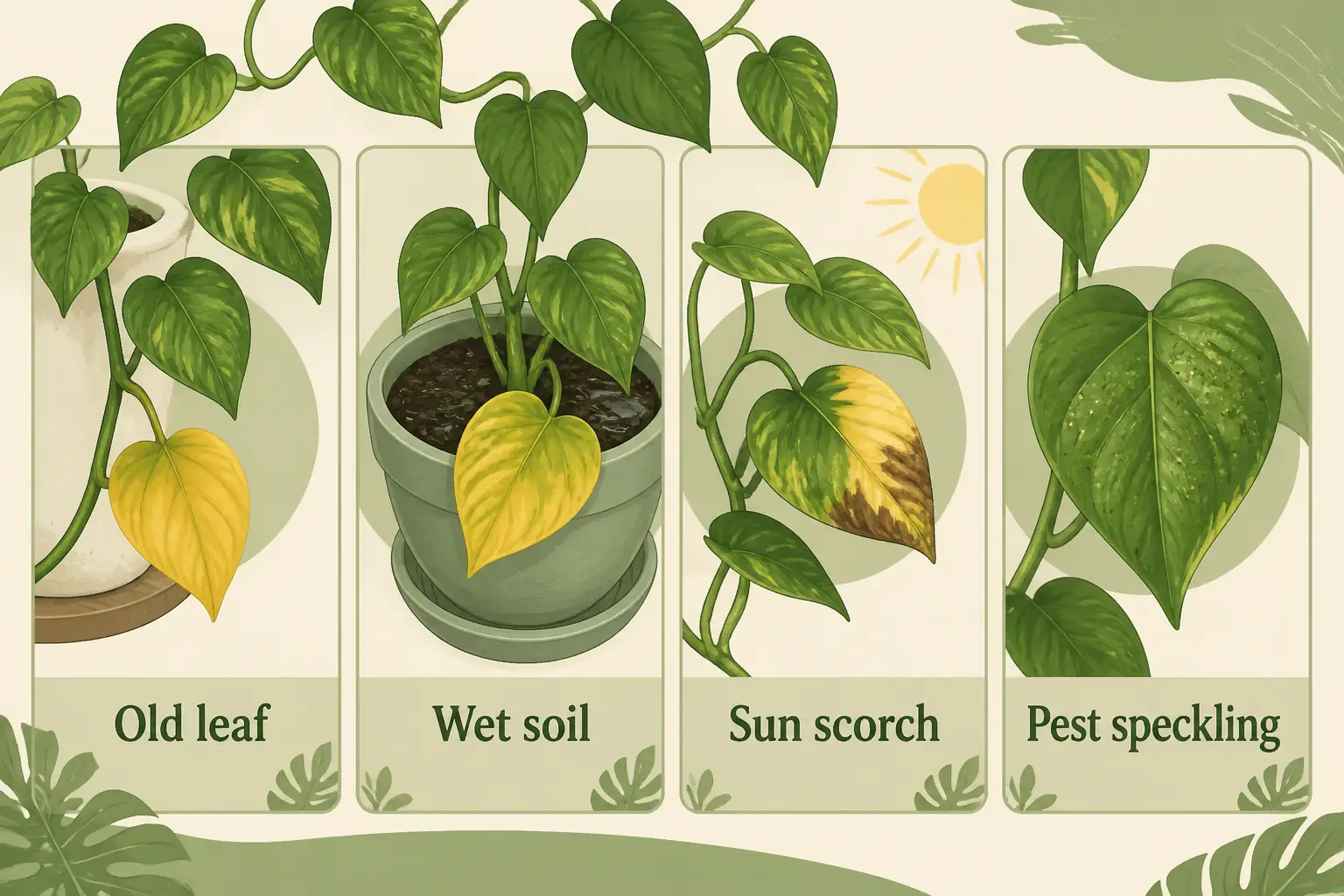
If your pothos leaves are turning yellow, check the pattern and the soil before you add fertilizer. One older lower leaf can be normal. Several yellow leaves with wet soil usually point to overwatering, drainage trouble, or stressed roots. Yellow crispy leaves with dry soil point the other way. Bleached patches near a sunny window suggest sun scorch, while yellow speckling, webbing, or sticky residue means you should inspect for pests.
The fastest safe fix is to identify the pattern first, then change one thing. Watering more, watering less, repotting, feeding, and spraying pests are all useful in the right situation, but they can make the plant worse when used as guesses.
Source note: This guide checks pothos diagnosis advice against Clemson Extension pothos guidance, NC State Extension pothos guidance, Penn State Extension pothos guidance, UF/IFAS pothos disease guidance, and Clemson houseplant disease guidance. Generated visuals are educational illustrations, not proof photos.
This article includes paid links. As an Amazon Associate, The Plant Manual may earn from qualifying purchases.
Do not fertilize first
Yellow pothos leaves are often blamed on nutrients too early. Fertilizer will not fix soggy soil, damaged roots, low light, sun scorch, or pests. Diagnose water, roots, light, and leaf undersides first. Treat nutrient problems last unless the leaf pattern clearly points there.
Pothos Yellow Leaves: Quick Diagnosis Table
| What you see | Most likely cause | Check first | Best next move |
|---|---|---|---|
| One old lower leaf turns yellow | Normal aging or old stress | Rest of the plant | Remove the leaf when it is fully yellow or limp. |
| Several yellow leaves and soil stays wet | Overwatering, dense mix, or root rot | Pot weight, drainage hole, root smell | Pause watering, check drainage, inspect roots if it keeps worsening. |
| Yellow leaves with dry, curling, crispy edges | Drought stress or hydrophobic soil | Dryness below the surface | Water slowly until the whole root ball is evenly moist. |
| Pale growth, long gaps between leaves, fading variegation | Low light | Distance from a bright window | Move to brighter indirect light. |
| Bleached yellow patches facing the window | Direct sun scorch | Hot afternoon sun exposure | Move back from the glass or add a sheer curtain. |
| Yellow speckling, webbing, sticky residue, or tiny insects | Pests | Leaf undersides and stem joints | Isolate, rinse, and treat only after confirming pests. |
| Yellow leaves after repotting or moving | Temporary stress or root disturbance | Timing and soil moisture | Keep care steady and avoid extra fertilizer. |
| New leaves yellow with green veins | Possible chlorosis or nutrient issue | Root health and care history first | Correct root/watering issues before feeding. |
One old lower leaf
Wet soil plus yellow leaves
Dry crispy yellow leaves
Speckling or webbing
When One Yellow Pothos Leaf Is Normal
A single older leaf turning yellow near the base of the vine is not always a problem. Leaves age, and a pothos can shed a leaf after a move, a missed watering, a cold draft, or a light change. If the rest of the plant is firm, green, and producing normal growth, do not overhaul the whole care routine because of one leaf.
Remove the leaf when it is fully yellow, limp, or easy to detach. If many leaves are yellowing at once, if new leaves are yellow, or if stems feel soft near the soil line, treat it as a diagnosis problem instead of normal aging.
Normal vs. urgent
Normal: one older lower leaf yellows while the rest of the plant looks steady. Urgent: several leaves yellow quickly, soil smells sour, stems soften, or the pot stays wet for days.
Yellow Leaves With Wet Soil: Overwatering or Root Rot
Wet soil is the first thing to check because it is one of the most common ways pothos declines indoors. Clemson Extension recommends watering pothos when the soil is dry to the touch, and Penn State Extension notes that excess water can lead to root rot. If the pot stays heavy and wet, the roots may not be getting enough air. Too little light combined with overwatering is the main trigger for yellow leaves. Check our guidelines for plants that survive in low light to set a safer care routine.
Check the surface, then check deeper. The top inch can dry while the lower root zone is still wet, especially in large pots, cachepots, or dense soil. Lift the pot. Smell the drainage holes. Look for a sour or swampy odor. If the yellowing keeps spreading while the soil remains wet, slide the plant out and inspect the roots.
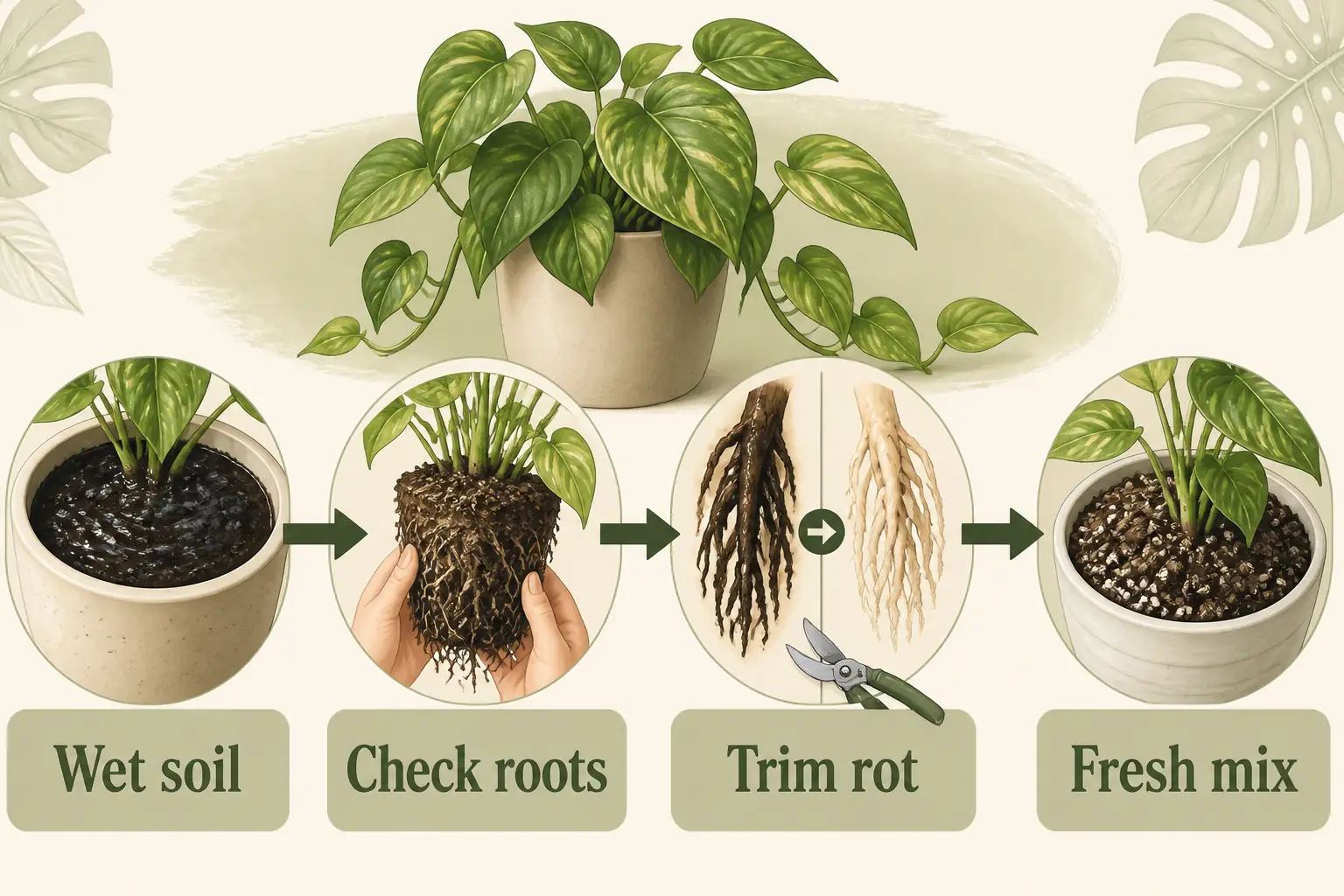
Emergency root rot flow
- Stop watering and remove the inner pot from any decorative cachepot.
- Slide the root ball out gently and smell the roots.
- Trim mushy, black, hollow, or foul-smelling roots with clean snips.
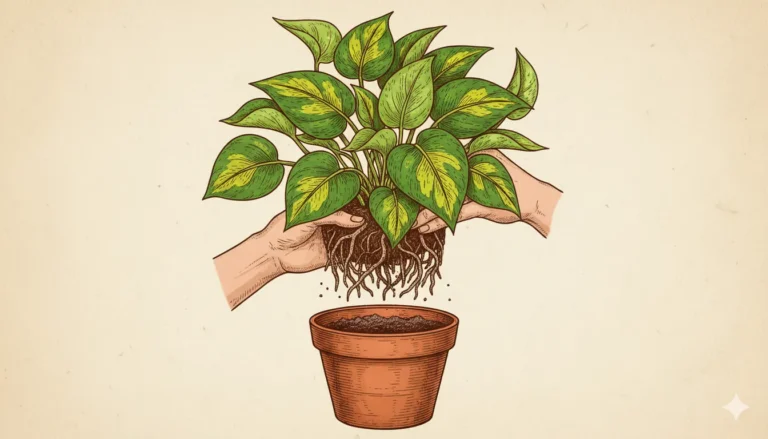
- Repot into a pot with drainage and a fresh, airy mix.
- Keep the plant in bright indirect light and water only when the mix has partly dried again.
If most roots are firm and pale to tan, the problem may be watering rhythm or soil density rather than full root rot. Improve drainage, empty cachepots after watering, and wait until the root zone dries before watering again. If you need a full step-by-step reset, use the repotting pothos guide.
Use this only if: you cannot tell whether the pot is still wet below the top inch after checking by hand.
Useful if you keep guessing wrong after checking with your finger and lifting the pot. It helps confirm whether the root zone is still wet before you water again.
Use this only if: yellowing points to wet soil, compacted mix, or a repot after root rot.
A simple way to loosen dense potting mix after a confirmed wet-soil or root-stress problem. It improves air space without forcing you to buy a fully new specialty mix.
Yellow Leaves With Dry Soil: Drought Stress
Yellow leaves can also happen when the plant gets too dry. This is why the soil check matters. If the mix is dry all the way down, leaves may turn yellow, curl, droop, or develop dry edges. Pothos is forgiving, but repeated drying can cause leaf loss.
Water slowly until moisture reaches the whole root ball and drains from the bottom. If water runs straight through a very dry pot, the mix may have become hydrophobic. Set the nursery pot in a basin of water for 15 to 30 minutes, then let it drain fully. Do not leave the pot sitting in water after the root ball has rehydrated.
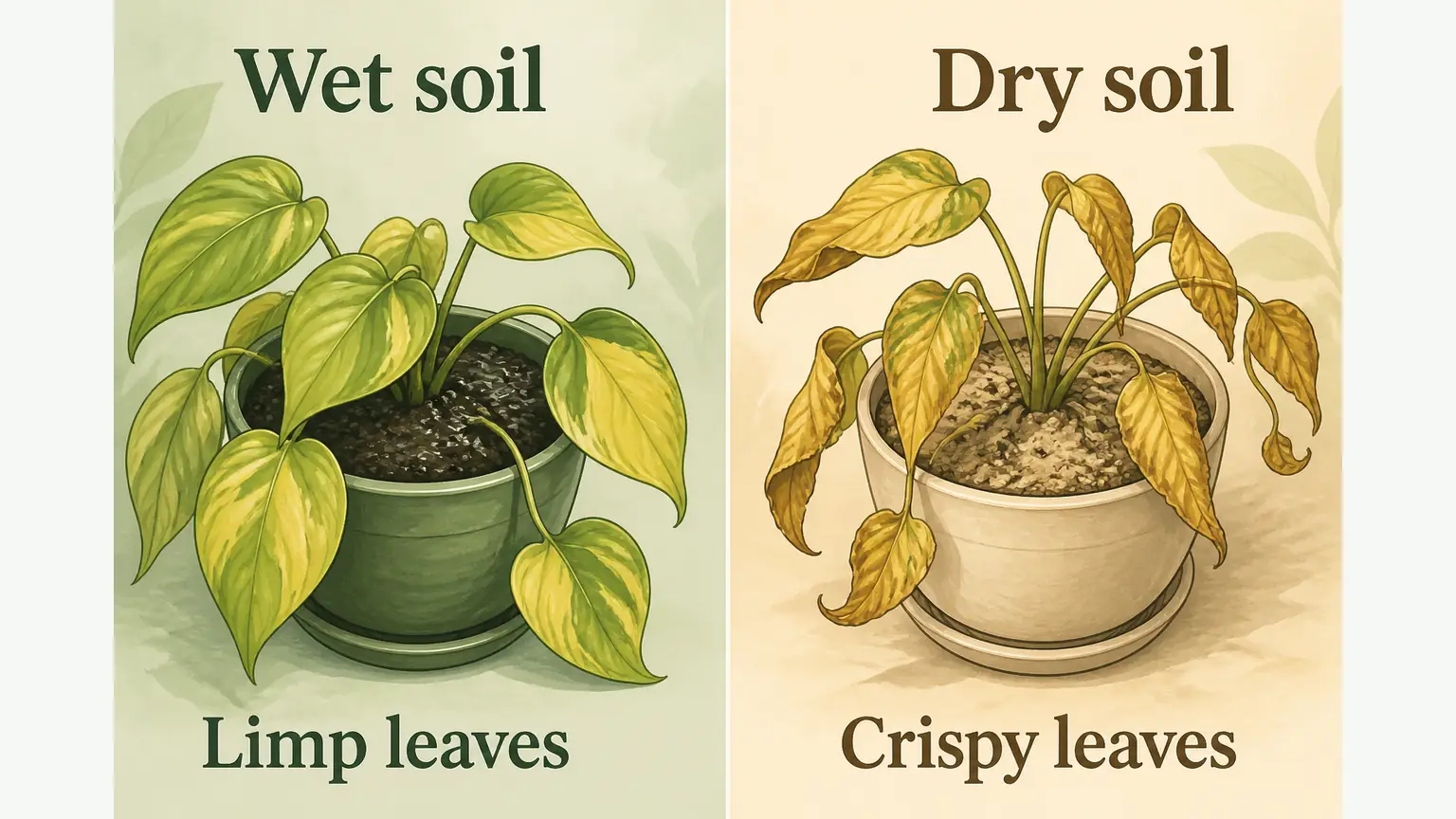
After the plant recovers, use a steadier rhythm: check the soil, lift the pot, and water when the mix is partly dry rather than bone dry. Pothos does not need constantly wet soil, but it should not be left in a cycle of drought and rescue watering either.
Yellow Leaves After Repotting or Moving
Some yellowing after repotting or moving can be stress response. Roots were disturbed, the plant may be in different light, and the new pot may hold water differently than the old one. The right response is usually steady care, not another big change.
Check two things first: soil moisture and drainage. If the new pot is much larger, the outer mix may stay wet longer than the old root ball can use it. If the pot has no drainage hole, repotting may have made the watering problem worse. If the plant was moved from bright light to a darker room, it may shed older leaves while adjusting.
First 14 days after a repot
- Keep the plant in bright indirect light.
- Do not fertilize while roots are settling.
- Check the pot weight before watering again.
- Expect a few older leaves to yellow, but watch for spreading yellowing with wet soil.
Looking to buy a healthy live plant online?

1-YEAR WARRANTY
Get a nursery-quality, well-rooted live Golden Pothos shipped directly to your door. Backed by a best-in-class plant warranty so you can shop with confidence.
Yellow Leaves From Low Light or Direct Sun
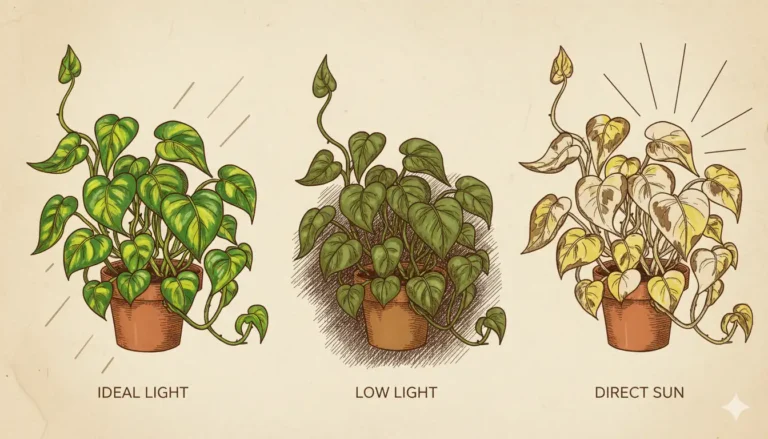
Pothos tolerates lower indoor light better than many houseplants, but tolerance is not the same as thriving. In dim corners, growth slows, vines stretch, variegation can fade, and older leaves may yellow because the plant is not getting enough light to support all its foliage.
The opposite problem is hot direct sun. Pothos leaves can bleach, yellow, or scorch when pressed against a sunny window, especially with strong afternoon exposure. Sun damage often appears as pale yellow or tan patches on the side facing the light, not as even yellowing across the whole plant.
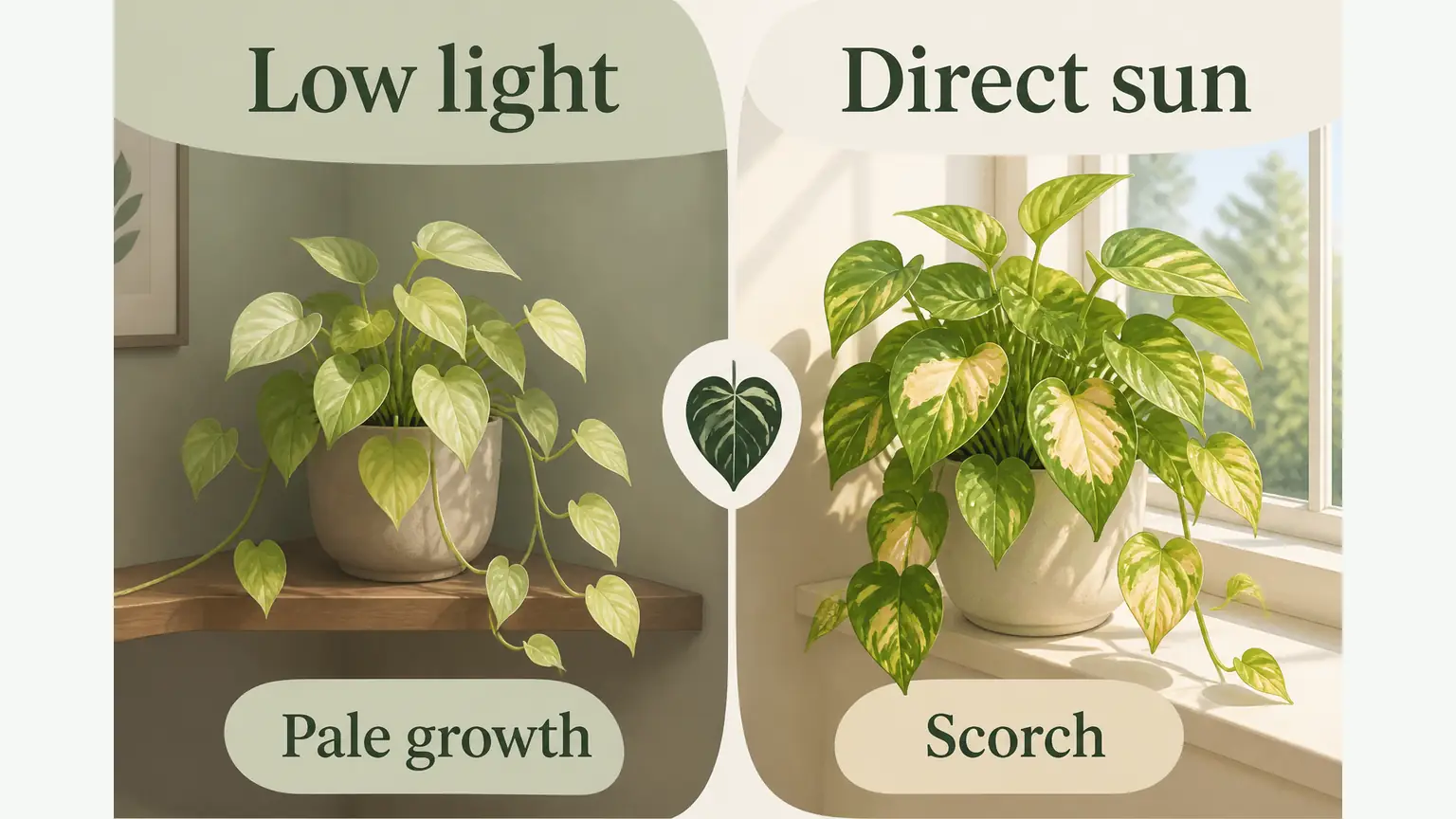
Move a low-light pothos closer to a bright window with indirect light. Move a scorched pothos back from the glass or filter the sun with a sheer curtain. For more exact placement help, use the pothos light requirements guide.
Yellow Speckling, Webbing, or Sticky Residue: Check for Pests
Pests can cause yellowing that looks different from watering stress. Instead of whole leaves turning evenly yellow, you may see tiny pale speckles, distorted new growth, sticky residue, webbing, or insects clustered on leaf undersides and stem joints.
Inspect before treating. Turn leaves over under bright light. Check where the petiole meets the vine. Tap a vine over white paper and look for moving specks. Isolate the plant if you find pests so the problem does not spread to nearby houseplants.
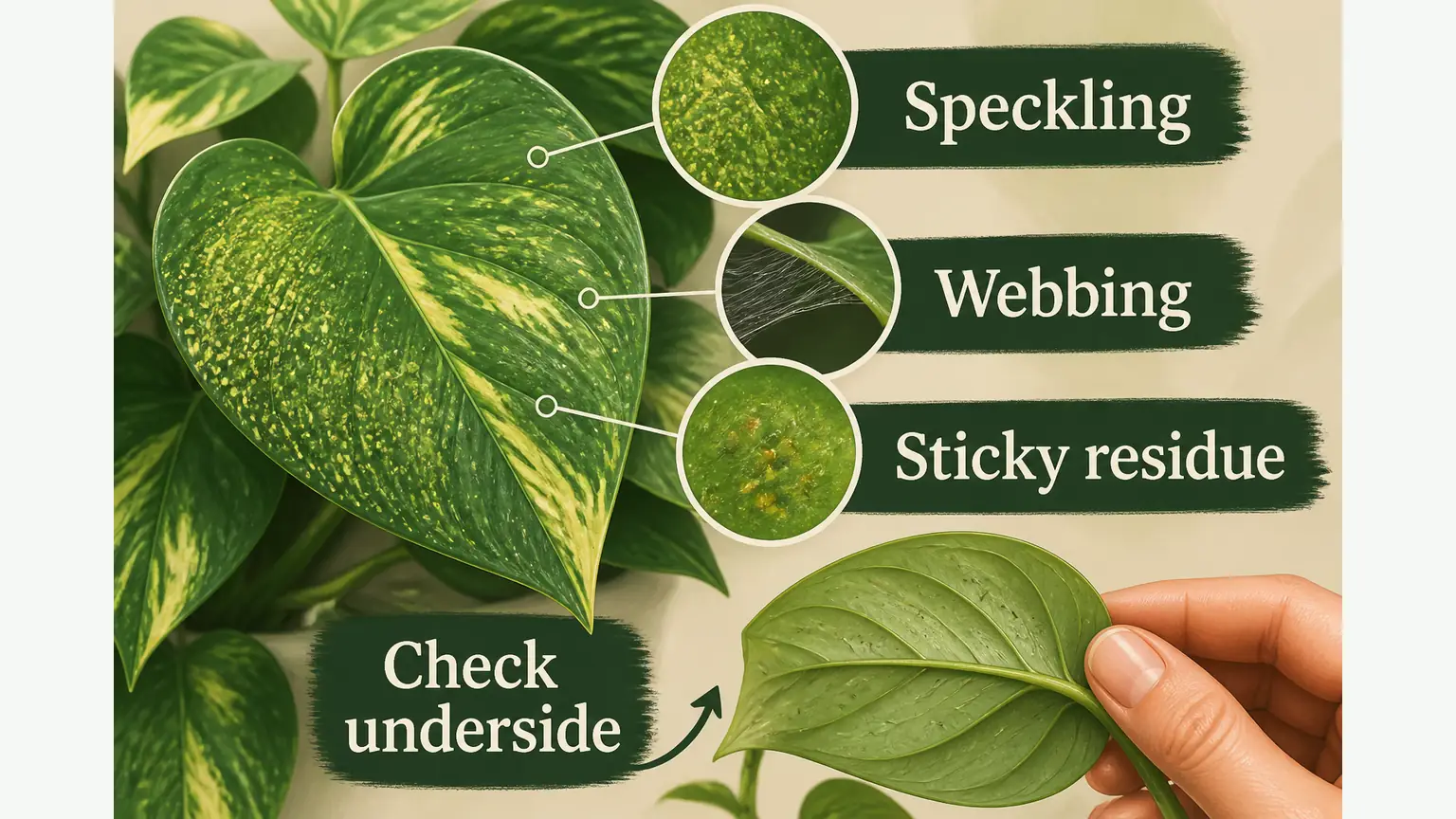
Start with the least disruptive fix: rinse the plant thoroughly, wipe leaves, and repeat inspections. If you use any pesticide or insecticidal product, follow the label and avoid spraying a heat-stressed plant in direct sun. Clemson houseplant disease guidance is also useful when yellowing is paired with spots, wet lesions, or leaf collapse instead of insects.
Use this only if: you see pests, yellow speckling, webbing, sticky residue, or moving insects on the plant.
A spinosad-based spray for confirmed leaf pests such as thrips or mites. Do not use it as a guess; inspect leaf undersides first and follow the label.
Could Yellow Pothos Leaves Be a Nutrient Problem?
Yes, but nutrients should usually be lower on the list than water, roots, light, and pests. A nutrient issue is more plausible when the plant has been in the same depleted mix for a long time, roots look healthy, watering is stable, and new growth is pale or yellow between green veins. That pattern is often described as chlorosis.
Do not feed a plant with soggy soil or damaged roots. Fertilizer salts can add stress to a struggling root system. If the diagnosis points to old soil rather than rot, refresh the potting mix or feed gently during active growth. Avoid using fertilizer as a quick fix for every yellow leaf.
Should You Remove Yellow Pothos Leaves?
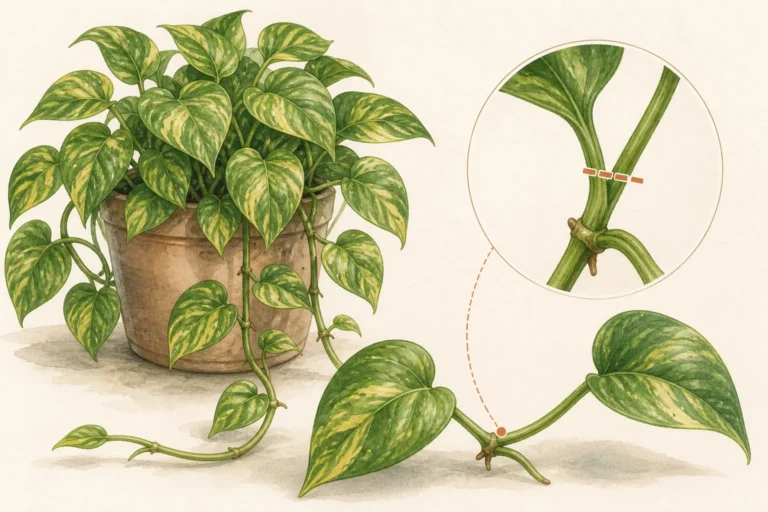
You can remove yellow pothos leaves once they are mostly yellow, limp, damaged, or unattractive. They will not turn green again. Use clean snips or pinch at the base of the leaf stem without tearing the vine.
Do not remove half the plant at once unless the leaves are diseased or rotten. Green leaves still help the plant recover. If yellow leaves are spreading, solve the cause first, then clean up the plant.
How to Prevent Yellow Leaves on Pothos
- Water only after checking the soil, not on a rigid calendar.
- Use a pot with drainage and empty decorative cachepots after watering.
- Keep pothos in bright indirect light for stronger growth.
- Move plants gradually after buying, repotting, or changing rooms.
- Inspect leaf undersides when you see speckling, sticky residue, or webbing.
- Repot when roots are crowded or soil is compacted, not just because vines are long.
- Fertilize modestly during active growth only after root and watering problems are ruled out.
FAQ
Can yellow pothos leaves turn green again?
No. Once a pothos leaf has turned yellow, it usually will not return to green. Use the leaf as a clue, fix the cause, and remove the leaf when it is fully yellow or limp.
Why are only the bottom pothos leaves turning yellow?
One or two older bottom leaves can be normal aging. Many lower leaves yellowing together often points to watering stress, poor light near the base of the plant, or root trouble.
Should I water my pothos when the leaves turn yellow?
Only if the soil is actually dry. Yellow leaves can come from both wet and dry soil, so check the root zone first. Watering a wet pot can make root problems worse.
Why did my pothos turn yellow after repotting?
Repotting can disturb roots, change moisture levels, and shift the plant into different light. A few older yellow leaves can be temporary stress. Spreading yellowing with wet soil means you should check drainage, pot size, and roots.
Do yellow pothos leaves mean root rot?
Not always. Root rot is more likely when yellowing comes with wet soil, a sour smell, soft stems, dark mushy roots, or wilting even though the pot is damp.
Should I fertilize pothos with yellow leaves?
Not first. Check watering, roots, light, and pests before feeding. Fertilizer can stress damaged roots and does not fix overwatering, sun scorch, or pests.
More Pothos Guides
Use the focused guide that matches what you are fixing next.
Sources