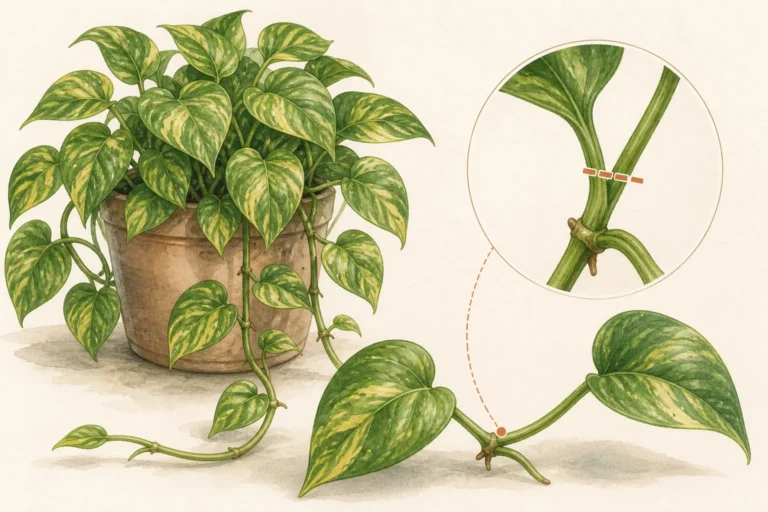
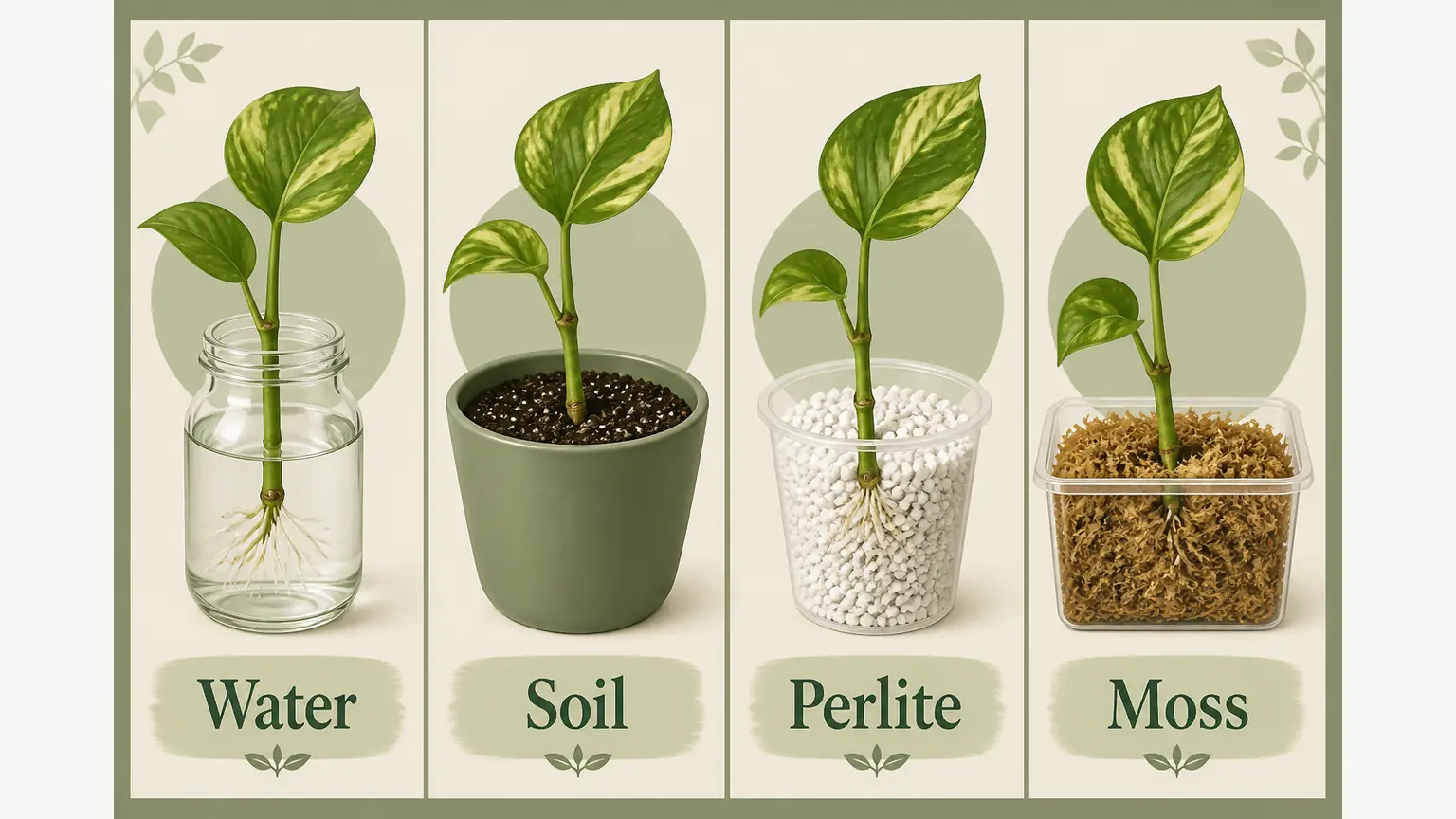
Successful pothos propagation requires cutting a healthy vine just below a node, then keeping at least one node in water, soil, perlite, or damp sphagnum moss. A cutting can have one leaf or several leaves, but it must have a node; a pothos leaf without stem node tissue will not grow into a new vine.
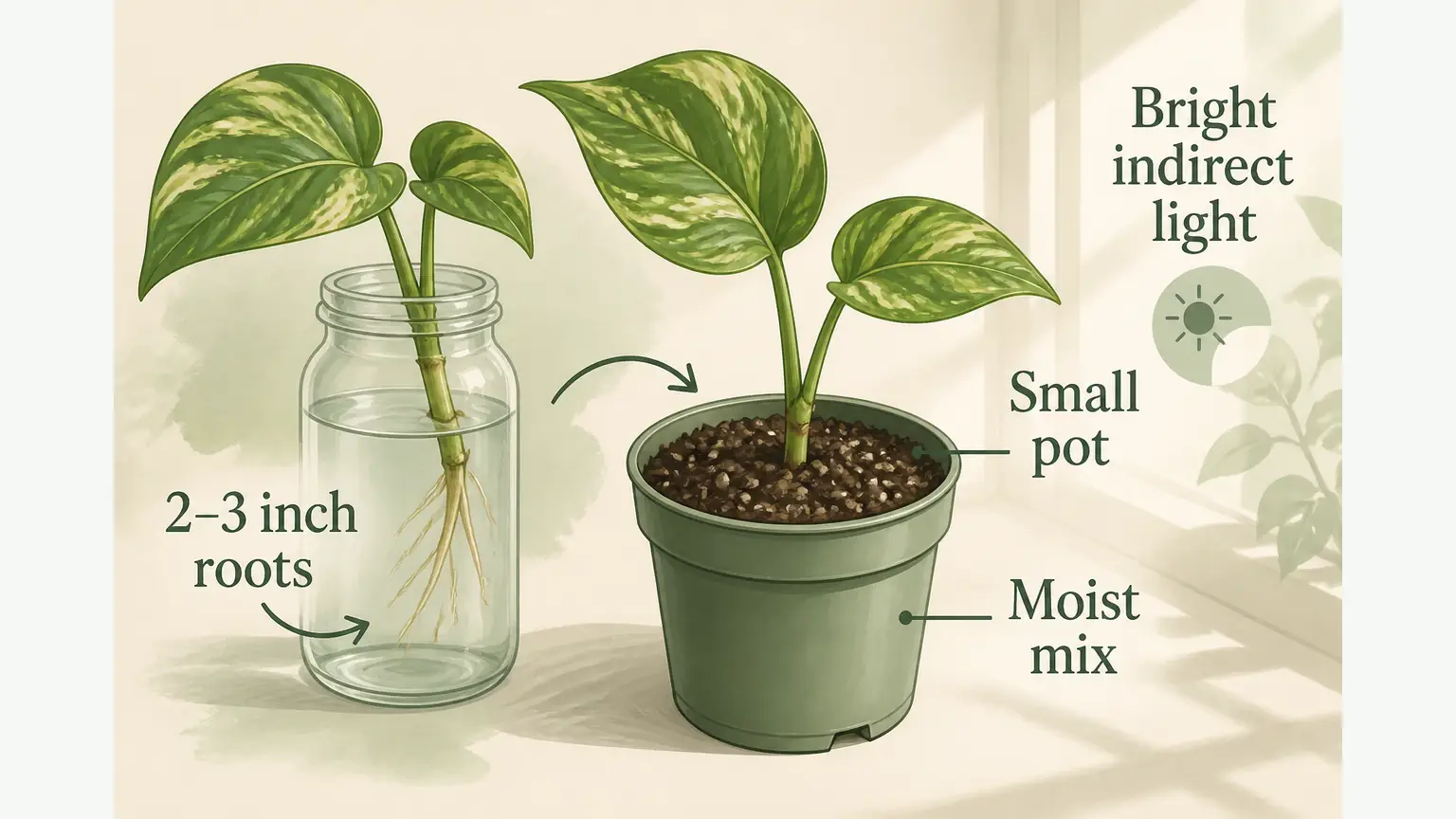
Water propagation is easiest when you want to see roots. Soil, perlite, or moss propagation can reduce the later transition step. Pot water-rooted cuttings when roots are about 2-3 inches long and starting to branch, then keep the soil lightly moist while the cutting adjusts.
Source note: This guide checks pothos-specific propagation advice against UF/IFAS Epipremnum guidance, which notes that pothos is commonly propagated from stem cuttings with a node and attached leaf, plus Penn State Extension houseplant propagation guidance, University of Missouri Extension propagation guidance, and Clemson Extension pothos care guidance. Generated visuals are educational illustrations, not proof photos.
This article includes paid links. As an Amazon Associate, The Plant Manual may earn from qualifying purchases.
Pothos Propagation: Pick the Right Method First
| Method | Best for | Watch out for | When it is ready |
|---|---|---|---|
| Water | Beginners who want to see roots forming | Water roots need a careful soil transition | Roots are 2-3 inches long and starting to branch |
| Soil | Cuttings you want established in a pot from the start | You cannot see root growth, so avoid overwatering | New growth appears or the cutting resists a very gentle tug |
| Perlite | Airy rooting with less mess than soil | Perlite must stay lightly moist, not dry or flooded | Roots are visible through the cup or drainage holes |
| Sphagnum moss | Single-node cuttings, wet sticks, and moss boxes | Packed moss can stay too wet and rot stems | Roots and a new growth point are active |
| Layering | Rooting a vine while it remains attached to the parent plant | Slower, but lower stress | The pinned node has rooted into the pot |
Water
Soil
Perlite
Moss
What Counts as a Viable Pothos Cutting?
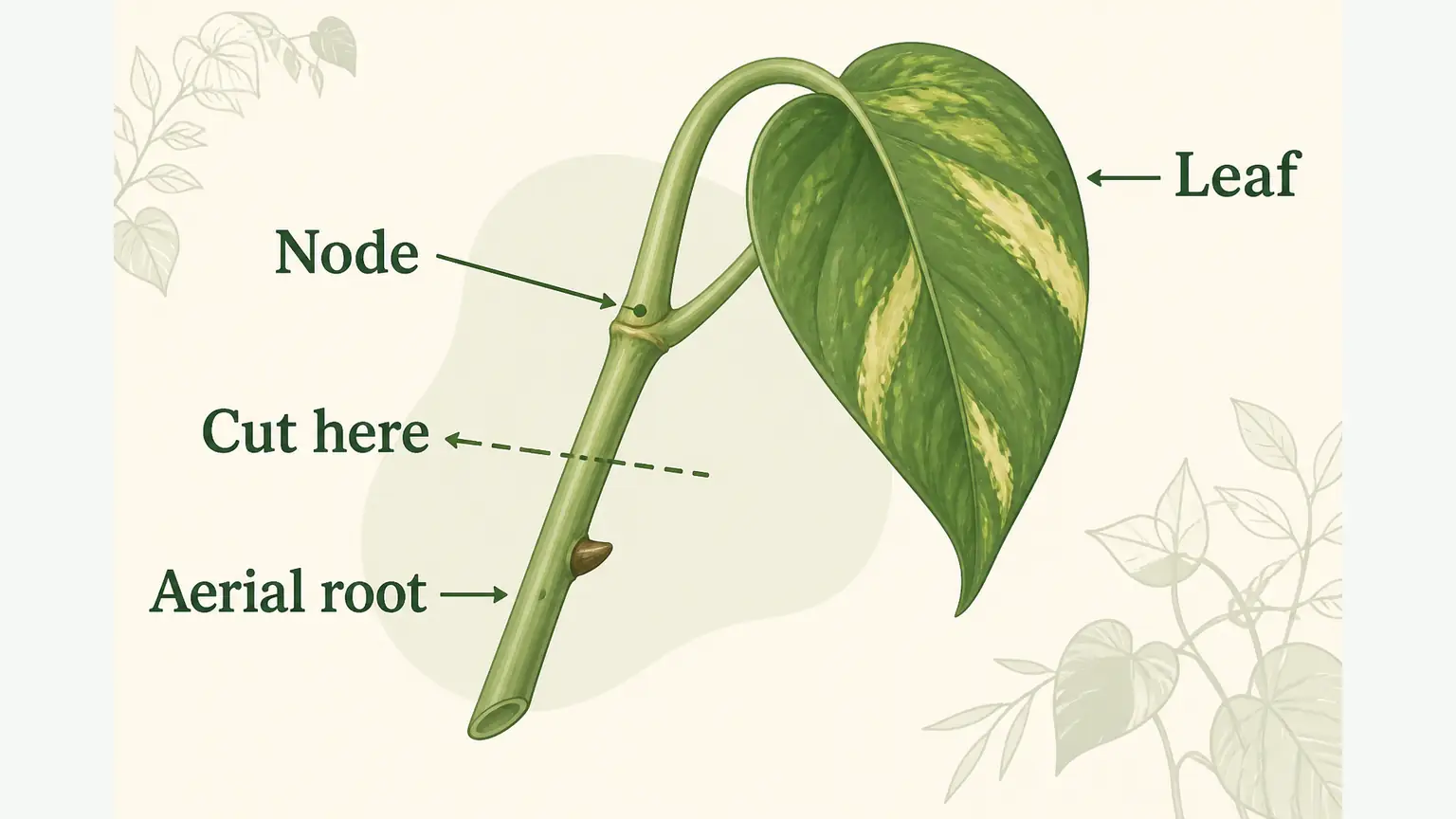
The node is non-negotiable. The node is the small joint on the vine where a leaf, aerial root nub, or new shoot can emerge. UF/IFAS describes commercial pothos propagation as stem cuttings with a node and attached leaf. That is the principle to keep: the leaf helps feed the cutting, but the node is where the new roots and growth come from.
A good beginner cutting has one to three leaves and at least one healthy node. A longer cutting can work, but too many leaves can lose water faster than the new roots can replace it. If the vine is very long, make several smaller node cuttings instead of one dramatic cutting.
Do not propagate a leaf-only cutting
A pothos leaf with a petiole but no stem node may stay green in water for a while, but it cannot grow into a new vine. If you cannot identify a node, do not cut yet.
Where to Cut Pothos for Propagation
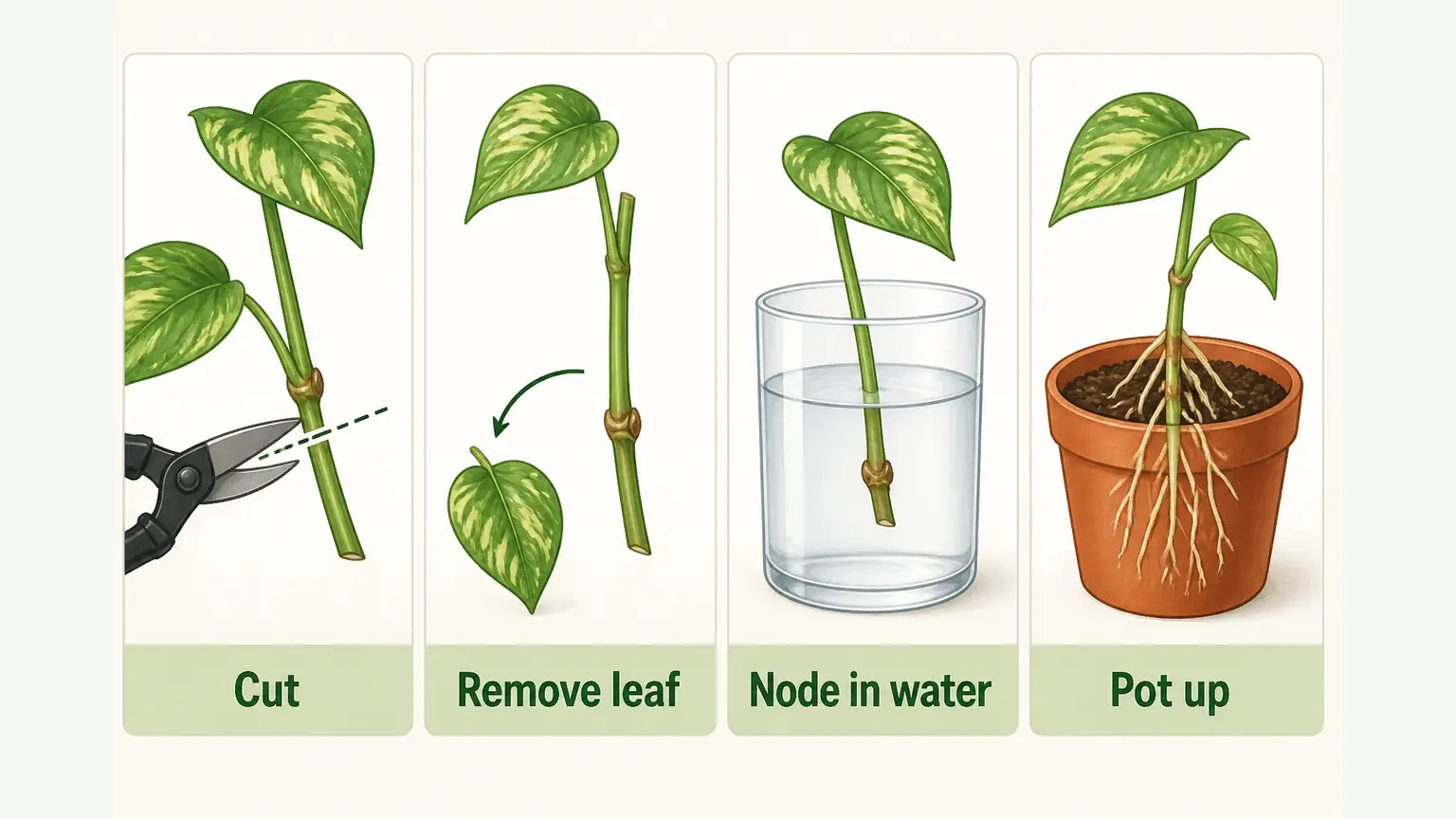
Use clean, sharp scissors or snips and cut just below a node. Penn State Extension recommends sterile tools for houseplant propagation, and the best propagation tools for houseplants can help when scissors crush stems or you propagate often. Clean, sharp scissors are still enough for most cuttings, and crushed or dirty cuts are more likely to rot before they root.
- Choose a healthy vine. Avoid stems with pests, mushy spots, or widespread yellowing.
- Find the node. Look for a bump, ring, aerial root nub, or the point where a leaf attaches.
- Cut below the node. Leave a short bit of stem below the node so the node can sit in water or medium.
- Remove lower leaves. Any leaf that would sit in water or wet medium should come off.
- Keep the top leaves. One or two healthy leaves help the cutting photosynthesize while roots form.
Use this only if: your scissors crush stems or you propagate often enough to want a dedicated clean cutting tool.
Helpful when you want a clean cut below a node without crushing the vine. Clean scissors also work if they are sharp and disinfected first.
How to Propagate Pothos in Water
Water is the easiest method to monitor. You can see whether roots are forming, whether the stem is staying firm, and whether the water is getting cloudy. It is also the method most beginners should start with if they are nervous about burying the node.
- Place the node in water. Keep at least one node submerged, but keep leaves above the waterline.
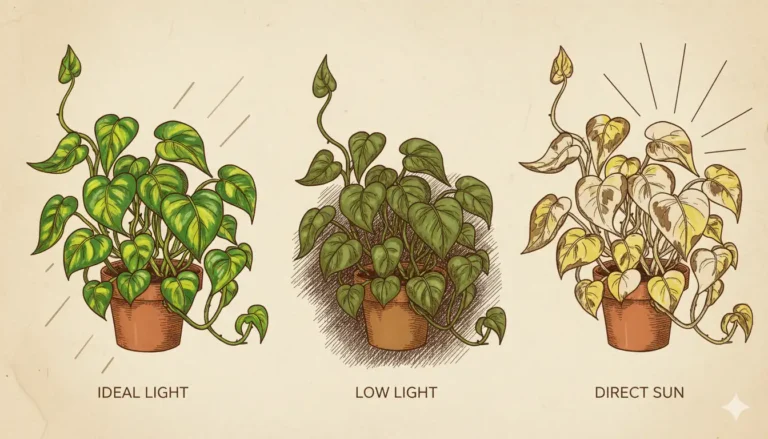
- Use bright indirect light. Too little light slows rooting; direct sun can overheat the container and encourage algae. For complete guidelines on optimal windows and lighting, explore our guide on pothos light requirements.
- Refresh the water. Replace cloudy water and rinse the container if it gets slimy.
- Watch for roots. Small root bumps are normal before longer roots appear.
- Pot up at the right time. Move cuttings to soil when roots are about 2-3 inches long and branching.
Water propagation is not the same as long-term water culture. If you want to keep pothos in water permanently, use the focused guide to growing pothos in water, because long-term water growing needs nutrient management and container maintenance.
How to Propagate Pothos in Soil or Perlite
Soil propagation skips the water-to-soil transition, but it requires more restraint with watering. Bury at least one node in a small pot of lightly moist, airy mix. The cutting should stand upright without the node being buried so deeply that the stem stays soggy.
Perlite is useful when you want a clean, airy medium instead of potting mix. Perlite helps cuttings root with less mess. Moisten it first, place the node below the surface, and keep the cup in bright indirect light. The goal is even moisture plus air, not a sealed cup of standing water.
Use this only if: you want a soil-free medium that gives nodes air while roots form.
Useful for rooting cuttings in a clean, airy medium instead of dense potting soil. Keep it lightly moist, not swampy.
Soil and perlite rooting check
Do not keep pulling the cutting out to check for roots. Wait for new growth or give the cutting a very gentle tug after a few weeks. Resistance can mean roots are anchoring. If the stem turns mushy, remove it and start over with a cleaner cutting.
Moss, Wet Sticks, and Single-Node Cuttings
Single-node pothos cuttings can work when the node is healthy, even if there is little stem. This is useful when you want many starts from one long vine. Lay the node against damp sphagnum moss or a moist propagation medium and keep it warm, bright, and humid.
The mistake is making the moss too wet. Sphagnum should be damp and springy, not dripping. A closed box can hold humidity, but it also needs occasional air exchange so the cutting does not sit in stale wet conditions.
Use this only if: you are rooting bare nodes, wet sticks, or trying a moss propagation box.
Useful for wet-stick nodes, moss boxes, or air-layering. It should be damp and fluffy, never packed into a soggy brick.
When to Move Water-Rooted Pothos Cuttings to Soil
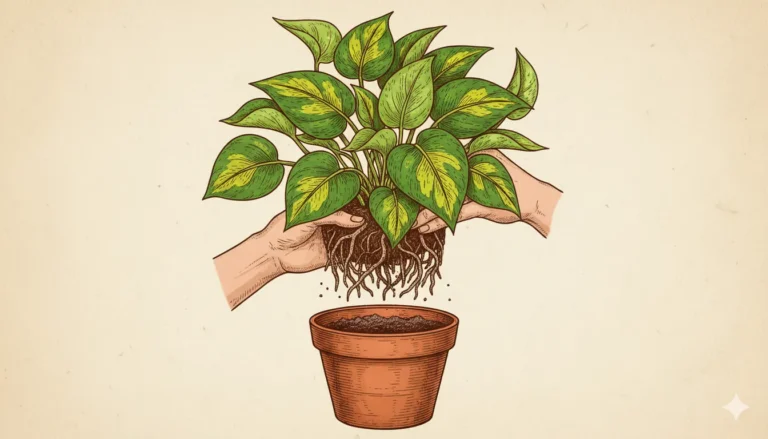
Move water-rooted pothos cuttings to soil when roots are roughly 2-3 inches long and beginning to branch. Very tiny roots may dry too quickly in soil. Very long tangled water roots can be harder to arrange without damage.
Use a small pot with drainage and a loose potting mix. Water it in, let excess drain, and keep the mix lightly moist for the first week or two. Do not fertilize immediately after potting. The cutting needs steady moisture and bright indirect light more than extra nutrients.
If the newly potted cutting yellows or wilts, check moisture first. Soil that is bone dry can stress new roots, but soggy soil can rot them. Use the repotting pothos guide for pot size and drainage details, and the pothos yellow leaves guide if symptoms spread.
Why Pothos Cuttings Fail
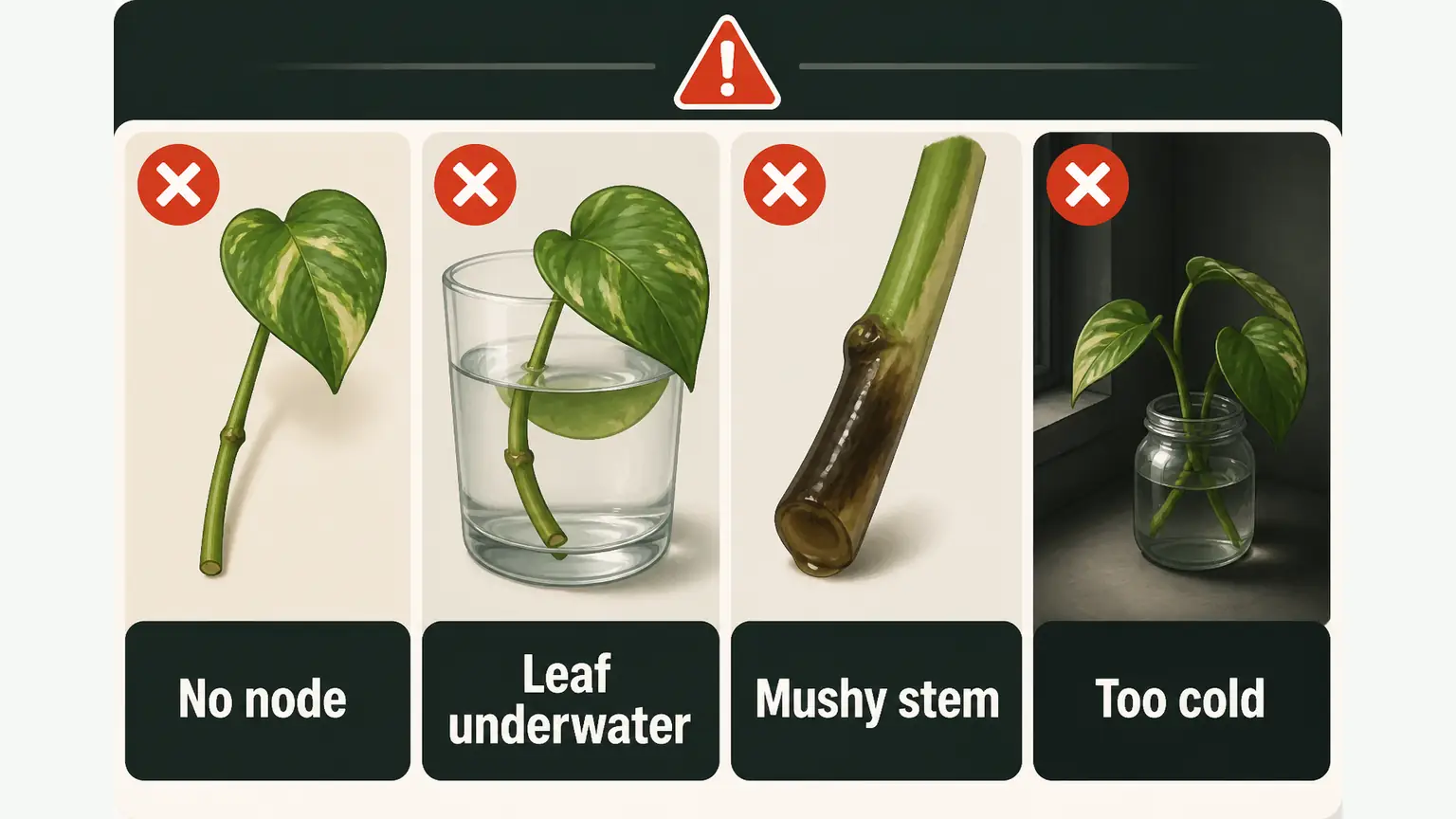
Most failed pothos cuttings fail for practical reasons, not mystery reasons. The most common problems are no node, a submerged leaf, a mushy stem, stale water, cold conditions, or too little light.
| Problem | Likely cause | What to do next |
|---|---|---|
| Cutting stays green but never grows | No node or inactive node | Check for a real stem node before waiting longer. |
| Stem turns brown and mushy | Rot from stale water, buried leaf, or soggy medium | Cut above the mushy part if a healthy node remains, or start over. |
| Leaves yellow while rooting | Stress, too much sun, cold, or rot | Check light and stem firmness before changing everything. |
| No roots after several weeks | Cool temperature, weak light, or old cutting | Move to brighter indirect light and keep conditions warm. |
| Roots form, then cutting declines after potting | Transition shock or wrong soil moisture | Use a small pot, airy mix, and steady light moisture. |
Optional Rooting Boosters
Pothos usually roots without special products. Rooting hormone can be useful for soil, perlite, or moss propagation, but it is not required for basic water propagation. Penn State Extension notes that rooting hormone can speed root development for cuttings, but using too much can slow development, so treat it as an optional tool, not a magic fix.
Use this only if: you are rooting in a medium and want an optional hormone dip; it is not required for normal pothos cuttings.
Optional for soil, perlite, or moss propagation. Pothos usually roots without it, so skip this if you are rooting simple water cuttings.
Warmth can also help, especially in winter, but avoid placing cuttings on a hot radiator, in direct sun, or anywhere the water overheats. Bright indirect light and steady room warmth are enough for most homes.
Aftercare for New Pothos Plants
Once cuttings are rooted and potted, treat them like small pothos plants rather than fragile seedlings. Give them bright indirect light, a pot with drainage, and a lightly moist but not soggy mix. Several cuttings in one pot will look fuller than one cutting alone.
- First week: keep soil lightly moist while water roots adjust.
- After new growth: shift toward normal pothos watering.
- Do not fertilize immediately: wait until the plant is rooted and actively growing.
- For fuller pots: plant several rooted cuttings together.
For ongoing care, use the Pothos care guide. If you are propagating a specific cultivar, the pothos varieties guide can help you keep labels straight.
FAQ
Can you propagate pothos from just a leaf?
No. A pothos leaf can stay alive for a while, but it needs a stem node to grow roots and a new vine. Look for the joint where the leaf attaches to the stem.
Is water or soil better for pothos propagation?
Water is easier to monitor, while soil or perlite avoids the later water-to-soil transition. For beginners, water is usually simplest. For fewer transition problems, root directly in a lightly moist medium.
How long does pothos propagation take?
UF/IFAS notes commercial pothos cuttings can root in about 3-4 weeks. At home, timing depends on light, warmth, cutting health, and medium. Some cuttings are faster; cold or low-light conditions are slower.
When should I pot pothos cuttings from water?
Pot them when roots are about 2-3 inches long and beginning to branch. Use a small pot with drainage and keep the soil lightly moist while the cutting adjusts.
Why is my pothos cutting rotting?
Rot usually comes from a submerged leaf, stale water, a damaged stem, soggy medium, or cold low-light conditions. Remove mushy tissue and restart with a clean node if any healthy stem remains.
Do pothos cuttings need rooting hormone?
No. Pothos usually roots without it. Rooting hormone is optional for soil, perlite, or moss propagation, but it is not required for a healthy node cutting.
More Pothos Guides
Use the focused guide that matches what you are doing next.
Sources
- UF/IFAS: Cultural Guidelines for Commercial Production of Interiorscape Epipremnum
- Penn State Extension: Propagating Houseplants
- University of Missouri Extension: Home Propagation of Houseplants
- Clemson Cooperative Extension: How to Grow Pothos Indoors