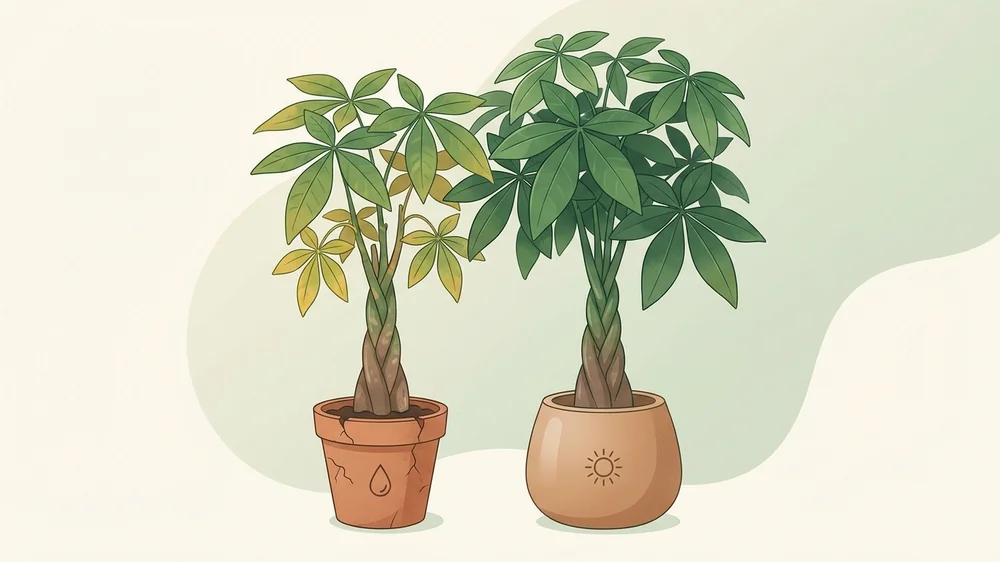
Return to main guide: Ultimate Money Tree Care Guide.
Transparency note: Some links in this article are affiliate links. As an Amazon Associate I earn from qualifying purchases at no extra cost to you. I research current product options and select suggestions based on relevance, availability, customer signals, and fit with the care problem discussed here.
Root Rot: The Silent Killer
The most urgent money tree problem is root rot. Among all the potential money tree problems you might encounter, this is the most aggressive and arguably the most common. It often happens after repeated overwatering, poor drainage, or a potting mix that stays wet too long.
The most reliable fix for overwatering is removing the guesswork entirely:
Insert it 2 inches deep before every watering. Tells you exactly what is happening at the root zone where rot actually starts.
It can be confusing because the Pachira aquatica is native to freshwater swamps and estuaries in Central and South America. You might assume a tree born in a swamp loves wet feet. However, there is a massive difference between the dynamic, oxygen-rich water of a riverbank and the stagnant, oxygen-depleted sludge at the bottom of a decorative pot.
🔬 Research Note
We often think water kills the roots, but it’s actually the lack of oxygen. When soil stays saturated (above 50-60% moisture capacity for too long), it creates anaerobic conditions. This environment allows oomycetes like Pythium and Phytophthora to thrive. According to data from Clemson Cooperative Extension, these pathogens attack the root tips first, destroying the plant’s ability to uptake water. Paradoxically, this is why one of the first signs of root rot looks exactly like dehydration.
If your plant has been in the same soil for 2+ years, it is time to upgrade:
A powerhouse blend with earthworm castings and bat guano. Perfect for hungry tropicals that want to grow big.
Identifying the Symptoms Early
Diagnosing money tree problems requires you to look beyond the leaves. By the time the foliage is dropping, the damage downstairs is usually extensive. Check for these signs:
- The Smell Test: Healthy soil smells earthy. Rotting roots smell like a damp basement or decaying vegetables. If you catch a whiff of sulfur or mold when you get close to the pot, you likely have rot.
- The Squish Test: The trunk (caudex) of your Money Tree acts as a water reservoir. It should feel firm, like a raw potato. If you press it and it feels soft, mushy, or the bark slips off easily, the rot has traveled up the stem.
- Yellowing Leaves: While yellow leaves can indicate various money tree problems, rot usually causes a rapid, generalized yellowing of the lower leaves first, followed by leaf drop.
- Stunted Growth: If your temperatures are within the ideal 65°F – 80°F (18°C – 27°C) range and you are fertilizing, but the plant refuses to grow, the root system may be compromised.
The “Hidden” Cause: Rubber Bands
We see this specific issue constantly with braided Pachira. When nurseries braid the young saplings, they often secure the base of the stems with heavy rubber bands or electrical tape to hold the shape. They then bury this binding under the soil.
As the tree grows, the trunk expands, but the rubber band doesn’t. This strangles the cambium layer, cutting off nutrient flow and trapping moisture against the bark. This constriction creates a perfect entry point for rot. If you are diagnosing money tree problems and can’t figure out why your watering routine isn’t working, dig down an inch or two. If you find a band, cut it off immediately.
How to Treat Root Rot
If you suspect rot, you cannot wait and hope the soil dries out. You have to perform surgery. This is the exact process we follow when saving a compromised plant:
- Unpot the Plant: Gently remove the tree from its container. Shake off as much old soil as possible.
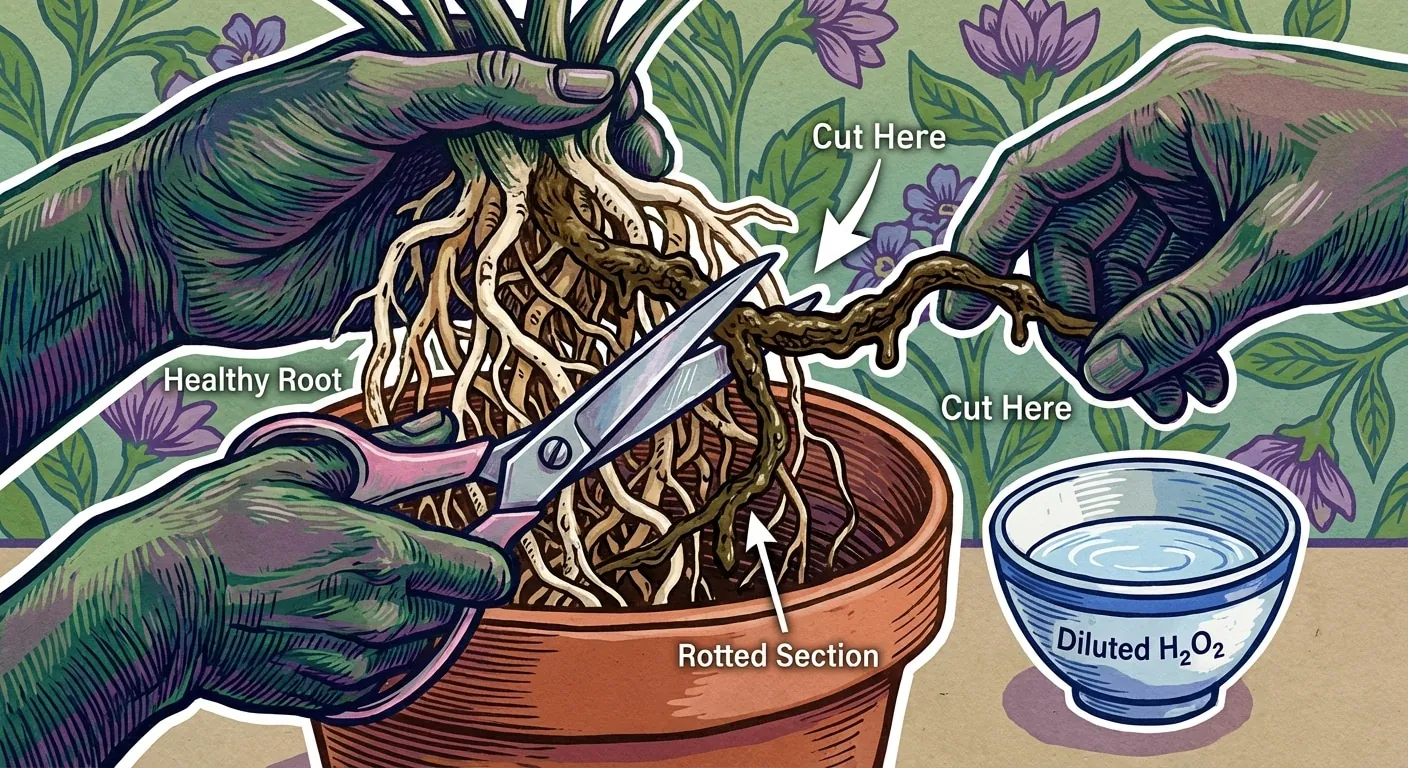
- Inspect and Cut: Healthy roots are firm and creamy white/tan. Rotted roots are slimy, dark brown or black, and fragile—the outer sheath often slides right off the inner core. Using sterilized scissors, cut away every piece of rotting tissue. You have to be ruthless here; leave only firm, healthy roots.
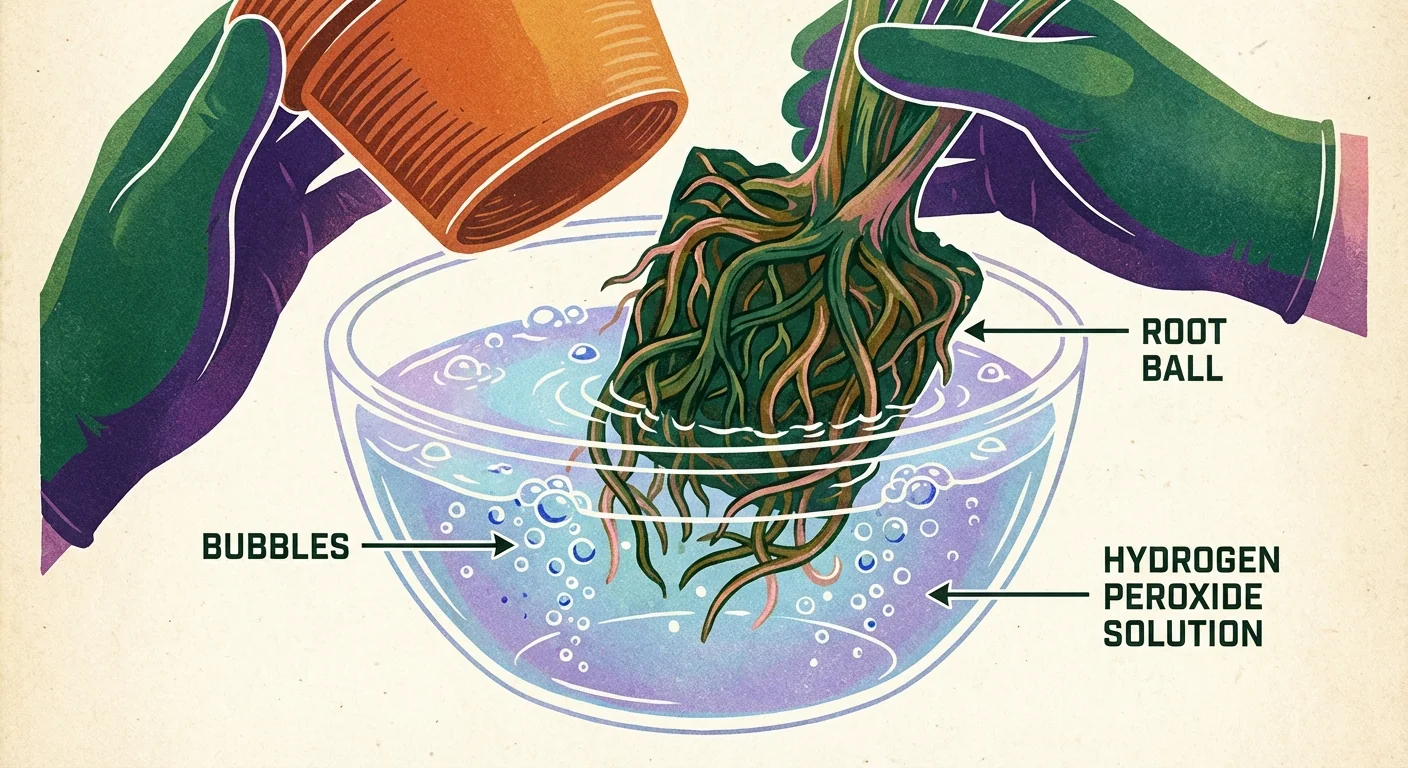
- Sterilize: We usually dip the remaining root ball in a solution of 1 part hydrogen peroxide (3%) to 3 parts water to kill lingering fungus spores.
- Repot: Discard the old soil entirely—it is contaminated. Repot into a fresh, well-draining mix. We aim for a pH between 6.0 and 7.5. A standard potting mix amended with plenty of perlite or pumice ensures the rapid drainage these trees need.

💚 Emilie’s Tip
After a traumatic repotting due to rot, I don’t water the plant immediately. I know it sounds counterintuitive! I let the Money Tree sit in the fresh, slightly moist soil for about 24 to 48 hours. This allows the cut root ends to callus over before they are exposed to water again, which prevents the rot from restarting right away.
If your plant is not getting enough natural light, this in a standard floor lamp changes everything:
Fits a standard lamp but delivers intense, full-spectrum light. Powerful enough for large floor plants in dark corners.
Recovery is slow. It may take a month or two for the plant to stabilize. During this time, keep humidity high (aim for that sweet spot of 50% – 70%) to help the leaves stay hydrated while the roots regenerate, but be extremely careful not to overwater the soil again.
Pests
If your watering routine is solid and your light levels are sitting comfortably between 1,000 and 2,500 lux, but your plant still looks unhappy, you are likely dealing with pests. In our experience, diagnosing money tree problems usually comes down to three main culprits: spider mites, mealybugs, and fungus gnats. We have battled all of them in our apartment, and while it feels discouraging, pests are a normal part of bringing nature indoors.
For this part of the guide, a researched product option that fits the job is:
Selected because this section is specifically about sticky traps use. Check Amazon for current price and availability.
The earlier you catch these invaders, the easier it is to solve your money tree problems. Most issues start small—a sticky leaf here, a tiny web there—before exploding into a full infestation that threatens the health of your Pachira aquatica.
Spider Mites: The Dry Air Enemy
Spider mites (Tetranychidae) are arguably the most destructive pests we encounter. They thrive in hot, dry conditions. If you recall, the ideal humidity for a Money Tree is 50% to 70%. When our Aarhus apartment gets dry in the winter (dropping below 40%), we almost always see a flare-up of these mites. They are incredibly small and difficult to see with the naked eye.
For this part of the guide, a researched product option that fits the job is:
Selected because this section is specifically about humidifier use. Check Amazon for current price and availability.
The first sign of mite-related money tree problems is usually stippling—tiny yellow or white dots on the leaves where the mites have sucked out the cell contents. As the infestation grows, you will see fine, silky webbing between the leaf stalks (petioles) or on the undersides of the leaves. If you see webbing, the population is already high.
💚 Emilie’s Tip
I don’t bother with sprays immediately when I see mites. I take the whole plant to the shower. I use the handheld showerhead with lukewarm water to physically blast the mites off the leaves. I make sure to hit the undersides of every single leaf. It knocks down the population instantly by about 90%, making the remaining treatment much easier.
Mealybugs and Scale Insects
If you notice sticky residue on your floor or furniture near the plant, you are facing a different set of money tree problems. This sticky substance is “honeydew,” a sugar-rich waste product excreted by sap-sucking insects like Mealybugs and Scale.
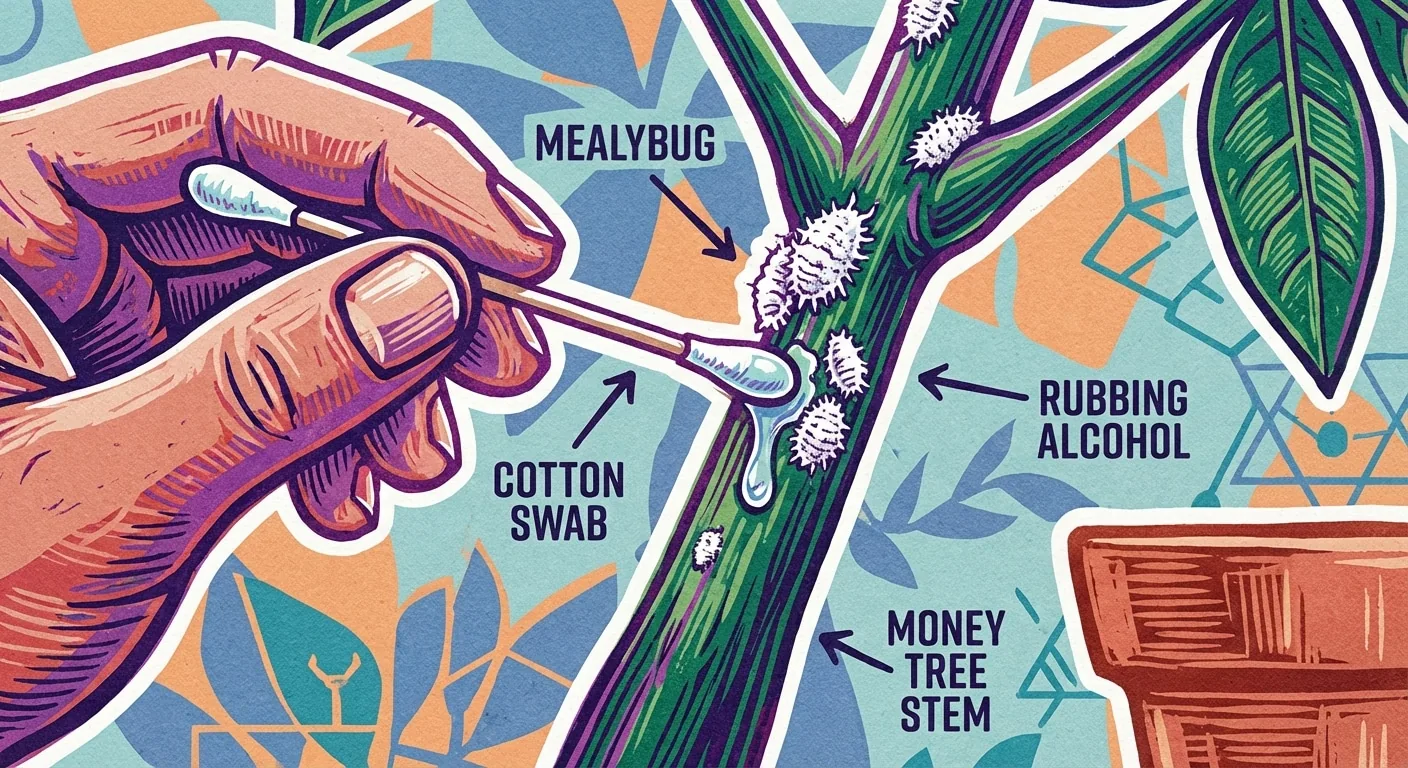
- Mealybugs: These look like tiny bits of white cotton or fluff tucked into the nooks where the leaf stem meets the branch. They are distinct and easy to spot against the green bark.
- Scale: These are harder to identify because they look like brown, raised bumps on the stems or leaves. You might try to scrape one off with a fingernail, only to realize it’s a living insect protected by a waxy shield.
Both of these pests drain the energy from the plant, leading to yellowing leaves and stunted growth. Ignoring these specific money tree problems can lead to sooty mold, a black fungus that grows on the honeydew they leave behind.
🔬 Research Note
When studying pest life cycles, I found that Mealybugs (Pseudococcidae) and Scale (Coccoidea) are particularly resilient because of their reproductive speed. A single female mealybug can lay up to 600 eggs. According to data from the Missouri Botanical Garden, the “crawlers” (juveniles) are the most vulnerable stage. Once Scale insects settle and form their hard shell, contact insecticides become less effective, which is why systemic treatments or physical removal work best for these money tree problems.
Fungus Gnats
While less damaging to the plant itself, fungus gnats are one of the most annoying money tree problems for the owner. These are the tiny black flies that hover around the soil surface. Their presence is almost always a secondary symptom of overwatering or soil that stays wet for too long.
The adult flies are a nuisance, but the larvae in the soil feed on decaying organic matter and, in severe cases, the fine root hairs of your Pachira. If you are already treating root rot, you will likely see gnats. Drying out the top two inches of soil is usually enough to break their life cycle, as the larvae cannot survive in dry dirt.
How to Treat These Money Tree Problems
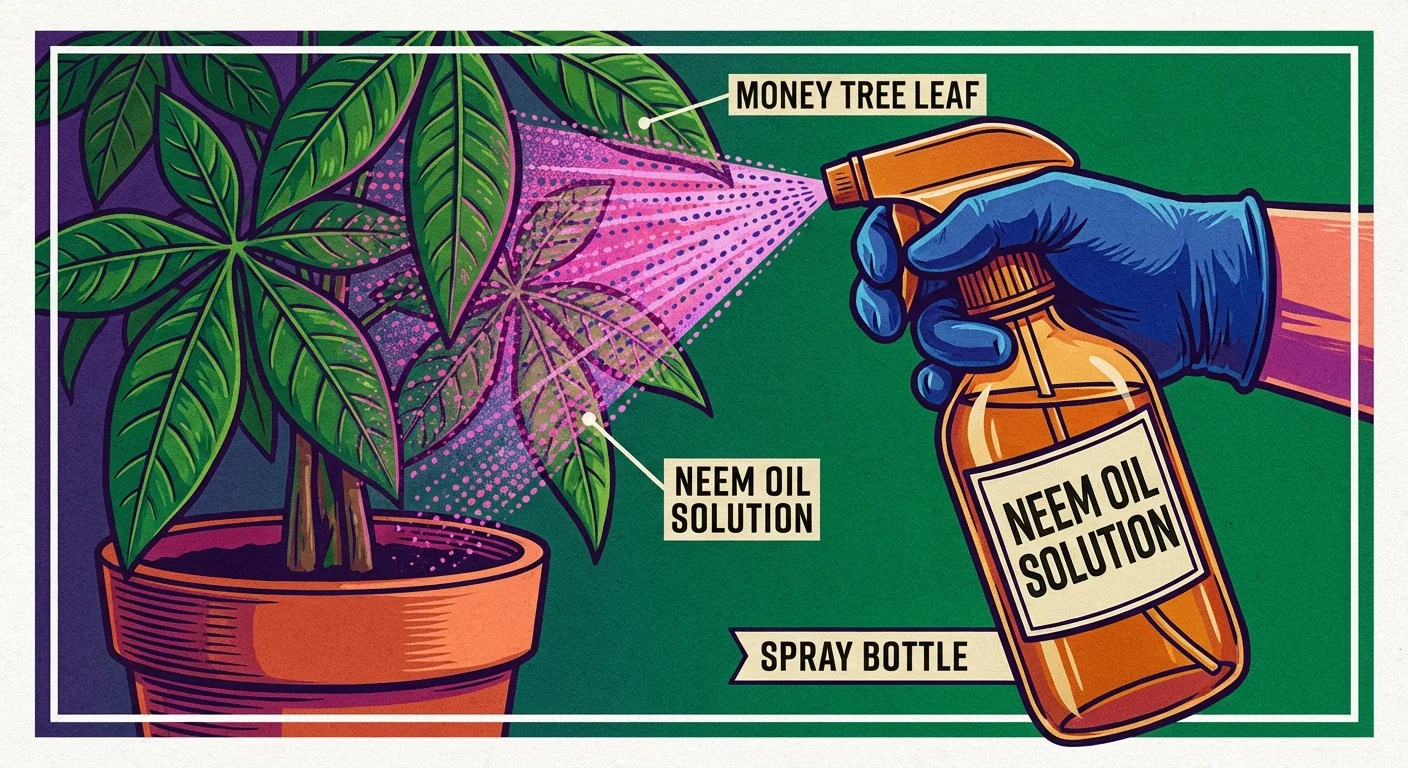
When we identify any of these bugs, we follow a strict protocol to stop the spread. Treating money tree problems requires consistency; one treatment is rarely enough.
- Quarantine: Move the affected plant away from your other houseplants immediately.
- Physical Removal: As Emilie mentioned, wash the leaves or use a cotton swab dipped in rubbing alcohol to dab away mealybugs and scale.
- Treatment: We use a solution of cold-pressed Neem oil mixed with water and a drop of dish soap. Spray the plant thoroughly, focusing on the undersides of leaves. Repeat this every 5–7 days for at least a month.
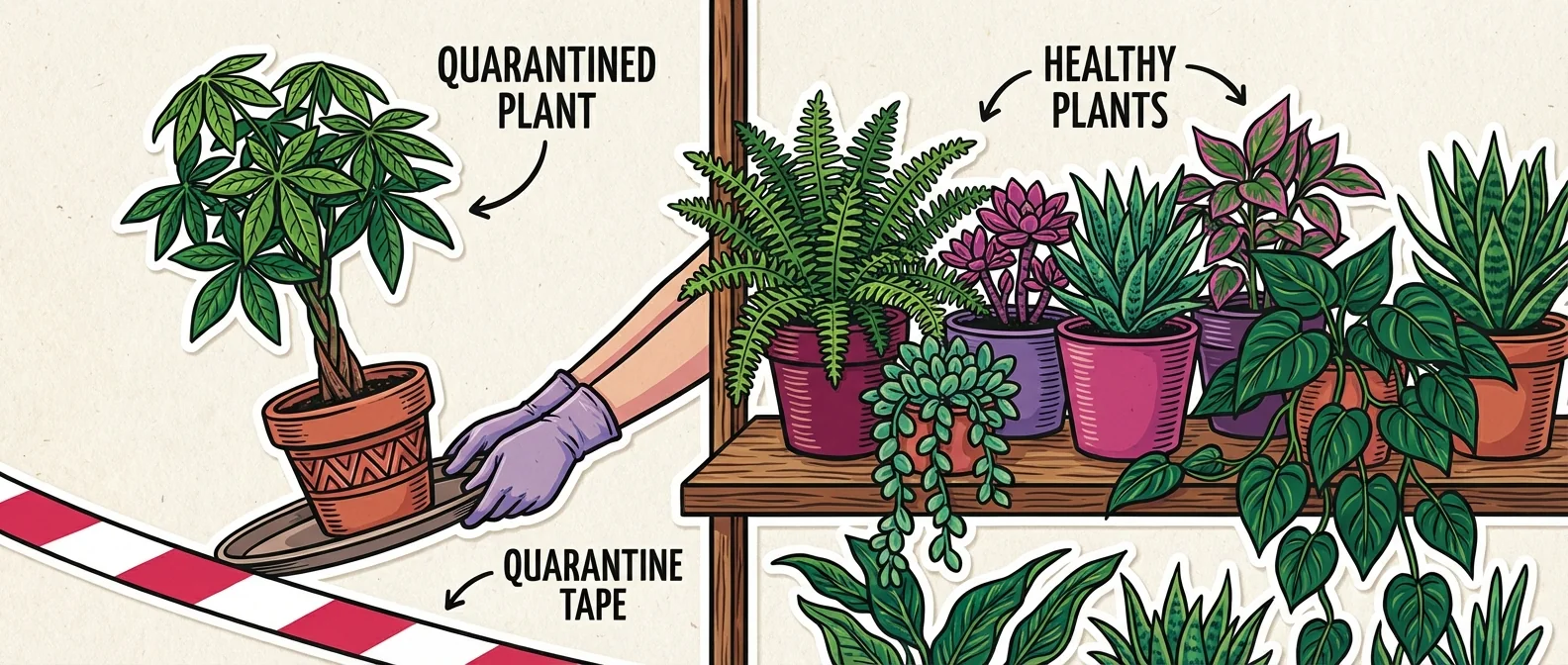
Pests are persistent, but fixing these money tree problems is possible if you stick to a routine and check your leaves every time you water.
Spinosad-based and organic. It’s incredibly effective against chewers like Thrips and Spider Mites, but safe to use indoors.
Recommended Houseplant Essentials
Each product below was hand-picked after thorough research and testing.
The cheapest upgrade you can make to any potting mix. A handful per pot dramatically improves drainage and aeration.
Check Price → (paid link)
The long, narrow spout lets you water directly at the soil level without splashing leaves — keeps foliage dry and reduces fungal risk.
Check Price → (paid link)
Complete liquid fertilizer with all 16 essential nutrients. The 7-9-5 ratio is dialled in for lush foliage plants.
Check Price → (paid link)
Accurate humidity and temperature monitor with Bluetooth logging. Know exactly what conditions your plants are living in.
Check Price → (paid link)
Common Questions About Money Tree Problems 2
Check light before you keep watering: Some Money Tree problems get worse when the plant is in weak light. See the guide to not enough light for a Money Tree before treating slow growth or wet soil as a simple watering issue.
Why is the base of my Money Tree’s braided trunk feeling soft or squishy?
This is a critical sign of root rot caused by overwatering or improper drainage. The ‘squishiness’ indicates the trunk is rotting from the inside out. You must immediately stop watering, check if the pot has drainage holes, and likely repot the plant into dry, well-draining soil after trimming away any black, mushy roots.
Why is my Money Tree suddenly dropping healthy-looking green leaves?
Sudden leaf drop without discoloration is usually caused by ‘shock’ from environmental changes. Money Trees are highly sensitive to drafts and movement. If the plant was recently moved, or is placed near an AC vent, heater, or drafty door, it will shed leaves. Keep the plant in a stable spot with consistent temperature to stop the dropping.
How do I continue the braid as the Money Tree grows taller?
The plant will not braid itself naturally. As new green shoots extend from the top, you must gently weave them together while they are still flexible and green. Secure the new braid loosely with a soft plant tie or string; once the stems turn woody and hard after a few months, the tie can be removed.
What does it mean if the leaves have brown, crispy tips but the rest of the leaf is green?
Brown tips generally indicate low humidity or underwatering. Since the Pachira aquatica is native to swamps, it craves moisture in the air. Increase humidity by placing the pot on a pebble tray with water or using a humidifier, and ensure you are watering deeply enough that water runs out the drainage holes.
Why are the leaves turning yellow and curling slightly?
Yellowing leaves are frequently a symptom of inconsistent soil moisture. If the soil is kept too wet, roots suffocate and leaves yellow; if it dries out completely for too long, the leaves also yellow. Aim for a consistent cycle where you water only when the top 2-3 inches of soil have dried out.


