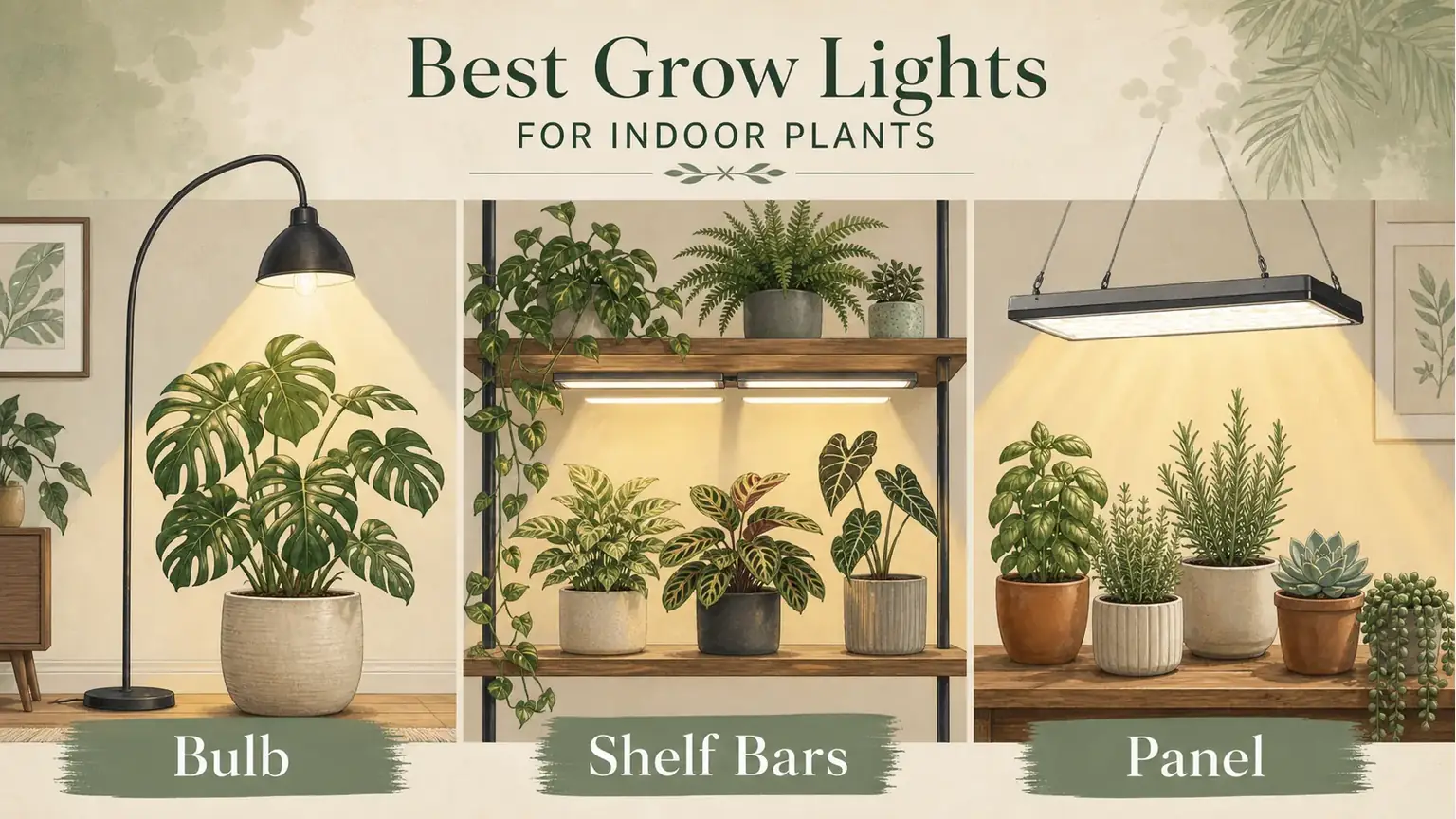
The best grow light for indoor plants depends less on hype and more on the setup: one plant, a shelf, a desk, a bright herb tray, or a winter corner that never gets enough sun.
If you want the simplest answer, use a strong E26 grow bulb for one plant, shelf bars for rows of small pots, a clip-on light only for tiny setups, and a stronger panel for herbs, succulents, seedlings, or high-light plants. For normal houseplants, coverage, distance, and a timer usually matter more than buying the most powerful light.
Affiliate disclosure: This article contains paid links. As an Amazon Associate, we may earn from qualifying purchases at no extra cost to you. Product suggestions are included only where they solve a specific setup problem.
Source note
This guide uses extension and university sources for the plant-light principles: light intensity at the leaves, distance, spectrum, duration, and the fact that plant-useful light is not the same as how bright a lamp looks to people. Product picks are editorial role matches, not hands-on lab tests.
Sources used: Illinois Extension: Lighting for Houseplants; Missouri Extension: Caring for Houseplants; University of Minnesota Extension: Growing Plants Indoors Under LED Lights; University of Vermont Extension: Tips for Choosing Grow Lights; University of Maryland Extension: Lighting for Indoor Plants.
Before you buy
A grow light will not fix every struggling plant. If the soil is staying wet for days, roots smell rotten, leaves have pests, or the plant is sitting in a cold draft, solve that first. Light helps growth only when the rest of the care is not actively working against the plant.
Quick Picker: Which Grow Light Setup Fits Your Plants?
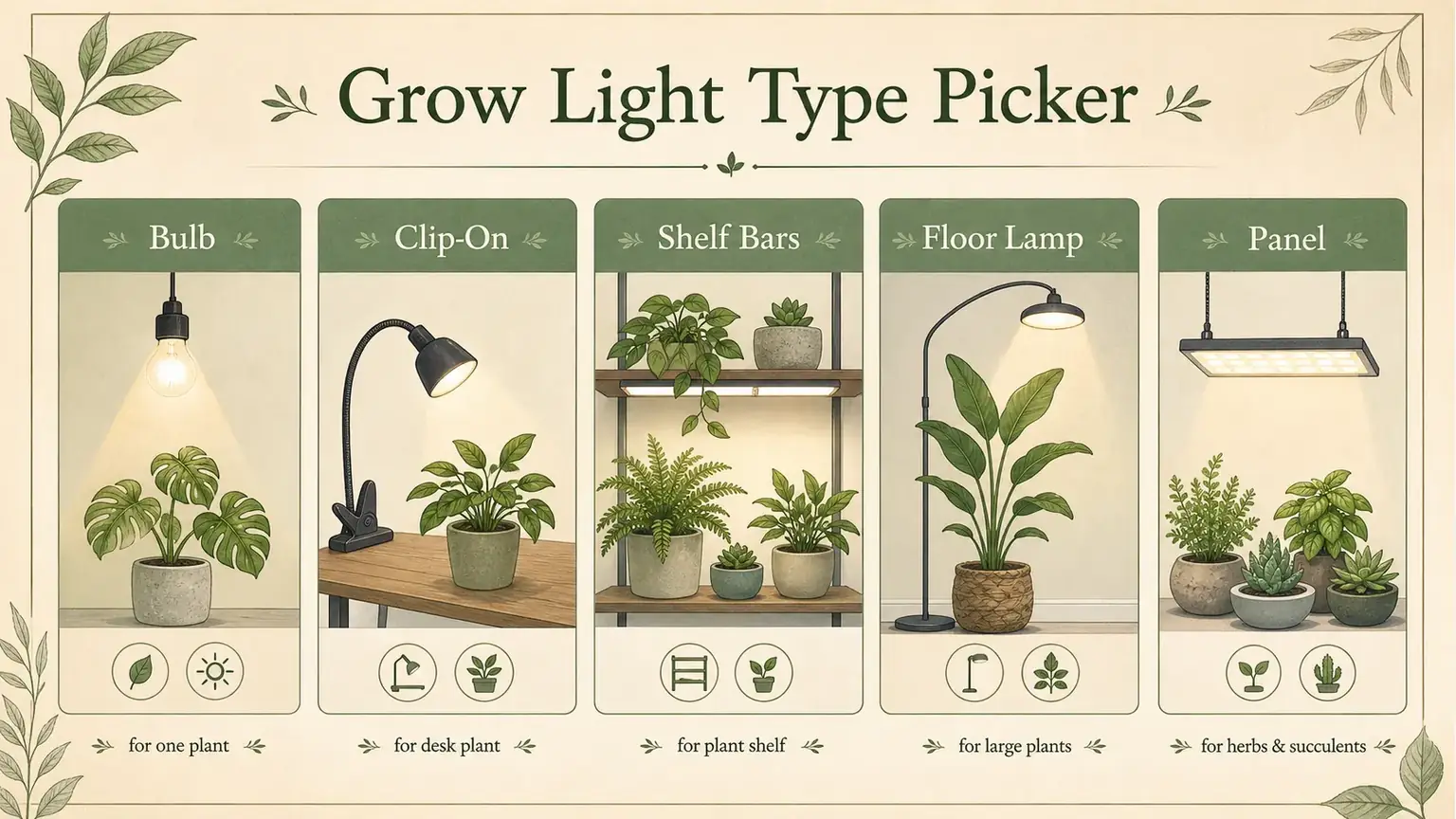
Start with the shape of the space. A shelf full of plants needs a different light than one fiddle leaf fig in a corner. This is where many grow-light purchases go wrong: the light may be decent, but the format does not match the job.
| Your setup | Best light type | Good for | Avoid if | Section |
|---|---|---|---|---|
| One plant in a dark corner | E26 grow bulb | Pothos, monstera, rubber plant, bird of paradise | If the plant is spread wider than the light cone | Go to section |
|
Tall floor plant setup: A grow light for a fiddle leaf fig has to reach the upper canopy, not just shine at the pot from across the room. Tall floor plant |
Standing vertical grow light | Money tree, rubber plant, dracaena, bird of paradise | If you need shelf coverage or seedling trays | Go to section |
| Plant shelf or rack | LED shelf bars | Rows of small pots, propagation shelves, plant cabinets | If you cannot mount or hide bars | Go to section |
| Desk plant or tiny pot | Clip-on or pot light | Small succulents, desk pothos, one tabletop plant | If you need broad coverage | Go to section |
| Herbs, seedlings, succulents | Stronger panel | High-light plants and serious winter growing | If decor and discretion matter most | Go to section |
| Not sure how bright the spot is | Light meter | Readers who want proof before moving plants | If you prefer simple trial and observation | Go to section |
| Forgetting the schedule | Outlet timer | Any setup without a reliable built-in timer | If the light already has a good timer | Go to section |
Best Grow Light Bulb for One Indoor Plant
A grow-light bulb is the cleanest choice when you have one plant and a lamp you already like. It works especially well for a single pothos, monstera, rubber plant, bird of paradise, ficus, or plant corner that needs a consistent boost.
The weak point is coverage. A bulb creates a cone of light. If the plant is wide, tall, or far from the lamp, the lower leaves may still be dim. Move the lamp close enough to cover the canopy, but not so close that leaves bleach or crisp.
Use this only if: One larger plant, a floor lamp, or a plant corner where a normal bulb format is easiest.

A familiar E26 bulb format for readers who want a stronger plant light without building a rack or hanging a panel.
Skip it if: You need to light a whole shelf, a tray of seedlings, or several plants spread across a wide area.
Small setup note
If you only need a light for a small tabletop plant, a lower-power bulb can be enough. The mistake is buying a tiny bulb and expecting it to light a shelf, a floor plant, or several pots at once.
Best Standing Grow Light for Tall Floor Plants
A standing grow light is useful when the plant is too tall or too awkward for a desk lamp, shelf bar, or clip-on light. This is the better format for a money tree, rubber plant, dracaena, bird of paradise, or plant corner where you want vertical coverage without mounting hardware.
The tradeoff is that a standing light is still a targeted setup. It will not replace shelf bars for rows of small pots, and it should be positioned so light reaches the canopy instead of just one side of the plant.
Use this only if: Tall floor plants, plant corners, or readers who cannot mount shelf bars.

A standing vertical light solves the tall-plant problem better than a tiny clip lamp and avoids mounting hardware.
Skip it if: You need shelf coverage, seedling trays, or a discreet light for one small tabletop plant.
Best Grow Light Bars for Plant Shelves
If your plants live on shelves, bar lights are usually better than a single bulb. The reason is simple: shelves need even light across a row, not one bright spot in the middle.
Use bars under each shelf level, keep leaves within the effective light zone, and avoid crowding plants so tightly that the front row shades the back row. For propagation shelves, small foliage plants, and winter plant racks, this is often the highest-value grow-light setup.
Use this only if: Plant shelves, propagation shelves, or several small pots in a row.

Linear bars solve a real coverage problem: they spread light across rows of plants better than one distant bulb.
Skip it if: You only have one floor plant or you cannot mount lights under a shelf.
Best Clip-On Grow Light for a Small Desk Plant
Clip-on and pot-clip grow lights are useful when the setup is tiny: one desk plant, one small succulent, or a renter-friendly spot where you cannot install bars or hang a panel.
Be realistic about the limits. A clip-on light is a convenience product, not a magic replacement for a bright window or shelf system. It can help a small plant if it is close enough and used consistently, but it is not the right product for a large plant collection.
Use this only if: One small desk plant, a small succulent, or a renter-friendly setup with no lamp space.

Clip-on lights are useful when convenience matters more than broad coverage.
Skip it if: You expect it to cover a shelf, large monstera, or several medium plants.
Best Strong Grow Light Panel for Herbs, Succulents, and Seedlings
A panel is the right direction when the plant actually needs more output: herbs, seedlings, succulents, citrus starts, and high-light plants that do not stay compact under weaker lamps.
For one casual pothos, a panel is usually overkill. For a shelf of herbs, a tray of seedlings, or succulents that stretch toward the window, it makes more sense because the light can cover a larger canopy with stronger intensity.
Use this only if: Herbs, succulents, seedlings, high-light plants, or a more serious grow shelf.

A panel is the better fit when output and canopy coverage matter more than decor.
Skip it if: You only want a discreet light for one pothos or a decorative plant corner.
Panel alternative
The VIPARSPECTRA P1000 is a reasonable comparison point if you want a panel-style grow light. I would keep one main panel card in the article rather than turning this into a panel-only roundup, because most houseplant readers do not need several near-duplicate panel choices.
How Bright Should a Grow Light Be?
Human eyes are bad at judging plant light. A lamp can look bright in a room but still be weak at the leaf surface. Extension sources often explain plant light in terms like foot-candles, lux, PPF, and PPFD. You do not need to become a lighting engineer, but you do need to understand one thing: intensity at the leaves matters.
For a normal houseplant owner, the practical test is simpler: place the light close enough to cover the plant, use it consistently, and watch the response. New growth should become less stretched, leaves should face the light without bleaching, and the soil may dry a little faster.
Use this only if: Readers who want to measure light at leaf height instead of guessing.

A light meter helps turn vague advice like bright indirect light into a real placement decision.
Skip it if: You only need a simple beginner setup and do not want another tool.
How Far Should Grow Lights Be From Indoor Plants?
Distance changes everything. A strong light placed too far away can act weak. A strong light placed too close can bleach leaves. The right distance depends on the fixture, plant, and whether the plant was already used to strong light.
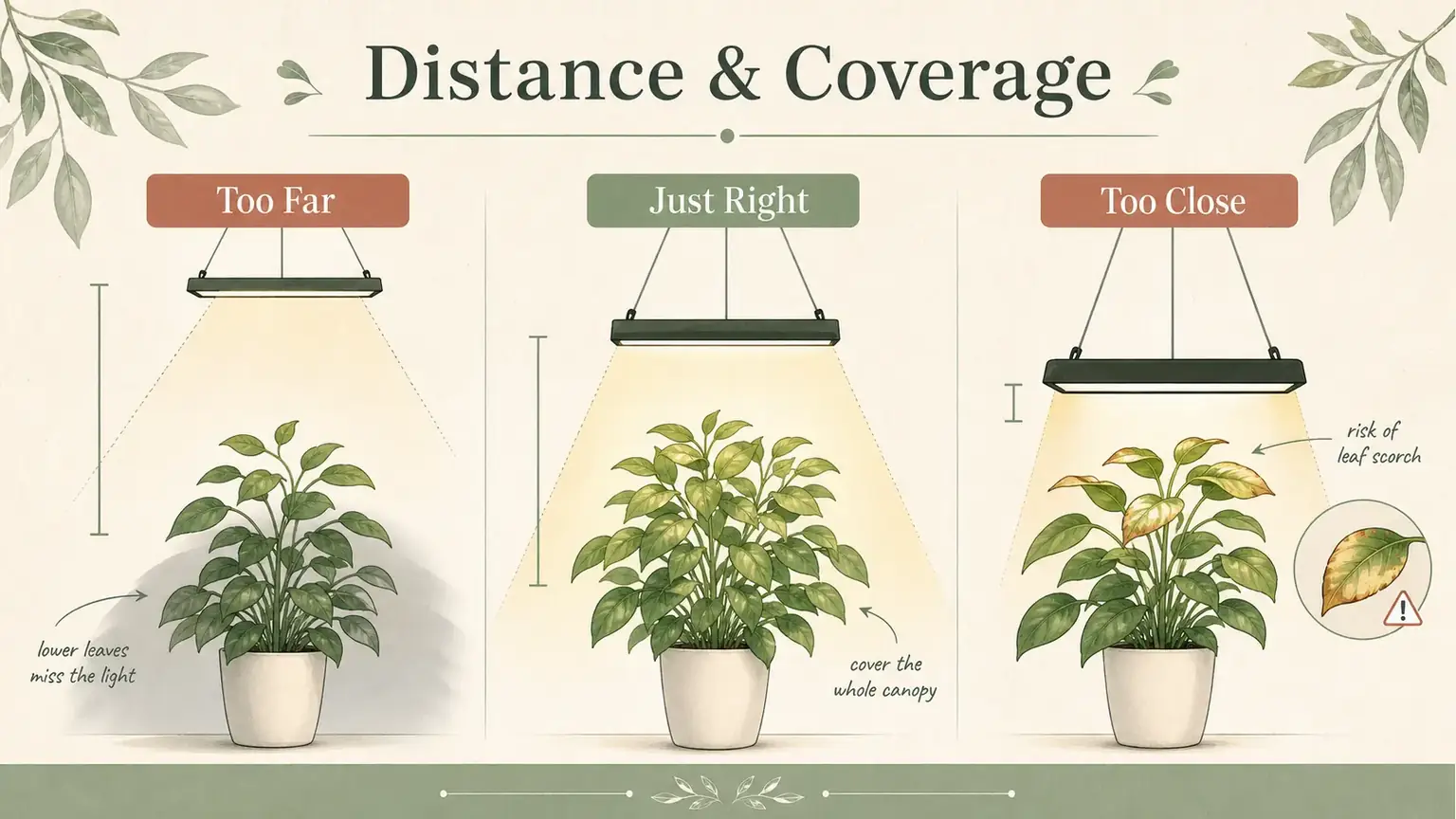
Use the plant as feedback. If stems keep stretching and leaves point sharply toward the light, the plant may need more intensity or closer placement. If leaves closest to the light turn pale, tan, or crispy, raise the light, dim it, or shorten the duration.
How Long Should Grow Lights Stay On?
Most indoor plant grow lights should run on a consistent daily schedule, not randomly when you remember. Many houseplant setups land around 10 to 14 hours per day, depending on natural window light, plant type, and light strength.
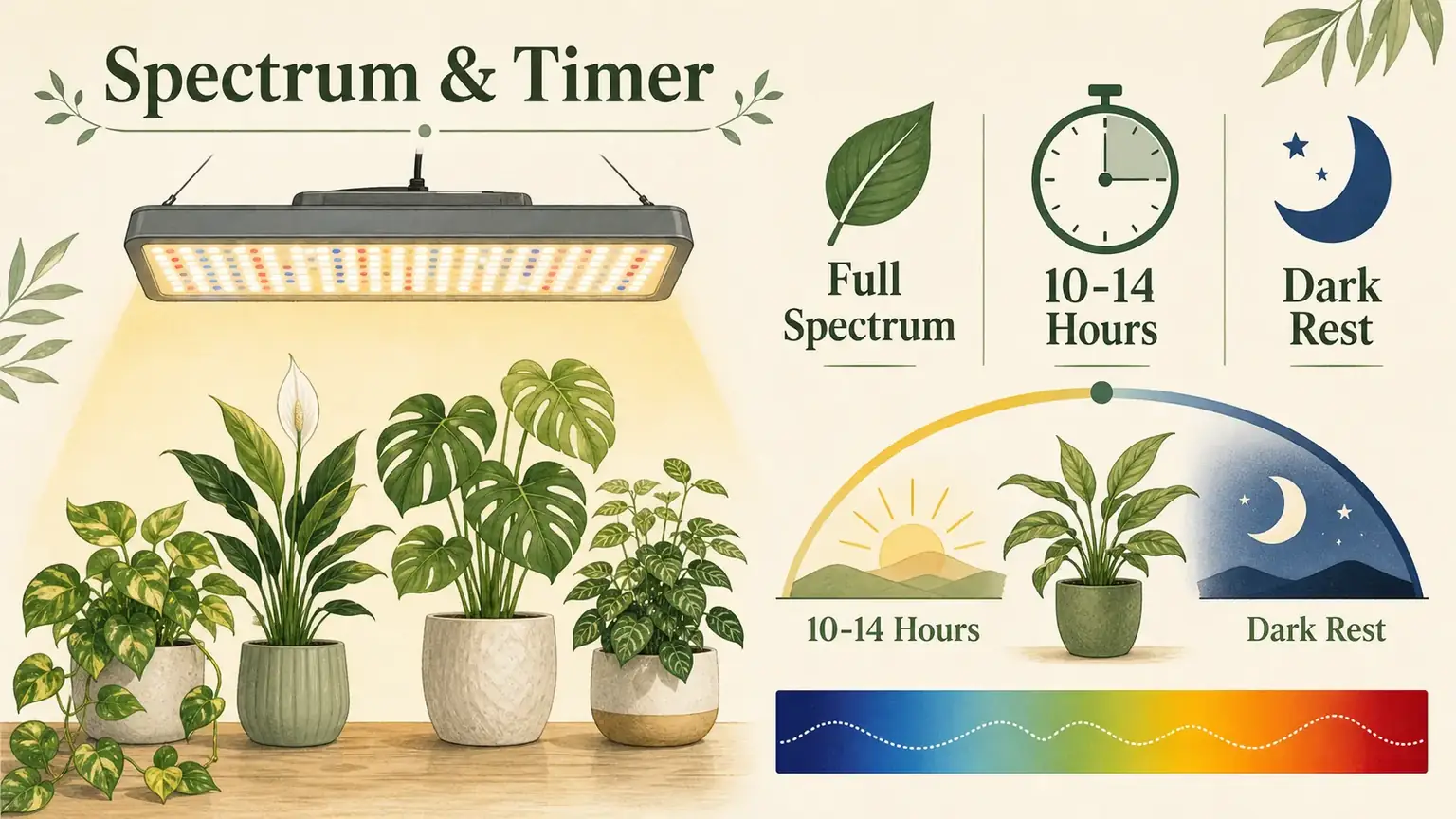
Do not leave grow lights on 24/7. Plants use darkness too. A timer is one of the easiest ways to make a grow light work better without adding more products or guesswork.
Use this only if: Consistent daily light cycles without remembering to switch the light on and off.

A timer is a low-friction fix for inconsistent or excessive grow-light duration.
Skip it if: Your grow light already has a reliable built-in timer.
Grow Light Mistakes That Waste Money
The most expensive grow-light mistake is not buying the wrong brand. It is buying a light that does not match the setup.
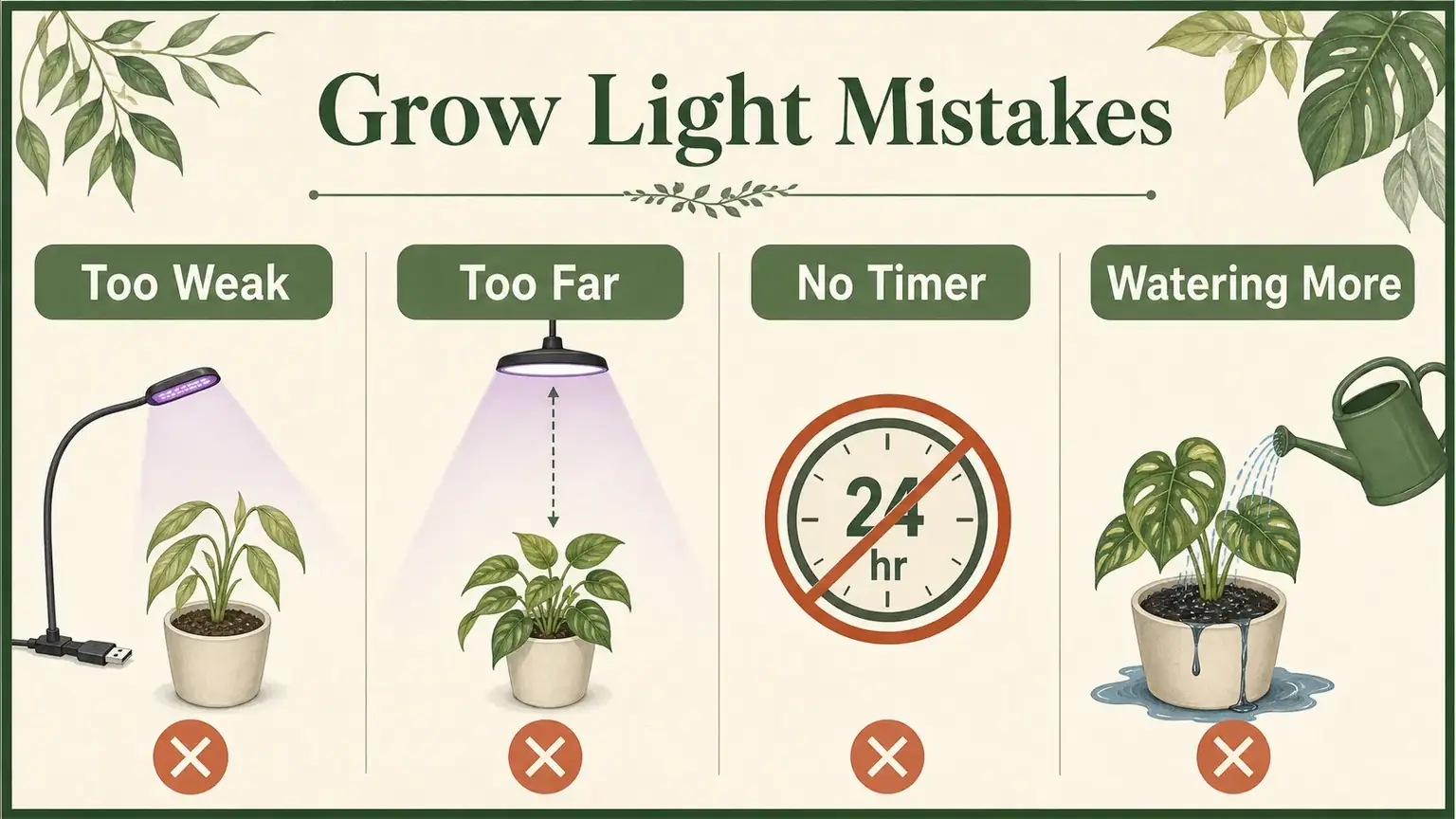
- Too weak: tiny lights can help small plants only when placed close enough.
- Too far: a good light loses usefulness when it sits far above or beside the plant.
- No timer: inconsistent use makes it hard to know whether the light is working.
- Watering more automatically: more light can increase growth, but soggy soil still causes root problems.
- Buying before diagnosing: yellow leaves, rot, pests, or cold damage may not be a light problem.
When You Do Not Need a Grow Light
You may not need a grow light if the plant already sits in a bright window and grows compactly. You also may not need one for low-light-tolerant plants that are simply growing slowly but otherwise look healthy.
Buy a grow light when it solves a real problem: winter light drops, a shelf is too far from a window, seedlings stretch, herbs fail indoors, succulents lean, or your best plant corner is beautiful but too dim.
Holiday cactus setup
For bloom-sensitive plants, see the Christmas cactus grow light and darkness guidance before running a lamp late into the evening.
FAQ
Are LED grow lights good for indoor plants?
Yes. LED grow lights are usually the best choice for indoor plants because they can provide useful light with less heat and energy use than older fixtures. The important part is not the word LED by itself; it is whether the light has enough intensity, coverage, and duration for the plant.
Do grow lights need to be full spectrum?
For most houseplant owners, a white or full-spectrum grow light is the easiest choice. It is more pleasant in a living room than purple lights and can support a broader range of foliage plants. Red and blue wavelengths matter for plants, but readers do not need a harsh purple light for normal houseplant care.
How many hours should grow lights be on for houseplants?
Many indoor setups work best around 10 to 14 hours per day, depending on the plant, natural window light, and light strength. Do not leave grow lights on all day and night; plants still need a dark period.
Can grow lights burn indoor plants?
Yes. A strong light placed too close can bleach or crisp leaves, especially on plants that were grown in dimmer light. If leaves closest to the light turn pale, tan, or crispy, raise the light, dim it, or shorten the duration.
Is a grow light better than a sunny window?
A sunny window is often better for plants that enjoy direct indoor sun, but a grow light is more controllable. It is especially useful in winter, in apartments with poor windows, or on plant shelves where window light does not reach evenly.
What is the best grow light for one plant?
For one medium or large houseplant, a strong E26 grow bulb in a lamp is usually the simplest starting point. For several small plants in a row, shelf bars are usually a better fit.
Are cheap purple grow lights worth it?
Some can help small plants at close range, but many cheap purple lights are weak, unpleasant in living spaces, or placed too far away to matter. For most homes, a white/full-spectrum bulb, shelf bar, or panel is easier to use well.
Sources