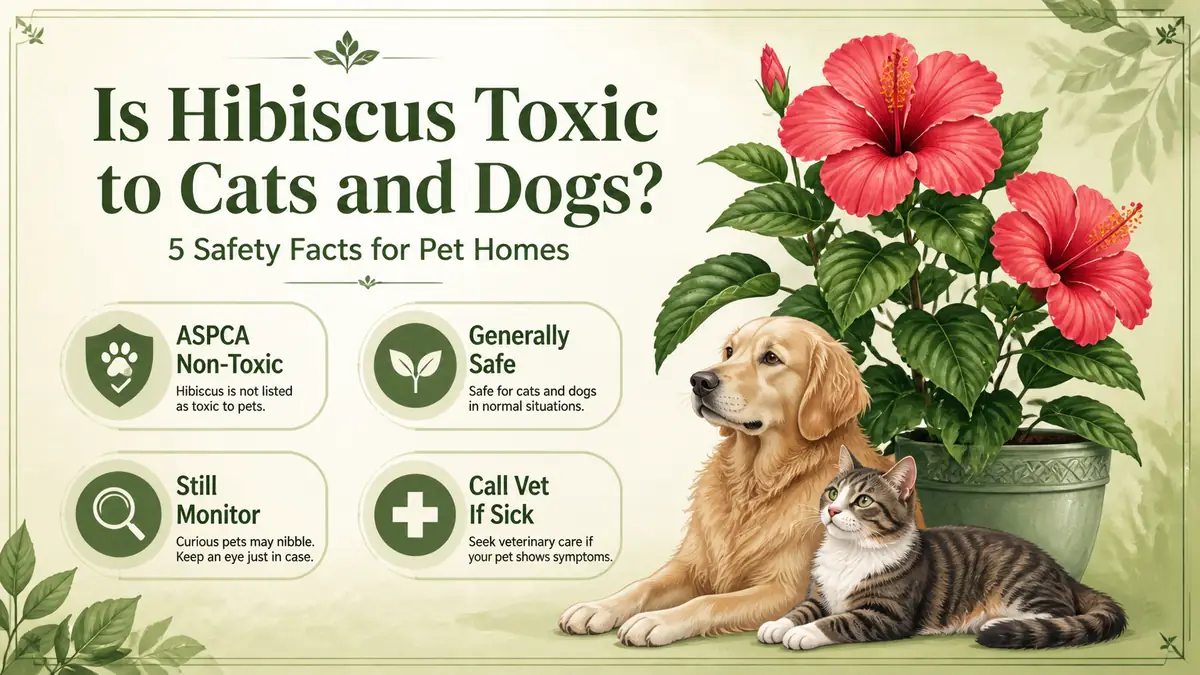
ASPCA lists hibiscus as non-toxic to cats and dogs, including entries using Rose of Sharon/Rose of China naming. Non-toxic does not mean a pet should eat it: large amounts of plant material, potting soil, fertilizer, pesticides, or repeated vomiting still deserve a vet call.
Quick Pet-Safety Answer
| Situation | First action | Why |
|---|---|---|
| Small nibble, no symptoms | Monitor and remove access | Usually low concern, but keep plant out of reach |
| Vomiting, diarrhea, drooling, lethargy | Call your vet or poison helpline | Symptoms matter even with non-toxic plants |
| Plant was treated with pesticide/fertilizer | Call your vet with product details | Chemical exposure is a different risk |
| Unknown hibiscus or mixed bouquet | Identify the plant before assuming safety | Names can be confusing |
The safest answer is not “ignore it” or “panic.” It is to identify the plant name, remove access, watch your pet closely, and call your veterinarian or a pet poison hotline if symptoms appear or if you are unsure what was eaten.
| Pet-home question | Practical answer | Go to |
|---|---|---|
| Is hibiscus poisonous to cats or dogs? | ASPCA lists hibiscus as non-toxic to cats, dogs, and horses. | ASPCA listing |
| Why do some sources mention Rose of Sharon? | Rose of Sharon is a common name used under Hibiscus syriacus, which creates name confusion. | Name check |
| My pet chewed a flower. What now? | Remove the plant material, offer water, monitor, and call a vet if symptoms appear. | Chewing risk |
| What else in the pot can be risky? | Fallen flowers, potting soil, fertilizer, pest products, and standing saucer water can cause trouble. | Home checklist |
| When should I call a vet? | Call for vomiting, diarrhea, lethargy, drooling, repeated gagging, tremors, or unknown ingestion. | Vet call signs |
If you are also trying to keep the plant healthy while making it less tempting, the right care depends on type. Tropical hibiscus, hardy hibiscus, and Rose of Sharon do not all behave the same way in winter, pruning, containers, or outdoor placement.
For broader care after the safety question is settled, use the main hibiscus care guide. If you are unsure which plant you own, the tropical vs hardy hibiscus guide is the better next step.
1. Check the ASPCA Hibiscus Safety Listing
The ASPCA lists hibiscus as non-toxic to dogs, non-toxic to cats, and non-toxic to horses. For most pet homes, that is the central safety fact: hibiscus is not in the same risk category as known toxic houseplants such as lilies for cats or sago palm for dogs.
This matters because many pet owners see a cat batting at hibiscus petals or a dog chewing a fallen flower and assume the worst. The plant itself is not listed by ASPCA as toxic to cats or dogs, so a small taste is usually a monitoring situation, not an automatic emergency.
Still, “non-toxic” does not mean “edible,” “safe as a snack,” or “no reaction is possible.” Pets can develop stomach upset after chewing almost any plant material. Large pieces can also cause gagging, and rough stems or fibrous leaves may irritate the mouth or digestive tract.
The ASPCA page is especially useful because it also names common-name confusion. Its hibiscus listing includes Rose of Sharon and Rose of China as common names under Hibiscus syriacus. That is one reason pet owners get conflicting answers when they search by a label instead of a botanical name.
If your pet is acting normal after nibbling a petal, remove the plant, clean up fallen material, and observe. If your pet is vomiting, drooling heavily, trembling, refusing food, acting weak, or you cannot confirm the plant identity, contact your veterinarian or a pet poison hotline.
Fast safety read: ASPCA non-toxic status is reassuring, but symptoms still matter. A symptomatic pet needs veterinary guidance even when the plant is not listed as toxic.
2. Identify Which Hibiscus Name Is on Your Plant
Before you decide how to place, prune, or overwinter the plant, identify what kind of hibiscus you have. Pet safety starts with the ASPCA non-toxic listing, but home safety and plant handling improve when you know whether the label means tropical hibiscus, hardy hibiscus, or Rose of Sharon.
These plants are often discussed as if they are the same. They are not. Tropical hibiscus is commonly grown in pots and moved indoors in cold climates. Hardy hibiscus dies back and returns from the roots in colder zones. Rose of Sharon is a woody shrub, usually grown outdoors.
| Plant name you may see | Common growth habit | Why it matters in a pet home |
|---|---|---|
| Tropical hibiscus | Evergreen or semi-evergreen shrub, often container-grown in cold regions | Usually the type pets can reach indoors during winter or on patios in summer |
| Hardy hibiscus | Perennial that dies back to the ground and regrows from the crown | Pets may chew new spring shoots or fallen dinner-plate-size blooms outdoors |
| Rose of Sharon | Woody shrub, Hibiscus syriacus | Confusing name appears in ASPCA common names; often planted in yards |
Start with the plant tag if you still have it. Look for a botanical name, not only a marketing name. Hibiscus rosa-sinensis usually points to tropical hibiscus. Hibiscus moscheutos or hybrid hardy hibiscus types point to the perennial group. Hibiscus syriacus points to Rose of Sharon.
Next, check the stems. Tropical hibiscus usually has woody stems and glossy leaves, and it struggles with cold nights. Hardy hibiscus produces soft stems from the base each season and can be cut down after frost. Rose of Sharon has a woody branching structure that remains through winter.
Flower size helps, but it is not enough by itself. Hardy hibiscus often has very large flowers, but tropical hibiscus can also have bold blooms. Rose of Sharon flowers are usually smaller than the largest hardy hibiscus blooms and appear on a woody shrub during the warm season.
Pet access also changes by type. A tropical hibiscus beside a sunny glass door may be at cat height all winter. A hardy hibiscus bed may drop large flowers onto a lawn where a dog can mouth them. A Rose of Sharon hedge may shed blooms along a fence line.
Use location as another clue. If the plant came indoors before frost, it is likely tropical hibiscus or a tender patio hibiscus. If it disappears to the ground in winter and returns from the crown, it is likely hardy hibiscus. If it keeps a woody framework outside, consider Rose of Sharon.
Type identification also prevents bad plant-care fixes that create pet problems. For example, overwatering a tropical hibiscus indoors can leave saucers full of fertilizer-tainted water. Cutting hardy hibiscus at the wrong time may leave tempting stems. Moving plants too fast can cause leaf drop that pets investigate.
If you need a visual sorting step, compare your plant against the detailed tropical vs hardy hibiscus differences before changing care. This is especially helpful if you inherited a plant without a tag.
Label check: “Hibiscus” on a tag is not enough for care decisions. For pet safety, ASPCA status is reassuring. For winter, pruning, and placement, the exact hibiscus type matters.
3. Treat Chewing as a Stomach-Irritation Risk
If your cat or dog chewed hibiscus, remove the plant material from the mouth if you can do so safely. Do not force your fingers into a stressed pet’s mouth. Move the plant out of reach, collect fallen pieces, and note what was eaten, how much, and when.
A small nibble of a petal from a correctly identified hibiscus is usually less concerning than repeated chewing, gulping leaves, eating potting mix, or drinking from a fertilized saucer. The amount matters. So does your pet’s size, health, age, and history of sensitive digestion.
Watch for vomiting, diarrhea, drooling, lip licking, repeated swallowing, gagging, refusal to eat, belly discomfort, or unusual tiredness. Mild, brief stomach upset may pass, but repeated symptoms deserve a call. Do not give home remedies unless your veterinarian tells you to.
Pet behavior can make hibiscus more tempting. Cats may chew leaves when bored or attracted to movement near a window. Dogs may mouth fallen flowers during yard exploration. Kittens and puppies are higher-risk simply because they sample objects often.
Care conditions influence how much plant litter is available. A stressed tropical hibiscus may drop yellow leaves and buds indoors. The University of Minnesota Extension notes that abrupt changes in moisture, temperature, drafts, low light, or watering can contribute to yellow leaves and bud drop.
That plant stress becomes a pet-home issue. Dropped buds and leaves collect on floors, under plant stands, and in saucers. A cat may bat them around. A dog may eat them with dust, soil, or fertilizer residue. Clean up daily when the plant is adjusting.
Use exact checks to reduce litter. For a potted tropical hibiscus, check the top inch of potting mix with your finger. If the top inch is dry and the pot feels noticeably lighter, water thoroughly until water drains, then empty the saucer. Do not let the pot sit in runoff.
For outdoor hardy hibiscus, check the root zone rather than only the surface. Push a finger or narrow trowel into the soil a few inches near the drip line. Hardy hibiscus performs best with consistent moisture, especially in full sun, but average to wet soil does not mean stagnant puddles around pets.
Light also affects leaf and bud drop. Indoors, tropical hibiscus needs very bright light. A western or southern exposure with four to five hours of bright direct light helps support blooms. Low light often leads to weaker growth, dropped buds, and more plant debris to clean up.
If you move a tropical hibiscus outdoors for summer, do it gradually. Start on a porch or protected spot, move to filtered shade, then work toward brighter sun. Sudden full sun can scorch leaves, which creates fallen plant material and encourages more pet investigation.
Reverse that process before frost. Watch nighttime temperatures, not only daytime highs. Tropical hibiscus should come in before cold nights stress it. A sudden cold shock can cause leaf yellowing and bud drop, which again increases chewable debris indoors.
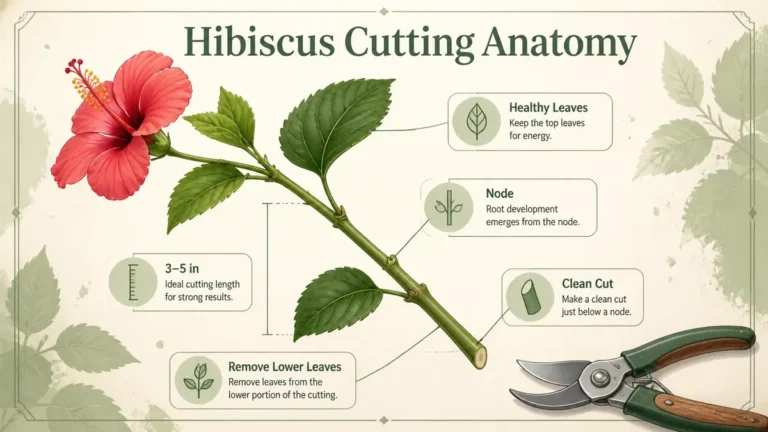
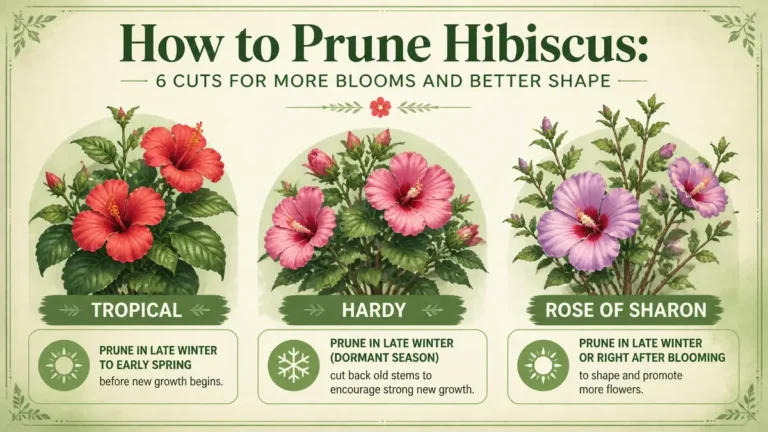
Pruning can also reduce low, tempting growth. For tropical hibiscus, prune in late winter for bushier growth. Make cuts just above a leaf node so the plant can branch cleanly. Avoid leaving long, leafless stubs that dry out and fall where pets can chew them.
If you root cuttings, keep them away from pets. University of Minnesota Extension notes that 3- to 5-inch cuttings can root in about three to five weeks. During that waiting period, small cutting trays, humidity covers, and loose potting mix are all attractive to curious cats.
For hardy hibiscus, NC State Extension notes that flowers appear on new growth. Cut stems to about 3 to 4 inches in late autumn after the season ends. Remove cut stems from the yard instead of leaving them as chew sticks for dogs.
Do not punish a pet for chewing. Instead, change access. Lift pots onto stable stands, use a plant room with a door, place outdoor shrubs away from dog runs when possible, and clean dropped flowers before they become toys.
If plant chewing is frequent, mention it to your veterinarian. Sometimes repeated plant chewing is boredom. Sometimes it is nausea, diet-related behavior, or anxiety. The hibiscus may be non-toxic, but the pattern still deserves attention.
4. Keep Fallen Flowers, Soil, and Fertilizer Away
In many homes, the bigger practical risk is not the hibiscus flower. It is the pot environment around the plant. Potting mix, fertilizer granules, pest treatments, mulch, saucer water, and moldy fallen debris can upset pets or expose them to products not meant for ingestion.
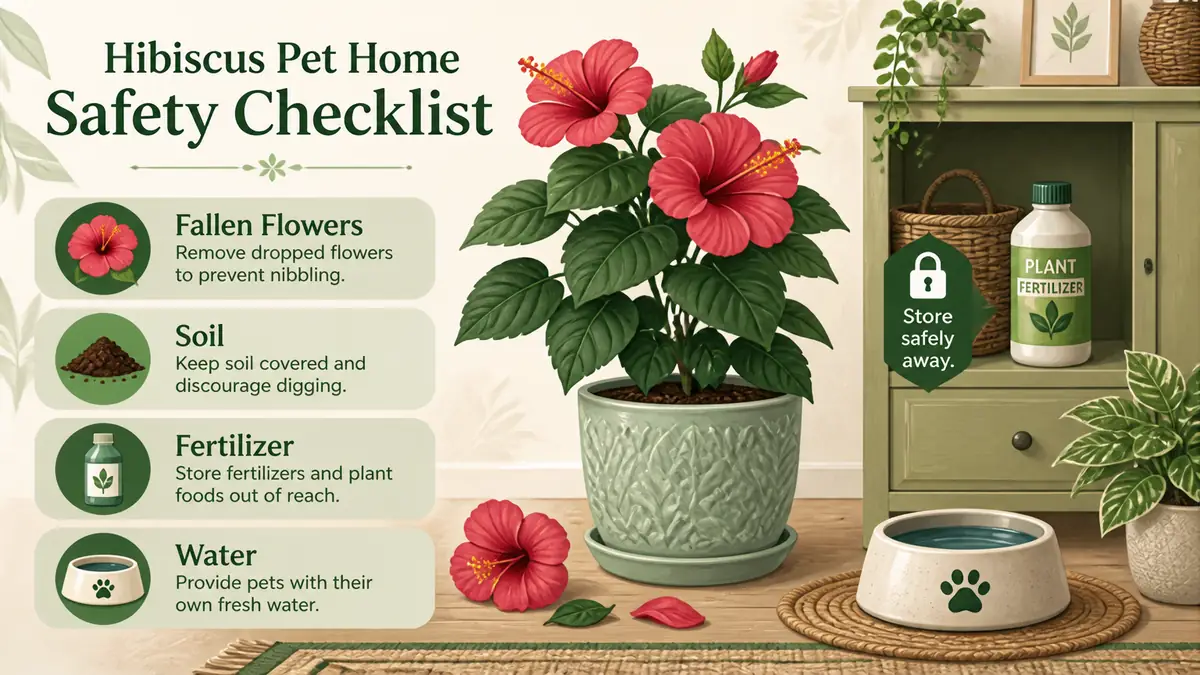
Make the area under the plant boring. Remove fallen flowers and leaves every day during bloom, after moving the plant, and during seasonal changes. Check behind the pot, under the plant stand, and inside the saucer. Cats often find the pieces you do not see.
Watering should not create a pet drinking station. Water a potted hibiscus thoroughly, let excess drain, and empty the saucer. This protects roots from staying saturated and prevents pets from drinking runoff that may contain fertilizer residue or soil particles.
Fertilizer should be handled with the same care you would use for any household chemical. University of Minnesota Extension suggests half-strength balanced fertilizer outdoors every two to three weeks in summer for hibiscus, and less often indoors. Apply it when pets are away from the area.
After fertilizing, water according to the product directions and keep pets away until surfaces are dry and any spills are cleaned. Store fertilizer in a closed container behind a cabinet door or in a locked garden bin. Do not leave scoops, bags, or diluted fertilizer pitchers near the plant.
Granular fertilizers can be especially tempting to dogs because some smell organic, salty, or unusual. Even when the hibiscus is pet-safe, the fertilizer may not be. If a pet eats fertilizer, read the label and call your veterinarian or poison hotline for product-specific guidance.
Soil can be another problem. Some pets dig in pots, eat potting mix, or use large containers as a litter box. Covering the soil surface with large, smooth stones can reduce digging, but avoid small pebbles that a pet could swallow. The stones should be too large to mouth.
Skip cocoa mulch around pet-accessible hibiscus. Also be cautious with bone meal, blood meal, fish-based amendments, and compost piles nearby. These materials can attract dogs and cause digestive problems. Keep amendments mixed into soil and inaccessible after use.
Pest products deserve extra caution. If you treat aphids, whiteflies, or mites on hibiscus, follow the label exactly and isolate the plant during treatment. Even mild products can irritate paws, mouths, or stomachs if a pet licks wet leaves.
For indoor plants, wipe up leaf shine products, spilled sprays, and sticky honeydew from pest infestations. Sticky residue attracts dust and pet hair. It can also make leaves more interesting to a cat that likes licking smooth surfaces.
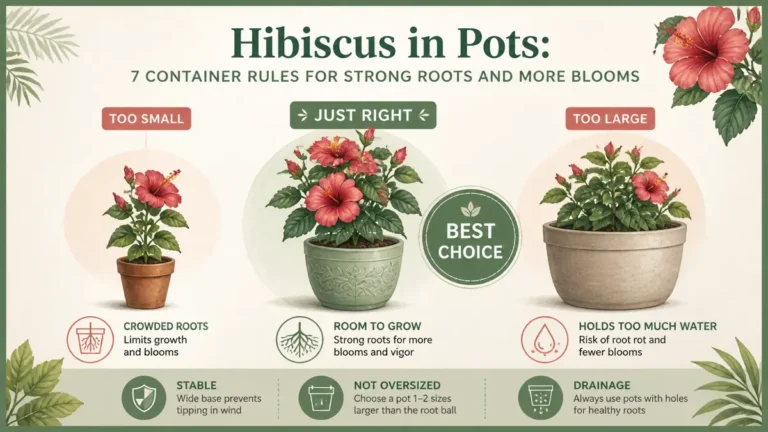
Placement is the best prevention. Keep tropical hibiscus in the brightest safe spot your home allows, but do not place it on a wobbly table where a cat can knock it down. A heavy pot on a stable stand near a south or west window is safer than a light nursery pot on a narrow ledge.
Watch the pot weight as part of watering and safety. A very light pot may be dry enough to water, but it is also easier for a pet to tip. If your dog bumps patio pots or your cat climbs plant stands, use a heavier cachepot and make sure drainage water cannot collect inside it.
Outdoor hardy hibiscus and Rose of Sharon need yard-level cleanup. Large blooms can collapse after flowering and land where pets walk. Pick up spent flowers near patios, dog runs, gates, and play areas. This is especially useful after rain, when petals become slimy and more likely to stick to paws.
For Rose of Sharon hedges, check the fence line. Dogs often patrol the same path and may mouth fallen flowers repeatedly. Rake under shrubs during peak bloom if your dog is a plant sampler.
If you are overwintering tropical hibiscus indoors, expect an adjustment period. Lower light, indoor heat, drafts, and watering changes can all trigger leaf drop. Keep the plant away from pet food bowls and litter boxes so dropped material does not mix with daily pet routines.
For step-by-step seasonal handling, see the guide to overwintering hibiscus. The key pet-home point is simple: transition slowly, clean often, and keep saucer water out of reach.
5. Call a Vet if Symptoms Appear
Call your veterinarian if your cat or dog develops symptoms after chewing hibiscus, even though the plant is listed as non-toxic. The call is especially important if symptoms are repeated, worsening, or paired with unusual behavior.
Symptoms that deserve veterinary guidance include repeated vomiting, diarrhea, excessive drooling, pawing at the mouth, trouble swallowing, gagging, coughing, weakness, tremors, bloating, collapse, or refusal to eat. Also call if your pet has a medical condition, is very young, elderly, pregnant, or very small.
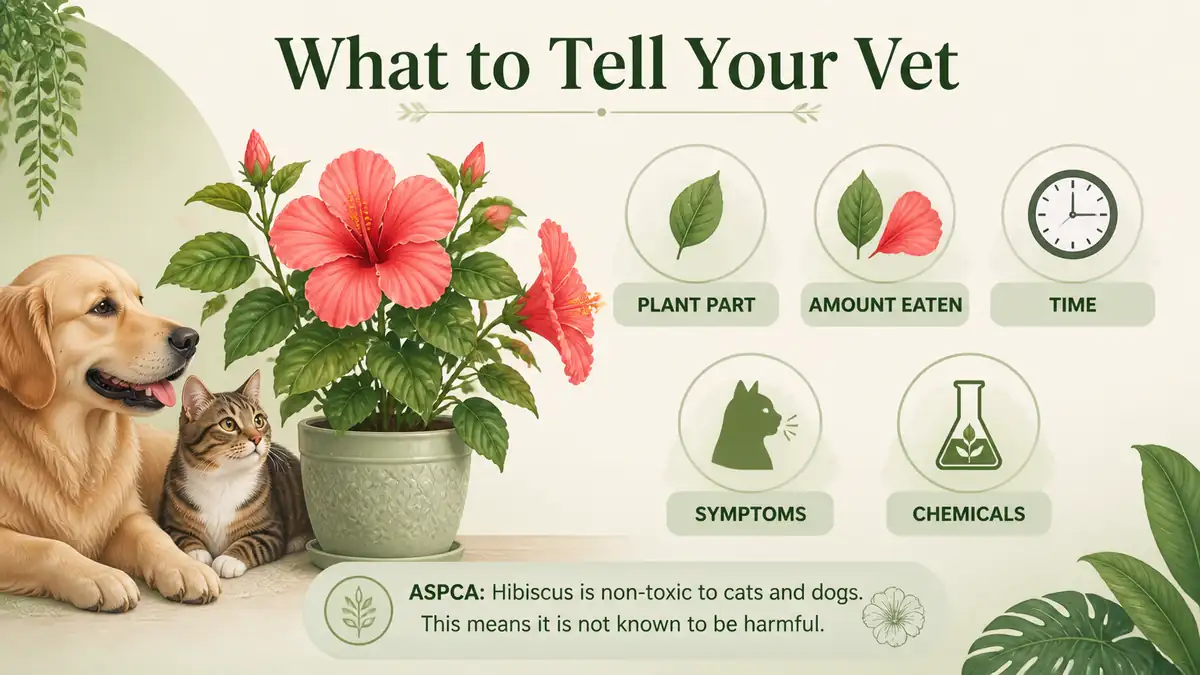
If you contact a vet or poison hotline, have useful details ready. Give your pet’s species, breed, weight, age, symptoms, the time of ingestion, the amount eaten, and the exact plant name if known. Mention whether fertilizer, pesticides, soil, mulch, or saucer water could also have been involved.
Take clear photos of the plant, leaf, flower, tag, fertilizer label, and any chewed material. Do not rely on memory under stress. A photo of the whole plant and a close-up of the flower can help the professional assess whether the plant is truly hibiscus.
Do not induce vomiting unless a veterinarian specifically instructs you. Do not give hydrogen peroxide, salt, oils, milk, activated charcoal, or over-the-counter stomach medicine without professional direction. Home treatment can make some situations worse.
If your pet seems normal but you are worried, a call is still reasonable. A short veterinary conversation can help you decide whether to monitor at home or bring your pet in. This is particularly useful when a child, pet sitter, or neighbor saw the chewing but cannot confirm details.
If your pet ate a different houseplant at the same time, treat the situation as unknown ingestion. Hibiscus may be non-toxic, but many common ornamental plants are not. For example, readers comparing risks may also want the articles on monstera toxicity or whether wandering jew is toxic to cats.
Keep a simple pet-plant note in your phone. List the plant’s botanical name, common name, fertilizer used, and where the tag or receipt is stored. This sounds small, but it saves time when someone else is watching your pet.
When in doubt: ASPCA non-toxic status supports calm monitoring, not guesswork. If symptoms appear, if another product was involved, or if the plant identity is uncertain, call a veterinarian or pet poison hotline.
Pet-Safe Hibiscus Placement by Plant Type
Good placement keeps the hibiscus healthy and reduces pet access. The best spot depends on which hibiscus you own, because tropical hibiscus, hardy hibiscus, and Rose of Sharon have different growth habits and seasonal needs.
For tropical hibiscus indoors, choose the brightest practical window that pets cannot easily access. A western or southern exposure is usually better than a dim corner. Aim for four to five hours of bright direct light if possible, because weak light encourages leaf drop and poor flowering.
Keep the pot away from drafts, heat vents, and cold glass. Sudden temperature swings can cause yellow leaves and bud drop. Those fallen pieces become pet toys, especially for cats. A stable, bright, low-stress location is safer than moving the plant every few days.
For tropical hibiscus outdoors in summer, transition gradually. Start in protected shade, then filtered light, then brighter sun. Keep the container away from dog traffic lanes and avoid placing it beside outdoor water bowls, where runoff and fallen petals may mix with drinking water.
For hardy hibiscus, plant in full sun with good air circulation. NC State Extension notes that full sun and air circulation improve flowers and stem strength. Stronger stems are less likely to flop into paths where dogs brush, chew, or break them.
Hardy hibiscus likes consistent moisture and can handle average to wet soils, but do not create muddy pet play areas. If your dog digs in damp beds, use fencing, plant supports, or a border that prevents access while new spring shoots are tender.
For Rose of Sharon, think like a yard manager. It is a woody shrub, so pet access is often around the base, under the canopy, or along a fence. Rake fallen flowers during heavy bloom, especially if your dog patrols that area daily.
If you use plant supports, choose pet-safe designs. Avoid sharp stakes at eye level, loose wire loops, and thin bamboo pieces that splinter. Secure ties so pets cannot pull them free. Soft plant ties are safer than twist ties with exposed wire ends.
What to Do After a Pet Chews Hibiscus
Use this calm sequence if your pet chews hibiscus and is currently alert, breathing normally, and not in distress.
- Move the plant. Put the hibiscus behind a closed door, outside the pet area, or on a stable surface the pet cannot reach.
- Remove loose material. Pick up petals, leaves, broken stems, soil clumps, and any fertilizer pieces.
- Check the product zone. Look for open fertilizer, pest spray, mulch, saucer water, or compost that may also have been contacted.
- Identify the plant. Photograph the whole plant, flower, leaves, and tag. Look for Hibiscus rosa-sinensis, Hibiscus syriacus, or hardy hibiscus names.
- Watch your pet. Monitor appetite, energy, drooling, vomiting, stool, swallowing, and breathing.
- Call if symptoms appear. Contact your vet or a pet poison hotline if anything seems off or if you cannot confirm what was eaten.
If your pet is distressed, skip the home checklist and call immediately. Trouble breathing, collapse, severe weakness, continuous vomiting, tremors, or swelling are not wait-and-see situations.
For future prevention, make chewing unrewarding. Remove dropped flowers quickly, keep the pot clean, use stable barriers, and give pets better options. Cats may need approved cat grass or enrichment. Dogs may need supervised yard time, chew toys, or training around garden beds.
Common Mistakes That Create Pet Risk
The first mistake is treating “non-toxic” as permission to let pets chew the plant. Hibiscus is not listed as toxic by ASPCA, but repeated chewing can still irritate the stomach. It can also damage the plant and expose pets to soil or fertilizer.
The second mistake is ignoring the plant type. Tropical hibiscus may need indoor winter protection, while hardy hibiscus can be cut back outdoors and return from the roots. Rose of Sharon is a woody yard shrub. Different handling creates different pet-access points.
The third mistake is overwatering indoors. Saturated soil leads to root stress, leaf yellowing, fungus gnats, and saucer water. Check the top inch of mix and the pot weight before watering. Water thoroughly, then drain the saucer completely.
The fourth mistake is fertilizing casually around pets. Fertilizer should never be left open or spilled near plant stands. Use the correct amount, clean up immediately, and block access until the area is safe. A pet that ignores leaves may still investigate fertilizer.
The fifth mistake is moving a hibiscus abruptly. Sudden changes in light, temperature, moisture, or drafts can trigger bud and leaf drop. Move plants gradually outdoors and back indoors. More dropped material means more chances for pets to chew.
The sixth mistake is pruning and leaving debris behind. When pruning tropical hibiscus in late winter, cut just above nodes and discard clippings. When cutting hardy hibiscus stems to 3 to 4 inches in late autumn, remove the old stems from pet areas.
The seventh mistake is waiting too long when symptoms appear. The plant’s non-toxic status is helpful information, but your pet’s symptoms are the priority. A quick call can prevent hours of uncertainty and help rule out fertilizer, pesticides, or a different plant.
FAQ
- Is hibiscus toxic to cats?
- No. The ASPCA lists hibiscus as non-toxic to cats. However, a cat can still vomit, drool, or have diarrhea after chewing plant material, soil, fertilizer, or treated leaves. Call your veterinarian if symptoms appear.
- Is hibiscus toxic to dogs?
- No. The ASPCA lists hibiscus as non-toxic to dogs. A dog that eats flowers, leaves, soil, mulch, fertilizer, or saucer water may still get stomach upset. Monitor closely and call a vet if your dog acts unwell.
- Is Rose of Sharon the same as hibiscus for pet safety searches?
- Rose of Sharon is a common name listed by ASPCA under Hibiscus syriacus. The name causes confusion because people may search Rose of Sharon separately from hibiscus. Use the botanical name on the tag when possible.
- What should I do if my cat ate a hibiscus flower?
- Remove the plant and any fallen pieces, offer normal water, and monitor your cat. Note the time and amount eaten. If your cat vomits, drools, refuses food, becomes lethargic, or you are unsure the plant is hibiscus, call your veterinarian.
- What should I do if my dog ate hibiscus leaves?
- Move the plant out of reach, collect remaining leaves, and check whether fertilizer, soil, mulch, or pesticides were involved. Watch for vomiting, diarrhea, gagging, drooling, or weakness. Call your vet if symptoms appear.
- Can hibiscus tea or dried hibiscus be given to pets?
- Do not give hibiscus tea, dried hibiscus, supplements, or flavored products to pets unless your veterinarian approves. A plant being listed as non-toxic is not the same as a prepared food or supplement being appropriate for your pet.
- Can cats be around indoor tropical hibiscus?
- Yes, if the plant is placed so the cat cannot chew it, dig in the soil, drink saucer water, or knock over the pot. Indoor tropical hibiscus needs very bright light, so choose a stable, bright, pet-restricted spot.
- Why did my pet vomit if hibiscus is non-toxic?
- Non-toxic plants can still irritate the stomach. Pets may react to fiber, rough leaves, swallowed petals, soil, fertilizer residue, pest products, or simply eating too much unfamiliar material. Repeated or severe vomiting needs veterinary guidance.
- Are hardy hibiscus plants safe in dog yards?
- Hardy hibiscus is not listed by ASPCA as toxic under the hibiscus listing, but dog-yard safety still requires cleanup. Pick up spent flowers, keep fertilizer inaccessible, and prevent digging around moist beds or new shoots.
- Should I remove hibiscus from my home if I have pets?
- Not always. Many pet homes can keep hibiscus safely with good placement, cleanup, and product storage. Remove or relocate the plant if your pet repeatedly chews it, digs in the pot, drinks saucer water, or has symptoms after contact.
What to Tell Your Vet
- Which plant name was on the tag, if you have it.
- Which part your pet ate: leaf, flower, stem, soil, or water from the saucer.
- How much you think they ate and when.
- Any symptoms: vomiting, diarrhea, drooling, coughing, pawing at the mouth, lethargy, or appetite change.
- Whether the plant was treated with fertilizer, pesticide, systemic insecticide, or leaf shine.
Source note: This article checks its hibiscus care and safety claims against ASPCA: Hibiscus, University of Minnesota Extension: Hibiscus, NC State Extension: Hardy Hibiscus. Generated visuals are educational illustrations, not proof photos or fake testing results.
More Hibiscus Guides
Use the focused hibiscus guide that matches what you see. This keeps the care hub from becoming a guessing game.
When to Call a Vet Now
Call your vet or a pet poison helpline if your cat or dog has repeated vomiting, diarrhea, drooling, lethargy, breathing trouble, appetite change, or if the plant was treated with fertilizer, pesticide, systemic insecticide, or leaf shine.
ASPCA’s non-toxic listing is reassuring, but symptoms and chemical exposure still matter.
Plant Material vs. Chemical Exposure
Chewed hibiscus leaves or flowers are different from eating potting mix, saucer water, fertilizer granules, or pesticide-treated foliage. If chemicals are involved, save the product label and call your vet with the exact name.