Potted hibiscus needs a stable container with drainage, rich but airy soil, deep watering during heat, and a winter move plan if it is tropical. The pot changes everything because roots heat, dry, and chill faster than roots in the ground.
Potted Hibiscus Quick Setup
| Situation | Best move | Why |
|---|---|---|
| Small young plant | Pot only 1-2 inches wider than current root ball | Avoid oversized wet soil |
| Top-heavy blooming plant | Use a stable container with real drainage holes | choose pot |
| Hot patio | Check water more often and shade the pot/root zone | summer watering |
| Tropical plant before winter | Move indoors before cold nights become routine | winter move |
The exact care depends on which hibiscus you have. Tropical hibiscus is usually the glossy-leaved patio plant with large, bright flowers and poor cold tolerance. Hardy hibiscus dies back to the ground in cold zones. Rose of Sharon is a woody shrub and behaves differently in containers.
For most readers, the container itself is the difference between a hibiscus that blooms all summer and one that cycles through wilting, yellow leaves, and bud drop. A pot changes the root environment fast: it heats up in afternoon sun, dries at the edges, stays wetter in the bottom, and exposes roots to cold sooner than garden soil does.
Before changing fertilizer or pruning hard, check the pot, drainage, soil moisture, and recent temperature swings.
| Container issue | What to check today | Best fix |
|---|---|---|
| Plant tips over or wilts fast | Pot width, weight, and root crowding | Choose the right pot size |
| Yellow leaves after watering | Drainage holes and saucer water | Remove standing water |
| Soil stays wet for days | Mix texture 3 inches down | Improve the potting mix |
| Bud drop in summer | Dry root ball, heat, or sudden sun change | Water deeply and acclimate to sun |
| Cold nights are coming | Night temperatures in the 50s F | Plan the winter move |
Type check before you change care: tropical hibiscus is tender and usually overwintered indoors. Hardy hibiscus can survive cold winters in the ground and may need root protection in pots. Rose of Sharon is a woody shrub that needs a larger container and outdoor dormancy. If you are unsure, compare the traits in our tropical vs hardy hibiscus guide.
A simple starting setup is a heavy container with open drainage holes, a fresh potting mix amended for air, and a location that receives strong light without trapping the pot against a baking wall. Once that foundation is right, the rest of potted hibiscus care becomes easier: water according to the root zone, feed only while the plant is actively growing, and move tropical plants before cool nights become a shock.
1. Choose a Pot That Is Stable and Not Oversized
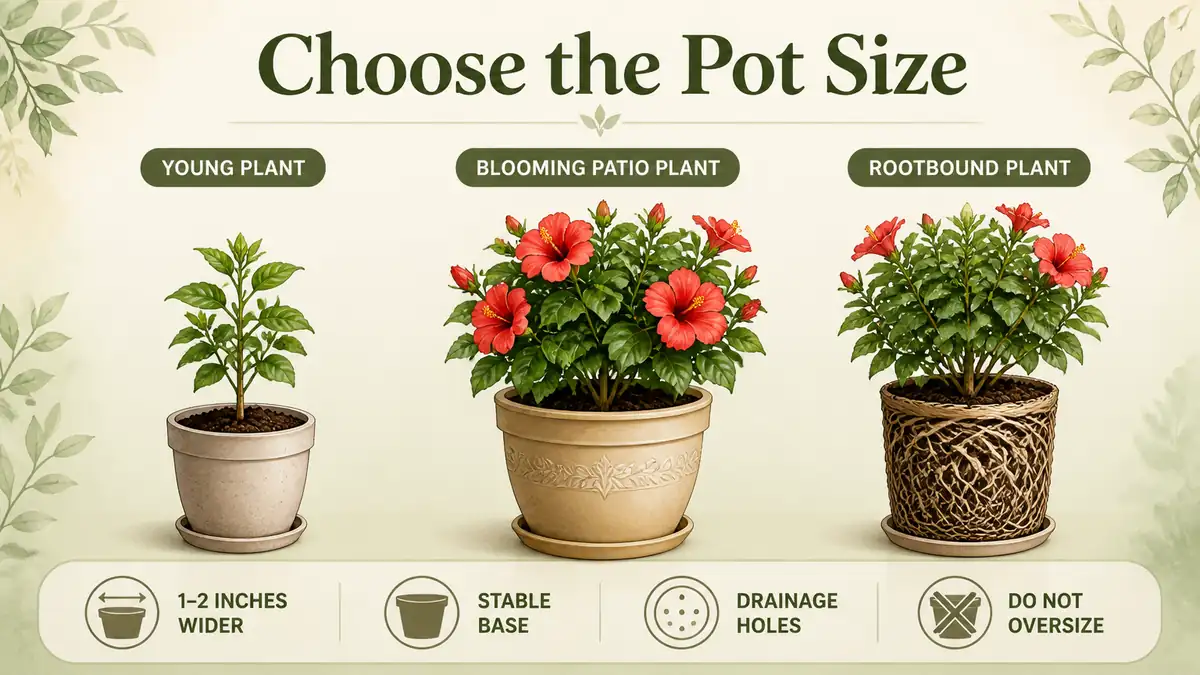
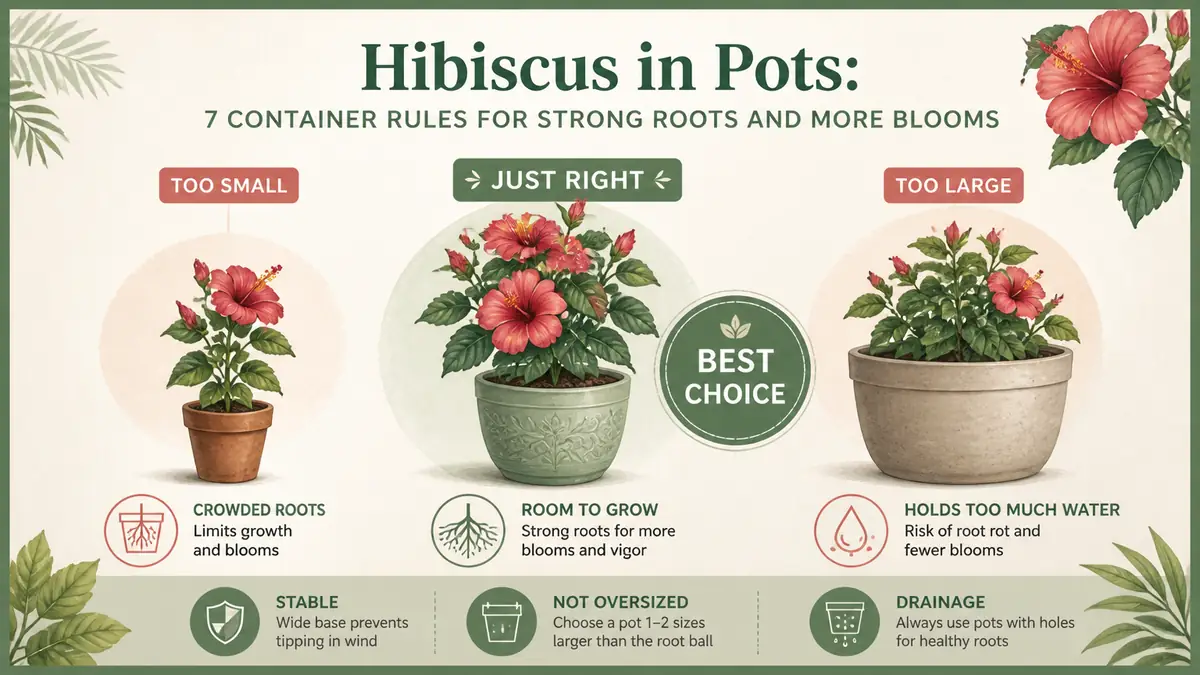
A good hibiscus pot is wide enough to steady the top growth but not so large that the roots sit in cold, wet mix. Most potted hibiscus problems start when the root zone is either crowded and dry or oversized and soggy.
For an actively growing tropical hibiscus, move up only one pot size when roots circle the outside of the root ball. A 1 to 2 inch increase in diameter is usually safer than jumping into a very large decorative container.
For patio plants with several woody stems, a 12 to 16 inch pot often works for young plants. Larger, mature tropical hibiscus may need 18 inches or more, but the drainage and soil mix become more important as pot size increases.
Hardy hibiscus and Rose of Sharon need more root room if they are kept long term in containers. Use a broad, heavy pot and expect more watering in summer. In cold-winter climates, remember that roots in pots are more exposed than roots in the ground.
Container material matters too. Terracotta breathes and dries faster, which can help in cool or damp weather but may require very frequent watering in July heat. Plastic nursery pots are light and easy to move, but they can tip when a hibiscus becomes top-heavy. Glazed ceramic pots hold moisture longer and add weight, but drainage holes must remain open.
If you use a decorative outer pot, treat it as a sleeve rather than a water reservoir.
- Check pot weight: if wind tips the plant, choose a heavier pot or place the nursery pot inside a weighted cachepot.
- Check root crowding: slide the root ball out. Repot if roots circle densely or water runs around the root ball instead of soaking in.
- Check container heat: touch the outside of the pot in late afternoon. If it is hot enough to be uncomfortable, roots may be heating too.
- Know when to wait: do not repot a stressed plant during a heat wave unless the pot is failing to drain or the roots are severely bound.
If the plant is blooming well and the root ball absorbs water evenly, you can wait. Hibiscus often blooms better when slightly snug than when moved into a large, wet pot.
When you do repot, water the plant a few hours beforehand so the root ball is moist but not muddy. Loosen only the outer circling roots, set the crown at the same depth it was growing before, and fill around the sides with fresh mix. Do not bury the woody stem deeper to “support” the plant; use a heavier pot or a stake if it needs temporary support.
2. Use Drainage Holes and Skip Standing Water
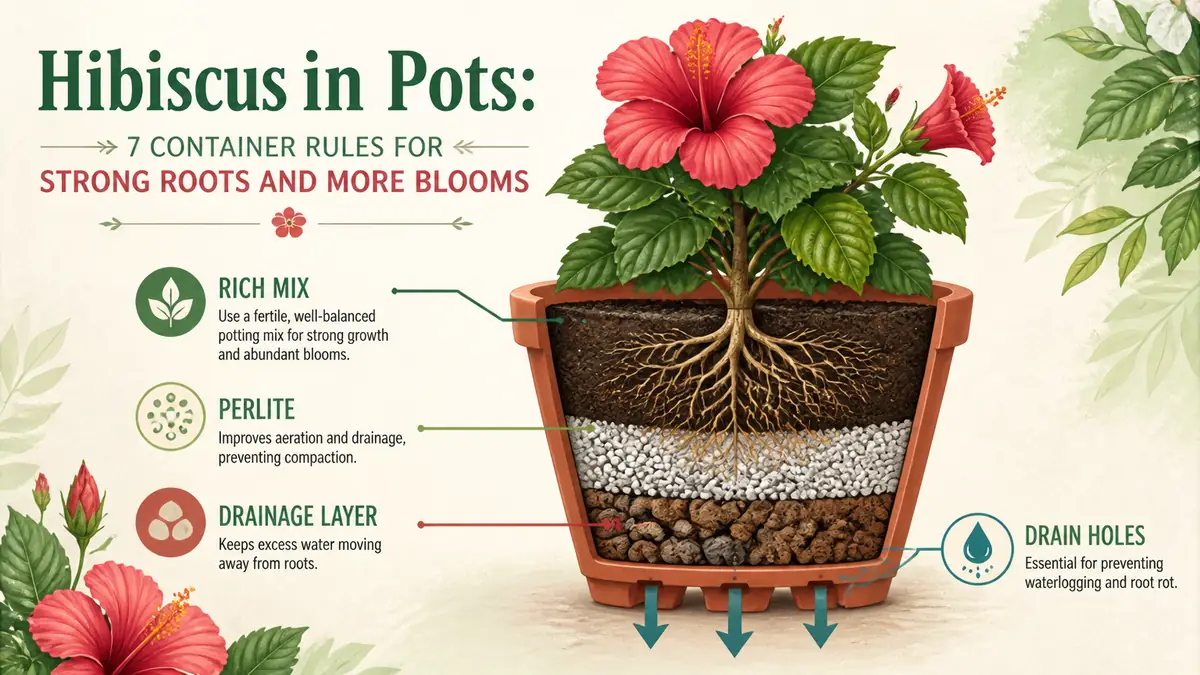
Every hibiscus container needs drainage holes. This is not optional for tropical hibiscus, hardy hibiscus, or Rose of Sharon. Rich, moist soil is helpful; stagnant water around roots is not.
Water should flow from the bottom after a thorough watering. If it does not, the holes may be blocked, the mix may be compacted, or the root ball may be so dense that water cannot move through evenly.
After watering, empty the saucer within 10 to 20 minutes. A short drain period is fine. Standing water that remains under the pot can suffocate roots and trigger yellow leaves, leaf drop, or sour-smelling soil.
Decorative outer pots can hide the problem. If your hibiscus sits inside a cachepot, lift the inner pot after watering and pour out trapped water. Do this especially after rain.
Fast drainage test: water until the surface is evenly wet. If no water exits the pot within a minute or two, pause and inspect the drainage holes. If the top puddles and the pot feels heavy for days, the mix likely needs more air.
If drainage holes are covered by a flat patio surface, lift the pot slightly with pot feet, bricks, or a plant caddy so water can escape. Do not rely on a layer of gravel at the bottom of a sealed pot. Gravel does not replace a drainage hole, and it can leave the lower soil wetter by reducing the usable root volume.
Rain is another common cause of hidden waterlogging. A hibiscus can be watered correctly by hand, then sit through two days of storms with the saucer full. After heavy rain, tilt the pot, check the saucer, and feel the lower root zone before watering again. The goal is moisture moving through the pot, not moisture trapped under it.
If leaves are yellowing, drainage is only one possible cause. Abrupt changes in water, light, temperature, or indoor conditions can also cause yellow leaves. Use our hibiscus yellow leaves guide if the problem continues after the root zone is corrected.
3. Fill the Pot With Rich Mix That Still Drains
Potted hibiscus likes a fertile, moisture-holding mix, but it still needs oxygen around the roots. Garden soil is usually too dense for containers. It compacts, drains poorly, and can stay wet below the surface.
Start with a quality potting mix, then adjust it if needed. If the mix feels heavy, add perlite, fine bark, or another container-safe aeration material. The goal is a mix that holds moisture but does not become muddy.
Use the finger check before watering. Push a finger into the top inch of soil. If the top inch is dry and the pot feels lighter, water. If the top is dry but the pot is still heavy, check deeper before adding more.
In large containers, the lower root zone can stay wet while the top looks dry. A wooden chopstick or moisture meter can help you compare the top 2 inches with the lower half of the pot.
A good mix should rewet without fighting you. If water runs down the inside wall and exits immediately while the center stays dry, the root ball may have pulled away from the pot or become hydrophobic. In that case, water slowly in several rounds, letting each pass soak in before adding more.
For a severely dry root ball, set the nursery pot in a shallow tub of water for a short soak, then let it drain fully.
| Soil sign | Likely problem | Correction |
|---|---|---|
| Water beads on the surface | Dry, hydrophobic mix | Water slowly in rounds until the root ball rehydrates |
| Mix smells sour | Too wet and low oxygen | Improve drainage and reduce watering frequency |
| Pot dries every few hours | Rootbound plant or undersized pot | Repot one size larger after the heat stress passes |
| Lower soil stays wet for days | Oversized pot or dense mix | Add aeration or repot into a better-draining mix |
Do not add uncomposted kitchen scraps, heavy clay soil, or thick layers of mulch into the potting mix. Organic matter is useful when it is part of a stable container blend, but dense or decomposing material can rob oxygen from the root zone. If you mulch the surface to reduce summer drying, keep the layer thin and leave a small gap around the main stems.
Some links are affiliate links. As an Amazon Associate I earn from qualifying purchases at no extra cost to you.
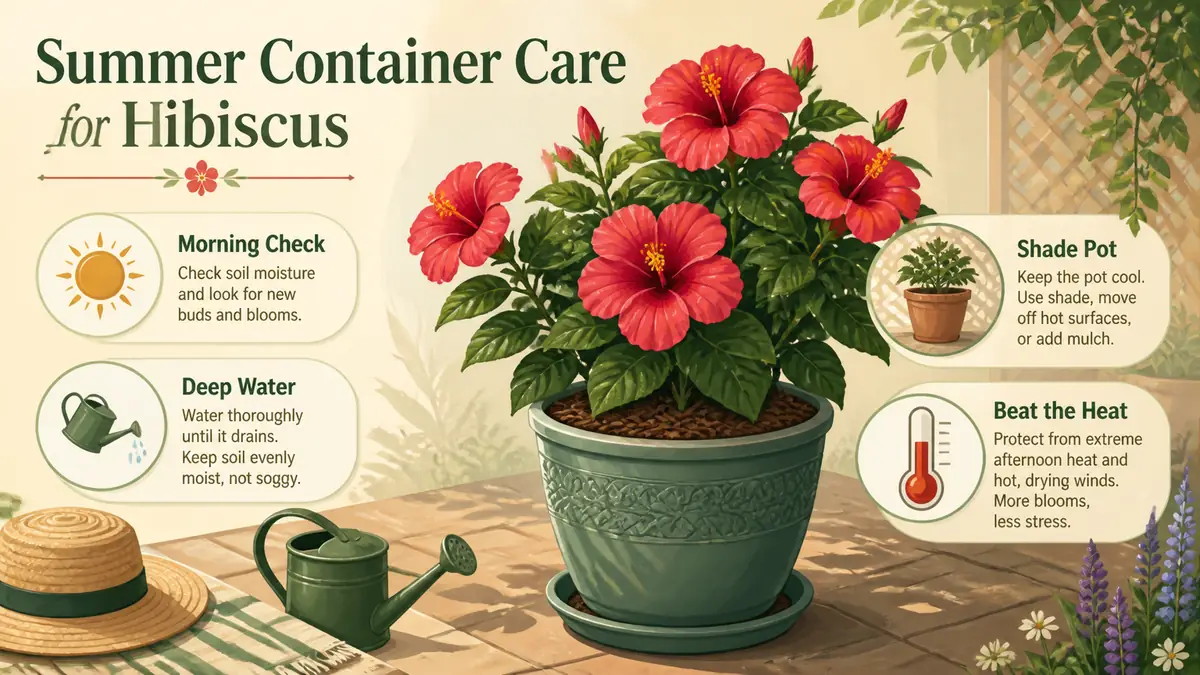
4. Water Deeply During Heat, Then Let Excess Drain
Hibiscus in pots often needs more frequent watering than hibiscus in the ground. Containers heat quickly, roots have less soil volume, and large leaves lose moisture fast in sun and wind.
Water deeply until water drains from the bottom. Shallow sips wet only the top layer and leave the inner root ball dry. After watering, let excess drain away instead of letting the pot sit in a full saucer.
During hot summer weather, check potted tropical hibiscus daily. In a small black nursery pot on a sunny patio, it may need water every day. In a larger glazed pot with afternoon shade, it may need less.
Use three checks together rather than a fixed calendar:
- Top-inch check: water when the top inch is dry or nearly dry.
- Pot-weight check: lift or tilt the pot. A dry pot feels noticeably lighter.
- Root-zone check: in large pots, check several inches down before watering again.
Bud drop can happen when a hibiscus swings from very dry to very wet. Try to keep the root ball consistently moist during active growth, especially when buds are forming.
Hardy hibiscus prefers consistent moisture and can tolerate wetter soil than tropical hibiscus, but a container still needs oxygen. Rose of Sharon is more drought tolerant once established, yet potted shrubs still need regular watering in heat.
Morning is the safest time to water because the plant enters the hottest part of the day with a hydrated root ball. Evening watering can work in hot weather if the pot is genuinely dry, but avoid repeatedly leaving the plant cold and wet overnight in spring or fall. Indoors, always check the lower soil first; warm rooms can dry leaves while the root zone remains wet.
If the plant wilts at noon but the pot is still moist, do not automatically add more water. A temporary afternoon wilt can happen when heat and sun exceed the plant’s ability to move water through its leaves. Move the pot out of reflected heat, shade the container, and check again in the evening. If the leaves recover as temperatures drop, the problem was heat load, not necessarily dry soil.
Helpful in large decorative containers where lower soil stays wet longer.
5. Feed Potted Hibiscus During Active Growth
Potted hibiscus needs fertilizer because nutrients wash out of containers. Feed during active growth, not when the plant is cold, dormant, newly stressed, or adjusting to a move indoors.
For tropical hibiscus outdoors in summer, a balanced fertilizer at half strength every 2 to 3 weeks is a practical rhythm. Some growers use monthly feeding, especially with stronger products. Always follow the label and adjust to plant response.
Stop or reduce feeding as growth slows in fall. Indoors in winter, feed much less often or not at all unless the plant is actively growing in strong light.
Do not try to force blooms with extra fertilizer if light, water, or temperature is wrong. Overfeeding a stressed container plant can burn roots and worsen leaf drop.
Apply fertilizer to moist soil, not a bone-dry root ball. If the plant needs water and fertilizer, water lightly first or use a diluted liquid feed as part of a thorough watering, then allow the pot to drain. Salt buildup is more likely in containers than in garden beds, so occasional plain-water flushing can help when the plant is actively growing and the pot drains well.
| Season | Tropical hibiscus in pots | Hardy hibiscus or Rose of Sharon in pots |
|---|---|---|
| Spring | Resume feeding after new growth begins | Feed after growth starts, not while dormant |
| Summer | Feed lightly but regularly during active growth | Use moderate feeding; avoid pushing weak, lush stems |
| Fall | Reduce or stop as nights cool | Stop feeding before dormancy |
| Winter | Little to none unless warm and actively growing | No feeding while dormant outdoors |
If your hibiscus has healthy leaves but few flowers, fertilizer may not be the main issue. Check sun exposure, pruning timing, pot size, and heat stress. For a deeper troubleshooting path, see why hibiscus is not blooming.
6. Place Containers for Sun Without Sudden Scorch
Most hibiscus blooms best with strong light. Tropical hibiscus grown indoors needs very bright light, and outdoor summer plants usually flower best with several hours of direct sun.
The mistake is moving a sheltered plant straight into harsh sun. Leaves formed indoors or in shade can scorch when suddenly placed on a hot patio. Acclimate in stages instead.
- Start with a porch, bright shade, or morning sun for a few days.
- Move to filtered sun or longer morning sun.
- Gradually increase to brighter sun if the leaves stay firm and unburned.
In very hot climates, morning sun with light afternoon shade can be better than all-day reflected heat. Brick walls, concrete, and dark pots can raise root-zone temperatures quickly.
Check the pot surface in late afternoon. If the container is hot to the touch and the plant wilts even when moist, move it away from reflected heat or shade the pot itself.
Full sun and good air circulation help hardy hibiscus flower and support stronger stems. Rose of Sharon also flowers best in good sun, but a large container may need protection from drying winds.
Indoors, “bright” should mean more than a room that feels pleasant to people. A tropical hibiscus near a south or west window usually performs better than one across the room from the glass. If stems stretch, leaves thin out, or buds yellow and drop after the plant comes inside, low light is often part of the problem. A grow light can help, but stable watering and pest checks still matter.
Rotate patio containers occasionally so growth stays balanced, especially if one side faces a wall or railing. If the plant leans toward light, turn it gradually rather than making a dramatic move from shade to full sun. Any major location change is easier when done in steps over several days.
7. Plan the Winter Move Before Nights Cool Down
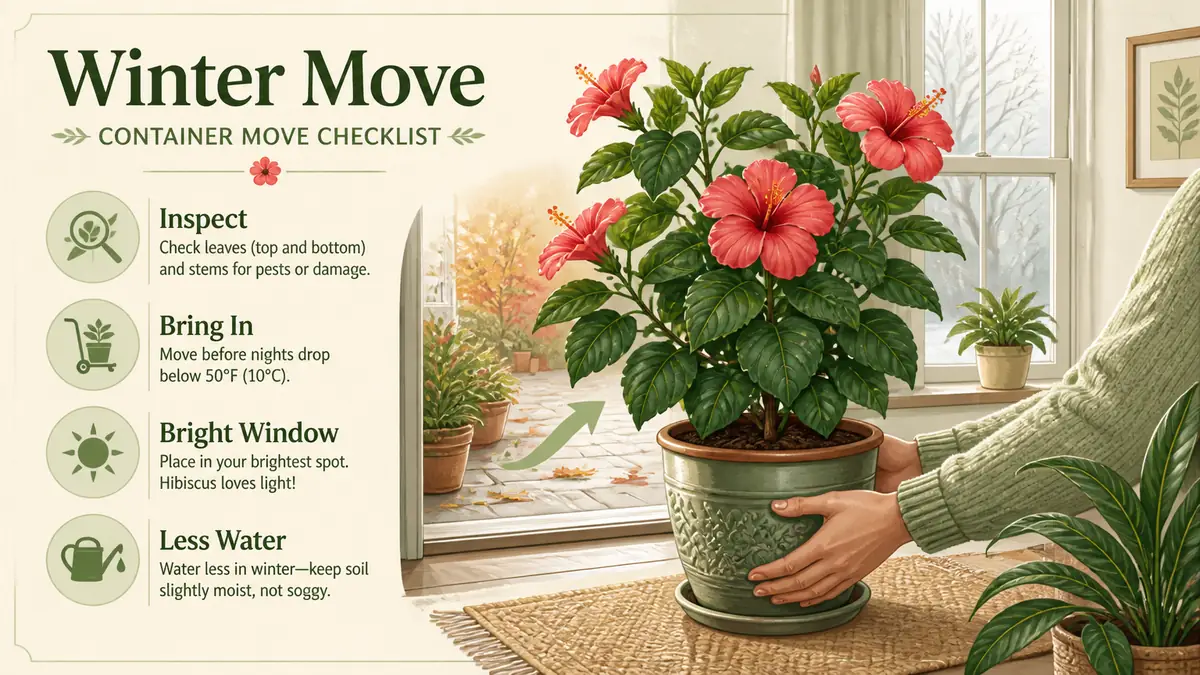
Plan winter care before nights regularly drop into the mid-to-low 50s F. Tropical hibiscus is tender and should not be treated like a hardy perennial in a pot.
Before bringing a tropical hibiscus indoors, inspect stems, leaf undersides, and branch joints. Watch for aphids, whiteflies, scale, mealybugs, and spider mites. Treat problems outside when possible before the plant enters your home.
Move the plant gradually if you can. Just as outdoor moves should be staged from shade to sun, fall moves are easier when you reverse the process before cold nights arrive.
Indoors, place tropical hibiscus in the brightest light available. A south or west window is often better than a dim room. Blooming indoors usually requires very bright light and stable conditions.
Water less in winter because growth slows and indoor light is weaker. Keep the root ball slightly moist, not saturated. If the plant drops leaves and rests semi-dormant, water sparingly to keep roots alive.
Do not fertilize a dormant or semi-dormant tropical hibiscus. Resume feeding only after you see active new growth in brighter spring conditions.
Hardy hibiscus in a pot can overwinter outdoors in suitable climates, but the container exposes roots to colder temperatures than garden soil. In marginal zones, protect the pot, move it to a sheltered spot, or sink the pot into the ground.
Rose of Sharon is woody and normally stays outdoors for dormancy. In a container, protect the root zone from freeze-thaw cycles and drying winter winds.
A good fall routine is to inspect first, rinse or treat pests if needed, reduce feeding, then move the plant to a brighter but more protected spot before the final indoor move. Expect some leaf yellowing after the transition. The goal is not to keep every summer leaf; it is to keep the plant alive, pest-managed, and ready to resume stronger growth when light improves.
If you overwinter a tropical hibiscus semi-dormant in a cool space, keep it on the dry side without letting the root ball become dust-dry. Check every couple of weeks by weight and by touch. A leafless plant uses far less water than a leafy plant in a warm sunny window, so the watering rhythm must change with the plant’s condition.
Pruning and Cuttings for Potted Hibiscus
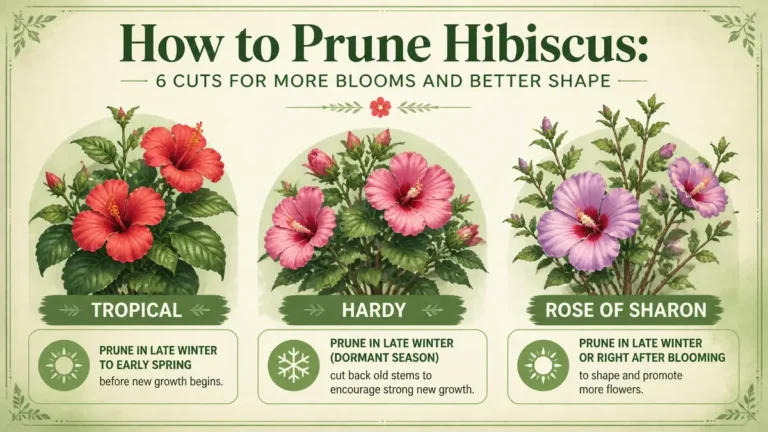
Pruning timing depends on type. Tropical hibiscus is commonly pruned in late winter or early spring before strong new growth. Hardy hibiscus stems can be cut back near the ground after frost because flowers form on new growth.
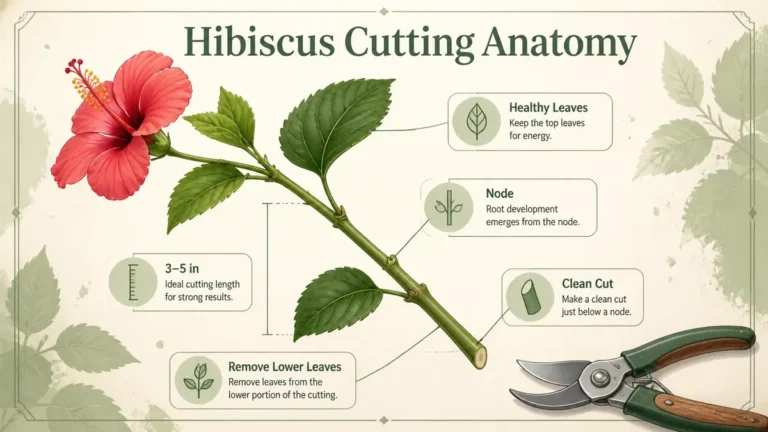
For tropical hibiscus, remove dead, thin, or crossing stems first. To shape the plant, cut just above a leaf node that faces the direction you want new growth to go. Leave a small stub rather than cutting into the node.
A practical cut is about 1/4 inch above a node. Use clean pruners. Avoid heavy pruning right before moving the plant indoors unless you must reduce size or remove pest-heavy growth.
If you want cuttings, take 3 to 5 inch pieces from healthy tropical hibiscus growth. Remove lower leaves, keep humidity around the cutting, and provide warmth. Rooting commonly takes about 3 to 5 weeks, though conditions can change the timeline.
Wait to prune a stressed, recently repotted, or leaf-dropping plant unless you are removing dead growth. Stabilize light, water, and temperature first.
For potted tropical hibiscus, pruning is also a way to manage balance. A plant with long bare stems and heavy outer growth catches wind and dries unevenly. Light shaping in the right season can encourage a bushier framework that fits the container better. Do not remove all green growth at once from a weak plant; staged pruning is safer when the plant is recovering.
For broader seasonal care beyond containers, use our main hibiscus care guide. For indoor winter choices, see how to overwinter hibiscus.
Potted Hibiscus Troubleshooting
| Symptom | Most common container causes | What to do first |
|---|---|---|
| Yellow leaves | Water swings, standing water, low light, temperature shock | Check drainage, root-zone moisture, and recent location changes |
| Bud drop | Dry root ball, sudden move, drafts, heat stress, low light | Stabilize watering and avoid abrupt sun or indoor changes |
| No blooms | Too little sun, excess nitrogen, pruning at the wrong time | Increase light gradually and review feeding |
| Wilting in wet soil | Root stress from poor drainage or low oxygen | Stop watering, drain the pot, and inspect roots if decline continues |
| Sticky leaves | Aphids, whiteflies, scale, or mealybugs | Inspect undersides and stem joints before bringing indoors |
One symptom can have more than one cause. The fastest way to avoid wrong fixes is to check the root zone, recent weather, and any recent move before adding fertilizer or repotting.
If the plant declines quickly, look for combinations rather than one perfect answer. For example, a tropical hibiscus moved from a greenhouse to a sunny patio may have sun stress, a small nursery pot, and a dry root ball all at once. A plant brought indoors in fall may have lower light, warmer dry air, and hidden pests.
Fix the most urgent root-zone issue first, then stabilize the location before making additional changes.
FAQ
- Do hibiscus grow well in pots?
- Yes. Tropical hibiscus is especially common in patio pots because it can be moved indoors before cold weather. Hardy hibiscus and Rose of Sharon can also grow in containers, but they need larger pots and a winter root-protection plan in cold climates.
- How often should I water hibiscus in pots?
- Water when the top inch is dry or nearly dry, then water deeply until excess drains out. In hot summer sun, this may be daily. In cool weather or indoors, it may be much less often. Always check pot weight and lower soil moisture.
- Can potted hibiscus take full sun?
- Most hibiscus flowers best in strong light, but move plants into full sun gradually. A plant grown indoors or in shade can scorch if placed suddenly on a hot patio. In very hot climates, morning sun and light afternoon shade can work better.
- What size pot does hibiscus need?
- Use a pot that is stable and only slightly larger than the root ball. When repotting tropical hibiscus, moving up 1 to 2 inches in diameter is usually enough. Larger hardy hibiscus and Rose of Sharon need broader, heavier containers for long-term growth.
- Why is my potted hibiscus dropping buds?
- Bud drop often follows water swings, sudden temperature changes, drafts, low light, or abrupt moves. In pots, the most common triggers are a dry root ball during heat or a fast move from indoors to harsh sun.
- Should I bring my potted hibiscus indoors for winter?
- Bring tropical hibiscus indoors before cold nights become regular, especially when nights move into the mid-to-low 50s F. Hardy hibiscus and Rose of Sharon usually stay outdoors, but their containers may need protection from root freezing.
- Should I prune hibiscus before or after winter?
- Prune tropical hibiscus in late winter or early spring for bushier growth. Cut just above a leaf node. Hardy hibiscus stems can be cut back to a few inches after frost because new shoots return from the crown in spring.
Decorative Pot Warning: Drainage Comes First
A decorative outer pot is fine if the hibiscus sits in a nursery pot that drains freely and you empty extra water after watering. A sealed decorative pot with no drainage is a root-stress trap.
If yellow leaves appear after moving to a prettier container, lift the inner pot and check for standing water before adding fertilizer or changing light.
Source note: This article checks its hibiscus care and safety claims against University of Minnesota Extension: Hibiscus, RHS: Hibiscus rosa-sinensis growing guide, University of Maryland Extension: Overwintering Tropical Plants, Illinois Extension: Tropical Hibiscus. Generated visuals are educational illustrations, not proof photos or fake testing results.
More Hibiscus Guides
Use the focused hibiscus guide that matches what you see. This keeps the care hub from becoming a guessing game.
Hibiscus Pot Size Chart
| Plant stage | Pot move | Avoid |
|---|---|---|
| Young plant | Move up only 1-2 inches wider than the root ball | A huge decorative pot full of wet soil |
| Blooming patio plant | Choose a heavier stable container with drainage | Light top-heavy pots that tip in wind |
| Rootbound plant | Repot after watering stress becomes frequent or roots circle heavily | Repotting during severe heat or bloom stress if avoidable |
Terracotta, Plastic, Ceramic, or Cachepot?
Terracotta dries faster and can help heavy-handed waterers. Plastic holds moisture longer and is lighter. Glazed ceramic can be stable, but drainage still matters. A cachepot is fine only if the inner pot drains and you empty standing water.