Hibiscus cuttings root best from healthy new growth with nodes, warm conditions, bright indirect light, and steady humidity. Soil or light propagation mix is usually the safer long-term method; water rooting is useful for visibility but needs a careful pot-up.
Hibiscus Propagation Method Picker
| Method | Best use | Read next |
|---|---|---|
| Soil/light mix cuttings | Best all-around method | soil rooting |
| Water rooting | Best for watching roots, weaker transition risk | water rooting |
| Hardy hibiscus division | Only when plant size and season allow it | division |
| Failed cuttings | Diagnose rot, wilt, no roots, or weak stem | failure fixes |
Soil rooting is the most reliable method for strong long-term roots. Water rooting is useful when you want to watch root growth, but those roots need careful potting because they are more fragile than roots formed in mix.
The main goal is not just getting a cutting to show roots. The goal is getting a young hibiscus that keeps growing after it is potted up. That means choosing the right stem, keeping one node in contact with moisture and oxygen, preventing leaf water loss, and waiting until the root system is strong enough before you move it.
Start by identifying your hibiscus type. Tropical hibiscus, hardy hibiscus, and Rose of Sharon are all called hibiscus, but they do not behave the same. If you are unsure which one you have, use this tropical vs hardy hibiscus guide before cutting.
| Propagation choice | Best for | Timing | Watch-out |
|---|---|---|---|
| Soil cuttings | Tropical hibiscus, hardy hibiscus, Rose of Sharon | Spring to early summer | Too-wet mix rots the stem. See soil rooting. |
| Water rooting | Checking root progress visually | Warm active growth | Water roots can stall after potting. See water rooting. |
| Division | Hardy perennial hibiscus only | Spring as shoots emerge | Do not divide tropical hibiscus or Rose of Sharon. See division. |
| Restarting failed cuttings | Black stems, wilt, no roots, mold | After fixing the cause | Do not repeat the same setup. See failure fixes. |
Soil cuttings
Water rooting
Division
Restarting failed cuttings
Before you begin, check the parent plant rather than the calendar alone. A good candidate is actively growing, well hydrated, pest-free, and not in the middle of shock from being moved, repotted, chilled, or dried out. If the pot feels feather-light, water the parent plant thoroughly and wait until the next day to take cuttings.
If the plant is sitting in saturated soil, wait until normal moisture returns so you do not start with water-stressed tissue.
Light also matters before propagation. Tropical hibiscus kept indoors in dim conditions often produces soft, stretched stems that wilt quickly after cutting. Give the parent plant the brightest practical position first, such as a strong south or west exposure indoors or a gradual move to brighter outdoor light after nights are warm. A cutting can only use the stored energy and stem quality it already has.
1. Take Healthy Cuttings at the Right Time
The best hibiscus cuttings come from firm, healthy new growth, not weak tips, old woody stems, or flowering shoots. Spring and early summer are usually easiest because the plant is actively growing and has enough warmth to replace lost moisture.
For tropical hibiscus, take cuttings when the plant is pushing fresh growth and nighttime temperatures are safely warm. If the plant has just moved outdoors, wait until it adjusts to brighter light before cutting.
For hardy perennial hibiscus, cuttings root best from firm new shoots in spring or early summer. These plants die back in cold regions and regrow from the crown, so do not take winter stems and expect them to root.
Rose of Sharon is a woody shrub, so treat it more like a shrub cutting than a tender houseplant. Softwood to semi-ripe cuttings in the growing season are usually more cooperative than old woody pieces.
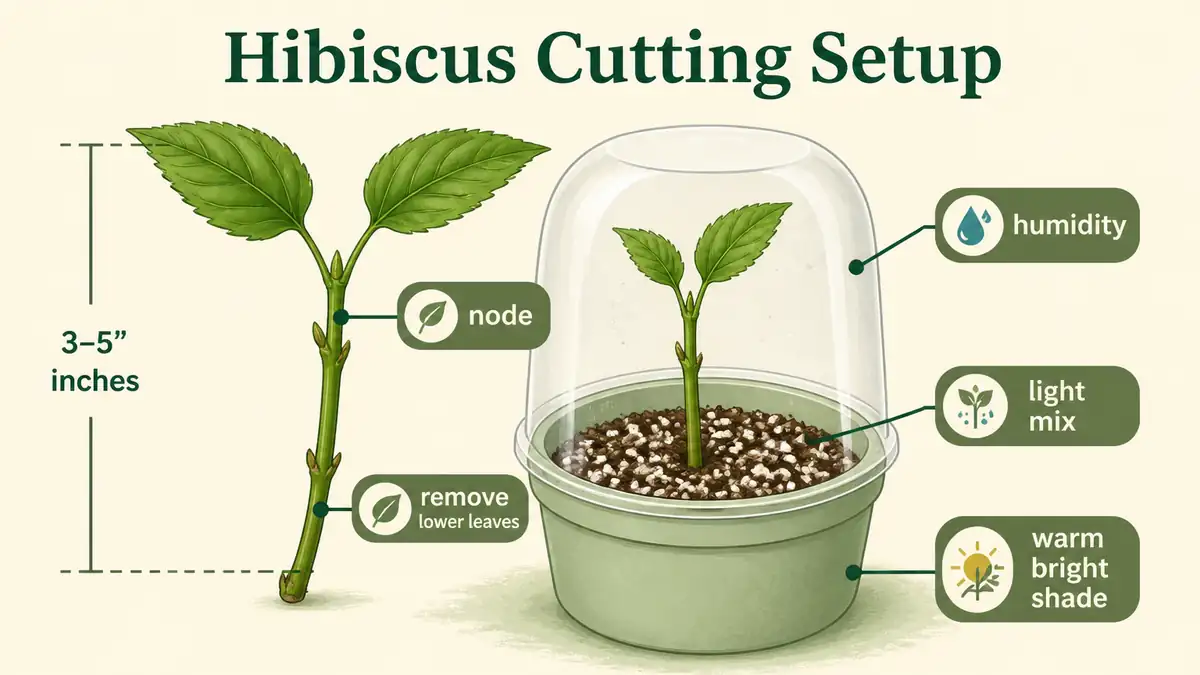
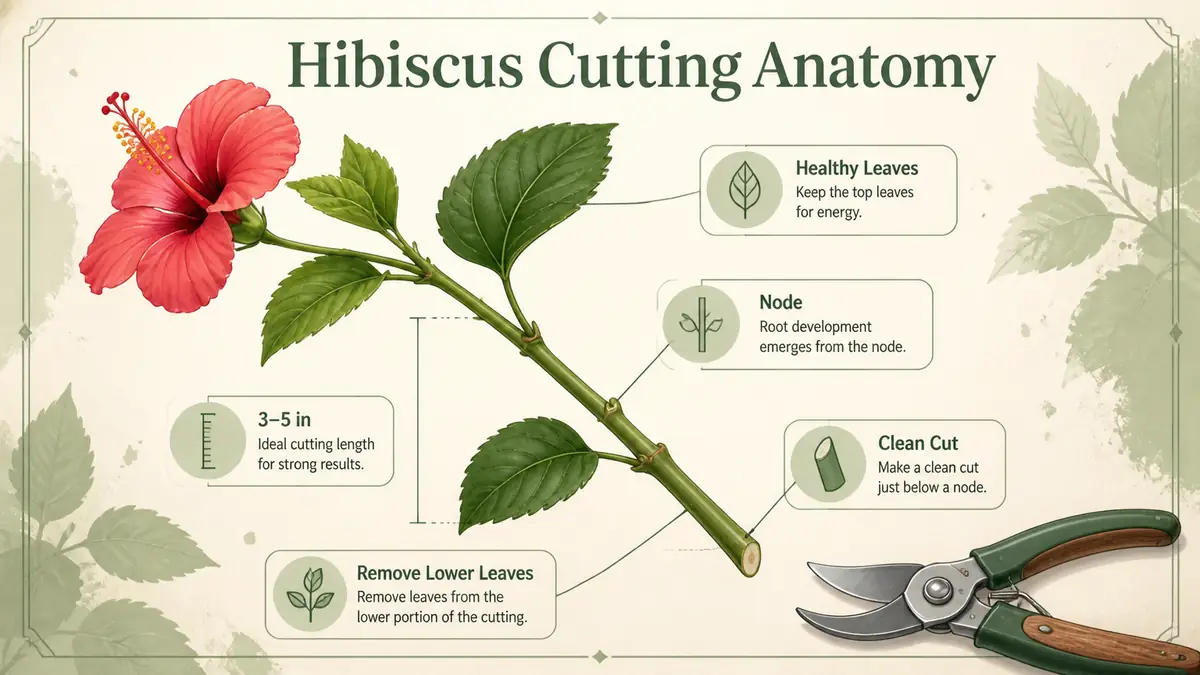
- Cut a stem section about 3 to 6 inches long.
- Choose a cutting with at least two nodes.
- Make the bottom cut just below a node.
- Remove flowers, buds, and the lower leaves.
- Leave one or two small upper leaves, or cut large leaves in half.
- Keep the cutting shaded and moist while you prepare the pot.
A node is the small bump where a leaf joins the stem. Roots form most readily near nodes, so a cutting with buried internode only is more likely to fail.
Use clean bypass pruners or a sharp knife. A crushed stem has more damaged tissue and is more likely to rot before it roots.
Do not take a cutting that is carrying a flower bud and expect it to root as quickly. Buds pull energy and water toward blooming, while the cutting needs those resources for callus and root formation. Pinch off buds and flowers immediately, even if the cutting looks less attractive afterward.
A good cutting feels flexible but not limp. If the tip bends like thread, it is too soft. If the stem is hard, gray, and woody, it may be slower to root. The best middle stage is usually green to slightly firm growth that snaps cleanly when cut and has visible leaf nodes close enough together to bury one node while keeping leaves above the mix.
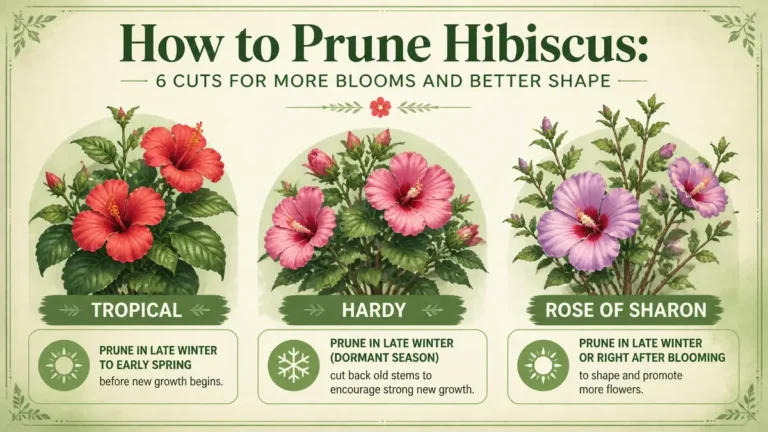
If your plant is leggy or due for shaping, combine propagation with seasonal pruning. For timing and cut placement on established plants, see how to prune hibiscus.
Some links are affiliate links. As an Amazon Associate I earn from qualifying purchases at no extra cost to you.
Useful for clean propagation cuts after you choose a healthy stem.
2. Root Hibiscus Cuttings in a Light Soil Mix
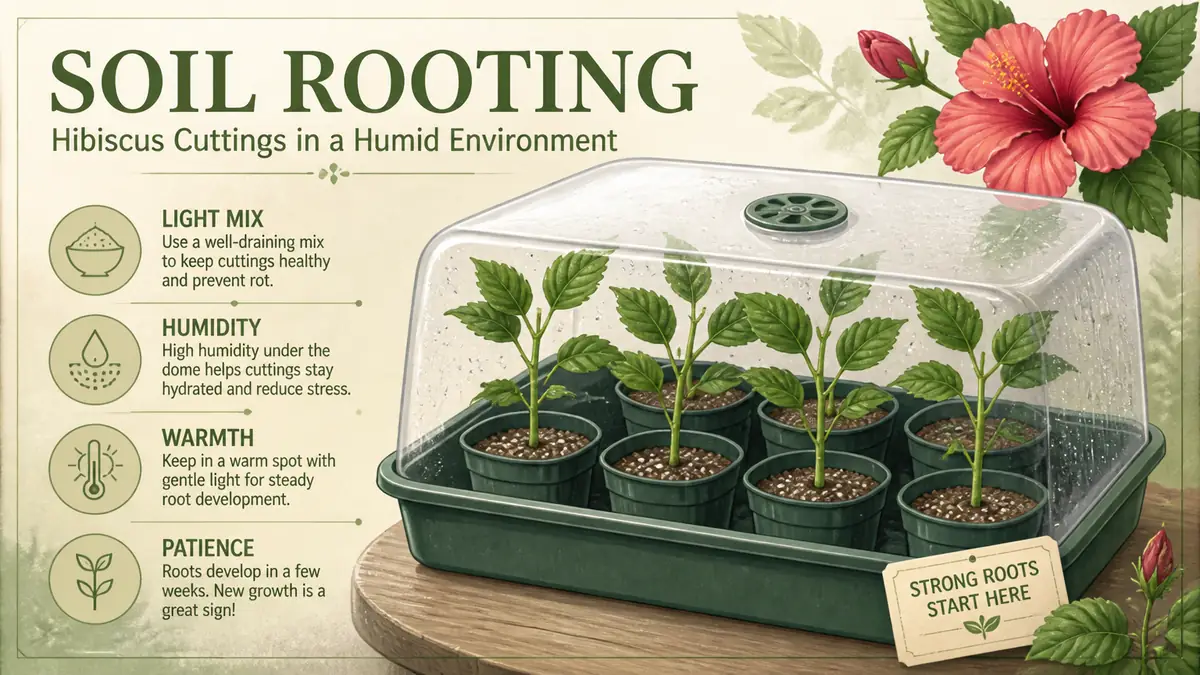
Soil rooting is the best default method for hibiscus propagation because the new roots develop in a medium similar to the one they will keep using. That reduces the shock that can happen when water-rooted cuttings move into potting mix.
Use a small pot with drainage holes. A 3- or 4-inch pot is enough for several short cuttings, or use one small pot per cutting if you want to avoid disturbing roots later.
The rooting mix should stay evenly moist but airy. A good simple mix is half fresh potting mix and half perlite. You can also use seed-starting mix with added perlite if it drains quickly.
- Moisten the mix first, then let excess water drain.
- Poke a hole with a pencil or dibber.
- Insert the cutting so at least one node is below the surface.
- Firm the mix gently around the stem.
- Place the pot in bright indirect light, not harsh midday sun.
- Keep the mix lightly moist, never waterlogged.
Rooting hormone is optional, but it can help slow or woody cuttings. If you use it, dip only the lower node and tap off excess powder. Too much hormone caked on the stem is not better.
Warmth matters. A room that stays around normal warm household temperatures is usually enough for tropical hibiscus. If nights drop cool, rooting slows and rot risk rises.
Use pot weight and the top-inch check together. If the top inch is still moist and the pot still feels heavy, do not water just because the surface looks slightly lighter. If the top inch is barely damp and the pot feels noticeably lighter than it did after watering, add a small amount around the edge of the pot so the mix rehydrates without flooding the stem.
Avoid compact garden soil for hibiscus cuttings in containers. Garden soil can hold too much water in a small pot, exclude oxygen, and bring in fungus gnat larvae or disease organisms. Cuttings need moisture, but they also need air around the buried node. That balance is easier in a sterile, lightweight propagation mix.
If you place several cuttings in one pot, space them so leaves do not press tightly together. Crowded leaves trap condensation and make it harder to remove one failed cutting without disturbing the rest. Label the pot with the date and plant type so you know whether you are still within the normal rooting window or dealing with a real delay.
Expect roots in about 3 to 5 weeks when warmth, humidity, and stem quality are right. Some woody or cooler-grown cuttings take longer. Do not tug hard to check; use gentle resistance or look for new growth.
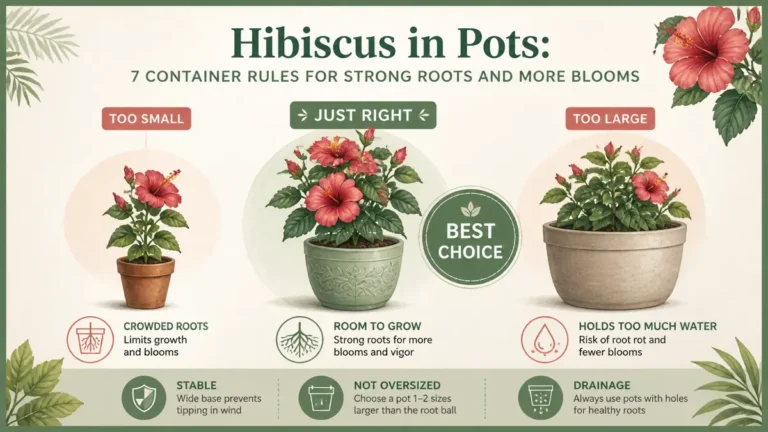
If you are propagating a potted tropical hibiscus, the mother plant also needs strong light and steady moisture while it recovers. For container aftercare, use this guide to growing hibiscus in pots.
Useful for making a lighter rooting mix that holds moisture without staying dense.
3. Use Water Rooting Carefully for Visibility
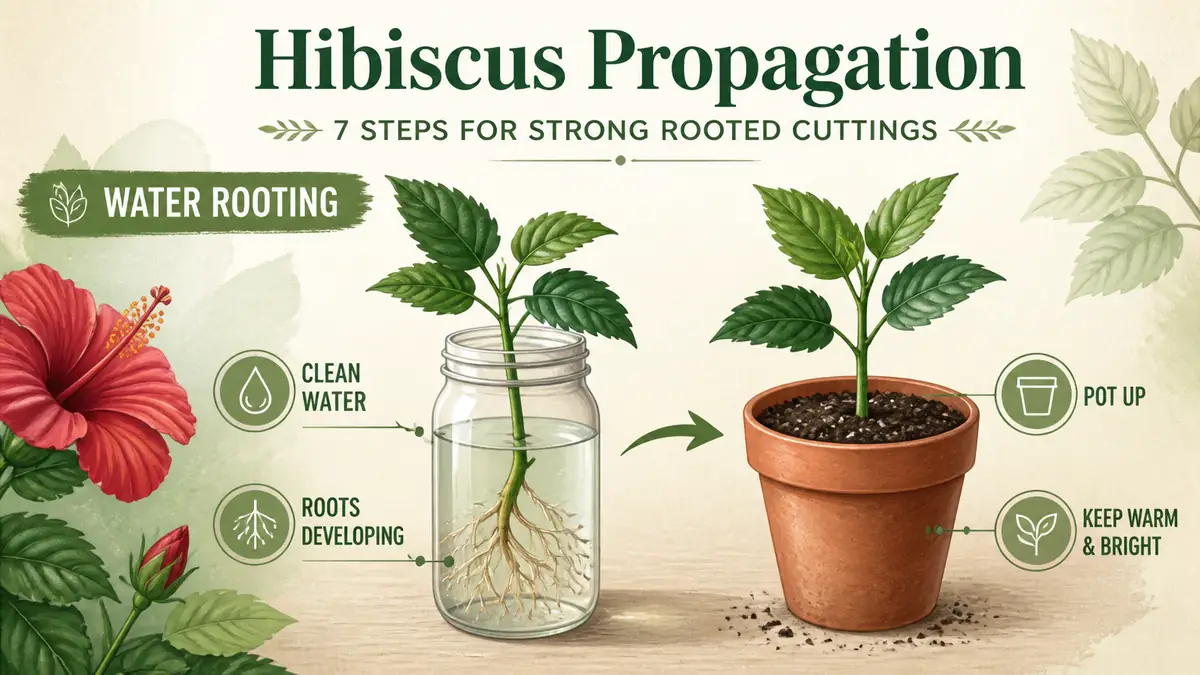
Water rooting hibiscus cuttings can work, especially when you want to see whether roots are forming. It is not always the strongest method because water roots are adapted to water, not potting mix.
Use a clean glass or jar with room-temperature water. Remove any leaves that would sit below the waterline. Place only the lower node in water, not the entire stem.
- Change the water every few days, or sooner if it clouds.
- Keep the jar in bright indirect light.
- Avoid hot windows that cook the water.
- Do not let leaves sit in water.
- Pot up before roots become long, tangled, and brittle.
Move the cutting to mix when roots are about 1 to 2 inches long. Longer roots often break during potting, and the cutting may wilt while it rebuilds soil-adapted roots.
When you pot a water-rooted cutting, use a small pot and pre-moistened light mix. Make a hole first, lower the roots in carefully, then firm the mix just enough to remove air pockets.
After potting, keep humidity high for several days and keep the mix evenly moist. Do not put a newly potted water-rooted cutting straight into full sun.
If the water smells sour, turns cloudy quickly, or the stem base becomes brown and soft, discard that cutting and clean the container before trying again. Simply changing the water may not save a rotting stem. Start with a fresher cutting, fewer leaves, and a cleaner jar.
For best results, treat water rooting as a short observation stage rather than a long-term home. Once roots appear, the cutting should move toward potting mix while those roots are still short and easy to settle. Waiting until the jar is full of roots may look successful, but it often makes the transplant harder.
4. Divide Hardy Hibiscus Only When the Plant Allows It
Division is for hardy perennial hibiscus, such as hardy rose mallow, when the clump is large enough. It is not the right method for tropical hibiscus, and it is not how you propagate Rose of Sharon.
Divide hardy hibiscus in spring, not fall. Wait until new shoots are emerging so you can see living crown sections. Fall division can leave the plant with too little time to re-establish before winter.
Before dividing, check that the plant has multiple growing points. If there is only one crown or a weak clump, wait another year. A division needs roots and shoots, not just a chopped root piece.
- Water the plant the day before dividing.
- Dig widely around the crown to preserve roots.
- Lift the clump and locate natural sections.
- Cut or pull apart divisions with shoots and roots attached.
- Replant at the same depth.
- Keep the root zone consistently moist while it settles.
Hardy hibiscus naturally likes consistently moist, organic soil and full sun to part sun. If the soil dries hard after division, the plant may pause growth or wilt even if the division was done correctly.
After division, do not judge success by same-week top growth alone. A divided hardy hibiscus may pause while roots reestablish. Keep the root zone moist, mulch lightly if the soil dries fast, and avoid strong fertilizer until growth resumes. If a division has shoots but too few roots, reduce stress by keeping it evenly watered and protected from drying wind for the first couple of weeks.
Do not try to divide a tropical hibiscus trunk or a Rose of Sharon shrub as if it were a perennial clump. Those plants are usually propagated from stem cuttings or other woody plant methods. Cutting through the main crown or trunk can permanently damage the plant instead of making usable divisions.
If your main goal is better flowering, division may not be the answer. Light, feeding, pruning timing, and plant type also matter. For broader seasonal care, see the hibiscus care guide.
5. Keep Humidity High Without Rotting the Stem
Fresh hibiscus cuttings lose moisture before they have roots, so humidity is important. The trick is to keep leaves from drying out while preventing stagnant, wet conditions around the stem.
Cover the pot with a clear plastic bag, humidity dome, or clear container. Keep the cover from resting heavily on the leaves by using small sticks, skewers, or a plant label as supports.
Open the cover daily for a few minutes. This air exchange lowers mold risk and lets you check the mix. If water drips constantly from the cover, the setup is probably too wet.
Use the top-inch check for the mix. If the top inch is still moist, wait. If it feels barely damp and the pot feels lighter, water gently around the edge.
Do not root cuttings in full sun under plastic. The cover can trap heat and cook the cutting. Bright indirect light is safer until the cutting has roots and new growth.
A good humidity setup should look slightly moist, not swampy. A light film of condensation in the morning is normal. Heavy droplets running down the sides all day, algae on the mix, or fuzzy growth on fallen leaf pieces means you need more ventilation and less water.
| Humidity problem | What it looks like | Fix |
|---|---|---|
| Too dry | Leaves droop, curl, or crisp | Cover the pot, reduce leaf area, move out of sun |
| Too wet | Black lower stem, sour smell, fuzzy mold | Vent daily, lighten mix, water less often |
| Too hot | Sudden collapse under cover | Move to bright indirect light and remove trapped heat |
Too dry
Too wet
Too hot
If leaves yellow while cuttings root, do not automatically fertilize. Yellowing can come from stress, low light, temperature swings, or moisture changes. For established plants, this hibiscus yellow leaves guide can help separate causes.
6. Pot Up Rooted Cuttings at the Right Stage
Pot up hibiscus cuttings when they have a small but real root system, not just one tiny root nub. A rooted cutting should resist a very gentle lift, show fresh growth, or have visible roots at the drainage holes or cup edge.
For soil-rooted cuttings, wait until roots hold some of the mix together. Moving too early tears new roots. Waiting too long in a tiny rooting cell can dry the cutting too quickly.
Use a small next pot, usually 4 inches for a young cutting. Oversized pots stay wet too long around a small root system, which can slow growth or cause rot.
- Pre-moisten the potting mix.
- Slide the cutting out gently, supporting the root ball.
- Set it at the same depth it rooted.
- Firm lightly, then water until excess drains.
- Keep it in bright indirect light for several days.
- Gradually increase light after it stops wilting.
Do not fertilize immediately after potting. Wait until the cutting shows active new growth. Then use a diluted balanced fertilizer rather than a strong dose on tender roots.
Tropical hibiscus grown indoors needs very bright light to become sturdy after rooting. A south or west exposure is often better than a dim room. Move plants outdoors gradually only after nights are warm.
Hardy hibiscus cuttings should be hardened off before planting outside. Start with shade, then morning sun, then more exposure. Keep the root zone moist while the plant adjusts.
| Stage after rooting | What to do | What to avoid |
|---|---|---|
| First 3 to 5 days after potting | Bright indirect light, steady moisture, light humidity | Full sun, dry mix, strong fertilizer |
| After visible new growth | Begin slightly brighter light and weak feeding | Jumping straight to harsh afternoon sun |
| Before outdoor planting | Harden off gradually over several days | Planting a tender cutting directly into wind and heat |
First 3 to 5 days after potting
After visible new growth
Before outdoor planting
Watch pot weight closely after potting up. A newly rooted cutting in a small pot can dry faster than expected in warm light, but an oversized pot can stay wet at the center for too long. Water thoroughly when needed, let excess drain, and do not leave the pot standing in a saucer of water.
Pinching is optional once the cutting is growing strongly. If the new plant is tall and single-stemmed, pinching the soft tip can encourage branching. Wait until the cutting has recovered and is producing fresh leaves; pinching too early removes energy the young plant still needs.
7. Fix Failed Cuttings Before Starting Over
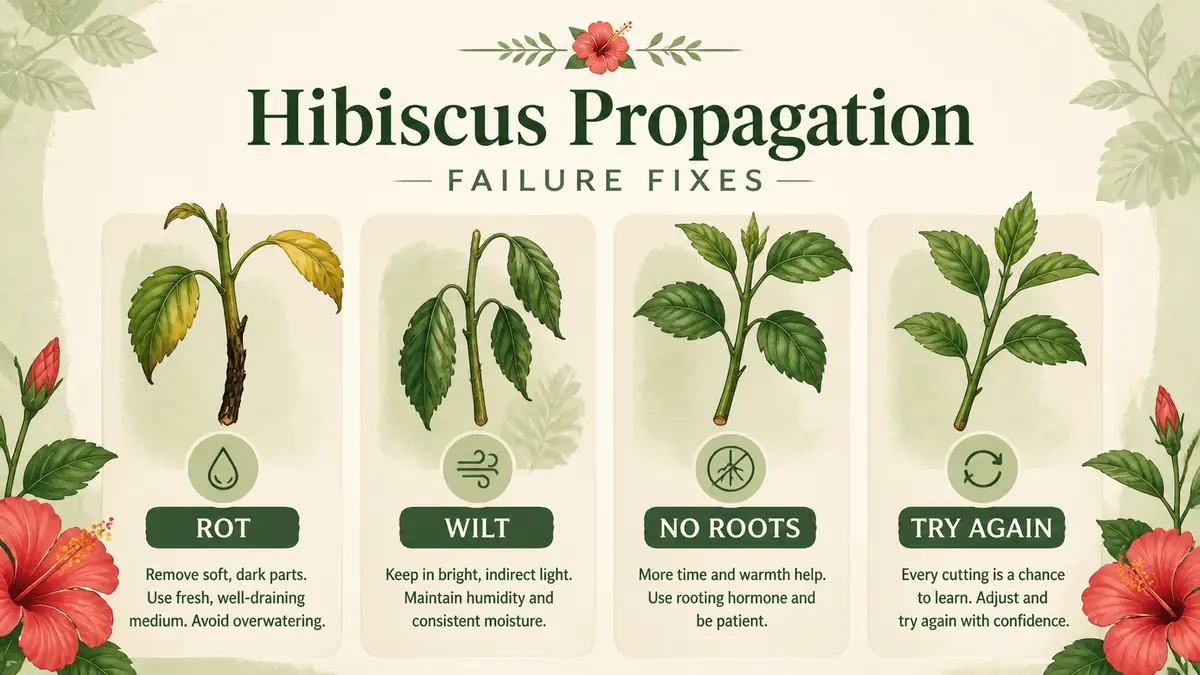
If hibiscus cuttings fail, do not just take more and repeat the same setup. Match the symptom to the cause first. Most failures come from weak stems, too much water, dry air, cold nights, or moving the cutting too soon.
| Symptom | Likely cause | What to change next time |
|---|---|---|
| Black, mushy lower stem | Rot from saturated mix or buried leaves | Use lighter mix, remove lower leaves, vent humidity cover |
| Leaves wilt within a day | Too much leaf area or too little humidity | Cut large leaves in half and cover the pot |
| No roots after 5 weeks | Cold, woody stem, low light, or dormant plant | Try warmer active growth and brighter indirect light |
| Cutting roots, then dies after potting | Moved too early or pot was too large | Wait for stronger roots and pot into a small container |
| Mold on mix surface | Stagnant air and constantly wet surface | Vent daily, water by need, improve drainage |
Black, mushy lower stem
Leaves wilt within a day
No roots after 5 weeks
Cutting roots, then dies after potting
Mold on mix surface
Also check the mother plant. A stressed hibiscus with pests, low light, or irregular watering gives weaker cuttings. Aphids, whiteflies, and other pests can hide on soft new growth.
If the plant recently dropped buds, yellowed, or moved between indoors and outdoors, wait until it stabilizes. Abrupt changes in moisture, temperature, drafts, and light can stress hibiscus before you ever take the cutting.
When starting over, take several cuttings instead of one. Even with good technique, not every hibiscus cutting roots. A small batch gives you better odds without over-pruning the parent plant.
If every cutting fails in the same way, change only one or two variables at a time. For example, switch from dense mix to a perlite-heavy mix, or move the setup from a hot sunny window to bright indirect light. Changing everything at once makes it harder to learn what actually fixed the problem.
Do not reuse a pot of mix that held rotting cuttings. Empty it, wash the pot, and start with fresh medium. Rot organisms and decaying plant tissue can remain in the old mix and attack the next batch before it has a chance to root.
FAQ
Can you propagate hibiscus from cuttings?
Yes. Hibiscus can be propagated from cuttings, especially during active growth. Tropical hibiscus, hardy hibiscus, and Rose of Sharon can root from cuttings, but their timing and aftercare differ.
How long do hibiscus cuttings take to root?
Many hibiscus cuttings root in about 3 to 5 weeks in warm, humid conditions. Cooler temperatures, woody stems, low light, or stressed parent plants can make rooting take longer.
Is it better to root hibiscus cuttings in water or soil?
Soil is usually better for strong long-term roots. Water rooting is useful because you can see root growth, but the cutting may struggle when moved into potting mix if roots are long or fragile.
Where should I cut a hibiscus stem for propagation?
Cut just below a node, which is where a leaf joins the stem. Remove the lower leaves and bury at least one node in the rooting mix or place that node in water.
Can hardy hibiscus be divided?
Yes, hardy perennial hibiscus can be divided in spring when new shoots emerge and the clump has multiple growing points. Do not divide tropical hibiscus or Rose of Sharon the same way.
Why did my hibiscus cutting turn black?
A black lower stem usually means rot. The most common causes are saturated mix, poor air flow, buried leaves, cold conditions, or a humidity cover that stays sealed too tightly.
Why are my hibiscus cuttings wilting?
Wilting usually means the cutting is losing water faster than it can replace it. Reduce leaf area, raise humidity, keep the mix lightly moist, and move the cutting out of direct sun while roots form.
Should I fertilize hibiscus cuttings while they root?
No. Unrooted cuttings cannot use fertilizer well, and strong fertilizer can damage tender tissue. Wait until the cutting has rooted, has been potted up, and is showing new growth before feeding lightly.
When can I plant a rooted hibiscus cutting outside?
Plant outside only after the cutting has a working root system and has been hardened off. Tropical hibiscus should wait until nights are warm. Hardy hibiscus cuttings still need gradual outdoor acclimation.
How to Read Rooting Timelines Honestly
Rooting timelines are ranges, not guarantees. Warmth, stem firmness, cultivar, humidity, and disease pressure all change the result. If a guide claims a fixed day count for every hibiscus, treat that as a warning sign.
Use the timeline as a check-in schedule: look for rot in the first week, gentle resistance after a few weeks, and new growth only after roots are strong enough to support it.
Source note: This article checks its hibiscus care and safety claims against University of Minnesota Extension: Hibiscus, RHS: Hibiscus rosa-sinensis growing guide, Clemson HGIC: Hibiscus, NC State Extension: Hibiscus moscheutos. Generated visuals are educational illustrations, not proof photos or fake testing results.
More Hibiscus Guides
Use the focused hibiscus guide that matches what you see. This keeps the care hub from becoming a guessing game.
Propagation Log Template
Use this as a record, not a fake promise. Fill it in when you actually test cuttings.
| Method | Cuttings started | Rooted | Days to first roots | Notes |
|---|---|---|---|---|
| Light soil mix | ||||
| Water | ||||
| Perlite or propagation mix | ||||
| With rooting hormone |
Light soil mix
Water
Perlite or propagation mix
With rooting hormone
Soil vs. Water Rooting
Soil or a light propagation mix usually gives roots that adapt better to potting mix. Water rooting is useful because you can see roots forming, but the cutting still has to transition into soil without drying out or rotting.