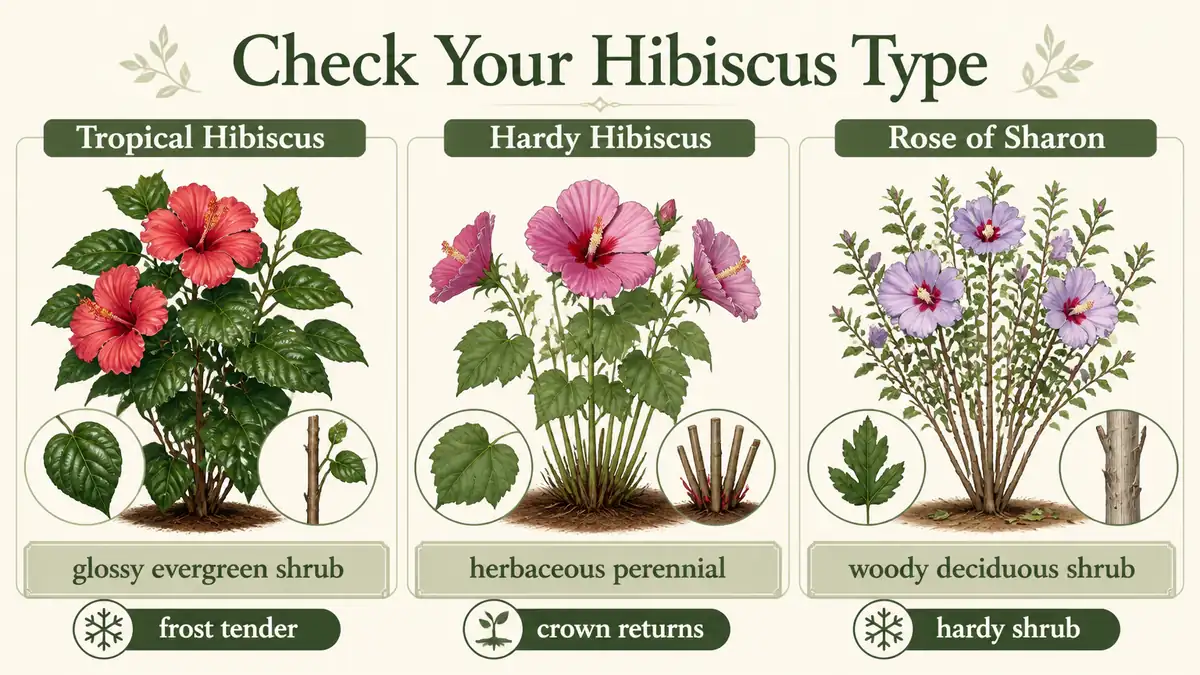
Hibiscus is not one care routine. First identify whether you have tropical hibiscus, hardy hibiscus, or Rose of Sharon, then use the focused guide that matches the plant and problem.
Start Here: Choose the Right Hibiscus Path
| If you need… | Do this first | Full guide |
|---|---|---|
| Not sure what type you have | Compare leaves, stems, winter behavior, and plant tags | identify your hibiscus type |
| Leaves are yellowing | Check the pattern before changing water or fertilizer | diagnose yellow leaves |
| No flowers or buds drop | Separate no buds from buds that form and fall | fix blooming problems |
| Winter is coming | Decide tropical indoor care, cool dormancy, or outdoor hardy care | plan winter care |
What “Hibiscus” Means on Plant Tags
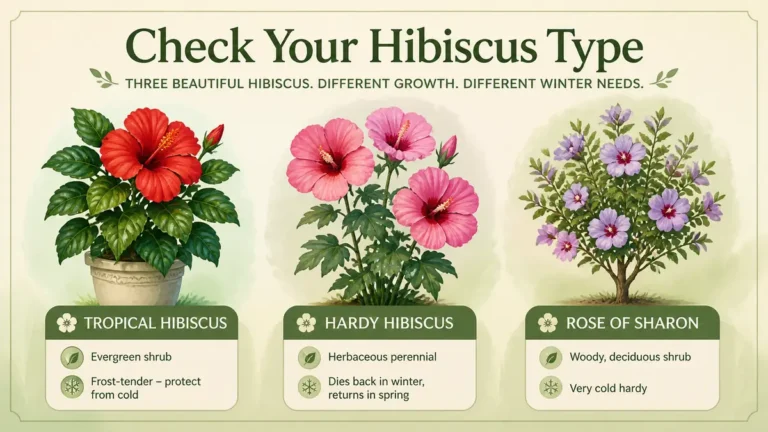
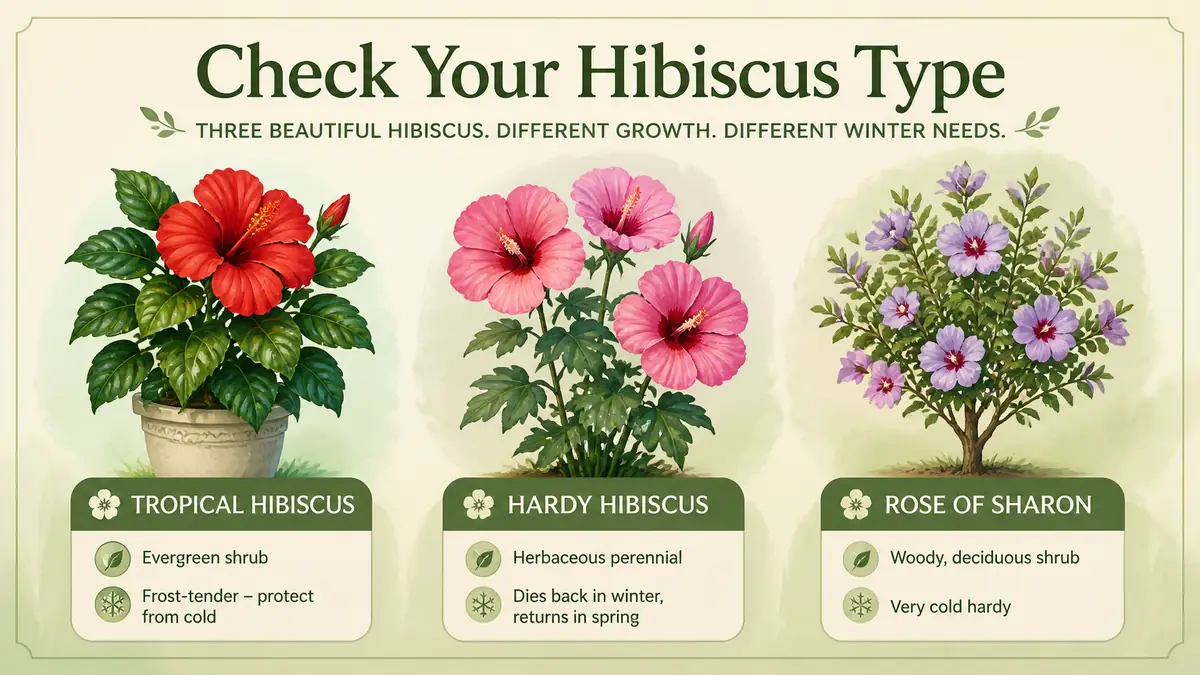
On plant tags and in search results, “hibiscus” can point to several different plants. Tropical hibiscus is usually grown as a warm patio plant or bright indoor overwintering plant. Hardy hibiscus can disappear to the ground in winter and return from the crown. Rose of Sharon is a deciduous woody shrub.
| Plant group | Common clue | Why it matters |
|---|---|---|
| Tropical hibiscus | Glossy leaves, patio pot, tender growth | Bring it indoors before cold nights and avoid winter overwatering. |
| Hardy hibiscus | Huge flowers, herbaceous stems, late spring return | Do not panic when top growth dies back after frost. |
| Rose of Sharon | Woody shrub habit | Prune and place it like a shrub, not a tender houseplant. |
Start Here Before Following Care Advice
If you are trying to fix a plant today, start with the practical hibiscus care guide. If the plant has a visible symptom, use the focused guide below instead of repeating every care step.
Winter Behavior Is the Main Split
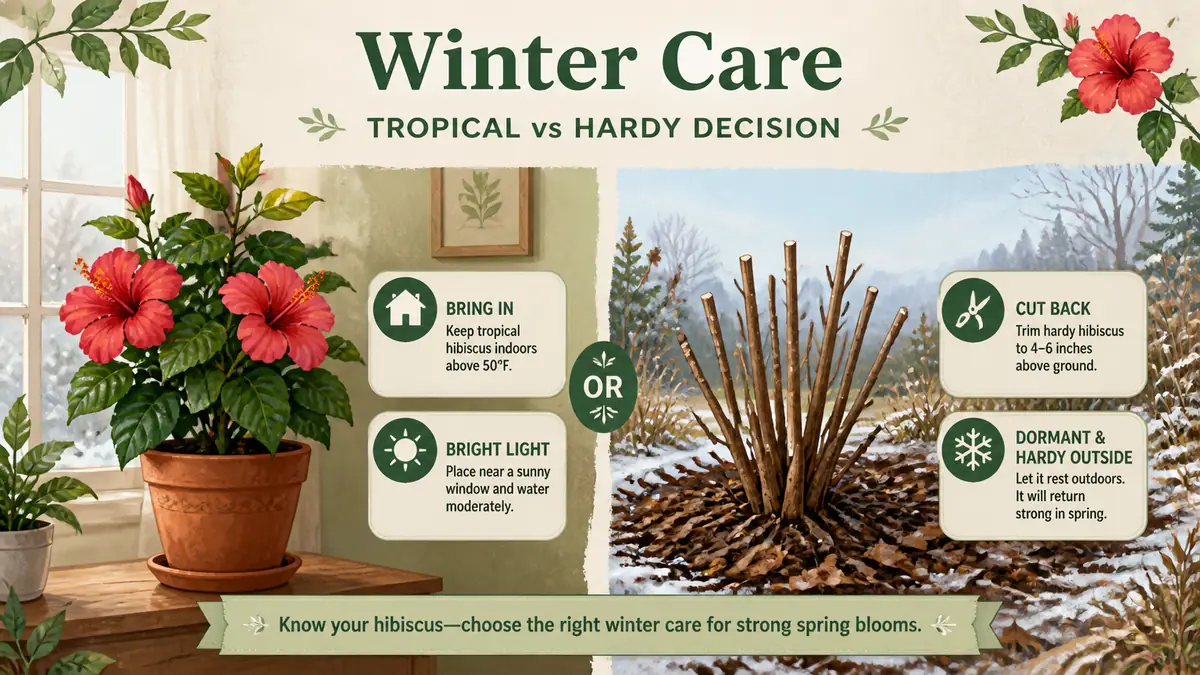
A tropical hibiscus usually needs protection before frost and often before repeated cool nights. Hardy hibiscus and Rose of Sharon behave differently: they can be outdoor landscape plants in suitable zones, but their leaves and stems may still change dramatically with the season.
Source note: This article checks its hibiscus care and safety claims against University of Minnesota Extension: Hibiscus, RHS: Hibiscus rosa-sinensis growing guide, NC State Extension: Hibiscus moscheutos, ASPCA: Hibiscus. Generated visuals are educational illustrations, not proof photos or fake testing results.
More Hibiscus Guides
Use the focused hibiscus guide that matches what you see. This keeps the care hub from becoming a guessing game.
Which Hibiscus Do You Have?
Use this page as the Hibiscus control center. Do not follow pruning, winter, or pot advice until you know whether the plant behaves like a tender tropical hibiscus, a hardy perennial hibiscus, or a woody Rose of Sharon.
| Type | Best clue | Care path |
|---|---|---|
| Tropical hibiscus | Glossy potted patio plant; frost tender | bright light, steady water, winter indoors |
| Hardy hibiscus | Huge blooms; stems die back and return from the crown | outdoor winter care by crown protection |
| Rose of Sharon | Permanent woody shrub with deciduous stems | identify before pruning or winter decisions |
Hibiscus Quick Facts
- Plant group: tropical house/patio plants, hardy perennials, and woody shrubs share the hibiscus name.
- Light: most bloom best with strong light; indoor tropical hibiscus needs the brightest practical window.
- Water: keep actively growing plants evenly moist, but do not leave pots sitting in water.
- Winter: tropical hibiscus needs cold protection; hardy hibiscus and Rose of Sharon usually stay outdoors.
- Pets: ASPCA lists hibiscus as non-toxic to cats and dogs, but plant material or chemicals can still upset pets.
- Best next step: identify the type, then use the focused guide for your exact problem.
Hibiscus FAQ
- Is hibiscus one plant?
- No. The hibiscus name is used for tropical hibiscus, hardy perennial hibiscus, Rose of Sharon, and related plants. Care changes by type.
- Can hibiscus grow indoors?
- Tropical hibiscus can grow indoors if it gets very bright light and stable warmth. Hardy hibiscus and Rose of Sharon are usually outdoor plants.
- Why does type matter so much?
- Winter survival, pruning timing, and container care are different. Treating a tropical hibiscus like a hardy outdoor plant is the fastest way to lose it in cold weather.