Overwintering hibiscus depends on type. Tropical hibiscus must be protected from cold and can overwinter bright or semi-dormant. Hardy hibiscus usually stays outside and returns from the crown. Rose of Sharon is a woody outdoor shrub.
Choose Your Winter Path
| Plant type | Winter move | Read next |
|---|---|---|
| Tropical hibiscus in a pot | Bring indoors before cold nights are routine | bring it in |
| Tropical hibiscus indoors all winter | Choose bright growth or cool semi-dormancy | choose winter mode |
| Hardy hibiscus outdoors | Let top growth die back; protect/mark the crown | confirm type |
| Rose of Sharon | Treat as a hardy woody shrub, not a houseplant | identify the type |
This advice is for potted tropical hibiscus, usually Hibiscus rosa-sinensis. Hardy hibiscus and Rose of Sharon follow different winter rules and should not be handled the same way. A tropical hibiscus is a warm-climate shrub being protected from cold; a hardy hibiscus is a cold-hardy perennial resting outdoors; Rose of Sharon is a woody landscape shrub that naturally drops its leaves.
The main winter goal is not perfect flowering. The goal is to keep the root system and stems alive without pushing weak growth in low light. If the plant keeps some leaves and even blooms, that is a bonus. If it drops leaves but the stems stay firm and green under the bark, it may still be overwintering successfully.
Fast winter decision: If your hibiscus has glossy evergreen leaves and came as a patio or florist plant, treat it as tropical. If it dies to the ground outdoors and returns from the crown in spring, it is probably hardy hibiscus.
| What you see | What it means | What to do now |
|---|---|---|
| Glossy leaves, potted patio plant, damaged by chilly nights | Tropical hibiscus | Bring it indoors before routine cool nights |
| Large dinner-plate flowers, stems die back outdoors | Hardy hibiscus | Leave it outdoors and cut back after frost |
| Woody shrub, summer flowers, bare branches in winter | Rose of Sharon | Do not overwinter it as a houseplant |
| Yellow leaves after moving indoors | Move shock, light drop, water change, pests, or drafts | Check moisture and light before feeding |
| Sticky leaves, webbing, flying white insects, bumps on stems | Likely indoor pest outbreak | Inspect leaf undersides and isolate the plant |
Use the steps below in order. Skipping the identity check can send a hardy plant indoors unnecessarily. Skipping the pest inspection can bring whiteflies or scale into every nearby houseplant. Skipping the watering adjustment is the most common way a plant that survived summer ends up with soggy winter roots.
1. Confirm You Have Tropical Hibiscus, Not Hardy Hibiscus
Winter care starts with plant identity. Tropical hibiscus is tender and must be protected from cold. Hardy hibiscus is a perennial that can survive winter outdoors in many cold climates. Rose of Sharon is a woody shrub and should not be treated like a tropical houseplant.
Tropical hibiscus usually has glossy, deep green leaves and bold flowers in warm colors such as red, orange, yellow, pink, or peach. It is commonly sold in pots for patios, decks, and summer containers. The leaves often look shiny and somewhat leathery, and the plant may keep foliage year-round when protected from cold.
Hardy hibiscus often has very large flowers and stems that die back to the ground after freezing weather. According to NC State Extension, hardy hibiscus can be winter hardy to USDA Zones 4 or 5, depending on the type. These plants are usually grown in the ground, not treated as winter houseplants.
For hardy hibiscus, leave the crown outdoors, water during dry fall weather, then cut dead stems to about 3 to 4 inches in late autumn or after frost. It blooms on new growth, so overwintering it indoors is usually unnecessary. A light mulch over the root zone can help moderate soil temperature, but do not bury the crown under wet, heavy material.
Rose of Sharon is a hardy woody hibiscus shrub. It drops leaves in winter and remains outside. Its branches stay above ground, unlike hardy perennial hibiscus that dies back to short stems. If you are unsure which plant you have, use the photos and traits in our tropical vs hardy hibiscus guide before moving it indoors.
A quick label check can also help, but labels are not always precise. If the tag says Hibiscus rosa-sinensis, tropical hibiscus, Chinese hibiscus, patio hibiscus, or florist hibiscus, protect it from cold. If the tag says Hibiscus moscheutos, hardy hibiscus, rose mallow, or perennial hibiscus, it is usually meant to stay outdoors in suitable zones.
If your hibiscus is in a large mixed container and you cannot identify it, look at its cold response. Tropical hibiscus often sulks when nights become chilly, with yellowing leaves or dropping buds before frost. Hardy hibiscus often keeps going until frost blackens the top growth, then returns from the base the next year. That difference matters because a tropical hibiscus needs an indoor plan before damaging cold arrives.
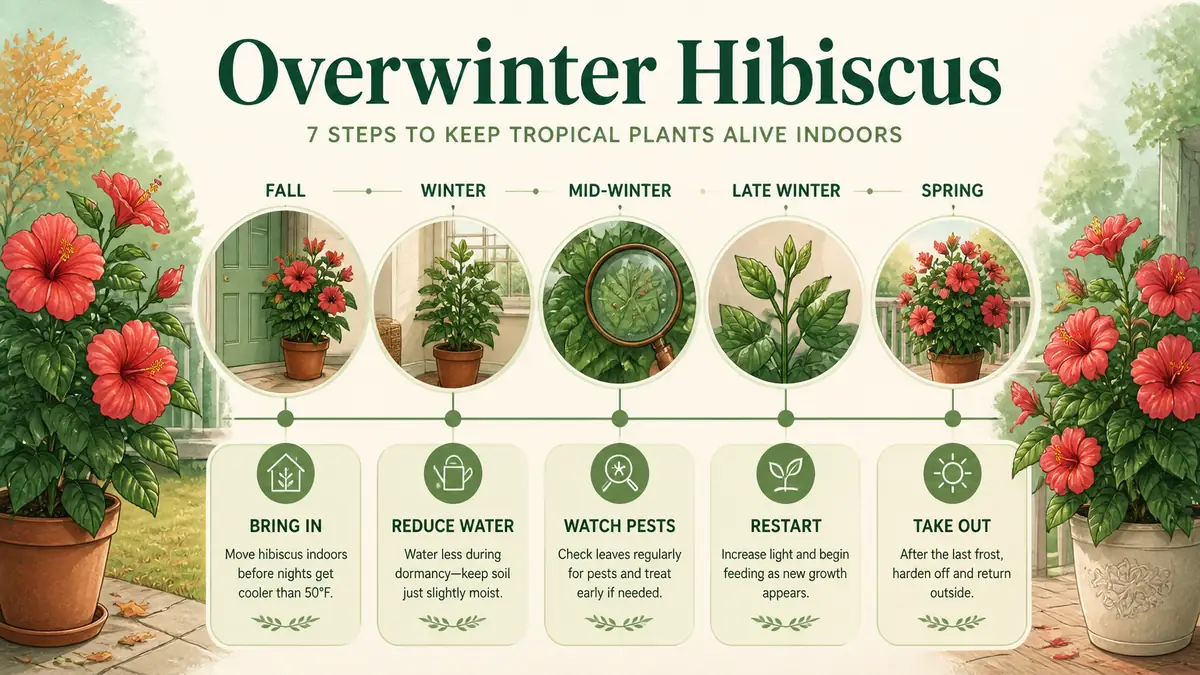
2. Bring It In Before Cool Nights Become Routine
Bring tropical hibiscus indoors before nighttime temperatures regularly fall into the mid-to-low 50s Fahrenheit. Do not wait for frost. By the time frost is forecast, the plant may already be stressed from repeated cold nights.
A tender tropical hibiscus can suffer when nights drop near 45 to 50 degrees Fahrenheit. Cool stress often shows up as yellow leaves, bud drop, stalled growth, and a plant that sheds foliage soon after it comes inside. The plant may not die from one chilly night, but repeated cool nights weaken it before winter even begins.
The best timing is gradual. Move the plant from full outdoor sun to a porch or bright sheltered spot for several days. Then move it indoors to the brightest window you have. This reduces the shock from light, wind, humidity, and temperature changes.
If the plant has been in intense summer sun, do not tuck it immediately into a dim corner and expect it to keep blooming. Outdoor light is far stronger than indoor light, even near a window. A gradual transition gives the plant time to adjust leaf function and water use. It also gives you a few days to inspect pests before the pot joins your indoor collection.
If a cold night arrives before you are ready, bring the hibiscus indoors that evening and place it away from heating vents. Inspect and clean it the next day. A quick emergency move is better than leaving a tropical hibiscus outside in damaging cold.
Choose a holding area before you lift the pot. Large hibiscus containers are heavy, and repeated moves can break stems or scatter pests. The best temporary spot is bright, protected, and easy to clean around. Avoid placing the plant directly beside a doorway where cold drafts hit it every time the door opens.
When you move the plant, check the saucer and the bottom of the pot. Slugs, ants, pill bugs, and other hitchhikers can hide underneath. Brush off the outside of the container, wipe the rim, and remove loose debris from the soil surface before the pot crosses the threshold.
3. Inspect and Clean the Plant Before It Comes Inside
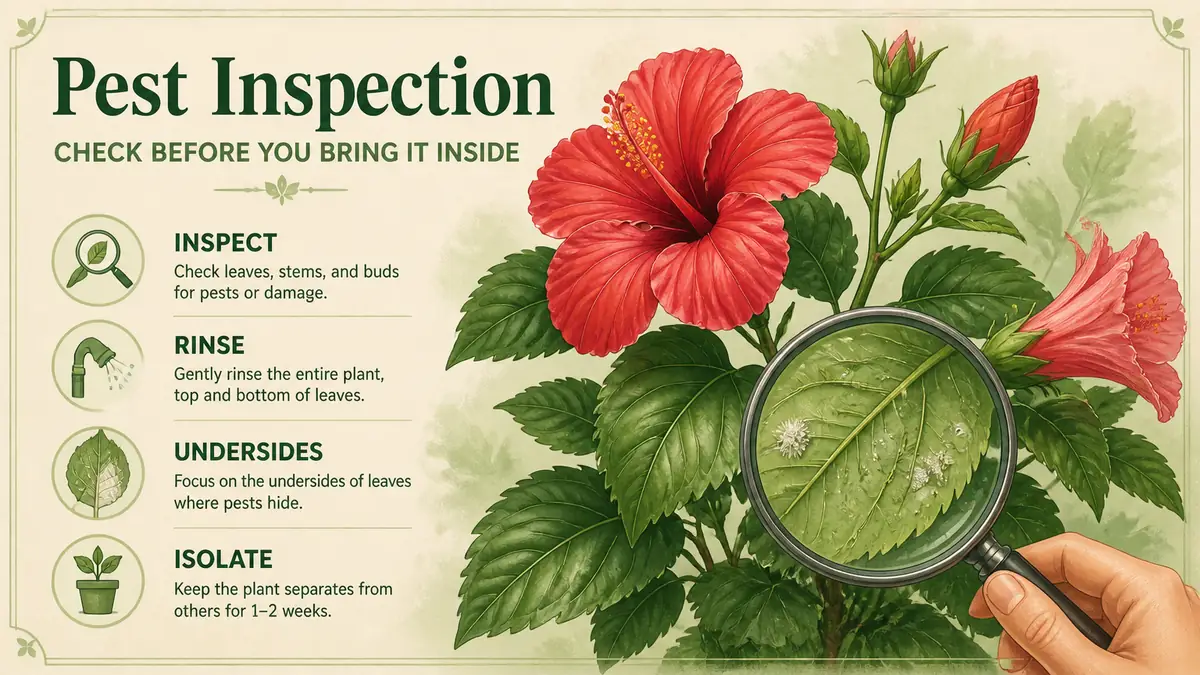
Before you bring hibiscus indoors for winter, inspect the plant in bright light. Look under leaves, along stems, at leaf joints, on flower buds, and across the soil surface. Outdoor pest numbers can explode indoors where there are no predators.
Remove dead leaves, fallen petals, weeds, and debris from the pot. Clip off broken stems and any obviously infested tips. Do not do a hard shaping prune in fall unless the plant is too large to move safely. Heavy fall pruning can trigger tender new growth just as light is declining.
Use a firm spray of water outdoors to rinse leaf undersides and stems. Let the foliage dry before the plant comes inside. If you see pests, isolate the plant and treat before placing it near houseplants.
Work from the top down. Start with flower buds and new shoot tips, because aphids and whiteflies often gather there. Then check the leaf undersides, especially near the midrib. Finally, inspect woody stems for scale insects that look like small tan, brown, gray, or shell-like bumps.
Check drainage at the same time. Water should move through the pot and out the drainage holes. If the pot sits in a saucer, empty the saucer after watering. Saturated winter soil is one of the fastest ways to lose a hibiscus indoors.
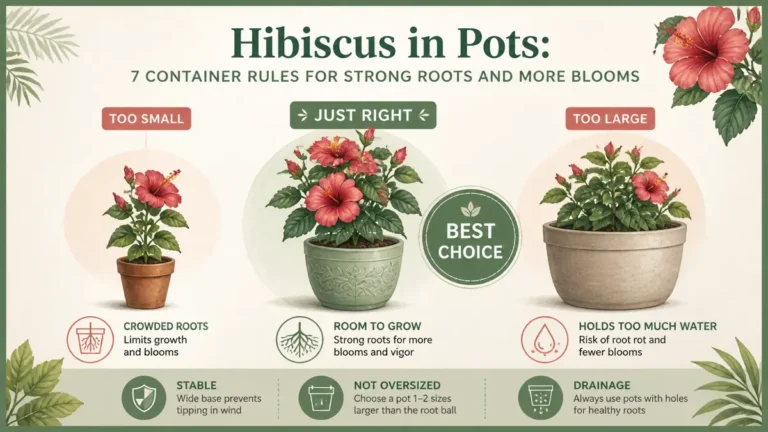
Do not repot automatically in fall. Repotting plus lower indoor light can trigger leaf drop. Wait until late winter or spring unless the soil smells sour, roots are rotting, or water cannot pass through the mix. If the potting mix has collapsed and drains poorly, a limited emergency repot may be needed, but keep it conservative and avoid greatly increasing pot size.
If the hibiscus is rootbound but otherwise healthy, it can usually wait. A snug root ball is easier to manage in winter than a huge new volume of damp soil. When you do repot, choose a container with drainage holes and only move up slightly in size. A large decorative cachepot without drainage may look tidy indoors, but it raises the risk of hidden standing water.
After cleaning, keep the plant separated from other houseplants for at least a short observation period. A week or two of isolation makes it easier to catch pests before they spread. During this time, use a white paper towel or cloth to wipe suspicious leaves and stems; moving insects, sticky residue, or rusty smears are clues that more cleanup is needed.
4. Choose Bright Indoor Growth or Cool Dormancy
You have two good options for tropical hibiscus winter care: keep it growing in very bright light, or hold it semi-dormant in a cool location. The right choice depends on your space, light, temperature, and tolerance for leaf drop.
| Winter method | Best conditions | What to expect |
|---|---|---|
| Bright indoor growth | South or west window, 4 to 5 hours of bright direct light, warm room | Some growth, possible blooms, higher pest monitoring needs |
| Cool semi-dormancy | Cool bright room, garage window, sunroom, or basement window above freezing | Leaf drop, little growth, sparse watering, no fertilizer |
For active indoor growth, give the plant your brightest window. A south or west exposure is usually best. The University of Minnesota Extension notes that hibiscus needs very bright light indoors, and 4 to 5 hours of bright direct light helps blooming.
If the window is bright but the plant sits several feet away, light may still be too weak. Place the hibiscus as close to the glass as temperature allows, then rotate the pot every week or two so one side does not stretch toward the light. If leaves touch cold glass at night, pull the plant back slightly before evening.
Keep the plant away from hot vents, cold drafts, exterior doors, and window glass that gets icy at night. Temperature swings are a common cause of yellow leaves and bud drop after the plant moves indoors.
For semi-dormancy, choose a cool location where the plant stays above freezing and does not sit in wet soil. Leaves may yellow and fall. That can be normal if the stems remain firm and the root ball does not dry to dust.
A cool garage, basement, enclosed porch, or sunroom can work only if temperatures stay safely above freezing. A dark, warm room is usually worse than a cool, lightly lit room because the plant keeps respiring but cannot photosynthesize enough to support healthy growth. If the storage area is very dim, expect more leaf drop and water even less.
If your winter window is dim, do not push for blooms. Prioritize keeping the roots and stems alive. You can rebuild shape and flowering after stronger light returns in spring. A plant that rests without flowers is not failing; it is conserving energy during the hardest part of the year.
Grow lights can help if you want to keep the plant actively growing. Position the light so the canopy receives strong, even illumination without overheating. A timer is useful because inconsistent lighting can lead to weak, stretched shoots. Even with supplemental light, continue to water by soil condition rather than assuming the plant needs summer-level moisture.

Some links are affiliate links. As an Amazon Associate I earn from qualifying purchases at no extra cost to you.
Useful if you want to keep tropical hibiscus growing indoors through winter.
5. Reduce Water and Stop Feeding During Winter Stress
Winter watering is the step most people get wrong. A hibiscus uses less water indoors because light is lower, growth slows, temperatures are steadier, and evaporation drops. Keep the soil lightly moist for active plants, not soaked.
Use three checks before watering. First, feel the top inch of potting mix. Second, lift the pot and judge its weight. Third, push a finger or wood skewer deeper into the root zone if the pot is large. The surface can dry while the lower root zone is still wet, especially in deep containers.
Water when the top inch is dry and the pot feels noticeably lighter. Water thoroughly until excess drains from the bottom, then empty the saucer. Do not give small daily sips, which can leave dry pockets and soggy surface soil.
For a cool semi-dormant hibiscus, water much less often. The goal is to keep roots from completely drying out while avoiding wet soil. If the plant has dropped many leaves, it may need only occasional light watering. Check the root ball every couple of weeks rather than watering by habit.
Stop fertilizing during winter stress. Fertilizer cannot fix low light, cold roots, pests, or move shock. Feeding a stressed plant can worsen salt buildup and weak growth. Resume only when you see healthy new growth in late winter or spring.
Do not use leaf yellowing alone as a watering signal. A thirsty plant, an overwatered plant, a chilled plant, and a pest-stressed plant can all turn yellow. Combine the leaf symptom with a soil check. If the pot is heavy and the soil is wet, more water will make the problem worse.
If the pot is very light and the root ball has pulled away from the sides, water thoroughly and let it drain.
Room conditions change the interval. A hibiscus in a warm, bright south window may need water much more often than one in a cool basement window. A plant in a plastic pot dries more slowly than one in porous terracotta. A large plant with many leaves uses more water than a defoliated dormant plant. These differences are why calendar watering is unreliable.
If water runs immediately down the sides of a very dry root ball, rehydrate slowly. Water once, wait a few minutes, then water again until the root zone is evenly moist and drainage appears. After that, return to normal checks. Do not leave the pot sitting in a basin of water for long periods unless you are deliberately rewetting a severely dried root ball and can remove it promptly.
Yellow leaves after moving indoors do not always mean the plant needs water or fertilizer. They often come from abrupt changes in light, moisture, temperature, drafts, or pests. For diagnosis, see our guide to hibiscus yellow leaves.
6. Watch for Spider Mites, Scale, Aphids, and Whitefly
Check overwintering hibiscus at least once a week. Indoor air, warm rooms, and stressed foliage make tropical hibiscus a common target for spider mites, scale, aphids, whitefly, and sometimes mealybugs.
Look for fine webbing, pale stippled leaves, sticky honeydew, black sooty mold, cottony clusters, flying white insects, or tan and brown bumps on stems. Inspect leaf undersides with a flashlight, especially along the midrib and new growth.
Spider mites often appear first as dull, dusty, speckled foliage. They can be hard to see without magnification, but the damage gives them away. Tap a suspect leaf over white paper and watch for tiny moving dots. Dry indoor air helps mites multiply quickly, so catching the first signs matters.
Scale insects are slower but stubborn. They may look like fixed bumps rather than insects, and they often hide on woody stems or along veins. Honeydew, sticky floors, or shiny leaves can be a clue. Aphids cluster on soft new growth and buds. Whiteflies flutter up when the plant is disturbed and then settle back under leaves.
If you find pests, isolate the plant. Rinse foliage in the shower or sink if the plant is small enough. Wipe scale from stems with a damp cloth. Repeat inspections because eggs and hidden insects often survive the first cleaning.
Yellow sticky traps can help monitor whiteflies, but they do not solve scale or spider mites alone. Use traps as an early warning system while you keep checking leaves by hand.
Do not spray oily products on a plant sitting in direct hot sun or under intense grow lights. Always read the product label, test a small area first, and avoid treating drought-stressed plants. Move the plant out of intense light for treatment if the label recommends it, then return it after the foliage is dry and the plant is no longer at risk of leaf burn.
Persistence is more important than one dramatic treatment. Clean, inspect, and repeat at label-approved intervals if using a product. Remove the worst affected leaves if they are heavily stippled, sticky, or covered with insects. Keep the floor and windowsill clean too, because fallen leaves and honeydew can hide continuing problems.
Also check nearby plants. A hibiscus can be the first plant to show pests because its soft growth is attractive, but the insects may already be on citrus, mandevilla, jasmine, herbs, or other plants that spent summer outdoors. Isolating one pot helps only if you keep monitoring the rest of the room.
Useful for monitoring whiteflies after a plant comes indoors.
7. Restart Growth Gradually in Spring
Do not rush a tropical hibiscus outdoors on the first warm afternoon. Wait until nights are reliably mild and the risk of frost has passed. If nights still dip into the 40s or low 50s, keep the plant protected.
Begin by moving it to a sheltered porch or bright shade for several days. Then shift it into filtered sun. After that, move it toward stronger sun. A sudden jump from indoor light to full outdoor sun can scorch leaves.
Think of the spring move as the reverse of the fall move. Indoor leaves are adapted to weaker light, still air, and lower water use. Outdoor sun, wind, and temperature swings are a big change. If leaves bleach, scorch, or crisp along the edges after the move, the plant may have received too much direct sun too quickly.
Increase watering as light, warmth, and new growth increase. Check the top inch and pot weight more often once the plant goes outdoors. Wind and sun can dry a container much faster than an indoor windowsill.
Resume fertilizer only after you see active new growth. Start with a diluted balanced fertilizer rather than a heavy feeding. During the outdoor growing season, hibiscus can use more regular feeding than it can tolerate indoors in winter.
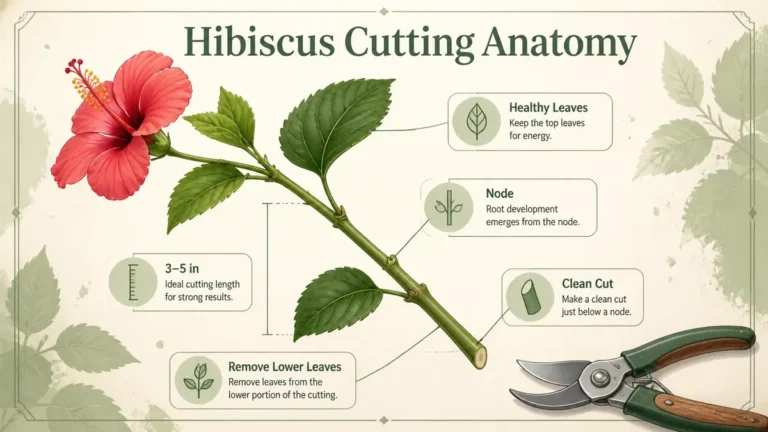
Prune in late winter or early spring, before strong new growth takes over. Cut just above an outward-facing leaf node, usually about 1/4 inch above the node. Remove thin, weak, crossing, dead, or unproductive shoots first.
If you need to reduce height, shorten stems by cutting back to healthy nodes rather than leaving long bare stubs. For a fuller plant, tip young shoots after they begin growing. More detailed cuts are covered in our hibiscus pruning guide.
Before pruning, do a scratch test on questionable stems. Gently scrape a small area of bark with a fingernail or clean blade. Green tissue underneath usually means the stem is alive. Dry brown tissue can be cut back to the next live section. Wait before removing the whole plant if the base is still firm and green, because tropical hibiscus can be slow to restart after a stressful winter.
You can root healthy tip cuttings when growth is active. Use 3 to 5 inch cuttings with several nodes, remove lower leaves, and keep them warm and humid. Rooting often takes about 3 to 5 weeks, depending on conditions. Take cuttings from healthy, pest-free growth, not from weak, stretched winter stems if better spring shoots are available.
If your hibiscus survived winter but is slow to bloom, wait until it has strong light, warm roots, and steady watering before changing care again. For bloom troubleshooting, use our guide to hibiscus not blooming.
Do not expect instant flowers the week the plant goes back outside. It may need time to replace leaves, rebuild roots, and produce strong new shoots. Once nights are warm, light is high, pests are controlled, and watering is consistent, buds are much more likely to hold instead of dropping.

Simple winter rhythm: Brightest safe light, no fertilizer during stress, water only after checking the soil and pot weight, inspect weekly for pests, and wait for spring growth before pruning hard or feeding again.
Common Overwintering Mistakes to Avoid
The biggest mistake is treating winter like summer. A tropical hibiscus that drank heavily outdoors in July will not use water the same way beside a winter window. Lower light means slower growth, slower drying, and a higher risk of root problems. Always reset your watering expectations after the move indoors.
The second mistake is feeding too soon. Fertilizer is useful when the plant is actively growing in good light, but it is not medicine for stress. If the hibiscus is dropping leaves, sitting in dim light, or fighting pests, solve those conditions first. Fertilizer applied at the wrong time can encourage weak growth and salt buildup in the potting mix.
The third mistake is assuming leaf drop means death. A tropical hibiscus can look rough by late winter and still recover. Check stems, roots, and moisture before discarding it. Firm stems, live green tissue under the bark, and a root ball that is not rotten are signs that patience may pay off.
The fourth mistake is bringing it back outside too fast. Spring sun is much stronger than indoor light, and wind strips moisture from leaves quickly. Acclimate the plant in stages, even if the weather feels pleasant. A slow transition is usually faster in the long run because the plant avoids a second round of shock.
Overwinter Hibiscus FAQ
- Can I overwinter hibiscus indoors?
- Yes, if it is a tropical hibiscus. Keep it in very bright light as a houseplant or hold it semi-dormant in a cool protected spot. Hardy hibiscus and Rose of Sharon usually overwinter outdoors instead.
- When should I bring tropical hibiscus indoors for winter?
- Bring it in before nights regularly fall into the mid-to-low 50s Fahrenheit. Do not wait for frost. Repeated cool nights can cause yellowing, bud drop, and stress before the plant ever reaches the windowsill.
- Will hibiscus lose leaves indoors?
- It may. Leaf drop is common after a move because light, humidity, watering, and temperature all change. If stems remain firm and pests are controlled, the plant can recover when stronger spring growth begins.
- Should I cut back hibiscus before bringing it inside?
- Remove broken, dead, or badly infested growth before moving it. Save major shaping for late winter or early spring. If the plant is too large to move, reduce it carefully by cutting just above healthy leaf nodes.
- How often should I water hibiscus indoors in winter?
- Water based on checks, not a calendar. Feel the top inch, lift the pot, and check deeper in large containers. Water active plants when the top inch is dry. Water semi-dormant plants only enough to keep roots alive.
- Should I fertilize overwintering hibiscus?
- No, not while the plant is stressed, dormant, or sitting in low winter light. Resume diluted fertilizer only after healthy new growth appears in late winter or spring.
- Can tropical hibiscus go dormant in a basement?
- Yes, if the basement is cool but not freezing and the plant is not kept wet. Some light is helpful. Expect leaf drop, sparse watering, and no fertilizer until spring growth resumes.
- Why are buds dropping after I brought hibiscus indoors?
- Bud drop often follows sudden changes in light, water, temperature, drafts, or humidity. Check for pests too. Stabilize care before feeding or repotting, because extra disruption can make the drop worse.
- Can I keep hibiscus blooming all winter?
- Sometimes, but only with very bright light, warm stable temperatures, good pest control, and careful watering. Many healthy plants stop blooming indoors because winter light is too weak. Keeping the plant alive and stable is more important than forcing flowers.
- What temperature is too cold for tropical hibiscus?
- Tropical hibiscus should be protected before nights routinely fall into the mid-to-low 50s Fahrenheit. Temperatures near 45 to 50 degrees Fahrenheit can cause stress, and freezing temperatures can kill tender growth quickly.
- Should I repot hibiscus before winter?
- Usually no. Repotting in fall adds stress just as light is declining. Repot in late winter or spring unless the pot has failed drainage, the soil smells sour, or root rot is already a concern.
- How do I know if my overwintered hibiscus is still alive?
- Check whether stems are firm and whether a light scratch reveals green tissue under the bark. Also check that the root ball is not rotten or completely dried to dust. If the base is alive, wait for warmer light before giving up.
Dead or Dormant? Check Before You Toss It
A dormant tropical hibiscus may drop most leaves in winter and still have living stems. Scratch a small section of bark: green tissue underneath means the stem is alive. Dry, brittle stems all the way down are more concerning.
Hardy hibiscus can be late to emerge in spring, especially in cool soil. Mark the crown, keep the area lightly moist, and wait for warm weather before assuming it failed.
Source note: This article checks its hibiscus care and safety claims against University of Minnesota Extension: Hibiscus, RHS: Hibiscus rosa-sinensis growing guide, University of Maryland Extension: Overwintering Tropical Plants, Illinois Extension: Tropical Hibiscus. Generated visuals are educational illustrations, not proof photos or fake testing results.
More Hibiscus Guides
Use the focused hibiscus guide that matches what you see. This keeps the care hub from becoming a guessing game.
Fall-to-Spring Overwintering Timeline
| Timing | Action | Why it matters |
|---|---|---|
| Late summer | Stop pushing heavy growth | Soft growth struggles indoors |
| Before cool nights are routine | Inspect for pests and move tropical hibiscus indoors | Pests multiply quickly indoors |
| Winter | Water less and avoid fertilizer if growth slows | Cold/dim roots use less water |
| Late winter | Prune tropical hibiscus if needed | Shapes growth before stronger spring light |
| Spring | Harden off gradually outdoors | Prevents sun scorch and shock |
Winter Leaf Drop: Normal vs. Danger
Some leaf drop is normal when tropical hibiscus moves indoors or enters a cooler semi-dormant state. It becomes more serious if stems shrivel, soil stays wet and sour, pests spread, or all growth collapses while the plant is still warm and wet.

Sources
- University of Minnesota Extension: Hibiscus
- Royal Horticultural Society: Hibiscus rosa-sinensis growing guide
- University of Maryland Extension: Overwintering Tropical Plants
- Illinois Extension: Tropical Hibiscus
- NC State Extension: Hardy Hibiscus
For year-round basics beyond winter, see our main hibiscus care guide.