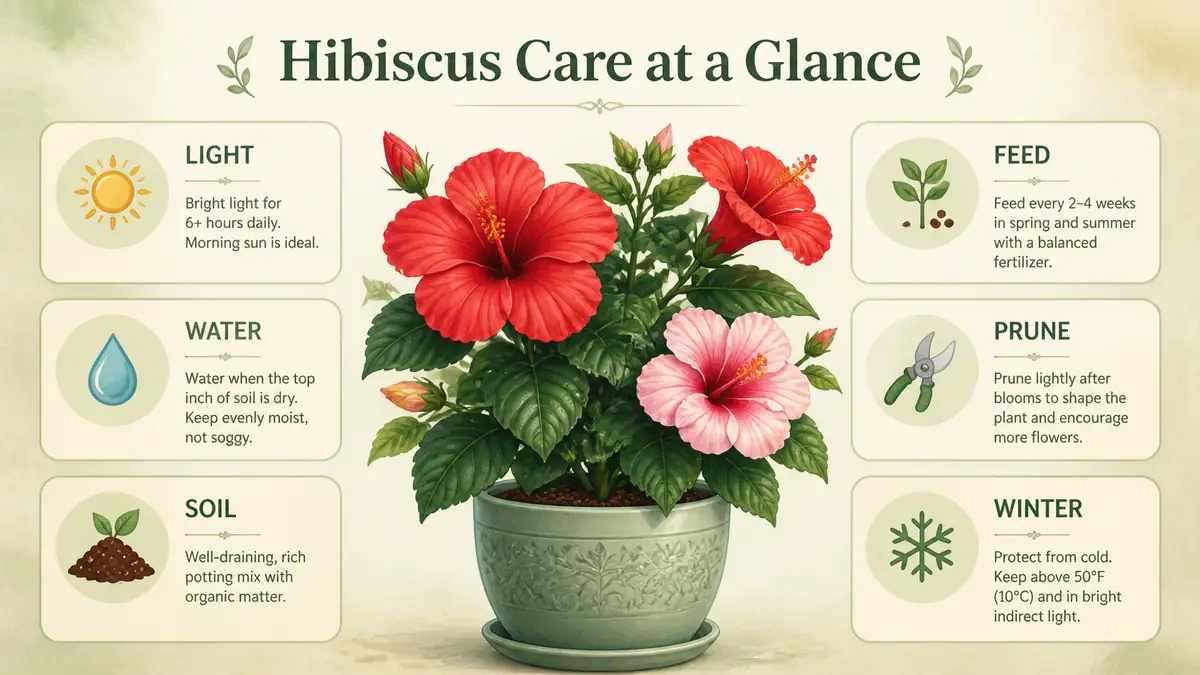
Good hibiscus care starts with the type. Tropical hibiscus needs frost protection and very bright light; hardy hibiscus can die back and return outdoors; Rose of Sharon is a woody shrub. Use this page as the start-here hub, then go deeper only where your plant needs it.
Start Here: What Are You Trying to Fix?
| Situation | First move | Go deeper |
|---|---|---|
| I do not know the type | Identify type before changing winter, pruning, or pot advice | Tropical vs hardy hibiscus |
| Yellow leaves | Check moisture, recent moves, pests, and light pattern | Yellow leaves diagnosis |
| No blooms or bud drop | Separate no buds from buds that fall before opening | Bloom troubleshooting |
| Winter care | Choose indoor growth, cool dormancy, or outdoor dieback care | Overwinter hibiscus |
| Potted hibiscus | Focus on pot size, drainage, heat, and winter movement | Hibiscus in pots |
| Pet question | Check ASPCA status and when to call a vet | Hibiscus pet safety |
The biggest hibiscus care mistake is using one set of instructions for every plant with a hibiscus flower. A tropical hibiscus in a patio pot, a hardy hibiscus perennial in the ground, and a Rose of Sharon shrub can all have similar-looking blooms, but they respond very differently to cold, pruning, repotting, and winter watering.
Use this guide as a care hub: identify the plant first, fix the most likely limiting factor, then move to a deeper symptom or seasonal guide when needed.
| Care question | Fast answer | Go deeper |
|---|---|---|
| Will it survive winter outside? | Tropical hibiscus usually will not; hardy hibiscus and Rose of Sharon often can in suitable zones. | Identify type |
| Why is it not blooming? | Check light first, then fertilizer, pruning timing, and temperature swings. | Light |
| How often should I water? | Water by root-zone moisture, not a fixed calendar. | Watering |
| When should I prune? | Tropical hibiscus is usually pruned late winter; hardy hibiscus is cut back after dieback; Rose of Sharon blooms on new wood. | Pruning |
| Why are leaves yellow or buds dropping? | Look for abrupt changes in water, light, drafts, temperature, or pests. | Diagnosis |
1. Identify Your Hibiscus Type Before Changing Care
Do this before changing watering, pruning, or winter care. Many hibiscus problems come from treating tropical hibiscus, hardy hibiscus, and Rose of Sharon as the same plant.
If the plant tag is gone, look at the whole plant instead of only the flower. Flowers can be misleading because many hibiscus types have big, showy, funnel-shaped blooms. Leaves, stems, growth habit, and winter behavior are more useful. Tropical hibiscus usually keeps woody stems and glossy evergreen foliage when protected from cold. Hardy hibiscus is herbaceous: the top growth often freezes down and the plant returns from the crown.
Rose of Sharon is a deciduous woody shrub or small tree with permanent branches.
| Type | What it usually looks like | Care difference that matters most |
|---|---|---|
| Tropical hibiscus | Glossy leaves, large flowers, often sold in patio pots | Needs warmth; protect before chilly nights and frost |
| Hardy hibiscus | Huge dinner-plate flowers, herbaceous stems that die back | Returns from roots in cold-winter gardens in suitable zones |
| Rose of Sharon | Woody shrub or small tree, smaller late-season flowers | Prune as a shrub, not as a tender patio plant |
If you are unsure, compare leaves, stems, winter behavior, and plant label wording. For a photo-based sorting process, use this tropical vs hardy hibiscus guide.
Fast type check: If the plant came from a summer patio display and has glossy leaves, assume tropical until proven otherwise. If it disappears to the ground each winter and returns late in spring, it is likely hardy hibiscus.
Also pay attention to where the plant was sold. A hibiscus sold as a gift plant, patio standard, braided trunk, or bright summer container plant is commonly tropical hibiscus. A hibiscus sold in the perennial section with tags mentioning USDA Zones 4 or 5 is usually hardy hibiscus. A plant sold among flowering shrubs, often under the name Rose of Sharon, althea, or Hibiscus syriacus, should be managed as a shrub.
The type also changes what “normal” looks like. A tropical hibiscus dropping leaves after a cold night is stress. A hardy hibiscus disappearing after frost is normal dormancy. Rose of Sharon losing leaves in fall is normal deciduous behavior. Before you diagnose a plant as dying, ask whether the plant is behaving normally for its group and season.
2. Give Hibiscus Strong Light for Better Blooms
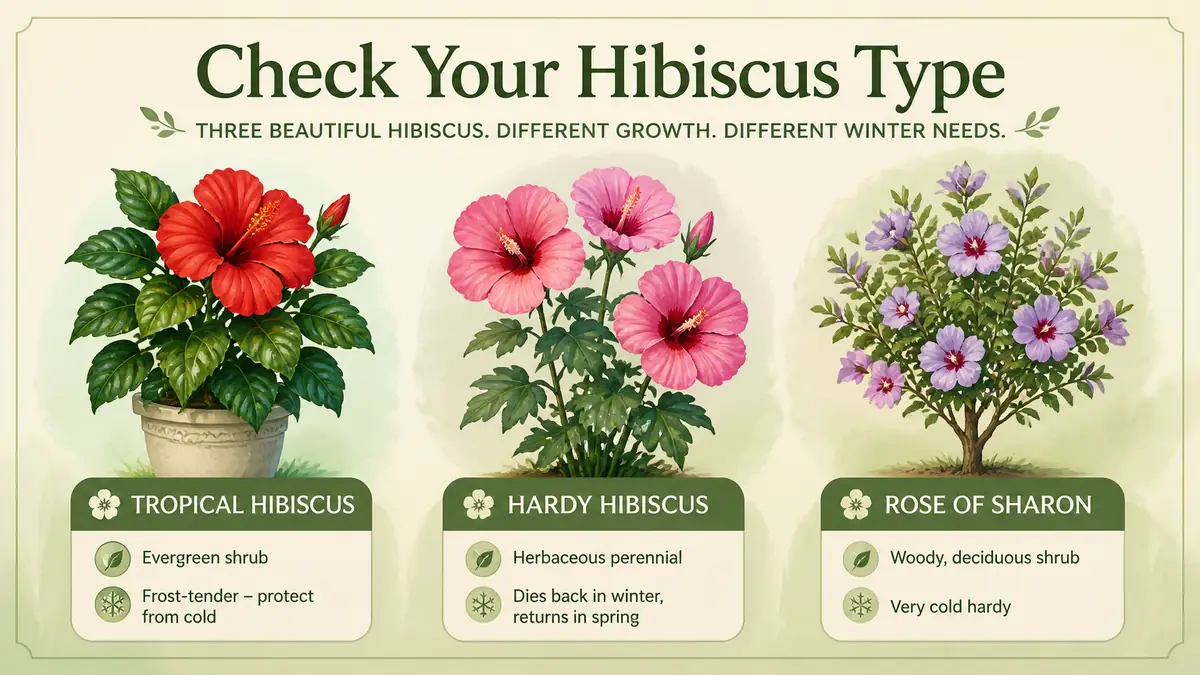
Hibiscus blooms best in strong light. Indoors, tropical hibiscus usually needs your brightest window, ideally a south or west exposure with several hours of direct or very bright light.
Outdoors, most hibiscus flower best in full sun. In very hot climates, afternoon shade can reduce stress, but too much shade usually means leafy growth and fewer buds.
- Indoor tropical hibiscus: Place within a few feet of the brightest window, not across a dim room.
- Outdoor tropical hibiscus: Move out gradually: porch, filtered shade, then brighter sun.
- Hardy hibiscus: Give full sun for better flowers and stronger stems.
- Rose of Sharon: Full sun is best, though it tolerates light shade with fewer blooms.
When moving a tropical hibiscus outside, harden it off over 7 to 14 days. Sudden direct sun can scorch indoor-grown leaves, even though the plant ultimately wants strong light.
A practical light check is to watch the plant for one full sunny day. Count how many hours the leaves receive direct sun or very bright, unobstructed light. A plant sitting near a bright-looking window may still receive weak light if the window faces north, has an overhang, is shaded by trees, or is several feet away from the glass.
Indoors, distance matters: moving a tropical hibiscus from six feet away to one or two feet from the window can change bloom performance dramatically.
For outdoor plants, compare morning sun, midday sun, and afternoon heat separately. In mild climates, full sun all day is usually ideal. In very hot inland climates, a plant may bloom better with strong morning sun and light afternoon protection, especially in a dark container on a hot patio. If leaves wilt hard every afternoon but recover at night, heat and root-zone stress may be combining with light exposure.
If the plant is lush, green, and flowerless, shade is more likely than too much sun.
Light also affects watering and fertilizer. A hibiscus in full sun uses water quickly and can support more active growth. A hibiscus indoors in winter uses water slowly and cannot use heavy fertilizer well. If you increase light, reassess watering after a few days because the plant may dry faster. If you reduce light for winter, reduce feeding and watering pressure at the same time.
If your plant has buds but drops them indoors, low light is one of the first things to check. For a step-by-step bloom checklist, see why hibiscus is not blooming.
Some links are affiliate links. As an Amazon Associate I earn from qualifying purchases at no extra cost to you.
Useful for indoor tropical hibiscus when the brightest window is still too weak for reliable blooms.
3. Water Deeply Without Keeping Roots Soggy
Hibiscus likes consistent moisture, but saturated roots cause stress. Water thoroughly until excess drains from the pot, then empty the saucer so the root zone is not sitting in water.
Do not water only because the top looks dry. Large hibiscus pots can have a dry surface and a wet lower root zone. Check deeper before adding more water.
- Finger check: For small pots, check the top inch and slightly below it.
- Pot weight: Lift the pot after watering, then again when it is ready for water.
- Wooden skewer check: Insert near the root zone; damp soil clings to the wood.
- Drainage check: Water should leave the pot freely within a short time.
For potted tropical hibiscus, water until the whole root ball is moistened. A quick splash on top can run down the sides of a dried potting mix and leave the center dry. If water instantly channels out but the pot still feels light, soak more slowly in several passes.
If the pot remains heavy for many days, smells sour, or has fungus gnats, the problem is not lack of water; it is likely poor drainage, low light, or an oversized container holding too much moisture.
Hardy hibiscus tolerates moist soil better than tropical hibiscus, especially in the ground. Even so, stagnant, airless soil is still risky. Aim for moisture plus oxygen.
Newly planted hardy hibiscus and Rose of Sharon need special attention in the first season. Their roots are still concentrated near the original root ball, so a surrounding bed can look moist while the root ball dries. Water deeply at the base, then check several inches down near the original planting area.
After establishment, Rose of Sharon usually handles average conditions better than tropical hibiscus, while hardy hibiscus still performs best with consistent moisture.
Heat, wind, pot size, and plant size change watering frequency. A large tropical hibiscus in a small black nursery pot on a sunny patio may need water daily during hot weather. The same plant indoors in winter may need water only when the root zone has partly dried. This is why a fixed schedule like “water every three days” fails. Use the plant and pot as the schedule.
Yellow leaves often appear after watering swings, a sudden indoor move, or soggy roots. If yellowing is the main issue, use this hibiscus yellow leaves troubleshooting guide.
Helpful in large hibiscus pots where the top dries before the lower root zone.
4. Use Rich Soil That Still Drains Fast
The best hibiscus soil holds moisture without staying swampy. In pots, use a quality potting mix with drainage material and a container with open drainage holes.
For tropical hibiscus in containers, avoid dense garden soil. It compacts, drains poorly, and can suffocate roots. If a pot drains slowly, repot before trying to fix the plant with fertilizer.
A good container mix should feel evenly moist after watering but not muddy or heavy for days. If you squeeze a handful of damp mix and it forms a sticky clay-like lump, it is too dense for long-term container use. If water races through and the pot dries within hours, the mix may be too coarse, hydrophobic, or rootbound.
The goal is a balance: enough organic material to hold moisture, enough air space to keep roots breathing, and enough drainage holes to remove excess water.
Do not solve drainage problems by adding a layer of gravel at the bottom of a pot. That does not create a true drainage system and can leave the root zone perched above a wet layer. Instead, use a potting mix built for containers, make sure the holes are open, and choose a pot that is only moderately larger than the root ball.
Oversized pots stay wet longer because roots cannot use the moisture quickly.
Hardy hibiscus grows best in moist, organically rich soil. It can handle wetter ground than tropical hibiscus, but stronger stems and better flowering still come from sun, air movement, and steady root moisture.
If your garden soil is very sandy, mix compost into the planting area and mulch over the root zone to slow moisture loss. If your soil is heavy clay, avoid planting the crown in a bathtub-like hole that fills with water.
Improve a broad area instead of only the planting hole, and place the plant where water does not stand for long periods unless you are growing a hardy type known to tolerate wet conditions.
Rose of Sharon is more shrub-like and generally adapts to average garden soil once established. During the first season, water deeply so roots expand beyond the planting hole.
Container check: If water pools on the surface for more than a moment, drains slowly, or leaves the pot smelling sour, the root zone needs more air. Repotting is often safer than watering less forever.
For container size, drainage holes, and patio placement, see the deeper guide to growing hibiscus in pots.
5. Keep Temperature and Humidity Stable
Tropical hibiscus dislikes abrupt changes. Bud drop often follows a sudden move, cold draft, hot dry air, or a big watering change. Stability matters as much as the exact number.
Plan indoor moves before nights regularly fall into the mid-to-low 50s F. Do not wait for frost warnings. Tropical hibiscus can be damaged before a freeze arrives.
- Keep tropical hibiscus away from cold windows, heat vents, and exterior doors.
- Expect some leaf drop after moving indoors, especially if light is lower.
- Increase humidity with grouping, trays, or room humidity rather than misting alone.
- Do not place a stressed plant in a dark corner and keep watering heavily.
When you move tropical hibiscus indoors, try to change as few conditions as possible at once. Inspect and clean it outdoors first, then move it to the brightest indoor location available. Keep it away from forced-air vents that blast hot, dry air across leaves. A plant that was using water quickly outdoors may suddenly use much less water indoors, so do not continue the summer watering routine automatically.
Humidity helps, but it is not a substitute for light. A pebble tray or humidifier can reduce crispy edges and stress in dry homes, yet a tropical hibiscus still needs bright light to bloom. Misting alone has a short-lived effect and can make pest inspection harder if leaves stay wet and sticky.
If the room is very dry, group plants together, use a humidity tray that keeps the pot above the water line, or run a small humidifier nearby.
Hardy hibiscus and Rose of Sharon are outdoor plants in suitable climates. Their winter response is normal dormancy, not a houseplant problem.
For outdoor hardy plants, temperature stability means choosing the right site and avoiding late-season forcing. Do not fertilize heavily late in the season to push tender new growth just before cold weather. Allow plants to slow down naturally as days shorten. Mulch can help moderate soil temperature and moisture, but keep heavy mulch from being packed tightly against woody Rose of Sharon stems.
6. Feed During Active Growth, Not Winter Stress
Feed hibiscus when it is actively growing and receiving enough light. Fertilizer cannot replace sun, repair root rot, or force a winter-stressed tropical plant to bloom indoors.
Outdoor tropical hibiscus can be fed with a diluted balanced fertilizer during summer growth. A half-strength liquid feed every 2 to 3 weeks is a common active-season approach.
Indoors, feed less often because growth slows in lower light. If the plant is losing leaves after a move indoors, pause fertilizer until new growth resumes.
Hardy hibiscus benefits from rich soil and steady moisture. Avoid excessive nitrogen, which can push leafy growth at the expense of flowers and weak stems.
Fertilizer works best as a maintenance tool, not an emergency rescue. If the leaves are yellow because the roots are staying wet, feeding can make things worse. If buds are dropping because the plant was moved from sun to a dim room, fertilizer will not replace missing light. If the plant is rootbound and drying too fast, feeding without repotting may create a cycle of quick growth and faster drought stress.
Use label directions as the upper limit, then adjust based on light and growth. A plant outside in warm weather with strong new leaves can use more nutrition than a plant indoors in short winter days. When in doubt, feed lightly. Hibiscus can be hungry during active growth, but heavy fertilizer in the wrong conditions increases salt buildup and root stress.
| Season or condition | Feeding move |
|---|---|
| Strong spring and summer growth | Feed lightly and regularly |
| Low indoor winter light | Reduce or stop feeding |
| Root stress or soggy soil | Fix drainage before fertilizing |
| Freshly repotted plant | Wait until it resumes growth |
If a potted hibiscus has white crust on the soil surface or pot rim, salts may be accumulating from fertilizer or hard water. Flush the pot thoroughly with plain water if the mix drains well, letting water run through and out. Do not flush a pot that already drains poorly; in that case, repotting into a better mix is safer.
A liquid fertilizer that can be diluted for active-growth feeding; skip it during winter stress.
7. Prune According to the Hibiscus Type
Pruning is where hibiscus type matters. The right cut can improve shape and flowering. The wrong timing can remove buds, stress a weak plant, or make winter damage worse.
Before pruning, decide why you are cutting. Common goals include removing dead wood, shaping a leggy plant, encouraging branching, reducing size before overwintering, or removing pest-infested tips. Do not prune simply because the plant is stressed. If a hibiscus is dropping leaves after a move, has soggy roots, or is in very low light, stabilize care first unless you are removing dead, diseased, or broken stems.
Tropical hibiscus pruning
Prune tropical hibiscus in late winter or very early spring, before strong new growth. Cut just above a node or outward-facing leaf joint. Remove thin, weak, crossing, or unproductive shoots first.
For bushier growth, pinch young shoot tips above a node. Avoid hard pruning right before moving a plant into low indoor winter light.
A node is the point on the stem where a leaf, bud, or side shoot emerges. Make the cut slightly above that point so the plant can push new growth from nearby buds. Cutting far above a node leaves a stub that may die back. Cutting too close can damage the bud. Use clean, sharp pruners, especially on woody stems.
If a tropical hibiscus has become tall and bare, rejuvenate it gradually when conditions are improving, not when light is declining. You can shorten selected stems by about one-third, wait for new growth, then continue shaping. A hard cut on a weak indoor plant may leave it with too few leaves to recover quickly.
Hardy hibiscus pruning
Hardy hibiscus flowers on new growth. In many climates, old stems die back after frost. Cut dead stems down to about 3 to 4 inches in late autumn or wait until new growth appears in spring.
Do not panic if hardy hibiscus is late to emerge. It often wakes later than many perennials. Mark the crown so you do not dig it up by accident.
Leaving short stem stubs can help you remember where the crown is during spring cleanup. Once new shoots emerge, remove remaining dead stems carefully so you do not break tender new growth. Because hardy hibiscus produces flowers on the current season’s stems, removing dead old stems does not remove the coming season’s flower buds.
Rose of Sharon pruning
Rose of Sharon blooms on new wood, so late winter or early spring pruning is usually safe. Remove dead, damaged, inward-growing, or crowded branches first.
If you want larger but fewer flowers, thin some stems and shorten selected branches. If you want a natural shrub, prune lightly and focus on structure.
For a tree-form Rose of Sharon, remove lower shoots gradually and maintain a clear trunk without stripping too much foliage at once. For a hedge or screen, avoid shearing only the outer surface year after year; that can create a leafy shell with crowded interior growth. Instead, thin some older stems to improve light and air movement inside the shrub.
For cut diagrams, timing by type, and recovery pruning, use the full guide on how to prune hibiscus.
Cut location: Make clean cuts just above a node, not in the middle of a bare stem section. A node is where a leaf, bud, or side shoot emerges.
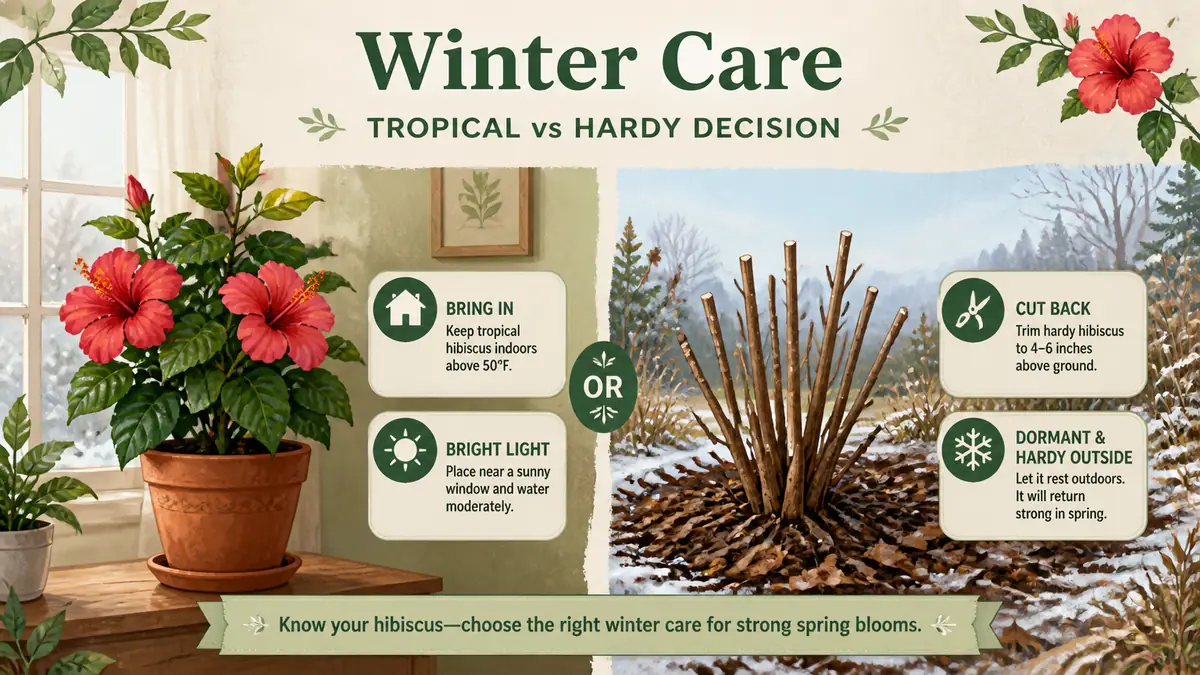
8. Match Winter Care to Tropical or Hardy Growth
Winter care is not the same for every hibiscus. Tropical hibiscus must be protected from cold. Hardy hibiscus and Rose of Sharon are usually managed outdoors in climates where they are hardy.
| Type | Winter plan | Main mistake to avoid |
|---|---|---|
| Tropical hibiscus | Bring indoors before chilly nights or overwinter cool and semi-dormant | Waiting until frost or overwatering in low light |
| Hardy hibiscus | Let it go dormant outdoors in suitable zones | Thinking dead top growth means the roots are dead |
| Rose of Sharon | Leave outdoors as a deciduous shrub where hardy | Treating normal leaf drop as a houseplant crisis |
Before bringing tropical hibiscus indoors, inspect stems, leaf undersides, and pot rims for pests. Aphids, whiteflies, scale, mealybugs, and spider mites often flare indoors.
Once indoors, reduce watering as growth slows. Keep the root ball barely moist if the plant is semi-dormant. Do not keep cold, leafless plants wet.
You have two basic winter choices for tropical hibiscus: keep it actively growing in bright indoor light, or hold it cooler and semi-dormant. Active growth requires the brightest location you can provide, careful watering, and frequent pest checks. Semi-dormant storage uses less light and water, but the plant may lose many leaves. In either case, the roots must stay alive and not rot.
When bringing a tropical hibiscus indoors, prune only as much as necessary for space, pest removal, or broken stems. A severe pruning plus lower light plus indoor dryness can be too much stress at once. If the plant is too large, moderate pruning is reasonable, but save major reshaping for late winter or early spring when days are lengthening and recovery is easier.
For hardy hibiscus, winter care is usually simple after the plant is established. Let frost end the top growth, then cut stems back after dieback or in spring. A layer of mulch can protect the crown in colder regions, but avoid burying the crown under soggy material. In spring, wait patiently. Hardy hibiscus can emerge late, and digging around too early can damage the crown.
Rose of Sharon should remain outside in climates where it is hardy. It drops leaves because it is deciduous, not because it needs to come indoors. Winter pruning can be used for structure, but major cuts are best made when the plant is dormant and before spring growth is well underway.
If you want the full decision tree for bright indoor growth versus dormant storage, use this guide to overwintering hibiscus.
9. Diagnose Problems One Care Factor at a Time
When hibiscus declines, change one care factor at a time. If you repot, prune, fertilize, move, and spray on the same day, you will not know what helped or what caused more stress.
| Symptom | First checks | What to do next |
|---|---|---|
| Yellow leaves | Water swings, soggy roots, low light, indoor move | Stabilize watering and improve light |
| Bud drop | Low light, temperature shift, drafts, drought, pests | Hold conditions steady for 2 to 3 weeks |
| No blooms | Shade, wrong pruning time, too much nitrogen, winter stress | Increase light before adding fertilizer |
| Sticky leaves | Aphids, whiteflies, scale, mealybugs | Inspect leaf undersides and isolate if indoors |
| Wilting in wet soil | Root stress, poor drainage, compact mix | Stop watering and check the root zone |
Start diagnosis with the most recent change. Did the plant move indoors? Did nights turn cool? Did you repot? Did you start fertilizing? Did a heat wave arrive? Hibiscus often reacts strongly to transitions, and the cause is usually hidden in the last one to three weeks of care.
For yellow leaves, check the pattern. A few older yellow leaves after moving indoors can be normal adjustment. Many yellow leaves plus a heavy wet pot suggests root stress. Yellowing plus sticky residue points toward sap-sucking pests. Yellowing plus pale new growth may involve nutrition, but only diagnose fertilizer after light, roots, and watering are reasonable.
For bud drop, protect the plant from sudden swings. Keep water consistent, avoid drafts, improve light, and stop moving the pot every day. Buds that formed outdoors may drop after the plant comes indoors because the new location cannot support them. In that case, stabilize the plant and wait for new buds under the new conditions.
For pests, start with a strong rinse outdoors when weather allows, then remove visible insects by hand or with appropriate low-toxicity controls. Repeat checks matter because eggs and hidden insects survive first treatments.
Inspect leaf undersides, tender shoot tips, stem joints, and the area where branches meet the main stem. Aphids cluster on soft growth. Whiteflies flutter when disturbed and leave sticky honeydew. Scale can look like small brown or tan bumps on stems. Mealybugs look like white cottony patches. Spider mites are often noticed by fine webbing, stippled leaves, and a dusty look. Isolate an infested indoor tropical hibiscus from other houseplants while treating.
For propagation, healthy spring or early-summer cuttings root more reliably than stressed winter cuttings. Many hibiscus cuttings root in about 3 to 5 weeks with warmth, humidity, and clean media. See hibiscus propagation from cuttings for timing and setup.
Hibiscus is listed by the ASPCA as non-toxic to dogs, cats, and horses. Still, unusual ingestion can cause stomach upset in some pets. If a pet has symptoms, contact a veterinarian or poison-control hotline. For plant-specific pet notes, see hibiscus toxicity to cats and dogs.
Seasonal Hibiscus Care Calendar
Use the calendar as a quick way to time care changes. The exact month depends on your climate, but the sequence stays similar: increase light and water as growth begins, feed during active growth, prepare tropical plants before cold nights, and reduce watering when growth slows.
| Season | Tropical hibiscus | Hardy hibiscus | Rose of Sharon |
|---|---|---|---|
| Spring | Increase light, resume feeding after new growth, repot if needed | Wait for late emergence, remove old stems, keep crown moist | Prune for structure before active growth if needed |
| Summer | Grow outdoors in strong light after hardening off, water deeply, feed lightly | Water consistently, mulch, support if stems flop | Water young shrubs deeply, monitor pests, avoid drought stress |
| Fall | Inspect for pests and move indoors before chilly nights | Let frost trigger dormancy, cut back after dieback or wait | Allow normal leaf drop, water during dry fall weather if newly planted |
| Winter | Keep bright and warm or cool and semi-dormant; water sparingly | Leave dormant outdoors in suitable zones | Leave dormant outdoors; prune late winter if shaping is needed |
Spring is the best time to correct many care problems because day length is increasing and plants are ready to grow. If a tropical hibiscus needs repotting, heavy pruning, or a move outdoors, spring and early summer give it the best recovery window. Avoid doing all major work on the same day unless the plant is in urgent trouble from rot or pests.
Summer care is mostly about keeping up with growth. Strong light, warm temperatures, and active roots mean the plant may use water quickly. Check containers daily during heat waves, especially if pots are small, dark-colored, or sitting on reflective concrete. Deadhead spent flowers if you want a tidier plant, and remove old blooms before they form seedheads if the plant is putting energy into seed instead of more flowers.
Fall is the transition season. Tropical hibiscus should not be left outside until the last possible night. Begin planning when nights regularly fall into the mid-to-low 50s F. Inspect pests while the plant is still outdoors where rinsing and cleanup are easier. Hardy hibiscus and Rose of Sharon, by contrast, should not be dragged indoors because leaves are dropping or stems are declining. They are preparing for dormancy.
Winter care is where restraint helps. Less light means less water and little to no fertilizer for tropical hibiscus. A few dropped leaves are not an emergency. For hardy hibiscus and Rose of Sharon, avoid unnecessary disturbance while dormant. If winter is dry and the ground is not frozen, newly planted shrubs and perennials may still need occasional deep watering.
Quick Care Recipes by Growing Situation
Hibiscus care indoors
Indoor hibiscus care almost always means tropical hibiscus care. Place the plant in the brightest window available, preferably south or west facing. Keep it away from cold drafts and heating vents. Water when the root zone has partly dried, then drain excess water completely. Feed only when the plant is actively producing new growth in adequate light.
If the plant stops blooming indoors, do not immediately fertilize harder. First ask whether the plant receives enough direct light to support flowers. If not, move it closer to the window or add a grow light. If leaves are dropping after an indoor move, hold conditions steady for a few weeks. Many tropical hibiscus plants shed some leaves while adjusting to lower light and drier air.
Hibiscus care outdoors in pots
Outdoor potted hibiscus needs more frequent checks than in-ground hibiscus. Pots heat up, dry faster, and restrict root volume. Use a container with drainage holes, a moisture-retentive but airy potting mix, and a location with strong light. Water deeply until runoff, then empty saucers so roots do not sit in water.
In hot climates, protect the pot itself from overheating if the plant wilts daily despite moist soil. Move it where it gets morning sun and light afternoon shade, use a larger container, or shade the pot while keeping the foliage in bright light. A stressed potted plant may drop buds even when the leaves look mostly healthy.
Hibiscus care outdoors in the ground
In-ground care depends on type. Hardy hibiscus wants full sun and consistent moisture in rich soil. Rose of Sharon wants a shrub site with room for mature size, good light, and deep watering while establishing. Tropical hibiscus can grow in the ground only where winters stay warm enough or where it is treated as a seasonal plant.
For new plantings, water the original root ball deeply rather than only wetting the surrounding soil. Mulch helps even out soil moisture, but do not pile mulch against stems. After the first growing season, established Rose of Sharon usually needs less routine watering than hardy hibiscus, while hardy hibiscus continues to bloom best with steady moisture.
FAQs
- How often should I water hibiscus?
- Water when the root zone is partly dry but not bone dry. In hot sun, a potted hibiscus may need frequent watering. Indoors in winter, it may need much less. Use pot weight, the top-inch check, and drainage behavior instead of a fixed schedule.
- Does hibiscus need full sun?
- Most hibiscus bloom best with strong light. Tropical hibiscus indoors needs the brightest window you have. Outdoors, full sun usually gives the best bloom count, though hot climates may require some afternoon protection.
- Can hibiscus grow indoors year-round?
- Tropical hibiscus can grow indoors if light is very bright. Hardy hibiscus and Rose of Sharon are usually better as outdoor plants. Indoors, weak light is the main reason tropical hibiscus drops buds or stops blooming.
- Why are my hibiscus leaves turning yellow?
- Yellow leaves commonly follow water swings, soggy roots, low light, pests, drafts, or a sudden move indoors. Check root-zone moisture and light before fertilizing.
- When should I prune hibiscus?
- Prune tropical hibiscus in late winter or early spring. Cut hardy hibiscus stems back after dieback or when new growth appears. Prune Rose of Sharon in late winter or early spring to shape the shrub and remove dead wood.
- Should I fertilize hibiscus in winter?
- Usually no. If tropical hibiscus is under low indoor light or semi-dormant, stop feeding until new growth begins. Fertilizer during winter stress can make root and leaf problems worse.
- Is hibiscus safe for pets?
- The ASPCA lists hibiscus as non-toxic to dogs, cats, and horses. If a pet eats a large amount or shows vomiting, diarrhea, drooling, or lethargy, contact a veterinarian or poison hotline.
- Why does my hibiscus have buds but no open flowers?
- Bud drop is usually related to low light, water swings, sudden temperature changes, drafts, or pests. Keep the plant in stable conditions, improve light, check moisture at the root zone, and inspect leaf undersides and tender stems.
- Can I move my indoor hibiscus outside for summer?
- Yes, tropical hibiscus often benefits from a summer outdoors, but move it gradually. Start in shade or a protected porch location, then increase light over 7 to 14 days. Bring it back indoors before nights regularly drop into the mid-to-low 50s F.
- Should I cut off dead hibiscus flowers?
- You can remove spent flowers for appearance and to reduce seed formation. Many hibiscus blooms last only a day or two, so old flowers are normal. Removing them is helpful for tidiness but does not fix deeper bloom problems like low light or incorrect pruning.
- Why is my hardy hibiscus not coming back in spring?
- Hardy hibiscus often emerges late compared with many perennials. Keep the crown marked, avoid digging in the area, and wait until the soil has warmed. If it was newly planted, winter wetness, crown damage, or an unsuitable zone can also affect survival.
- Can I propagate hibiscus from cuttings?
- Yes. Healthy spring or early-summer cuttings root more reliably than stressed winter cuttings. Use clean tools, warm conditions, humidity, and a clean rooting medium. Many cuttings root in about 3 to 5 weeks when conditions are right.
How to Use This Hibiscus Hub Without Overdoing Care
Do not change light, fertilizer, pruning, and water in the same week. Hibiscus reacts strongly to sudden changes, especially tropical hibiscus moving indoors or outdoors. Pick the one care factor that matches the symptom, fix that first, and give new growth time to show the result.
If the issue is yellow leaves, blooms, winter survival, pruning, pots, propagation, or pet safety, the focused guides below give more detail than this hub should repeat.
Source note: This article checks its hibiscus care and safety claims against University of Minnesota Extension: Hibiscus, RHS: Hibiscus rosa-sinensis growing guide, Clemson HGIC: Hibiscus, University of Maryland Extension: Overwintering Tropical Plants. Generated visuals are educational illustrations, not proof photos or fake testing results.
More Hibiscus Guides
Use the focused hibiscus guide that matches what you see. This keeps the care hub from becoming a guessing game.
Use This as the Start Page, Not the Only Page
This care guide gives the routine: type, light, water, soil, feeding, pruning, winter, and problem triage. It should not repeat every troubleshooting detail from the focused guides.
If you already have a visible symptom, use the specific page: yellow leaf diagnosis, no blooms or bud drop, winter care, or potted hibiscus care.