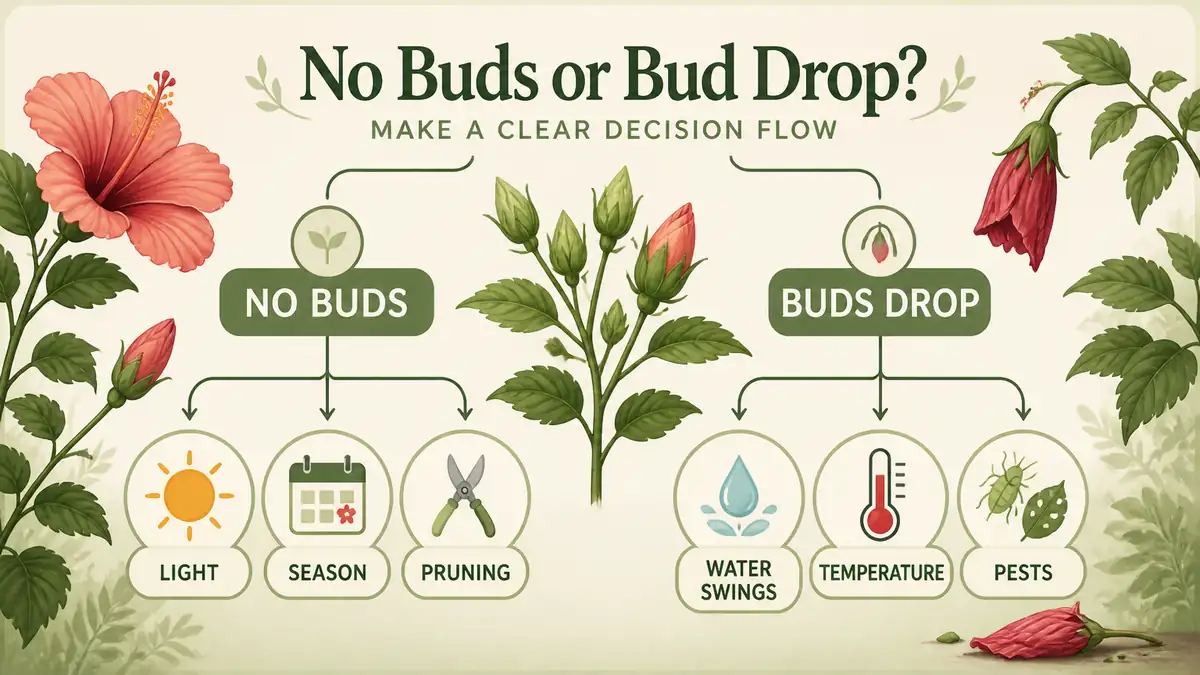
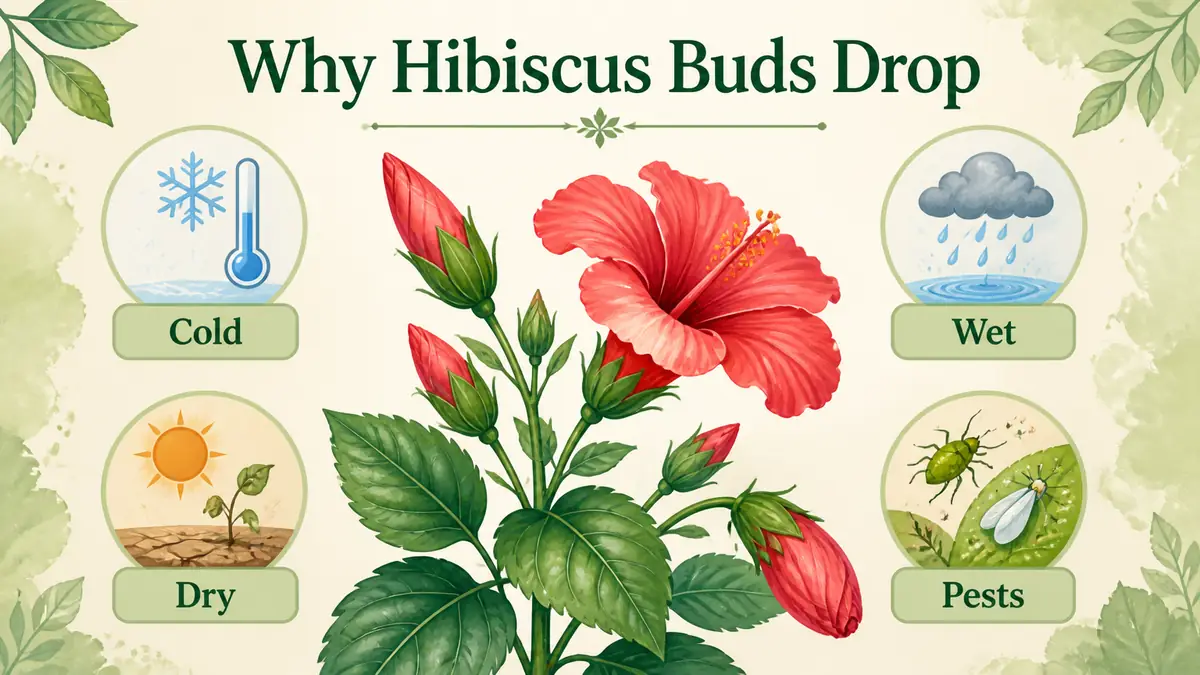
First decide whether your hibiscus has no buds at all or buds that form and drop. No buds usually points to light, season, pruning, maturity, or feeding. Bud drop more often points to water swings, temperature changes, recent moves, root stress, or pests.
No Buds vs Bud Drop
| Symptom | Likely direction | Start here |
|---|---|---|
| No buds at all | Low light, wrong season, pruning timing, too much nitrogen | start with light |
| Buds form, then fall | Water swings, cold nights, heat, move stress, pests | check water swings |
| Leaves grow but no flowers | Light or feeding balance problem | feed carefully |
| Sticky buds or distorted buds | Aphids, whitefly, mites, thrips | inspect buds |
Before changing everything, identify your plant. Tropical hibiscus, hardy hibiscus, and Rose of Sharon can all be called “hibiscus,” but they do not bloom, overwinter, or respond to pruning in exactly the same way. A patio tropical hibiscus in a pot may need more light and steadier moisture right now, while a hardy hibiscus in the ground may simply be waiting for warm soil or recovering from an early-season cutback.
The best fix is not to add more fertilizer or prune harder immediately. Start with the factor that changed most recently. If the plant stopped blooming after it came indoors, light and temperature are the first suspects. If buds were present and fell after a missed watering, moisture swings are more likely. If the plant is lush, dark green, and leafy with no buds, light and nitrogen balance deserve the closest look.
Quick type check before troubleshooting
- Tropical hibiscus: Glossy leaves, large bright flowers, often sold as patio or houseplants. It is tender and should come indoors before chilly nights.
- Hardy hibiscus: Dinner-plate flowers, dies back to the ground in cold climates, returns from the crown in spring, and usually flowers on new growth.
- Rose of Sharon: Woody shrub, later summer blooms, deciduous stems remain above ground through winter, and it is often grown as a landscape shrub.
10-minute bloom diagnosis
Use this quick check before making a major change. Count the hours of direct sun the plant actually receives, not just how bright the room or garden bed looks. Lift the pot to judge whether it is very light, normally moist, or still heavy and wet. Check the newest buds and leaf undersides with a bright light.
Then review the last two weeks: a cold night, indoor move, missed watering, repotting, pest spray, or pruning session often explains sudden bud drop.
If you find one clear problem, correct that first and wait. Hibiscus reacts to stress quickly by dropping buds, but it does not always replace them immediately. It may need several weeks of steady care before the next bud cycle is visible.
| What you see | Most likely check | Start here |
|---|---|---|
| Lots of leaves, no buds | Too little direct light or too much nitrogen | Light and fertilizer |
| Buds form, then fall | Temperature swings, dry spells, soggy roots, or pests | Temperature, water, and pests |
| New growth, few flowers after pruning | Pruned at the wrong time or removed budding wood | Pruning timing |
| Yellow leaves plus no blooms | Moisture stress, low light, roots, or indoor transition shock | Roots and hibiscus yellow leaves |
| Healthy plant, no flowers yet | Normal seasonal timing or immature growth | FAQ and the waiting notes below |
1. Give It Enough Direct Light to Set Buds
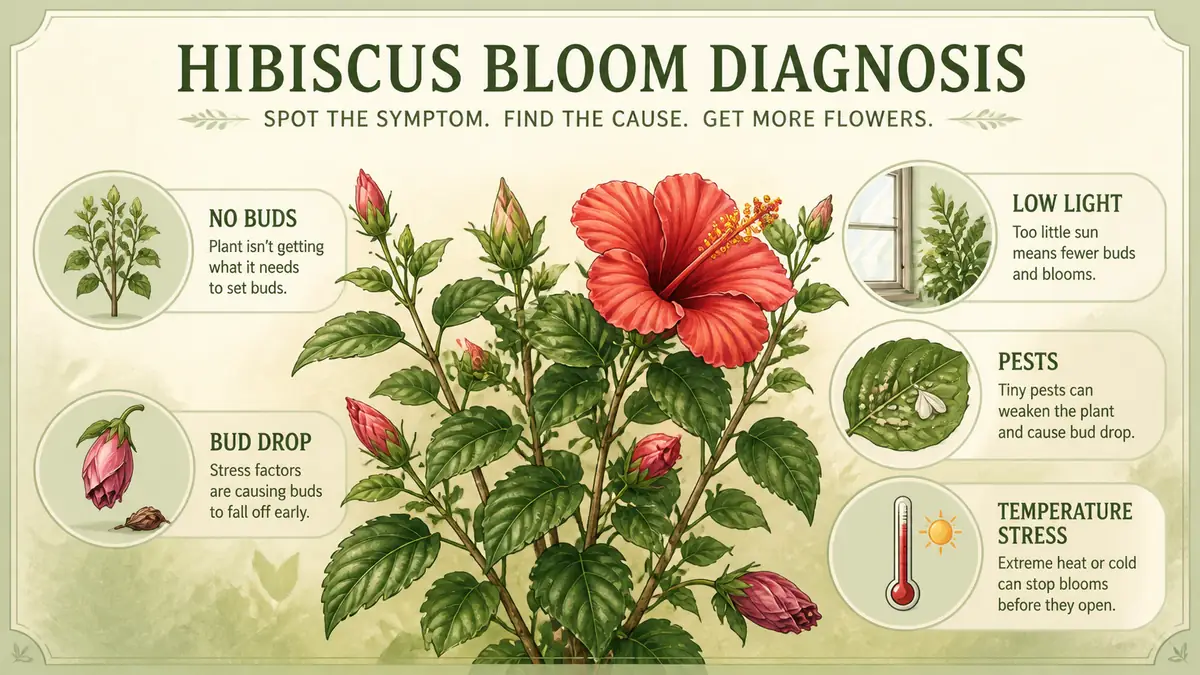
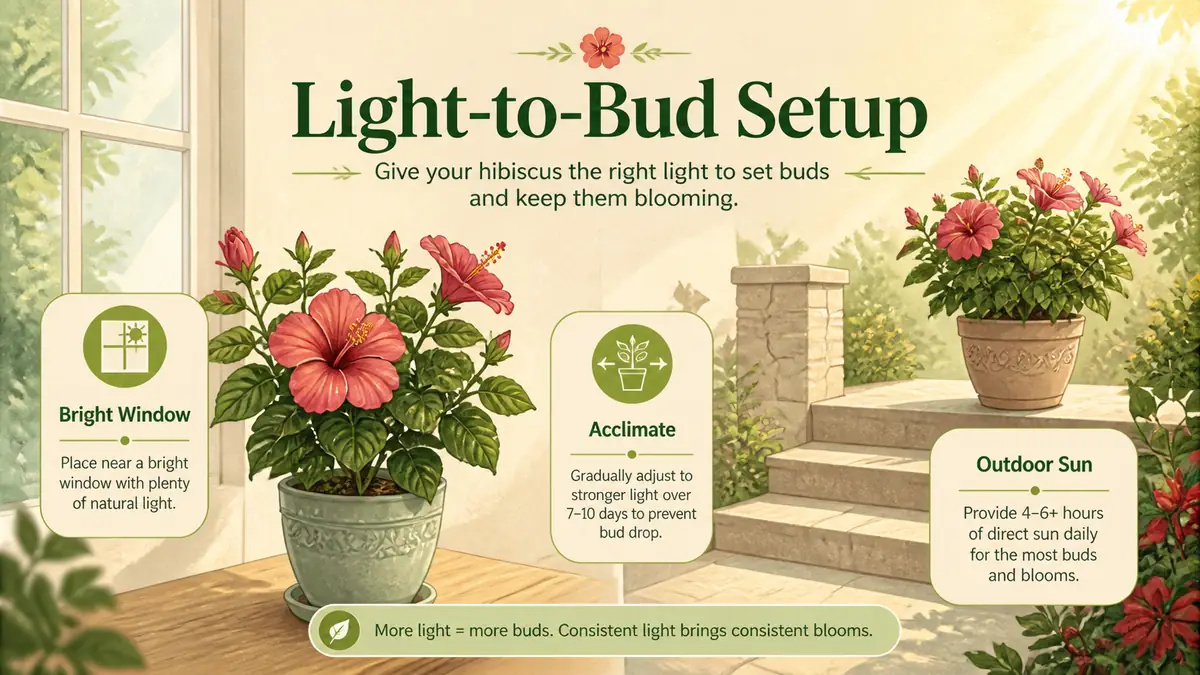
Light is the first thing to check when hibiscus has healthy leaves but no flowers. Tropical hibiscus grown indoors needs very bright light, and several hours of direct sun are often needed before buds form reliably. A plant can survive in a bright-looking room for months while still receiving too little energy to produce flowers.
Use this check: stand where the plant sits at midday. If you cannot see a strong shadow from your hand, the plant is probably not getting bloom-level light. A bright room can still be too dim for hibiscus buds, especially in winter, behind tinted glass, or several feet back from the window.
- Indoors: Use a south or west window when possible. Aim for 4 to 5 hours of bright direct light for tropical hibiscus.
- Outdoors: Give tropical hibiscus full sun or bright sun with brief afternoon relief in very hot climates.
- Hardy hibiscus: Plant in full sun for the strongest flowering. Light shade usually reduces the number of blooms.
- Rose of Sharon: Full sun gives the best bloom show; shade usually means fewer flowers and more open, leggy growth.
If a tropical hibiscus has been indoors, do not move it straight into hot full sun. Acclimate it over 7 to 14 days: porch shade first, then filtered sun, then brighter sun. Sudden exposure can scorch leaves and trigger bud drop. The same rule applies in reverse when bringing a plant indoors: a sudden drop from outdoor sun to indoor light often causes yellow leaves and bud loss.
For indoor plants, distance from the window matters. A tropical hibiscus directly in a bright south or west window may bloom; the same plant 6 feet away may only grow leaves. If the best window is blocked by trees, overhangs, or winter clouds, a grow light can supplement the missing intensity. Place the light close enough to help the plant, but not so close that leaves heat or bleach.
Also check whether nearby plants, curtains, blinds, privacy film, or porch roofs are shading the hibiscus during the exact hours it needs light. Many “full sun” patios only get a short morning burst, and many indoor windows are bright to human eyes but weak for a flowering tropical plant.
For a broader care setup by plant type, see the main hibiscus care guide.
Some links are affiliate links. As an Amazon Associate I earn from qualifying purchases at no extra cost to you.
Useful when a tropical hibiscus is indoors and cannot get enough window light for buds.
2. Keep Temperatures Steady While Buds Form
Hibiscus buds are sensitive to sudden temperature changes. A plant can look healthy, set buds, and then drop them after a cold night, hot dry blast, drafty window, or abrupt indoor move. This is especially frustrating because the damage may show up several days after the stressful event.
Tropical hibiscus is the most sensitive. Plan to bring it in before nights regularly fall into the mid-to-low 50s°F. Many tropical hibiscus plants resent temperatures near 45 to 50°F, especially when combined with wet soil. Chilly roots, low light, and saturated potting mix are a common fall combination that leads to yellow leaves and dropped buds.
- Indoors: Keep tropical hibiscus away from heat vents, exterior doors, cold glass, fireplaces, and air-conditioning drafts.
- Outdoors in pots: Move containers to a sheltered bright spot before a cold, windy night.
- Hardy hibiscus: Do not panic if stems die back after frost. This is normal in cold regions.
- Rose of Sharon: It is woody and deciduous, so winter leaf loss is expected.
Night temperature is often more important than the warm daytime high. A patio may feel pleasant at noon but drop sharply before sunrise. If a tropical hibiscus is loaded with buds and the forecast shows a chilly night, move the pot to a protected location before the temperature falls rather than after the plant has already been chilled.
Indoors, avoid placing a hibiscus where leaves touch cold window glass at night. Also watch for hot, dry air from vents. A plant beside a heating vent may dry out faster than expected, and that moisture swing can compound the temperature stress.
If buds dropped after moving the plant indoors or outdoors, correct the conditions and wait for the next flush. New buds may take several weeks once light, warmth, and watering are stable. Resist the urge to repot, prune hard, and fertilize heavily all at once; too many changes can extend the recovery period.
For seasonal moving and cold-weather timing, use this deeper guide to overwintering hibiscus.
3. Stop Water Swings That Trigger Bud Drop
Water swings are one of the fastest ways to lose hibiscus buds. Both bone-dry soil and saturated soil can stress the roots enough to stop flowering or cause unopened buds to yellow and fall. Hibiscus likes consistent moisture during active growth, but consistent moisture is not the same as standing water.
Check moisture with more than a quick surface glance. Push a finger 1 to 2 inches into the potting mix. In the ground, check the root zone a few inches down. The goal is evenly moist soil, not swampy soil. If the surface is dry but the lower root zone is still damp, wait a bit longer. If the root zone is drying hard, water deeply.
| Check | What it means | What to do |
|---|---|---|
| Pot feels very light and mix pulls from edges | Too dry | Water thoroughly until excess drains |
| Pot stays heavy for days | Too wet or poor drainage | Pause watering and inspect drainage |
| Top inch dry but lower mix moist | Usually okay | Wait, then water before the root zone dries hard |
| Buds drop after missed watering | Drought shock | Resume even moisture; do not overcorrect with constant soaking |
| Leaves wilt while soil is wet | Possible root stress or low oxygen | Check drainage and avoid adding more water automatically |
Water thoroughly when needed, then empty saucers. Roots need oxygen. A hibiscus sitting in drained water may wilt, yellow, and drop buds even though the pot looks “well watered.” This is why a drainage hole is not enough if the outer cachepot or saucer remains full of water.
Outdoor containers dry faster in heat, wind, and full sun. During active summer growth, a potted tropical hibiscus may need water very often. In cool indoor winter conditions, the same plant may need much less. Let the plant’s root zone, pot weight, and growth rate guide you instead of following a fixed calendar.
If the plant repeatedly dries out between waterings, consider whether the pot is too small, the mix has become hydrophobic, or the roots have filled the container. When dry potting mix pulls away from the sides, water can run down the gap and out the bottom without soaking the root ball. In that case, water slowly in stages until the mix rehydrates evenly.
For in-ground hardy hibiscus and Rose of Sharon, water deeply rather than sprinkling the surface. A shallow splash encourages surface roots and may not reach the active root zone. Mulch can help even out moisture, but keep mulch pulled back slightly from the crown or woody stems to reduce rot risk.
4. Feed for Active Growth Without Overdoing Nitrogen
A hungry hibiscus may bloom poorly, but overfeeding can also backfire. Too much nitrogen encourages leafy growth at the expense of flowers, especially when light is already marginal. A dark green plant that grows long shoots but refuses to bud is often receiving enough nutrition for leaves but not enough light, balance, or seasonal support for flowers.
Feed only when the plant is actively growing. For tropical hibiscus outdoors in summer, a half-strength balanced fertilizer every 2 to 3 weeks is a reasonable starting point. Indoors, feed less often because growth is slower. A plant in cool, low-light winter conditions may need little or no fertilizer until new growth resumes.
- Good sign: New leaves are forming, stems are extending, and the plant is in bright light.
- Slow down: Growth has stalled, days are short, the plant is cool, or it is semi-dormant indoors.
- Avoid: Heavy lawn fertilizer near in-ground hibiscus. High nitrogen can push leaves over blooms.
- After stress: Fix light, watering, and roots before increasing fertilizer.
If your hibiscus is newly repotted, heat-stressed, pest-infested, or recently moved indoors, do not use fertilizer as the first fix. A stressed root system cannot use extra fertilizer well. Fertilizer salts can build up in containers, especially if you water lightly without enough runoff, and that can worsen root stress.
Hardy hibiscus and Rose of Sharon in the ground usually need less frequent feeding than a tropical hibiscus in a pot. Improve soil health, avoid drought stress, and fertilize lightly if growth is weak. If the shrub is growing strongly but flowering poorly, more fertilizer is unlikely to be the answer.
Watch nearby lawn and garden feeding, too. Rose of Sharon planted in a lawn or border may receive nitrogen from turf fertilizer. That can create lush growth with fewer flowers. Keep high-nitrogen products away from the root zone, and do not pile compost or manure directly against stems.
If you suspect overfeeding, stop fertilizing for a few weeks, water thoroughly when the plant needs it, and let excess drain. Do not flush a plant that is already soggy or in a pot without drainage. Once the plant is actively growing in strong light again, resume at a modest rate rather than trying to force instant bloom.
5. Prune at the Right Time for Your Hibiscus Type
Pruning can increase branching and future bloom sites, but timing matters. If you cut at the wrong time, you may remove the wood that would have carried the next flowers. Pruning is useful, but it is not a universal cure for a hibiscus with low light, soggy roots, or pest pressure.
| Hibiscus type | Best pruning time | Bloom mistake to avoid |
|---|---|---|
| Tropical hibiscus | Late winter to early spring, before strong new growth | Hard pruning during a budded bloom cycle |
| Hardy hibiscus | Cut old dead stems when new shoots emerge in spring | Assuming it is dead because it wakes late |
| Rose of Sharon | Late winter or early spring | Heavy late-season pruning that delays or reduces bloom |
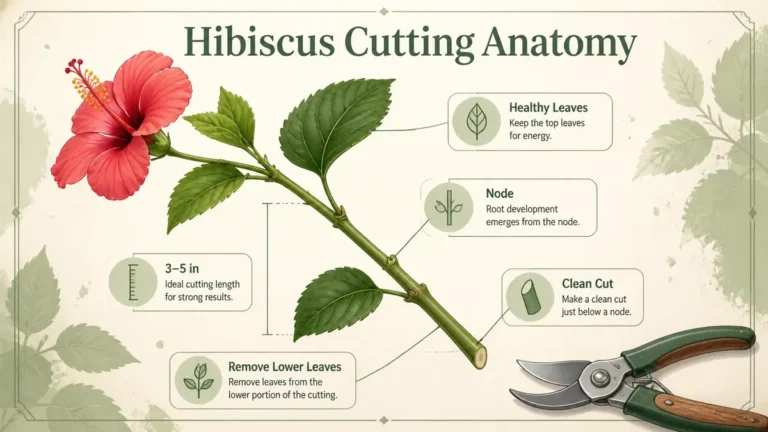
For tropical hibiscus, cut just above a leaf node or outward-facing bud. A light trim can shape the plant. A harder cut can renew a leggy plant, but it may delay flowers while the plant rebuilds growth. Make clean cuts with sanitized pruners, and remove dead, damaged, or crossing stems first.
Remove thin, weak, crossing, or unproductive shoots first. If you are trying to keep flowers coming, avoid removing every stem tip at once during active bloom season. Staggering light trims can preserve some blooming wood while encouraging new branching for later.
Old flowers can be removed before seedheads form. After a bloom flush, a light reduction can encourage branching and another round of growth when warmth, light, and nutrition are favorable. Do not confuse natural one-day flower drop with a blooming problem; individual hibiscus flowers are often short-lived even on a healthy plant.
Hardy hibiscus behaves differently from a woody tropical shrub. In cold climates, top growth may die back completely, and new shoots arise from the crown. Wait until you see where new growth is emerging, then cut old dead stems back. Because hardy hibiscus can be slow to appear in spring, marking the planting spot helps prevent accidental digging or early-season panic.
Rose of Sharon is a woody shrub, so do not cut it to the ground as if it were a perennial hibiscus. Late winter or early spring shaping is usually safer than late-season pruning. If you prune heavily after buds have started developing, you may delay or reduce the flower display.
Need cut-by-cut help? Use this detailed guide on how to prune hibiscus.
6. Check Roots, Pot Size, and Drainage
A hibiscus with root problems may stop blooming even when the top growth looks acceptable. Roots that are crowded, rotting, or drying too fast cannot support a heavy bud load. Root stress often shows up as a mix of symptoms: fewer flowers, yellow leaves, wilting, sudden bud drop, and watering that seems difficult to get right.
Lift the pot before and after watering to learn its weight. If it goes from wet to feather-light in a day, the plant may be root-bound, in too small a pot, or exposed to intense heat and wind. If it remains heavy for many days, the mix may be too dense, the pot may be oversized, or drainage may be blocked.
Slide the root ball out if the plant is safe to handle. Healthy roots are usually firm and pale to tan. A tight wall of circling roots means it is pot-bound. Mushy, dark, sour-smelling roots point to rot or chronic saturation. If the roots look healthy but crowded, repotting can help. If they are rotting, drainage and watering must be corrected before bloom recovery is likely.
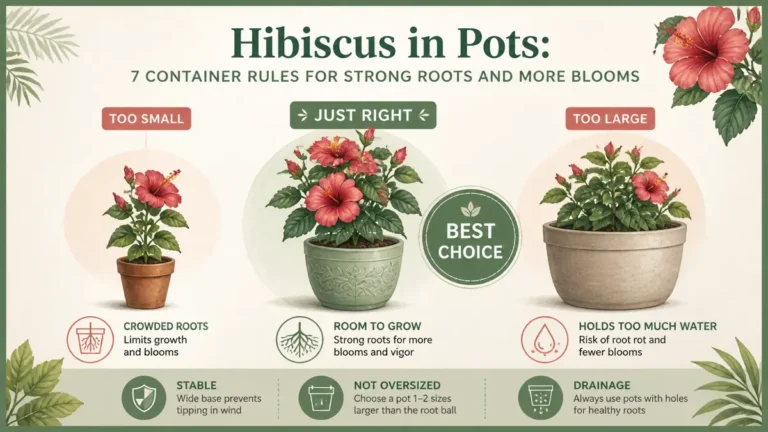
- Root-bound pot: Move up one pot size, not several sizes, and loosen circling roots lightly.
- No drainage hole: Repot into a container with drainage. Decorative cachepots should not hold standing water.
- Heavy old mix: Refresh with a well-draining potting mix suitable for containers.
- Recent repot: Expect a short pause in blooming while roots settle.
Container hibiscus need a balance: enough room for roots, but not a huge wet pot that stays soggy. Moving from a small pot into a much larger container can keep the outer mix wet long after the root ball has used the water near it. That uneven moisture can cause rot while the plant still wilts from root damage.
When repotting, keep the crown at roughly the same soil level unless the plant was clearly planted too deep. Do not bury woody stems deeply in fresh mix. Water in thoroughly after repotting, let excess drain, and give the plant bright but not scorching conditions while it adjusts. A short bloom pause after repotting is normal.
For pot sizing, mix, and watering details, see hibiscus in pots.
Hardy hibiscus in the ground can be divided in spring if clumps are crowded. Avoid fall division in cold climates because roots need time to reestablish before winter. Rose of Sharon is not handled the same way; it is a woody shrub and is usually managed by pruning rather than division.
7. Inspect Buds for Aphids, Whiteflies, and Spider Mites
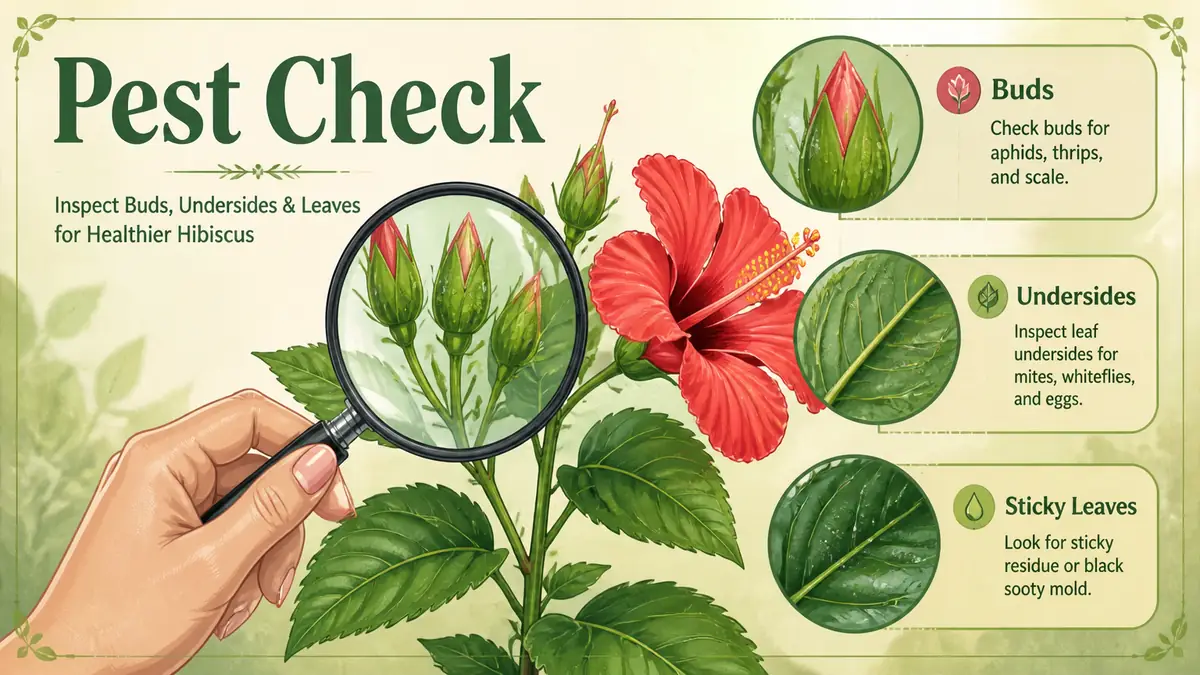
Pests often hide exactly where bloom problems begin: on buds, tender stem tips, and leaf undersides. Aphids, whiteflies, spider mites, scale, and mealybugs can all stress tropical hibiscus, especially indoors. Even a small infestation can cause bud distortion or drop because buds are soft, nutrient-rich growth.
Inspect with a bright light. Turn leaves over. Tap a branch gently over white paper. Look for tiny moving specks, sticky honeydew, webbing, curled new growth, yellow stippling, or clusters on unopened buds. Do not rely on a quick look at the top of the leaves; many pests hide below the leaf surface or inside tender tips.
- Aphids: Soft clusters on buds and tender stems. They may be green, black, yellow, or pinkish.
- Whiteflies: Tiny white adults flutter up when disturbed; larvae sit under leaves.
- Spider mites: Fine webbing, dusty-looking leaves, and pale speckling, often worse in dry indoor air.
- Scale or mealybugs: Bumps or cottony masses, often along stems and leaf joints.
Start with the least disruptive control. Rinse pests off with a firm spray of water, including undersides of leaves. Prune heavily infested tips if needed. Repeat inspections every few days because new pests can hatch after the first cleanup. For indoor plants, isolate the hibiscus from other houseplants while you monitor it.
If using insecticidal soap or horticultural oil, test a small area first and apply according to the label. Do not spray a heat-stressed plant in direct hot sun. Open flowers may be damaged by sprays, so focus on stems, buds, and leaf undersides. More product is not better; repeated label-rate applications are safer than one overly strong treatment.
Check for pests before bringing a tropical hibiscus indoors for winter. Outdoor predators may keep pests low during summer, but once the plant moves inside, aphids, whiteflies, mealybugs, and spider mites can increase quickly in warm, still air. Sticky traps can help monitor flying adults, but they do not replace leaf and bud inspections.
Useful for monitoring adult whiteflies after inspecting buds and leaf undersides.
When to wait instead of changing care again
If you corrected one clear issue, give the plant time before making another major change. A tropical hibiscus may need several weeks of steady light, warmth, and moisture to set a new bud cycle. Existing stressed buds may still fall even after you fix the cause, but new buds should be better if conditions remain stable.
Hardy hibiscus often starts late in spring. Rose of Sharon naturally blooms later than many shrubs. If the plant is healthy, in good light, and still within its normal seasonal window, patience may be the correct fix.
Waiting is especially important after repotting, a cold snap, indoor relocation, or pruning. Track one variable at a time: light hours, watering rhythm, nighttime temperature, pest counts, or fertilizer schedule. If you change all of them at once, it becomes much harder to know what actually helped.
FAQ
- Why is my hibiscus not blooming even though it has lots of leaves?
- Too little direct light is the most common reason. Too much nitrogen can also push leafy growth instead of flowers. Check light first, then review fertilizer, pruning timing, and root health. If the plant is indoors, move it as close as possible to a bright south or west window or consider supplemental light.
- Why are my hibiscus buds falling off before they open?
- Hibiscus bud drop often follows sudden changes in watering, temperature, light, or location. Pests on buds and leaf undersides can also cause bud loss. Check moisture consistency, chilly nights, drafts, and insects. If the plant was recently moved, keep conditions steady and wait for the next flush.
- How much sun does hibiscus need to bloom?
- Tropical hibiscus indoors usually needs very bright light and about 4 to 5 hours of bright direct sun to bloom well. Outdoors, most hibiscus types flower best in full sun, though extreme heat may require careful watering. Shade usually produces fewer flowers, even if the foliage looks healthy.
- Should I fertilize a hibiscus that is not flowering?
- Only fertilize if the plant is actively growing and has adequate light. Use a balanced fertilizer at a moderate rate. Do not fertilize a cold, dormant, root-stressed, pest-stressed, or recently moved hibiscus as the first fix. More fertilizer will not compensate for weak light or damaged roots.
- Can pruning stop hibiscus from blooming?
- Yes. Pruning at the wrong time can remove developing bloom sites or delay flowering while the plant regrows. Tropical hibiscus is commonly pruned in late winter or early spring, while hardy hibiscus dead stems are cut back when new growth appears. Rose of Sharon is usually pruned in late winter or early spring as a woody shrub.
- Will an indoor tropical hibiscus bloom in winter?
- Sometimes, but not always. Winter indoor light is often too weak, and some plants slow down or become semi-dormant. Keep it bright, avoid drafts, water less as growth slows, and wait for stronger growth before feeding heavily. Leaf drop during adjustment does not always mean the plant is dying.
- Is my hardy hibiscus dead if it is not growing in early spring?
- Not necessarily. Hardy hibiscus often emerges late compared with many perennials. Wait until the soil warms and look for new shoots from the crown before assuming the plant has died. Avoid digging around the crown too early, because new shoots can be fragile.
- Why does my hibiscus flower for one day and then drop the bloom?
- That can be normal. Individual hibiscus flowers are often short-lived, especially in heat or bright sun. A healthy plant replaces old flowers with new buds. The problem is when unopened buds drop, no new buds form, or the plant loses many leaves at the same time.
The Last-14-Days Hibiscus Bloom Checklist
- Did nights suddenly cool down or did the plant move indoors?
- Did the pot dry out completely, then get soaked?
- Did you fertilize heavily, especially with nitrogen?
- Did you prune after buds started forming?
- Did you inspect buds and undersides for pests?
If one of these changed recently, fix that before buying another product. Hibiscus often reacts to the last stress event, not a permanent care failure.
Source note: This article checks its hibiscus care and safety claims against University of Minnesota Extension: Hibiscus, RHS: Hibiscus rosa-sinensis growing guide, Clemson HGIC: Hibiscus, University of Maryland Extension: Overwintering Tropical Plants. Generated visuals are educational illustrations, not proof photos or fake testing results.
More Hibiscus Guides
Use the focused hibiscus guide that matches what you see. This keeps the care hub from becoming a guessing game.
Use the Right Bloom Path
| Path | Most likely causes | First useful fix |
|---|---|---|
| No buds at all | Low light, wrong season, pruning timing, plant maturity, or too much nitrogen | Increase light and check pruning/feeding history |
| Buds form but drop | Water swings, cold nights, heat stress, recent move, pests, or root stress | Stabilize watering and inspect buds/leaf undersides |
Common Hibiscus Bloom Scenarios
- Lots of leaves but no buds: start with light and nitrogen-heavy feeding.
- Buds yellow and drop: check water swings, cold nights, and pests first.
- No blooms after pruning: wait for new growth and avoid cutting new bud-bearing shoots.
- No blooms after moving indoors: treat it as a light and transition problem before changing fertilizer.