Popular Spider Plant Varieties Explained

by Joakim Becker | Feb 24, 2026 | 0 comments

Varieties and Types

April 14, 2026

Popular Spider Plant Varieties at a Glance

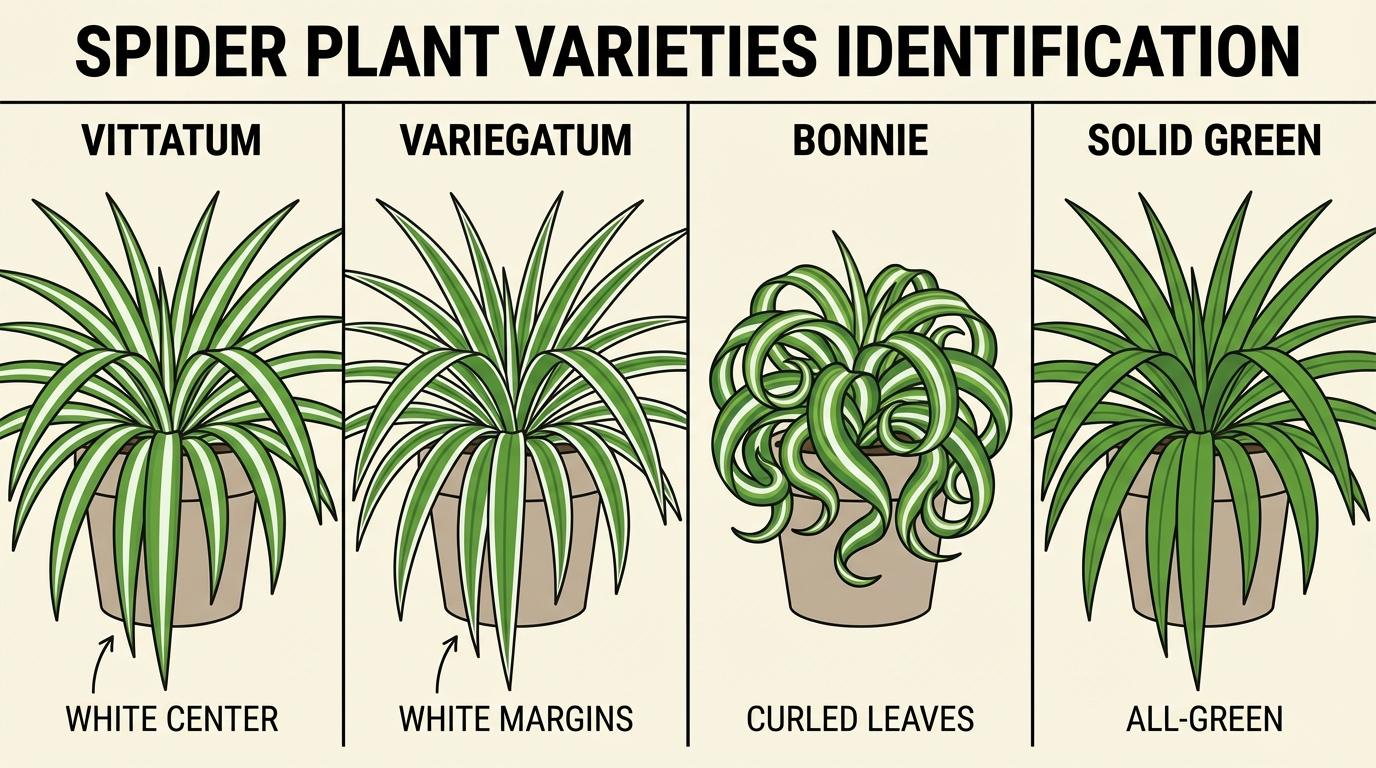
spider plant varieties comparison showing the white center of Vittatum versus the white edges of Variegatum.
spider plant varieties comparison showing healthy leaves versus signs of root rot, light starvation, and chemical damage.
spider plant varieties comparison showing Vittatum and Variegatum leaf patterns and light needs.
spider plant varieties diagram comparing lighting needs for striped variegated plants versus solid green types
spider plant varieties diagram comparing a root-bound plant in dense soil to a healthy plant in airy perlite mix.
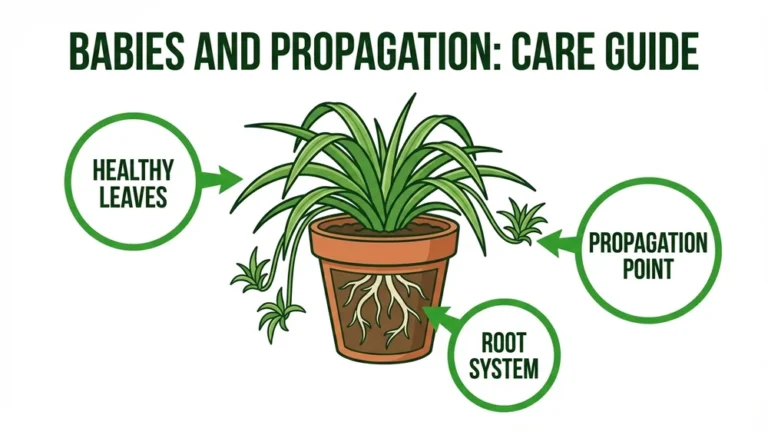
spider plant varieties step-by-step guide showing leaf identification, lighting, roots, watering, and offsets.
spider plant varieties comparison showing different light requirements for variegated and solid green types
spider plant varieties diagram comparing Vittatum, Variegatum, Bonnie curly, and solid green types.
spider plant varieties diagram showing leaf differences between Vittatum, Variegatum, and Bonnie types.

When we brought our first spider plant home to our Aarhus apartment, we had no idea how many different spider plant varieties actually existed. We just assumed they were all the same grassy plants hanging in every Danish living room.

If your plant has been in the same soil for 2+ years, it is time to upgrade:

EDITOR’S PICK

A powerhouse blend with earthworm castings and bat guano. Perfect for hungry tropicals that want to grow big.

Check Price on Amazon →

(paid link)

If your plant is not getting enough natural light, this in a standard floor lamp changes everything:

TOP RATED

Fits a standard lamp but delivers intense, full-spectrum light. Powerful enough for large floor plants in dark corners.

Check Price on Amazon →

(paid link)

It turns out that identifying exactly which type you have is the crucial first step in proper spider plant varieties care. We learned the hard way that different leaf patterns mean entirely different survival requirements.

Because the popular striped plants have less chlorophyll, Joakim found horticultural research showing they need up to 30% more light than solid green species. During our notoriously dark Scandinavian winters, meeting that extra light requirement is the only way to keep them alive.

In this section, we promise to share everything we know about identifying and growing spider plant varieties. We will explain the subtle genetic differences between the white-centered ‘Vittatum’ and the green-centered ‘Variegatum’, and cover the curly ‘Bonnie’ type.

We will also clear up the confusing advice out there about keeping healthy spider plant varieties completely root-bound. Once you identify your specific plant, you can safely apply our Master Spider Plant Care Guide without constantly battling Brown Tips.

How Spider Plant Varieties Differ

Having the different spider plant varieties explained clearly changed how we handle our indoor jungle. We used to treat every striped leaf exactly the same. Once we learned the genetic differences, we realized why some thrived while others struggled in our dark apartment.

The Classic ‘Vittatum’ (White Center, Green Edges)

This is the most common type we spot at local plant swaps here in Aarhus. The Chlorophytum comosum ‘Vittatum’ has a thick white stripe down the middle of each leaf, bordered by green margins.

Because that white center lacks chlorophyll, it cannot photosynthesize efficiently. As botanical researchers note, variegated types require up to 30% more light than solid green plants.

Reading about spider plant varieties explained care differences finally clicked for us. Joakim measured our window light, and we had to move our ‘Vittatum’ directly into our east-facing windowsill just to keep it alive during the Danish winter.

The Reverse ‘Variegatum’ (Green Center, White Edges)

We actually confused this with the ‘Vittatum’ for our first two years of plant keeping. The ‘Variegatum’ is the exact reverse pattern, featuring a solid green center flanked by white outer edges.

Seeing healthy spider plant varieties explained structurally helped us place this plant better. The larger green surface area means it handles slightly darker corners better than the ‘Vittatum’.

The Curly ‘Bonnie’

The ‘Bonnie’ is a compact favorite for small spaces. It shares the same coloring as the ‘Vittatum’, but its leaves curl tightly in on themselves.

We keep our ‘Bonnie’ on a strict schedule because those curled leaves trap moisture near the soil surface. Figuring out How Often to Water this specific type finally stopped ours from getting mushy stems.

These tightly wound plants also produce pups on curving stalks. When it is time for Propagation, you handle these curly offshoots exactly like you would the straight-leaved types.

The Solid Green Spider Plant

You rarely see the pure green, non-variegated spider plant in regular stores anymore. Since every leaf is completely packed with chlorophyll, this is by far the most resilient type you can own.

If you only have a shady north-facing window, this is the plant to choose. Seeing growing spider plant varieties explained through photosynthesis proves that solid green plants simply process low light much better.

Choosing the Right Variety for Your Space

Understanding spider plant varieties importance comes down to one simple biological rule. The color of the leaves directly dictates the exact amount of light and care your plant needs to survive. Treating a heavily striped plant exactly like a solid green type is a fast track to disappointment.

The white stripes on popular varieties completely lack chlorophyll, which is the green pigment plants use to turn sunlight into food. This means variegated plants must work much harder to feed themselves. Because of this, growing spider plant varieties importance becomes incredibly clear during the winter.

Here in our Aarhus apartment, the dark Scandinavian winters are brutal on our striped plants. We quickly learned that the white-centered Chlorophytum comosum ‘Vittatum’ requires almost 30 percent more light than a solid green plant just to maintain its health. We ended up installing small grow lights to keep them going.

How Leaf Color Changes Your Routine

Recognizing healthy spider plant varieties importance allows you to position your pots correctly right from the start. Solid green types handle a shady north-facing window quite well. However, striped types require a bright, east-facing or west-facing spot to thrive and maintain their contrast.

Different types also demand slight adjustments to your watering habits. The curly ‘Bonnie’ variety traps moisture tightly near the soil level, making it highly prone to stem rot. Knowing this difference completely changes How Often to Water your specific plant.

Every variety shares a strong sensitivity to the chemicals found in tap water. We used to water our plants straight from our Danish taps, which provide notoriously hard water. This quickly caused severe Brown Tips on both our ‘Vittatum’ and ‘Variegatum’ plants.

While letting tap water sit out overnight allows chlorine to evaporate, it does absolutely nothing for fluoride. According to botanical research, fluoride remains in the water and accumulates in the leaf margins. We eventually switched to collecting rainwater on our balcony to solve this issue.

Finally, grasping spider plant varieties importance care helps you manage your home environment safely. All varieties are universally recognized as non-toxic, but cats in particular love to chew on the long, grassy leaves. If you are worried about the plant being Toxic to Cats, rest assured it is safe, though eating too much might upset a feline stomach.

How to Identify Your Spider Plant Variety

spider plant varieties stress signs showing healthy roots versus root-bound plants with faded leaf variegation.

Knowing your specific plant is helpful, but learning the exact spider plant varieties signs of stress is what keeps them alive. In our Aarhus apartment, we learned the hard way that these plants constantly communicate their needs through subtle physical changes.

When you understand these signals, providing proper spider plant varieties signs care becomes much easier. The most common issues usually involve lighting adjustments, hidden root problems, or watering habits. Let us walk you through the key indicators to look out for.

The Root-Bound Stress Response

You will often hear that these plants love being cramped in their pots. The truth is slightly more complicated. Producing pups is actually a physiological stress response to running out of root space.

Keeping them slightly cramped encourages those famous hanging babies. However, ignoring healthy spider plant varieties signs can quickly turn fatal. When the thick, tuberous roots start pushing the plant entirely out of the pot, it is starving.

If water runs straight down the sides of the pot without soaking in, the roots have completely replaced the soil. The potting mix has lost its ability to hold essential nutrients. When this happens, consult our Master Spider Plant Care Guide for safe repotting steps.

Reading Leaves for Light and Water Issues

Paying attention to growing spider plant varieties signs means watching the foliage closely. As Joakim found in horticultural research, variegated types need up to 30 percent more light to thrive.

If the stark white stripes on your ‘Vittatum’ or ‘Variegatum’ start fading to a dull green, the plant is struggling to photosynthesize. Move it closer to a window. During dark Danish winters, we rely on small grow lights to maintain those sharp colors.

Watch the leaf ends closely as well. While crispy edges often point to fluoride buildup causing Brown Tips, pale and mushy leaves indicate poor soil aeration. These plants have thick roots that hold excess water, making them highly susceptible to rot.

We use a potting mix with plenty of perlite to ensure a minimum of 20 percent aeration. If the leaves look pale and feel limp, rethink How Often to Water your plant. Always let the top two inches of soil dry out completely before adding more moisture.

Where to Find Rare Varieties

Understanding your specific plant is crucial before making changes. Following the right spider plant varieties steps helps you tailor your daily routine. We quickly learned that treating all chlorophytum identically leads to rotting roots and crispy edges.

Step 1: Identify Your Exact Plant

The first action is figuring out what is sitting on your windowsill. If your plant has green edges and a white stripe down the center, you have the classic ‘Vittatum’. If it is reversed with white edges and a green center, you own the ‘Variegatum’.

We also have the curly ‘Bonnie’, which looks exactly like a ‘Vittatum’ that got a perm. Finally, there is the solid green type. Following basic growing spider plant varieties steps for the pure green one is easiest because it is incredibly resilient.

Step 2: Adjust Lighting for Variegation

Proper spider plant varieties steps care means adjusting your lighting first. Those striking white stripes indicate the plant has less chlorophyll. According to horticultural research, variegated types require up to 30 percent more light than solid green plants.

In our east-facing Aarhus apartment, winter daylight is practically non-existent. We use a small grow light over our variegated types from November to March. This extra boost keeps them actively photosynthesizing through the dark Scandinavian winter.

Step 3: Ignore the Root-Bound Myth

You have probably read that these plants prefer to be totally root-bound to produce pups. That is actually a myth based on a physiological stress response. When the thick tuberous roots run out of space, the plant panics and pushes out offshoots to survive.

We keep our healthy spider plant varieties steps simple by repotting when water runs straight through the pot. Waiting too long turns beneficial stress into a fatal decline. Check out our Master Spider Plant Care Guide for our preferred chunky, well-aerated soil recipe.

Step 4: Upgrade Your Watering Routine

The final hurdle is watering. Danish tap water is incredibly hard, which quickly leads to Brown Tips. We used to leave water out overnight, but while that lets chlorine evaporate, it does absolutely nothing for fluoride.

Fluoride actually accumulates in the leaf margins and cannot be gassed off. We started collecting rainwater on our balcony to water our indoor jungle. Figuring out exactly How Often to Water with clean rainwater finally stopped the crispy ends from forming.

Step 5: Handle Offsets and Pets Safely

Eventually, your plant will push out curving stalks covered in tiny pups. At this point, basic Propagation is easy. You just snip the offsets and place them in shallow water until fresh roots form.

As a bonus, these plants are completely safe to have around pets. If you ever worry about them being Toxic to Cats, you can relax. A curious cat might get a mild stomach upset from eating too many grassy leaves, but the plant is completely non-toxic.

Variety-Specific Care Mistakes

Making spider plant varieties mistakes usually happens when you treat every single type exactly the same. We definitely did this early on by assuming our curly ‘Bonnie’ needed the identical care routine as a standard green species.

Avoiding common growing spider plant varieties mistakes is much easier once you understand their basic biology. Let us walk you through the biggest errors we see, and the ones we made ourselves in our Aarhus apartment.

Forcing Them to Stay Root-Bound

The most common piece of advice online is to keep your plant heavily root-bound to produce offsets. This is actually a physiological stress response. The plant thinks it is dying, so it shoots out babies for Propagation to ensure its survival.

A little crowding in the pot is perfectly fine. However, one of the biggest healthy spider plant varieties mistakes happens when owners refuse to ever repot them.

Once those thick tuberous roots start cracking the plastic nursery pot, water just runs straight through without absorbing. At that point, the plant is slowly starving to death.

Starving Variegated Types of Light

If you have a ‘Vittatum’ or ‘Variegatum’, remember that those white stripes lack chlorophyll. Joakim dug into horticultural research confirming these variegated types need up to 30 percent more light than solid green ones.

We lost the bright white stripes on our first ‘Vittatum’ because we left it in a dim corner. During our dark Danish winters, we now rely on grow lights to make up for the lack of natural sun.

Ignoring Water Quality and Soil Density

A major factor in spider plant varieties mistakes care is using the wrong type of water. Tap water contains fluoride, which these plants cannot filter out.

This fluoride builds up in the leaf edges, directly causing Brown Tips. Letting your watering can sit out overnight only removes chlorine, so we highly recommend catching rainwater if you can.

Finally, planting them in a dense potting mix is a recipe for rot. We always mix standard soil with at least 20 percent perlite to keep the root zone aerated.

This porous mix makes a massive difference when figuring out How Often to Water. To build a solid routine, you can combine these specific corrections with our Master Spider Plant Care Guide.

While avoiding these errors keeps your indoor jungle thriving, you never have to worry about this plant hurting your pets. They are perfectly safe, so if you ever wonder if they are Toxic to Cats, you can breathe easy.

Getting the Best Variegation from Each Type

When we first started building our indoor jungle, we treated every spider plant exactly the same. We quickly learned that following expert spider plant varieties tips is essential because subtle genetic differences completely change how these plants behave.

Lighting for Striped Plants

Joakim read through botanical research and found that striped plants physically process less sunlight. The common ‘Vittatum’ and ‘Variegatum’ varieties actually require up to 30 percent more light than solid green types just to survive.

In our dark Aarhus apartment during winter, meeting this light demand is tough. One of our top healthy spider plant varieties tips is to place striped plants directly against an east-facing window or use a small grow light.

The Root-Bound Myth Explained

You will often read that these plants love being tight in their pots to produce pups. Emilie learned the hard way that this is actually a physiological stress response, not a sign of a happy plant.

A plant pushing out offsets because it is cramped is literally entering survival mode. For those seeking reliable growing spider plant varieties tips, we highly recommend repotting before those thick tuberous roots start cracking the plastic nursery pot.

We usually repot ours every two years to prevent the roots from completely suffocating. When your cramped plant does eventually push out those long stalks of pups, Propagation is a fun and easy weekend project.

Soil Aeration and Water Rules

Standard plant advice just says to use well-draining soil. However, proper spider plant varieties tips care requires a soil mix that holds nutrients while maintaining at least a 20 percent aeration porosity.

We combine regular potting soil with a heavy dose of perlite to achieve this. This porous setup forms the foundation of our Master Spider Plant Care Guide and prevents the thick tuberous roots from turning to mush.

Finally, you must protect your specific variety from hard tap water. The tap water here in Denmark is heavily treated, and the resulting fluoride buildup directly causes Brown Tips on sensitive leaves.

Letting a watering can sit out overnight does absolutely nothing to evaporate fluoride. We strictly collect rainwater now, which completely solved our mystery leaf damage and changed How Often to Water our collection safely.

Keeping Variegation from Reverting to Green

Mastering spider plant varieties prevention starts with understanding the specific genetic quirks of your plant. We lost our very first white-centered ‘Vittatum’ simply because we treated it exactly like a resilient, solid green type.

Proper spider plant varieties prevention care means tweaking your routine based on whether you own a ‘Vittatum’, a green-centered ‘Variegatum’, or a curly ‘Bonnie’. Each specific cultivar handles environmental stress quite differently.

Preventing Root Stress and Soil Issues

You will often hear that these plants love being totally root-bound. In reality, being squeezed into a small pot triggers a physiological stress response that literally forces the plant to push out pups for survival.

Leaving them restricted for too long eventually starves the thick tuberous roots. To maintain healthy spider plant varieties prevention, we always repot when thick roots physically start pushing the plant up out of its container.

We build a potting mix with a high cation exchange capacity to hold nutrients, plus at least 20 percent perlite for aeration. This porous structure prevents root rot and completely changes our How Often to Water routine.

You can easily adapt this airy potting mix to fit the daily instructions in our Master Spider Plant Care Guide.

Stopping Chemical Leaf Burn

Here in Aarhus, our apartment tap water is notoriously hard and full of harsh minerals. Watering straight from the tap quickly caused severe Brown Tips on our sensitive ‘Variegatum’ plant.

Many people think letting water sit out overnight solves this problem entirely. While that successfully off-gasses chlorine, it does absolutely nothing for fluoride, which cannot evaporate and accumulates directly in the leaf margins.

We completely stopped this crunchy leaf damage by switching to rainwater collected on our balcony. If you cannot catch rainwater, using distilled water or reverse osmosis water works perfectly for sensitive varieties.

Light Adjustments for Variegated Types

Growing spider plant varieties prevention also requires adjusting your expectations regarding sunlight. Striped cultivars lack chlorophyll in their white sections, meaning they photosynthesize much less efficiently than solid green types.

According to horticultural research, variegated plants actually need up to 30 percent more light just to maintain normal growth rates.

During our gloomy Danish winters, we are forced to put our striped types directly under small grow lights. If the bright white stripes start looking muddy or light green, your plant is begging for higher lux levels.

Managing Pups and Pet Safety

When your mature plant finally produces curving stalks full of offsets, snipping them off actually helps the mother plant conserve energy. Handling these tiny plantlets is the first step in successful Propagation.

Keeping your indoor jungle safe for animals is another vital part of everyday plant maintenance. Luckily, you never have to worry about these grassy plants being Toxic to Cats or dogs.

When Your Variety Isn’t Thriving

Knowing when to consult a spider plant varieties professional can save a dying collection. Most issues are easily fixable at home, but severe physical decline sometimes requires a complete reset.

If you are researching growing spider plant varieties professional growers will tell you to watch their physical limits. Let us look at the warning signs that indicate your plant needs immediate rescue.

The Root-Bound Myth Gone Wrong

Many people mistakenly believe these plants must be severely root-bound to thrive. While a tight pot triggers the stress response needed to produce offsets for Propagation, leaving them cramped too long is fatal.

If water runs straight through the pot without absorbing, or the thick tuberous roots push above the soil line, the plant is suffocating. At this stage, standard advice from a Master Spider Plant Care Guide will not work without a major repotting intervention.

Unstoppable Crispy Edges

We used to panic over severe leaf damage. If your plant has worsening Brown Tips despite your best efforts, the issue is likely chemical buildup in your potting soil.

Hard Danish tap water is full of fluoride. Letting water sit out overnight removes chlorine, but fluoride stays and accumulates heavily in the plant tissue.

When the crispy damage spreads down the entire leaf, you must flush the soil. We completely stopped using tap water and now collect rainwater to reverse this specific damage.

Fading Stripes and Rotting Centers

Striped types like ‘Vittatum’ and ‘Variegatum’ require specific lighting to survive. According to horticultural research, these variegated plants have less chlorophyll and need up to 30 percent more light than solid green ones.

If the bright white stripes turn a muddy green, the plant is starving for light. We rely on strong grow lights during dark Aarhus winters to maintain healthy spider plant varieties professional growers would admire.

Finally, if the center of your curly ‘Bonnie’ variety turns black and mushy, you have a severe soil aeration issue. These plants require a potting mix with at least 20 percent perlite to prevent root rot.

A dense, wet soil mix quickly drowns the tuberous root system. If the base feels soft to the touch, you need to rethink How Often to Water and immediately change the soil to save it.

While a rotting plant is stressful to handle, it poses no danger to your pets. If you ever worry about sick or dying leaves being Toxic to Cats, you can rest easy knowing they are completely safe.

Spider Plant Varieties and Types FAQ

Welcome to our spider plant varieties faq. We get asked constantly about the subtle differences between these common striped houseplants. Whether you are troubleshooting issues or just want healthy spider plant varieties faq tips, we have tested it all in our Aarhus apartment.

What is the difference between ‘Vittatum’ and ‘Variegatum’?

It comes down to exactly where the white stripes are located. Chlorophytum comosum ‘Vittatum’ has green edges with a white center, while ‘Variegatum’ features white edges with a solid green center.

Because they have less chlorophyll than pure green types, they need up to 30 percent more light. Joakim checked the botanical data, confirming this photosynthetic variance is very real.

Growing spider plant varieties faq questions often miss this extra light requirement. If the stark white stripes on your plant fade to a dull green, move it closer to a window immediately.

Do spider plants need to be root-bound?

No, this is a very common indoor gardening myth. Being tightly root-bound actually triggers a physiological stress response in the plant. It produces offsets, or pups, as a survival mechanism because it feels trapped.

While a little crowding in the pot is fine, leaving them severely root-bound will eventually become fatal. When thick roots begin circling the container and pushing above the soil line, upgrade the pot.

Once you relieve that root stress and provide fresh soil, Propagation becomes much easier. The mother plant can finally support all that new growth without suffocating in its own container.

Why do the leaf tips turn brown despite regular watering?

The tap water here in Denmark is notoriously hard, which quickly leads to crispy Brown Tips. Letting your watering can sit out overnight only evaporates the chlorine.

Fluoride remains in the water and constantly builds up in the delicate leaf margins. Because this specific chemical cannot be off-gassed, we completely switched to collecting rainwater on our balcony.

Using clean rainwater completely changed How Often to Water our indoor jungle. We no longer worry about causing accidental chemical burns on the leaves with every single watering session.

How do I care for the curly ‘Bonnie’ spider plant?

The curled leaves of the ‘Bonnie’ type tend to trap moisture right against the soil surface. This makes them highly susceptible to base rot if the dirt stays too wet.

Standard advice just says to use well-draining soil, but we mix standard potting dirt with at least 20 percent perlite. This ensures the thick, tuberous roots get proper aeration porosity.

This airy soil mix is a key part of our Master Spider Plant Care Guide. It holds enough nutrients to support growth while completely preventing the root system from turning into mush.

Proper spider plant varieties faq care ultimately means keeping things simple and safe. Thankfully, no matter which type you bring home, you never have to worry about them being Toxic to Cats or dogs.

Recommended Spider Plant Essentials

Each product below was hand-picked after thorough research and testing.

🌱 Best Soil
BEST VALUE

The cheapest upgrade you can make to any potting mix. A handful per pot dramatically improves drainage and aeration.

Check Price → (paid link)

💧 Watering
EDITOR’S PICK

The long, narrow spout lets you water directly at the soil level without splashing leaves — keeps foliage dry and reduces fungal risk.

Check Price → (paid link)

🌿 Fertilizer
EDITOR’S PICK

Complete liquid fertilizer with all 16 essential nutrients. The 7-9-5 ratio is dialled in for lush foliage plants.

Check Price → (paid link)

💦 Humidity
EDITOR’S PICK

Accurate humidity and temperature monitor with Bluetooth logging. Know exactly what conditions your plants are living in.

Check Price → (paid link)

As an Amazon Associate I earn from qualifying purchases.

Common Questions About Spider Plant Varieties

How often should I water my spider plant?

Spider plants prefer lightly moist but not soggy soil. Water your spider plant about once a week during the spring and summer growing season, allowing the top inch or two of soil to dry out between waterings. Reduce watering in the fall and winter.

Because they have thick, tuberous roots that store water, it is always better to slightly underwater than to overwater.

What kind of light does a spider plant need?

Spider plants thrive best in bright, indirect light. While they tolerate medium or low light conditions (like in a shaded hallway), their growth will slow down and variegated varieties may lose their bold stripes. Always avoid placing them in direct, harsh sunlight, as this can easily scorch and burn their leaves.

Why are the tips of my spider plant leaves turning brown?

Brown leaf tips on a spider plant are very common and are usually caused by underwatering, low humidity, or a buildup of salts and chemicals (like fluoride or chlorine) found in tap water. To prevent this, try to water your plant with rainwater or distilled water, and maintain consistent soil moisture.

Should I cut the brown tips off my spider plant?

Yes, you can safely cut off the brown tips to improve the plant’s appearance. Use clean, sharp scissors and cut at an angle to mimic the natural pointed shape of the leaf. Removing the dead tips will not harm the plant, though you should still address the underlying watering or humidity issue.

How do I propagate a spider plant?

Spider plants are incredibly easy to propagate using the baby plants, or ‘spiderettes,’ that grow on the ends of their long, trailing stems. Simply snip a spiderette off the mother plant—ideally choosing one that has already formed small brown root nodules—and plant it in a small pot with damp compost, or place it in water until deeper roots develop.

Why are my spider plant’s leaves turning yellow?

Yellowing leaves on a spider plant almost always indicate a watering issue, most commonly overwatering, which leads to root rot. It can also be a sign that the plant is severely root-bound, meaning the roots take up the entire pot and the plant can no longer adequately absorb moisture or nutrients.

Do spider plants like to be root-bound?

Spider plants grow very quickly and actually produce spiderettes and flowers best when they are slightly pot-bound. However, they should not be left severely root-bound indefinitely. If the fleshy roots are pushing the plant out of the pot or if water runs straight through without soaking into the soil, it is time to repot.

Why is my spider plant wilting?

Wilting in a spider plant is generally caused by underwatering, insufficient light, or exposure to excessive heat. Ensure the plant is placed in bright, indirect light, avoid keeping it near heat vents, fireplaces, or hot south-facing windows, and water it thoroughly when the top two inches of soil feel dry.

Are spider plants toxic to cats and dogs?

No, spider plants (Chlorophytum comosum) are completely non-toxic to both cats and dogs. They are widely considered safe houseplants for households with pets and children. However, cats are often attracted to their grass-like leaves, and eating large quantities of any foliage can cause mild stomach upset.

How often should I fertilize my spider plant?

You should fertilize your spider plant once every two to four weeks during the active growing season (spring through summer) using a balanced, water-soluble liquid houseplant fertilizer diluted to half-strength. Do not fertilize during the winter months, as excess nitrogen and salt buildup can cause weak growth and brown leaf tips.

What is the ideal temperature and humidity for a spider plant?

Spider plants prefer moderate room temperatures between 60°F and 75°F (15°C to 24°C). They should be kept away from cold drafts and temperatures below 50°F (10°C). While they can easily adapt to standard indoor conditions, they are native to tropical environments and will thrive in higher humidity, making bathrooms or kitchens excellent locations.

Why is the base of my spider plant turning brown or mushy?

A brown, mushy base is a strong indicator of overwatering and severe root rot. Spider plants have thick roots that store water, making them highly susceptible to rotting if left sitting in soggy, poorly-drained soil. If you notice a rotting base, you must immediately remove the plant, trim away the affected roots, and repot it in fresh, well-draining soil.

What are the most common pests that affect spider plants?

While generally resilient, spider plants can occasionally attract common houseplant pests such as spider mites, aphids, whiteflies, mealybugs, and scale insects. If you spot webbing, sticky residue, or tiny bugs on the foliage, rinse the plant gently under a shower and treat the leaves with insecticidal soap or neem oil.

Why is my spider plant not producing babies (spiderettes)?

Spider plants typically only produce flowers and spiderettes when they reach maturity and receive optimal care. If your plant isn’t reproducing, it likely needs more bright, indirect sunlight or it might need to become slightly root-bound. Increasing light levels in the summer and ensuring proper, light fertilization will usually trigger them to produce offshoots.

Image of joakim with a monstera in the back

Joakim Becker

Joakim Becker is the co-founder and chief investigator for The Plant Manual. His mission is to demystify the science of plant care, cutting through the noise of conflicting online advice. With a researcher's mindset, Joakim translates dense academic studies and horticultural data into the simple, critical 'why' behind every instruction on this site. He believes that true expertise isn't just knowing what to do, but understanding why you're doing it. His goal is to arm you with the knowledge to think like your plant, ensuring the advice Emilie puts into practice is both scientifically sound and destined for success.

0 Comments

Submit a Comment

Your email address will not be published. Required fields are marked *

Related Guides

Purple Heart Plant Propagation: 3 Easy Methods (Works!)

Purple heart plant propagation is incredibly easy! Learn water, soil, and division methods that root in 1-2 weeks. Multiply your collection for free!

Is Wandering Jew Toxic to Cats? Safety Guide (2026)

Is wandering jew toxic to cats? Yes — learn the exact toxins, symptoms to watch for, and 7 proven strategies to keep cats safe around Tradescantia.

Wandering Jew Plant Care: What Actually Works

Expert wandering jew plant care guide covering light, watering, propagation, and troubleshooting. Real tips from hands-on experience with Tradescantia.

Growing Wandering Jew Indoors: Room-by-Room Guide (2026)

Complete indoor wandering jew guide. Room-by-room placement, humidity hacks, and how to keep those purple leaves vivid all year.

Subscribe To Our Newsletter

Get weekly plant tips, exclusive guides, and early access to new content, curated by Joakim and Emilie. Become a more confident plant parent, one email at a time.

You have Successfully Subscribed!

Index