Transparency note: Some links in this article are affiliate links. As an Amazon Associate I earn from qualifying purchases at no extra cost to you. I research current product options and select suggestions based on relevance, availability, customer signals, and fit with the care problem discussed here.
What Yellow Leaves Tell You About Plant Health
Understanding spider plant yellow leaves importance is the line between saving your plant and accidentally killing it with kindness. When we first noticed yellowing on our oldest plant, our immediate reaction was to just add more water.
That was a huge mistake. Because spider plants have thick, tuberous roots that store water, adding extra moisture to damp soil leads straight to root rot. Learning the actual reasons behind healthy spider plant yellow leaves importance saved our indoor jungle.
Getting the diagnosis right matters because the symptoms for totally opposite problems look identical at first glance. If you guess wrong and water a plant that is actually drowning, the roots will quickly suffocate.
Reading the Right Signals
This is where Emilie relies on feeling the leaves rather than just looking at them. If the yellow leaves feel soft, mushy, and start at the base of the plant, you are overwatering. If the yellowing comes with crispy edges and a general plant droop, it needs a drink.
For this part of the guide, a researched product option that fits the job is:
Selected because this section is specifically about soil moisture meter use. Check Amazon for current price and availability.
The most reliable fix for overwatering is removing the guesswork entirely:
Insert it 2 inches deep before every watering. Tells you exactly what is happening at the root zone where rot actually starts.
Understanding growing spider plant yellow leaves importance means you stop guessing based on visuals alone. It helps you nail down exactly How Often to Water your specific pot and environment.
The Aarhus Tap Water Factor
Living in Aarhus, Joakim quickly learned that our hard tap water plays a massive role in plant health. Spider plants are highly susceptible to fluoride toxicity, showing physical cell damage when water levels hit just 1 part per million. You can read more about this mechanism in Penn State’s research on fluoride damage.
This mineral buildup usually starts as dead tissue at the tips. Slowly, that brown edge pushes down the leaf, leaving a sickly yellow band behind it. If you misdiagnose this as underwatering, adding more tap water just poisons the plant further.
Sometimes, a single yellow leaf is just natural aging as the plant prepares for new growth. Knowing the spider plant yellow leaves importance care prevents panic and keeps you from fixing things that are not actually broken. For a complete look at daily routines, check out our Master Spider Plant Care Guide.
Overwatering vs. Underwatering: How to Tell
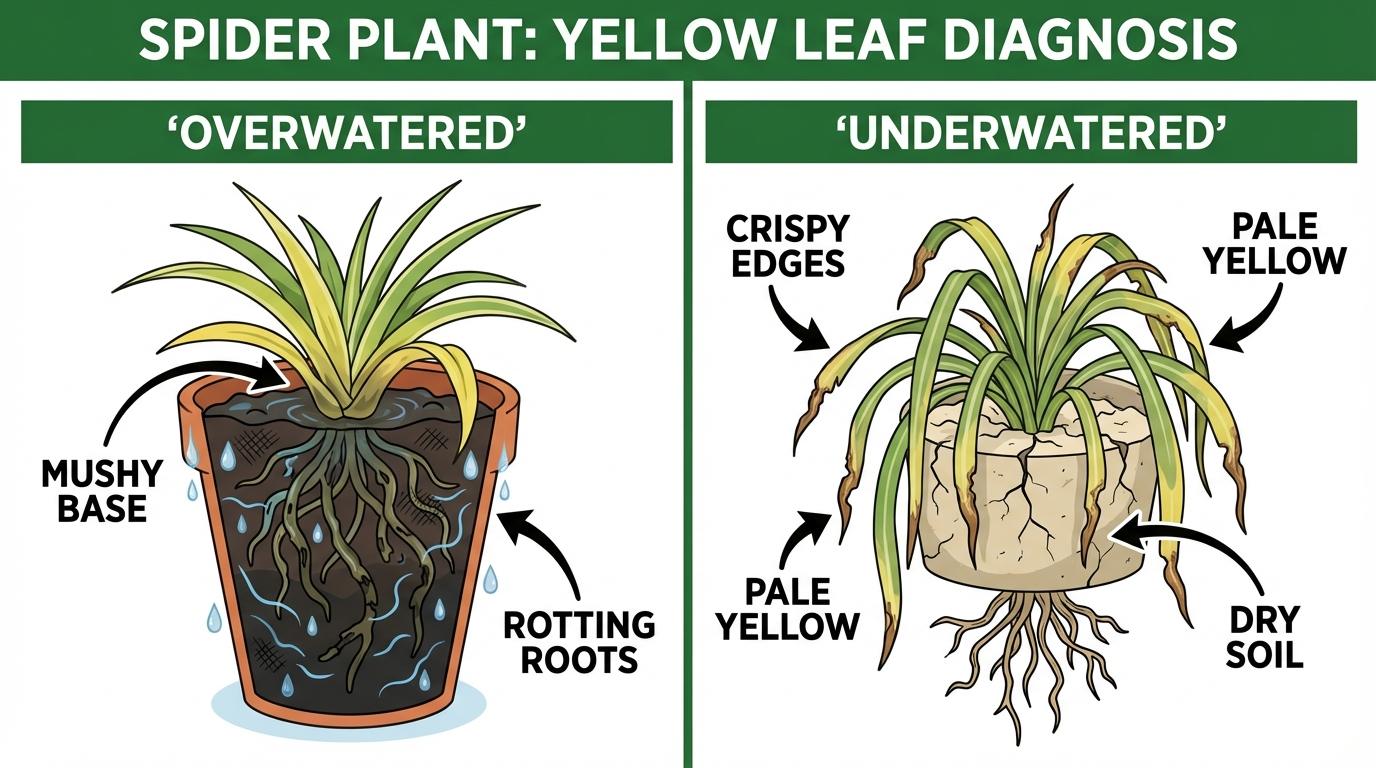
Reading spider plant yellow leaves signs is like translating a very subtle language. When our first spider plant started fading, we had no idea if it was thirsty or drowning. Figuring out healthy spider plant yellow leaves signs takes a bit of practice, but the physical clues are always there.
Feeling the Leaves: Mushy vs. Crispy
The most common confusion is the watering paradox. Both too much and too little water cause yellowing, but the texture tells the real story.
For this part of the guide, a researched product option that fits the job is:
Selected because this section is specifically about humidifier use. Check Amazon for current price and availability.
If the yellowing leaves feel soft, mushy, and start near the base of the plant, you are likely overwatering. Spider plants have thick, tuberous roots designed to store water. Leaving them in soggy soil quickly leads to root rot.
If the yellow leaves are paired with overall drooping and dry edges, the plant is thirsty. We learned to check the soil deeply rather than guessing. Fixing our How Often to Water routine saved our current plants from both extremes.
Tap Water Minerals and Fluoride
Here in Aarhus, our tap water is incredibly hard. This is a real problem because growing spider plant yellow leaves signs often point straight to mineral buildup in the soil.
These plants are highly sensitive to fluoride in particular. According to Penn State Extension, fluoride toxicity damages plant cells when water levels exceed just 1 part per million.
This damage usually begins as Brown Tips on the very ends of the foliage. Slowly, a sickly yellow band follows that brown dead tissue down the leaf. Switching to rainwater or filtered water stops this progression completely.
The Natural Aging Process
Sometimes, a single fading leaf is nothing to worry about. If the oldest leaves right at the soil line turn a pale, even yellow, this is simply natural aging.
The plant redirects energy to grow new offsets and sacrifices its older lower leaves to do so. We usually notice this process right before our plants gear up for Propagation.
By paying close attention, spider plant yellow leaves signs care becomes a calm routine instead of a sudden panic. You just need to feel the leaf texture and understand your local water quality.
How to Fix Yellow Leaves (Our Process)
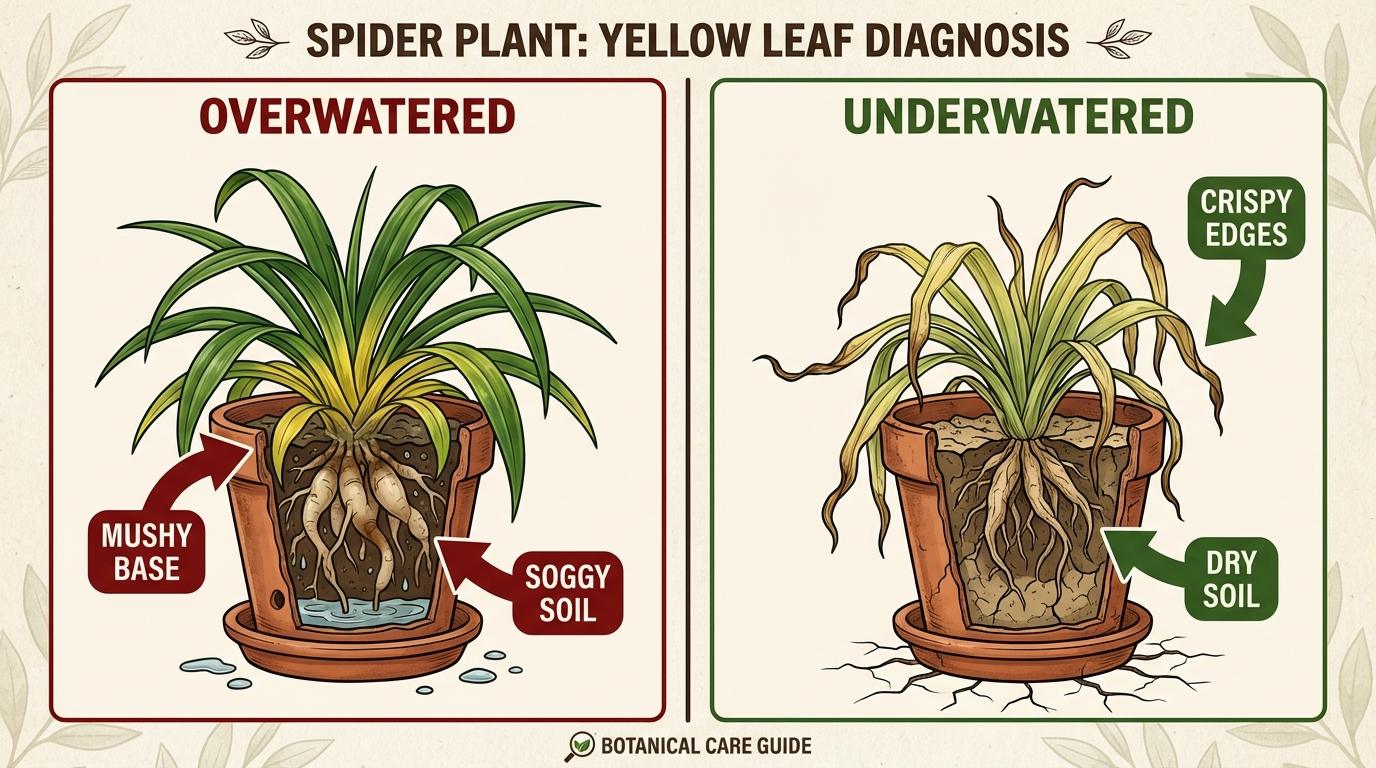
When our first spider plant started fading in our Aarhus apartment, we panicked and just added more water. We quickly learned that following a clear set of spider plant yellow leaves steps saves your plant from a well-intentioned but fatal watering. Today, we use a simple diagnostic checklist.
Step 1: Check the Soil and Roots
Before you do anything, stick your finger deeply into the dirt. Spider plants have thick, tuberous roots designed to store water, meaning standard potting soil often stays too wet. Getting a feel for How Often to Water is your best defense against root rot.
Step 2: Inspect the Leaf Texture
The way a fading leaf feels tells you exactly what went wrong. Overwatered leaves are soft, mushy, and typically start rotting right at the base. If the leaf is yellow but accompanied by a drooping plant and crispy edges, it is severely underwatered.
Step 3: Evaluate Your Water Source
Here in Denmark, our extremely hard tap water causes constant issues. If you see dead tissue spreading from the end into a yellow band, you are dealing with Brown Tips caused by mineral buildup. According to Penn State’s botanical research, physical cell damage begins when water fluoride levels exceed just 1 part per million.
Step 4: Look at the Leaf Location
Finally, check where the yellowing is happening on the plant. If the oldest leaves right at the soil line turn a uniform pale yellow but remain entirely firm, it is simply natural aging. The plant is just redirecting energy toward making offsets for Propagation.
By building these spider plant yellow leaves steps care routines into your weekend schedule, diagnosing problems becomes incredibly straightforward. In our experience, following these growing spider plant yellow leaves steps prevents sudden overreactions. Trust your touch and observations to maintain healthy spider plant yellow leaves steps all year long.
Reactions That Make Yellow Leaves Worse
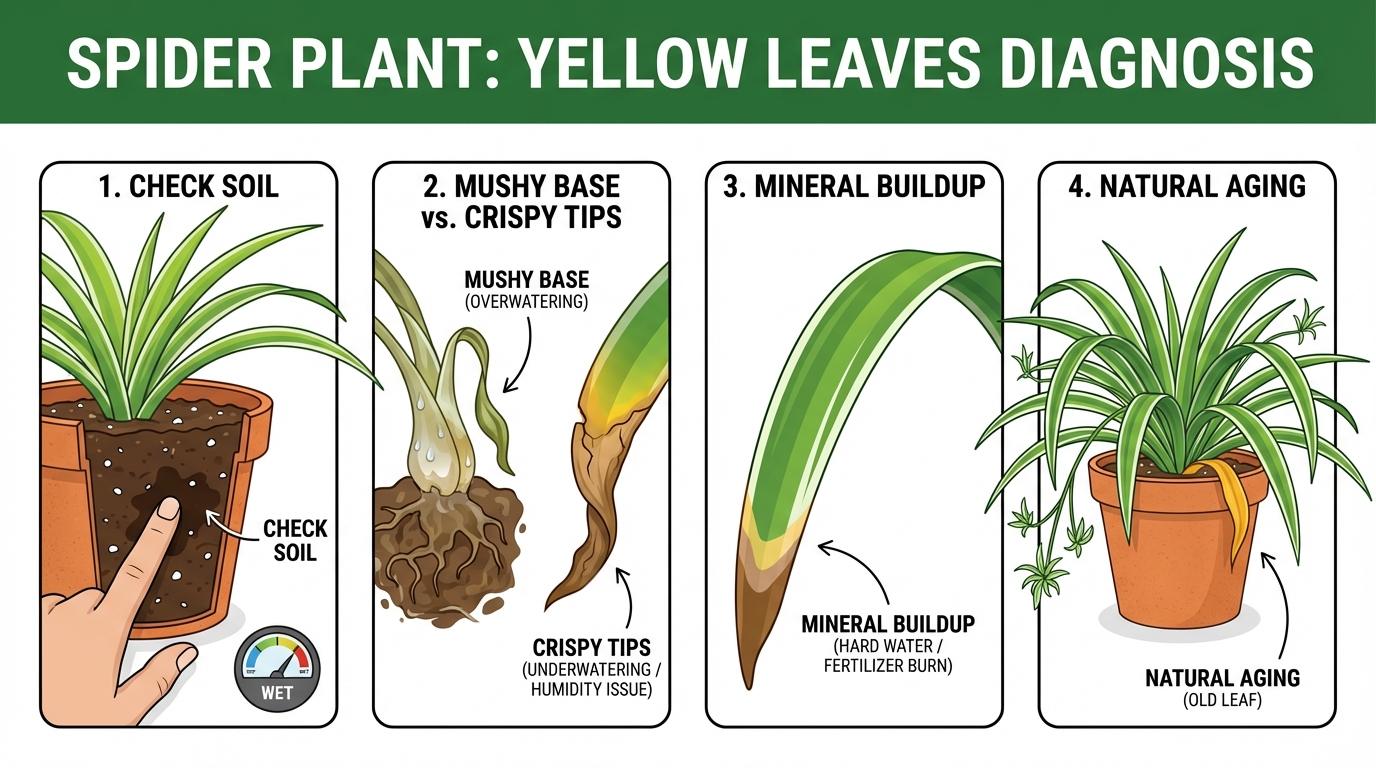
When trying to save a struggling houseplant, falling into common spider plant yellow leaves mistakes can accidentally cause more harm than good. We have definitely panicked and made hasty choices that stressed our plants even further.
Misjudging the Water Signals
The biggest trap is assuming all yellow foliage means the plant is thirsty. If the yellow leaves are soft, mushy, and starting near the soil, you are overwatering.
On the flip side, if the plant is drooping and the yellowing comes with crispy edges, it needs a drink. Figuring out How Often to Water is much easier when you actually feel the leaves first.
Using Heavy Potting Soil
Many people treat these plants like standard tropicals, which leads straight to growing spider plant yellow leaves mistakes. These plants have thick, tuberous roots that store water like tiny potatoes.
For this part of the guide, a researched product option that fits the job is:
Selected because this section is specifically about potting mix use. Check Amazon for current price and availability.
We learned this the hard way when our standard potting soil held onto too much moisture. Now, we always mix in perlite to keep the soil draining fast and prevent root rot.
Adding Water to Fix Fluoride Damage
Here in Aarhus, our tap water is notoriously hard. If you see Brown Tips followed by a sickly yellow band spreading down the leaf, you are looking at mineral toxicity, not underwatering.
According to Penn State’s plant science research, physical cell damage happens when fluoride levels exceed just 1 part per million. Pouring more tap water over the soil just poisons the roots further.
Reacting to Natural Aging
A single pale leaf at the very base of the plant is rarely an emergency. Avoiding healthy spider plant yellow leaves mistakes means understanding that old lower leaves naturally fade and drop off.
The plant is simply redirecting its energy to push out new growth and babies for Propagation. Properly managing spider plant yellow leaves mistakes care is mostly about patience and checking your soil before reacting.
Our Hard Water Solution (Aarhus Tap Water Fix)
Most yellowing on your indoor plants can be fixed at home, but sometimes you need outside advice. Seeking spider plant yellow leaves professional help makes sense if the entire plant turns mushy and begins collapsing overnight. Before spending money on an expert, let us walk you through the diagnostic steps we use in our Aarhus apartment.
Decoding the Water Paradox
Many guides say that yellow leaves mean poor watering, but they rarely explain how to tell the difference. If your yellow leaves feel soft, mushy, and start rotting at the base, you are dealing with waterlogged soil. We actually lost a beautiful plant this way early on before we understood their thick roots.
On the flip side, underwatered leaves look and feel totally different. They droop heavily over the pot and show crispy Brown Tips before fading to yellow. Figuring out How Often to Water depends entirely on checking your specific soil moisture with your fingers first.
Fluoride Toxicity and Tap Water
Here in Denmark, our extremely hard tap water often causes unexpected damage. According to Penn State’s plant science research, spider plants suffer physical cell damage when fluoride levels exceed just 1 part per million.
This toxicity creates a sickly yellow band that slowly follows dead brown tissue down the leaf. When troubleshooting a growing spider plant, yellow leaves professional advice usually recommends switching to rainwater or filtered water immediately to stop the spread.
Recognizing Natural Aging
It is completely normal for a single old leaf near the soil line to turn a uniform, pale yellow. The plant is simply sacrificing older growth to redirect energy toward new spiderettes for Propagation.
If the fading leaf remains completely firm, do not panic. Maintaining a healthy spider plant, yellow leaves professional routine just requires patience and observing the plant’s natural life cycle before making drastic changes.
Remember that spider plants have tuberous roots that store quite a bit of water. Dialing in your spider plant yellow leaves professional care means letting that soil dry out properly. If you still feel stuck, checking our Master Spider Plant Care Guide might save you a trip to a botanist.
Spider Plant Yellow Leaves Diagnosis FAQ
When things go wrong in our indoor jungle, compiling a spider plant yellow leaves faq is exactly what helps us stop panicking. Diagnosing a fading plant usually comes down to feeling the leaf texture and checking your soil moisture.
How do I tell overwatering from underwatering?
Many guides say both issues cause yellowing, which leaves you completely stuck. Handling growing spider plant yellow leaves faq problems starts with understanding that these plants have thick, tuberous roots designed to store large amounts of water.
If the yellow leaves are soft, mushy, and near the soil base, the plant is overwatered and suffering from root rot. If the leaves have crispy edges and the whole plant droops, it is thirsty. We highly recommend reviewing How Often to Water to fix your timing.
Can tap water cause yellow leaves?
Absolutely. Living in Aarhus, our extremely hard tap water taught us this lesson quickly. Spider plants are incredibly sensitive to fluoride toxicity, which slowly kills the plant tissue.
According to Penn State’s botanical research, physical cell damage begins when water fluoride levels exceed just 1 part per million. This starts as Brown Tips that eventually push a sickly yellow band down the leaf.
Why are only the bottom leaves fading?
If the oldest leaves near the soil line turn a uniform pale yellow but remain entirely firm, do not worry. This is a normal part of the plant’s life cycle.
The plant is simply sacrificing its older growth to redirect energy toward making new offsets. We always notice this shedding phase right before our plants gear up for Propagation.
Should I cut the yellow leaves off?
Yes, once a leaf loses its green color, it will not recover. Snip it off near the base with clean scissors. If you notice little bite marks on the damaged foliage, your pets might be the actual problem.
Thankfully, these plants are not Toxic to Cats, but heavy biting destroys the leaf structure. A healthy spider plant yellow leaves faq routine means checking for these physical damages regularly.
Mastering your spider plant yellow leaves faq care just requires patience and observation before reacting. If you are ever unsure about your daily setup, our Master Spider Plant Care Guide covers all the fundamentals.
Recommended Spider Plant Essentials
Each product below was hand-picked after thorough research and testing.
Slow-release granules that feed for 6 months. Mix into the top of the soil and forget about fertilizing for half a year.
Check Price → (paid link)
High-phosphorus organic fertilizer that promotes strong root development and bigger blooms. The classic amendment for irises and bulb plants.
Check Price → (paid link)
The cheapest upgrade you can make to any potting mix. A handful per pot dramatically improves drainage and aeration.
Check Price → (paid link)
The long, narrow spout lets you water directly at the soil level without splashing leaves — keeps foliage dry and reduces fungal risk.
Check Price → (paid link)
Common Questions About Spider Plant Yellow Leaves

Why are the tips of my spider plant turning brown?
Brown leaf tips on a spider plant are most commonly caused by fluoride or chlorine in tap water, low humidity, underwatering, or salt buildup from over-fertilization. To prevent this, water your plant with distilled or rainwater, let the soil dry out slightly between waterings, and maintain moderate humidity.
How often should I water my spider plant?
You should water your spider plant when the top 1 to 2 inches of soil feel dry to the touch, which is typically every 7 to 14 days. Spider plants have thick, fleshy storage roots that hold water, making them highly susceptible to root rot if they are overwatered or sit in soggy soil.
Do spider plants need direct sunlight?
No, spider plants do not like direct sunlight. They thrive best in bright, indirect or filtered light for 4 to 8 hours a day. Prolonged exposure to harsh, direct sunlight, especially in the afternoon, will scorch their leaves and cause sunburn.
Are spider plants toxic to pets?
No, spider plants (Chlorophytum comosum) are completely non-toxic and safe for cats, dogs, and other pets. However, cats are often attracted to their grass-like foliage, and eating too much of the plant can cause mild stomach upset, so hanging baskets are often recommended.
How do I propagate a spider plant?
Propagating a spider plant is incredibly easy. Simply snip the small plantlets (spiderettes or babies) off the long, trailing stems once they develop small brown root nodules. You can place the base of the baby plant in a glass of water until roots grow, or plant it directly into moist potting soil.
Why isn’t my spider plant producing babies?
If your mature spider plant isn’t producing trailing stems with baby plantlets, it likely isn’t getting enough light. They require 6 to 8 hours of bright, indirect light daily to reproduce. Additionally, spider plants often need to be slightly root-bound in their pots to trigger the production of spiderettes.
Do spider plants like to be root bound?
Yes, spider plants grow and produce plantlets best when they are slightly pot-bound. However, because they are fast growers with thick root systems, they can eventually become overly crowded. You should repot them into a slightly larger container when roots start pushing the plant out of the pot or out of the drainage holes.
Should I cut the brown tips off my spider plant?
Yes, you can safely trim the brown, crispy tips off your spider plant for aesthetic reasons. Use clean, sharp scissors to cut off the dead tissue, ideally mimicking the natural pointed shape of the leaf. Leave a tiny sliver of the brown edge so you do not cut into the healthy green tissue.
Can spider plants live in low light?
While spider plants can tolerate and survive in low-light conditions, they will not thrive. In dim lighting, their growth will slow down, their leaves may become droopy, variegated varieties may lose their white or yellow stripes, and they will rarely produce flowers or babies.
Why are my spider plant leaves turning yellow?
Yellowing leaves on a spider plant are most frequently a sign of overwatering or poor drainage leading to root rot. Make sure the pot has drainage holes and that the plant isn’t sitting in excess water. Yellow foliage can also be caused by sudden temperature drops or severe nutrient deficiencies.
Nutrient deficiency is a common cause of yellowing. A complete liquid feed often turns it around fast:
Complete liquid fertilizer with all 16 essential nutrients. The 7-9-5 ratio is dialled in for lush foliage plants.
What kind of soil do spider plants need?
Spider plants need a loose, well-draining potting mix. A standard indoor houseplant soil mixed with a handful of perlite or coarse sand works perfectly. The soil needs to retain some moisture but must drain freely to prevent the thick roots from drowning.
Does tap water hurt spider plants?
Tap water can harm spider plants if it contains high levels of fluoride, chlorine, or heavy minerals. These chemicals build up in the soil over time and are pushed to the extremities of the plant, resulting in classic ‘brown tips’. Using filtered, distilled, or rainwater is a safer alternative.
Can spider plants live outside?
Yes, spider plants can be grown outdoors in partial shade or filtered light during warmer months, or year-round in USDA zones 9-11. They must be protected from direct, hot sun to prevent leaf scorch, and should be brought indoors before temperatures drop below 45°F (7°C).