Can Spider Plants Live Outside?
Mastering spider plant outdoor care completely changed how we handle these classic plants. A few summers ago, we moved our biggest pot to our Aarhus balcony, expecting a massive growth spurt.
Instead, it suffered severe sunburn within three days. We quickly realized that healthy spider plant outdoor care requires a slow transition, rather than just moving a pot into the direct elements.
Most guides treat these strictly as indoor companions. They ignore how a sudden, dramatic shift in Light Requirements degrades the plant’s chlorophyll and permanently bleaches the foliage.
Outdoor living also exposes them to an entirely new set of pests. While indoor setups mostly deal with mites, outdoor patio conditions quickly attract aphids and slugs to those fleshy leaves.
But there is a massive biological upside to putting them outside. Natural rainwater exposure perfectly flushes out fluoride from the soil, preventing the cellular damage known as halide toxicity.
Research shows this buildup is the main biological trigger for Brown Tips. Letting your plant drink from a Danish summer rainstorm naturally resolves this common issue.
Below, we will share the exact steps that make growing spider plant outdoor care routines successful. You will learn how to harden off your plant, handle pests, and manage outdoor watering.
If you need to brush up on basic indoor maintenance before moving your plant outside, you can always reference our Master Spider Plant Care Guide first.
Temperature and Hardiness Zones Explained
Getting your spider plant outdoor care explained means understanding a few critical biological shifts. Most people treat these exclusively as houseplants. Moving them to an outdoor patio changes their light, water, and pest realities dramatically.
If you want healthy spider plant outdoor care explained, the first step is dealing with sunlight. Spider plants reach maximum photosynthesis at around 1,500 to 2,000 foot-candles. Anything higher degrades their chlorophyll and bleaches the leaves.
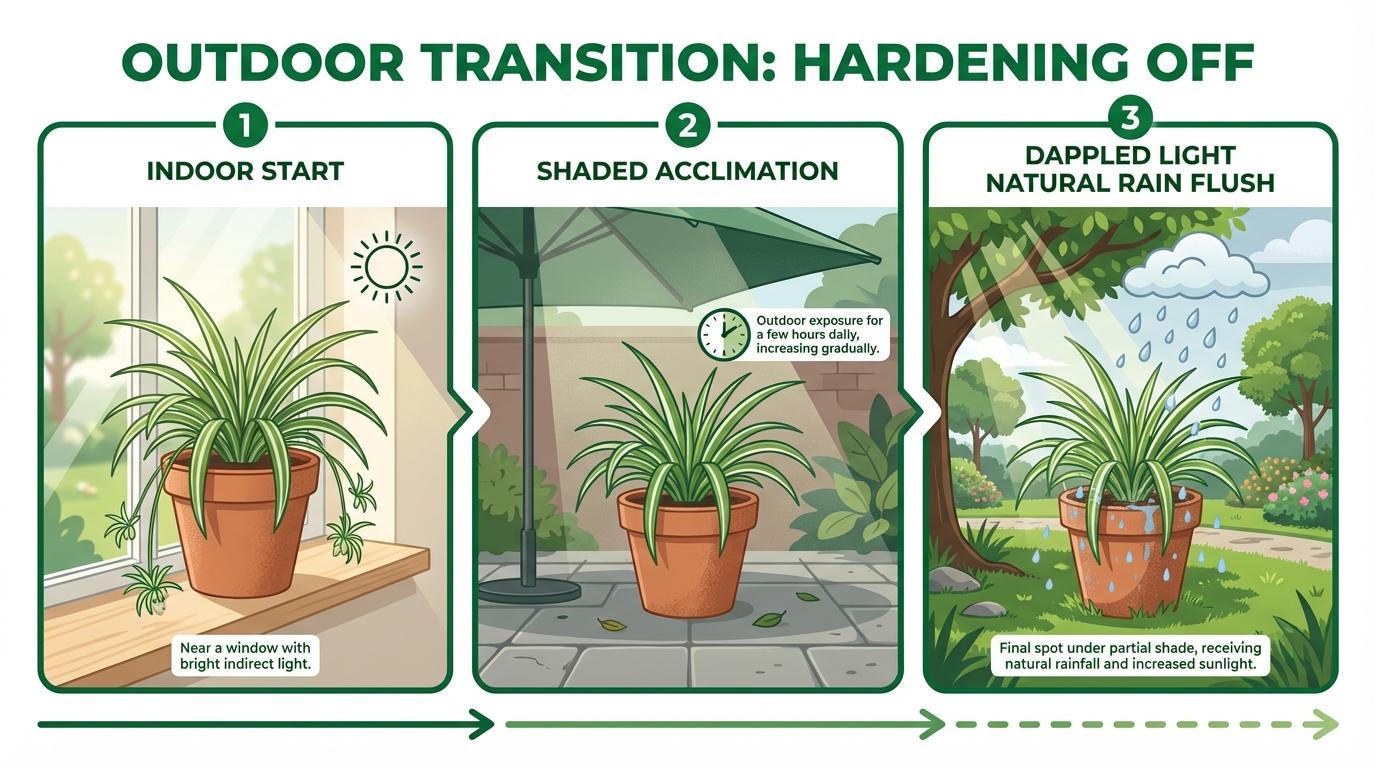
We learned this the hard way during a surprisingly sunny July here in Aarhus. We moved our biggest plant straight to the balcony, and it suffered severe sunburn within hours. You must harden off the plant by moving it into full shade first.
If you need a deeper look at safe sunlight levels, review our guide on Light Requirements.
Watering and Root Science Outdoors
When looking at growing spider plant outdoor care explained, watering habits must change. These plants have thick, tuberous roots designed to safely store massive amounts of water.
Overwatering from unpredictable summer downpours causes these fleshy tubers to absorb too much moisture. Their cells literally burst from high root turgor pressure, which leads directly to bacterial root rot.
To prevent this, ensure your pot has heavy drainage and use the Best Soil mix with plenty of perlite. Adjusting How Often to Water is critical when moving plants outside into the elements.
Managing Patio Pests
Upgrading your spider plant outdoor care explained care routines must also account for local bugs. Indoors, we usually just worry about spider mites. Outside, the environment is completely different.
The fleshy leaves of a spider plant act as a magnet for outdoor pests like aphids, grasshoppers, and common slugs. We constantly check our pots during the warmer outdoor months.
If we spot aphids, we gently wipe the foliage down with a damp cloth instead of using harsh chemicals. This protects the plant while keeping the bug population safely under control.
How Outdoor Conditions Boost Growth

Focusing on spider plant outdoor care importance care simply means giving your indoor plant a summer break outside. While they do fine inside, fresh air and rainwater completely transform their health.
We quickly learned the growing spider plant outdoor care importance a few years ago. We had a sad, droopy pot in our Aarhus living room that immediately perked up after just two weeks on our shaded patio.
A major part of healthy spider plant outdoor care importance is taking advantage of natural rain. Tap water is often very hard and leaves behind heavy minerals in the soil over time.
This mineral buildup leads directly to halide toxicity. Fluoride travels through the plant’s vascular system and accumulates at the edges, causing the plant cells to die off.
This toxicity is the main biological trigger for Brown Tips. When you leave your plant outside during a soft rainstorm, the pure rainwater naturally flushes these harsh chemicals out of the pot.
Outdoor placement also supercharges growth by maximizing light exposure. Botanically, these plants reach peak photosynthesis at around 1,500 to 2,000 foot-candles of light.
You rarely get this exact intensity indoors. A shaded outdoor spot hits this light saturation sweet spot perfectly, forcing the plant to push out new growth and thick, healthy roots.
Just remember to keep them out of direct afternoon sun. As we note in our Light Requirements breakdown, direct UV rays will quickly bleach the leaves and degrade the plant’s chlorophyll.
When to Bring Your Spider Plant Back Inside
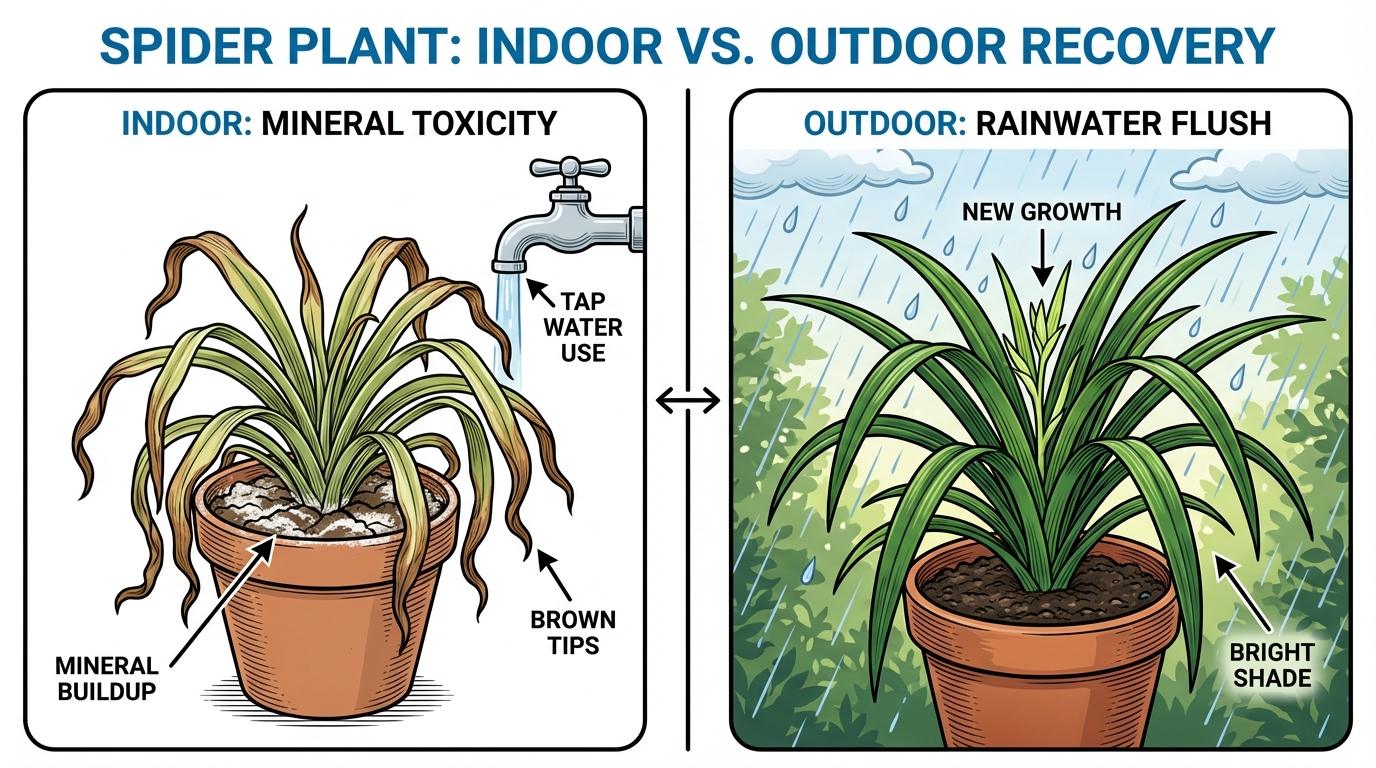
When you move your potted companions onto the patio, knowing the right spider plant outdoor care signs to watch for is essential. A sudden change in environment stresses the plant, so you need to read its signals closely.
We learned this the hard way on our Aarhus balcony. We put our largest spider plant directly into the summer sun, and within two days, the leaves turned completely pale and translucent.
Sunburn and Bleaching
That washed-out color is a classic sign of sun stress. Botanically, these plants hit maximum photosynthesis at 1,500 to 2,000 foot-candles. Anything higher actively degrades the chlorophyll.
If you notice the white stripes fading or bleached patches appearing, move the pot to a shaded spot immediately. This is one of the most critical healthy spider plant outdoor care signs to monitor.
If you catch the bleaching early, the plant usually recovers. For a deeper explanation of safe sunlight levels, check our Light Requirements guide.
Monitoring Water Stress
Recognizing growing spider plant outdoor care signs also involves watching how the roots handle the weather. These plants have thick, tuberous roots designed to store massive amounts of water.
During a heavy Danish summer downpour, the soil can stay soaked for days. This causes high root turgor pressure, meaning the plant’s cells literally burst from absorbing too much water.
This cellular damage quickly leads to bacterial root rot. If you start seeing mushy stems or sudden Yellow Leaves near the base, pull the plant under an overhang to dry out.
On the positive side, steady outdoor rain naturally flushes fluoride out of the potting mix. This prevents halide toxicity, which is the main biological cause of Brown Tips.
Pest Damage Indicators
Finally, mastering spider plant outdoor care signs care means keeping a close eye on the foliage for insect damage. The fleshy leaves are highly attractive to outdoor bugs.
Check the undersides of the leaves for aphids or sticky residue. If you see jagged holes near the edges of the foliage, local slugs or grasshoppers have likely found your plant.
We usually just gently wipe the leaves with a damp cloth if we spot early pest activity. If the damage gets out of hand, reviewing our Troubleshooting steps will help you reset the plant indoors.
Moving Your Spider Plant Outdoors Safely

When summer finally hits Aarhus, we love moving our indoor jungle to the balcony. Following the right spider plant outdoor care steps ensures your plant thrives in the fresh air without getting shocked by the sudden environmental shift.
If you just toss a houseplant outside, it will almost certainly suffer from severe sunburn. To prevent this, growing spider plant outdoor care steps must always start with a slow transition period known as hardening off.
Step 1: The Hardening Off Process
Start by placing your plant in a completely shaded outdoor spot for just two hours a day. Over a two-week period, gradually increase its time outside and slowly introduce it to dappled morning light.
Botanically, these plants reach their maximum photosynthesis rate at 1,500 to 2,000 foot-candles of light. As we explain in our Light Requirements guide, direct afternoon sun exceeds this limit and will quickly degrade the plant’s chlorophyll.
Step 2: Watering and Rain Management
Adjusting How Often to Water is crucial when your plant is exposed to the elements. These plants utilize thick, tuberous roots that are specifically designed to store massive amounts of water.
If they sit in soggy soil from heavy rain, the root cells burst from high turgor pressure, causing rapid bacterial root rot. We always make sure our outdoor pots have extra drainage holes to prevent this.
However, natural Danish rainwater is actually incredible for these plants when properly drained. It naturally flushes the potting mix, preventing halide toxicity which is the primary biological cause of Brown Tips.
Step 3: Handling Patio Pests
Standard indoor maintenance usually ignores the pests you find on an open patio or balcony. When implementing healthy spider plant outdoor care steps, you must actively watch out for aphids, slugs, and grasshoppers.
These outdoor bugs are drawn directly to the plant’s fleshy, water-filled leaves. We make it a Sunday morning routine to carefully inspect the undersides of the foliage on our balcony pots.
If we spot aphids or sticky spots, we gently wipe the leaves down with a damp cloth. If pests start overwhelming the plant, reviewing our Troubleshooting manual will help you safely bring the plant back indoors.
Mastering this spider plant outdoor care steps care routine takes a little practice. But the resulting burst of healthy new growth and natural rainwater cleansing is absolutely worth the effort.
Outdoor Mistakes That Burn or Kill Leaves

One of the most common spider plant outdoor care mistakes is treating your balcony exactly like your living room. When we first moved our collection outside for the Danish summer, we severely underestimated the harsh outdoor elements.
Understanding these pitfalls is the foundation of basic spider plant outdoor care mistakes care. Below, we break down the specific errors that can ruin your plant and how you can easily prevent them.
Skipping the Acclimation Phase
The fastest way to damage your plant is moving it from a dim indoor corner directly into full sun. This sudden environmental shift completely shocks the plant and causes immediate severe sunburn.
Botanically, these plants reach maximum photosynthesis at around 1,500 to 2,000 foot-candles. Pushing them past this saturation point degrades their chlorophyll, which we discuss further in our Light Requirements breakdown.
To prevent this, you absolutely must harden off the plant. We slowly introduce our pots to our Aarhus patio by keeping them in full shade for the first week before allowing any morning sun.
Ignoring Heavy Rainfall
Another major issue is leaving pots exposed during heavy, continuous rainstorms. While rainwater beautifully flushes out halide toxicity from the soil, sitting in a waterlogged pot is highly dangerous.
These plants store massive amounts of water in their thick, fleshy tubers. When overwatered, high root turgor pressure causes these cells to literally burst, leading to rapid bacterial root rot.
One of the worst growing spider plant outdoor care mistakes is using a pot without proper drainage. Always use the Best Soil mix packed with perlite, and drastically adjust How Often to Water when it rains.
Underestimating Patio Pests
Most standard guides only warn you about spider mites, completely ignoring the reality of open-air environments. Fleshy spider plant leaves act as a massive magnet for local aphids, grasshoppers, and hungry slugs.
Preventing healthy spider plant outdoor care mistakes requires you to actively check your foliage. We make it a habit to inspect the undersides of the leaves every single time we water our balcony plants.
If you spot jagged bite marks or sticky residue, gently wipe the leaves down with a damp cloth immediately. For severe bug issues, refer to our Troubleshooting manual to safely reset your plant indoors.
Best Outdoor Spots by Season
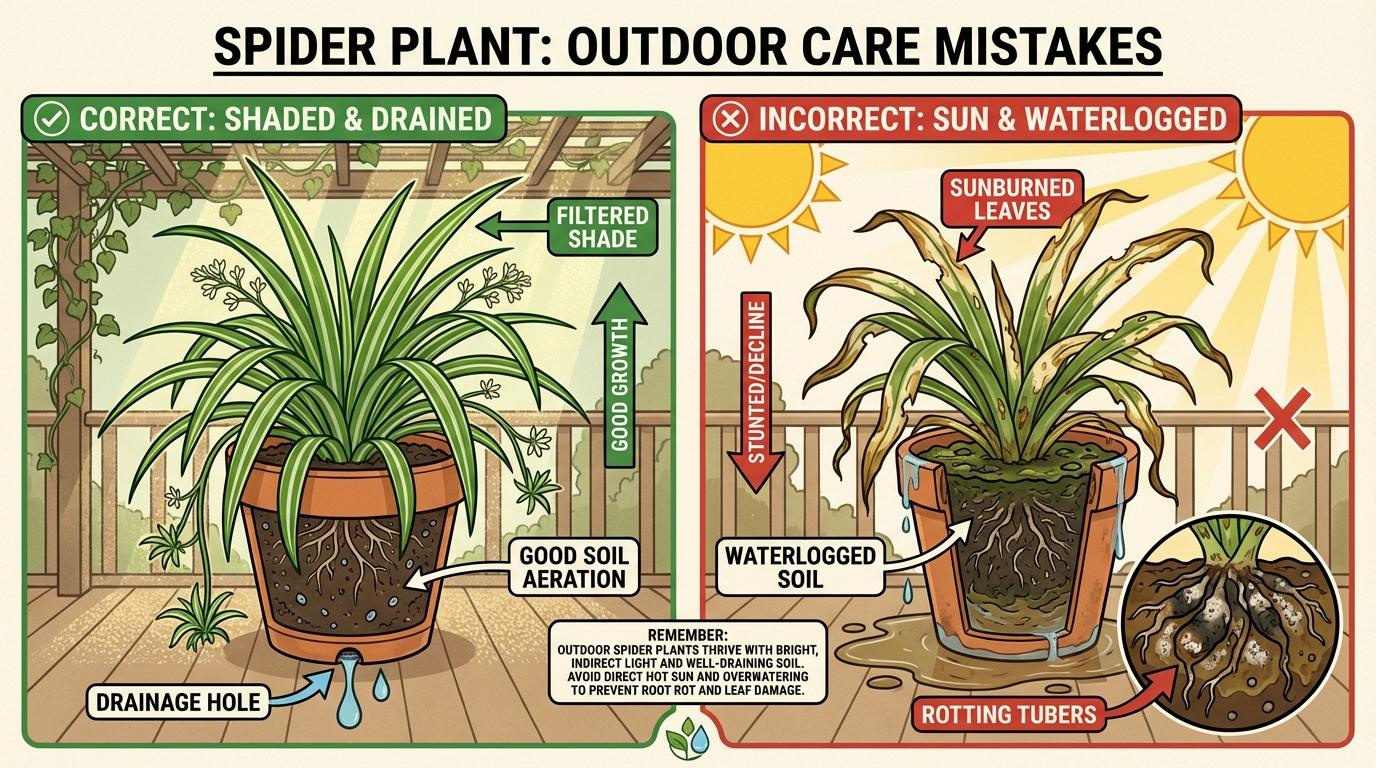
Moving your indoor jungle to the balcony for the summer feels incredibly rewarding, but it requires a solid strategy. The first time we tried this, Emilie put our favorite plant right in the Danish afternoon sun, and the leaves bleached completely within hours.
To help you avoid our early mistakes, we put together these expert spider plant outdoor care tips. The secret is blending botanical limits with practical daily habits.
The Hardening Off Process
Indoor plants are completely unprepared for outdoor wind and intense sunlight. Botanically, these plants hit peak photosynthesis at around 1,500 to 2,000 foot-candles of light.
Direct summer sun far exceeds this limit and quickly destroys their chlorophyll. Implementing growing spider plant outdoor care tips starts with a process called hardening off.
Place your plant in total shade for the first week outside. Gradually introduce it to dappled morning light over two weeks so it can acclimate safely. For more on these light thresholds, review our Light Requirements guide.
Managing Heavy Summer Rain
Danish summer storms are actually fantastic for the long-term health of your potted plants. Pure rainwater naturally flushes accumulated fluoride out of the potting mix.
This natural flush prevents halide toxicity, which Joakim found is the primary biological trigger for Brown Tips. However, applying healthy spider plant outdoor care tips means carefully managing all that extra water.
These plants have thick, tuberous roots that store massive amounts of water. If a pot stays soaked from rain, high root turgor pressure causes the root cells to physically burst, leading directly to bacterial root rot.
Always use the Best Soil mix heavily cut with perlite to ensure fast drainage. You must also adjust How Often to Water since outdoor humidity and rain will dramatically change the soil moisture levels.
Pest Patrol on the Patio
Finally, your spider plant outdoor care tips care routine must adapt to open-air bugs. Most indoor manuals only warn you about spider mites, but a patio is a completely different ecosystem.
The thick, fleshy leaves act as a magnet for outdoor aphids, hungry slugs, and grasshoppers. We spend our Sunday mornings drinking coffee and carefully inspecting the undersides of our balcony plants.
If we spot aphids or sticky residue, we simply wipe the foliage down with a damp cloth instead of reaching for harsh chemical sprays. If an infestation gets out of hand, check our Troubleshooting steps to safely bring the plant back indoors.
Protecting from Wind, Rain, and Pests
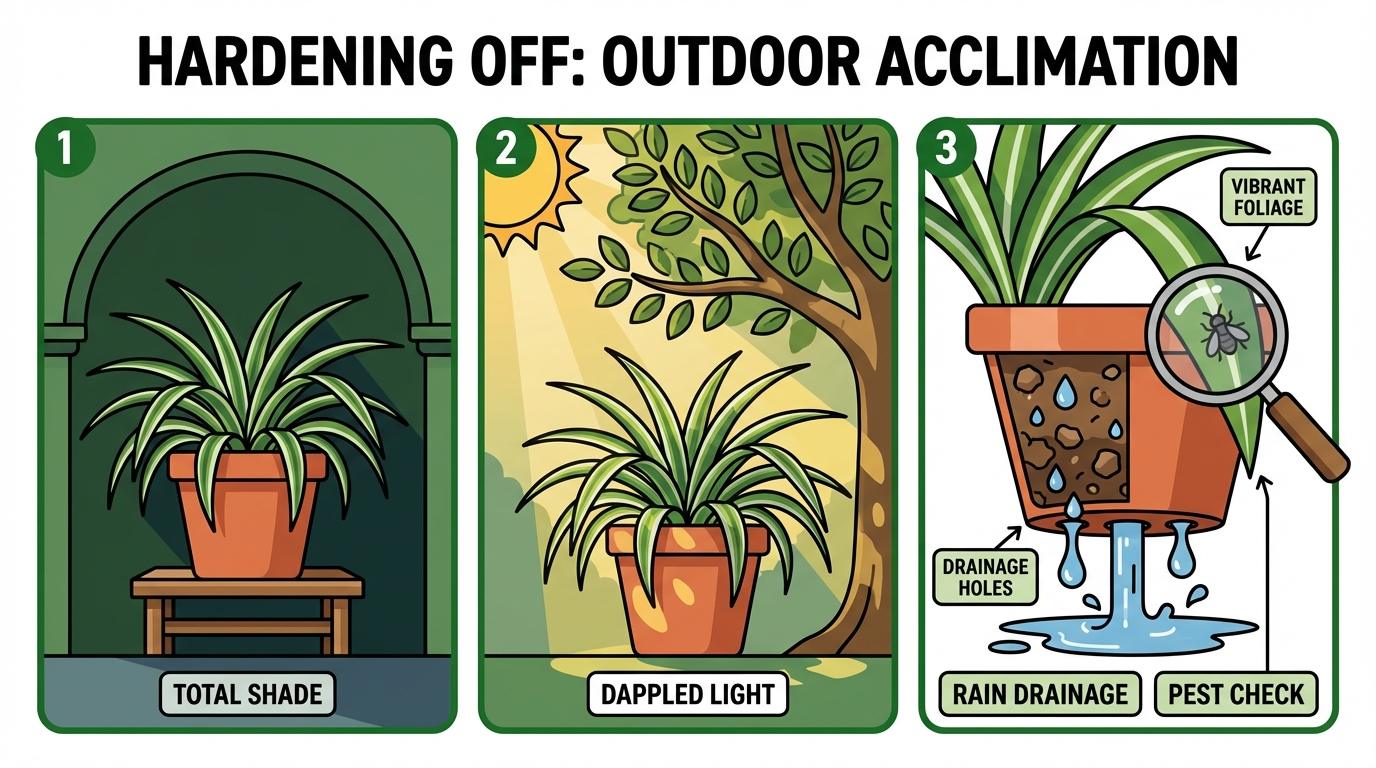
When summer finally arrives in Aarhus, we love moving our indoor jungle outside. But mastering spider plant outdoor care prevention is the only way to keep your plants alive on the patio. The transition from a protected living room to the harsh outdoor elements requires some serious planning.
Hardening Off Against Sunburn
The biggest mistake in growing spider plant outdoor care prevention routines is skipping the acclimation phase. Most standard guides treat these strictly as houseplants. Botanically, spider plants hit maximum photosynthesis around 1,500 to 2,000 foot-candles of light.
If you suddenly put them in direct afternoon sun, those intense UV rays degrade the chlorophyll and severely bleach the leaves. We prevent this by placing our pots in heavy shade for the first week. You can read more about safe exposure in our Light Requirements breakdown.
Stopping Root Rot Before It Starts
A healthy spider plant outdoor care prevention plan must also account for heavy rain. These plants have thick, tuberous roots designed to store massive amounts of water. If they sit in a waterlogged pot, the cells literally burst from high root turgor pressure.
This cellular damage quickly leads to bacterial root rot. To stop this, we always use the Best Soil mix with plenty of perlite for fast drainage. You will also need to adjust How Often to Water when the summer storms roll in.
Pests and the Rainwater Benefit
Despite the risks, putting your plants outside actually has amazing biological benefits. Heavy Danish rain perfectly flushes out built-up fluoride from the potting mix. This prevents the cellular damage known as halide toxicity, which is the main biological trigger for Brown Tips.
However, the ultimate spider plant outdoor care prevention care step is pest control. The fleshy leaves are highly attractive to outdoor aphids, grasshoppers, and hungry slugs. We check the undersides of the foliage every Sunday morning while drinking our coffee.
If we spot sticky residue or aphids, we gently wipe the leaves with a damp cloth. If an outdoor bug infestation gets out of hand, check our Troubleshooting manual for advice on safely moving the plant back indoors.
Rescuing a Frost-Damaged Spider Plant
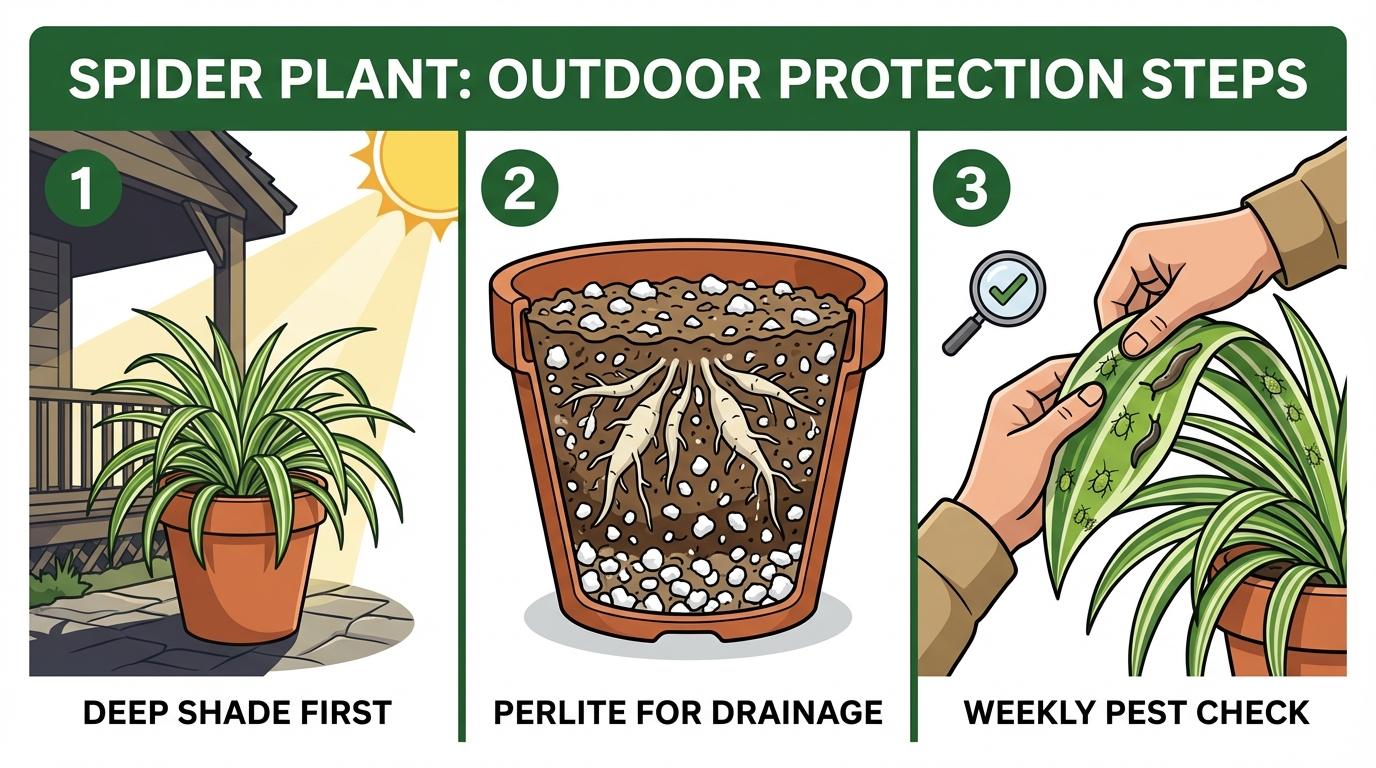
Sometimes, despite your best efforts, the outdoor elements win. Recognizing when to consult a spider plant outdoor care professional saves you both time and frustration. We have definitely lost patio plants to heavy Danish storms before.
For large balcony displays, you might need a growing spider plant outdoor care professional to step in. If your plant shows a rapid, irreversible decline, it is time to quickly assess the biological damage.
A few sad leaves are normal when adjusting to outdoor wind. But if you see sudden, mushy Yellow Leaves spreading from the base, you are looking at a critical problem.
Identifying Severe Root Rot
Spider plants utilize thick tuberous roots to store massive amounts of water. When heavy summer rain constantly saturates the outdoor pot, the plant’s root turgor pressure gets dangerously high.
Eventually, the root cells literally burst open, leading straight to rapid bacterial root rot. If the soil smells like rotting vegetables and the base is completely black, basic interventions will no longer work.
At this stage, bring the plant inside, carefully cut away the dead mush, and repot it. Using the Best Soil mix packed with draining perlite is your absolute best chance to save it.
Uncontrollable Pest Infestations
Fleshy foliage acts as a magnet for outdoor bugs like slugs, grasshoppers, and aphids. A minor aphid issue is easily managed by gently wiping the leaves with a damp cloth on a Sunday morning.
However, if the leaves are completely covered in sticky bug residue or heavily eaten, you need more help. Massive outdoor pest damage severely stunts the plant and drains its stored energy.
When bugs completely overrun the pot, consult our Troubleshooting manual. We always recommend a full soapy water flush before bringing a highly infested plant back inside your apartment.
Consulting a Local Expert
Maintaining healthy spider plant outdoor care professional standards requires knowing when a plant is too far gone. You do not have to fight severe rotting or intense pest infestations entirely alone.
Consulting an expert helps identify complex biological issues like advanced halide toxicity. This harsh fluoride buildup causes severe Brown Tips that often look suspiciously like outdoor sunburn.
A local nursery specialist can offer excellent spider plant outdoor care professional care advice tailored to your specific climate. Sometimes, admitting a badly damaged plant belongs in the compost is the most practical lesson.
Spider Plant Outdoor Care FAQ

We get a lot of questions from readers wanting to move their indoor jungle out onto a balcony or patio. To help you succeed, we put together this spider plant outdoor care faq to cover the most common issues. The biggest mistake people make is skipping the acclimation process.
Can I move my indoor plant straight outside?
No, you must harden off your plant slowly. Moving an indoor plant directly into open sunlight causes immediate, severe sunburn. You have to introduce it to outdoor conditions gradually over a week or two.
Start by placing the pot in full shade for a few hours a day. We usually tuck ours under our patio table first. A healthy spider plant outdoor care faq routine requires protecting the foliage from harsh UV rays.
Remember that these plants reach peak photosynthesis at relatively low light levels. Direct afternoon sun will completely bleach the leaves. Review our Light Requirements guide to find the ideal shaded placement.
Does outdoor rain help or hurt?
A heavy Danish summer downpour is actually fantastic for these plants. Natural rainwater perfectly flushes accumulated minerals and fluoride out of the potting mix. This harsh buildup causes cellular damage known as halide toxicity.
Fluoride toxicity is the primary biological reason you get Brown Tips. Letting your plant drink pure rainwater outdoors naturally resolves this frustrating issue. However, you must ensure the pot does not stay waterlogged.
Excessive rain can cause the thick, tuberous roots to swell and burst from high turgor pressure. To prevent rot, always use a pot with drainage holes and our recommended Best Soil mix heavily cut with perlite.
What about outdoor pests?
Most basic guides ignore the reality of open-air environments. Implementing growing spider plant outdoor care faq strategies means preparing for local bugs. The fleshy leaves are a massive magnet for aphids, hungry slugs, and grasshoppers.
We check our balcony pots every Sunday morning for jagged bite marks or sticky residue. If we spot aphids, we just gently wipe the leaves down with a damp cloth instead of spraying harsh chemicals.
If an infestation gets out of control on your patio, do not panic. You can always check our Troubleshooting manual for steps on safely cleaning the plant before bringing it back inside our apartment.
Should I change my watering schedule outside?
Yes, your watering routine will shift completely outdoors. Balcony wind and warm daytime temperatures dry out the soil much faster than stagnant indoor air. Nailing down spider plant outdoor care faq care involves checking the soil moisture constantly.
You will likely need to adjust How Often to Water depending on the weekly weather forecast. Stick your finger into the top two inches of dirt. If it feels completely dry to the touch, it is time for a thorough soak.
What I Use for Spider Plant
Products I have personally researched and recommend.
Cowhide leather with reinforced fingertips. Thick enough to handle yucca spines and iris rhizomes, flexible enough to feel what you are doing.
Check Price → (paid link)
The cheapest upgrade you can make to any potting mix. A handful per pot dramatically improves drainage and aeration.
Check Price → (paid link)
The long, narrow spout lets you water directly at the soil level without splashing leaves — keeps foliage dry and reduces fungal risk.
Check Price → (paid link)
Complete liquid fertilizer with all 16 essential nutrients. The 7-9-5 ratio is dialled in for lush foliage plants.
Check Price → (paid link)
As an Amazon Associate I earn from qualifying purchases.
Common Questions About Spider Plant Outdoor Care

Why are the tips of my spider plant leaves turning brown?
Brown leaf tips are the most common issue with spider plants. This is typically caused by fluoride, chlorine, or excess minerals in tap water, as well as a buildup of salts from over-fertilizing.
Inconsistent watering or very low humidity can also cause the tips to dry out and turn crisp. To prevent this, water your plant with distilled, filtered, or rainwater, and ensure the soil doesn’t completely dry out between waterings.
How often should I water a spider plant?
Spider plants prefer their soil to be slightly moist but are highly susceptible to root rot if overwatered. During the growing season (spring and summer), water your spider plant about once a week when the top 1 to 2 inches of soil feel dry to the touch. In the autumn and winter, when the plant’s growth slows, reduce watering to once every 10 to 14 days.
Are spider plants toxic to cats and dogs?
No, spider plants (Chlorophytum comosum) are completely non-toxic to cats and dogs according to the ASPCA. However, cats are naturally attracted to their dangling leaves, and the plant is known to have a mild, catnip-like hallucinogenic effect on them. While safe, ingesting large amounts of the plant can cause mild stomach upset or vomiting in pets.
Do spider plants need direct sunlight?
No, spider plants do not tolerate direct sunlight well. They thrive best in bright, indirect light, such as near an east-facing or south-facing window. Placing them in direct, harsh sunlight will scorch their foliage, causing the leaves to fade or develop brown, crispy spots.
They can tolerate low-light conditions, but their growth and variegation may diminish.
How do I propagate a spider plant?
Spider plants are very easy to propagate using the small plantlets, or ‘spiderettes,’ that grow on the ends of their long stems. Simply snip a healthy baby plant off the mother runner and place its base in a glass of water until roots develop. Alternatively, you can plant the spiderette directly into a small pot of moist, well-draining soil.
Why is my spider plant not producing babies (spiderettes)?
If your spider plant isn’t producing runners with babies, it may simply be too young; only mature plants reproduce. Other common reasons include inadequate light, lack of fertilizer, or being planted in a pot that is too large. Spider plants usually need to be slightly root-bound and receive bright, indirect sunlight to feel stressed enough to send out runners.
Should I cut off the brown tips on my spider plant?
Yes, you can safely trim the brown tips off your spider plant to improve its appearance. Use sharp, clean scissors and trim along the natural angled shape of the leaf. Try to leave a tiny sliver of the brown edge behind so you don’t cut into the healthy green tissue, which can create a fresh wound that will just turn brown again.
Is tap water bad for spider plants?
Yes, tap water can be harmful to spider plants if it contains high levels of fluoride, chlorine, or hard minerals. Spider plants are highly sensitive to these chemicals, which build up in the soil and cause the leaf tips to burn and turn brown. It is highly recommended to use distilled water, filtered water, or rainwater to keep the foliage vibrant.
What kind of soil is best for spider plants?
Spider plants prefer a loose, well-draining potting mix. A standard indoor houseplant soil mixed with a handful of perlite, pumice, or orchid bark is ideal. Because their thick, tuberous roots store water, excellent drainage is crucial to prevent root rot.
Always ensure the pot has drainage holes at the bottom.
Do spider plants like to be root-bound?
Yes, spider plants actually prefer to be slightly root-bound. Being somewhat cramped in their pot encourages the plant to produce flowers and send out the long runners that grow baby spiderettes. You generally only need to repot them every 1 to 2 years, or when the thick roots begin pushing the plant up and out of the pot.
Should I mist my spider plant?
While spider plants adapt well to average household humidity, they natively prefer moderate to high humidity (around 40-60%). If your home has very dry air, especially during winter when heating systems are running, misting the leaves occasionally or placing the plant on a pebble tray with water can help prevent the leaf edges from drying out.
How much fertilizer does a spider plant need?
Spider plants are light feeders. You should fertilize them about once a month during their active growing season in the spring and summer using a balanced liquid houseplant fertilizer diluted to half-strength. Do not fertilize them in the fall and winter.
Over-fertilizing can cause a buildup of salts in the soil, leading to toxic shock and brown leaf tips.
Can spider plants live outdoors?
Yes, spider plants can be grown outdoors in warmer climates (USDA zones 9-11) as ground cover or in hanging baskets. In cooler regions, they can be placed outside during the summer but must be kept in a shaded or semi-shaded area to protect them from direct sun. They must be brought back indoors before temperatures drop below 50 degrees Fahrenheit, as they are not frost-hardy.