Proven Benefits of Keeping Spider Plants
When you start researching spider plant benefits, you’ll quickly run into the famous 1989 NASA Clean Air Study. It proved these resilient plants can pull indoor toxins like formaldehyde right out of the air.
But there’s a major catch. To actually purify a normal living room, you’d need roughly 10 to 100 plants per square meter. Our Aarhus apartment is packed with greenery, but even we don’t have that many.
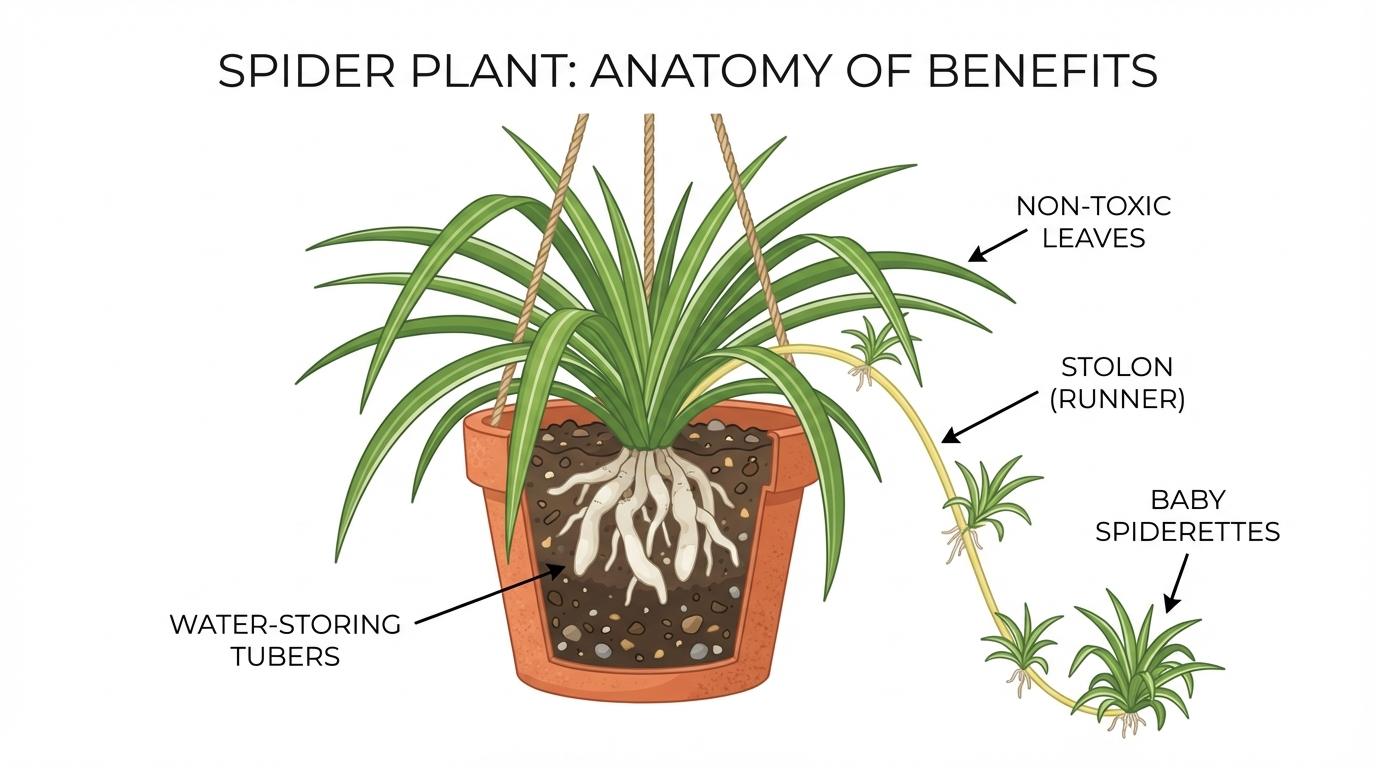
So, what are the real growing spider plant benefits? For us, their true superpower is pure survival. They have thick, fleshy roots that store water, easily surviving the dry air from our winter central heating.
We’ll show you exactly what to expect from these highly adaptable plants. We cover the proven healthy spider plant benefits, along with how to avoid the common traps most beginners fall into.
For example, the tap water here in Denmark is very hard. This heavy fluoride and boron buildup often causes Brown Tips. We’ll teach you how to flush the soil properly to prevent this exact damage.
If your plant has been in the same soil for 2+ years, it is time to upgrade:
A powerhouse blend with earthworm castings and bat guano. Perfect for hungry tropicals that want to grow big.
Once you understand proper spider plant benefits care, you can even use their biology to your advantage. You’ll learn how to trigger those famous tiny babies, which we cover fully in our Master Spider Plant Care Guide.
The NASA Air Purification Study Explained

Getting the spider plant benefits explained clearly means looking past the old internet myths. While they will not magically filter all the air in your living room, they offer huge rewards for everyday indoor gardeners. They are incredibly forgiving and grow fast.
When we hear healthy spider plant benefits explained, pet safety is always number one. If your pets like to chew on leaves, you can relax. These plants are completely safe and non-Toxic to Cats and dogs.
When Emilie brought our first one into our Aarhus apartment, our dry winter radiators usually killed everything. But these plants have thick, tuberous roots that store water. This built-in drought tolerance is a lifesaver if you miss a watering cycle.
We learned the hard way that letting the soil dry out is actually a good thing. Figuring out How Often to Water becomes much less stressful once you realize their roots prefer a dry period.
The Joy of Spiderettes
For us, the most exciting growing spider plant benefits explained are those tiny babies, called stolons. Joakim found out they actually need stress to produce them. Being slightly root-bound and experiencing shorter daylight hours triggers the plant to reproduce.
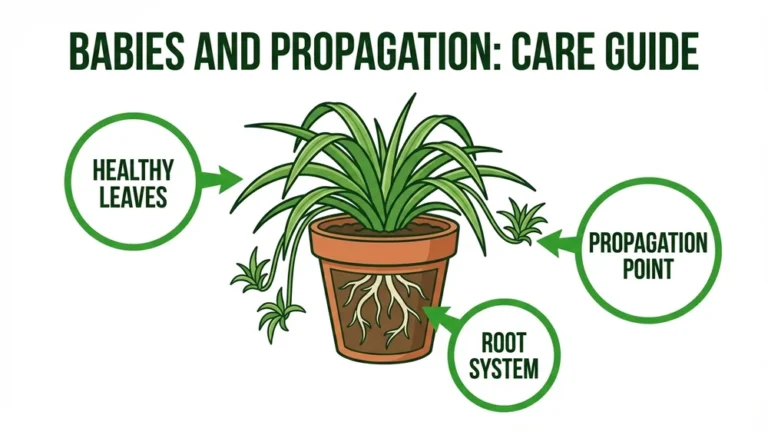
Watching those babies cascade over the edge of a hanging pot is highly rewarding. It also makes Propagation incredibly easy. You just snip the baby off and stick it straight into slightly damp soil.
Real Air Quality Expectations
We still see the famous 1989 NASA Clean Air Study cited everywhere online. While the science shows they do absorb volatile compounds like formaldehyde, you would need roughly 10 to 100 plants per square meter to actually change your household air quality.
When researching spider plant benefits explained care steps, focus on how these plants actually make your space feel. The real benefit is having a resilient, fast-growing piece of nature in your home that tolerates your early mistakes.
Health Benefits Backed by Research

Understanding spider plant benefits importance is mostly about setting realistic expectations for your indoor jungle. When we first started collecting plants, we expected miracles based on internet rumors.
Realizing the actual growing spider plant benefits importance shifted our entire routine. We stopped trying to use them as miracle air purifiers and started appreciating their unique biology.
Built for Survival
The real superpower of a spider plant is its specialized root system. They have thick, fleshy, tuberous roots that are perfectly designed to store water for long periods.
This biological trait is incredibly useful during dark Danish winters when our central heating completely dries out the apartment air. They easily survive our occasional watering neglect.
Because they store so much moisture, they actually need their soil to dry out almost completely. We learned this quickly when we noticed mushy roots and Yellow Leaves on our very first plant.
Peace of Mind
A major part of healthy spider plant benefits importance is simply peace of mind. Many trendy houseplants are highly dangerous if chewed on by curious animals.
Spider plants are completely safe. If you are ever worried about your new houseplant being Toxic to Cats, you can relax with this specific variety.
The ASPCA officially lists them as non-toxic to both cats and dogs. Emilie loves being able to place them on lower shelves without worrying about visiting pets taking a bite.
Fast and Rewarding Growth
Finally, understanding spider plant benefits importance care means accepting their need for a little stress. Most beginners panic when they see their plant becoming root-bound.
But that tight pot, combined with shifting seasonal daylight hours, is exactly what triggers them to produce stolons. These are the long stems that carry the tiny babies making the plant so famous.
Watching a single plant multiply gives you an instant confidence boost. It is a highly forgiving process that constantly reminds us why we started keeping plants in the first place.
How to Maximize Air-Purifying Effect
Knowing what your plant is trying to tell you is crucial. The most obvious spider plant benefits signs show up in the leaves and roots. When they are thriving, you will see fast, upright growth and an eventual cascade of tiny babies.
But they are also great communicators when things go wrong. We learned to read these growing spider plant benefits signs early on. Let’s look at the specific visual cues Emilie checks for during our Sunday watering routine.
Reading the Leaves and Roots
A healthy plant has plump, fleshy roots hidden in the soil. These thick tubers store water, which makes them incredibly resilient to our dry apartment air. It also means they prefer the soil to dry out almost completely between waterings.
If you water too often, the plant will quickly let you know. Limp, mushy foliage or sudden Yellow Leaves usually mean the roots are suffocating. We highly recommend using a well-draining mix, which you can read about in our Best Soil guide.
Spotting Mineral Buildup
Our tap water here in Aarhus is notoriously hard. Spider plants are highly sensitive to the fluoride and boron found in municipal water supplies. This mineral buildup is the exact cause of those frustrating Brown Tips on the leaves.
To fix this, we flush the soil. We run distilled water through the pot every three months to wash away the salts. As the Wisconsin Horticulture Extension explains, fluoride toxicity builds up over time, making this flush an essential part of proper spider plant benefits signs care.
When Stress is a Good Thing
You might be surprised to learn that a little stress produces the most visible healthy spider plant benefits signs. When a spider plant becomes slightly root-bound, it triggers a survival response.
This tight root space, combined with changing seasonal daylight hours, tells the plant it is time to reproduce. We monitor our Light Requirements closely during the Danish autumn. The shift in light triggers the plant to shoot out long stems covered in flowers and babies.
Seeing those babies appear is the ultimate proof that your care routine is working. It shows that you have mastered the balance of water, light, and just the right amount of natural stress.
Setting Up Spider Plants for Maximum Benefit

Following a few reliable spider plant benefits steps will help you maximize what this resilient houseplant has to offer. We quickly learned that keeping them happy requires understanding their specific biology rather than just guessing.
To get the most out of your indoor plants, you need a practical routine. These healthy spider plant benefits steps combine our hands-on trials in our Aarhus apartment with basic botanical science.
Step 1: Manage Your Water Quality
The biggest mistake we made early on was using water straight from the tap. Danish tap water is notoriously hard, and these plants are highly sensitive to fluoride and boron accumulation.
This chemical buildup is the leading cause of Brown Tips on the leaves. Figuring out exactly How Often to Water matters, but flushing the soil with distilled water every few months is crucial.
As the Wisconsin Horticulture Extension notes, regular flushing prevents long-term fluoride toxicity. We use a well-draining mix, which you can read about in our Best Soil guide, to make this flushing process much easier.
Step 2: Use Stress to Create Babies
The most rewarding part of growing spider plant benefits steps is learning how to trigger new growth. Most plant owners panic when a pot gets crowded, but this plant actually prefers being slightly root-bound.
Combined with the shorter days of our dark autumns, this root stress signals the plant to reproduce. Adjusting your Light Requirements during seasonal shifts encourages those long stems filled with tiny plantlets.
Once the babies develop small roots, Propagation takes almost no effort. Emilie usually just snips them off with clean scissors and places them directly into damp potting mix.
Step 3: Enjoy a Pet-Safe Environment
A major relief for animal lovers is knowing these plants will not harm your pets. If you are ever worried about plants being Toxic to Cats, the ASPCA officially categorizes spider plants as non-toxic.
This peace of mind is a vital part of proper spider plant benefits steps care. We keep ours on low coffee tables and hanging from lower shelves without any stress when friends bring their dogs over.
Different Varieties and Types might have varying leaf patterns, but their safe, adaptable nature remains exactly the same. Just watch out for Yellow Leaves, which usually indicates you are overwatering their thick, water-storing roots.
Overstating What Spider Plants Can Do

When researching spider plant benefits mistakes, the biggest trap is expecting a single plant to act like an air-purifying machine. We constantly see people buying one plant and expecting hospital-grade air quality. While they do absorb compounds, a single pot will not drastically change your apartment’s air.
Overwatering Tuberous Roots
Another common trap is giving them too much water. These plants have thick, fleshy, tuberous roots designed to store water for long periods. If you keep the Best Soil constantly wet, those roots will quickly suffocate and rot.
One of the worst growing spider plant benefits mistakes is ignoring this high drought tolerance. We let our soil dry out almost completely between waterings, so check our guide on How Often to Water to get the timing right. Constant moisture usually leads straight to mushy roots and Yellow Leaves.
Using Hard Tap Water
Using straight tap water is another quick way to ruin the look of your plant. Here in Aarhus, our water is full of heavy minerals. Spider plants are incredibly sensitive to fluoride and boron buildup in the soil over time.
This salt accumulation is exactly what causes those frustrating Brown Tips. To avoid these healthy spider plant benefits mistakes, we flush our pots with distilled water every few months. The Wisconsin Horticulture Extension also strongly recommends this periodic leaching to wash away excess fertilizer salts.
Repotting Too Quickly
Finally, do not rush to repot your plant the moment it looks slightly tight in its container. It sounds counterintuitive, but these plants actually need a little stress to reproduce. If you move them to a massive pot too soon, they will focus entirely on root growth instead of producing babies.
Proper spider plant benefits mistakes care means leaving them slightly root-bound. Combined with proper Light Requirements, this tight space tells the plant to start surviving by sending out long runners. This natural stress is exactly what triggers those beautiful cascading spiderettes.
Best Rooms for Spider Plant Placement

When friends ask us for expert spider plant benefits tips, we always start by addressing the watering routine. Because these plants have thick, tuberous roots that store water, they actually prefer their soil to dry out almost completely.
In our Aarhus apartment, the tap water is incredibly hard. This leads us to one of the most important growing spider plant benefits tips: you must actively manage fluoride and boron buildup.
Heavy minerals in tap water will quickly cause Brown Tips on the leaves. To prevent this, we flush the soil with distilled water every three to four months to wash away the excess fertilizer salts.
Mastering Light and Stress
One of our favorite healthy spider plant benefits tips is getting the lighting right. Instead of guessing with vague terms, Joakim measures around 1,000 to 2,500 lux near our east-facing window. You can find exact measurements in our Light Requirements guide.
A vital part of spider plant benefits tips care is letting the plant experience a little stress. Most beginners do not realize that keeping them slightly root-bound actually triggers the plant to reproduce.
When the roots are tight and the Danish autumn brings shorter daylight hours, the plant goes into survival mode. It shoots out long stolons covered in tiny babies, making Propagation incredibly easy for Emilie.
Setting Realistic Air Quality Goals
We often hear people cite the 1989 NASA Clean Air Study when talking about these plants. While they do absorb volatile organic compounds like formaldehyde, the reality is much less dramatic than social media claims.
You would actually need roughly 10 to 100 plants per square meter to significantly change your household air quality. Instead of expecting a single plant to purify your bedroom, enjoy it for its resilience and fast growth.
Their ability to survive winter central heating and missed watering days is their real superpower. Just make sure you use the Best Soil with plenty of perlite so those fleshy roots never sit in soggy conditions.
Keeping Your Air-Purifying Plants Healthy
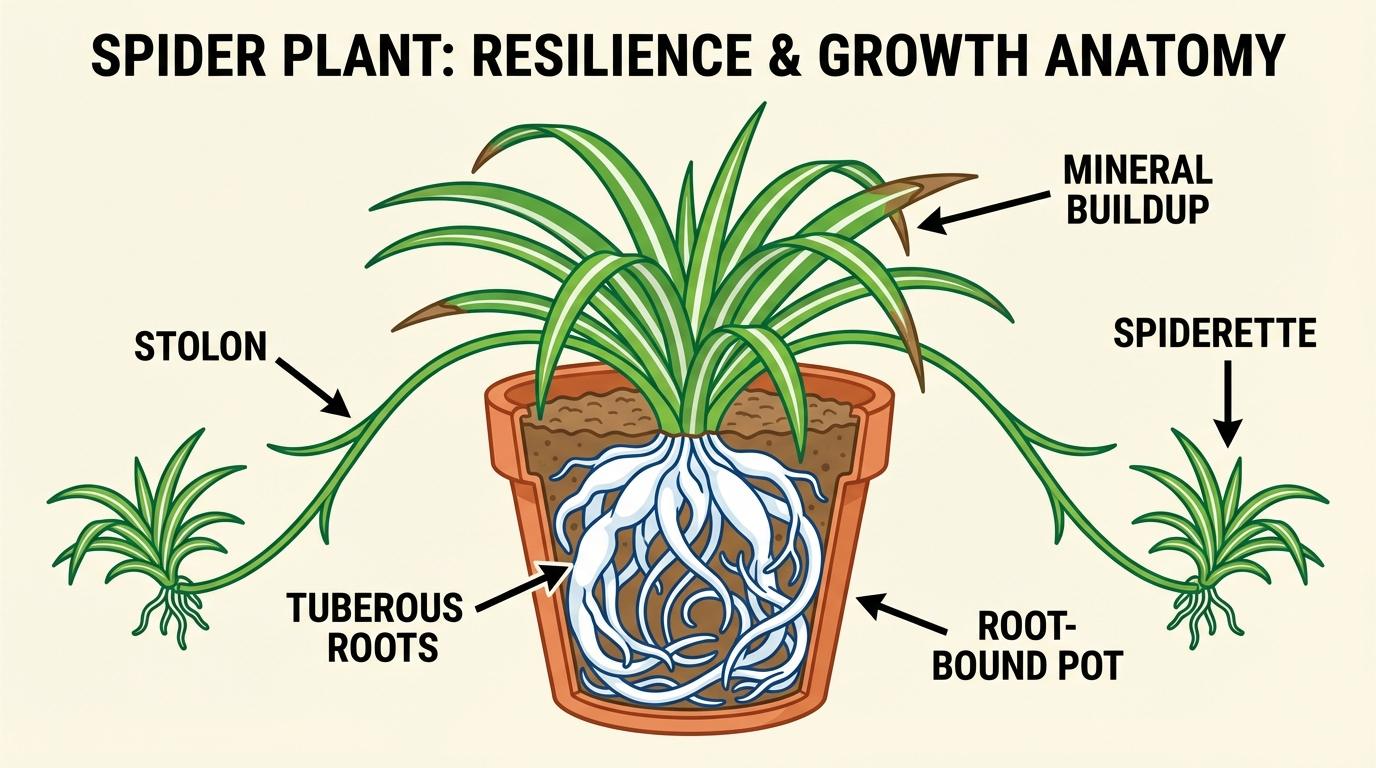
Understanding spider plant benefits prevention starts with recognizing how their unique biology reacts to our homes. To actually enjoy their fast growth and resilience, you have to stop accidental damage before it starts.
For us here in Aarhus, the biggest hurdle is the tap water. Danish water is notoriously hard, which creates a massive problem for these sensitive plants.
Preventing Tap Water Damage
Municipal water is often loaded with fluoride and boron. Over time, these minerals build up in the potting mix and cause severe Brown Tips on the long, grassy leaves.
Proper spider plant benefits prevention care requires active soil management. We follow the advice from the Wisconsin Horticulture Extension and leach our pots with distilled water every three to four months.
Joakim takes our pots to the bathroom and runs pure distilled water completely through the soil. Letting it pour freely out the drainage holes washes away the harmful fertilizer salts and heavy minerals.
Preventing Root Rot
Another major issue we see is overwatering. Beginners often forget that these plants have thick, tuberous roots specifically designed to store water for long periods.
If you keep the soil constantly wet, those fleshy roots will quickly suffocate. This leads directly to Yellow Leaves and a sad, drooping plant that eventually collapses.
Growing spider plant benefits prevention means letting the pot dry out almost completely. When you are figuring out How Often to Water, always lean toward underwatering. Using the Best Soil mixed with plenty of perlite helps maintain this airy environment.
Preventing Stunted Growth
Most people assume giving a plant a bigger pot will make it grow faster. With spider plants, moving them to a massive container actually stops them from producing babies.
Healthy spider plant benefits prevention involves embracing a little natural stress. The plant needs to be slightly root-bound to trigger its basic survival and reproduction instincts.
Emilie always waits until the roots are visibly pushing against the edge of the pot. Combined with changing seasonal Light Requirements, this tight space tells the plant to shoot out those famous cascading stolons.
When Spider Plants Aren’t Enough for Air Quality

Most of the time, these resilient plants practically care for themselves. But occasionally, you might need spider plant benefits professional advice to understand why your houseplant is suddenly struggling.
We learned this the hard way during our first year in Aarhus. Our local tap water is extremely hard, and our plant started looking miserable despite our best daily efforts.
Stubborn Brown Margins
If you constantly see Brown Tips despite regular watering, it is time to look deeper. Generic blogs often blame your watering schedule, but the real issue is usually chemical buildup.
Spider plants are highly sensitive to fluoride and boron. We quickly realized that growing spider plant benefits professional care means knowing how to actively remove these heavy mineral deposits from the pot.
We fix this by flushing the soil with distilled water every three to four months. The Wisconsin Horticulture Extension specifically recommends this leaching process to wash away toxic fertilizer salts safely.
Failing to Produce Babies
Another reason to seek healthy spider plant benefits professional guidance is when your mature plant refuses to reproduce. Beginners often panic and immediately move the plant to a larger pot.
This actually prevents reproduction. Their fleshy tuberous roots need to feel slightly root-bound to trigger the natural stress response that creates those beautiful cascading stolons.
If you are struggling with this, double-check your seasonal Light Requirements. Shortening daylight hours combined with tight roots is the biological trigger needed for successful Propagation.
Misunderstanding Air Purification
Finally, you might need a reality check regarding indoor air quality. We often see the 1989 NASA Clean Air Study completely misrepresented online by well-meaning plant enthusiasts.
While these plants do absorb volatile organic compounds like formaldehyde, expecting one pot to purify your bedroom is unrealistic. You actually need 10 to 100 plants per square meter to significantly change household air quality.
If your goal is strictly air purification, you might need mechanical filters. For us, the real benefit is having a hardy, pet-safe plant that the ASPCA lists as entirely non-toxic.
Spider Plant Benefits FAQ

If you are just starting out, you likely have questions that a standard spider plant benefits faq cannot fully answer. Whenever friends visit our Aarhus apartment, they always ask us how we keep our indoor jungle thriving.
We have gathered the most common queries right here. By combining botanical data with our own trial and error, we can help you skip the beginner mistakes entirely.
Do spider plants really purify the air?
When reading a growing spider plant benefits faq, you will almost always see claims about incredible air purification. Most of these articles cite the famous 1989 NASA Clean Air Study regarding formaldehyde removal.
While the science is real, the practical application is often exaggerated online. You would actually need between 10 and 100 plants per square meter to significantly change your household air quality.
Why isn’t my plant producing babies?
A frequent question in our healthy spider plant benefits faq is why a seemingly happy plant refuses to reproduce. The truth is, these plants need a little biological stress to trigger those tiny offshoots.
If you put them in a massive pot, they focus entirely on root growth. They need to be slightly root-bound, which, combined with changing seasonal Light Requirements, tells them it is time to push out stolons for Propagation.
Are these plants safe around pets?
Yes, and this is a massive relief for animal lovers. If you are ever worried about your houseplants being Toxic to Cats, you can relax completely with this species.
The ASPCA officially lists them as non-toxic for both cats and dogs. Emilie loves styling ours on low coffee tables without stressing about our friends’ visiting pets taking a bite.
How do I stop the leaf tips from turning brown?
A major part of spider plant benefits faq care involves tackling those crispy ends. These plants are incredibly sensitive to fluoride and boron accumulation.
These minerals build up rapidly if you use hard tap water, which we constantly battle here in Denmark. To prevent Brown Tips, we flush the soil heavily with distilled water every three to four months.
The Wisconsin Horticulture Extension strongly recommends this exact leaching process. It washes away excess fertilizer salts before they can burn the delicate leaf ends.
Do they need constant watering?
Not at all. When we first researched their biology, Joakim discovered they have specialized tuberous roots. These thick, fleshy structures act like hidden water reservoirs.
This makes them highly drought-tolerant and perfect for surviving dry central heating. When deciding How Often to Water, you should let the pot dry out almost entirely.
Planting them in the Best Soil mixed with plenty of perlite ensures those thick roots never sit in standing water. Overwatering is the fastest way to kill them.
Recommended Spider Plant Essentials
Each product below was hand-picked after thorough research and testing.
The cheapest upgrade you can make to any potting mix. A handful per pot dramatically improves drainage and aeration.
Check Price → (paid link)
The long, narrow spout lets you water directly at the soil level without splashing leaves — keeps foliage dry and reduces fungal risk.
Check Price → (paid link)
Complete liquid fertilizer with all 16 essential nutrients. The 7-9-5 ratio is dialled in for lush foliage plants.
Check Price → (paid link)
Accurate humidity and temperature monitor with Bluetooth logging. Know exactly what conditions your plants are living in.
Check Price → (paid link)
As an Amazon Associate I earn from qualifying purchases.
Common Questions About Spider Plant Benefits

How often should I water a spider plant?
Spider plants typically need watering about once a week. You should allow the top 50 to 75 percent (or top two inches) of the soil to dry out completely before watering again.
They require more frequent watering during their active growing seasons in spring and summer, and less during the autumn and winter. Always ensure the pot drains fully so the roots do not sit in water, which can cause root rot.
What kind of light does a spider plant need?
Spider plants thrive best in bright, indirect sunlight. A spot near a north or east-facing window is ideal. While they are highly adaptable and can tolerate some shade, exposing them to harsh, direct sunlight will scorch their leaves and cause sunburn.
Why are the tips of my spider plant leaves turning brown?
Brown tips on a spider plant are most commonly caused by sensitivity to fluoride, chlorine, or other chemicals found in municipal tap water. Switching to distilled water or rainwater can prevent this. Brown tips can also result from inconsistent watering, extremely low humidity, or excess fertilizer.
Should I cut the brown tips off my spider plant?
Yes, you can safely snip off the brown tips to improve the plant’s appearance without harming it. Use clean, sharp scissors and try to cut at an angle to mimic the natural, pointed shape of the original leaf.
Are spider plants toxic to cats and dogs?
No, spider plants (Chlorophytum comosum) are entirely non-toxic to cats, dogs, and humans. They are considered one of the safest houseplant choices for homes with curious pets, though ingestion in large quantities might still cause mild stomach upset.
How do you propagate spider plant babies (spiderettes)?
Spider plants are easily propagated by rooting the small plantlets (babies) that grow on the ends of their arching stems. Snip the baby off and place its tiny brown root nubs in a glass of water, ensuring the foliage stays dry.
Change the water every 7-14 days. Once the roots grow a few inches long, plant it in a small pot with fresh soil.
What is the best soil for a spider plant?
The best soil for a spider plant is a loose, loamy, and well-draining indoor potting mix with a neutral pH. Adding perlite or using a high-quality all-purpose mix helps ensure proper drainage, which is crucial to prevent the plant’s thick, moisture-retaining roots from rotting.
What is the ideal temperature and humidity for a spider plant?
Spider plants prefer moderate indoor temperatures ranging between 65°F and 80°F (18°C – 25°C). They do not tolerate freezing conditions, frost, or intense heat. Because of their coastal African origins, they appreciate moderate to high humidity, though they easily adapt to standard household humidity levels.
How often should I fertilize my spider plant?
Spider plants are light feeders, but they benefit from a water-soluble, all-purpose liquid fertilizer applied once a month during the spring and summer. Stop fertilizing during the fall and winter when the plant’s growth naturally slows down and goes dormant.
Can a spider plant survive in low light?
Yes, spider plants can survive in low-light environments, such as a dim office or a bathroom. However, their growth will slow down significantly, the foliage may become pale or weak, and they are highly unlikely to produce flowers or their signature baby plantlets.
Why is my spider plant drooping and looking wilted?
Drooping leaves usually indicate a moisture issue. If the soil is bone dry, the plant is under-watered and needs a thorough soaking. If the soil is soggy or planted in heavy clay that doesn’t drain well, the drooping is likely a symptom of root rot.
How do you prune a spider plant?
Spider plants do not require extensive pruning. Simply remove any dead, yellowing, or damaged leaves at the base as they appear. If the plant becomes too overgrown, you can trim off the long stems bearing the spiderettes to redirect energy back to the mother plant.
Can spider plants be grown outdoors?
Yes, spider plants can be grown outdoors as perennials in warm, frost-free climates (USDA zones 9-11). They should be placed in partial to full shade, as direct afternoon sun will burn them. In cooler climates, they can be kept outside in pots during the summer but must be brought indoors before temperatures drop.