Spider plants do best in bright indirect light. They tolerate lower light, but strong stripes, fuller growth, and more plantlets usually need a brighter placement without harsh midday sun.
The best everyday spot is near a bright window where the plant can see the sky, but where direct afternoon sun does not sit on the leaves for hours. If the room is bright enough to read in without switching on a lamp during the day, you may be close. If the plant is tucked in a dim corner, it is probably surviving rather than growing strongly.
Light is the difference between a spider plant that simply stays alive and one that makes arching leaves, crisp variegation, and dangling babies. Watering and pot size matter too, but light sets the pace for growth. For the full plant profile, see our spider plant care guide.
Quick Placement Table
| Placement | How it usually works | Best use |
|---|---|---|
| East window | Gentle morning sun and bright indirect light | One of the easiest spots for strong growth |
| North window | Soft, lower light in many homes | Good if the window is large and unobstructed |
| West window | Bright, with hotter afternoon sun | Good if filtered by a sheer curtain or set back |
| South window | Very bright, often with direct sun | Best a few feet back or behind a sheer curtain |
| Dim interior corner | Low usable light, even if the room feels bright | Short-term tolerance, not ideal for stripes or babies |
| Grow light spot | Controlled light when windows are weak | Useful for winter, offices, and dark rooms |
Spider plants, Chlorophytum comosum, are known for tolerating a wide range of indoor conditions. North Carolina State Extension describes spider plant as adaptable and suitable for bright indirect light, while the University of Minnesota Extension also notes that spider plants grow well in bright light and can handle lower light. Tolerant does not mean light is irrelevant.
Use the six placement rules below to choose a spot, read the leaves, and adjust before the plant becomes thin, pale, or sun-scorched.
1. Use Bright Indirect Light for Best Growth
Bright indirect light is the sweet spot for spider plants. In practical terms, that means the plant sits in a bright area, but the strongest sunbeams do not bake the foliage. The leaves get plenty of usable light without the heat and bleaching that direct midday sun can cause.
A spider plant in bright indirect light usually has firmer leaves, better arching shape, and clearer green-and-white striping. Variegated cultivars especially need enough light to keep the contrast sharp. In too little light, white or cream bands can look dull, and new leaves may emerge narrower or weaker.
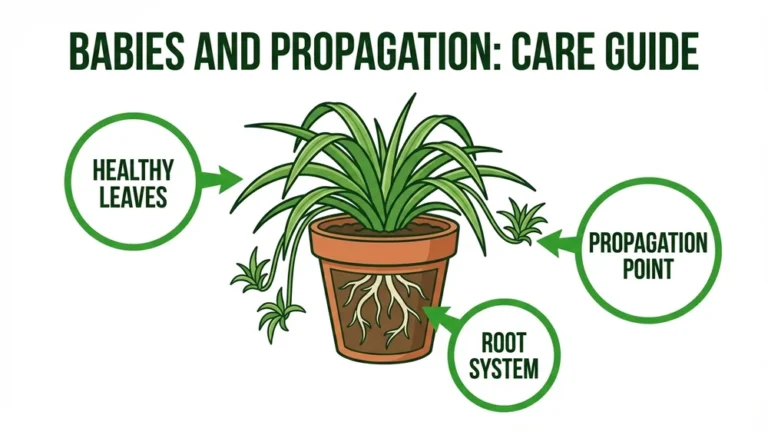
Baby production is also tied to plant energy. Spider plants produce plantlets on long runners after they are mature and healthy. Brighter indirect light helps the plant build the energy reserves needed for those runners. It does not guarantee babies on command, but it gives the plant a much better chance.
If your spider plant is green rather than variegated, it may tolerate lower light better than a striped variety. Green leaves contain more chlorophyll across the leaf surface. Variegated types have less green tissue, so they often need brighter conditions to perform equally well.
A good test is whether the plant casts a soft shadow during the brightest part of the day. A crisp, harsh shadow may mean direct sun is too intense. No visible shadow at all often means the plant is in low light, especially if it is several feet from the window.
Do not judge by room brightness alone. Human eyes adjust easily, so a corner can feel bright while giving a plant very little usable light. Spider plants respond to the light that reaches their leaves, not to how pleasant the room looks.
For most homes, start with a spot near an east-facing window, a bright north-facing window, or a position a few feet from a south or west window. Then watch the plant for four to eight weeks. New growth tells you more than one day of guessing.
2. Keep It Close Enough to the Window
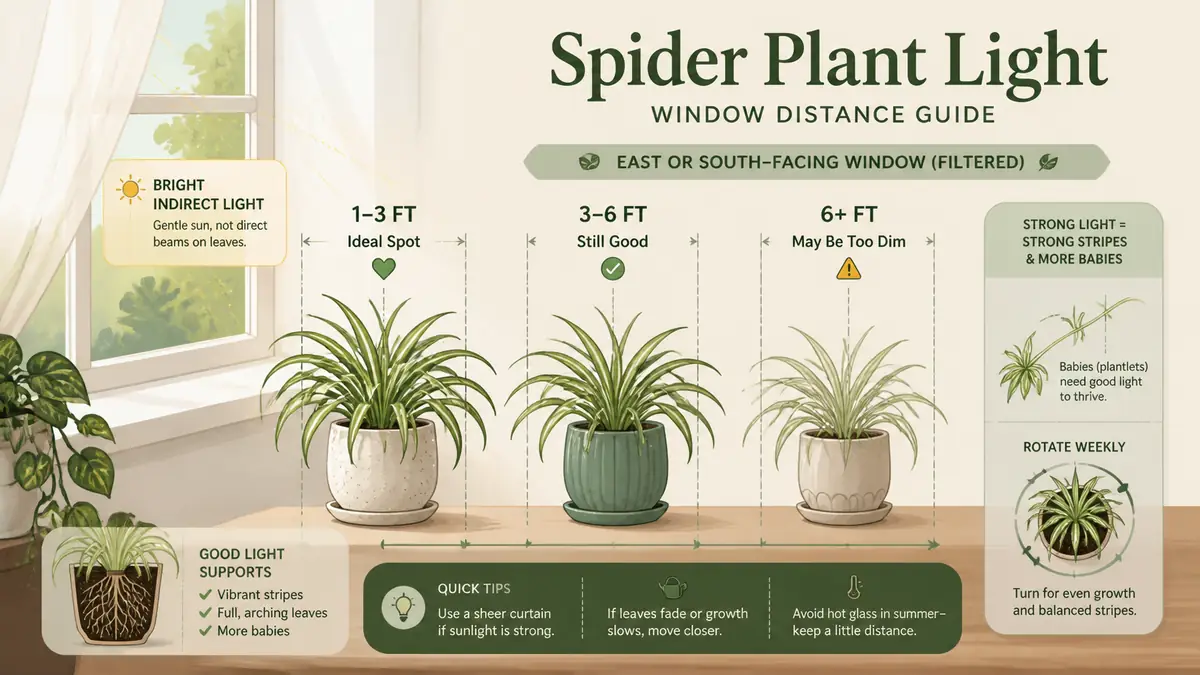
Distance from the window matters more than many plant owners expect. Light drops quickly as you move across a room. A spider plant 1 to 3 feet from bright glass may receive several times more useful light than one 8 or 10 feet away.
For an east window, placing the plant within 1 to 4 feet of the glass usually works well. Morning sun is gentle enough for many spider plants, especially if the window is not extremely hot. If the plant is directly on the sill and the leaves stay cool, that can be an excellent spot.
For a north window, keep the plant close. North windows are usually softer in the United States, especially in winter. A spider plant can grow there if the window is large and not blocked by trees, porches, blinds, or nearby buildings.
For a south or west window, distance and filtering become more important. Try 3 to 6 feet back from the glass, or use a sheer curtain. In very sunny climates, even this may be too much if hot rays land on the leaves for long periods.
If the plant sits on a shelf, check what the leaves actually receive. A shelf beside a window can be bright. A shelf on the opposite wall may be decorative but dim. Spider plants are often sold as low-light plants, but they look much better when they are not treated like dark-corner plants.
Window obstructions also change everything. A north window with a white building nearby may be surprisingly bright. A south window shaded by a deep porch may behave like a low-light window. Trees, roof overhangs, insect screens, tinted glass, and closed blinds all reduce light.
Rotate the pot a quarter turn every week or two if the plant leans toward the window. Spider plants naturally reach toward the strongest light. Rotation keeps the rosette more balanced and prevents one-sided growth.
If you move a spider plant from a dim room to a brighter window, do it gradually. Start with a brighter indirect spot, not direct sun. Sudden changes can stress older leaves, even when the final location is better for long-term growth.
If you want to compare two spots, use your phone’s shadow and exposure as a rough clue, or use a light meter for a more objective reading. You do not need a meter to grow spider plants, but it can help when every room seems “bright” and the plant disagrees.
Some links are affiliate links. As an Amazon Associate I earn from qualifying purchases at no extra cost to you.
Useful if you want to compare window spots instead of guessing from room brightness.
3. Watch for Pale Leaves and Weak Stripes
Your spider plant will usually show you when light is too low. The earliest signs are often subtle. The plant may keep living, but the leaves look softer, thinner, or less upright. Growth slows, and the variegation may lose its clean contrast.
Weak stripes are a key clue on variegated spider plants. The white or cream areas may look muddy, grayish, or less defined. New leaves may have less dramatic patterning than older leaves. This does not always mean the plant is dying, but it often means the placement is too dim for its best appearance.
Low light also affects shape. Leaves may stretch longer and flop more easily. The center may produce fewer fresh leaves. If the plant once looked full and now looks open or tired, compare its current light to its previous location.
Fewer babies can be another clue. Spider plants do not make plantlets constantly, and maturity matters. Still, a mature plant that never flowers or sends runners may not be receiving enough light. Before feeding heavily, improve the light and wait for new growth.
Low light can also make watering problems worse. A spider plant in dim conditions uses water slowly. Soil stays wet longer, which raises the risk of root stress and yellow leaves. If you recently moved the plant away from a window, adjust watering too.
For watering timing, use the soil rather than the calendar. Our guide on how often to water spider plant explains how light, pot size, and temperature change the schedule.
Yellowing can come from several causes, including overwatering, underwatering, low light, old leaves, or root issues. If pale growth comes with soggy soil and slow drying, light and water are probably working together. See spider plant yellow leaves for a more detailed diagnosis.
When low light is the issue, move the plant closer to a window rather than making a dramatic jump into direct sun. Choose a brighter indirect spot and give the plant a few weeks. Existing pale leaves may not regain perfect color, but new leaves should look stronger.
Do not remove every imperfect leaf at once. Spider plants still use damaged or pale leaves to photosynthesize. Trim the worst leaves if they bother you, but let the plant rebuild energy before doing a heavy cleanup.
4. Protect It From Harsh Midday Sun
Spider plants like brightness, but they are not desert plants. Harsh direct sun, especially around midday and afternoon, can bleach or scorch the leaves. The thin, arching foliage can develop tan, brown, or white patches where sunlight overheats the tissue.
The risk is highest in south and west windows, in hot climates, and during summer. Sun through glass can be intense. A leaf pressed against hot glass may scorch even when the rest of the plant looks fine.
Sun damage usually appears as dry, bleached, tan, or brown patches on the parts of leaves facing the window. The marks do not rub off and will not turn green again. If the pattern matches where the sun hits, move or filter the plant.
A sheer curtain is often enough to solve the problem. You can also shift the plant 2 to 4 feet farther from the glass, move it to the side of the window, or place it where it receives only morning sun. The goal is bright light without the hottest rays sitting on the leaves.
Some direct morning sun is often fine. An hour or two of early sun in an east window usually supports good growth without scorching. Late afternoon sun can be more variable. In cool seasons it may be acceptable, but in summer it can be too strong.
Brown tips are not always sunburn. Spider plants commonly develop brown leaf tips from inconsistent watering, mineral buildup, low humidity, fertilizer stress, or physical damage. If only the tips are brown and the rest of the leaf is not bleached, check care conditions before blaming light.
For that specific issue, see our guide to spider plant brown tips. Light can contribute, but tip burn is often a mixed signal rather than a single-cause symptom.
If a spider plant is sunburned, remove only leaves that are badly damaged. Then correct the placement. New leaves should emerge clean if the light is right and the plant is otherwise healthy. Scorched areas on existing leaves will remain scarred.

Outdoor light needs even more caution. Spider plants can grow outdoors in warm conditions, but they usually need shade or filtered light rather than exposed midday sun. For patio, porch, and seasonal moves, use our spider plant outdoor care guide.
5. Adjust Light in Winter
Winter light is weaker and shorter in many homes. A spider plant that looks perfect in summer may slow down in December or January. This is normal, but you can reduce stress by moving the plant closer to the brightest safe window.
In winter, a south or west window may become useful instead of risky. The sun angle is lower, days are shorter, and heat may be less intense. A spider plant that needed filtering in July may enjoy a brighter position in January.
Still, check the leaves. Sun intensity varies by region, elevation, window glass, and snow reflection. If leaves bleach or develop dry patches, add a sheer curtain or move the plant back. Winter sun is gentler in many homes, not automatically harmless.
Watering should also change with winter light. Less light means slower growth and slower water use. If you keep watering on a summer schedule, soil can remain wet too long. Let the top of the potting mix dry before watering again.
Expect fewer babies in winter. Spider plants may pause runners when light is weak or indoor temperatures fluctuate. That does not mean anything is wrong. Focus on maintaining healthy leaves and roots until brighter days return.
Clean the leaves and the window glass. Dust, blinds, screens, and dirty glass reduce light. Spider plant leaves are narrow, but dust still collects along the blades. Wipe gently with a damp cloth or rinse the plant during a watering session.
If your plant is hanging, winter placement can be tricky. Hanging baskets are often placed high and away from windows, where light is weaker than it looks. Lower the basket or move it closer to the glass if growth becomes thin.
A winter move does not need to be permanent. Think of placement as seasonal. Many spider plants do well near a brighter window in winter, then shift a little farther back when spring and summer sun becomes stronger.
6. Use Grow Lights When Windows Are Weak
Grow lights are useful when a spider plant lives in a dark apartment, office, basement, or room with blocked windows. They are not required in every home. They are simply a practical way to give the plant bright, steady light when the window cannot.
A basic full-spectrum LED grow light can support a spider plant well. The important details are distance and duration. A weak bulb across the room will not do much. A suitable light placed close enough to the leaves can make a visible difference.
As a starting point, place a small LED grow bulb about 12 to 24 inches above the plant, depending on the bulb strength. If the light is very intense, start farther away. If growth stays weak, move it closer gradually and watch for bleaching.
Run the light for about 10 to 14 hours per day. A timer helps keep the schedule consistent. Spider plants do not need light around the clock. They benefit from a daily dark period, just like they would experience in a normal day-night cycle.
Grow lights can improve stripe contrast when the plant was previously in low light. They can also help mature plants produce enough energy for runners and plantlets. If your main goal is more babies, pair better light with steady watering and patience.
For more on runners, timing, and what to do once plantlets appear, see our guide to spider plant babies. Light helps set the stage, but age and overall plant health still matter.
If the leaves curl, bleach, or develop dry pale patches near the top, the light may be too close or too strong. Raise the lamp, shorten the duration, or move the plant slightly to the side. If the plant still leans and stretches, the light may be too weak or too far away.
A grow light works best when it covers the whole plant. Spider plants are wide and arching, so a tiny beam on the center may leave outer leaves in shade. Position the bulb high enough to spread light over the full rosette.
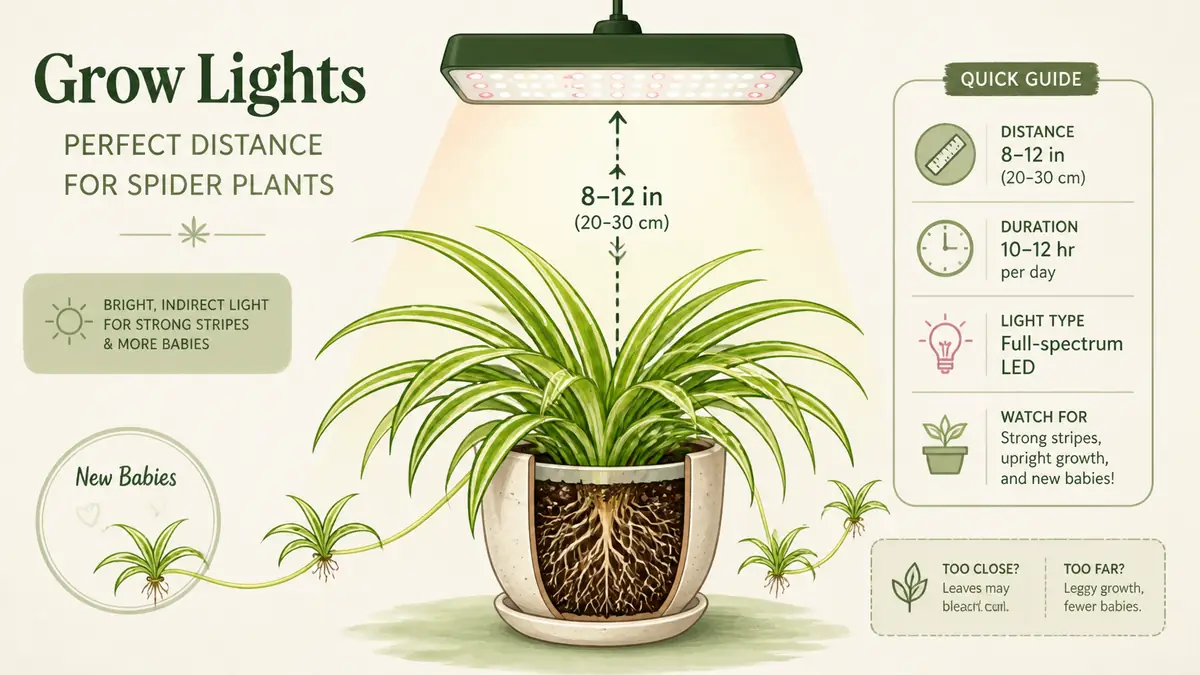
You do not need an elaborate setup. One good bulb in a simple fixture can help a spider plant that sits far from a window. Use the plant’s response as your guide. Stronger new leaves, better striping, and more upright growth are signs the light is helping.
Some links are affiliate links. As an Amazon Associate I earn from qualifying purchases at no extra cost to you.
Useful when a spider plant sits far from a bright window and starts losing stripe contrast.
How Light Affects Spider Plant Babies
Spider plant babies, or plantlets, form on long arching stems after the plant flowers. Light is not the only trigger, but it strongly affects whether the plant has enough energy to produce them. A mature spider plant in bright indirect light is more likely to make runners than one kept in a dim corner.
If your plant is healthy but baby-free, first check age and pot size. Very young plants may need more time. A plant in an oversized pot may focus on roots and leaves before runners. A slightly snug, healthy spider plant in good light often performs better than one swimming in excess soil.
Do not force babies by withholding water severely or blasting the plant with sun. Stress can damage the plant rather than encourage useful growth. Give bright indirect light, let the soil partially dry between waterings, and avoid heavy fertilizer. Too much nitrogen can push leaves instead of flowers and runners.
Once babies appear, keep the mother plant in bright indirect light. The plantlets rely on the runner while they are attached. Better light supports both the mother plant and the developing babies until you root them or leave them cascading.
How Light Affects Variegation
Variegated spider plants need enough light to keep their stripes crisp. The white or cream parts of the leaf do not photosynthesize like the green parts. That means a variegated plant has less productive leaf surface than an all-green plant, so it often appreciates a brighter placement.
In low light, the plant may produce leaves that look less vivid. The stripe can appear dull, narrow, or washed out. Sometimes the plant simply grows slowly and loses its full shape. Improving light usually helps new growth look better, but old leaves may not change dramatically.
Too much direct sun creates the opposite problem. Instead of weak striping, you may see bleached patches, tan scars, or crispy areas. The goal is not maximum sun. The goal is enough brightness to support variegation without burning the pale tissue.
If your spider plant has reverted to mostly green growth, prune out fully green offsets only if you want to preserve the variegated look. Green growth can be more vigorous and may dominate over time. Better light can help variegated growth stay strong, but it cannot always reverse genetic reversion.
Best Window Directions for Spider Plants
East-facing windows
East windows are often the easiest choice. They provide bright morning light without the strongest afternoon heat. Many spider plants can sit on or near an east sill, as long as the leaves do not press against hot glass.
North-facing windows
North windows can work if they are bright and unobstructed. Keep the plant close to the glass. If the plant becomes floppy, pale, or stops making new leaves, move it to a brighter window or add a grow light.
South-facing windows
South windows can be excellent or excessive, depending on distance and season. A spider plant usually does best a few feet back, to the side, or behind a sheer curtain. In winter, this may become the best window in the house.
West-facing windows
West windows give strong afternoon light, which can be hot. Use a sheer curtain or place the plant back from the glass. If only the window-facing leaves scorch, the plant is telling you the exposure is too intense.
Light Troubleshooting Checklist
- If leaves are pale, floppy, and slow to grow, move the plant closer to a bright window.
- If stripes are fading, increase bright indirect light before adding fertilizer.
- If leaves have bleached patches, reduce direct sun exposure.
- If brown tips appear without scorched patches, check watering, minerals, and humidity too.
- If soil stays wet for many days, the plant may need more light and less frequent watering.
- If there are no babies, improve light and wait for mature, steady growth.
- If the plant leans, rotate the pot every week or two.
- If windows are weak, use a full-spectrum LED grow light for 10 to 14 hours daily.
FAQ
- Can spider plants live in low light?
-
Yes, spider plants can tolerate lower light, but they usually grow more slowly there. Low light often means weaker stripes, fewer new leaves, and fewer babies. For the best appearance, use bright indirect light rather than a dim interior corner.
- Can spider plants take direct sun?
-
They can often handle gentle morning sun, especially from an east-facing window. Harsh midday or afternoon sun can bleach or scorch the leaves. If direct sun creates tan, white, or crispy patches, filter the light or move the plant back.
- What window is best for a spider plant?
-
An east-facing window is often the easiest choice. A bright north window can work if the plant is close to the glass. South and west windows can also work, but the plant may need distance from the glass or a sheer curtain.
- How far should a spider plant be from a window?
-
In many homes, 1 to 4 feet from an east or bright north window works well. For south or west windows, start around 3 to 6 feet back or use a sheer curtain. Adjust based on leaf color, growth, and any scorch marks.
- Why is my spider plant losing its stripes?
-
Weak stripes often point to low light, especially on variegated plants. Move the plant to brighter indirect light and watch the next few leaves. If new growth is still dull, the spot may still be too dim or the plant may need time to recover.
- Does more light make spider plants produce more babies?
-
Bright indirect light helps a mature spider plant build the energy needed for flowers, runners, and babies. It does not guarantee instant plantlets, but low light often reduces baby production. Age, watering, pot size, and general health also matter.
- Can I put a spider plant outside for more light?
-
Yes, but place it in shade or filtered light, not exposed midday sun. Outdoor sun is stronger than indoor light through glass. Acclimate the plant gradually and bring it indoors before cold weather if your climate is not suitable year-round.
- Do spider plants need a grow light?
-
Not if they already sit near a bright window. A grow light is helpful in dark rooms, offices, basement apartments, or winter conditions. Use a full-spectrum LED close enough to matter, usually about 12 to 24 inches from the plant.
- How many hours of grow light does a spider plant need?
-
About 10 to 14 hours per day is a practical range for indoor spider plants under artificial light. Use a timer for consistency. Do not leave the light on all day and night, because plants still benefit from a dark period.
- Why are only the leaves facing the window damaged?
-
That pattern often points to direct sun or heat through the glass. Move the plant slightly back, add a sheer curtain, or shift it to a spot with morning sun only. Damaged patches will not heal, but new leaves should grow normally after the light is corrected.
Sources
- North Carolina State Extension: Chlorophytum comosum, spiderplant
- University of Minnesota Extension: Spider plant