Transparency note: Some links in this article are affiliate links. As an Amazon Associate I earn from qualifying purchases at no extra cost to you. Product suggestions are included only where they fit a specific plant-care problem. on relevance, availability, customer signals, and fit with the care problem discussed here.
Growing Spider Plants in Water and LECA
Keeping a spider plant in water or LECA can work, but it is not the same as growing it in potting mix. Water quality, nutrient routine, and root transition matter.
For this part of the guide, a researched product option that fits the job is:
Selected because this section is specifically about soil moisture meter use. Check Amazon for current price and availability.
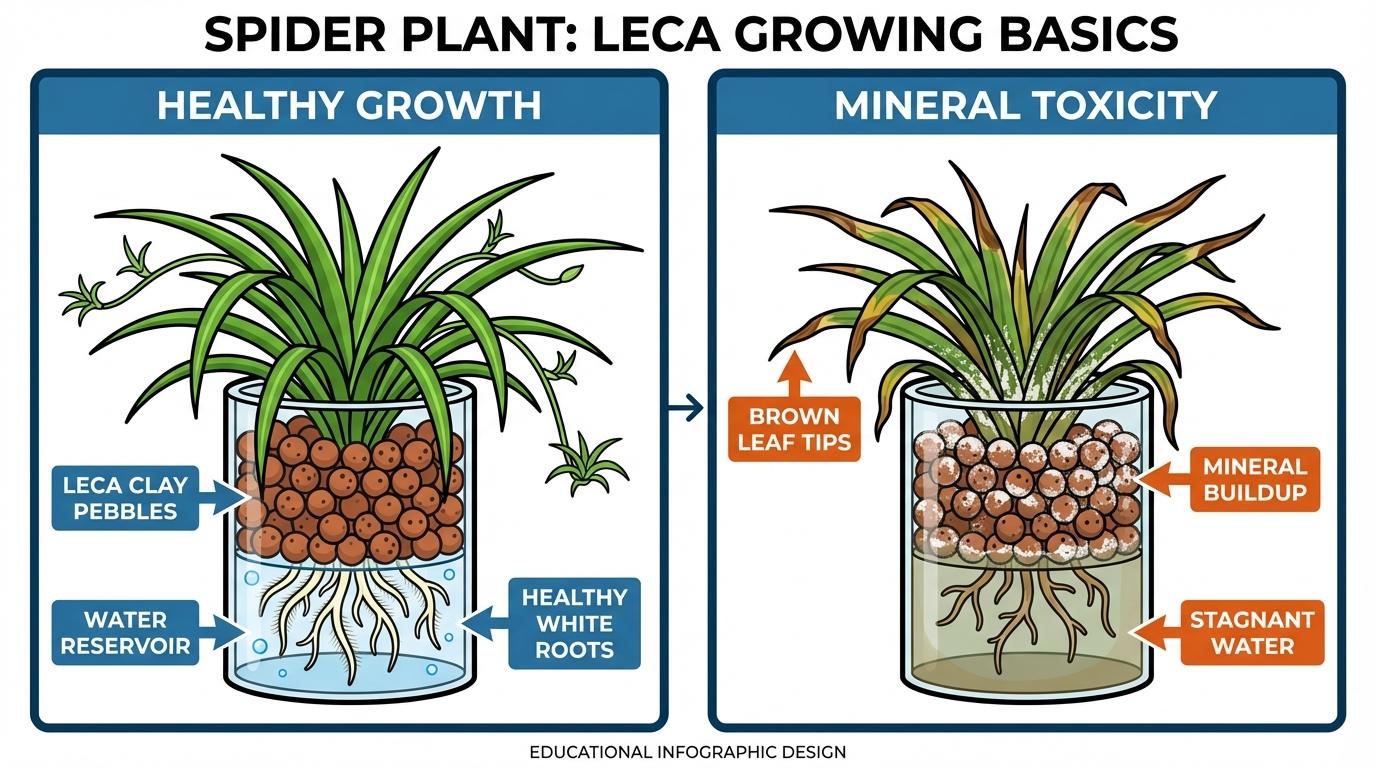
But within three weeks, our supposedly healthy spider plant in water and leca developed severe Brown Tips. We quickly learned that our hard Aarhus tap water was a terrible match for a soil-free setup.
LECA clay pebbles can accumulate minerals over time. This is a massive issue because spider plants are highly sensitive to fluoride and chlorine.
These chemicals travel up the stem and build up at the leaf ends through a scientific process known as fluoride translocation. Because the plant cannot sweat out the minerals, the leaf tissue simply dies and turns crispy.
The biggest risk is treating semi-hydro like normal potting soil. Spider plants can adapt, but they need clean water, oxygen around the roots, and a suitable nutrient routine.
We are going to share exactly what we do to make this work in our apartment. We will cover how to survive the initial root transition shock, flush your LECA properly, and lock in a foolproof spider plant in water and leca care routine.
How Hydroponics Works for Spider Plants
Having the process of a spider plant in water and leca explained makes transitioning your plants much less stressful. When we first moved our soil-grown spider plant into a glass vase, we expected instant success. Instead, the roots turned black and mushy within a week.
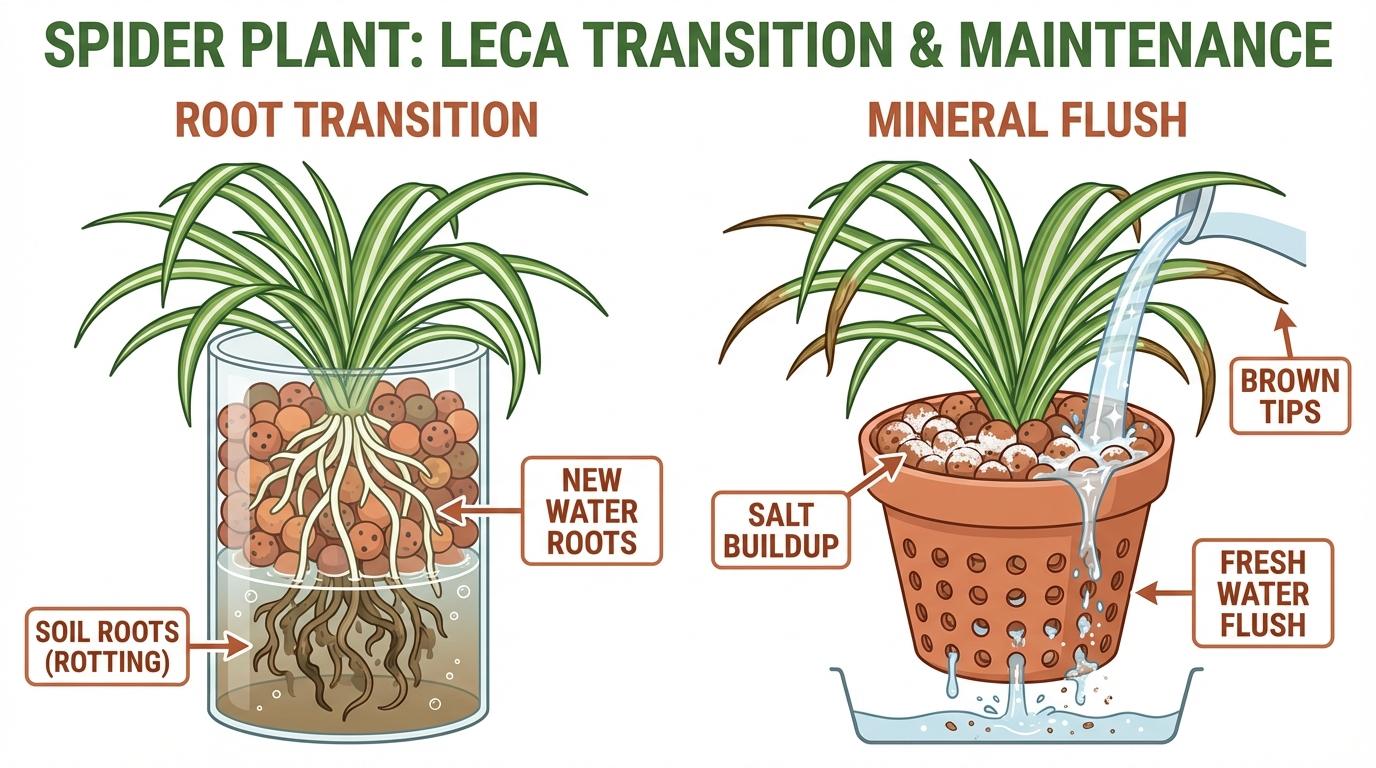
This happens because plants grow two completely different types of root systems. Soil roots are designed to pull moisture from dirt, while water roots are built for a purely liquid environment. When transitioning your plant, those old terrestrial roots will naturally drown, rot, and shed.
Managing the Root Transition Shock
We handle this transition shock by thoroughly washing the old soil off the roots under lukewarm tap water. We then place the clean plant in a vase of plain water for a few weeks to let the new, white water roots develop. Once you see these fresh roots, you can safely move the plant into LECA.
Hydroponic Nutrients and Reservoir Health
The secret to a healthy spider plant in water and leca explained comes down to using the right nutrients. Standard liquid houseplant fertilizer will fail in a semi-hydroponic setup. According to university hydroponic research, regular fertilizers lack essential micronutrients like calcium and magnesium.
The fertilizer I have used consistently longer than any other:
Complete liquid fertilizer with all 16 essential nutrients. The 7-9-5 ratio is dialled in for lush foliage plants.
Without these specific minerals, you will quickly notice yellow leaves developing on your plant. Joakim measures our nutrient reservoir to keep the Electrical Conductivity (EC) strictly between 1.0 and 1.5 mS/cm. This ensures the plant gets fed without burning the fragile new water roots.
Flushing LECA to Stop Mineral Buildup
Because LECA clay pebbles act like tiny sponges, they soak up heavy salts from your fertilizer and tap water. Here in Aarhus, our tap water is notoriously hard. If we just top off the reservoir without cleaning it, the spider plant absorbs all that excess fluoride.
As the fluoride builds up in the leaf tips, it kills the plant tissue. This is the main cause of crispy brown tips in semi-hydro setups. To fix this, Emilie physically takes our LECA pots to the shower every four weeks and flushes the clay thoroughly with clean water.
Proper spider plant in water and leca explained care means resetting that mineral balance regularly. We often tell friends that growing spider plant in water and leca explained takes patience during the root transition, but treating the reservoir like a tiny ecosystem makes it incredibly rewarding.
Water Culture vs. Soil: Pros and Cons
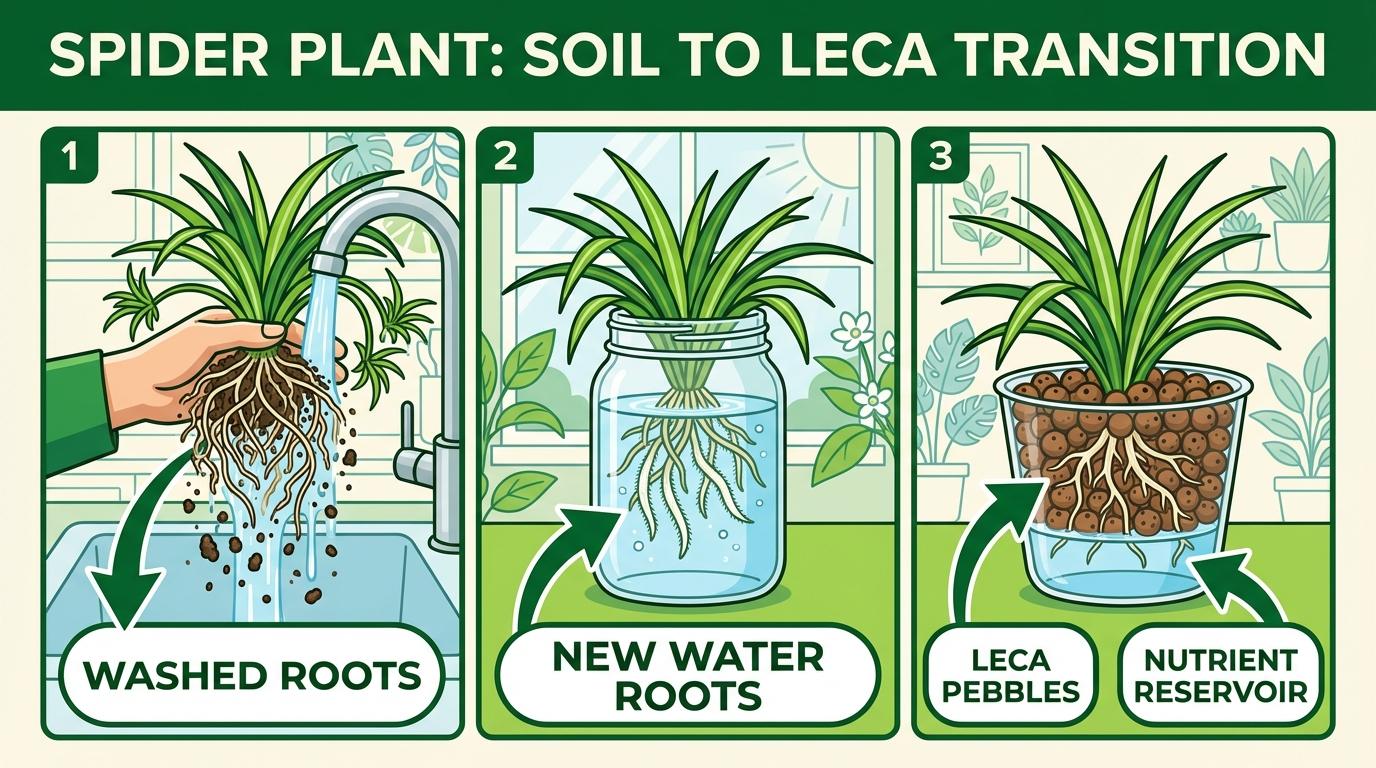
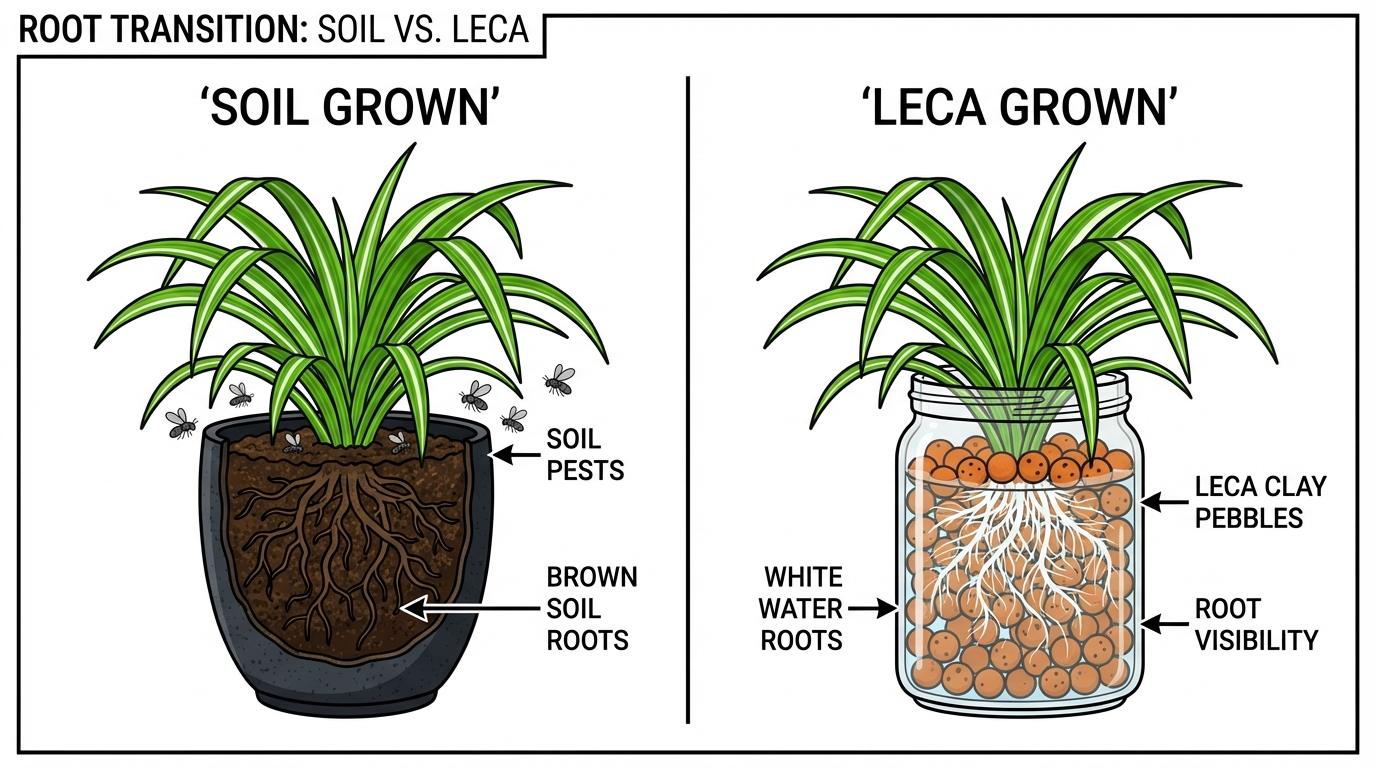
Understanding the spider plant in water and leca importance changed our entire approach to keeping houseplants. Initially, we just wanted a desperate escape from the fungus gnats that invade our apartment every winter.
Soil-borne pests thrive in the damp, dark days of the Danish winter. Switching to a soilless setup removes the organic matter these bugs need to lay eggs. It also gives us complete visibility over root health.
The Reality of the Root Transition
When you are growing spider plant in water and leca importance lies in protecting the delicate roots during the switch. Many people think you can just wash the dirt off and drop the plant in a jar. We learned the hard way that this fails.
When moved from soil to a wet environment, terrestrial roots often drown. The plant has to shed those old roots and grow fine, white “water roots” adapted to an aquatic environment.
Precision Feeding for Semi-Hydro
Proper spider plant in water and leca importance care means rethinking how you feed your indoor jungle. You cannot use regular potting soil fertilizers in a water reservoir. Standard fertilizers lack essential micronutrients like calcium and magnesium that plants normally pull from dirt.
Without these micronutrients, spider plants quickly develop yellow leaves due to chlorosis. To fix this, we use a specialized hydroponic fertilizer. Joakim checks our reservoir with a meter, keeping the electrical conductivity (EC) right between 1.0 and 1.5 mS/cm.
Maintaining the System Ecosystem
To build a healthy spider plant in water and leca importance is heavily placed on precision feeding and pH control. The water pH dictates whether the plant can absorb the food. If it drifts too high, the plant experiences nutrient lockout.
Despite the learning curve, taking these plants out of even the best soil solved our pest issues. The glass reservoir also makes it incredibly easy to see exactly how often to water.
It takes a little extra effort upfront. But mastering this setup gives you total control over the plant’s actual environment. For us, that predictability is completely worth the initial transition shock.
Signs Your Water-Grown Plant Needs Attention
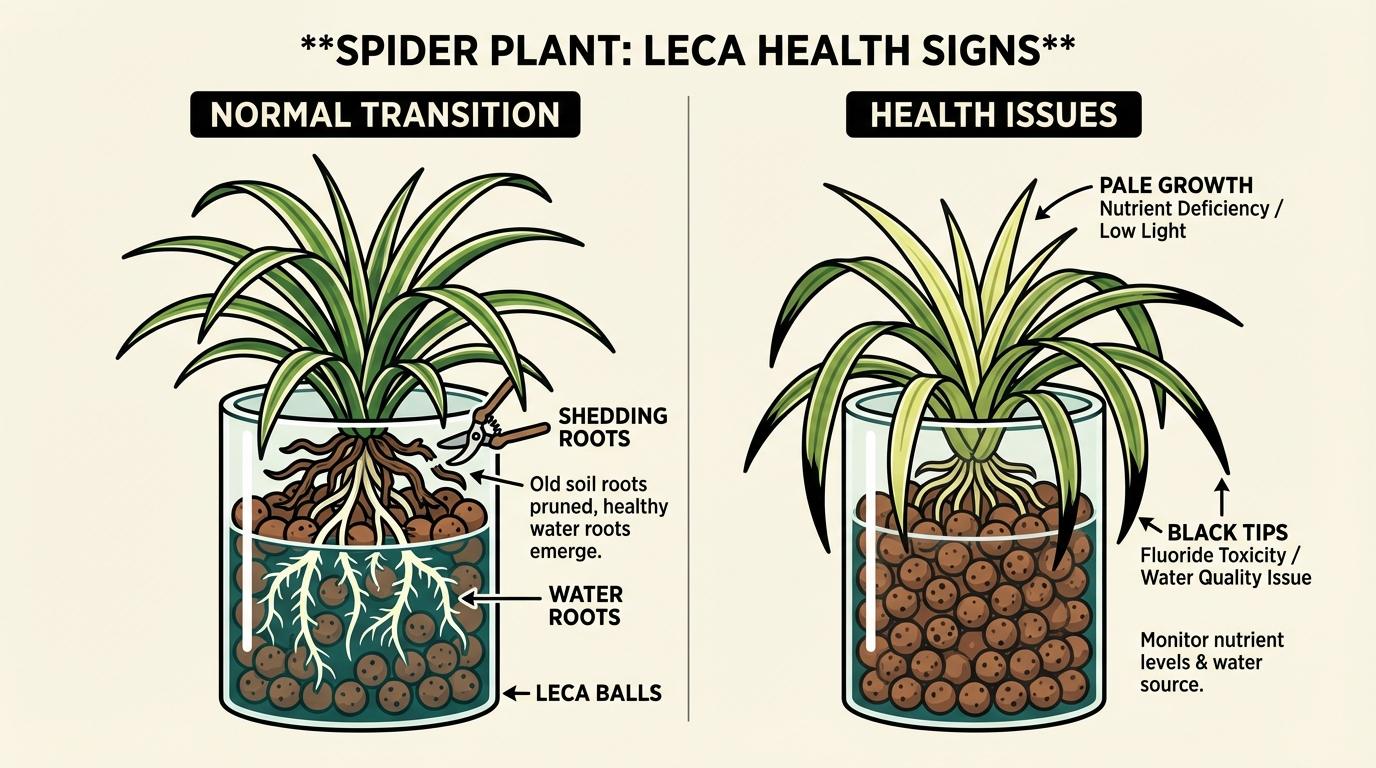
When converting your setup, it is crucial to know exactly which spider plant in water and leca signs indicate a normal transition and which spell trouble. Early on, Emilie constantly pulled our plants out of their pots just to check the roots. Over time, we learned to read the plant’s visible cues instead.
The Terrestrial Root Shedding Phase
The most alarming phase is the initial root transition shock. When you move a soil-grown plant into a wet environment, the thick terrestrial roots almost always rot. This decay is actually a normal part of growing spider plant in water and leca signs.
The plant is intentionally shedding old roots to push out thinner, fuzzier water roots adapted for aquatic life. If you see mushy brown roots in the first three weeks, do a quick troubleshooting check and simply trim the rot away with sterile scissors.
Spotting Hydroponic Chlorosis
Standard houseplant fertilizers lack the heavy calcium and magnesium usually found in potting soil. Because of this, a common spider plant in water and leca signs care issue is chlorosis, a condition that causes pale or washed-out new growth.
We noticed our first LECA spider plant producing weak, pale leaves after two months. We initially assumed we had standard yellow leaves from an unbalanced reservoir. Joakim realized our standard fertilizer was missing essential micronutrients, so we immediately switched to a hydroponic-specific nutrient blend.
Fluoride Toxicity vs. Dry Air
As we mentioned earlier, LECA clay absorbs heavy salts from our hard Aarhus tap water. If you do not flush the reservoir regularly, the plant simply cannot filter these chemicals out. One of the clearest healthy spider plant in water and leca signs is crisp, clean leaf ends.
If the tips turn completely black or crispy brown, you are likely seeing fluoride toxicity rather than simple dry air. To fix this, increase your flushing frequency under the shower and ensure your light requirements are being met so the plant can actively photosynthesize.
Transitioning from Soil to Water or LECA
Mastering the right spider plant in water and leca steps is crucial because moving a plant from dirt to a hydroponic setup causes massive root shock. You cannot simply wash the roots and drop them into a jar.
Soil roots will quickly rot when submerged permanently in water. The plant needs time to shed its terrestrial roots and grow specialized water roots. Whether you are transitioning an adult plant or starting fresh with propagation, expect some initial stress.
Step 1: Root Cleaning and Clay Prep
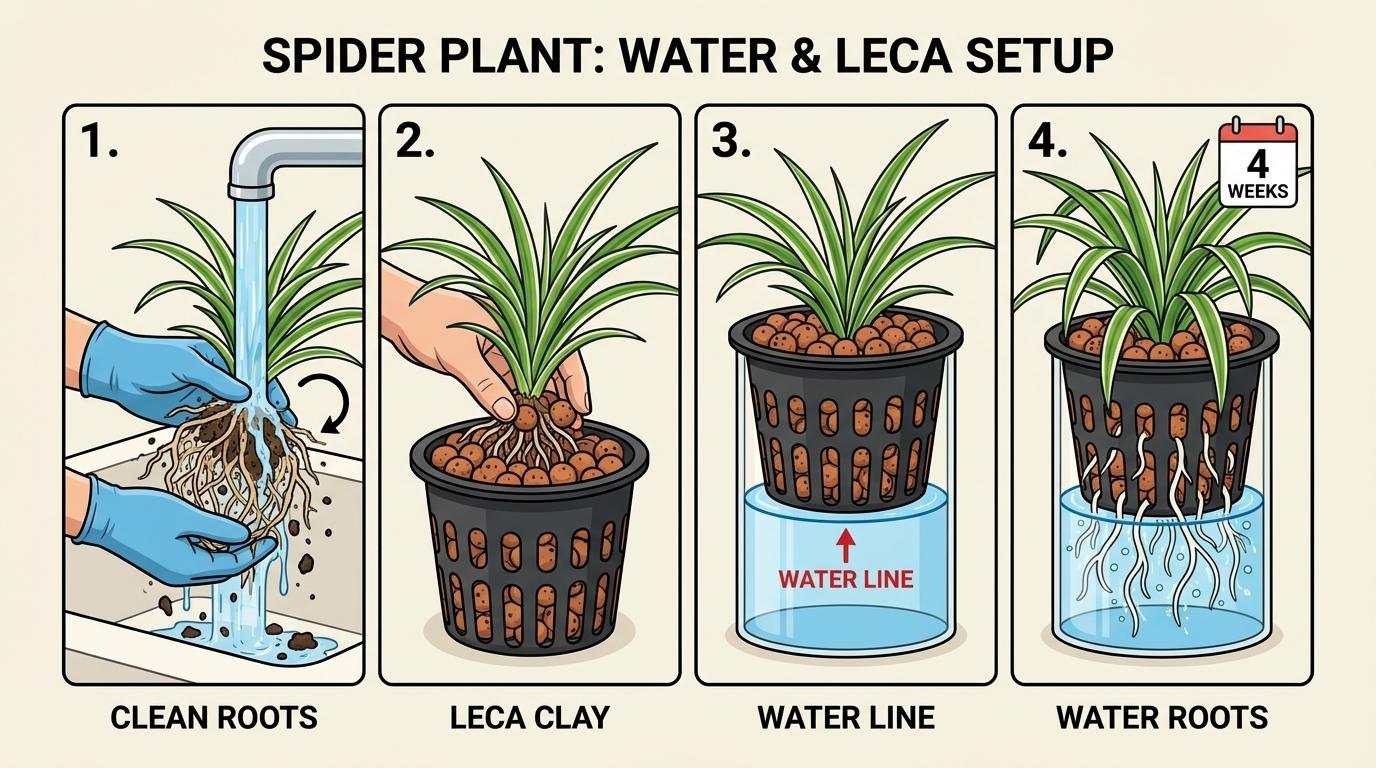
Emilie spends a lot of time at our kitchen sink gently massaging the root ball to remove every speck of the best soil. Any leftover dirt will cause dangerous bacterial rot in your new reservoir.
Next, you must boil your LECA clay pebbles before using them. This sterilizes the clay and removes heavy manufacturing dust. We rinse ours thoroughly with cold water right after boiling.
Step 2: Mixing the Hydroponic Nutrients
Standard houseplant fertilizers completely lack calcium and magnesium. For growing spider plant in water and leca steps successfully, you need to buy a hydroponic-specific liquid nutrient blend.
Joakim measures our reservoir water with a digital meter to ensure the electrical conductivity (EC) sits between 1.0 and 1.5 mS/cm. Keeping the water pH strictly balanced prevents nutrient lockout in the new roots.
Step 3: Setting Up the Reservoir
Place the clean plant roots into a plastic net pot, filling in the empty gaps with your prepared LECA. Sit this net pot safely inside a waterproof glass cachepot filled with your nutrient water.
The water line should sit just below the roots, never actually touching the main plant stem. The LECA will wick moisture upward to the roots. Getting this water level right is a vital part of your spider plant in water and leca steps care routine.
Step 4: Flushing and Maintenance
Within a few weeks, you will see thick, white water roots pushing through the clay pebbles. To maintain healthy spider plant in water and leca steps over the long term, you must flush the setup regularly.
We take our pots to the shower every four weeks to wash away the heavy minerals left by our hard Danish tap water. If you skip this flush, the clay acts like a sponge and your plant will quickly develop brown tips from fluoride buildup.
Hydro Mistakes That Cause Root Rot
When we transitioned our first plant, we made all the classic spider plant in water and leca mistakes. We simply washed the dirt off the root ball and plopped the whole thing into a glass jar.
Within a week, those soil roots turned to black mush. We did not know that terrestrial roots literally cannot breathe underwater. The plant has to shed its old roots and grow completely new water roots.
To avoid this initial transition shock, keep the reservoir water line just below the base of the plant. Let the plant naturally stretch its new roots down toward the moisture.
Using Standard Houseplant Fertilizer
Another huge issue is feeding. One of the biggest growing spider plant in water and leca mistakes is using your standard liquid potting fertilizer in a hydroponic setup.
Regular fertilizers lack essential micronutrients like calcium and magnesium, which soil naturally provides. Without these minerals, you will quickly see yellow leaves pop up all over your plant.
Joakim bought a digital meter to fix this issue. We now use a dedicated hydroponic nutrient blend and maintain an electrical conductivity strictly between 1.0 and 1.5 mS/cm to prevent nutrient lockout.
Skipping the Monthly LECA Flush
Our apartment in Aarhus has incredibly hard tap water. Because LECA clay acts like a tiny sponge, it traps all the heavy minerals and fluoride from that tap water.
The plant pulls this fluoride up through its stem in a process called translocation. Since the plant cannot sweat the minerals out, they destroy the leaf ends, causing severe brown tips.
To fix your spider plant in water and leca mistakes care routine, you must flush the system. Emilie physically takes our LECA pots to the shower and rinses the clay pebbles under running water every four weeks.
When analyzing healthy spider plant in water and leca mistakes, we discovered that skipping this monthly flush is the primary cause of failure. Staying on top of this basic troubleshooting completely changed how well our plants thrive indoors.
Nutrient Schedules for Water-Grown Plants
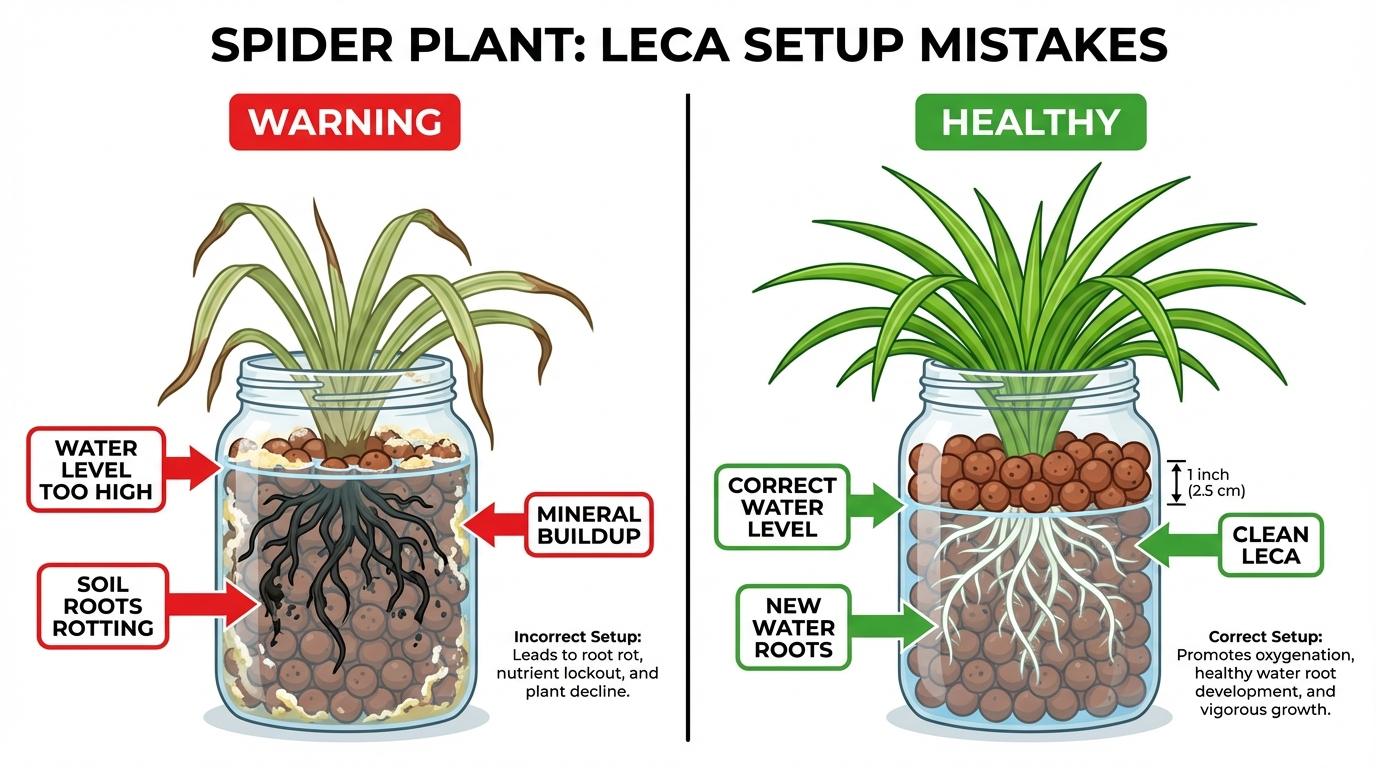
When we first switched our indoor jungle to semi-hydroponics, we realized that standard advice often falls short. Finding reliable spider plant in water and leca tips changed everything for our Aarhus apartment. It requires a distinct approach compared to traditional potting mixes.
You cannot treat a glass jar of clay pebbles like a regular pot. Here are our top growing spider plant in water and leca tips to help you avoid the exact mistakes we made.
Navigating the Root Transition
The most critical phase is the initial transition. Soil roots often rot when submerged, so your plant will naturally shed them to grow specialized water roots. We learned this the hard way after pulling a plant from our best soil to put straight into a reservoir.
To give your plant the best chance, clean the roots thoroughly before the move. Keep the water level just below the stem base so the LECA wicks moisture upward. This prevents stem rot while encouraging those new, white water roots to emerge.
Nailing the Nutrient Balance
Regular liquid fertilizer will not work here. Standard houseplant fertilizers lack essential micronutrients like calcium and magnesium that plants usually pull from dirt. Without them, your setup will quickly develop yellow leaves from chlorosis.
Joakim tracks our reservoir strength using an electrical conductivity meter. A reliable spider plant in water and leca tips care routine means keeping your nutrient water EC between 1.0 and 1.5 mS/cm. Maintaining proper electrical conductivity and pH ensures the plant can actually absorb the food.
Beating the Fluoride Trap
Spider plants are highly sensitive to fluoride, which builds up fast in LECA systems. The clay absorbs salts from fertilizer and our hard Danish tap water like a sponge. The plant then pushes these minerals to the leaf ends through fluoride translocation.
Because the plant cannot excrete these minerals, the tissue simply dies. This causes severe brown tips that ruin the look of your plant. Emilie solves this by physically taking our pots to the shower every four weeks for a deep flush.
Running clean water through the pebbles resets the mineral balance completely. Following these healthy spider plant in water and leca tips will keep your foliage crisp and clean. Once you establish this monthly rhythm, keeping them happy in semi-hydro is incredibly easy.
Keeping Water Clean and Roots Healthy
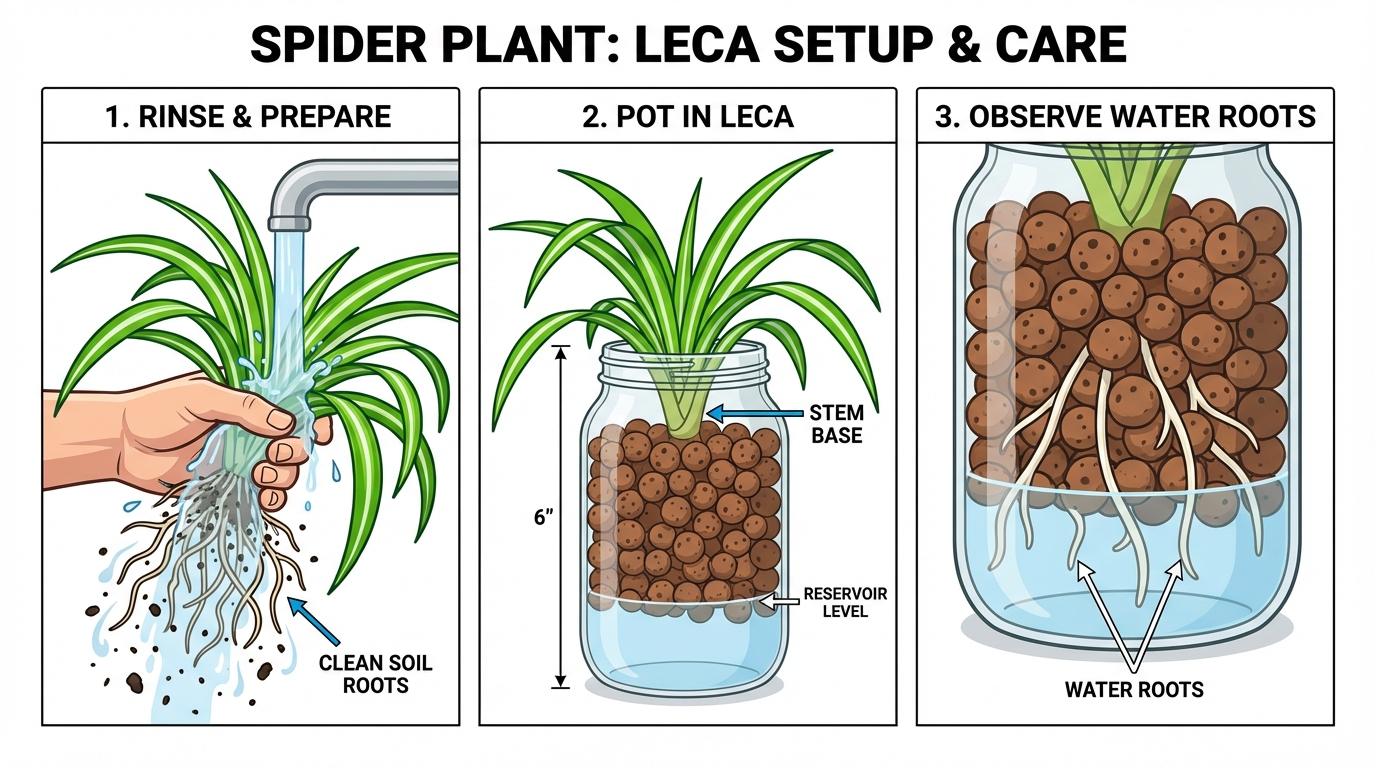
Proper spider plant in water and leca prevention starts with understanding that soil roots and water roots are entirely different. When we first tried semi-hydroponics, we panicked when the original roots began to rot. We quickly learned that the plant naturally sheds its terrestrial roots to grow thick, white water roots.
To practice healthy spider plant in water and leca prevention, you have to support the plant through this transition shock. Emilie carefully cleans the soil off the roots under the tap, taking care not to snap the delicate main stem.
Stopping Fluoride Translocation
The biggest issue we face in our Aarhus apartment is our incredibly hard tap water. LECA clay pebbles act like tiny sponges, trapping heavy minerals and fluoride from the water.
The plant pulls this fluoride up through its stem in a scientific process called fluoride translocation. Because the plant cannot sweat out the minerals, they build up and destroy the leaf tissue, causing severe brown tips.
Effective growing spider plant in water and leca prevention means physically washing your reservoir. Every four weeks, we take our glass pots into the shower and flush the clay pebbles thoroughly with clean water to reset the mineral balance.
Managing Nutrients and pH
During our first setup, we noticed our plant producing weak foliage and yellow leaves. Joakim hit the research and realized standard liquid fertilizer lacks essential micronutrients like calcium and magnesium needed for semi-hydroponics.
Good spider plant in water and leca prevention care requires a hydroponic-specific nutrient blend. We use a digital meter to measure the food strength, keeping the electrical conductivity (EC) precisely between 1.0 and 1.5 mS/cm.
We also carefully monitor the water pH. If the pH drifts too high, the plant will suffer from nutrient lockout and starve. Staying on top of this basic troubleshooting makes semi-hydroponics highly predictable and rewarding.
When to Move Back to Soil
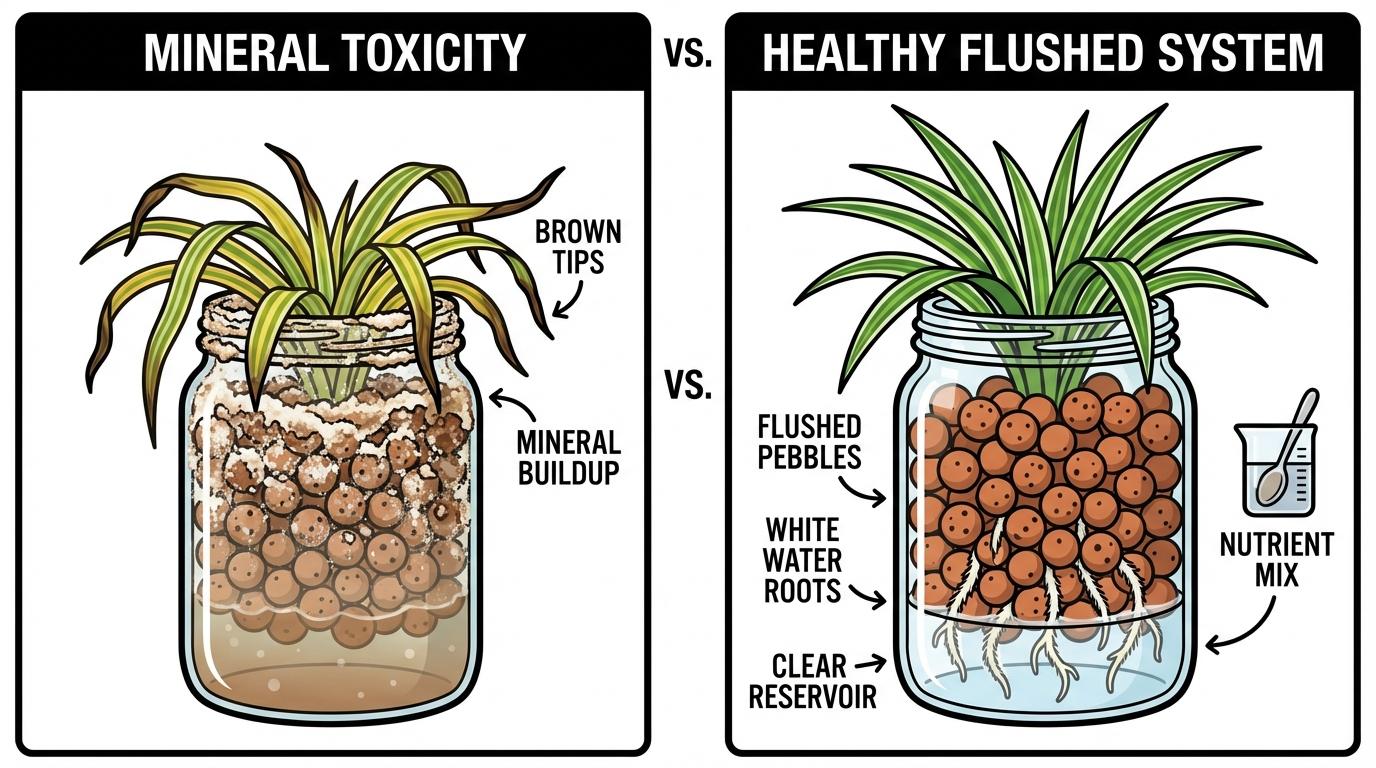
Sometimes, despite your best efforts, a semi-hydro setup crashes hard. If you are constantly battling root rot or severe nutrient deficiencies, it might be time to look into spider plant in water and leca professional solutions. We certainly hit a wall during our first year experimenting with clay pebbles.
When growing spider plant in water and leca professional care techniques emphasize monitoring the early transition phase. Moving a plant from dirt straight into water causes extreme shock because old soil roots cannot process oxygen the same way. If your plant smells like swamp water after two weeks, you need to intervene.
Spotting Severe Fluoride Damage
LECA clay acts exactly like a sponge, soaking up minerals from fertilizers and tap water. Here in Aarhus, our water is incredibly hard. This creates a massive issue because spider plants are highly sensitive to chlorine and fluoride.
The plant pulls these heavy minerals up through the stem, depositing them at the leaf ends. Because the plant cannot sweat the salts out, the tissue simply dies. This destructive process is called fluoride translocation.
If you notice more than just a few crispy edges, you are dealing with severe toxicity. When standard shower flushing does not stop the brown tips, you may need to switch to distilled water or reassess the full water and nutrient routine.
Identifying Nutrient Lockout
You also need to watch for sudden, pale yellow leaves. We originally made the mistake of using standard houseplant fertilizer in our reservoirs. Regular fertilizers lack essential micronutrients like calcium and magnesium needed for a healthy spider plant in water and leca professional setup.
Without those nutrients, the plant slowly starves. Joakim learned that we had to measure our reservoir carefully. We now keep the electrical conductivity (EC) strictly between 1.0 and 1.5 mS/cm to avoid burning the fragile new water roots.
If the water pH drifts too high, the roots completely shut down and block nutrient absorption. If your troubleshooting efforts fail to fix the fading colors, a local hydroponics shop can help you recalibrate your meters and nutrient ratios.
Spider Plant Water and LECA Growing FAQ
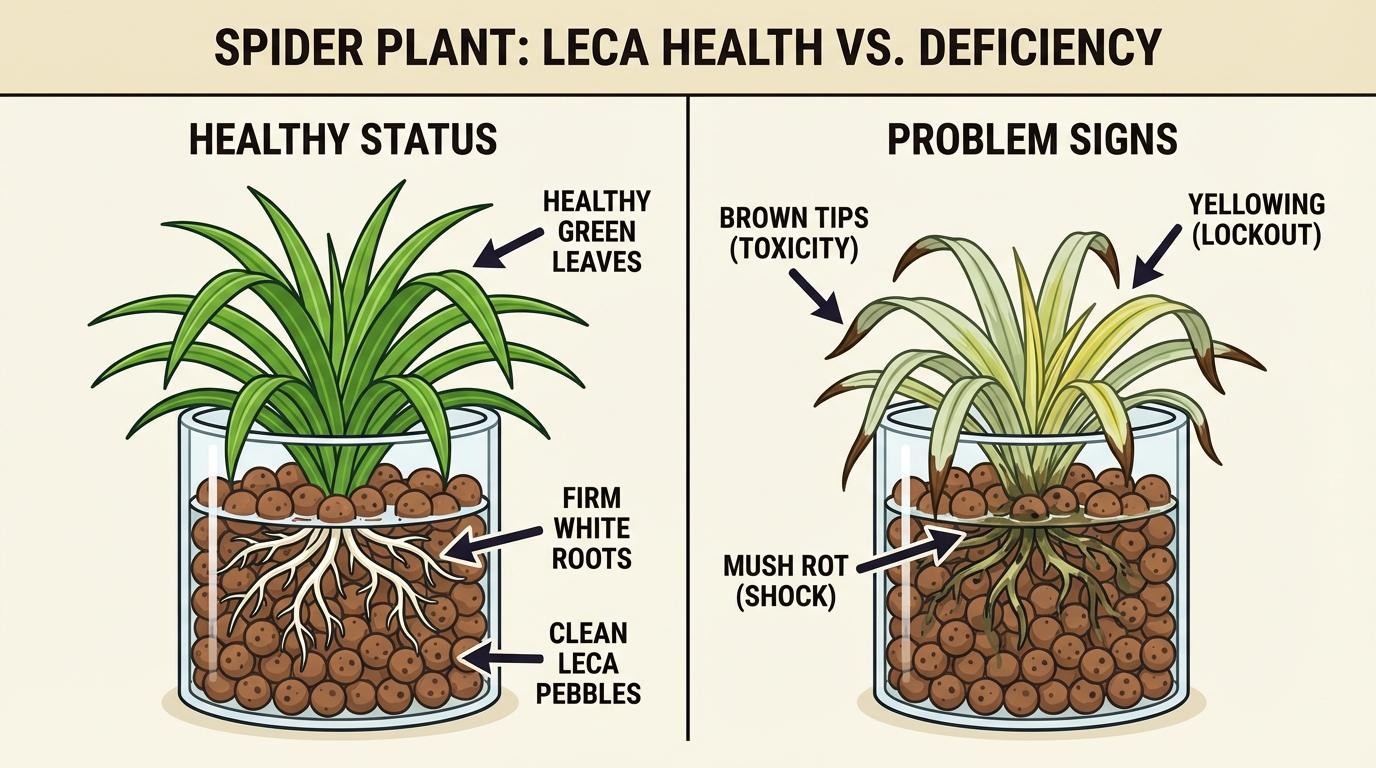
Since transitioning our indoor jungle away from traditional dirt, the most common questions we receive make up this spider plant in water and leca faq. Growing these resilient plants in clay pebbles completely changes how they feed and drink.
We want to answer the biggest hurdles we faced in our Aarhus apartment. Mastering this setup reduces pest problems and takes the guesswork out of how often to water.
Why do roots rot when moving from soil to water?
This is called transition shock. Terrestrial roots are built to pull moisture from soil, so they often suffocate and rot when submerged directly in a reservoir.
A common question in our growing spider plant in water and leca faq care guides is how to handle this die-off. Don’t panic. Emilie simply snips off the mushy bits over a few weeks until thick, white water roots grow to replace them.
Can I use regular houseplant fertilizer?
No, you can’t. A crucial healthy spider plant in water and leca faq rule is that standard liquid food lacks vital micronutrients like calcium and magnesium. Without them, your plant will quickly develop pale yellow leaves.
Joakim uses a digital meter for basic troubleshooting and daily reservoir checks. By keeping the electrical conductivity and pH perfectly balanced, with the EC strictly between 1.0 and 1.5 mS/cm, we easily avoid nutrient lockout.
Why are my leaf tips getting crispy in LECA?
Spider plants are highly sensitive to fluoride and chlorine. LECA clay pebbles act like a sponge, rapidly soaking up heavy minerals from our hard Danish tap water.
Through a scientific process called fluoride translocation, the plant pushes these trapped salts directly to the leaf ends. Because it can’t sweat the minerals out, the tissue dies and causes severe brown tips.
To prevent this, Emilie takes our pots to the shower every four weeks. Flushing clean water through the pebbles resets the mineral balance and keeps the leaves looking sharp.
Common Questions About Spider Plant In Water And Leca
How do you take care of spider plant?
Spider plants are low-maintenance houseplants that thrive in indirect light and average room temperatures (65-75°F). Plant them in well-draining soil and water when the top inch of the soil feels dry.
They prefer slightly pot-bound conditions, so repotting is only necessary when roots become too crowded. Avoid overwatering and protect them from extreme cold below 50°F.
What is spider plant good for?
Spider plants are highly effective at improving indoor air quality by absorbing toxins such as formaldehyde. Aesthetically, their arching, bi-color foliage makes them excellent focal points for hanging baskets or shelves. They are also completely non-toxic, making them a perfectly safe houseplant choice for homes with children and pets.
How often should you water spider plant?
Spider plants generally need to be watered about once a week. However, it is best to check the soil first; only water when the top inch of the soil is completely dry. Their thick, fleshy roots store water, making them somewhat drought-tolerant.
It is better to underwater than overwater, as waterlogged soil quickly leads to root rot.
How much sun does a spider plant need?
Spider plants grow best in bright, indirect or moderate light. Placing them near east-facing or north-facing windows is usually ideal. While they can tolerate lower light, this may result in leggy growth and a loss of leaf variegation.
Conversely, too much direct sunlight will scorch their leaves, causing them to turn brown and crispy.
Will spider plant grow indoors and outdoors?
Yes, spider plants can be grown both indoors and outdoors. They are famous as indoor houseplants due to their adaptability to room temperatures and indirect light. Outdoors, they can be grown as an annual in cool climates or as a perennial ground cover in warmer, frost-free climates, provided they are kept in partial shade to prevent sunburn.
Should I cut the brown tips off my spider plant?
Yes, you can trim the brown tips off your spider plant using sterile, sharp scissors to improve its appearance. Brown tips are a common issue usually caused by low humidity, excessively dry soil, or a build-up of chemicals like fluoride and chlorine from tap water. To prevent them, consider watering your plant with distilled water or rainwater.
For taking cuttings, you need a sharp blade that does not crush the stem. These are my go-to:
Sharp, spring-loaded, and precise. Makes clean cuts that heal fast — essential for propagating without crushing the stem.
How do you propagate spider plant?
Propagating a spider plant is incredibly simple. Mature plants naturally produce long trailing stems with tiny baby plants, known as ‘spiderettes’ or ‘pups’, at the ends. You can snip off a spiderette and plant it directly into moist potting soil, or let the base sit in a glass of water for a few weeks to encourage root growth before potting.
How tall can spider plant get?
The main herbaceous body of a spider plant is relatively compact, typically growing to about 12 to 15 inches (up to 50 cm) in height. However, their trailing stems, which produce small white flowers and baby plantlets, can cascade down several feet, making them exceptionally well-suited for hanging baskets.
Is spider plant tolerant to cold?
Spider plants can tolerate some cool temperatures but are highly sensitive to extreme cold. Their growth stops at temperatures around 50°F (10°C). If exposed to temperatures below this threshold, the plant’s growth will significantly slow down, and the leaves may sustain cold damage.
Outdoor plants should be brought indoors to overwinter before temperatures drop.
What happens if a cat eats a spider plant?
Spider plants are classified as non-toxic to cats. If a feline nibbles a small amount, they typically will not develop any symptoms. However, if a cat ingests a large quantity of the plant’s leaves, they may experience mild gastrointestinal upset, resulting in vomiting or diarrhea.
Should I cut the roots of my spider plant?
You should generally avoid cutting the roots of a spider plant unless you are trimming away diseased or rotted sections. Spider plants naturally prefer being slightly root-bound, as this encourages them to produce baby plantlets. If the roots become so crowded that they push the plant out of the pot or dry out too quickly, you should repot it into a slightly larger container instead of cutting the roots.
What is the best fertilizer for spider plants?
A general-purpose, balanced liquid houseplant fertilizer is ideal. It is important to avoid fertilizers with excessively high nitrogen content; too much nitrogen will cause the spider plant to produce soft, overly long shoots that are susceptible to pests, and can inhibit the growth of new spiderettes.
How often should you fertilize spider plants?
You should fertilize your spider plant every two to four weeks during their active growing season from March to October. Alternatively, feeding them every three to four months with a half-strength solution is also sufficient. You should stop fertilizing entirely during the winter months, as feeding them during dormancy can lead to weak, delicate growth.
Is the spider plant an evergreen?
Yes, the spider plant (Chlorophytum comosum) is an evergreen herbaceous perennial. As long as it is kept in ideal indoor conditions and protected from frost, it will retain its arching green or variegated foliage all year round.
Can cats eat spider plants safely?
While spider plants are safe and non-toxic, they shouldn’t be a regular part of a cat’s diet. The plant will not cause systemic poisoning, but the dangling leaves often tempt cats to chew on them. Ingesting too much plant material can safely pass but may cause mild stomach upset and vomiting.