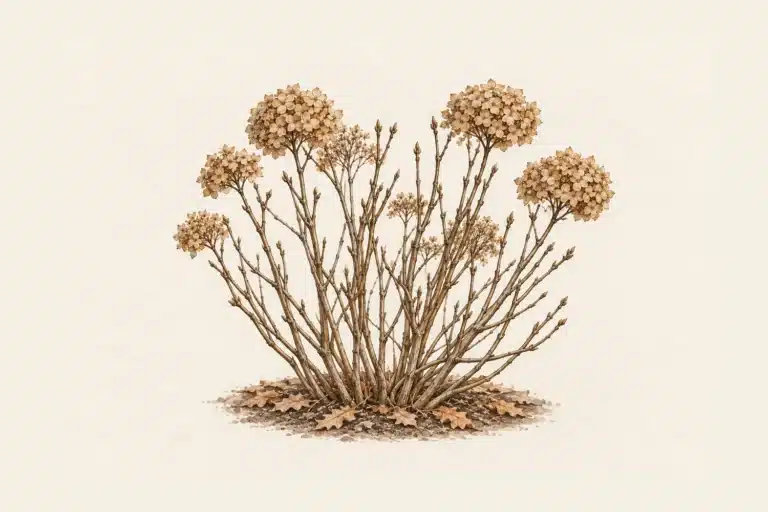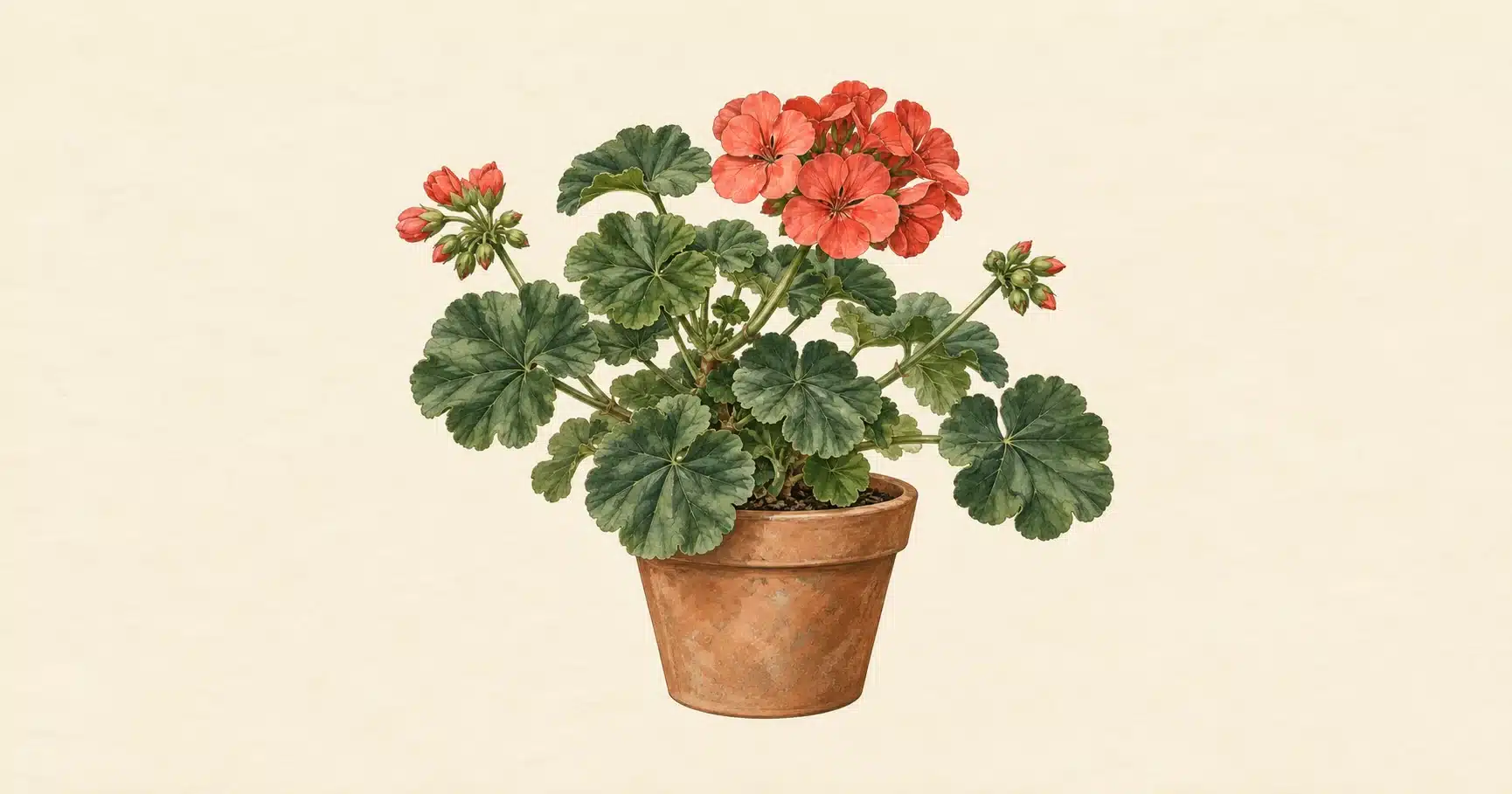
Overwintering geraniums starts before the first frost: keep a healthy plant growing in a bright window, store it bare-root in a cool, dark place, or take cuttings to save space. Choose by the conditions you can provide. Potted plants need light and watering when the soil dries; dormant bare-root plants need different care.
Start with a healthy tender geranium before frost
This guide covers tender annual geraniums in the genus Pelargonium, especially common or zonal geraniums (Pelargonium × hortorum). Hardy cranesbills belong to the separate genus Geranium. If the name is uncertain, compare the plant label with the real botanical photos in Iowa State’s annual geranium guide. Do not assume every scented, ivy or regal type responds equally well to bare-root storage.
Watch your local forecast and prepare before the first fall frost, rather than waiting for a national calendar date. Inspect leaves, stems and roots; keep healthy plants, not plants with rot, disease or an insect infestation. University of Illinois Extension makes this selection the first step.
Choose a method for overwintering geraniums
Start with what you already have: a suitable window, a draining pot or a paper grocery bag. Check the actual temperature where plants will sit. A basement or garage is useful only if its conditions fit the method; its name does not establish that it stays cool without freezing.
Use a suitable air thermometer you already own to check the plant’s actual location. If you do not have one, the optional monitor below can help you measure the space before choosing a method.
| Method | Light and temperature | Space and what you keep | Moisture rule |
|---|---|---|---|
| Potted plant | Bright, sunny window or supplemental light. Iowa State’s ideal: 65–70°F (18–21°C) days; 60–65°F (16–18°C) nights. | Room for the whole plant and pot; keeps the original plant growing. | Water when the soil becomes dry. |
| Dormant bare-root plant | Dark, dry storage at 45–55°F (7–13°C), following Iowa State. | No growing-space window needed; keeps the original plant without its pot or soil. | Inspect stored plants. A check is not an automatic watering appointment; see the source differences below. |
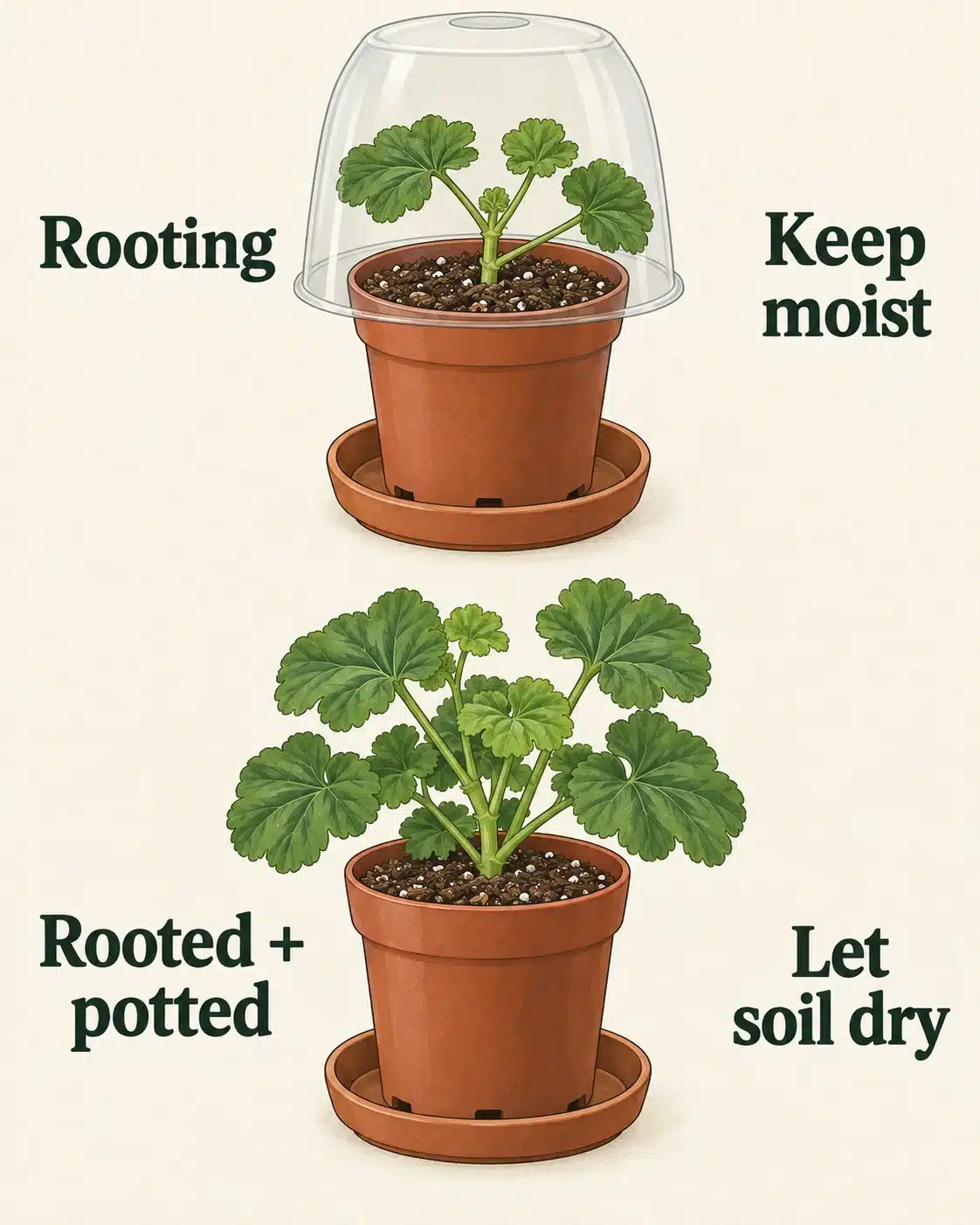
| Stem cuttings | Bright indirect light while rooting; a sunny window or supplemental light after potting. | Smaller containers; starts new plants from the parent. | Keep unrooted medium moist. Once rooted and potted, water when the soil dries. |
These choices follow Iowa State’s guide, reviewed September 2026, and its geranium overwintering FAQ. The temperature ranges are growing or storage targets, not sharp survival limits.
No suitable cool storage? Choose a bright potted plant or space-saving cuttings instead. If you have neither adequate light nor suitable storage, overwintering may be impractical this year. Supplemental light is worth considering only if you want to keep an active plant and the window cannot supply enough light; our indoor grow-light guide explains that separate choice.
Keep the plant growing in a pot
- Before frost, bring in the existing container or carefully lift a garden plant and pot it in a container with drainage holes.
- Remove one-third to one-half of the plant’s growth for the fall move. This is the amount removed, not the amount left. Water thoroughly and let the pot drain.
- Place it in a bright, sunny window or under supplemental light, using the potted temperature targets above.
- Check the soil before watering. When it becomes dry, water; do not keep the summer watering schedule automatically.
Iowa State warns that warmth combined with poor light produces lanky growth. Improve the light conditions and occasionally pinch stems to encourage branching. More water does not correct inadequate light.

Keep newly returned pots apart from established houseplants and inspect them often. Iowa State’s general indoor–outdoor plant guidance recommends three to four weeks of isolation after bringing plants indoors.
Store a dormant geranium in a paper bag
Before frost, lift a healthy plant and gently shake the soil from its roots. Put it in a paper grocery bag or hang it upside down in a dark, dry place at 45–55°F (7–13°C), following Iowa State’s current method. Keep air circulating; do not seal the bag shut.

Leaves and some shoot tips can die during dormancy. Check about monthly, remove fallen leaves and inspect stems, as described by Friends of the Oak Park Conservatory. Leaf loss alone does not tell you the plant is dead.
| What you find | What to do |
|---|---|
| Fallen, dry leaves; stems still firm | Remove the loose leaves and continue inspection. Do not treat normal dormant leaf loss like wilt in a growing pot. |
| Mold or soft, decaying tissue | Check that storage is dry and the bag allows airflow. Discard a rotting or diseased plant rather than trying to rescue it by soaking. |
| Shriveled, dead stem sections | At restart, remove dead material and prune back to firm, green, live stem tissue. Do not expect completely dried-out or rotted tissue to recover. |
| Storage outside the chosen temperature range | Find a location that meets the 45–55°F (7–13°C) target. Do not rely on an unmeasured garage staying suitable all winter. |
The tissue and restart checks follow Iowa State’s FAQ; the healthy-plant boundary follows Illinois Extension.
Why do winter soaking instructions differ?
Published methods differ. Iowa State’s current 2026 guide and 2022 FAQ do not prescribe routine winter soaking. Its 1999 article prescribes soaking roots monthly for one to two hours, but explicitly warns that its information may be outdated. Wisconsin Extension’s 2024 article reports soaking as something some gardeners do; its author had not yet tried bare-root storage.
A monthly inspection is therefore not a universal monthly soak instruction. Nor does the newer guide’s omission prove every plant can remain completely dry for months. If you choose the historical root-soak protocol, recognize its age and follow it as a separate method; do not combine it with misting, overnight whole-plant soaking or the watering rule for a rooted pot.
Save space with stem cuttings
Take cuttings from a healthy plant before frost if you have light but little room for large pots. The following steps use Iowa State’s geranium-specific procedure:
- With a sharp knife, take 3–4-inch (8–10 cm) stem tips and remove the lower leaves.
- The Iowa State procedure dips the base in rooting hormone. Follow the actual product label; the source does not establish a brand or dose.
- Use a container with drainage holes and a rooting medium such as vermiculite or a mixture of perlite and sphagnum peat moss. Insert cuttings just far enough to stand unsupported.
- Water the medium, let it drain and place the cuttings in bright indirect light, away from direct sun. Keep the unrooted medium moist.
- Pot each cutting individually once it has a good root system. Move rooted plants to a sunny window or supplemental light, then use the potted-plant watering rule.
Iowa State’s procedure uses a clear bag or dome to limit wilting. Illinois Extension makes a clear cover optional and says to monitor for mold. Its real cutting photos also show how cuttings stand in their medium.
Iowa State estimates six to eight weeks for rooting; Illinois gives four to eight weeks. Use established roots as the potting decision, not a guaranteed deadline. A moist rooting container and a dormant paper bag serve different purposes.
Restart in spring, then return outdoors gradually
For stored bare-root plants, remove dead material and cut back to firm, green, live stem tissue. Pot the remaining plant, water thoroughly and place it in a sunny window or under supplemental light. These are Iowa State’s restart steps; new growth is the outcome to watch for, not a promise that every stored plant will recover.
Iowa’s March restart and May planting examples are regional. For a locally adaptable planning window, Friends of the Oak Park Conservatory’s separate bare-root protocol suggests restarting indoors six to eight weeks before your local average last frost date. Use that interval as a planning example, not a guarantee that plants stored by Iowa State’s method will be ready on schedule.
An average last frost date helps you plan; actual local frost danger decides outdoor return. Keep plants indoors until that danger has passed. Introduce them gradually to outdoor light instead of moving indoor foliage straight into full sun. Iowa State’s acclimation guidance supports a gradual transition; the annual geranium guide then supplies the plant-specific outdoor conditions.
Saving another tender patio plant too? Use the separate hibiscus overwintering guide for that plant’s choices.
Overwintering geraniums: common questions
Is it worth overwintering geraniums?
It can be worthwhile when you want to preserve a favorite healthy geranium and already have suitable light or cool storage. Cuttings take less indoor space than a mature plant. Weigh the care and space against replacing it next season; neither survival nor a specific saving is guaranteed.
What’s the best way to keep geraniums over the winter?
The best fit depends on your home. Keep a potted plant in a bright window, choose bare-root storage only with a dark, dry 45–55°F (7–13°C) space, or root cuttings when space is limited. If your garage freezes or your window is dim, choose another suitable route.
How far back do you cut geraniums for winter?
For the fall move indoors as a potted plant, remove one-third to one-half of the growth, following current Iowa State and Illinois guidance. Dormant bare-root plants have a different spring task: remove dead material back to firm, green, live stem tissue. Do not apply one pruning fraction to every method.
How do you overwinter geraniums in a paper bag?
Before frost, lift a healthy tender geranium, shake soil from its roots and place it in a paper grocery bag. Keep the bag ventilated in a dark, dry 45–55°F (7–13°C) location. Inspect about monthly and remove fallen leaves. That inspection schedule does not automatically require monthly watering or soaking.
Sources
- Iowa State University Extension and Outreach: Growing Annual Geraniums (reviewed September 2026).
- Iowa State University Extension and Outreach: How can I over-winter my geraniums indoors? (updated March 4, 2022).
- University of Illinois Extension: How to overwinter geraniums for next year’s garden (October 11, 2024).
- Friends of the Oak Park Conservatory: Overwintering Geraniums (October 9, 2023); a separate bare-root protocol used here for its attributed spring-planning example.