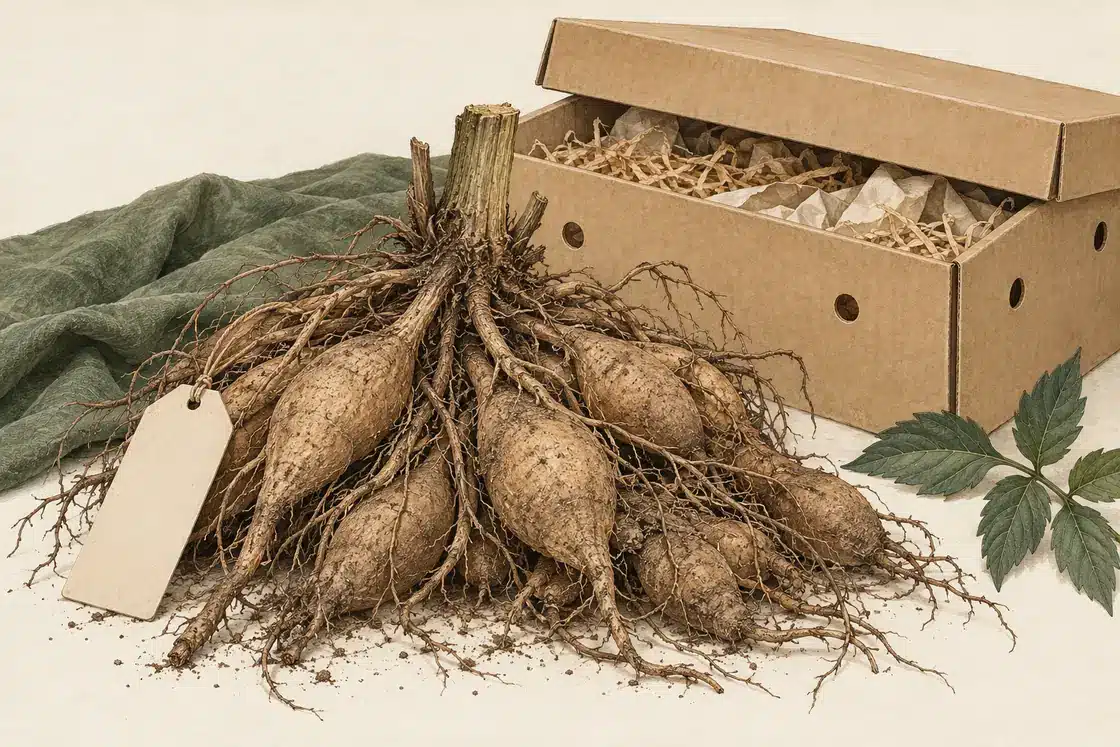
Here is how to store dahlia tubers over winter: lift them before the soil freezes, remove loose soil, let the surface dry, then pack them in a ventilated box in a cool, frost-free place. Aim for 40–50°F (4–10°C), a practical target from Iowa State and New Hampshire Extension guidance. Keep uncertain clumps whole until spring, and inspect monthly for drying or decay.
Do you need to dig up dahlias where you live?
Lift dahlias in USDA zones below 7. In zone 7 and warmer, leaving them in the ground may be possible if the tubers stay unfrozen and the soil drains well. A zone number alone cannot tell you whether a wet bed or exposed site will protect your particular clump.
| Your situation | Practical decision |
|---|---|
| USDA zone below 7 | Lift and store under frost-free protection. |
| Zone 7 or warmer; well-drained ground that remains unfrozen | In-ground overwintering with locally appropriate mulch is an option. |
| Standing winter water, possible frozen soil or uncertain conditions | Lift rather than rely on the zone label. |
NC State’s dahlia profile gives the zone-based starting point; Oregon State’s overwintering guidance adds the drainage requirement. The uncertain-site branch is a conservative choice, not a survival prediction. Dahlias store energy in tuberous roots, commonly called tubers; they are not true bulbs.
When should you lift and cut back dahlias?
Let the plants mature into fall, then lift after foliage dies back or a frost kills the tops, before a hard freeze can freeze the underground clump. Blackened foliage does not mean the tubers have frozen. Follow your local forecast rather than a nationwide October or November digging date.
For a straightforward route, cut stems immediately before digging. New Hampshire Extension warns that cut, hollow stems can collect water and promote decay. Other methods include a short wait after cutting when weather permits; that wait is optional, and should never carry the clump through freezing soil.
- Label first. Keep each cultivar name with its clump throughout lifting and storage. Write “unknown” if you do not know the variety.
- Leave a short stem. Oregon State suggests 4–6 inches (10–15 cm) before digging.
- Loosen all sides. Start well outside the clump; Oregon State illustrates digging about 18 inches (46 cm) from the stalk. Work farther out if you encounter roots.
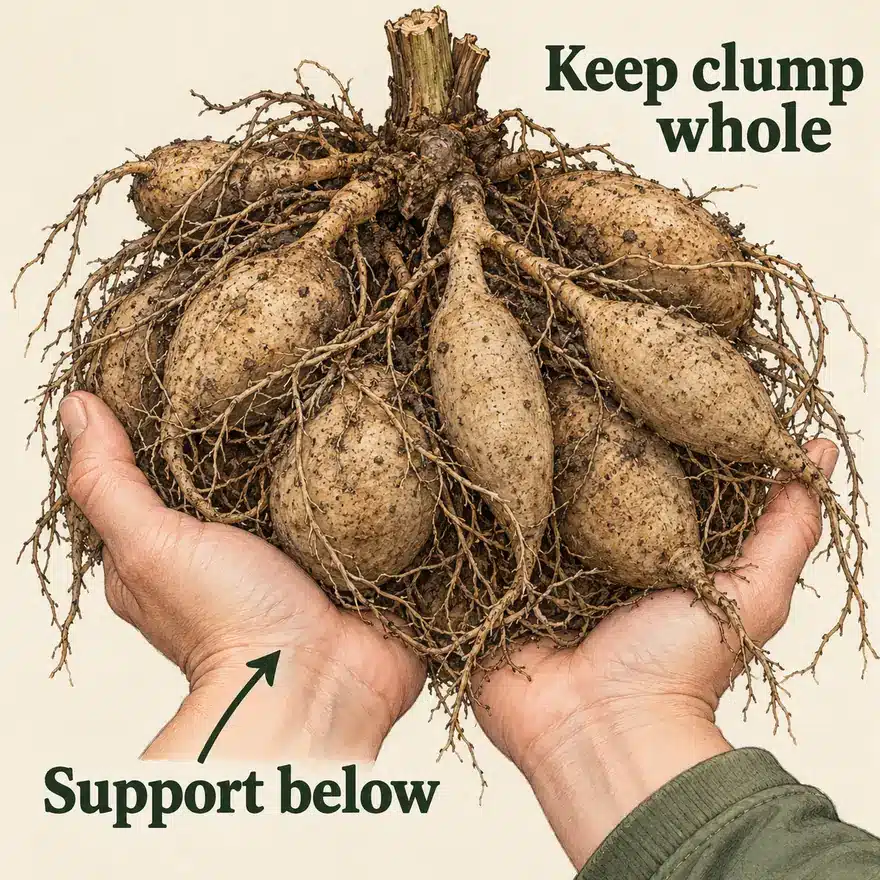
- Support from beneath. Lift gently with a fork or spade instead of pulling the stem. Protect the skin and the narrow necks connecting the swollen roots to the crown.
Should you wash tubers or store an unwashed clump?
Both routes have extension support. For an intact clump you plan to divide in spring, gently remove loose soil without washing. If you want to remove persistent soil or inspect a cleaned clump, wash gently and dry it before storage. Neither route permits packing a soaking-wet, muddy clump.
| Route | Prepare and dry | Ready to pack when… |
|---|---|---|
| Unwashed whole clump | Following Oregon State’s spring-division route, gently brush or shake away loose soil. Air-dry for a few days so clinging soil loses moisture; keep the clump intact. | The clump is no longer wet and muddy. Do not scrape the skin to remove every speck. |
| Washed clump | Following Iowa State and New Hampshire guidance, gently wash away soil, then spread the clump in a shaded, ventilated, frost-free place. | The surface is dry to the touch while the roots remain firm. Whole-clump storage is still an option. |
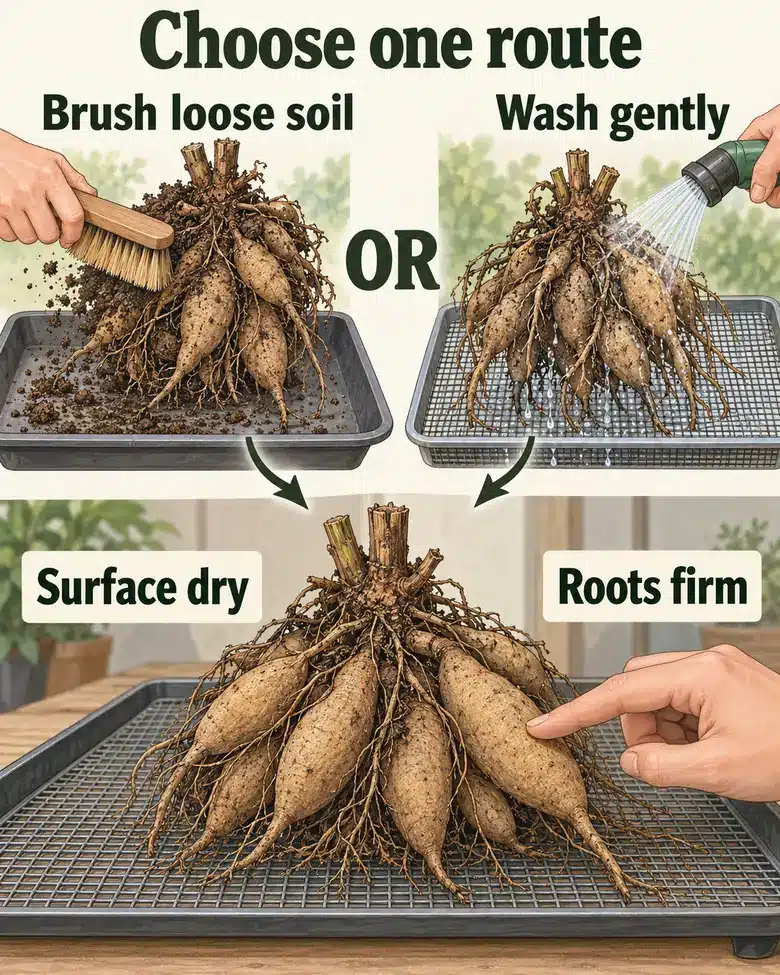
The sources give different drying times: Iowa State’s dahlia instructions say washed roots are usually dry to the touch in about a day; New Hampshire describes a few days at 60–70°F (16–21°C). Check the actual surface instead of adding every source’s waiting period together. Drying should remove surface moisture, not continue until the roots shrivel.
Should you divide in fall or wait until spring?
Keep the clump whole if you cannot confidently identify its crown and eyes. Fall division reduces storage bulk, but adds cut surfaces and can be difficult when growth buds are inconspicuous. Spring division may make those eyes easier to see; there is no need to make speculative cuts in fall.
An eye is a growth bud on the crown near the old stalk. Each viable division needs crown tissue with an eye and a sound neck connecting it to the swollen root, as explained by the American Dahlia Society and Oregon State. A plump detached root is not enough. A dormant clump with no obvious autumn eyes is not automatically dead.
If you choose fall division, identify those parts before cutting and let cut surfaces dry before packing. If their identity remains unclear, stop and retain the clump for spring. This storage method does not require learning to divide on freshly dug roots.
How to store dahlia tubers through winter
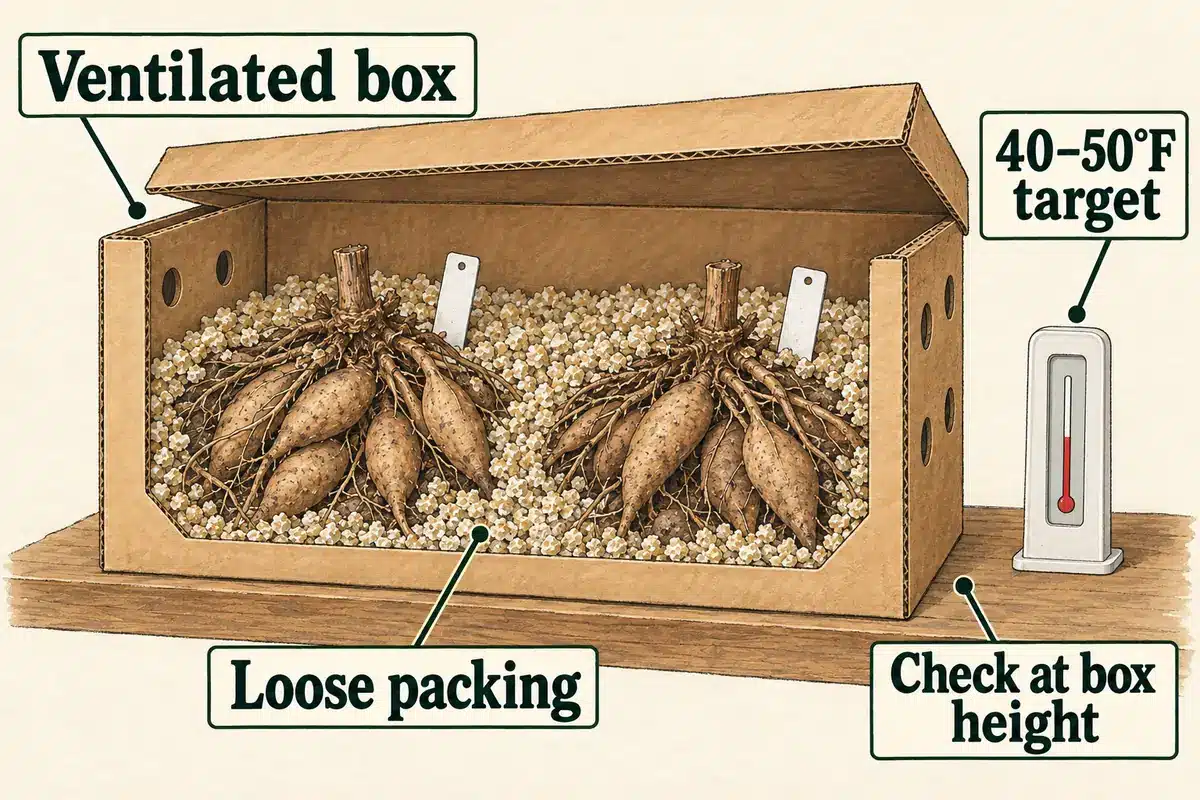
Use a cool, dark, frost-free location and packing that limits drying without trapping excess moisture. For this home-storage approach, target 40–50°F (4–10°C), drawing on Iowa State’s range and New Hampshire’s cool-storage guidance. Other extension methods specify different ranges, so this is a practical target rather than a universal biological cutoff.
- Check the location. Put an already-owned thermometer at box height. Check during cold weather as well as an ordinary day; a basement, garage or spare room is suitable only if its actual conditions are suitable.
- Use a clean ventilated container. An existing cardboard box or wooden crate can work. For this loose-packing route, avoid an airtight lid that traps moisture.
- Cover with suitable loose material. Coarse vermiculite, coir, layered newspaper or wood shavings are documented options. Use clean supplies you already have where suitable; no material removes the need to inspect. Shavings can contribute to drying.
- Balance moisture. New Hampshire uses slightly moistened medium; it must not be saturated. Separate clumps with packing and keep their labels visible. Wet packing encourages decay; excessively dry conditions can shrivel roots.
Do not select storage solely by its room name. Iowa State warns that even attached garages can freeze during extreme weather, while ordinary heated rooms can be too warm. If you cannot provide protected cool storage, a particular box or packing material cannot compensate for that location.
What should you check during storage?
Inspect at least monthly, checking the roots as well as the surrounding packing. Check sooner after changing the setup or during a major temperature change. Wisconsin Extension recommends monthly dahlia checks; the useful response depends on whether you find decay, excess moisture or drying.
| Observation | Action | At the next check |
|---|---|---|
| Firm roots; no wet packing | Keep the setup and record the temperature. | Look for a change in firmness or moisture. |
| Condensation or very damp packing | Inspect for decay. Remove affected material; allow the container and overly wet packing to dry before repacking. | Check whether moisture is still accumulating. |
| Soft, mushy or visibly decaying roots | Remove rotting roots from the stored group. Do not treat this as thirst or add water to the whole box. | Inspect neighboring roots for further decay. |
| Wrinkling with dry packing, without mushy decay | Lightly moisten the packing material and repack; avoid soaking the roots. | Look for continued shriveling or newly excessive moisture. Recovery is not assured. |
| Premature sprouts or feeder roots | Check whether storage has warmed; move to a cooler suitable place without exposing roots to freezing. | Record temperature and any further growth. |
Use this simple log on paper or in a phone note. Set the next check from what you find; there is no fixed rescue timetable or universal humidity percentage for every storage method.
| Date / box label | Temperature | Roots / condensation | Action / next check |
|---|---|---|---|
| ________ | ________ | ________ | ________ |
Dahlia storage FAQs
How long do dahlia tubers last in storage?
Plan for one dormant winter, ending when local spring planting conditions arrive. Continue monthly checks. Plant outdoors after local frost danger has passed and the soil has warmed; Oregon State recommends soil consistently around 60°F (16°C). Inspect the clumps before planting; reaching spring does not guarantee viability.
Should you rinse off dahlia tubers before storing?
Rinsing is optional, depending on your preparation route. Oregon State describes storing unwashed whole clumps for spring division, while Iowa State and New Hampshire describe washing. Remove loose soil gently either way, and never pack wet, muddy roots; washed roots need to become dry to the touch first.
Can you store dahlia tubers in the garage?
A garage works only if it stays cool and frost-free through your local winter extremes. Check its temperature where the box will sit, rather than assuming an attached garage is protected. If it freezes, move the clumps to another suitable location; packing material is not a substitute for frost protection.
Can I leave dahlia tubers in pots over winter?
Pot storage is possible under cool, protected conditions, as described by UConn Extension and the American Dahlia Society. It does not make an outdoor planter frost-proof or a wet root ball safe from decay. Check temperature and moisture; if those conditions are uncertain, lifting provides a chance to inspect and repack.
Why put cinnamon on dahlia tubers?
Cinnamon is not a required step in the Iowa State or New Hampshire storage methods used here. Those methods rely on careful handling, drying, suitable packing and inspection. This guide does not establish cinnamon’s effectiveness or recommend a household treatment recipe.
When should you bring tubers out for spring?
Inspect the clumps again before dividing or planting, retaining only sound material with the necessary growth points. Plant outdoors after local frost danger has passed and the soil has warmed; Oregon State recommends soil consistently around 60°F (16°C). Its Oregon calendar dates should not become a planting date for the whole United States.
If your fall tasks also include other plants, use their separate instructions: overwintering hibiscus depends on which hibiscus you grow. For hardy spring-flowering bulbs, when to plant tulip bulbs addresses a different fall task; do not apply dahlia lifting and storage instructions to tulips.
Sources
- Iowa State University Extension: How to Overwinter Tender Perennials — dahlia drying, storage temperature and winter checks.
- University of New Hampshire Extension: Digging and storing dahlia tubers — cutting, gentle handling and washed-clump storage.
- Oregon State University Extension: Dahlias in Oregon — unwashed whole-clump route, division and regional overwintering.
- University of Wisconsin–Madison Extension: Storing Tender Bulbs for Winter — dahlia inspection and moisture responses.
- UConn Home & Garden Education Center: Dig Dahlias — protected pot storage and monitoring.