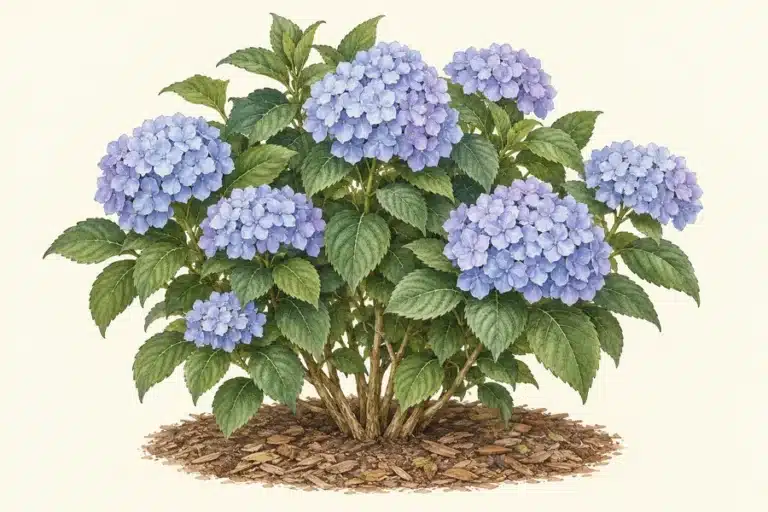
Hydrangea winter care starts with two checks: which hydrangea you have, and whether its roots are in the ground or in a pot. Preserve living stems on old-wood bloomers, check moisture before the soil freezes, and protect vulnerable flower buds where your climate warrants it. Outdoor pots need a separate root-protection plan. Bare winter stems alone do not mean the shrub has died.
Start with what you already have: the plant label, a soil-moisture check, and a look at its exposure. You do not need to buy fertilizer or wrap every hydrangea. The decisions below concern landscape hydrangeas; a blooming florist gift has a separate caution.
Hydrangea winter care: protect roots, flower buds, or both?
A shrub can survive winter and still lose next season’s flowers. Roots keep the plant alive; flower buds on last year’s stems supply the early blooms of old-wood hydrangeas. Cold can destroy those buds while leaving a leafy shrub. A pot adds another concern: roots above ground lose the insulation surrounding garden roots.
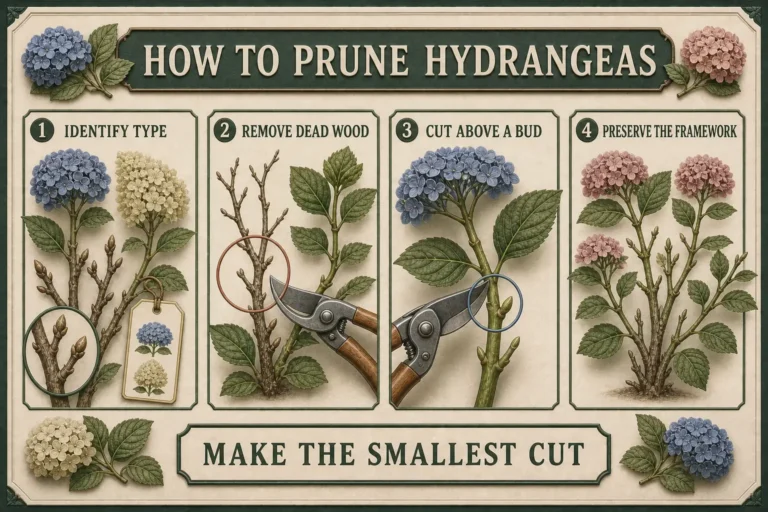
“Old wood” means stems formed in an earlier growing season. “New wood” means this season’s growth. Use the label or cultivar record first; a rounded flower head alone cannot distinguish smooth from bigleaf hydrangea. For broader identification and growing conditions, use the hydrangea care guide.
| Plant or situation | What is at risk? | First useful action |
|---|---|---|
| Traditional bigleaf (Hydrangea macrophylla) or mountain (H. serrata) in the ground | Flower buds carried on old wood can be damaged even if the plant survives. | Preserve living stems. Consider bud protection where cold, drying wind, or past winter injury makes it useful. |
| Oakleaf (H. quercifolia) in the ground | Old-wood flower buds; winter injury is a concern in colder northern gardens. | Check the cultivar’s local suitability and avoid routine winter cutback. |
| Smooth (H. arborescens) or panicle (H. paniculata) in the ground | Plant and root health still matter, but flowers form on new growth. | Check moisture and site conditions; an old-wood bud enclosure is not automatically needed. |
| A reblooming bigleaf or mountain cultivar | It can flower on old and new wood, but preserving old wood can retain earlier flowers. | Keep healthy stems rather than assuming new growth will replace every lost bloom. |
| An identified landscape hydrangea in an outdoor pot | The exposed root ball, plus any old-wood buds. | Plan root insulation or suitable cool storage as well as any needed bud protection. |
| An unknown plant or florist gift | Identity, outdoor hardiness, and flowering behavior are uncertain. | Find the label or ask the supplier before using a landscape winter plan. Preserve living stems while identifying it. |
This table combines the flowering distinctions in UNH Extension’s hydrangea fact sheet with Iowa State Extension’s container-root guidance. It is a decision aid, not a guarantee that a particular plant will survive or flower.
What protection does an in-ground hydrangea need?
Match protection to the species, cultivar, and site. Smooth and panicle types generally tolerate colder conditions than many bigleaf cultivars, but “hydrangea” does not have one universal USDA zone range. Check the exact cultivar’s hardiness information and local Extension advice. A suitable garden hardiness rating does not by itself promise undamaged flower buds or a safe exposed pot.
In a milder site, the useful job may be checking moisture and leaving healthy stems alone. In a cold or wind-exposed site, preserving bigleaf or mountain flower buds can require extra protection. A history of abundant leaves but missing flowers is a reason to examine winter injury and pruning, rather than automatically adding fertilizer. Iowa State’s hydrangea guide explains why winter dieback affects flowering differently among species.
Root-zone mulch and an upright bud enclosure do different jobs. Material over the soil helps protect the root zone; it does not surround buds farther up the stems. Do not turn a container-insulation instruction into a deep mound of hardwood mulch against every garden hydrangea.
A loose leaf enclosure for vulnerable old-wood buds
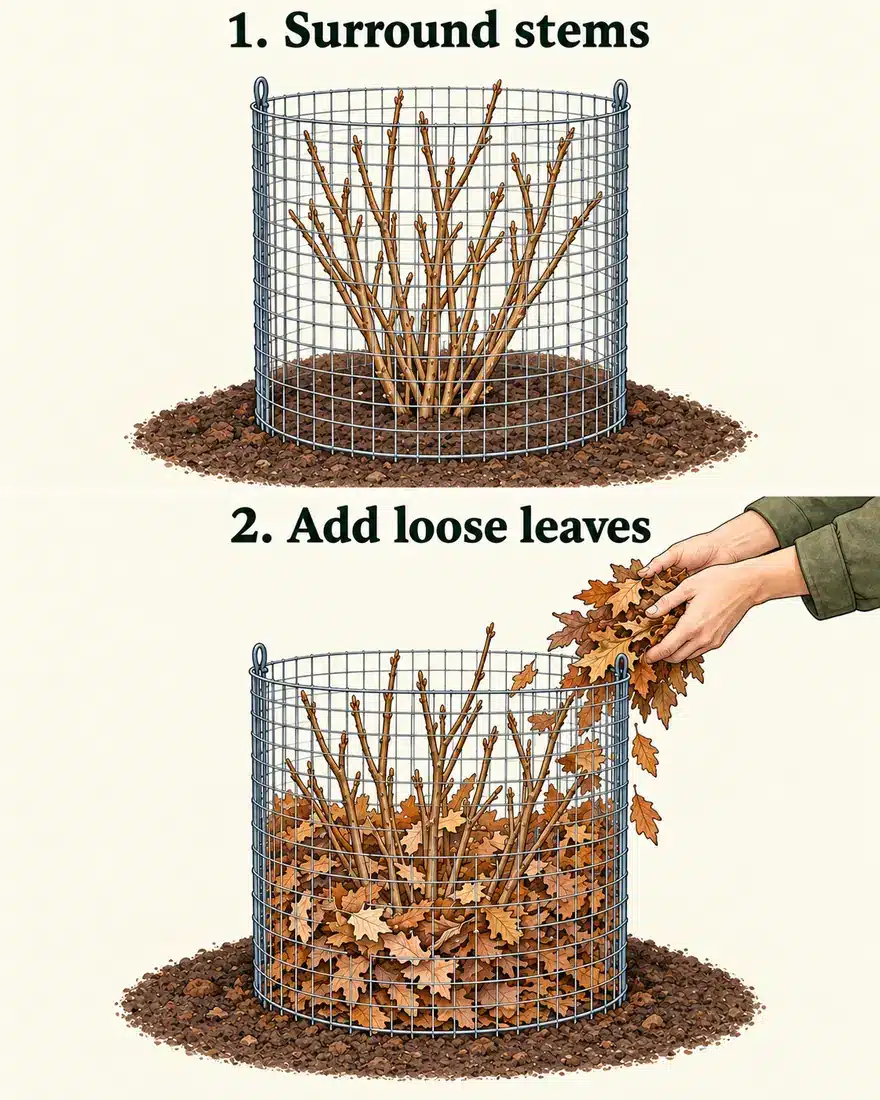
UNH describes a mesh cylinder filled with fallen leaves for bigleaf hydrangeas. UConn Extension likewise recommends a wire enclosure with loose leaves or mulch for old-wood plants vulnerable to winter and spring freeze injury.
- Identify the stems you are preserving. Position a mesh cylinder around them without scraping buds or forcing branches into a tight bundle.
- Fill the enclosure loosely with fallen leaves around the stems. Use suitable materials already on hand; the aim is insulation around buds, not a tightly packed mass.
- Check during winter. UConn advises adding material as the fill settles. Avoid damaging buds while adjusting it.
- Keep track of bud development and local spring freeze risk before removing the protection; use the spring checks below.
Protection may help buds survive; it cannot ensure flowers after every winter. Neither a single calendar date nor one outdoor temperature is a reliable trigger for all US regions and cultivars.
Should you water hydrangeas in winter?
Water when the soil needs it and can accept water, rather than on a winter calendar. Check moisture through fall before the ground freezes. In a mild winter or a protected pot where the mix remains unfrozen, keep checking. Do not add water to already wet soil or treat frozen soil as a cue to irrigate.
UConn advises continuing water until the ground freezes; Iowa State emphasizes moist, well-drained conditions and warns against standing water. These recommendations work together: inspect moisture, account for rain, and avoid saturation. One final soaking cannot be assumed to carry every plant through spring.
Check a sheltered container separately from the garden bed. It may miss rain, and burying a pot changes how readily it drains. Iowa State’s overwintering guidance says to supply water as needed before freezing and after thawing; supplemental irrigation is unnecessary while the soil is frozen.
How do you overwinter a potted hydrangea?
Protect the root ball of a landscape hydrangea in a cold-climate pot. Above-ground roots experience much colder conditions than roots surrounded by garden soil. Iowa State offers two useful approaches for container-grown woody plants: heel the dormant pot into the ground, or use a protected location that stays moderately cold. Neither option removes old-wood flower-bud concerns.
Option 1: heel a dormant pot into the ground
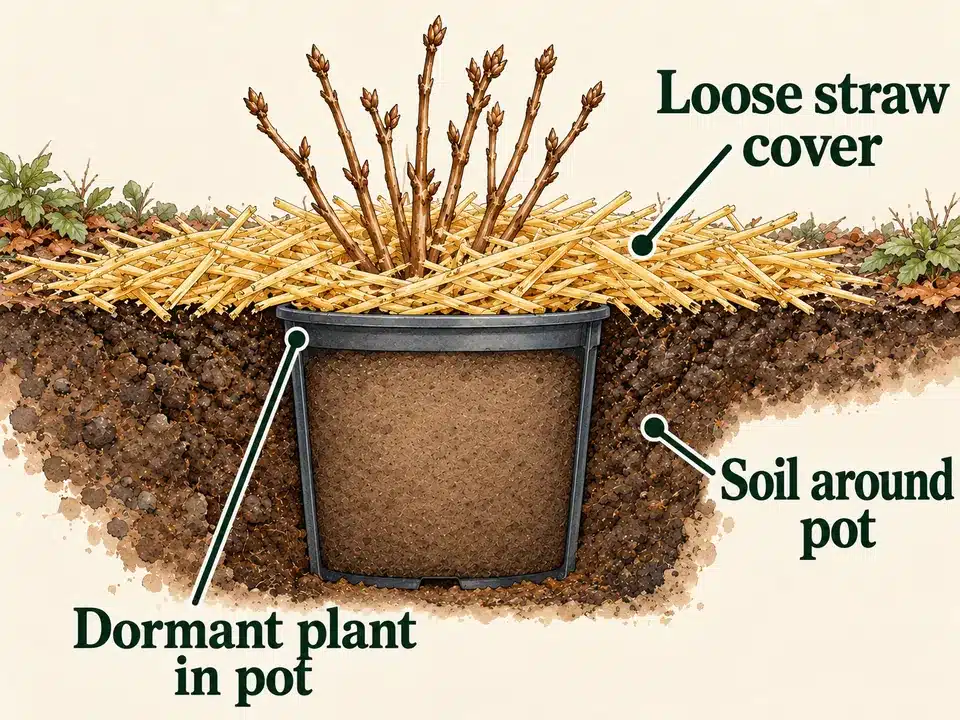
Where digging is practical, Iowa State recommends setting the container into a hole and placing soil around it after dormancy but before the ground freezes. The surrounding soil insulates roots. Check moisture before freezing; a buried pot may drain less readily and need less supplemental water.
For additional insulation over buried containers, that source specifies 6–12 inches (15–30 cm) of straw, pine needles, or other loose mulch after dormancy. It cautions that leaves can compact and smother plants in this over-the-top method. This is a different setup from loose leaves inside an upright hydrangea bud enclosure. Remove that covering after winter’s extremes have passed and before growth begins, using local conditions rather than copying Iowa’s calendar.
Option 2: use a genuinely cool protected space
Iowa State’s general woody-container guidance gives a storage range of 20–45°F (about −7 to 7°C). This is cold-climate guidance for dormant container plants, not a guaranteed ideal range for every hydrangea. Confirm that the identified cultivar and location fit the method.
An unheated garage or porch is useful only if its actual conditions are suitable. Monitor temperatures: a sunny structure can become too warm by day and too cold at night. Check soil moisture often and water if necessary when the mix is unfrozen, without leaving it saturated. A heated living room is not the cool dormant-storage method described here.
A flowering florist gift needs a separate decision. UConn cautions that greenhouse-raised gift hydrangeas are not generally as winter hardy as nursery landscape plants, and flower buds may not survive outdoors. Identify its cultivar and local suitability before planting it out or treating it as a dormant hardy shrub.
What should you check from winter through spring?
Use observations rather than one nationwide removal date. UNH says to remove its bigleaf leaf-cylinder protection once buds begin expanding. UConn says to remove enclosure mulch after the danger of a killing frost has passed. Those cues can occur at different times; watch both buds and local forecasts, and seek local Extension advice if growth starts while damaging freezes remain likely.
| What you observe | Useful response | What to record or recheck |
|---|---|---|
| Soil is unfrozen and becoming dry | Water as needed, then allow drainage. | Rainfall, soil moisture, and whether a sheltered pot receives rain. |
| Soil is frozen or already wet | Do not add supplemental water to frozen soil or saturate wet soil. | Recheck after thawing; watch for standing water. |
| Leaf fill has settled below buds you meant to protect | Replenish loose fill without injuring stems or buds. | Coverage after wind or settling. |
| Stored pot temperatures leave the intended range | Adjust the protected location or its conditions; do not assume “unheated” is sufficient. | Actual cold-night and sunny-day temperatures, plus soil moisture. |
| Buds expand, but a damaging freeze is still forecast | Reassess winter covering and arrange temporary protection suited to your plant and local advice. | Bud stage and forecast together; a warm spell does not end freeze risk. |
| Winter extremes have passed and the ground thaws | For heeled-in pots, follow the container method’s removal timing. Check moisture again. | Soil thaw and emerging growth; this is separate from old-wood bud protection. |
| New growth appears on some stems but others remain bare | Assess live buds and winter injury before deciding which wood to remove. | Where growth emerges and which stems later flower. |
The record combines UConn’s freeze and enclosure checks, UNH’s bud-development guidance, and Iowa State’s container monitoring. It is an editorial synthesis, not a single institution’s universal schedule.
Should you cut back hydrangeas before winter?
Do not cut every hydrangea back as a winter chore. Identify its flowering wood first. Cutting living old-wood stems can remove next year’s buds. Panicle and smooth hydrangeas flower on new growth and have different pruning options; a hard cut is not a requirement for winter survival. Detailed cuts belong in the type-by-type hydrangea pruning guide.
There is a real distinction in published bigleaf guidance: Rutgers describes selective winter removal of the oldest, less productive stems, while UNH advises waiting until spring growth reveals live buds. Selective renewal of an identified shrub is different from shearing all stems. If the type or bud survival is uncertain, preserve healthy wood and assess new growth first.
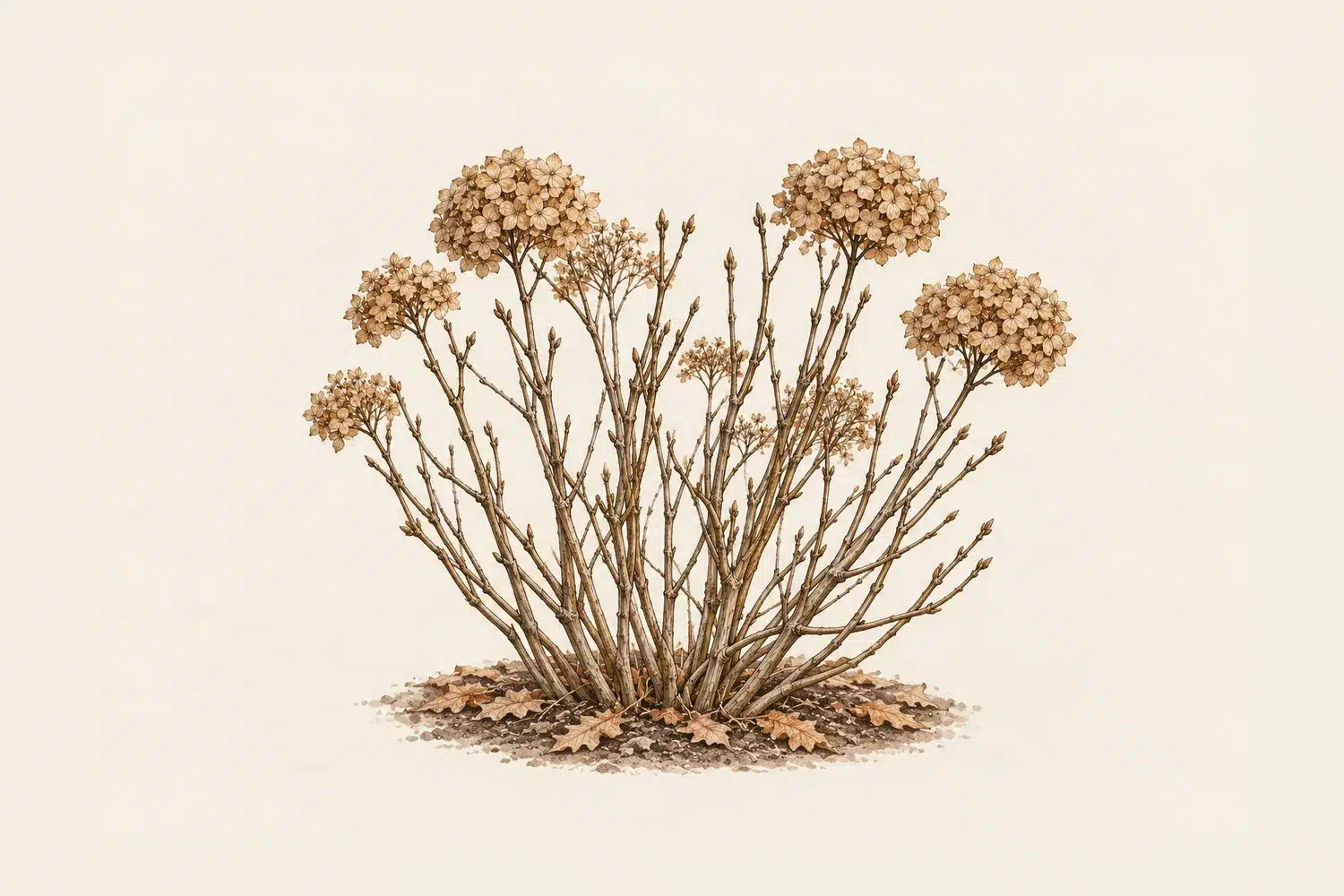
Hydrangeas are deciduous, so leafless winter stems are expected. Dried flowerheads and bare branches alone do not establish that the plant is dead. In spring, look for live buds and emerging shoots before removing suspected deadwood. A living bigleaf shrub that produces foliage without flowers may have lost buds to cold or pruning; fertilizer cannot restore buds already removed or killed. Review other causes and use the hydrangea fertilizer guide before deciding feeding is needed.
Hydrangea winter care FAQs
Do all hydrangeas need covering?
No. The need depends on the cultivar, climate, exposure, and whether you are protecting roots or old-wood buds. A cold-climate outdoor pot needs a root plan even when its shrub is considered garden hardy. Established in-ground panicle and smooth types do not automatically need the bud enclosure used for vulnerable bigleaf plants.
Can I leave dried hydrangea flowers on the shrub?
You do not need to remove every dried flower before winter. Their presence alone is not a problem or evidence that the shrub died. The consequential decision is where any cut would fall relative to live buds and flowering wood. Identify the type before turning deadheading into a general cutback.
Will winter protection guarantee flowers next year?
No. Protection may reduce winter injury, but flowering also depends on species, cultivar, surviving buds, pruning, and growing conditions. Record whether the plant returns from old stems or from its base. That observation helps distinguish a survival success from successful preservation of old-wood flowers and makes next winter’s plan more useful.
Sources and scope
This guide uses US Extension guidance to explain winter decisions for landscape hydrangeas. Regional recommendations are identified where they matter; no one calendar or hardiness range applies to every US garden. The decision tables combine the cited sources and do not claim firsthand trials.
- UNH Extension: Pruning Hydrangeas — flowering wood, bud protection, and spring assessment.
- UConn Extension: Hydrangea — winter flower-bud injury, loose enclosure fill, moisture, and florist plants.
- Iowa State Extension: Growing Hydrangeas in Iowa — species differences, drainage, and winter dieback.
- Iowa State Extension: Overwintering Unplanted Trees, Shrubs and Perennials — cold-climate container methods and monitoring.
- Rutgers: Hydrangeas in the Garden — species-specific pruning and selective bigleaf renewal.