Venus fly trap care starts with strong light, low-mineral water, and an unfertilized carnivorous-plant medium that stays moist. Choose a seasonal outdoor routine with protected winter rest, or intentional indoor culture with strong supplemental light and regular insect feeding. A dim windowsill plus occasional bugs is not a substitute. Check those conditions before treating black traps as disease.
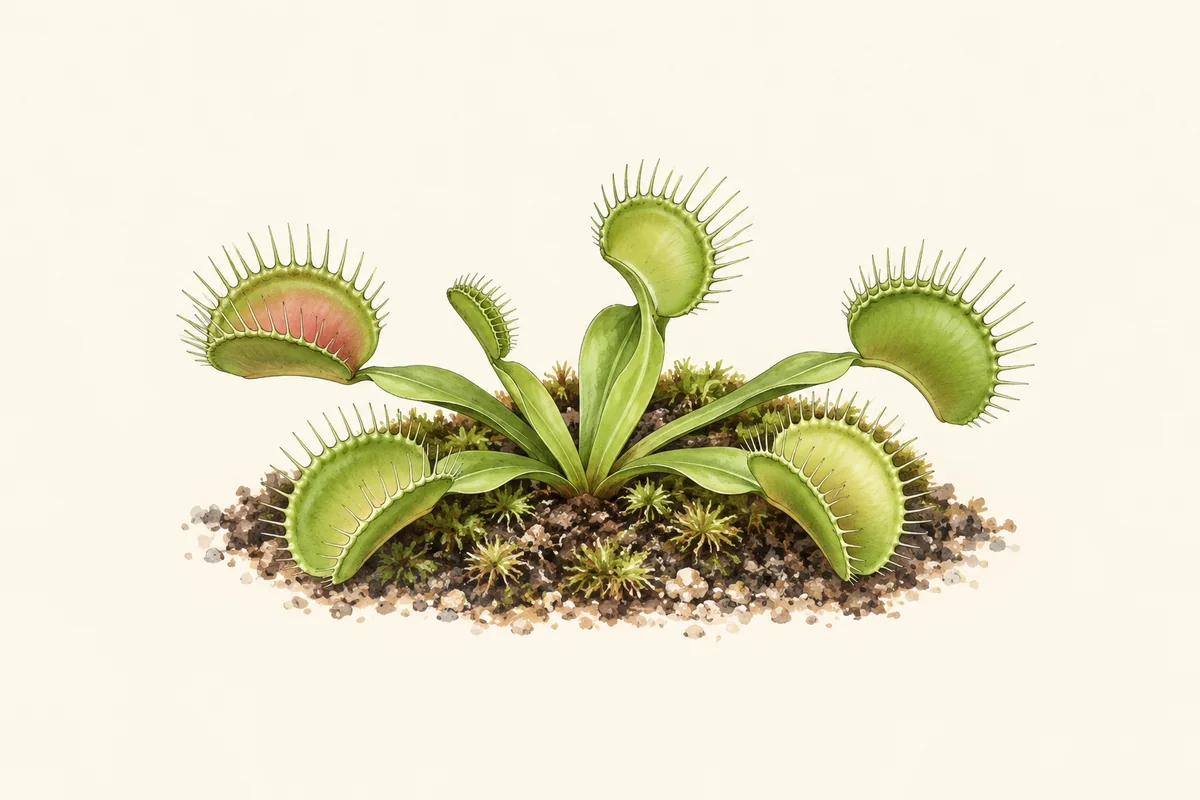
The Venus flytrap, Dionaea muscipula, is a perennial native to North and South Carolina. Its energy comes from photosynthesis; prey supplies extra nutrients. That is why feeding cannot repair inadequate light. See the U.S. Fish and Wildlife Service species account.
Should you grow a Venus flytrap indoors or outdoors?
Choose the location you can support through the whole year. Outdoors can provide direct sun and natural prey; an indoor plant needs deliberately strong light and regular feeding. Winter advice differs between these methods. Do not combine a dim indoor winter, no feeding, and an expectation of continuous growth.
| Routine | Growing conditions | Winter plan |
|---|---|---|
| Seasonal outdoor culture | Acclimate to strong direct sun; let the plant catch prey. | Allow seasonal slowdown and provide protection appropriate to your actual winter exposure. |
| Continuous indoor culture | Maintain sufficiently strong supplemental light and feed suitable insects regularly. | Continue those conditions; this is a deliberate year-round method, not a neglected windowsill plant. |
Experts disagree about dormancy. Outdoor specialist nurseries such as Sarracenia Northwest prescribe annual winter rest. The New York Botanical Garden (NYBG) and International Carnivorous Plant Society (ICPS) describe long-term indoor culture without dormancy when strong light and regular feeding are maintained. Neither method makes a dim, warm windowsill adequate.
How much light should you provide?
For an acclimated outdoor plant in active growth, Sarracenia Northwest recommends 6 or more hours of unobstructed direct sunlight. In hot, dry conditions, ICPS allows full morning sun followed by afternoon part shade. Move a plant raised indoors or under a shipping cover toward sun gradually; the St. Louis Carnivorous Plant Society uses mostly shade initially, increasing exposure over a week or two.
Indoors, check the hours of sunlight that actually reach the leaves. A sunny southern exposure may help, but NYBG warns that a gently lit sill is too dim. Its supplemental LED guidance is 12–16 hours a day for a small plant, with ordinary home temperatures of 65–75°F. Duration alone does not establish sufficient intensity: a weak light left on longer is not automatically enough.
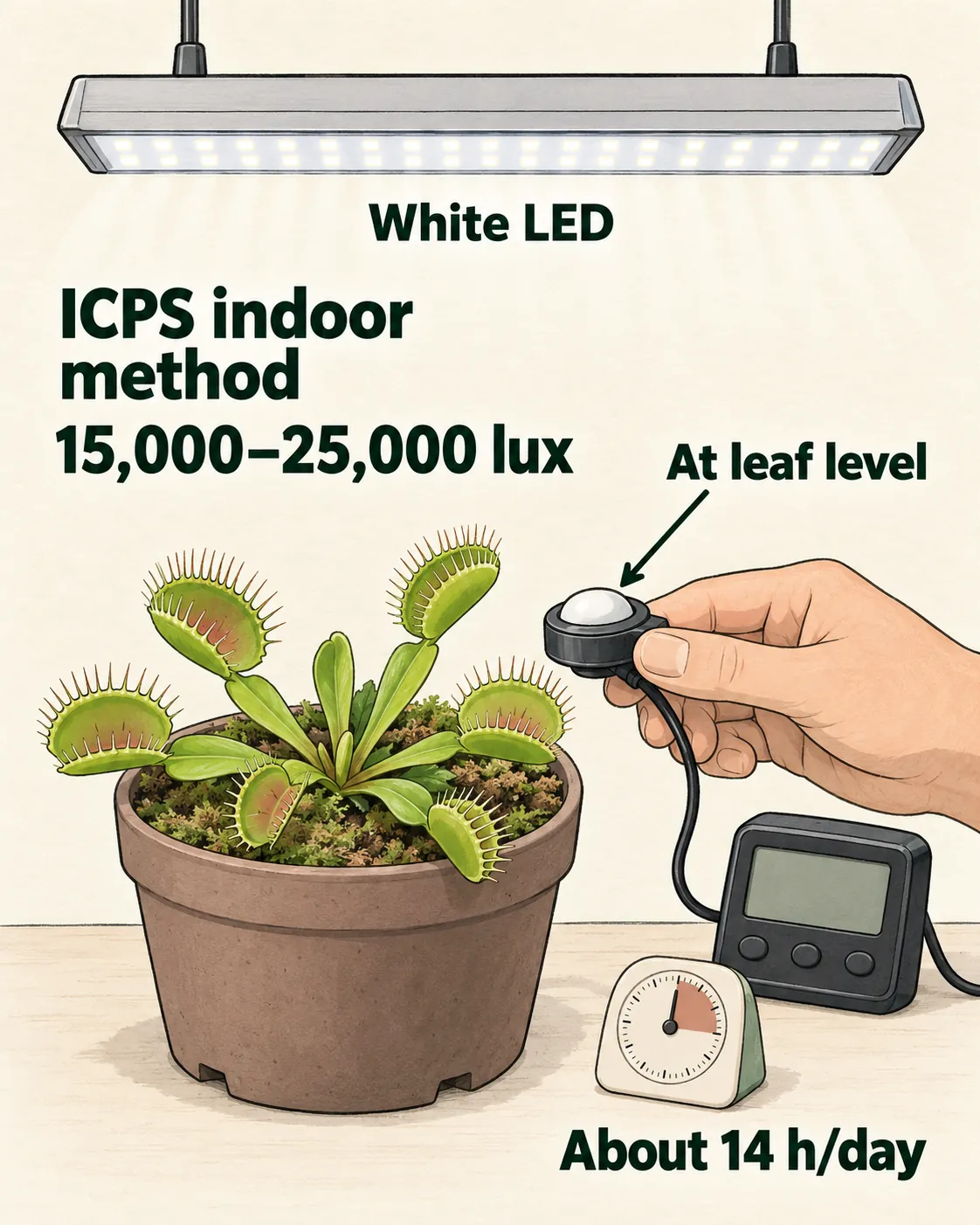
For a specific continuous-indoor method, ICPS recommends 15,000–25,000 lux of white LED light for about 14 hours daily, together with regular feeding. Lux measures illuminance. If you have access to a light meter, check at leaf level in the plant’s actual growing position and compare with that reference; check again if the position changes. This is a practical check against the ICPS white-LED protocol, not a universal pass/fail guarantee or a target to transfer to colored lamps. It does not certify a fixture by its label.
Try a suitable location or light you already own first. If you need help comparing fixtures, use our general grow-light selection guide; it is background reading, not confirmation that a particular fixture meets this plant’s needs.
What should you do with a newly purchased plant?
Remove the protective shipping cup; a terrarium is not required. Keep a suitable existing pot and medium while the plant acclimates instead of routinely repotting immediately. Check for drainage holes and the water clearance below. The ICPS beginner checklist explains why the shipping cover is protection during transport rather than a permanent habitat.
How do you water a Venus flytrap without drying or drowning it?
Use distilled water, reverse-osmosis water, or clean collected rainwater. During active growth, a shallow tray can keep an appropriate medium moist, provided the pot drains and the water stays well below the medium’s surface. Water depth and pot geometry work together; filling every saucer to the same depth is not a complete method.
| Water available | What to do |
|---|---|
| Distilled or reverse osmosis | Use as the low-mineral default. |
| Clean collected rainwater | Use when you can collect it cleanly. |
| Tap, spring, mineral, or ordinary pitcher-filtered water | Do not assume suitability. These labels do not establish low dissolved-mineral content. |
NYBG lists the three low-mineral choices. ICPS explains that ordinary filtering does not remove dissolved salts; reverse osmosis is a different treatment. Growers publish different tap-water cutoffs, so this guide does not treat one parts-per-million number as a universal safety boundary.
Set up the NYBG shallow-tray method
- Use a draining pot with the unfertilized medium described below.
- Add about ½–1 inch of suitable water to its tray during active growth.
- Measure vertically from the waterline to the medium’s surface. Keep at least 2 inches of clearance. This is not a measurement from the bottom of the pot.
- Check the tray and medium regularly. Refill before the tray dries out, while retaining that clearance; do not let the plant’s crown sit underwater.
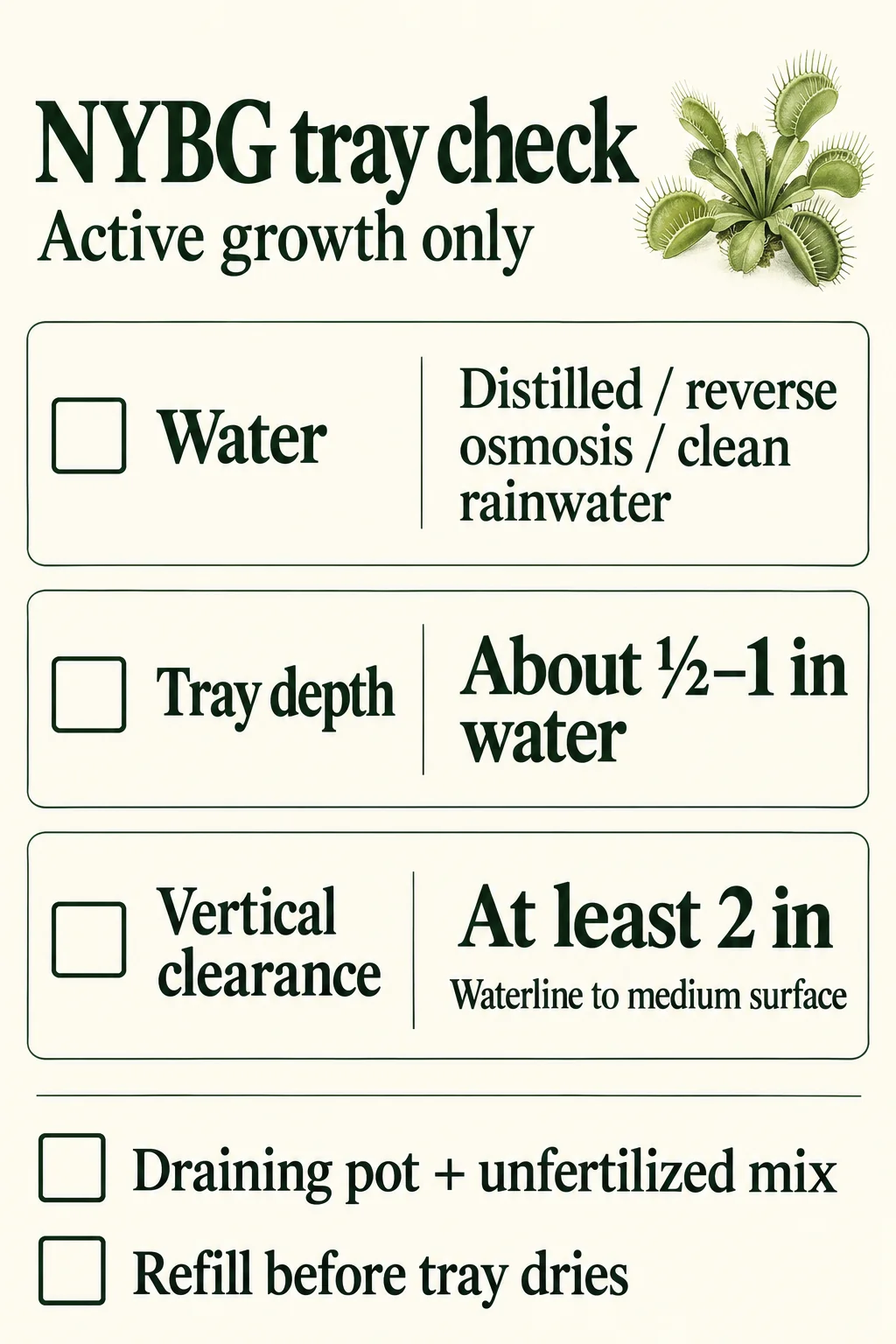
These dimensions belong to NYBG’s pot-and-medium method, not every possible container. A tray that violates the clearance needs less water or a more suitable pot. Hot, exposed locations can use water quickly. For a plant in cool winter rest, follow the reduced-water instructions below instead of automatically maintaining its summer tray.
What soil and pot should you use?
One supported recipe is 1 part plain sphagnum peat moss to 1 part coarse horticultural silica sand. Measure equal volumes with the same scoop. Use ingredients without added fertilizer; regular potting soil, compost, and play or builder’s sand are not substitutes. Read the ingredient labels before using materials you already have.
This recipe combines NYBG’s half-peat, half-coarse-sand method with the suitable sand and additive checks in the ICPS checklist. It is a documented route, not a claim that every successful grower uses the same mix. Choose a pot with drainage holes and enough height for the tray clearance.
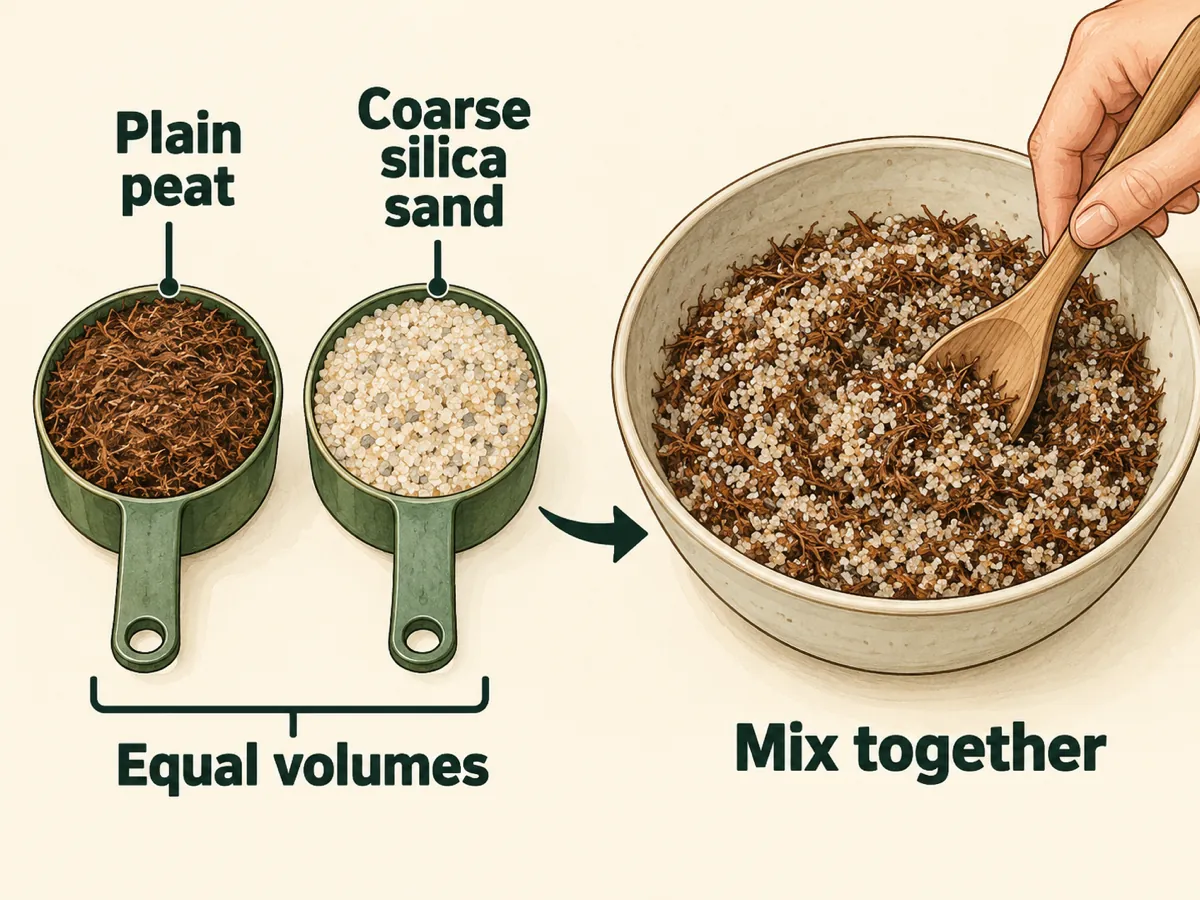
Do not add standard houseplant fertilizer to the medium. Routine repotting can wait if a new plant has suitable medium and a workable container. Reassess when its growth point reaches the pot edge or the medium needs renewal; NYBG identifies spring as a suitable routine repotting season. Known unsuitable, fertilized medium needs attention rather than an arbitrary wait until the next anniversary.
What should you feed a Venus flytrap, and when?
An outdoor plant catching its own prey does not need hand-feeding. An actively growing indoor plant without prey access needs suitable insect food as part of its routine. Correct light, water, and medium first; extra food cannot replace them. Do not feed a dormant plant or use hamburger, cheese, or other human food.
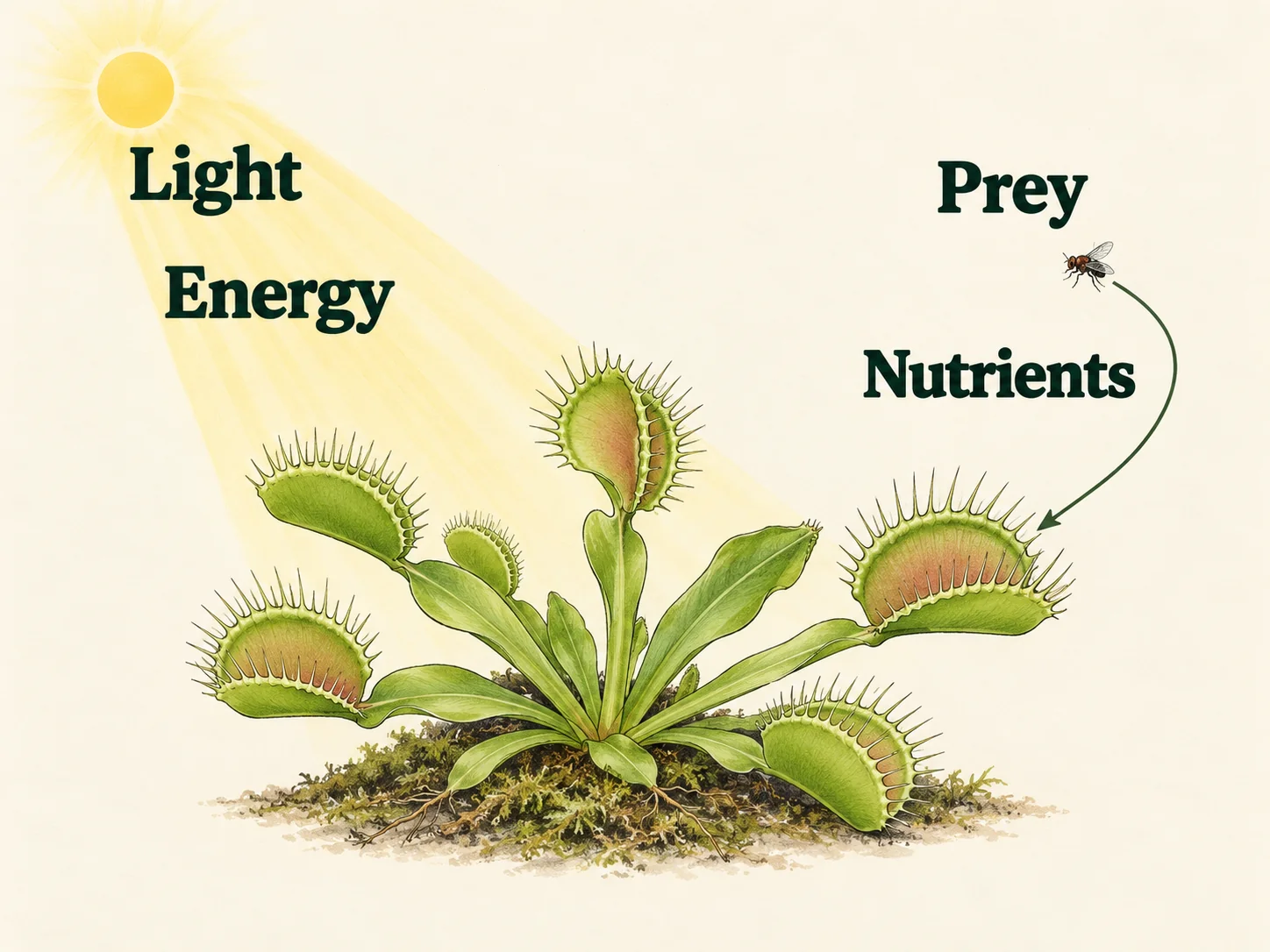
For a straightforward indoor method, NYBG suggests feeding one or two traps about once every week or two, using small live prey no bigger than about one-third of the trap. There is no need to feed every trap. Use this as that guide’s routine for a growing plant, not a daily feeding target.
Prepared dead insect food is another option: NYBG and ICPS describe rehydrating insect food and gently stimulating the closed trap to initiate digestion. It takes more preparation than offering small live prey; merely dropping a dry insect onto a trap is not the same procedure.
For ordinary handling, avoid triggering empty traps for entertainment. Grower advice differs on this, so do not treat an accidental closure as a disaster or rely on a fixed “three closures and it dies” rule.
How should you handle winter care in your US climate?
Follow the growing routine you chose. A seasonal outdoor plant slows as days shorten and temperatures fall; protect it according to the actual forecast and exposure. A continuously grown indoor plant needs its strong light and regular feeding maintained. There is no single national date or outdoor temperature rule that fits every potted flytrap.
- Seasonal plant in a mild location: Keep watching the forecast and medium. Sarracenia Northwest allows outdoor dormancy where conditions permit, with extra protection during prolonged or severe freezes.
- Seasonal plant needing a controlled cool location: NYBG describes gradually reducing temperature to about 45–50°F, allowing light to dwindle naturally, stopping feeding, and keeping the medium barely moist. This is one protected cool-rest option, not a universal outdoor target.
- Intentional year-round indoor plant: Maintain adequate light and regular suitable feeding. Do not interpret the no-dormancy option as permission to leave the plant under weak winter room light.
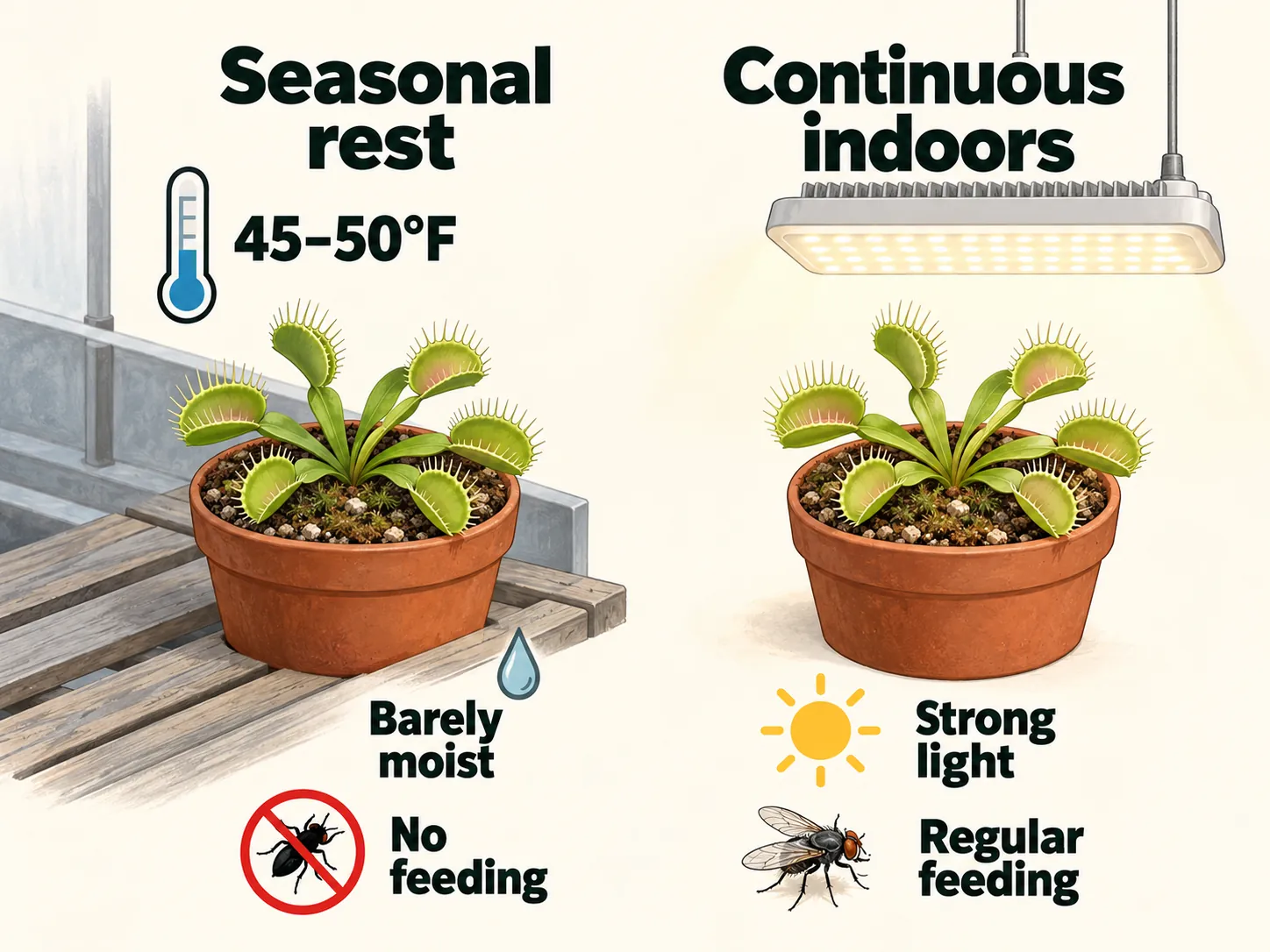
Container exposure, drying wind, and repeated freezing and thawing matter. A USDA zone number alone does not guarantee that an unprotected pot will survive. The ICPS guide warns that moving a seasonal outdoor plant into warm indoor lighting for winter and back outside can disrupt its seasonal timing unless the light timer follows local day length. Protected cool overwintering and continuous indoor culture are different plans.
During rest, reduced growth means reduced water use. Keep the medium from drying completely, but do not mechanically copy the active-season tray depth. Resume the seasonal plant’s normal routine gradually as growth returns; avoid moving a warm indoor plant straight into freezing conditions.
Why are the traps turning black, and what should you check?
A black trap alone does not establish rot, dormancy, or plant death. Old leaves naturally die; the useful clues are which leaves are affected, whether new growth is appearing during active growth, the season, and recent care changes. Check the whole plant’s conditions before selecting a treatment.
| What you see | What it may fit | Next step |
|---|---|---|
| A few older traps blacken while new leaves develop | Normal leaf replacement in an otherwise healthy, actively growing plant. | Keep the routine stable. Clip fully dead growth if desired; do not pull it off. |
| Growth slows after shorter, cooler days outdoors | Seasonal rest; black traps alone do not confirm it. | Review your winter location and moisture plan. New summerlike growth is not expected during dormancy. |
| Many leaves decline and no replacement growth appears when active growth is expected | A reason to investigate, not a unique diagnosis. | Check actual light, water source, medium moisture, drainage, and recent moves before feeding or repotting reflexively. |
NYBG describes normal old-leaf loss alongside problems from low light, salt accumulation, excessive wetness, and complete drying. Record the present leaves and growing conditions, correct a confirmed mismatch, and compare subsequent growth. There is no reliable rescue countdown or diagnosis from black color alone; continuing decline with no clear cause merits advice from a carnivorous-plant specialist with photos and your care history.
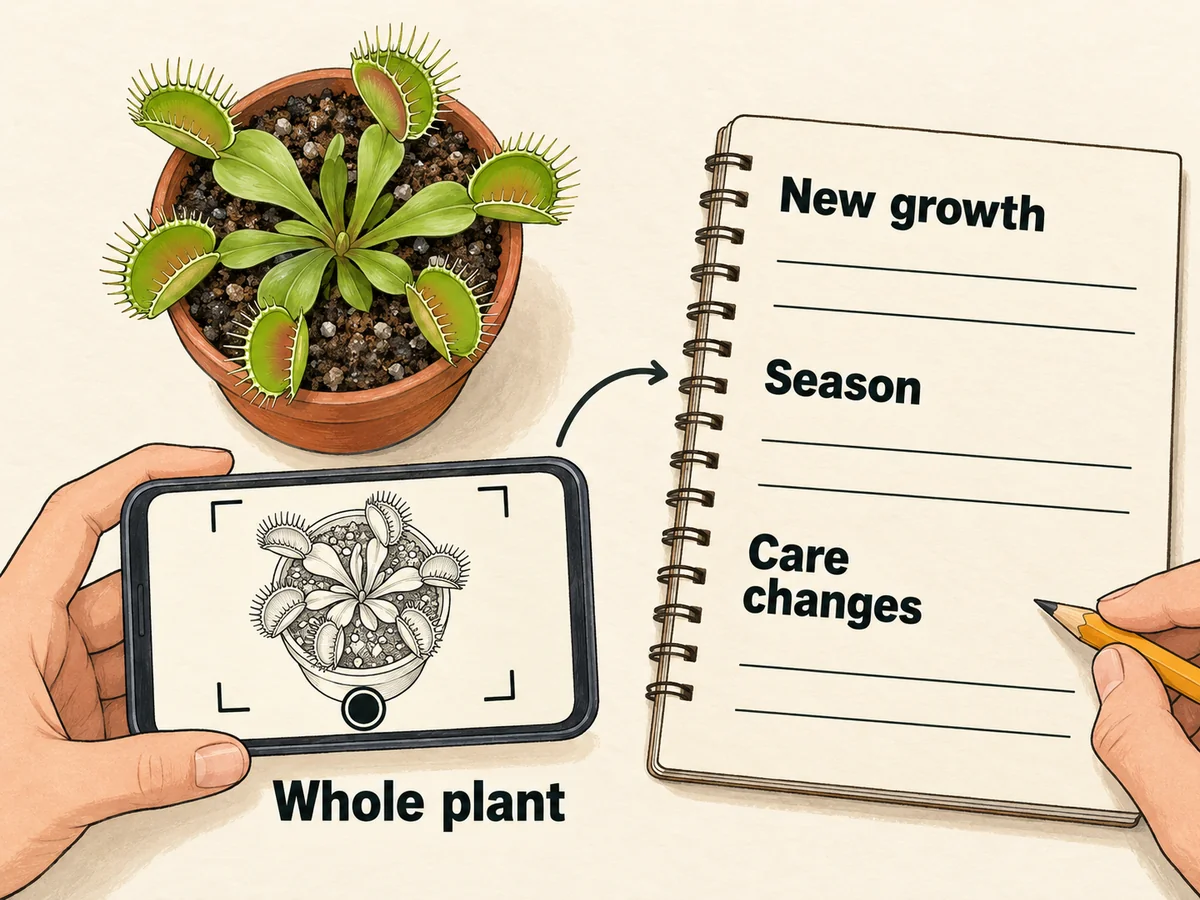
Do not demand red traps as a health test: pigment varies among cultivars. If trimming, remove only completely black, dead growth and avoid tugging, as the St. Louis society advises.
Venus fly trap care FAQ
How do I care for a Dionaea muscipula plant?
Give Dionaea muscipula strong light, low-mineral water, and suitable unfertilized medium kept moist in a draining pot. Choose seasonal outdoor culture with protected cool rest, or continuous indoor culture with adequate supplemental light and regular suitable insect feeding. Remove a new plant’s shipping cover and increase sun exposure gradually.
Can a Venus flytrap survive without bugs?
Yes, a Venus flytrap can survive for an extended period without eating insects, but NYBG says growth slows. That does not establish indefinite healthy indoor growth without food. Outdoor plants can catch their own prey; intentional continuous indoor culture combines adequate light with regular suitable feeding.
How do you spell Venus flytrap?
“Venus flytrap” is the common-name spelling used here; “Venus fly trap” also refers to the plant. Its botanical name is Dionaea muscipula. Use that name when checking a care guide or plant label, so you are following instructions for this species rather than another carnivorous plant.
Where is the best place to put a Venus flytrap?
Choose a place that supplies strong light and lets you maintain the correct water and seasonal routine. An acclimated outdoor plant can use a sunny location; hot, dry conditions may call for afternoon part shade. Indoors, a genuinely sunny exposure may still need supplemental light. A dim sill is unsuitable.
For any future plant purchase, choose nursery-propagated stock and leave wild populations undisturbed, following U.S. Fish and Wildlife Service guidance.