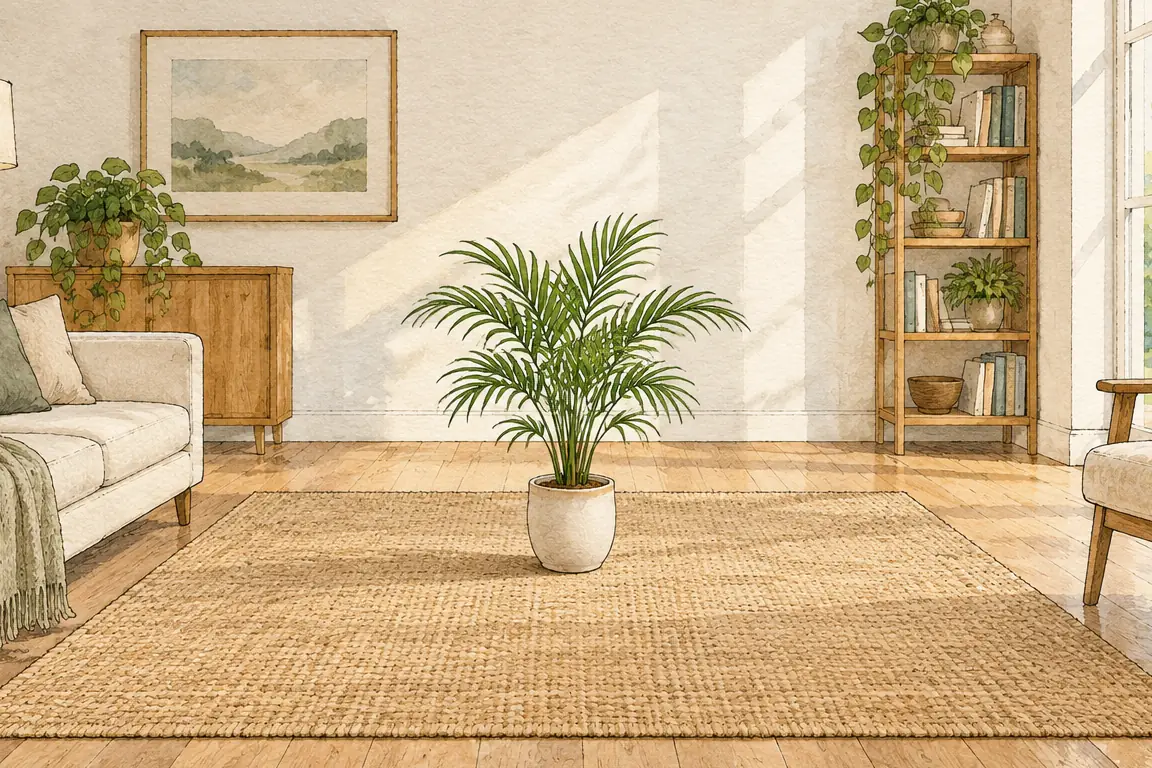
For indoor majesty palm care, give an identified Ravenea rivularis bright, indirect light and consistently moist, well-drained soil. Check the soil surface before watering, avoid cold drafts and direct heat, and watch new growth as you adjust care. Yellow fronds or brown tips can have several causes, so check the pot and recent conditions before changing everything at once.
How can you check which palm you have?
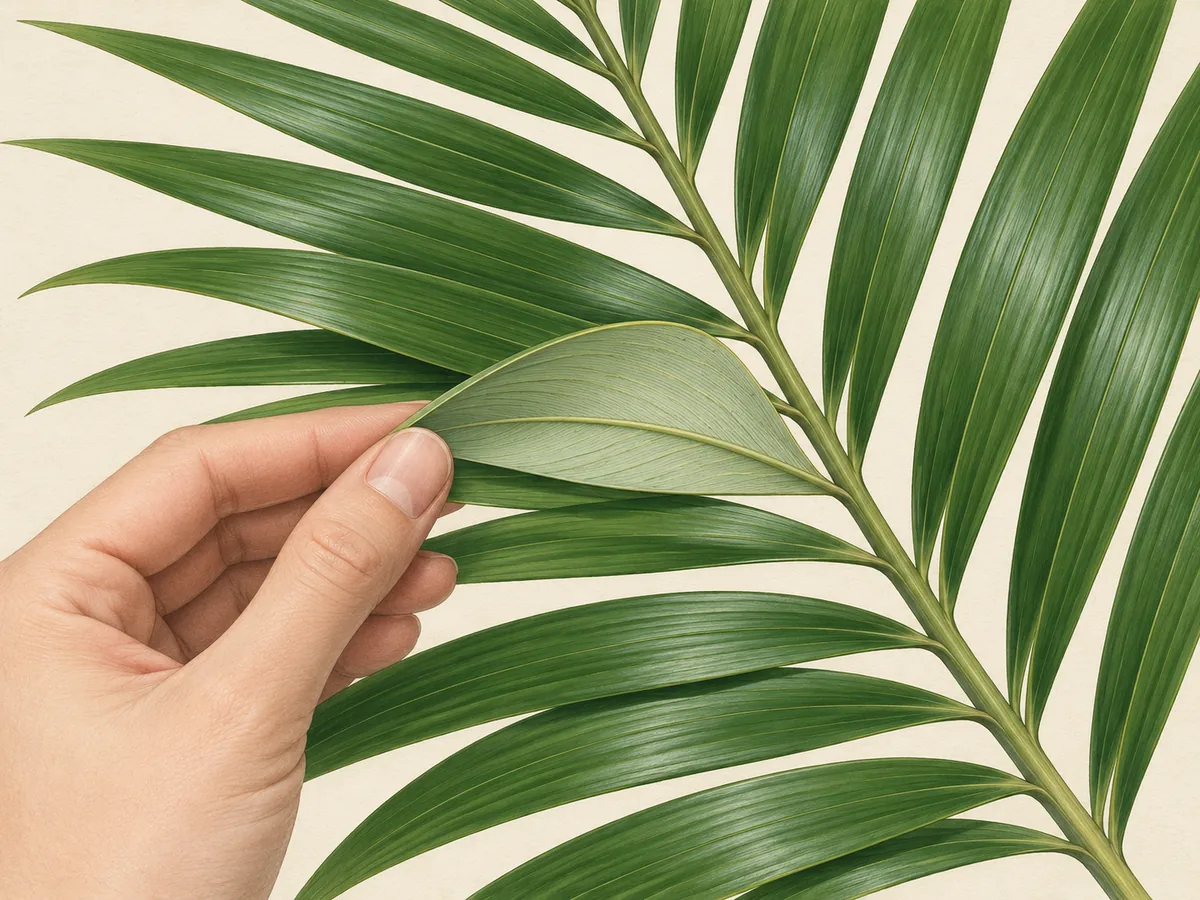
This guide is for Ravenea rivularis, a palm native to Madagascar with arching, feather-like fronds. An indoor pot can contain more than one plant. NC State Extension identifies this species as majesty palm. But the common name is not a reliable species identification by itself: a University of Florida palm guide also uses it for Ravenea glauca.
Check the botanical name with the seller or a qualified identifier if it is uncertain. Similar-looking fronds alone cannot confirm the species. This matters especially when checking pet-safety information.
Majesty palm care: how should you water indoors?
Feel the surface of the potting mix before reaching for the watering can. The University of Florida IFAS recommends watering majesty palms when the soil surface feels dry and using well-drained soil. Aim for moisture without leaving the root zone waterlogged; UF’s species sheet cautions that overwatering can cause root rot.
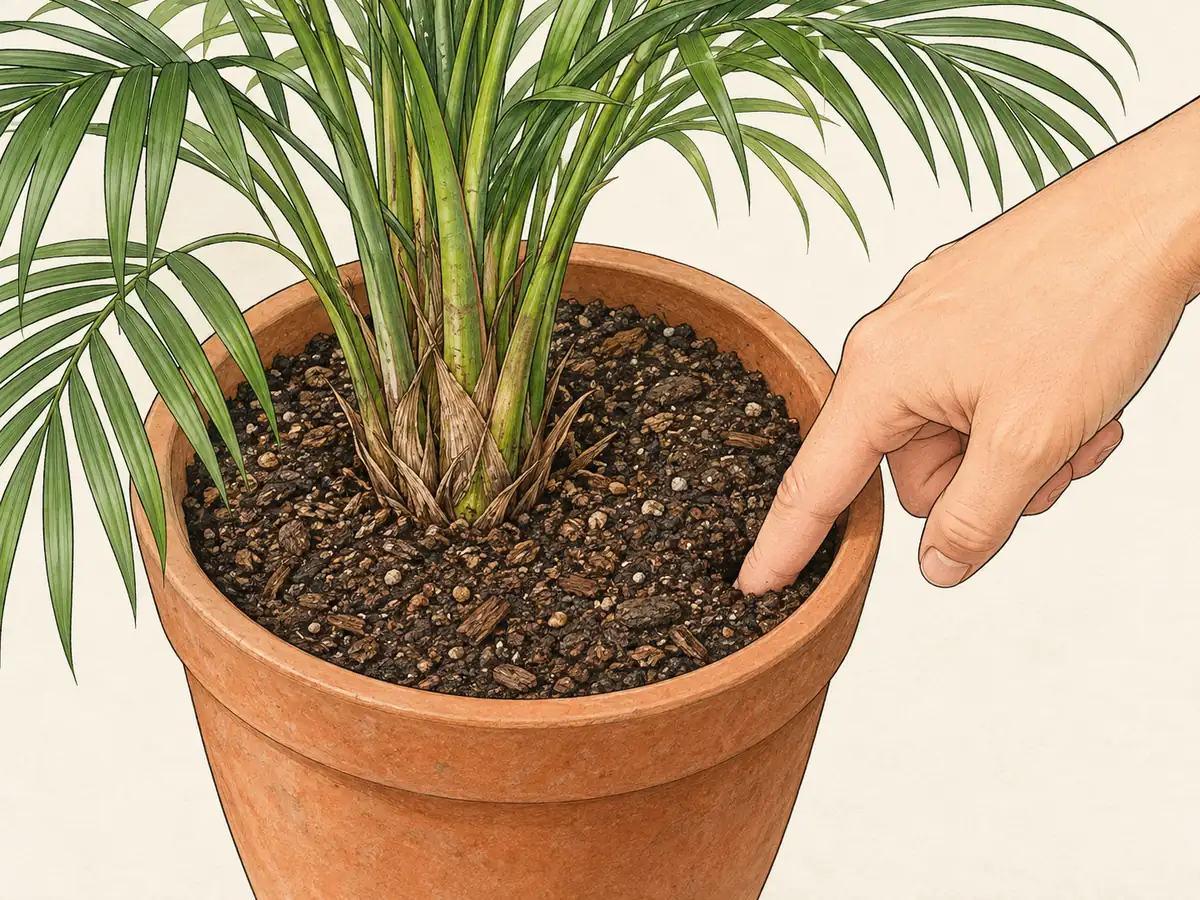
- Look and feel: Check the surface and, carefully, the mix beneath it near the pot edge. A dry surface over persistently wet mix calls for more investigation, not an automatic extra watering.
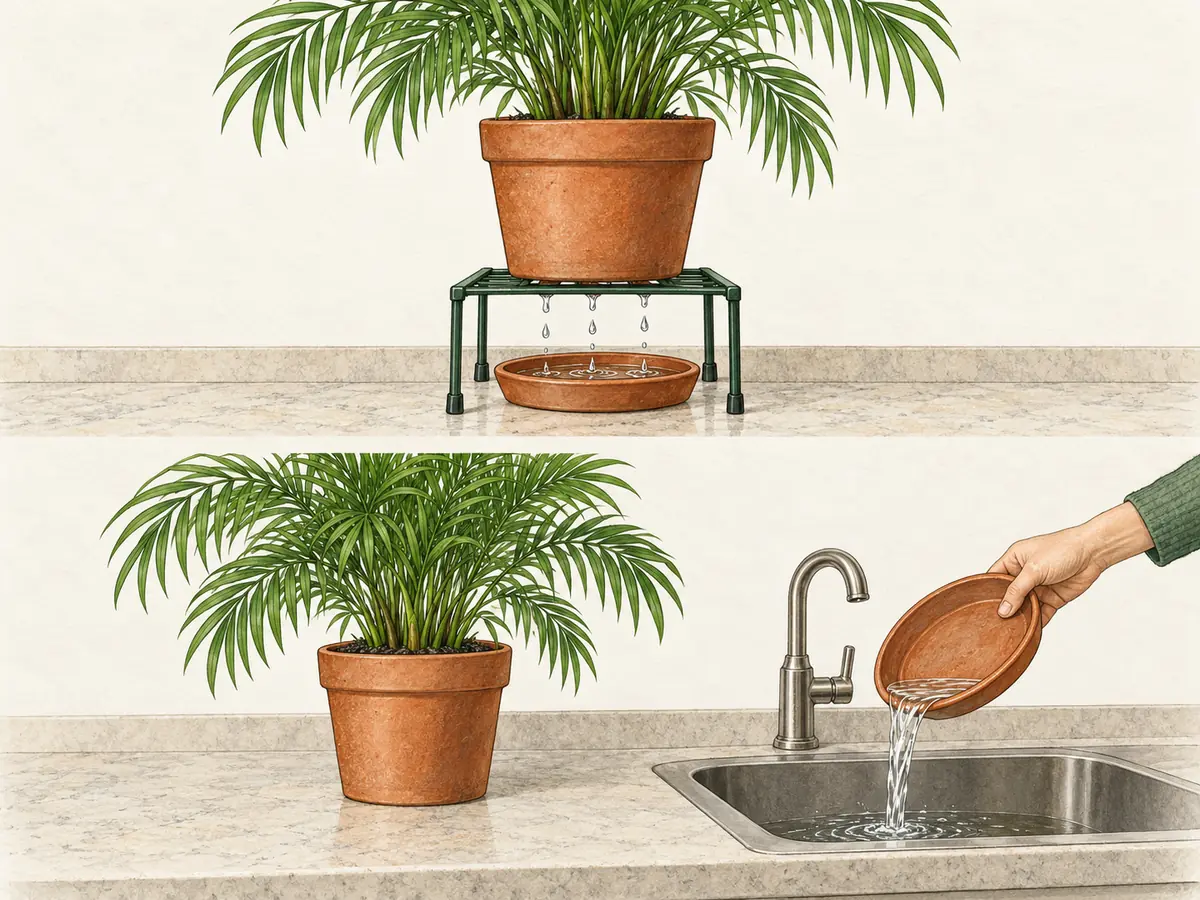
- Decide: If the surface is dry and the mix is not still wet below, water the soil. Use a pot with drainage, allow excess water to escape, and empty the saucer after watering. Penn State Extension’s general indoor-palm guidance recommends emptying the saucer and keeping palms moist rather than waterlogged. If the mix remains wet, wait and check again rather than adding more.
- Check the response: Notice how the soil feels on subsequent checks and whether fresh damage continues. Indoor light, room conditions and pot size affect the routine, so let the plant and pot guide you instead of a fixed calendar.
If the pot stays wet and fronds continue to decline, check that drainage openings are clear. If the problem persists, gently slide the root ball out to inspect it. Penn State’s general houseplant disease guidance describes blackened, mushy roots as a possible root-rot sign; its diagnostic guide lists other possible causes of dark, limp roots too. These are general observations, not a diagnosis of this palm. If roots look concerning, avoid adding more water to saturated mix, ensure excess water can drain, and ask your local Extension office for help assessing the roots and next steps. Check soil moisture and whether decline continues afterward; avoid repeatedly disturbing the root ball.
What light and room conditions does a majesty palm need?
Place the palm where it receives bright, indirect light. Keep direct sun off the fronds and avoid a dark corner. A bright window with the light filtered by a curtain is one way to provide indirect light; check the actual light that reaches the plant as the sun and seasons change. NC State recommends avoiding direct sun, cold drafts and direct heat, and lists 65–85°F (approximately 18–29°C) as the indoor temperature range.
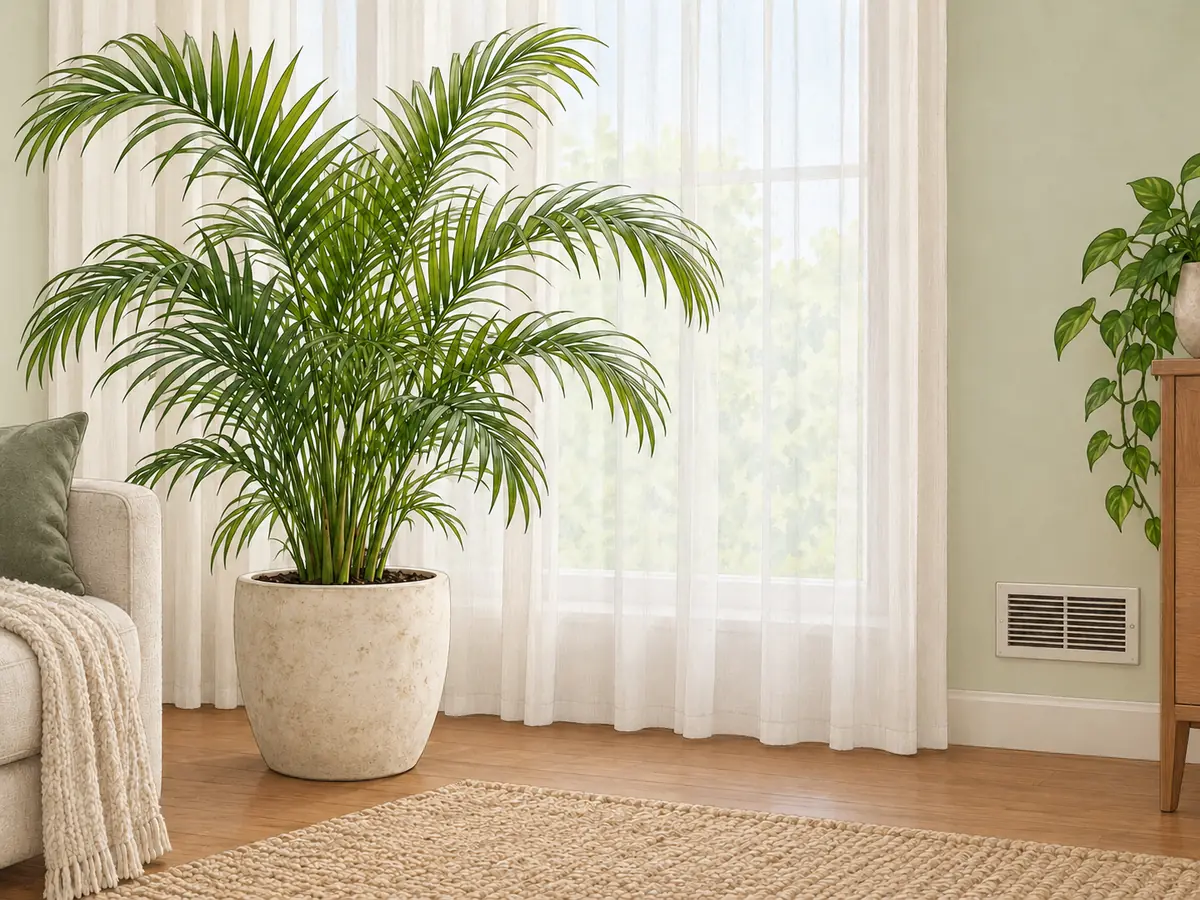
Majesty palms also prefer high humidity. In a heated home, check whether the palm sits in a stream of dry air from a heat vent and move it away if needed. If humidity remains low, group the palm with other plants while keeping enough space to inspect them, or use an existing room humidifier. Penn State’s general houseplant guidance notes that the effect of grouping depends on the room and number of plants; its indoor-palm guidance suggests a humidifier. If you use a humidifier, follow its instructions. The EPA advises unplugging portable units before emptying, wiping dry and refilling daily, and cleaning them every third day; use low-mineral water to reduce mineral buildup. Monitor indoor relative humidity and do not let it exceed 50%; lower or reduce use if nearby surfaces become damp or condensation appears. Continue checking moisture, light and new growth: improvement cannot be guaranteed, and brown tips have several possible causes.
What should you check when fronds yellow, tips brown or pests appear?
Start with the observation and use the checks below to narrow the possibilities. Changes already present on a frond are a record of past stress; watch newer growth and whether damage continues after a care change.
- Yellowing fronds: Feel the soil and check drainage first. Then consider light, humidity and feeding history. NC State lists inadequate light, too little or too much water, low humidity and nutritional deficiencies among possible causes. If the mix stays wet, hold off watering and investigate; if it is dry, water and reassess. Yellowing alone does not identify which cause applies.
- Brown tips or edges: Compare the soil’s moisture and your recent watering with the room’s heat and light. Iowa State Extension notes that low humidity, inconsistent watering, excess fertilizer salts and water quality can contribute to brown tips in houseplants generally. This does not prove which factor affected your palm. Correct the clearest issue first and watch for further browning on newer growth.
- Specks, webbing or visible insects: Inspect both sides of fronds and the areas where leaves meet the plant. NC State lists spider mites, aphids, whiteflies, mealybugs and scale as possible pests. Identify what you see before choosing a treatment, and follow the label of any treatment you use.
When should you change the soil, repot or fertilize?
Use a well-drained potting mix and a pot that allows excess water to escape. Consistent moisture does not mean standing water. If water is not draining or the mix remains wet, check those conditions before assuming the plant needs a larger pot. Our indoor potting-mix guide explains what to consider when choosing a mix.
Repot only when necessary, when the plant needs more space or the growing medium has a serious problem. Inspect the roots and medium rather than relying on a calendar; the exact point at which this palm needs repotting depends on its condition. UF advises against unnecessarily large pots and recommends repotting only when needed. After repotting, check moisture and new growth as the plant settles; do not assume an immediate improvement proves the cause of earlier damage.
For fertilizer, follow the actual product’s directions. UF’s houseplant guidance recommends following label instructions; more fertilizer is not a diagnosis or a substitute for checking water and light. If tips are browning and you have recently fed the plant, consider that history before applying more. For help choosing a product if feeding is needed, see our indoor plant fertilizer guide.
Is a majesty palm safe around cats and dogs?
The ASPCA lists Ravenea rivularis as non-toxic to cats, dogs and horses. That classification applies to the named species, not automatically to every plant sold as a majesty palm or to products applied to it. The ASPCA notes that any plant material may cause vomiting or gastrointestinal upset in cats and dogs.
If your pet may have eaten a plant of uncertain identity or been exposed to a potentially hazardous treatment, contact your veterinarian or an animal poison-control service promptly, even if your pet seems well. If your pet is ill, contact a veterinarian; life-threatening signs need immediate veterinary hospital care. Bring the plant name and treatment information if available. See the ASPCA’s ingestion guidance for when to seek help.
How should you check whether a care change helped?
When you tend the palm, feel the soil, look for new yellowing or brown tips, and inspect the undersides of fronds. Note recent watering, feeding or changes in light and heat. Change the clearest problem first, then compare new growth and soil moisture on later checks. If symptoms keep spreading despite a correction, revisit the other possible causes and seek local help rather than repeating the same treatment. Looking for another plant to fit your space? Browse our indoor plant guides by room and need.
Frequently asked questions
How often do I water a majesty palm plant?
Water when the soil surface feels dry, rather than on a fixed weekly schedule. If the mix below the surface is still wet, wait and investigate before adding more. Use a pot with drainage, let excess water escape, and empty the saucer. Recheck as room conditions change.
Is Ravenea rivularis poisonous to cats?
The ASPCA lists Ravenea rivularis as non-toxic to cats. Confirm the botanical name first: other palms may share the common name. Any plant material can cause stomach upset. If the plant is unidentified or a potentially hazardous treatment was ingested, contact a veterinarian promptly, even if your cat seems well.
Why are the tips of my majesty palm brown?
Brown tips have several possible causes, so color alone cannot identify the problem. Iowa State lists low humidity, inconsistent watering, fertilizer salts and water quality as possibilities for houseplants generally. Check moisture and recent care, correct the clearest issue, and watch whether browning continues on newer growth.
What is the lifespan of a majesty palm?
The sources consulted do not establish a reliable number of years for an indoor majesty palm. Its lifespan in a particular home cannot be promised. Focus instead on bright indirect light, checking moisture and drainage, and observing new growth; persistent decline warrants a closer look at conditions and roots.
Sources
- NC State Extension: Majesty Palm (Ravenea rivularis) — species identity and care.
- University of Florida IFAS: Keeping Finicky Houseplants Healthy — indoor palm watering, soil and feeding.
- ASPCA: Majesty Palm — named-species pet classification.
- Iowa State Extension: Brown Leaf Tips and Edges — general houseplant causes.
- US EPA: Use and Care of Home Humidifiers — household humidity and humidifier care.