Bromeliad care starts with the plant’s name and how it is grown. For common indoor tank types, manage the leaf cup and root medium separately: water in the cup does not mean soggy roots. Give them suitable indirect light and drainage, check moisture before watering, and keep replacement pups when the flowering mother rosette declines.
Which bromeliad care routine fits your plant?
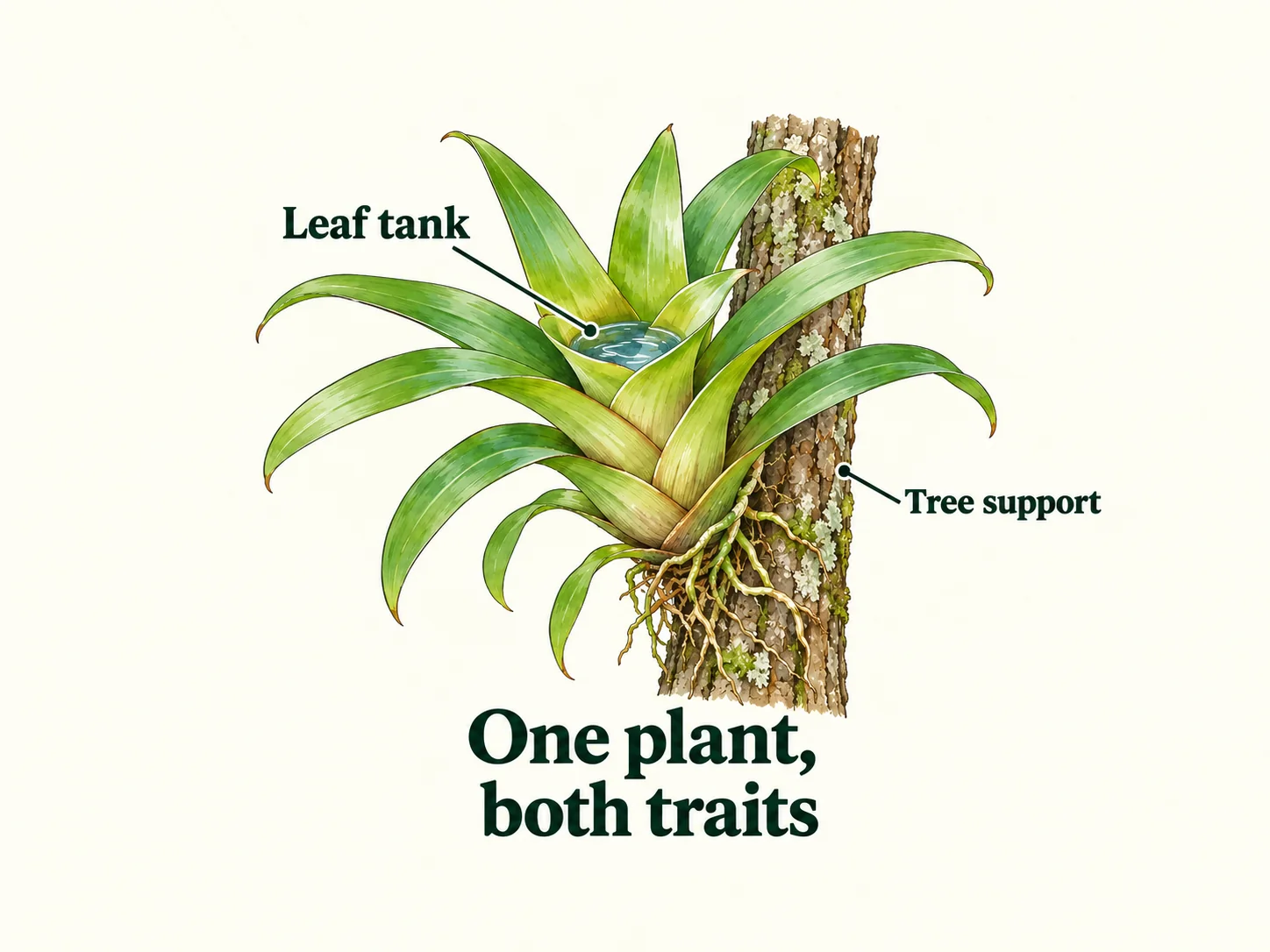
“Bromeliad” names a diverse family, Bromeliaceae, rather than one species. A tank is a water reservoir formed by overlapping leaves. “Epiphytic” describes a plant that uses another plant for support; an epiphyte can also have a tank and can sometimes be grown in a pot. These are overlapping descriptions, not three separate plant groups. Clemson Extension explains the growth habits.
Start with the nursery label, then confirm whether your plant grows in potting medium or is a soil-free air plant. Use the named source pages below for their botanical descriptions and photographs; this table cannot identify an unlabeled plant from its shape alone.
| Your label or confirmed type | Leaf cup | Root medium or next step |
|---|---|---|
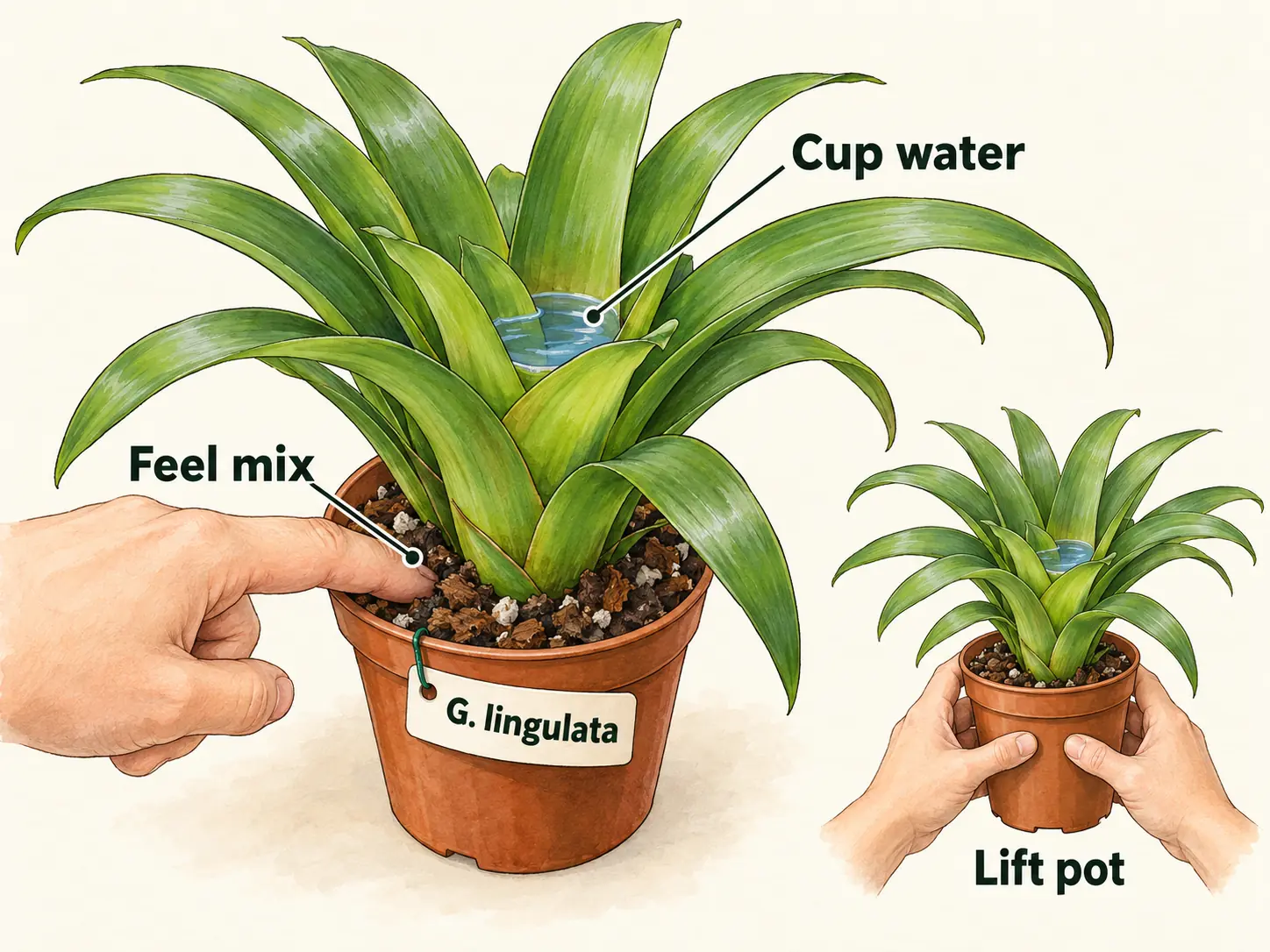
| Guzmania lingulata | Keep water in its central cup, especially in summer. | Water roots sparingly in an airy medium. This is the NC State species route; confirm instructions for a differently named hybrid. |
| Vriesea | NC State’s genus guide keeps the tank full. | Use an airy, well-drained medium. In NC State’s Vriesea method, excess water from topping up the tank trickles into the root zone. Let it drain and empty runoff; a tank top-up is not a reason for another automatic pot watering. |
| Aechmea fasciata | NC State maintains water in the cup and replaces it regularly. | Its species profile calls for consistently moist, well-drained medium. Do not apply an all-bromeliads dry-out rule; see the source difference below. |
| Cryptanthus earth stars | Use terrestrial care, rather than a tank-filling routine. | Clemson recommends rich organic soil that dries slightly between watering. NC State’s C. zonatus profile also specifies good drainage. |
| Confirmed soil-free Tillandsia air plant | Do not apply the potted tank routine. | Use Iowa State’s air-plant instructions: wet the plant, then drain and dry it thoroughly. Not every plant labeled Tillandsia belongs on this soil-free route. |
| Only “bromeliad,” or an uncertain identity | Confirm the plant before choosing a cup regimen. | Check the seller’s label or ask a plant specialist. For a potted plant, check that water can escape and the roots are not sitting in soggy medium. |
The Aechmea exception matters. NC State’s A. fasciata profile specifies consistently moist, well-drained medium, while Clemson’s broader Aechmea guidance allows the mix to dry between watering. For a confirmed A. fasciata, this guide follows the species-specific NC State route. Moist does not mean saturated or standing in runoff.
Should you water the cup, the potting mix, or both?
For an identified tank bromeliad, make two decisions: whether its cup needs fresh water, and whether its root medium needs watering. A cup refresh is not a signal to drench the pot. For Vriesea, follow the table’s NC State tank-top-up and root-trickle method, then check drainage. The other potted routes give separate root-moisture guidance; use that before deciding to water the mix. There is no reliable whole-family weekly schedule.
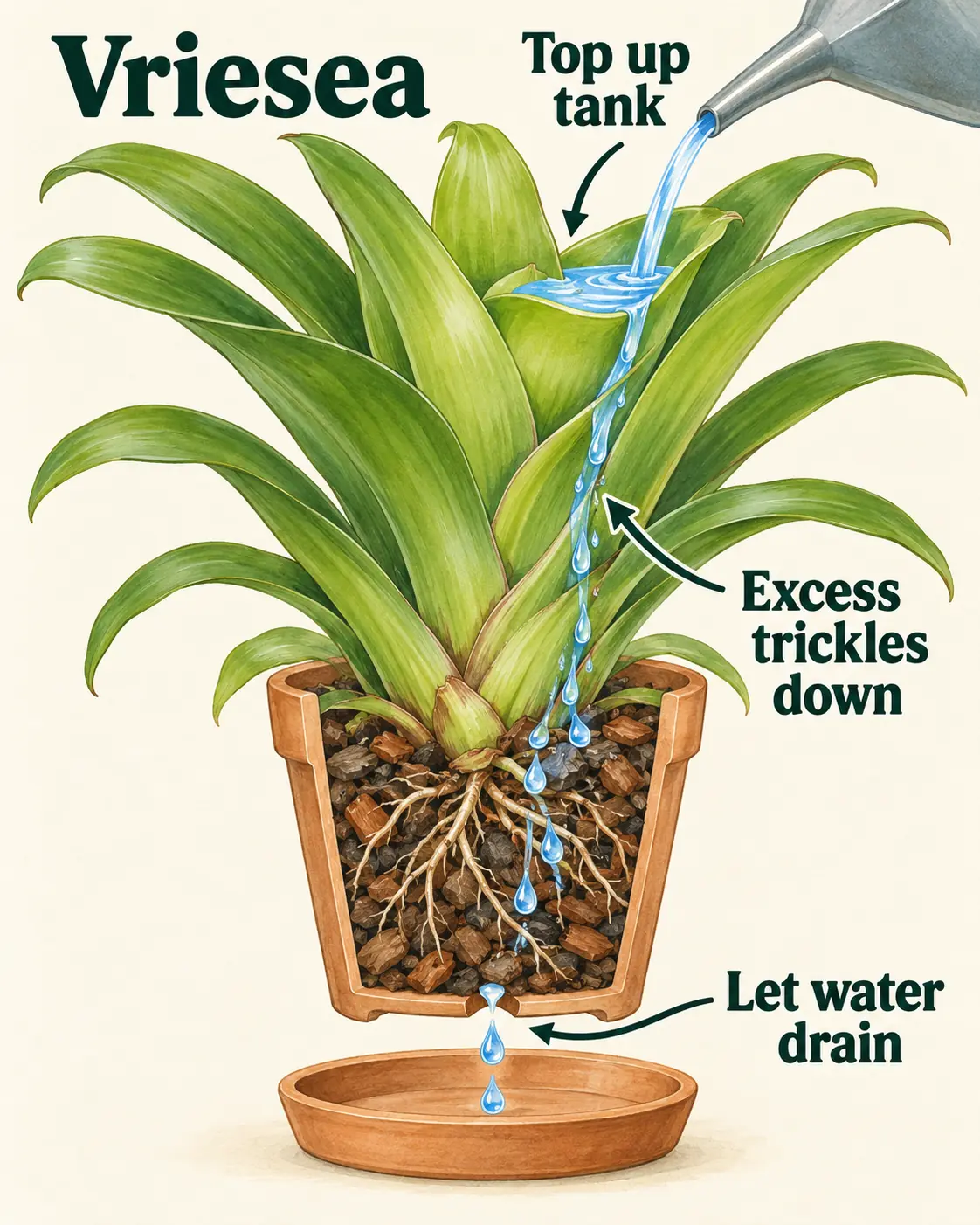
General advice does differ. UF/IFAS’s indoor method fills and then drains the cup. Clemson and the named NC State tank profiles retain cup water. Here, the identified G. lingulata, Vriesea and A. fasciata routes follow NC State, with root drainage checked separately. Do not choose between these methods from an unconfirmed family label.
Refresh an identified tank without repeatedly soaking the mix
- Take the plant to a sink and support it securely. Clemson’s flushing method adds fresh water, inverts the plant to remove the old water, then refills the tank.
- Follow your identified plant’s cup instructions. For Vriesea, NC State allows excess tank-top-up water to trickle into the root zone; let it drain. Avoid repeated flooding or an extra automatic pot watering merely because you refreshed the tank.
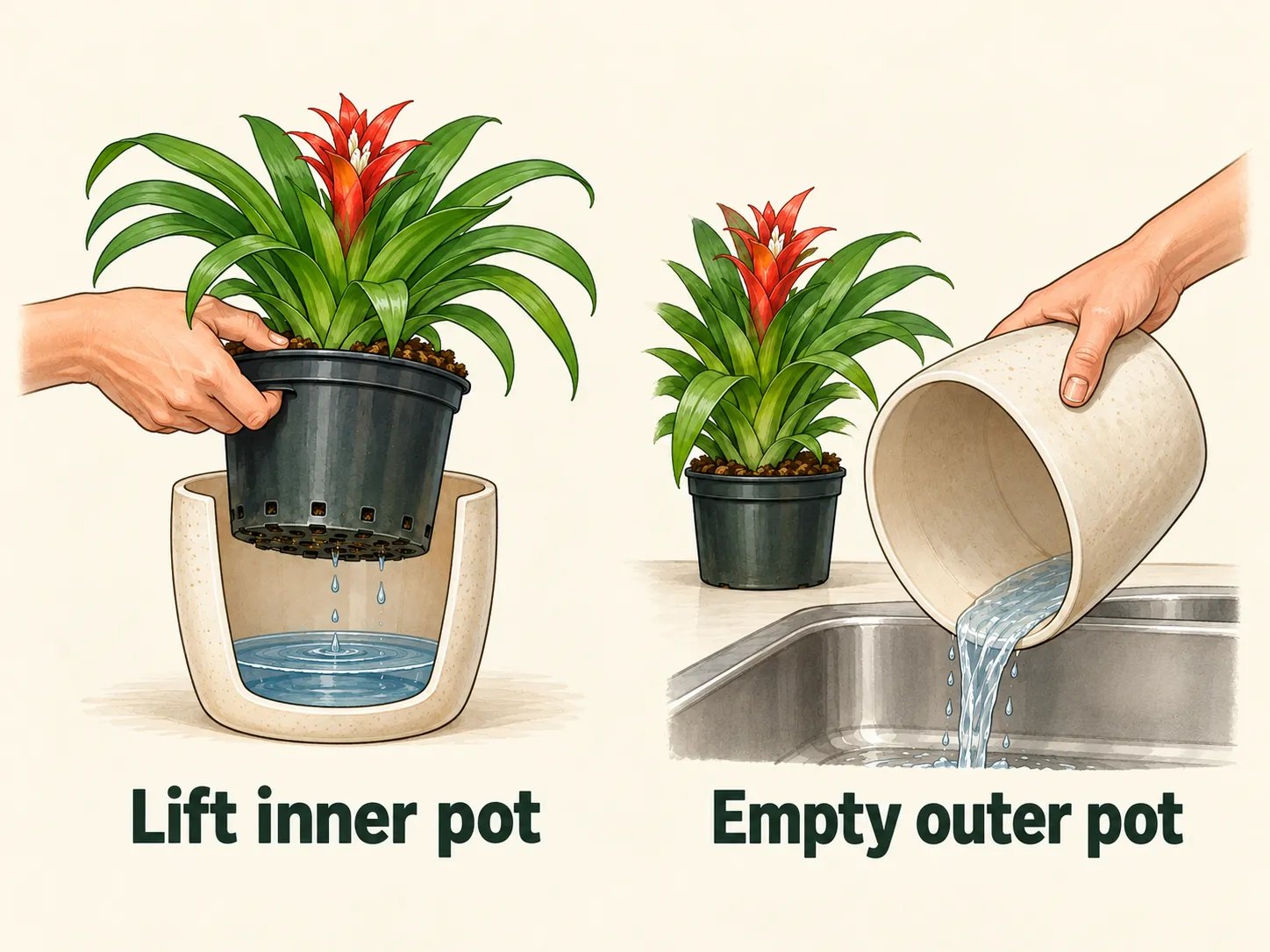
- Check the pot and saucer afterward. Empty collected runoff, including water inside a decorative outer pot.
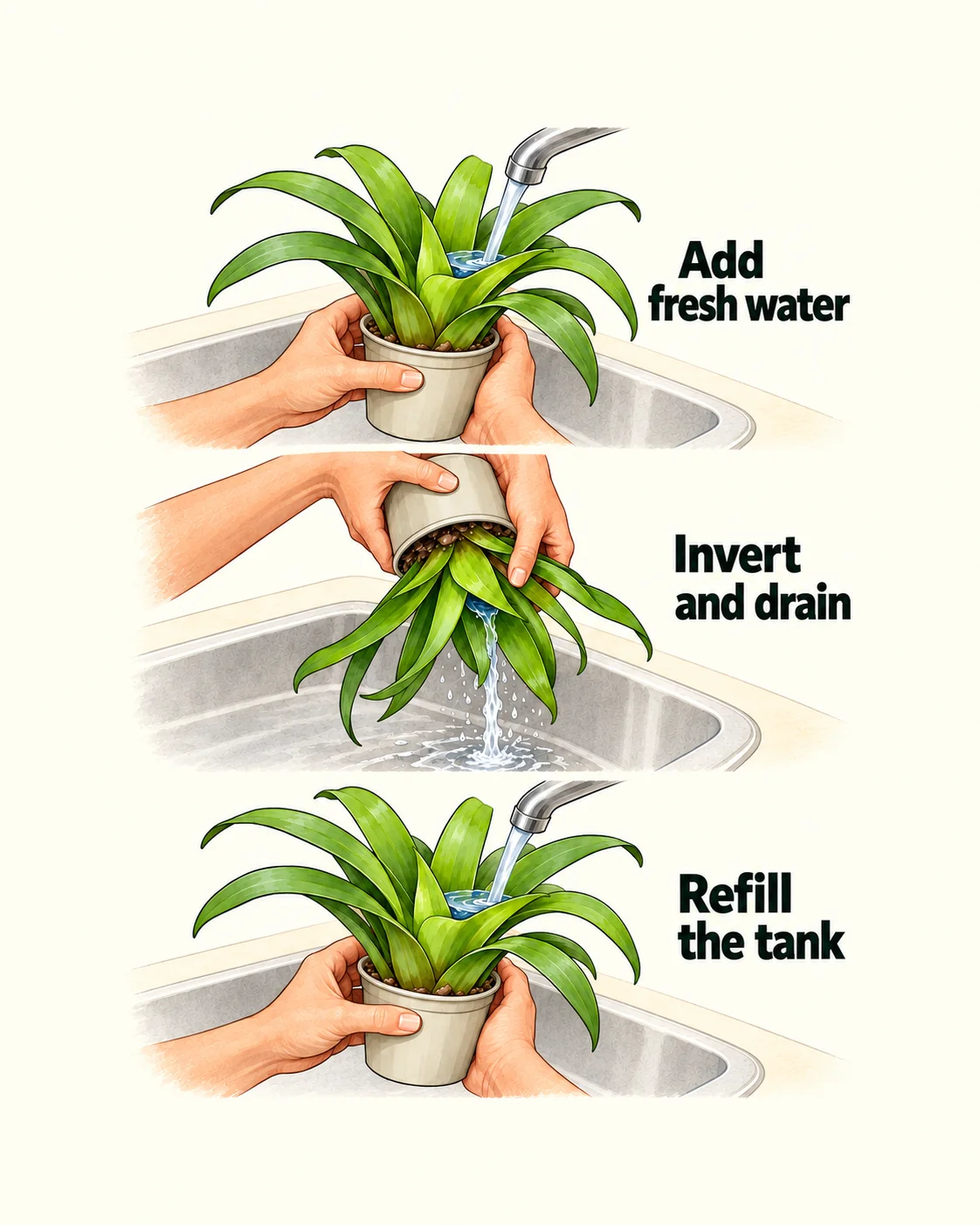
Clemson recommends periodic tank flushing to limit stagnant water and mineral-salt buildup. It does not give one interval for every plant. NC State gives a monthly cup-water change for A. fasciata; keep that timing species-specific.
Check the root medium before adding water
- For a route that calls for separate root watering, confirm the applicable moisture requirement first. Then feel the medium and lift the pot to learn how its weight changes as water is used. Compare what you find with the applicable route: slightly drying earth-star soil is different from consistently moist A. fasciata medium.
- If the medium is already wetter than that route calls for, wait on root watering and check drainage. A drooping leaf alone is not evidence that more water is needed.
- When root watering is due, let water run through the drainage holes and empty the saucer. Then record the date and what the medium felt like, so the next decision uses an observation rather than a calendar alarm.
Clemson’s houseplant watering guide supports touch, pot-weight and runoff checks, and explains that excessive and insufficient watering can produce similar symptoms. Its general dry-to-touch advice does not override a species’ moisture requirement.
You can do these checks without buying a meter. If you are considering one for the potting mix, read our guide to soil moisture meters and their limits. A soil reading is not a measurement of the leaf tank or a watering rule for bare air-plant roots.
Where should you put an indoor bromeliad?
Bright, indirect or diffused light is a useful starting point for the common indoor ornamentals covered here. Check where direct sun actually falls across the leaves during the day. A bathroom, mantel or kitchen table is not automatically a suitable growing location; the plant still needs appropriate light.
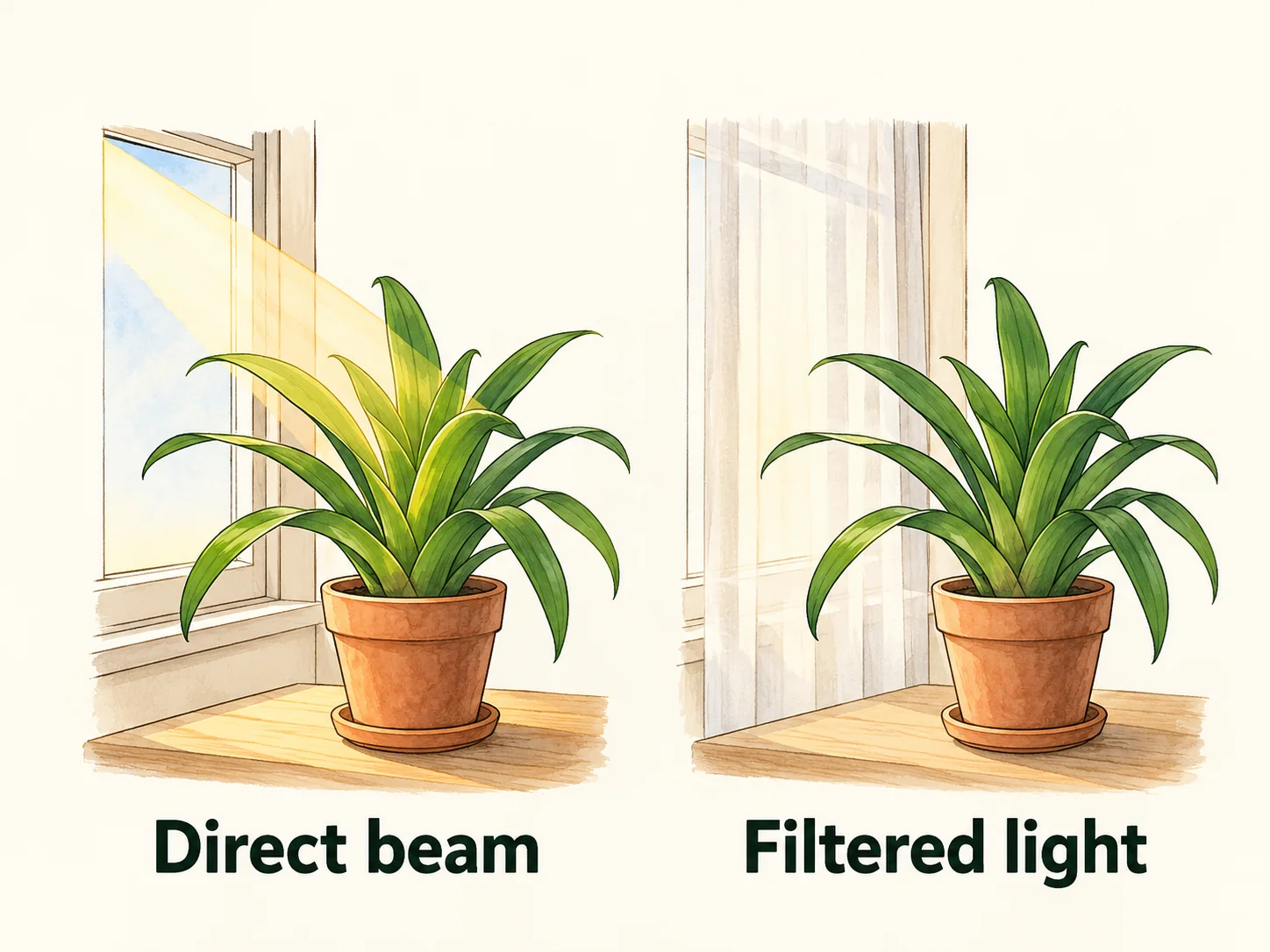
Adjust for the label. Clemson describes moderate light for Guzmania; NC State notes that Vriesea species and hybrids range from shade to bright-light needs. UF/IFAS distinguishes surviving in very low light from growing well there. Clemson, NC State and UF/IFAS provide those boundaries.
Clemson gives 60–85°F (16–29°C) as broad indoor growing guidance. The narrower NC State preference for A. fasciata is 65–75°F (18–24°C). These are growing preferences, not promises of outdoor cold tolerance. This indoor guide does not supply one USDA zone or outdoor moving date for the whole family.
For Guzmania, Clemson pairs humid air with good air movement. Keep the root medium draining while attending to the air around the leaves; extra root watering cannot substitute for atmospheric humidity. No humidity percentage or automatic misting schedule applies to all these plants.
Recheck moisture when conditions change. A cool, dim room generally uses water more slowly than a warm, bright one, while a dry heated room may behave differently. Follow the actual medium, rather than automatically repeating a summer routine. Clemson explains these watering variables.
Do you need new potting mix or fertilizer?
First check the container you already own: drainage holes must work, and the inner pot must not stand in water. An airy medium should let excess water escape while meeting the identified plant’s moisture needs. Do not replace a functioning setup merely because the plant’s display is fading.
For Vriesea, NC State accepts an airy houseplant mix or bark-based orchid mix. Cryptanthus needs its terrestrial, rich-organic-soil route. These are different specifications, not one universal bromeliad recipe. Our potting-mix guide provides a broader comparison; use the species guidance here to decide which properties matter.
Fertilizer is not the first response to an unidentified problem. UF/IFAS says indoor bromeliads rarely need feeding and often need little or none in winter or low light. Feeding advice also differs by type: UF cautions about salts accumulating in the cup, while NC State’s Vriesea profile includes tank feeding. Until identity and need are clear, leave fertilizer out of this troubleshooting routine. Use plant-specific guidance and the actual product label if feeding later. UF/IFAS; NC State Vriesea.
Is a fading bromeliad dying, and should you remove its pups?
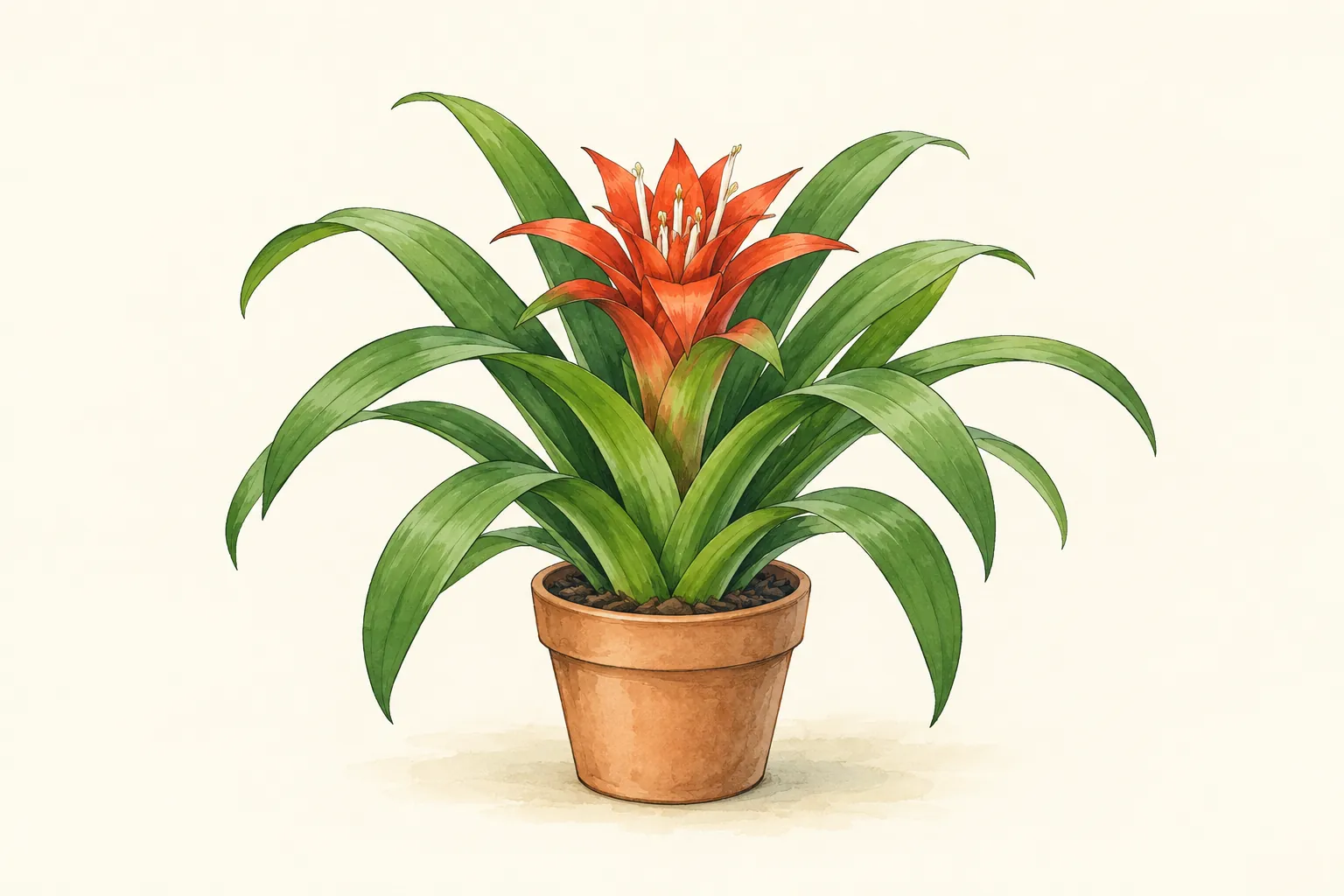
In the common flowering Guzmania, Vriesea and Aechmea covered here, the original flowering rosette eventually declines. Pups—new plants developing near its base—can continue the group. A fading display therefore does not mean every part of the plant must be discarded. NC State Guzmania, Vriesea and Aechmea fasciata describe this lifecycle.
Separate the display from the whole rosette. In G. lingulata, the showy colored bracts surround small white flowers; in Vriesea, bracts can outlast the true flowers. Their fading alone cannot tell you whether the roots are healthy. Check the medium, drainage, recent cold exposure and the rest of the foliage before attributing all decline to age.
You can leave pups attached. New York Botanical Garden explicitly offers keeping them together as a cluster. Separation is a choice, not an emergency response to a fading bloom.
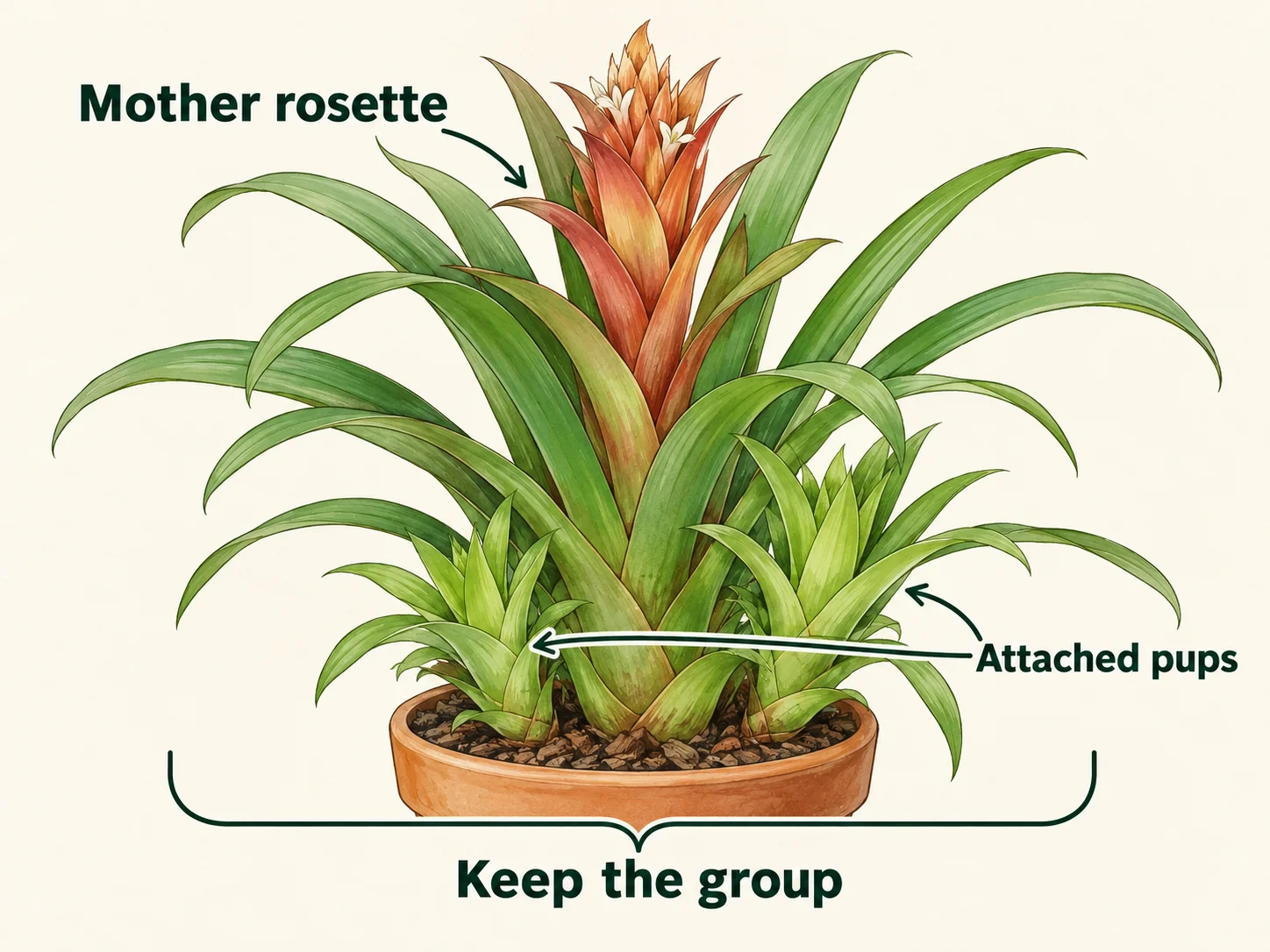
If you want separate plants, choose readiness guidance for the known type. UF/IFAS’s broad guide waits until a pup is half the parent’s size. NC State’s Vriesea guidance allows about one-third, while its A. fasciata profile specifies 6 inches (15 cm) tall. Those are different, source-specific criteria. For the broad route, use UF’s half-size guide unless you have applicable plant-specific instructions.
Before dividing, consult the linked source’s procedure and confirm the attachment on your actual plant. A generic drawing cannot establish a safe cut position. If that junction is unclear, keep the pups attached and ask a knowledgeable grower or Extension service for help. There is no universal deadline for a pup to flower: UF/IFAS lists maturity, light, water, temperature and day length among the factors.
What should you check when leaves change?
Use leaf changes to choose a check, rather than to name a disease immediately. The table combines source-supported clues with a practical observation sequence; it is not a diagnostic test or a guaranteed rescue plan.
| What you notice | Check before acting | What to do and reassess |
|---|---|---|
| Pale or yellowish foliage | UF/IFAS says excessive light is one possibility. Check direct sun and medium moisture. | If light is too intense for the known type, move to suitable filtered light. Record the change and watch subsequent growth; color alone does not establish the cause. |
| Dark-green, soft, drooping leaves | Low light is one UF/IFAS clue, but wet and dry roots can also produce similar stress signs. | Check medium and drainage first, then improve inadequate light. At the next moisture check, record whether the pot is drying as expected. |
| Brown tips on confirmed A. fasciata | NC State names inadequate water and cold as possible causes. | Review its moist-but-drained medium and temperature history. Do not assume every brown tip means sunburn or needs fertilizer. |
| A fading display on a previously flowering mother | Look for attached pups, and check the rest of the plant and its medium. | Keep healthy pups. Do not dismiss ongoing unexplained deterioration as normal flowering decline without checking growing conditions. |
| Persistent unexplained decline or suspected insects | Clemson lists scale and mealybugs among common bromeliad pests. | Seek identification and management advice from your local Extension service. Bring the label, clear photographs and your moisture observations; avoid a guessed pesticide treatment. |
Sources for these checks: UF/IFAS light and pest guidance, NC State A. fasciata, and Clemson’s warning about overlapping watering symptoms.
What if you have pets?
Check the exact identity rather than relying on the family name. ASPCA lists Orange Star as Guzmania lingulata minor, non-toxic to cats and dogs. That listing does not classify every bromeliad or every plant sold as “Orange Star.” ASPCA also cautions that any plant material can cause vomiting or gastrointestinal upset. If your pet is ill or may have eaten a poisonous plant—including one with an uncertain identity—contact your veterinarian or ASPCA Poison Control; do not use this care guide to choose treatment.
Bromeliad care questions
How to care for bromeliad plants in pots?
Identify the plant first. For tank-forming types, manage leaf-cup water separately from the potting medium. Use suitable indirect light and a draining pot; empty collected runoff. Follow the identified type’s root-moisture needs: NC State specifies consistently moist, well-drained medium for Aechmea fasciata. Species-specific instructions take priority over a general routine.
What are bromeliads?
Bromeliads are members of the diverse plant family Bromeliaceae, which includes Guzmania, Aechmea, earth stars and air plants. Some form water-holding leaf tanks; some grow terrestrially, while others use trees for support. Those descriptions can overlap, so the family name alone does not determine the correct watering routine.
What is the lifespan of a bromeliad?
There is no single lifespan for every bromeliad. In common flowering Guzmania, Vriesea and Aechmea, the original rosette declines after bloom, while pups can continue the group. Without a growing history, a purchased plant’s age is unknown. Judge its stage and growing conditions rather than applying one number of years to the family.
Do bromeliads only flower once?
The original rosette of the common flowering Guzmania, Vriesea and Aechmea discussed here flowers once, then declines. Replacement pups are new rosettes that may eventually flower when mature. That is different from the same spent rosette blooming again, and it is not a flowering timetable for every bromeliad species.
These answers follow the named Guzmania, Vriesea and Aechmea profiles, Clemson’s family overview and UF/IFAS’s maturity and flowering guidance.