How do I care for a rubber plant?
Rubber plant care starts with bright indirect light, a pot that drains, and checking the mix before watering. For indoor Ficus elastica, water thoroughly after the mix dries somewhat, then empty collected runoff. Check moisture and recent changes before treating leaf drop; both overly wet and overly dry conditions can cause it.
Start with the right rubber plant and a workable setup
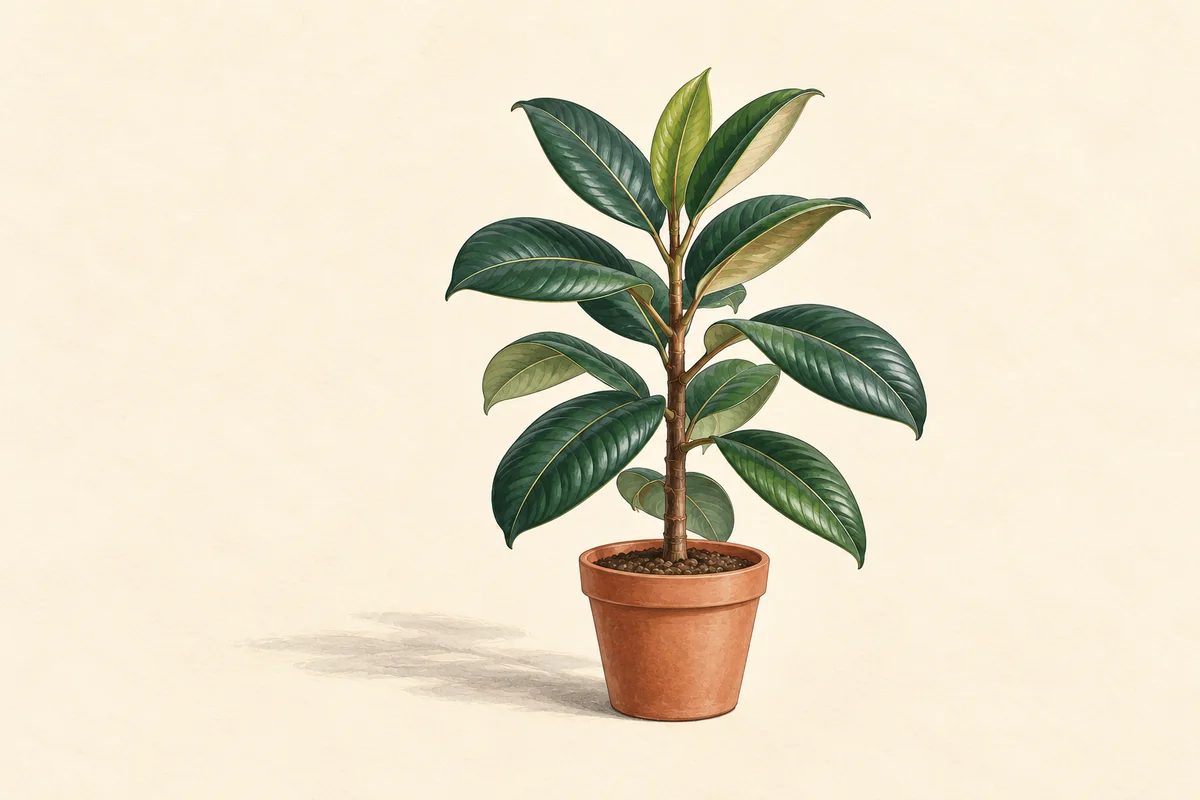
This guide is for Ficus elastica, the woody houseplant with large, leathery leaves. Burgundy and Tineke are named forms of this species, with different leaf colors. They are not separate care species. A common name alone is not enough to establish identity: the “baby” or “American rubber plant” may be Peperomia obtusifolia. Check the botanical name on the label before applying this guide.
NC State Extension’s Ficus elastica profile provides botanical descriptions and reference photographs. An attractive leaf color or a drawing cannot confirm an unknown plant’s identity.
| Task | Start here | Check before changing it |
|---|---|---|
| Light | Bright indirect light; gentle morning sun can work. | Is the plant in a harsh afternoon beam, a dim corner, or a cold draft? |
| Water | Check the mix, then water thoroughly when it has dried somewhat. | Is it still damp below the surface? Is runoff trapped in an outer pot? |
| Container | Drainage holes and a well-drained houseplant mix. | Are roots crowded, or is the real problem persistently wet mix? |
| Temperature | A warm indoor position; avoid temperatures below 55°F (about 13°C). | Does a window, door, furnace, or air conditioner cause sudden changes? |
| Routine care | A damp cloth for dust; fertilizer during active growth according to its label. | Is the plant actually growing, and does anything need changing? |
These starting points follow Clemson Extension’s rubber plant guidance. You can make the placement, moisture, drainage, and dust checks with what you already have. Keep the plant away from pets and young children likely to chew it; see sap and pet safety before pruning or handling damaged tissue.
Choose bright light without a harsh afternoon beam
Start indoors with bright indirect light: a bright position where strong afternoon sun is filtered or does not fall directly on the leaves. An east-facing window with gentle morning light is a supported option. The window’s direction is a starting clue; nearby buildings, trees, curtains, and the plant’s actual position affect what reaches it.
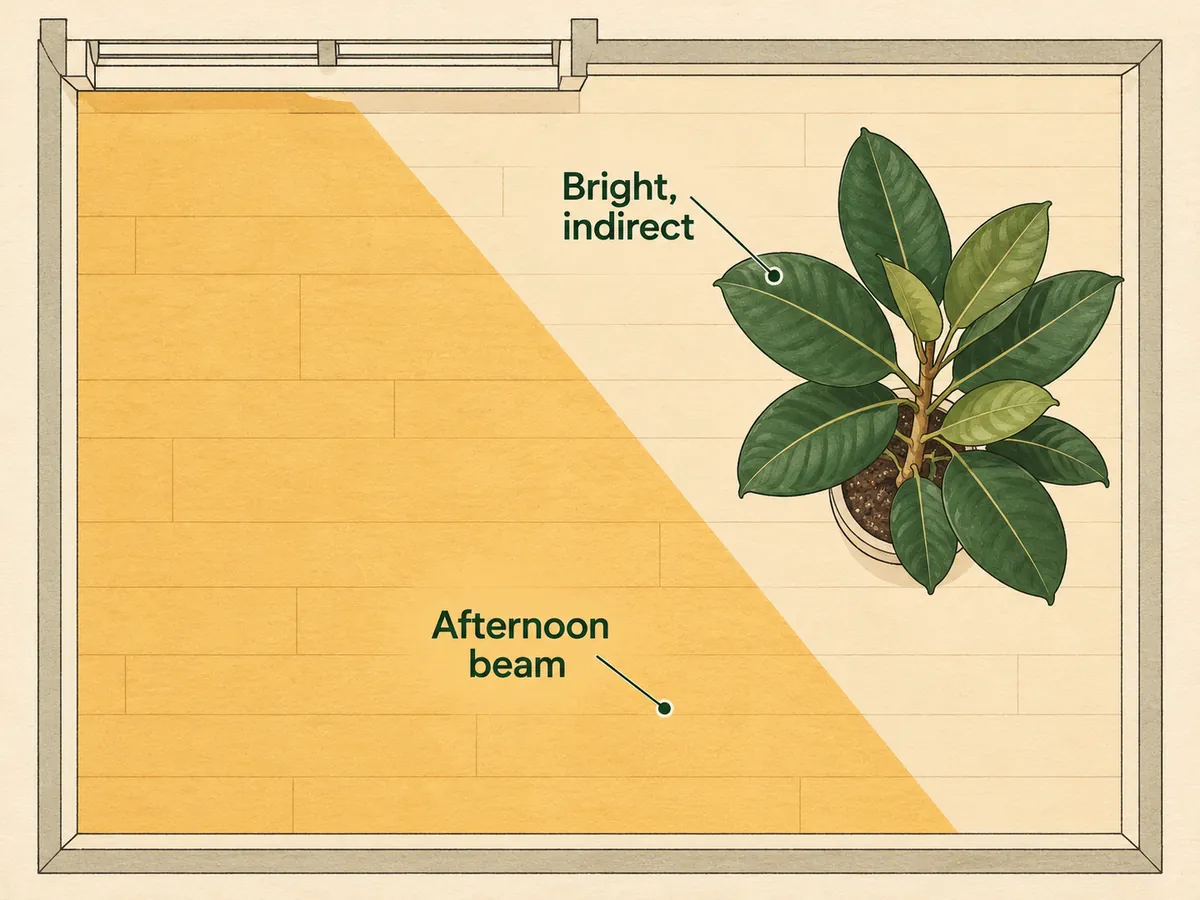
Clemson recommends morning light from an east window, while NC State specifies bright indirect light with protection from afternoon sun. That supports a practical choice: use a bright, protected position rather than assuming either “no direct sun ever” or “full sun all day.” Outdoor landscape advice does not automatically describe a houseplant beside glass.
- Bright window, strong afternoon beam: use an existing sheer curtain or a position outside that beam.
- Dim corner: look for a brighter suitable position before buying fertilizer to address poor growth or leaf loss.
- Bright but drafty window: find a position clear of the draft as well as suitable light.
Rubber plants can tolerate lower light, but tolerance is not a reason to choose the darkest spot. Low light can contribute to leaf loss. Keep the plant clear of furnace and air-conditioner airflow and drafty doors, especially during winter, as Colorado State Extension’s indoor guidance explains.
Humidity matters, but a humidifier is not an automatic requirement. Clemson notes that rubber plants prefer humid conditions yet tolerate the dry air common in homes. Check light, water, and drafts before treating ordinary indoor air as the only explanation for a struggling plant.
Check the mix before deciding to water
How often should I water a Ficus?
For Ficus elastica, let the mix dry somewhat between thorough waterings, then drain it completely. There is no dependable weekly interval for every home. Check the mix before adding water; temperature, humidity, and potting medium change its needs. A dry surface alone does not establish that the root ball needs water.
The source wording varies: Clemson says to let soil dry slightly, while Colorado State emphasizes even moisture without saturation. The useful shared advice is to avoid both prolonged wetness and severe drying. Do not turn “dry between waterings” into a requirement to make the entire pot bone-dry.
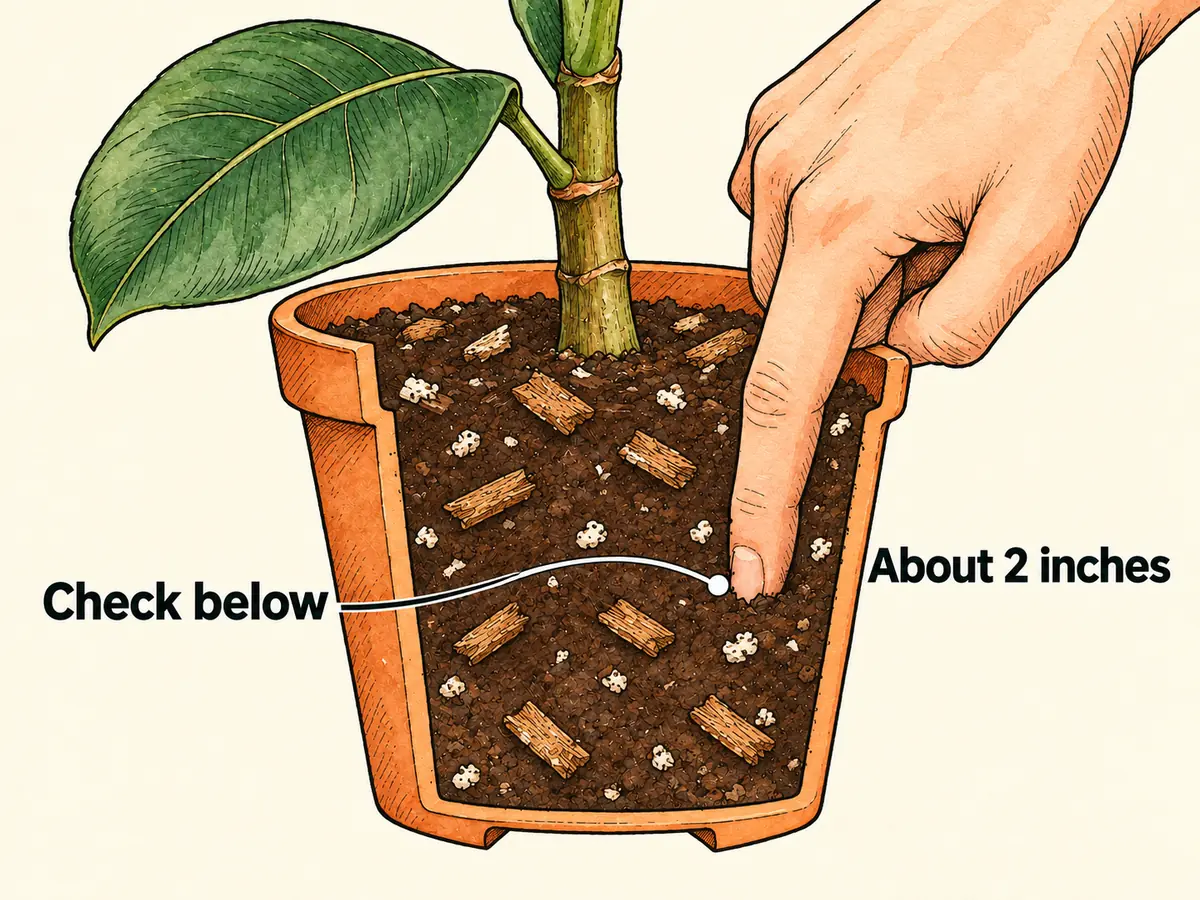
- Check below the surface. University of Maryland Extension describes a finger check about 2 inches (5 cm) into the mix as a general houseplant method. If the mix there is still damp, wait and check again. That depth is a practical observation point, not a tested rubber-plant threshold or proof that the lower part of a large pot is dry.
- Use pot weight as another clue when safe. A manageable pot feels lighter as its mix dries. Compare it with its own weight after watering and draining. Do not lift a heavy floor specimen just to perform this test.
- Water thoroughly when the observations support it. Apply water to the mix so excess can drain freely through the holes. A small plant can drain in the sink before going back to its place.
- Finish by emptying runoff. Check both the saucer and any decorative outer pot. Return the inner pot only after it has drained; do not leave its base standing in collected water.
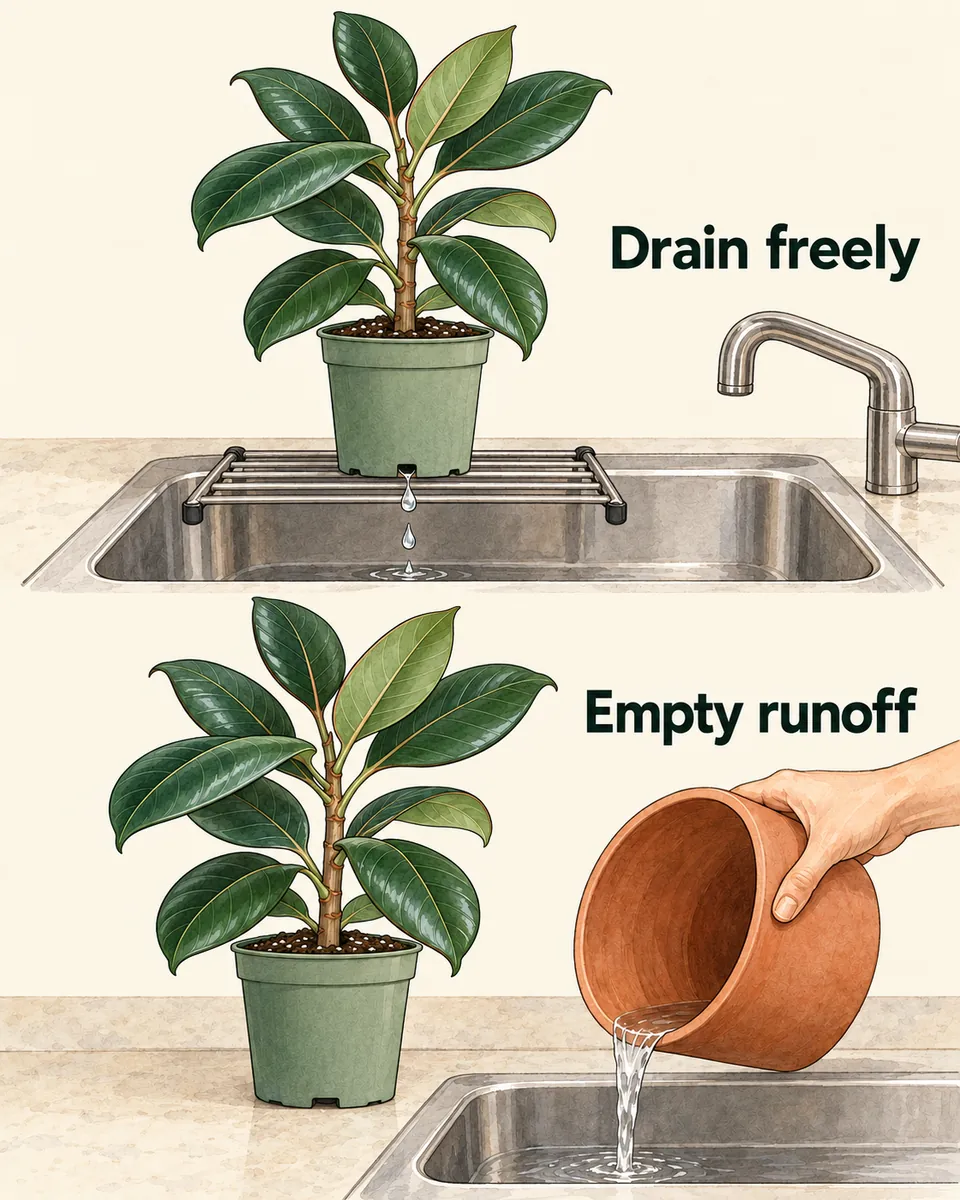
The check-and-drain procedure comes from University of Maryland Extension’s houseplant watering guidance, used here alongside the species-specific advice. If the surface feels dry but the mix below remains wet, do not let the surface override that finding. Check drainage and the container before adding more water.
Start with these free checks. If you are considering an instrument because checking a particular container is difficult, our soil moisture meter guide explains options and when not to trust a reading. A tool does not remove the need to check drainage and the plant’s conditions.
Choose the pot and mix from what the roots need
Use a container with drainage holes and a well-drained houseplant potting mix. The consulted rubber-plant guidance does not establish one ideal ingredient ratio. You do not need a special branded “rubber plant soil” to follow this advice.
Decide why you are considering repotting before choosing a larger container. Illinois Extension’s general houseplant repotting guidance lists roots growing through drainage holes, appearing at the surface, or filling the soil mass as reasons to inspect the root ball. These observations are more useful than a compulsory annual repotting date.
| What you observe | What to decide next | What it does not prove |
|---|---|---|
| Roots emerging from holes or filling the soil mass | Inspect for crowding and consider a larger container if the root ball needs room. | A root at a hole alone does not tell you how much larger the next pot should be. |
| Mix stays wet; runoff collects beneath the pot | Empty trapped water and assess drainage and the root/soil condition. | Wet mix is not a reason to automatically move into a larger pot. |
| No crowding or drainage problem evident | Continue observing growth and moisture. | Another year passing does not by itself require repotting. |
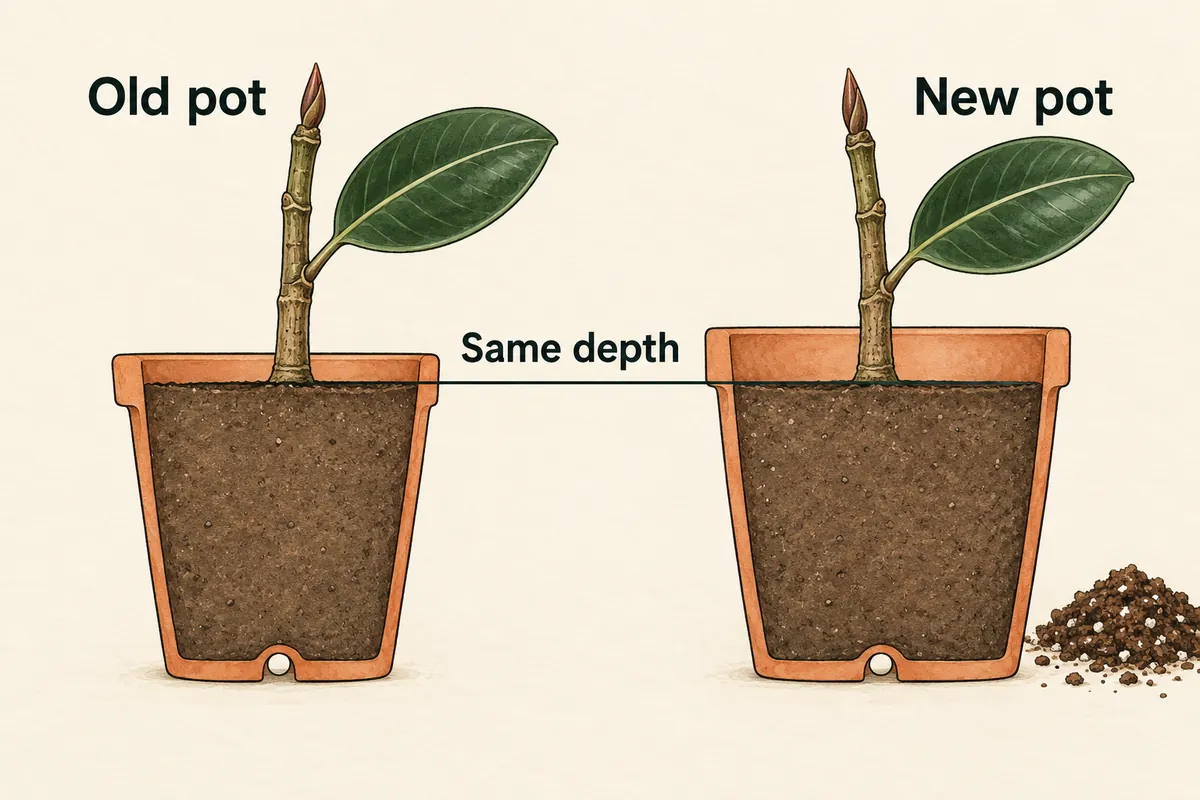
For a healthy plant that needs routine repotting, spring near renewed active growth is a useful time. Keep the plant at its previous planting depth in fresh mix, following Illinois Extension’s guidance. A serious root or soil problem calls for assessment on its own merits; it is not the same decision as giving healthy crowded roots more room.
When leaves yellow or fall, check conditions before treating
Leaf drop is an observation, not a diagnosis. Too much water, too little water, inadequate light, temperature drops, cold drafts, and dry air can contribute. NC State also notes that some older bottom leaves yellow and drop normally. Neither a yellow leaf nor its position proves the cause of repeated loss.
| What you find | First action | Limit of that observation |
|---|---|---|
| Mix is still damp and runoff is trapped | Empty the collected water. Wait before watering again and assess drainage. | Yellow leaves do not confirm root rot; persistently wet, poorly draining conditions are a reason to investigate. |
| Mix has dried markedly; a safely movable pot is much lighter | Water thoroughly and let it drain, then empty the saucer. | Drooping or leaf loss alone cannot distinguish dry roots from other problems. |
| Loss follows a cold spell, draft, or change in position | Review temperature and airflow alongside moisture and light. | The timing is a useful clue, not proof that water is irrelevant. |
| Plant is in a dim corner | Look for brighter indirect light with suitable warmth and no cold draft. | Leaf loss does not measure light or rule out a watering problem. |
| A few older bottom leaves are lost; the rest seems stable | Record the loss and continue checking the whole plant. | Normal aging is possible; ongoing or accelerating loss still needs investigation. |
| You notice insects or mites while inspecting | Obtain an identification before choosing treatment; check with your local Extension office if uncertain. | A leaf mark or an illustration cannot establish which pest is present. |
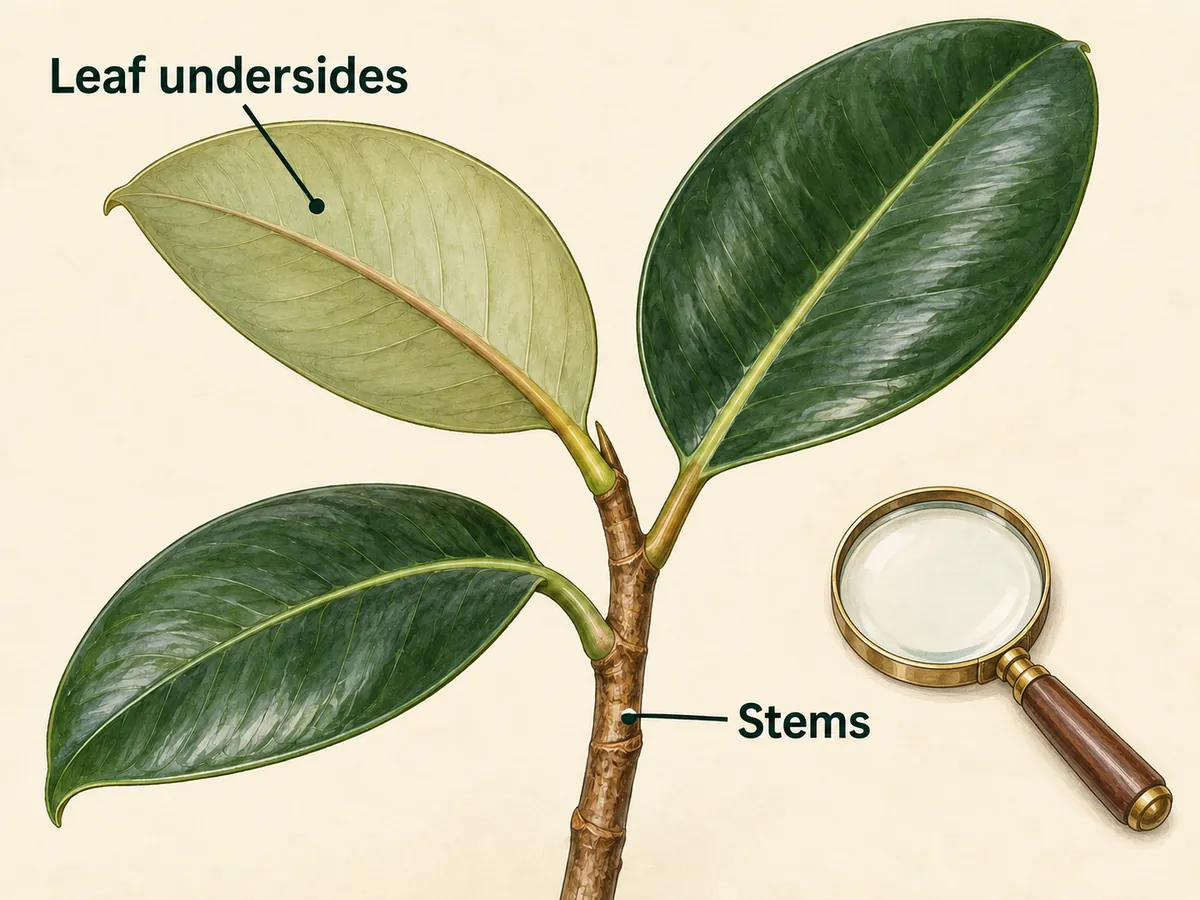
Clemson links persistent wetness and poor drainage with root rot; NC State lists mealybugs, scales, and spider mites among potential problems. Inspect leaves, their undersides, and stems when checking the plant. Do not begin a routine pesticide spray merely because a leaf has fallen.
Feed active growth, clean dusty leaves, and plan size control
Feed according to growth and the actual fertilizer label. A houseplant fertilizer can support active growth. Follow its dilution and application directions rather than combining schedules from different products. Clemson’s rubber-plant sheet and Maryland Extension’s indoor fertilizer guidance give different application schedules; neither makes one dose appropriate for every fertilizer and home.
As indoor light and growth decline in fall and winter, reassess both feeding and watering. A plant that has slowed needs less than one growing actively; do not keep adding fertilizer on a summer calendar. Reduced water demand means checking before watering, not withholding water for the whole winter. Conditions differ between a bright heated home and a dim, cool room.
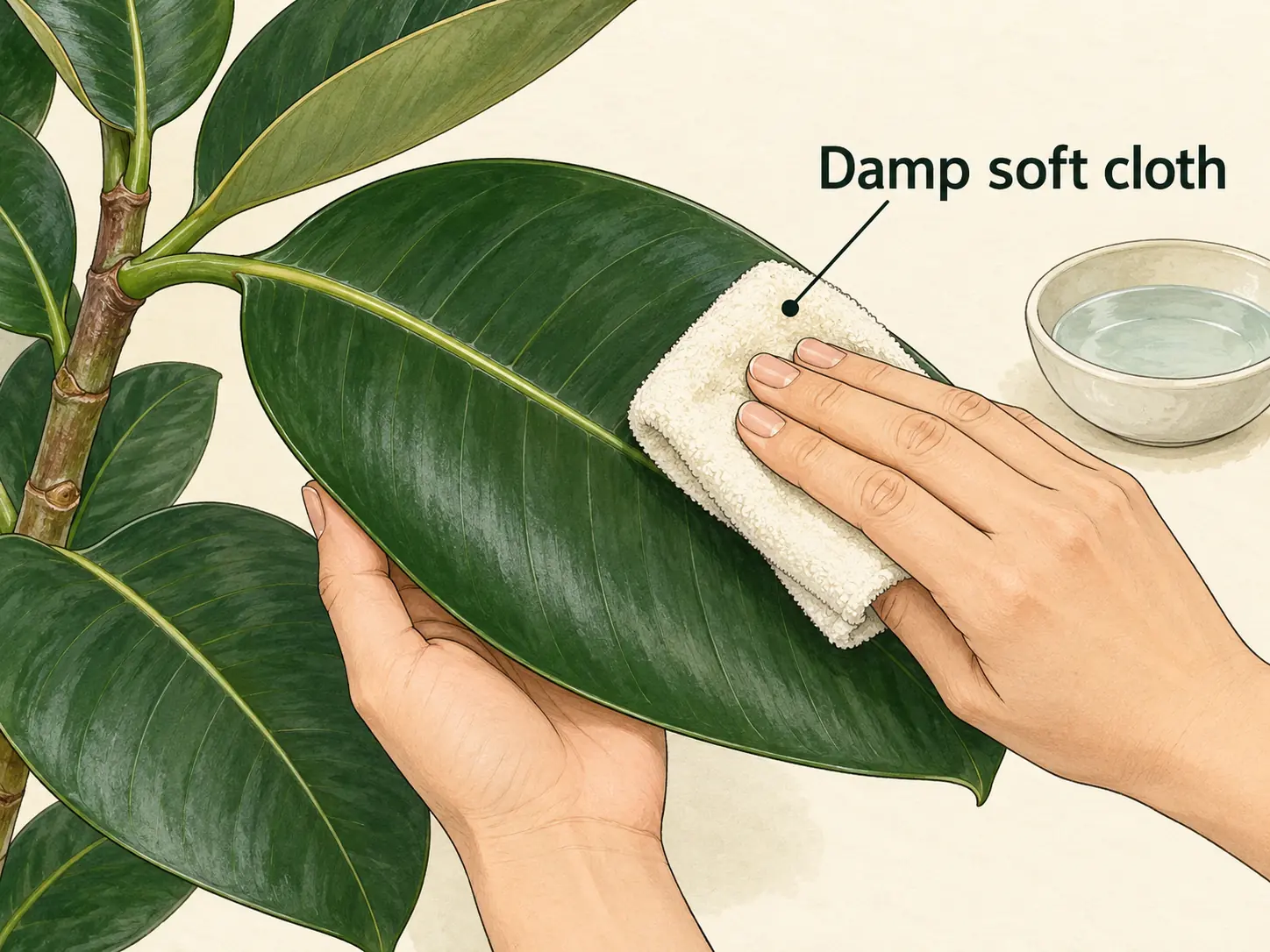
Wipe dust with a damp soft cloth or sponge. This is NC State’s straightforward leaf-cleaning advice. Clean leaves as needed; a leaf-shine spray is unnecessary for that task.
Choose the shape you have room for. A rubber plant can become a substantial indoor tree. Clemson describes heights of 6–10 feet (about 1.8–3 m) or more where space permits, not a promised size for every home. Pruning main branches can encourage a bushier habit; leaving them unpruned supports a taller, narrower form. Spring is a suitable time for size control when needed.
Plan for irritating sap before making cuts: avoid contact, and keep children and pets away from cut material. Stem or tip cuttings and air layering are recognized propagation methods, but they need their own procedure. This care guide does not promise that rooting a detached leaf will produce a new branching plant.
Keep sap and chewed plant material away from children and pets
Broken leaves and stems release milky sap that can irritate skin. Keep the plant and cuttings away from young children or pets likely to chew them. Use the botanical name when checking safety information: common names can refer to different plants.
Is the burgundy rubber plant toxic?
Yes. Burgundy is a form of Ficus elastica, which Pet Poison Helpline lists as toxic to pets. Its irritating sap can cause mouth irritation and gastrointestinal upset, including drooling, retching, and vomiting after ingestion. After suspected chewing or ingestion, contact a veterinarian or Pet Poison Helpline promptly; do not wait for symptoms.
Pet Poison Helpline’s exact Ficus elastica entry gives case-specific exposure advice. Its US number is 855-764-7661; a fee may apply. Seek professional guidance rather than trying a home treatment. The outcome depends on the individual exposure, so a general description is not a guarantee of mild effects.
Do not confuse this species with the ASPCA’s American rubber plant entry, Peperomia obtusifolia. That entry’s classification does not establish the safety of Ficus elastica.
Keep a care record before making the next change
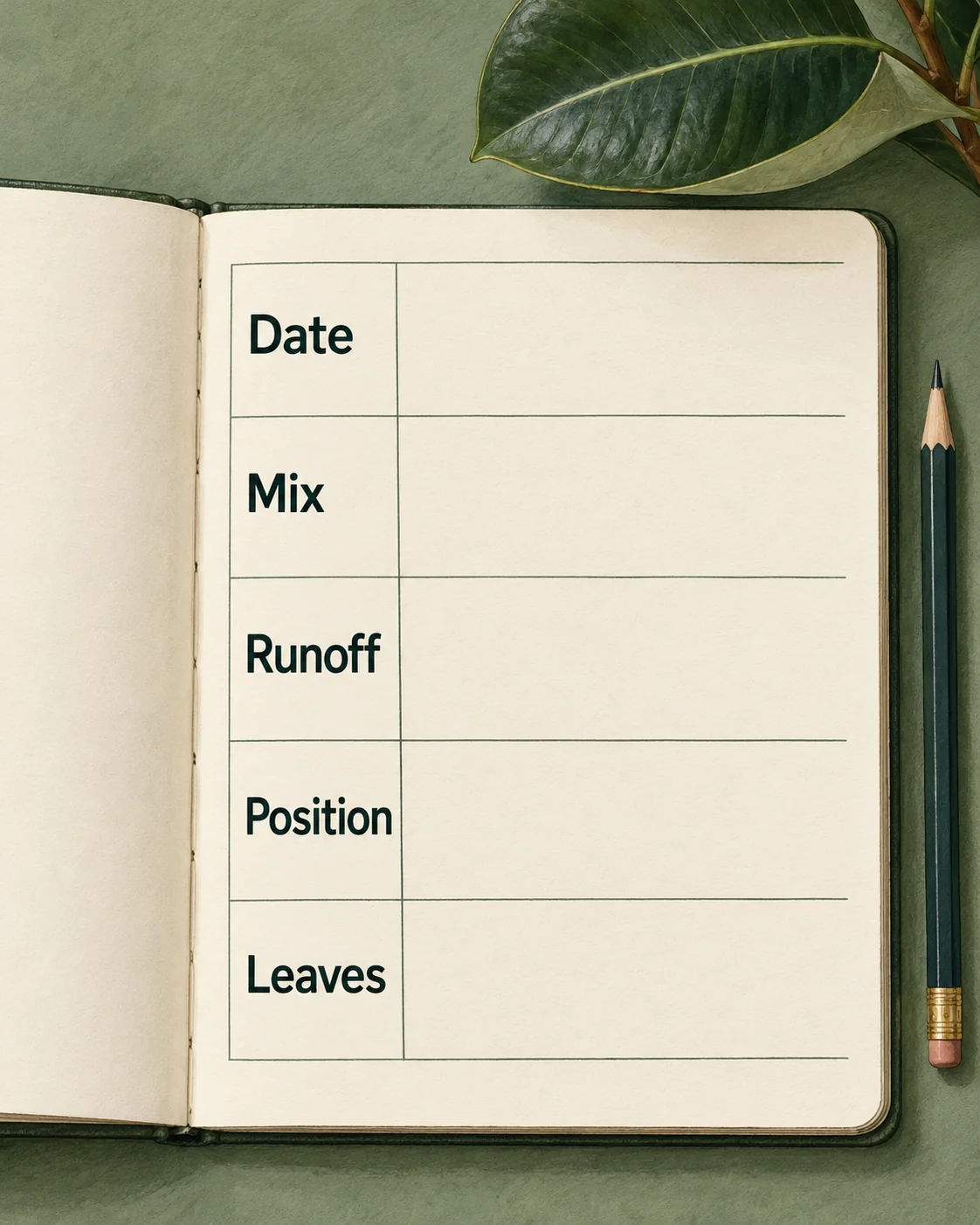
A short record helps you compare what happened instead of changing water, light, pot, and fertilizer at once. Use this as an observation method, not a recovery timetable:
- Record the date, the mix’s moisture before watering, and whether you emptied runoff.
- Note any change in position, drafts, heating, or cooling.
- Record which leaves are dropping and whether new growth is appearing.
- Compare those observations at the next care check before making another major change.
Look for whether the conditions you addressed have changed and whether further leaf loss continues. There is no reliable universal recovery deadline. If decline continues or you cannot resolve a root, soil, or pest concern, take the record and clear photographs to your local Extension office for help.
Rubber plant care FAQ
Are rubber plants indoor or outdoor?
Rubber plants can be indoor houseplants or outdoor landscape trees in suitable warm climates. This guide concerns indoor Ficus elastica: bright indirect light, drainage, and protection from cold drafts. Avoid temperatures below 55°F (about 13°C). Outdoor planting needs local climate and space guidance; indoor window advice is not a landscape planting plan.
About the guidance: The recommendations here synthesize the linked US Extension sources and the species-specific veterinary entry consulted on October 27, 2026. The care record is an editorial observation tool. This is not a report of hands-on testing or a veterinary assessment of an individual animal.