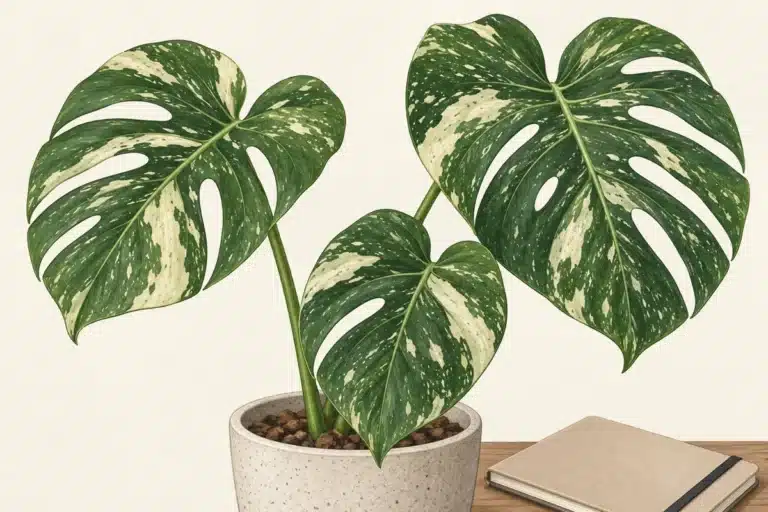
It’s a sight that sends a chill down the spine of any plant parent: a beautiful, vibrant green leaf on your beloved Monstera has started to turn yellow. Your first instinct might be to panic, but take a deep breath. A yellowing leaf isn’t a death sentence; it’s a signal. Your Monstera is trying to communicate with you, and it’s your job to learn its language. Yellow leaves are simply data, and with the right information, you can diagnose the issue and get your plant back to thriving.
Transparency note: Some links in this article are affiliate links. As an Amazon Associate I earn from qualifying purchases at no extra cost to you. I research current product options and select suggestions based on relevance, availability, customer signals, and fit with the care problem discussed here.
This comprehensive guide will walk you through every common cause of yellowing Monstera leaves, from the most likely culprit to the less common issues. We’ll help you become a plant detective, identify the root cause, and implement the right solution with confidence.
🔍 The #1 Cause of Yellow Leaves: An Issue with Watering
In nine out of ten cases, a yellowing Monstera leaf is pointing directly to a problem with moisture at the root level. Both giving too much water and giving too little can cause yellowing, but they do so in different ways. Your first step is to feel the soil to determine which path to go down.
For this part of the guide, a researched product option that fits the job is:
Selected because this section is specifically about soil moisture meter use. Check Amazon for current price and availability.
💧 Overwatering: The Most Common Culprit
More Monsteras suffer from too much love than from neglect. Plant parents often feel the urge to water frequently, but this is the fastest way to harm your plant. When the soil is constantly soggy, water fills all the air pockets, and the roots can no longer breathe. They begin to suffocate, shut down, and can no longer absorb the water and nutrients the plant needs. This leads to the dreaded root rot, and yellow leaves are the first major symptom.
Nutrient deficiency is a common cause of yellowing. A complete liquid feed often turns it around fast:
Complete liquid fertilizer with all 16 essential nutrients. The 7-9-5 ratio is dialled in for lush foliage plants.
The most reliable fix for overwatering is removing the guesswork entirely:
Insert it 2 inches deep before every watering. Tells you exactly what is happening at the root zone where rot actually starts.
Symptoms of Overwatering:
- The yellowing typically starts on the lower leaves first.
- The leaf may feel soft or limp, not dry or crispy.
- The soil feels damp or wet to the touch, even days after you last watered.
- You might see dark brown or black, mushy spots appearing on the stems near the soil line.
- In advanced cases, the soil may have a musty or rotten smell.
How to Fix Overwatering:
- Step 1: Stop Watering Immediately. Do not give your plant another drop of water until you have diagnosed the problem.
- Step 2: Increase Airflow. If the soil is just damp, not soaking, move the plant to a spot with better air circulation. You can also gently poke a few holes in the soil with a chopstick to help introduce air to the roots.
- Step 3: Perform “Root Surgery” (For Severe Cases). If you suspect root rot, you must act decisively. Gently slide the plant out of its pot and inspect the roots. Healthy roots are firm and white or light tan. Rotted roots will be dark brown or black, mushy, and may smell foul.
- Using clean, sharp scissors, trim away all of the mushy, rotten roots. Be thorough.
- Gently remove as much of the old, waterlogged soil as possible.
- Repot the plant in a pot with excellent drainage using fresh, chunky, well-draining soil. For an in-depth look at this process, the University of Minnesota Extension offers an excellent scientific guide to treating root rot.
- Water very lightly and give the plant plenty of bright, indirect light as it recovers.
💧 Underwatering: The Less Common Cause
While less frequent, forgetting to water your Monstera can also cause leaves to yellow as the plant sacrifices them to conserve moisture for new growth. The symptoms are distinctly different from overwatering.
Symptoms of Underwatering:
- The leaves will often look droopy and wilted before they turn yellow.
- The yellowing leaf will often have brown, crispy edges and feel dry to the touch.
- The soil will be bone dry, compacted, and may be pulling away from the sides of the pot.
How to Fix Underwatering:
The solution is simple: give your plant a thorough drink. If the soil is extremely compacted, top-watering may not be effective as the water will just run down the sides. This is a perfect time to try bottom watering.
⭐ Pro Tip: Bottom Watering. Place your Monstera’s pot in a sink or basin filled with a few inches of water. Let it sit for 30-45 minutes, allowing the soil to soak up moisture from the bottom up. This ensures the entire root ball is evenly hydrated without compacting the soil further. Once the top of the soil is moist, remove it from the water and let it fully drain.
☀️ Other Causes for Yellow Leaves
If you’re confident that watering isn’t the issue, it’s time to investigate other environmental factors. These are less common, but are important to rule out.
Lighting Issues
Light is your plant’s food, and the wrong amount can cause stress that leads to yellow leaves.
- Too Little Light: If your Monstera is in a dark corner, it can’t produce enough energy to support all of its leaves. To conserve resources, it will often sacrifice its oldest, lowest leaves, causing them to turn a pale, washed-out yellow before dropping. This is often accompanied by slow, leggy growth and is a key reason why a Monstera’s leaves might not be splitting.
- Too Much Direct Light: A Monstera’s leaves are not built to withstand the sun’s direct rays. If your plant is getting hit with harsh, direct sun, you’ll see bright yellow or even white “sunburn” patches appear on the leaves.
The Solution: Evaluate the plant’s location. Move it to a spot that aligns with its needs for bright, indirect light, as detailed in our Ultimate Monstera Deliciosa Care Guide.
Nutrient Deficiency
This is uncommon in plants that are repotted every couple of years, but an older plant in stale soil can run out of essential nutrients. A nitrogen deficiency is a common culprit, which typically presents as a general yellowing that starts with the oldest, lowest leaves and gradually moves up the plant.
The Solution: If it’s the growing season (spring or summer), begin feeding your Monstera with a balanced liquid fertilizer diluted to half-strength. If the plant hasn’t been repotted in over two years, providing it with fresh soil will be the most effective long-term solution.
Pests
An infestation of common houseplant pests like spider mites or thrips can cause yellowing. This type of yellowing usually appears as fine, yellow stippling or spotting on the leaf, rather than the entire leaf turning yellow at once. You may also see fine webbing (spider mites) or tiny black specks (thrips excrement).
The Solution: Inspect the undersides of the leaves closely. If you see pests, isolate your Monstera from your other plants immediately and treat it by wiping down the leaves with a damp cloth and applying neem oil or an insecticidal soap.
🍃 Is It Just an Old Leaf? The Natural Lifecycle
Finally, it’s important to consider that sometimes, a single yellow leaf is not a sign of a problem at all. As a Monstera grows and pushes out beautiful new leaves, it will occasionally retire its oldest, smallest leaf at the very bottom of the plant. The plant reabsorbs the nutrients from this old leaf to fuel new growth.
You’ll know it’s just part of the natural process if:
- It is only one leaf, and it’s the oldest one at the very bottom.
- The rest of the plant looks healthy, green, and vibrant.
- You can see new leaves actively unfurling at the top of the plant.
If this is the case, you don’t need to do anything. Simply let the leaf turn fully yellow, at which point you can easily snip it off or let it fall off on its own.
Recommended Monstera Essentials
Each product below was hand-picked after thorough research and testing.
The cheapest upgrade you can make to any potting mix. A handful per pot dramatically improves drainage and aeration.
Check Price → (paid link)
Extendable and bendable coco coir pole that encourages aerial roots to attach. Produces larger, more mature leaves on climbing plants.
Check Price → (paid link)
Slow-release granules that feed for 6 months. Mix into the top of the soil and forget about fertilizing for half a year.
Check Price → (paid link)
6L tank that runs 24–60 hours per fill. Quiet, cool-mist, and large enough to raise humidity in a whole room.
Check Price → (paid link)
Final Thoughts: Your Plant is Talking, You’re Learning to Listen
Seeing a yellow leaf on your Monstera can be alarming, but it’s an incredible learning opportunity. By systematically checking the soil, evaluating the light, and inspecting for pests, you can move from panic to confident action. Remember that every plant and every home environment is different. The key to success is observation.
For a complete overview of how to provide the best preventative care and keep your plant happy for years to come, refer back to our Ultimate Monstera Deliciosa Care Guide. Happy growing!