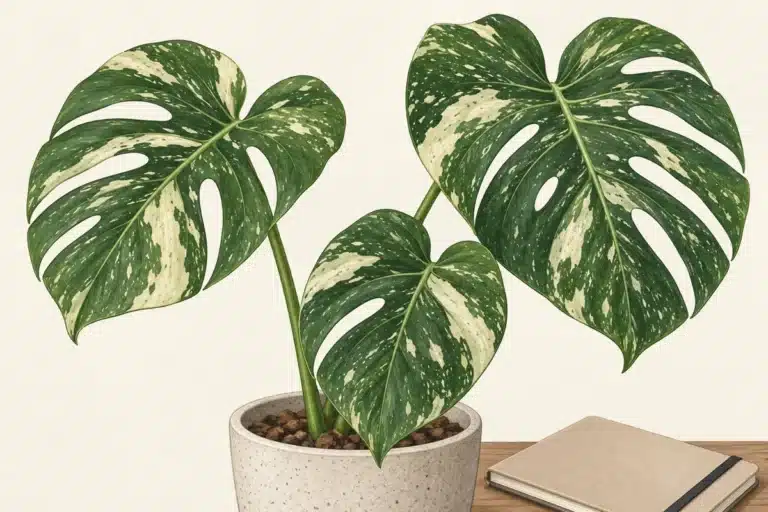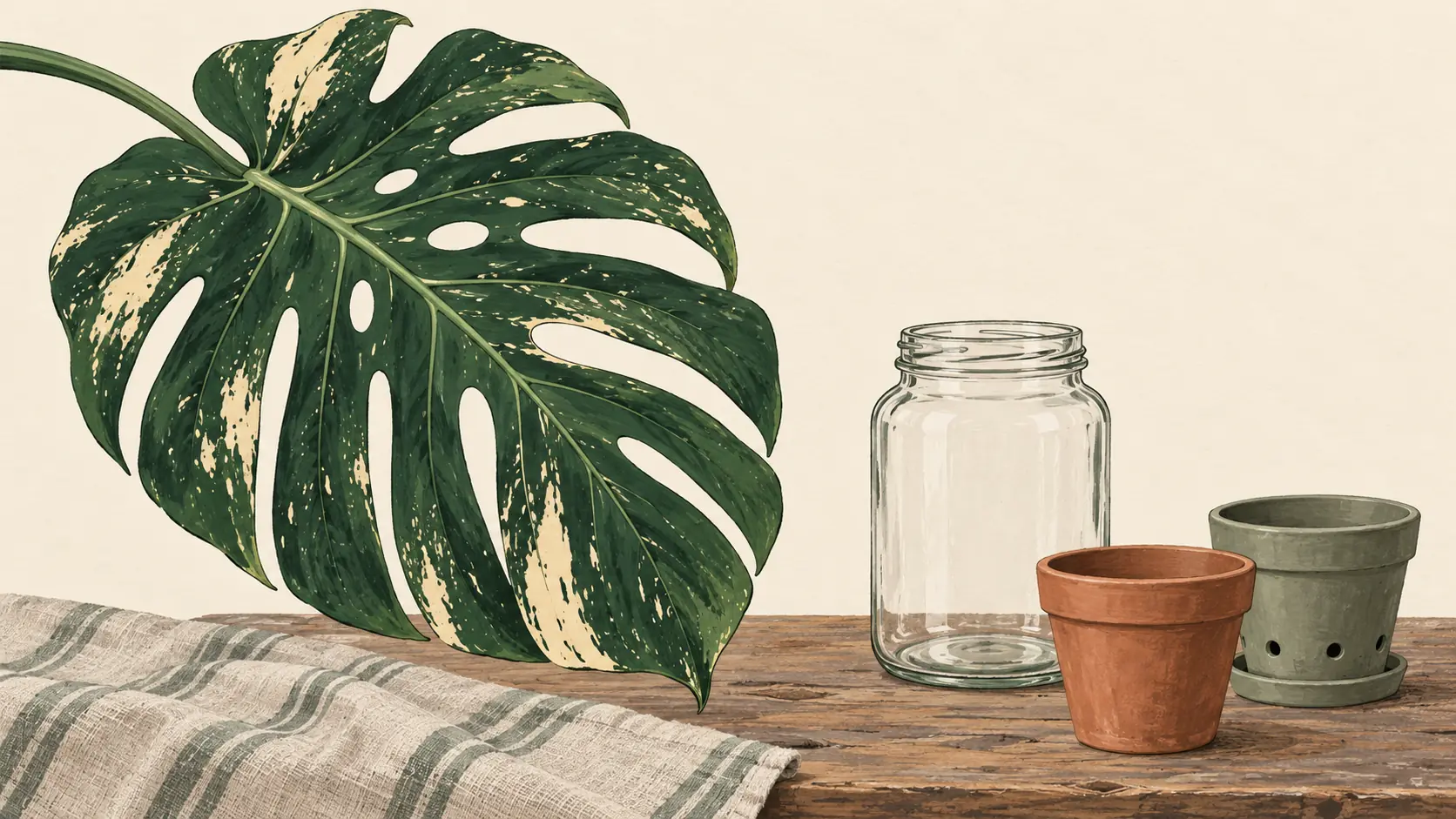
To propagate Thai Constellation Monstera, take a stem cutting with a node and a viable growth bud, then root it in water, coarse sphagnum moss, or an airy potting mix. Keep it warm in indirect light and monitor moisture and stem condition. Decide when to pot from healthy roots and growth, rather than a fixed number of weeks.
Thai Constellation is a cultivar of Monstera deliciosa. The guidance below draws on UConn’s species and cultivar profile, species-level Monstera advice, and general houseplant propagation guidance. Those sources support the techniques; they do not establish a Thai Constellation success rate, fastest method, or guaranteed rooting schedule.
What You Need Before You Start
Start with what you already own: a clean, sharp cutting tool, a healthy parent plant, and a clean container that can support the cutting. A reused food container can work; avoid anything that previously held chemicals. For moss or mix, the container must drain.
- Water method: a stable jar and plain water.
- Moss method: coarse sphagnum, moistened before use, and a container with drainage.
- Mix method: an open rooting mix, such as perlite mixed with peat, and a drainage pot.
- Optional cover: a clear bag supported away from the leaves, loosely closed to allow air exchange.
Illinois Extension recommends sterilizing cutting tools before starting and between every cut. Follow the sanitation product’s label and your tool’s care instructions for the method and contact time; the source does not supply a concentration or timed soak recipe.
A warm indoor spot is the first step; a heat mat is not a requirement. Rooting hormone is optional for detached Monstera stem cuttings. If you use one, follow that product’s label for the medium and application method, and put powder into a separate container rather than dipping the cutting into the original supply. Do not assume a powder intended for solid media belongs in the water jar.
Illinois Extension’s propagation guidance supports healthy material, clean tools, and moisture balanced with air. Iowa State’s stem-cutting guide describes early spring as an ideal time while noting that most houseplants can be propagated year-round. In a US home, the plant’s condition and available light matter more than a calendar date.
Step 1: Identify the Stem, Node, and Growth Bud
A leaf blade and its stalk, the petiole, are not the same as a stem cutting. The node is the place on the main stem where a leaf attaches; the axillary bud is a potential new shoot at that node. The internode is the stem between nodes. An aerial root alone is not a replacement for a node and bud.
Before cutting, compare your plant with the labeled propagation map in University of Minnesota Extension’s Monstera guide. If the stem, node, bud, material health, or original orientation is unclear, stop and ask a local Extension office or an experienced grower to inspect the actual plant. Check the rooted parent section too: do not cut while you are unsure what living growth tissue will remain. A decorative illustration or firm stem alone cannot confirm bud viability.
Choose the Material Before You Cut
Wisconsin Extension describes both Monstera stem tips and vine sections; UConn also lists cane cuttings for the species. NC State’s general cane-cutting guidance explains leafless stem sections with nodes and buds. Use those distinctions to assess your material, rather than removing healthy leaves to create a leafless cutting.
| Material | What the cutting retains | What your decision means |
|---|---|---|
| Active stem tip | The current growing top plus healthy stem tissue with a node and bud. | Taking it removes that top from the parent. Keep a healthy rooted base with living nodes and buds; future regrowth is not guaranteed. |
| Mid-stem segment | A section below the growing tip with a healthy node and bud; a new shoot must develop from a bud. | Separating it requires cuts above and below the section and also disconnects the top beyond it. Plan for that top and the rooted base before cutting. |
| Leafless stem segment | Actual healthy stem tissue with an identifiable node and bud, not a detached leaf stalk. | It needs both roots and a new shoot. Use only material whose anatomy and health you can assess; being leafless does not prove viability. |
| Keep the stem attached for now | The intended top remains connected to the rooted parent. | If you want roots before separation, consider the attached-rooting option below. If anatomy or parent survival is unclear, wait and seek help. |
Photograph or mark the rootward and tipward ends before separating a segment. Iowa State cautions against rooting stem segments upside down: keep the rootward end down for an upright cutting. For a leafless segment placed horizontally in solid rooting medium, NC State specifies a bud facing upward. If you cannot identify that orientation or bud, stop. These are species and general-houseplant principles, not Thai Constellation success comparisons.
- Choose healthy material. Identify a stem section with a node and an intact growth bud. Keep useful leaves on the cutting where possible; do not reduce it to a leaf and petiole.
- Prepare the destination first. Clean the container, moisten solid media, and arrange a stable support so the freshly cut stem can be placed promptly.
- Cut through the internode below the chosen node. Preserve the node and bud. Minnesota’s species-level guide suggests 1–2 inches (2.5–5 cm) below the node; that is not a reason to cut through another node or force a measurement onto a tightly spaced stem.
- Place the cutting in your chosen setup. Keep leaves above water or media and preserve the orientation described above. Support it without crushing the stem.
A clean cut and preserved growth tissue matter more than an exact cutting angle. The consulted guidance does not establish a mandatory Thai Constellation drying interval, so this workflow does not add a timed callusing step.
Want Roots Before Separating? Consider Air Layering
Iowa State’s air-layering guide explicitly lists Monstera deliciosa as suitable. This forms roots while the stem stays attached; it postpones separation but does not guarantee a safer or faster result for Thai Constellation.
- Read the linked procedure before wounding. Identify the intended top, a supported stem site, and what will remain on the rooted parent. If you cannot assess the anatomy or support the stem, seek Extension help first.
- Use the guide’s monocot partial-wound procedure. Monstera is a monocot. Do not apply the separate bark-ring removal instructions for woody dicots. Keep the stem connected and supported; a wound can weaken it.
- Follow the guide’s hormone, moss, and wrapping sequence. The procedure includes rooting hormone on the wound before moist sphagnum and plastic wrapping. Check that the actual product label covers the plant and this air-layering use, then follow its concentration and application instructions. Do not improvise a use or dose. Check the moss and restore moisture if it dries.
- Wait for a developed, visible root system before separation. Then follow the guide to cut below the layer, remove the wrapping and ties, and pot the rooted top. No cultivar-specific week deadline is established.
If a suitable stem naturally reaches an adjacent pot without forcing it, Iowa State also lists Monstera for simple layering. Follow that guide for keeping a node in the medium with leaves and the tip out, securing it, and separating only after adequate roots form.
The 3 Propagation Methods Compared
Water, moss, and an airy mix differ mainly in how you manage moisture and inspect roots. These are three setup options, not a ranking by speed or success. Moss and mix are both solid rooting media; neither removes the need for air and drainage.

| Method | Useful feature | Main check |
|---|---|---|
| Water | Roots are visible without lifting the cutting. | Water clarity and level; later adjustment to potting mix. |
| Coarse sphagnum | Retains moisture while allowing air when used loosely. | Moisture within the moss and unobstructed drainage. |
| Airy potting mix | Provides support in solid media. | Moisture and drainage; roots are harder to see. |
Water Propagation: Watch Roots Without Lifting
- Place the cutting in a clean, stable jar with the node and developing roots in water. Keep the leaf and its stalk above the water.
- Set it in a bright, warm spot out of direct sun. Top up before developing roots become exposed.
- Replace cloudy water and clean the jar. Iowa State’s general guidance also recommends changing water once or twice a week; check sooner if it becomes cloudy.
- Observe root condition through the glass. Use the readiness checks below before moving into mix.
Minnesota supports plain-water rooting for M. deliciosa. Iowa State’s stem-cutting guide cautions that water-grown cuttings can wilt or lose leaves after transfer to potting soil. Visible roots make this method convenient to monitor; they do not eliminate transplant stress.
Sphagnum Moss Propagation: Balance Moisture and Air
- Moisten coarse sphagnum and let excess water drain. Place it loosely in a clean drainage container.
- Position the cutting with the node in contact with the moist moss and the leaves above it. Support the cutting so it remains stable.
- If using a clear bag, keep it off the foliage and allow air exchange. Keep an enclosed cutting out of direct sun.
- Check moisture and drainage. Moisten drying moss, then drain; do not keep adding water to moss that is already wet.
Iowa State lists coarse sphagnum as a medium with high moisture retention and good aeration, while noting that it can be difficult to rewet after it dries completely. That explains its usefulness; it does not establish that Thai Constellation develops its strongest roots in moss.
Airy Mix Propagation: Use a Drainage Pot
- Moisten an airy rooting mix before planting. Dense potting soil alone may provide too little air or drainage; Iowa State lists combinations such as perlite with peat.
- Make a hole for the stem, insert the cutting with a node in the medium, and keep leaves above the surface.
- Water to settle the medium and let excess drain. Keep the pot warm, in indirect light.
- Check before adding more water. If the medium is already wet, inspect drainage rather than watering again.

Minnesota warns that excessively wet, cool media can cause decay. Rooting directly in a mix avoids a later water-to-mix change, but that is not evidence that it is the fastest method. For location choices, use our Thai Constellation light placement guide.
When Is the Cutting Ready to Pot?
Use the roots and growth, not a week deadline. Iowa State’s general houseplant guide suggests transplanting water cuttings when roots are about 1 inch (2.5 cm) long. Minnesota’s Monstera guide allows transplanting developed roots and describes healthy roots plus active growth as the signal for a longer-term pot. These are related checkpoints with different scopes, not competing Thai Constellation rules.
The inch measurement is a useful general cue to start assessing a water cutting. It is not a cultivar-tested minimum, and a longer root alone is not proof that a damaged stem is ready. Roots and a new shoot are separate milestones: a rooted cutting without a new leaf has not automatically failed.
| What you observe | Decision | Next step |
|---|---|---|
| Few or no roots; stem remains firm | Wait and maintain. | Keep the setup moist with appropriate air and drainage. Return a gently inspected solid-media cutting to its medium. |
| Developed, firm, pale roots; intact stem | Prepare to pot. | For water cuttings, assess the general 1-inch cue alongside root and stem condition. For solid media, assess actual developed roots rather than applying the water cue mechanically. |
| Healthy roots and active new growth | Plan longer-term growth. | Use a drainage pot that supports the cutting and contains moist potting mix. |
| Soft brown roots or a softening stem | Inspect a problem first. | Check excess moisture and poor drainage. Do not use a root-length target or more water to dismiss deterioration. |
For a necessary root inspection in solid media, Minnesota recommends lifting carefully with a small spatula or plant label. Avoid repeated pulling just to see progress. After potting, keep the mix moist with drainage and maintain bright indirect light while the cutting adjusts. Water-grown cuttings may show stress during that transition. Follow the full Thai Constellation care guide as growth becomes established.
A Reusable Propagation Check Record
Copy these rows into a notebook or phone note. Add the date and method at each check, then record what changed since the previous entry. This is a condition log, not a schedule predicting when roots or leaves must appear.

| Check | What to record | Next action |
|---|---|---|
| Date and setup | Date: ___; water / moss / mix: ___; last change: ___. | Compare with your previous note before changing another condition. |
| Water jar | Clear / cloudy: ___; roots covered: yes / no. | Replace cloudy water; top up if roots would be exposed. |
| Moss or mix | Drying / moist / wet: ___; drainage clear: yes / no. | Moisten if drying and let excess drain. If wet, check drainage before adding water. |
| Stem and visible roots | Stem firm / soft: ___; roots absent / firm and pale / soft and brown: ___. | Maintain firm, healthy material. Inspect deterioration and moisture; do not treat color alone as a pathogen diagnosis. |
| Shoot and light | New shoot or leaf: yes / no; direct sun reaches setup: yes / no. | Use the readiness table for growth. Move an enclosed setup out of direct sun. |
| Decision and follow-up | Today I will: ___; next check I will look for: ___. | Choose a response to the recorded condition, then compare that condition at the next check. |
Hypothetical example, not a growing trial: On day 21, a water cutting has clear water, a firm stem, and firm pale roots about 1 inch long, but no new leaf. Record those facts. It is reasonable to assess transfer using Iowa State’s general cue; the absent leaf does not make day 21 a failure. If you keep rooting it for now, maintain the setup and check for continued healthy roots or a new shoot. Do not add hormone or heat just because a calendar says a leaf should have appeared.
If instead the record shows soft brown roots and a softening stem, inspect drainage and excess moisture promptly. A rotting cutting may not survive. Where the node or bud is damaged or its viability is uncertain, seek advice on the actual material before making another cut. No household remedy can replace missing growth tissue.
Common Questions About Propagating Thai Constellation
Can I propagate Thai Constellation from a leaf?
No new Monstera vine develops from a leaf and petiole alone. A cutting needs stem tissue with a node and viable bud. Root formation and shoot formation are different: even if detached material produces roots, that does not establish that it can grow a new vine.
Is water better than soil for propagation?
Neither is universally better. Water makes roots easy to observe, but water-grown cuttings may struggle after moving into potting mix. Solid media require moisture and drainage checks, and roots are less visible. Choose the setup you can monitor consistently; the consulted sources provide no Thai Constellation comparative success rate.
What are common mistakes in Monstera propagation?
Cutting a leaf stalk instead of taking stem tissue, damaging the bud, and keeping solid media too wet are important avoidable problems. Check anatomy before cutting, keep leaves above the medium, and allow drainage. An enclosed cutting also needs air exchange and protection from direct sun.
Why has my cutting rooted but not grown a new leaf?
Roots and new leaves are separate stages, so roots without a leaf are not automatically a failure. Confirm that the stem contains a viable node and bud, then monitor firmness, moisture, and light. The consulted species and general-houseplant sources do not supply a guaranteed Thai Constellation leaf deadline.
Will the new plant have exactly the same variegation?
Do not expect an identical pattern on every new leaf. Stem cuttings are vegetative propagation, which Illinois Extension describes as producing genetic clones. That general principle does not prove that every Thai Constellation cell carries a particular mutation or that future leaves repeat the parent’s visible pattern.
Can I take multiple cuttings from one plant?
Yes, if each intended cutting has viable stem growth tissue, but there is no universal one- or two-cutting allowance in the consulted guidance. Assess the parent’s health and identify what living growth tissue will remain before cutting. If that is unclear, have the plant inspected before taking more material.
For leaf changes after establishment, see what to check first when Thai Constellation leaves develop brown spots. Propagation observations alone cannot identify the cause of every leaf symptom.
Sources and Scope
- University of Minnesota Extension: Monstera deliciosa — node and bud anatomy, species propagation, rooting media, root condition, and transplant decisions.
- Iowa State University Extension: How to Propagate Houseplants by Stem Tip Cuttings — general media, covers, water-to-mix transition, and the approximate 1-inch root cue.
- University of Illinois Extension: Houseplant Propagation — tool sterilization, clean setup, and vegetative propagation.
- UConn Home & Garden Education Center: Monstera deliciosa — species and cultivar identity; stem, layering, and cane propagation.
- University of Wisconsin Extension: Monstera deliciosa — species-level stem-tip, vine-section, and layering options.
- NC State Extension Gardener Handbook: Propagation — general leafless cane-cutting anatomy and orientation.
- Iowa State University Extension: Air Layering and Simple Layering — attached-rooting procedures and explicit Monstera species fit; parent regrowth remains conditional here.
The readiness table and observation record are editorial decision aids built from this guidance, not cultivar trials or guarantees. No personal experiment or product performance test is claimed.