Kalanchoe care starts with bright indoor light, soil that dries between waterings, and a pot that drains freely. This guide covers florist kalanchoe, Kalanchoe blossfeldiana. Remove faded flowers, then decide whether to try six weeks of 14-hour nights to encourage new buds; open flowers take longer. Keep kalanchoes away from dogs and cats.
- Everyday care: Bright light, free drainage, and thorough watering after soil dries, without waiting for wilt.
- After flowering: Remove spent stems; long, uninterrupted nights initiate new buds, with open flowers taking longer.
- Suspected pet ingestion: Contact your veterinarian or ASPCA Poison Control promptly, even without symptoms.
Which kalanchoe does this guide cover?
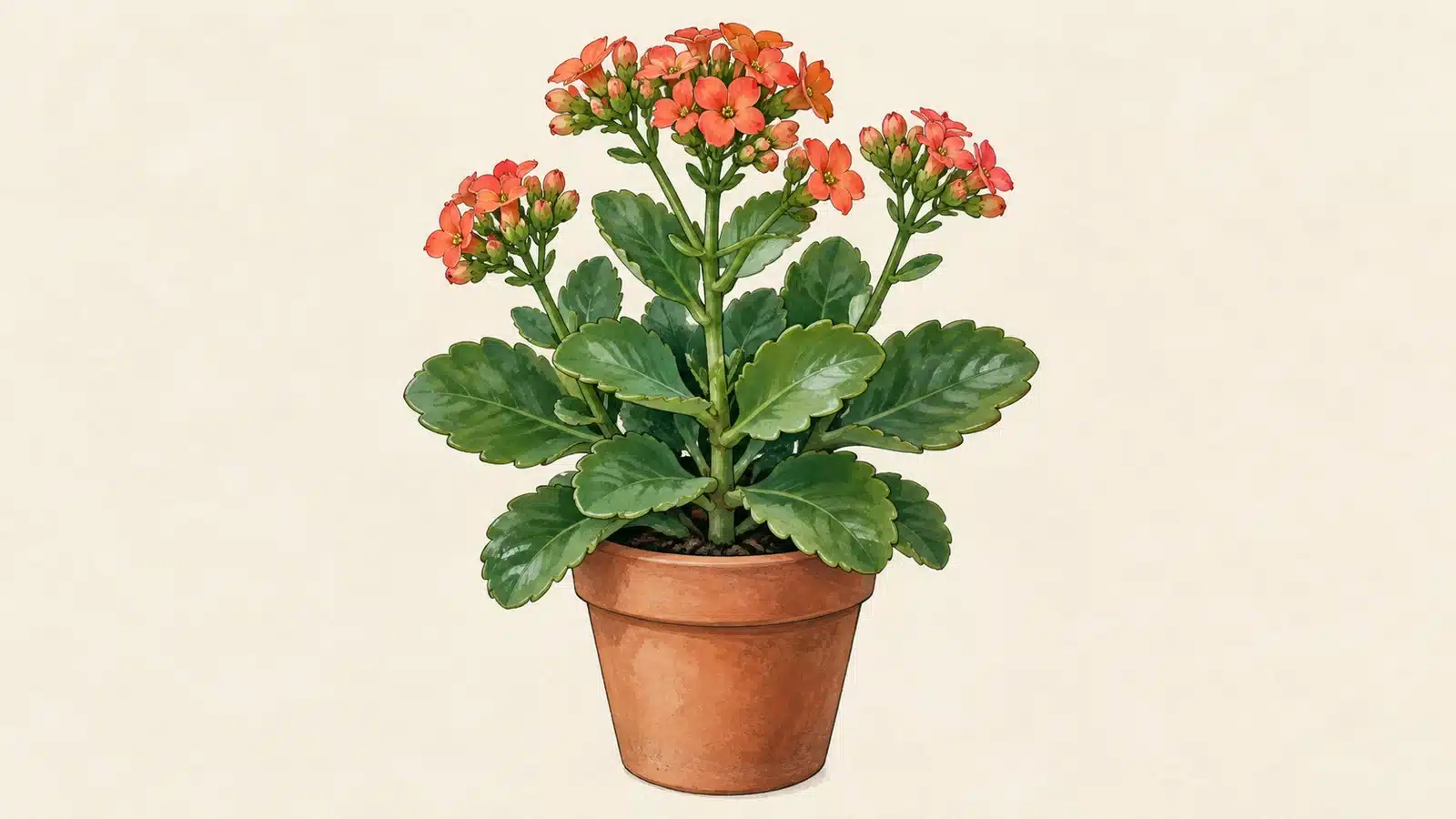
The compact gift plant with glossy, fleshy, scalloped leaves and upright flower clusters is commonly florist kalanchoe, Kalanchoe blossfeldiana. It comes in single- and double-flowered forms. NC State Extension’s species profile describes these traits; flower color alone does not establish a cultivar name.
Kalanchoe is a genus, not one plant. Check the botanical label before applying this flowering routine to a differently shaped kalanchoe. The care instructions below are species-focused; the ASPCA pet warning later in the guide has broader, genus-level scope.
Kalanchoe care indoors: where should it go?
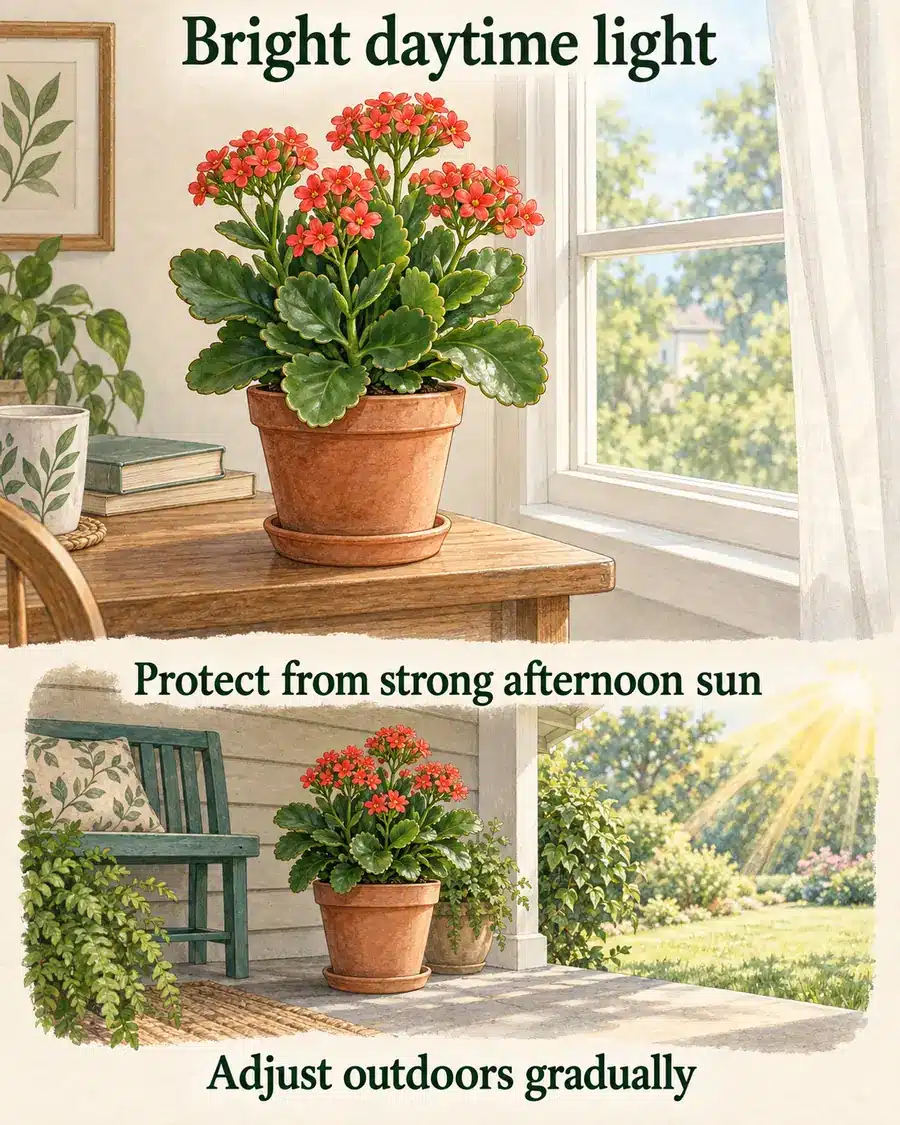
Start by moving the plant to an existing bright window. Clemson Cooperative Extension links low light with spindly growth. NC State Extension recommends bright indirect light or partial shade and warns that prolonged direct sun can scorch leaves.
Give a plant moved outdoors time to adjust, and protect it from strong afternoon sun. Bright daytime light and an unlit night serve different jobs: light supports growth, while long nights help initiate flower buds. Do not leave it in darkness all day to force blooms.
When should you water a kalanchoe?
Let the soil dry between waterings, then water thoroughly. Do not wait for the plant to wilt. That is the moisture-based approach supported by Iowa State University Extension and NC State Extension, rather than a fixed weekly schedule.
- Check the soil first. If it is still damp, wait. If the leaves wilt while the mix remains wet, use the troubleshooting table before watering.
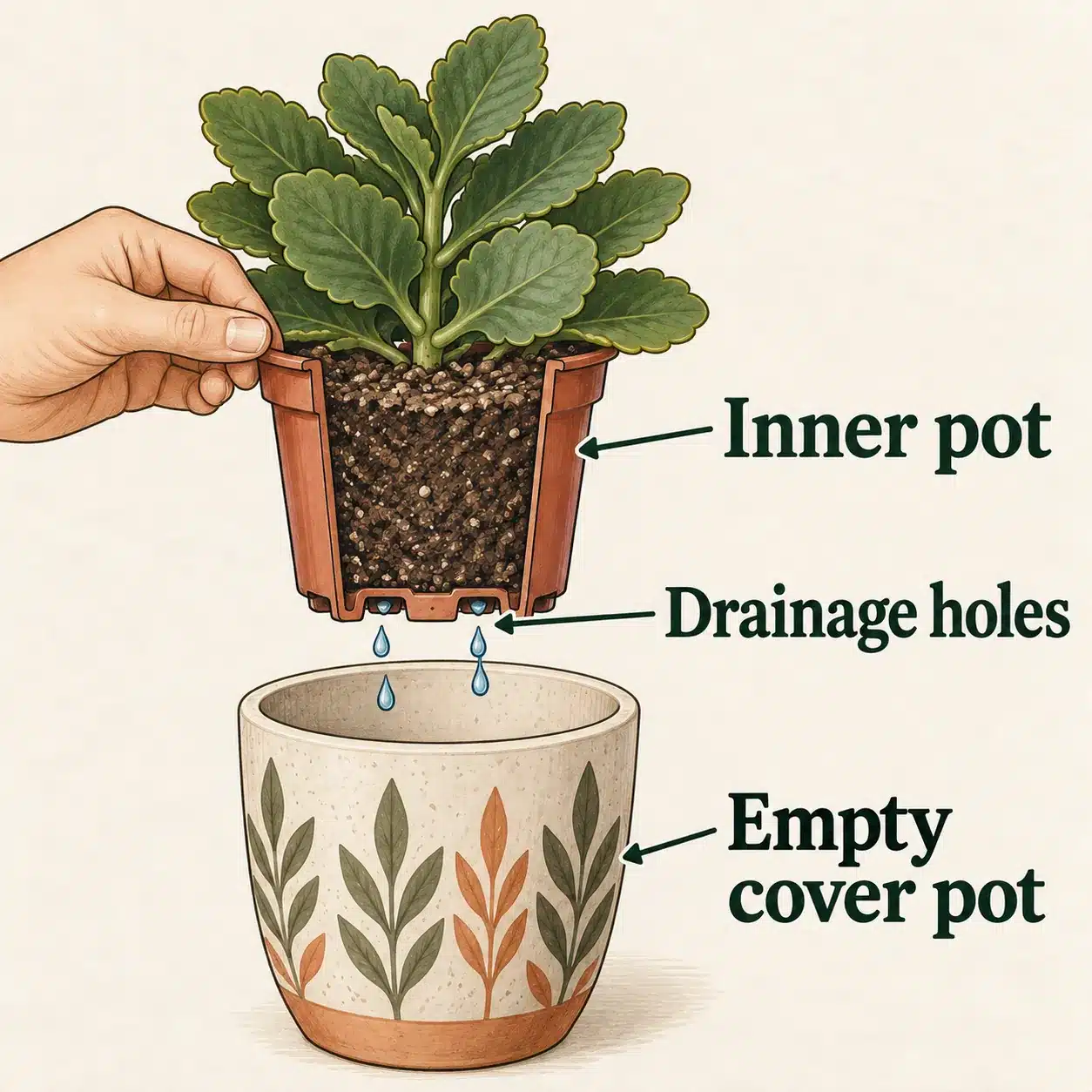
- Lift out the nursery pot. Remove the foil or plastic gift wrap and take the pot out of its decorative cover.
- Water deeply when the soil has dried. Let excess water leave through the drainage holes.
- Empty the outer pot or saucer. Return the plant only after it has drained; its inner pot must not stand in collected water.
This free drainage check matters more than changing the pot’s appearance. Illinois Extension explains double potting and gift wraps: the outer container catches water, but that water still needs emptying. Gravel beneath the soil inside the growing pot does not improve drainage.
What is your kalanchoe telling you?
| What you observe | What to check | First action |
|---|---|---|
| Dry soil | Whether the pot has open drainage holes | Water thoroughly, let it drain, and empty collected water. |
| Wilting with wet soil | Roots and lower stems for dark, soft or mushy tissue | Inspect for suspected rot; adding more water can worsen a drainage problem. |
| Long, spindly growth | Whether the plant receives bright daytime light | Move to a brighter position; adjust gradually when moving outdoors. |
| Scorched leaves after stronger sun | A recent exposure change and prolonged direct sun | Provide afternoon shade and gradual acclimation. |
| Healthy foliage but no new buds | Night lighting and the duration of the long-night routine | Use the consistent rebloom procedure below. |
Wet-soil wilting is a warning, not a diagnosis of a particular pathogen. University of Maryland Extension describes soft, dark roots and lower stems among rot symptoms. Its indoor-plant diagnostic guide advises root inspection and removal of diseased portions where healthy sections remain.

Separate an affected plant from others. If salvageable healthy tissue remains, use a clean pot and fresh, suitable mix after removing diseased tissue. Severe rot may require discarding the plant; propagation should use healthy tissue only. Recheck the roots and drainage if wilting continues instead of repeating extra watering.
Aphids, mealybugs and spider mites can also affect florist kalanchoe, according to NC State Extension. Inspect the plant before assuming every declining leaf is a watering problem. Provide air circulation, which the same source recommends to help prevent powdery mildew.
What soil, pot and fertilizer does it need?
Use an airy, well-draining cactus or succulent potting mix and a pot with drainage holes. A healthy plant in suitable mix does not need an immediate purchase. When repotting, use clean tools and remove dead roots; Maryland Extension’s repotting guidance explains porous media and warns against filling the pot bottom with gravel.
Clemson recommends moving a plant into a slightly larger pot after flowering and feeding actively growing plants monthly with houseplant fertilizer. Follow the fertilizer label; fertilizer cannot correct a waterlogged root system. For a related succulent’s separate routine, see our jade plant care guide.
Should you remove spent flowers?
Yes. Remove faded flowers and old flower stems after the display finishes, as described by NC State and Clemson. Use clean cutting tools. Deadheading tidies the plant, but it does not replace the long-night conditions needed for another bloom cycle.
Can you keep a healthy cutting?
For stem propagation, Clemson recommends a healthy, nonflowering shoot tip 2–3 inches (5–8 cm) long with two leaf pairs. Remove the lower leaves, let the cut end callus for several days, and insert it into clean rooting medium. Keep it in bright indirect light. Do not use soft, rotting tissue as a propagation cutting.
How do you get a kalanchoe to bloom again?
A second display is an option, not a guaranteed result. Follow one routine: Iowa State’s bud-induction protocol uses 14 hours of uninterrupted darkness each night for six weeks, with bright natural light during the day.
- Choose a genuinely dark night location. Use an existing room where lights stay off. Keep artificial light off for the entire 14-hour period.
- Restore daytime light. For example, a hypothetical 6 p.m.–8 a.m. dark period supplies 14 hours; return the plant to bright light at 8 a.m.
- Keep induction temperatures consistent. Aim for 65–70°F (18–21°C) by day and 60–65°F (16–18°C) at night during the six-week routine.
- Watch for visible buds. Once buds stand visibly above the foliage, Clemson says day length is no longer crucial; stop the special darkness treatment.
Six weeks means bud initiation, not six weeks to open flowers. Clemson describes roughly 12 weeks from the start of long nights to flowering. Treat that as an approximate planning window, not a holiday deadline. Keep ordinary watering and drainage care going throughout.

Our Christmas cactus care guide covers another flowering houseplant with its own routine. Use the Kalanchoe temperatures and timings here for florist kalanchoe rather than exchanging the two plants’ instructions.
Can you grow florist kalanchoe outdoors?
It can spend the frost-free season outdoors, with gradual acclimation and protection from strong afternoon sun. NC State lists USDA zones 10–12 for this species, but also states that it is frost-intolerant. Bring a container indoors before temperatures fall to 45°F (7°C); that is a protection threshold, not its preferred indoor temperature.
For most US households, keeping it in a movable pot makes the outdoor-to-indoor choice easier. Check the local forecast rather than relying on one fall date for the whole country.
What if a dog or cat chews kalanchoe?
The ASPCA lists Kalanchoe spp. as toxic to dogs and cats. That is a genus-level warning. Reported signs include vomiting, diarrhea and, rarely, an abnormal heart rhythm. Pet Poison Helpline also warns of gastrointestinal and potentially more serious cardiac effects.
If ingestion is suspected, contact your veterinarian or ASPCA Poison Control at 888-426-4435 as soon as possible, even if your pet has no symptoms. An ASPCA consultation fee may apply. Prevent further access while you seek professional advice; treatment decisions belong to the veterinarian or poison specialist.
Keep the plant and discarded flowers or cuttings out of reach. Our guide to plants toxic to cats and dogs provides further reading; it does not replace advice for a current exposure.
Kalanchoe care questions
How do you keep a kalanchoe blooming?
Support the current display with bright light, good drainage and watering after the soil dries, then remove faded flowers. For another cycle, florist kalanchoe needs long nights to initiate buds: use 14 hours of uninterrupted darkness nightly for six weeks. This starts bud formation; it does not promise open flowers in six weeks.
How do you take care of a kalanchoe indoors?
Place florist kalanchoe in bright indoor light and let the soil dry between thorough waterings without waiting for wilt. Remove the gift wrap during watering, drain the inner pot, and empty the cover pot. If it wilts while the soil is wet, inspect its roots before giving it more water.
Should you cut dead flowers off kalanchoe?
Yes, remove spent flowers and old flowering stems after the display finishes, using clean tools. That leaves you ready to maintain the plant or attempt another bloom cycle. Deadheading alone does not supply the long nights required for bud formation; use the separate darkness routine if you want to try reblooming.
Is a kalanchoe an indoor or outdoor plant?
Florist kalanchoe works as an indoor container plant and can go outside during frost-free weather after gradual acclimation. NC State lists this species for USDA zones 10–12 but says it cannot tolerate frost. Bring it indoors before temperatures drop to 45°F (7°C), and protect it from strong afternoon sun.
How often should you water a kalanchoe?
Water when the soil has dried rather than on a fixed weekly schedule; do not deliberately wait for wilting. Water thoroughly and let the pot drain freely, then empty the saucer or cover pot. A plant wilting in wet soil needs root inspection and a drainage check before another watering.
What should I do if my pet eats kalanchoe?
Contact your veterinarian or ASPCA Poison Control at 888-426-4435 promptly if ingestion is suspected, even without symptoms; a consultation fee may apply. The ASPCA lists Kalanchoe spp. as toxic to dogs and cats. Keep your pet from further access while a professional advises you on the exposure.
Sources
- Iowa State University Extension: Kalanchoe care and bud induction
- Clemson Cooperative Extension: florist Kalanchoe culture, reblooming and cuttings
- NC State Extension: Kalanchoe blossfeldiana
- Illinois Extension: container drainage and decorative covers
- University of Maryland Extension: root rots of indoor plants
- University of Maryland Extension: diagnosing indoor-plant problems
- University of Maryland Extension: potting and repotting
- ASPCA: Kalanchoe toxicity and poison contact
- Pet Poison Helpline: Kalanchoe