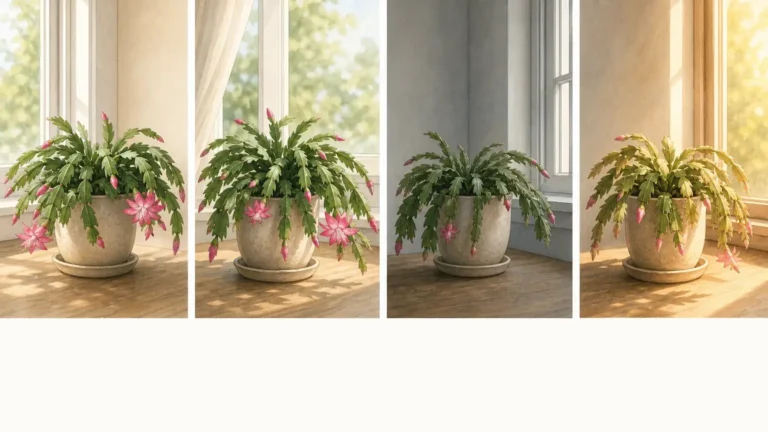
A Christmas cactus that will not bloom is usually missing the right fall signal, not a miracle fertilizer.
If your Christmas cactus is not blooming, first separate three problems: no buds formed, buds formed and dropped, or the plant is blooming at the wrong season. No buds usually points to light, darkness, temperature, or maturity. Bud drop usually points to sudden changes after buds formed.
Fast Bloom Diagnosis
- No buds: check fall darkness, cool nights, and daytime light.
- Buds dropped: check movement, drafts, dry swings, wet roots, or heat.
- Wrong season: confirm whether it is actually Thanksgiving cactus.
- Do not start with fertilizer: fix conditions first.
Affiliate disclosure: This article contains paid links. As an Amazon Associate, we may earn from qualifying purchases at no extra cost to you.
Source note
Bloom guidance is based on University of Minnesota Extension, Iowa State Extension, and Michigan State Extension. Product suggestions are included only where they solve a specific setup problem and are not proof of hands-on testing.
No Buds vs Bud Drop: Diagnose the Right Problem
| Symptom | Most likely issue | First fix |
|---|---|---|
| No buds at all | The plant did not receive a strong enough fall bloom cue | Improve dark nights, cool room conditions, and daytime light |
| Buds formed, then fell | Sudden change after bud set | Stabilize watering, location, temperature, and drafts |
| Blooms too early | It may be Thanksgiving cactus or a hybrid | Check stem segment shape and bloom timing |
Long Nights and Short Days Trigger Buds
Holiday cacti respond to seasonal cues. In fall, long uninterrupted nights help the plant form buds. A plant can sit in a bright room during the day and still fail to bud if lamps or room lights interrupt darkness at night.
The simplest home fix is to put the plant somewhere bright by day but genuinely dark at night. Do not cover a plant if the cover traps heat, bends stems, or makes care harder; a naturally dark room is easier.
The dark period must be uninterrupted
A few minutes of bright room light at the wrong time can matter more than people expect. If the plant sits in a living room, kitchen, office, or hallway where lights stay on late, move it to a room that becomes dark naturally in the evening.
Cooler Fall Temperatures Help
Cooler fall nights support bud formation. A constantly warm room can keep the plant growing without pushing it into bloom mode. Avoid cold drafts, but do not place the plant next to a heater when trying to set buds.
If your home is warm all fall, use the coolest bright room that stays above cold-damage range. A spare room, bright bedroom, or cool east-facing room can work better than a warm kitchen or a shelf above a radiator.
Artificial Light at Night Can Interrupt Blooming
Artificial light is one of the most overlooked reasons Christmas cactus fails to bloom indoors. Streetlights, bright lamps, and grow lights that run into the evening can all weaken the long-night signal.
Use this only if room lights or a grow light make the dark period inconsistent.
A simple timer can make the fall dark period more consistent, but it will not fix heat, root, or watering problems.
Daytime Light Still Matters
Dark nights do not replace daytime light. A Christmas cactus in a dim corner may survive, but it often grows weaker and has less energy to bloom. During the day, keep it in bright indirect light. During the night, keep it dark.
| Condition | What it does | Reader action |
|---|---|---|
| Bright daytime light | Supports strong growth and energy for buds | Use a bright indirect window, not a dark shelf |
| Long dark nights | Signals fall bloom timing | Keep lamps and screens away at night |
| Cooler nights | Supports bud formation | Avoid hot rooms and heaters during fall |
| Stable care after buds | Helps buds stay attached | Do not move, repot, or swing watering suddenly |
Watering During Bud Set
During bud formation, the potting mix should not swing from soggy to bone dry. Keep it lightly and evenly moist, then let excess water drain. Drying hard during bud set can contribute to bud drop, but wet roots can also make the plant too stressed to hold buds.
Use the pot itself as the guide. A small plant in bright light may need water sooner than a large plant in a cool room. If the pot feels heavy and the mix is still damp, do not add water just because the plant has buds.
Fertilizer Is Not the First Fix
Fertilizer can support spring and summer growth, but it is not the main bloom trigger. If the plant has no buds, fix light, darkness, temperature, and plant health first. If buds are dropping, fix sudden changes before feeding.
Do not fertilize a stressed plant first
If stems are limp, soil is wet, buds are falling, or roots smell sour, fertilizer can make troubleshooting harder. Stabilize care first.
What If It Is the Wrong Holiday Cactus?
Sometimes the plant is not failing. It may simply be a Thanksgiving cactus blooming on its normal schedule. If your “Christmas cactus” flowers in November and has pointed stem edges, compare it with the Christmas cactus vs Thanksgiving cactus guide before changing care.
After Pruning, Repotting, or Moving
A plant that was heavily pruned, recently repotted, moved across the room, or brought home from a store may skip a bloom cycle. That is not always a care failure. Focus on rebuilding steady growth, then use the fall bloom cues next season.
Bloom Calendar Checklist

- Late summer: grow a healthy plant in bright indirect light.
- Early fall: start protecting long dark nights.
- Fall: keep nights cooler if your home allows it.
- Bud set: avoid moving, rotating, repotting, or letting the mix dry hard.
- Bloom: keep care steady until flowers finish.
More Christmas Cactus Guides
Daylight and darkness
If your plant gets room light at night, compare its setup with the Christmas cactus light requirements guide.
Fertilizer is not the first bloom fix
If buds are missing, confirm dark nights and light first; this Christmas cactus fertilizer guide explains when feeding helps and when it does not.
After buds form
If the plant is blooming but the shade looks different than expected, see the Christmas cactus flower colors guide.
FAQ
Why is my Christmas cactus not blooming?
The usual reasons are not enough long dark nights, a room that is too warm, artificial light at night, poor daytime light, drought swings during bud set, or a plant that is not mature or healthy enough yet.
How many hours of darkness does a Christmas cactus need?
Many extension sources describe long uninterrupted nights as the key fall cue. The exact routine varies by home, but the important part is consistent darkness at night without lamps interrupting the signal.
Can artificial light stop a Christmas cactus from blooming?
Yes. Room lights, lamps, and nearby screens can interrupt the dark period that helps trigger buds in fall.
Why did my Christmas cactus make buds and then drop them?
Bud drop is usually a sudden-change problem: moving the plant, dry soil swings, wet roots, drafts, heat, or a big light change after buds form.
Should I fertilize a Christmas cactus to make it bloom?
Do not make fertilizer the first fix. Blooming is mostly about light, dark period, temperature, plant health, and steady care. Fertilizer is better used lightly during active growth.
What month should Christmas cactus bloom?
Christmas cactus usually blooms in late fall or winter, but many retail plants are Thanksgiving cactus hybrids and may naturally bloom earlier.
For a focused rescue flow, use the limp or stressed Christmas cactus guide.
Sources