Transparency note: Some links in this article are affiliate links. As an Amazon Associate I earn from qualifying purchases at no extra cost to you. I research current product options and select suggestions based on relevance, availability, customer signals, and fit with the care problem discussed here.
Looking to buy a healthy live plant online?

1-YEAR WARRANTY
Get a nursery-quality, well-rooted live String Of Hearts shipped directly to your door. Backed by a best-in-class plant warranty so you can shop with confidence.
String of Hearts Propagation: 3 Easy Methods That Work
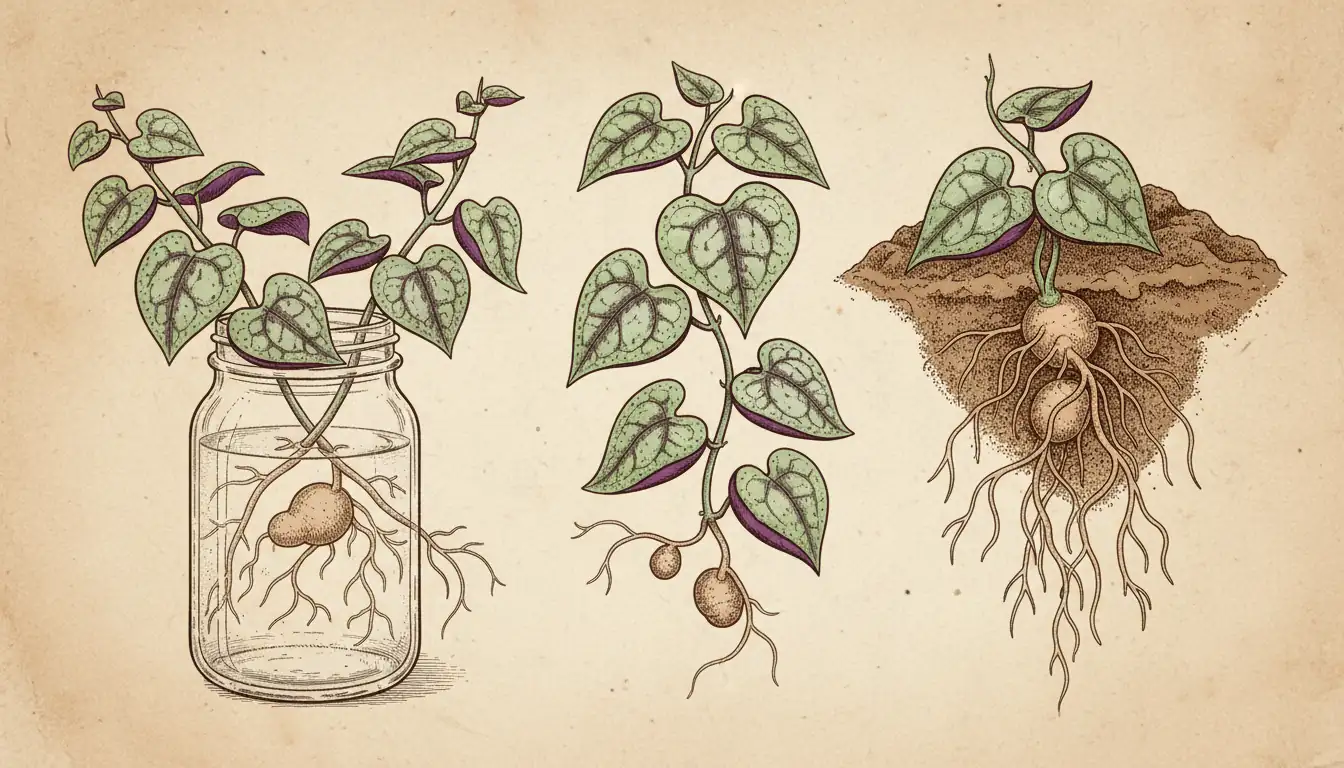
String of hearts propagation is one of the most fascinating propagation experiences you’ll have because this plant offers a unique method that almost no other houseplant can match: tuber propagation. We’ve propagated dozens of these charming plants (Ceropegia woodii), and there’s something genuinely exciting about watching tiny aerial tubers – those little bead-like bumps along the vines – transform into entirely new plants within just a few weeks.
Beyond the unique tuber method, string of hearts also propagates beautifully from traditional stem cuttings in water or soil. The success rate is high with all methods, though rooting takes a bit longer than super-fast rooters like wandering jew. Expect to see roots in 2-3 weeks rather than 5-7 days. The slower pace just makes the success even more rewarding when it arrives.
A quick dip in rooting hormone before placing your cutting makes a significant difference to success rate:
Dip cut stems before placing in water or soil. Optional for stem cuttings; pothos usually roots without it.
For taking cuttings, you need a sharp blade that does not crush the stem. These are my go-to:
Sharp, spring-loaded, and precise. Makes clean cuts that heal fast — essential for propagating without crushing the stem.
In this comprehensive guide, we’ll walk you through three proven propagation methods: water propagation (most visual and beginner-friendly), soil propagation (stronger root systems), and the fascinating tuber method (unique to string of hearts). You’ll learn the exact steps for each, timing, troubleshooting tips, and how to ensure your new plants maintain those gorgeous heart-shaped leaves and silver marbling.
For general plant care after propagation, see our complete string of hearts care guide.
When to Propagate String of Hearts
Timing your propagation ensures the fastest rooting and healthiest new plants.
Best Season for Propagation
Spring and early summer are ideal for string of hearts propagation. During these months, the plant is in active growth mode with vigorous cell division, which means cuttings and tubers root faster and establish more quickly.
For this part of the guide, a researched product option that fits the job is:
Selected because this section is specifically about rooting hormone use. Check Amazon for current price and availability.
You can propagate year-round indoors with reasonable success, but fall and winter propagation takes longer – expect 3-4 weeks for rooting instead of 2-3 weeks.
Signs Your Plant is Ready
The best time to take cuttings or harvest tubers is when your plant is producing active new growth with vibrant green-and-silver leaves. Mature plants with aerial tubers along the vines are perfect for tuber propagation.
Method 1: Water Propagation (Most Visual)
Water propagation lets you watch roots develop, making it perfect for beginners and satisfying for experienced gardeners.
What You’ll Need
- Clean, sharp scissors
- Clear glass jar or vase
- Room-temperature water (filtered or dechlorinated tap water)
- Healthy string of hearts for cuttings
Step-by-Step Water Propagation
Step 1: Take Your Cuttings
Select healthy vines with good color and leaf size. Cut 4-6 inch (10-15 cm) sections that include at least 4-5 pairs of leaves (nodes). Cut just below a node using clean, sharp scissors at a 45-degree angle.
Step 2: Prepare the Cuttings
Remove the bottom 2-3 pairs of leaves, leaving bare stem with exposed nodes. These submerged nodes are where roots will form. Leave the upper leaves intact for photosynthesis.
Step 3: Place in Water
Fill your jar with 2-3 inches (5-7.5 cm) of room-temperature water – enough to cover 2-3 nodes but not so much that remaining leaves touch the water. You can place 3-5 cuttings per jar.
Step 4: Provide Proper Conditions
Position in bright, indirect light. An east-facing window works perfectly. Avoid direct intense sun, which can overheat the water and stress the cuttings.
Step 5: Change Water Regularly
Change the water every 4-5 days to prevent bacterial growth and ensure oxygen is available. Fresh water keeps everything healthy and prevents rot.
Step 6: Watch for Roots
Within 2-3 weeks, you’ll see small white roots emerging from the nodes. This is slower than wandering jew but still reasonably fast! Once roots are 1-2 inches (2.5-5 cm) long (typically 4-6 weeks total), cuttings are ready to pot.
Transplanting Water-Rooted Cuttings
Fill small pots (3-4 inch/7.5-10 cm diameter) with well-draining cactus/succulent soil mix. Make a hole, gently place the rooted cutting, and firm the soil around it.
Water lightly after potting and place in bright, indirect light. Keep soil barely moist (not wet) for the first week to help roots transition from water to soil. After that, begin normal watering (when top 2 inches/5 cm are dry).
Method 2: Soil Propagation (Stronger Roots)
Soil propagation creates cuttings with stronger root systems that don’t need the water-to-soil transition.
What You’ll Need
- Clean, sharp scissors
- Small pots with drainage holes
- Well-draining cactus/succulent soil mix
- Rooting hormone (optional)
- Clear plastic bag or humidity dome
Step-by-Step Soil Propagation
Step 1: Prepare Your Pots
Fill 3-4 inch (7.5-10 cm) pots with moistened well-draining soil mix. Make a hole with your finger or pencil where the cutting will go.
Step 2: Take and Prepare Cuttings
Cut 4-6 inch (10-15 cm) stem sections just below a node, exactly as with water propagation. Remove the bottom 2-3 pairs of leaves to expose bare nodes.
Step 3: Optional Rooting Hormone
Dip the cut end in rooting hormone powder. This is optional for string of hearts but can speed up rooting and increase success rates, especially in fall/winter.
Step 4: Plant Your Cuttings
Insert each cutting into the prepared hole, burying 2-3 nodes. Firm the soil gently around the cutting. You can place 2-3 cuttings per 3-4 inch (7.5-10 cm) pot for a fuller appearance.
Step 5: Create Humidity
Cover the pot with a clear plastic bag or humidity dome. Ensure the plastic doesn’t touch the leaves by using small stakes.
Remove the cover for 10-15 minutes daily to allow air circulation and prevent fungal issues.
Step 6: Care for Rooting Cuttings
Place in bright, indirect light and keep soil barely moist (not wet). Check every 2-3 days and mist lightly if the surface feels dry.
Step 7: Check for Root Development
After 3-4 weeks, gently tug on the cutting. If you feel resistance, roots have formed! Once established, remove the humidity cover and begin normal care.
Method 3: Tuber Propagation (The Magic Method)
This is the method that makes string of hearts propagation truly unique and special!
What Are String of Hearts Tubers?
String of hearts produces small, round tubers (about the size of a pea) along its vines. These aerial tubers are storage organs that can grow into entirely new plants. They look like little beads and are often mistaken for pests by new growers – they’re actually a propagation goldmine!
How to Propagate with Tubers
Step 1: Identify Healthy Tubers
Look for firm, round tubers along the vines. Healthy tubers are light tan to brown, firm to the touch, and may already show tiny root beginnings.
Step 2: Harvest or Leave Attached
You can either:
- Leave attached: Pin the tuber-bearing vine section onto soil surface in the same pot so the tuber touches soil
- Harvest: Cut the vine section containing the tuber (include a few inches of vine on each side)
Step 3: Plant the Tuber
If harvesting, gently press the tuber onto moistened soil surface. Don’t bury it – just press it into contact with the soil. The tuber should be partially visible.
Step 4: Maintain Moisture
Keep the soil surface barely moist (not wet) using a spray bottle. The tuber needs moisture to activate and send out roots.
Step 5: Wait for Growth
Within 2-4 weeks, you’ll see small roots emerging from the tuber, followed by new vine growth. This is genuinely magical to watch!
Step 6: Normal Care
Once the new plant has 2-3 inches (5-7.5 cm) of vine growth, begin normal watering and care. If you left the vine attached, you can now cut it to separate the new plant from the mother plant.
The Butterfly Method (Creating Fuller Plants)
This technique combines propagation with creating a fuller mother plant.
How the Butterfly Method Works
Take long vines from your existing plant and lay them in loops on top of the soil in the same pot. Pin the vines down using bobby pins or U-shaped pins so multiple nodes touch the soil.
Each node in contact with soil will root within 2-3 weeks, creating multiple new growth points. This results in a much fuller, bushier plant rather than just long, sparse vines.
This is the best method for transforming a leggy plant into a lush, full display.
Troubleshooting Propagation Problems
While string of hearts propagates reliably, occasional issues arise.
Slow or No Rooting
If cuttings haven’t rooted after 4-5 weeks, check:
- Light levels (needs bright, indirect light even during propagation)
- Temperature (roots faster in warmth, 65-75°F/18-24°C is ideal)
- Water freshness (change water every 4-5 days for water method)
- Soil moisture (keep barely moist for soil method)
String of hearts roots more slowly than plants like wandering jew. Be patient!
Cuttings Rotting
Rot indicates bacterial or fungal growth, usually from:
- Water not changed frequently enough
- Too many leaves left submerged
- Soil kept too wet
- Poor air circulation
If rot starts, remove the rotted portion, make a fresh cut above healthy tissue, and start again with fresh water or soil.
Tubers Not Growing
If tubers aren’t producing roots after 4-5 weeks:
- Ensure the tuber is in contact with moist soil
- Check that the tuber is firm (soft, mushy tubers are dead)
- Verify bright, indirect light
- Maintain warmth (cool temperatures slow or stop tuber growth)
Caring for New Plants After Propagation
Once your cuttings or tubers have rooted, transition to regular care.
Light Requirements
Newly propagated plants need the same bright, indirect light as mature plants. Place in east or west-facing windows within 2-3 feet (60-90 cm) of the glass.
For detailed light information, see our string of hearts light requirements guide.
Watering New Plants
Young plants need slightly more consistent moisture than mature plants as their root systems establish. Water when the top 1-2 inches (2.5-5 cm) of soil feels dry, typically every 5-7 days for new plants in small pots.
As plants mature and develop larger tuber systems, you can extend to every 7-14 days.
Encouraging Growth
Fertilize lightly (half-strength balanced fertilizer) once per month during the growing season. Don’t over-fertilize young plants – they need time to establish before heavy feeding.
Common Questions About String Of Hearts Propagation
How long does string of hearts propagation take?
String of hearts propagation takes 2-3 weeks for roots to appear on stem cuttings, and 4-6 weeks until roots are long enough (1-2 inches/2.5-5 cm) to transplant. Tuber propagation shows roots in 2-4 weeks with new vine growth appearing shortly after. Spring and summer propagation is fastest, while fall and winter may take 4-5 weeks for initial root development. This is slower than wandering jew but still reasonably quick.
Can you root string of hearts in water?
Yes! Water propagation works well for string of hearts. Take 4-6 inch (10-15 cm) stem cuttings, remove lower leaves, and place in water with 2-3 nodes submerged. Change water every 4-5 days and keep in bright, indirect light. Roots appear within 2-3 weeks, and cuttings are ready to pot when roots reach 1-2 inches (2.5-5 cm) long, typically 4-6 weeks total.
How do you propagate string of hearts from tubers?
Propagate string of hearts from the small aerial tubers (bead-like bumps) that form along vines. Gently press a tuber onto moist soil surface without burying it completely. Keep soil barely moist using a spray bottle. Within 2-4 weeks, roots emerge from the tuber, followed by new vine growth. This unique propagation method is faster than cuttings and produces plants with established tuber systems immediately.
What are the bumps on my string of hearts vines?
The bumps (aerial tubers) on string of hearts vines are completely normal storage organs that can grow into new plants. They’re not pests or disease – they’re actually a propagation advantage! Healthy tubers are firm, light tan to brown, and about pea-sized. You can use these tubers for propagation by pressing them onto moist soil where they’ll root and grow into new plants within 2-4 weeks.
Do string of hearts cuttings need rooting hormone?
No, rooting hormone is not necessary for string of hearts propagation – these plants root reliably without it. However, rooting hormone can speed up the rooting process from 3 weeks to 2 weeks and increase success rates, especially for fall/winter propagation or if you’re propagating in cooler conditions. It’s optional but can be helpful for beginners wanting extra insurance.
How do I make my string of hearts fuller?
Make string of hearts fuller using the butterfly method: lay long vines in loops on top of the soil in the same pot and pin them down with bobby pins so nodes touch the soil. These nodes will root within 2-3 weeks, creating multiple new growth points and a much fuller plant. This is more effective than pruning for creating fullness. You can also plant multiple rooted cuttings or tubers together in one pot.
Can you propagate string of hearts from a single leaf?
No, string of hearts cannot be propagated from individual leaves alone. You must take stem cuttings that include nodes, or use aerial tubers. Each cutting needs at least 2-3 nodes (leaf pairs) attached to the stem. The stem and nodes are what produce roots and new growth – leaves alone won’t root or grow. Always include stem portions in your cuttings for successful propagation.
String of hearts propagation offers three excellent methods, each with its own advantages. Water propagation lets you watch the magic happen, soil propagation creates stronger roots, and tuber propagation provides a unique experience you won’t find with most houseplants. The moderate rooting time (2-4 weeks) just makes success that much more rewarding when those tiny white roots finally appear.
Remember that the key to successful propagation isn’t just getting roots to form – it’s maintaining those new plants properly after rooting. Provide bright, indirect light, let the soil dry between waterings, and resist the urge to overwater. These simple practices ensure your propagated string of hearts grow into the stunning cascading displays that make this plant so beloved by collectors worldwide.
Related Care Guides
- String of Hearts Care: Complete Guide – Master all aspects of care
- String of Hearts Light Requirements – Perfect lighting for new plants
- String of Hearts Flower – Understanding mature plants
- Wandering Jew Propagation – Compare with faster-rooting relative
- Propagating Pothos – Another easy propagator
Expert Resources & Further Reading
- Wikipedia: Plant Propagation – Understanding propagation science
- Royal Horticultural Society: Propagation – Expert techniques
- University of Minnesota Extension: Plant Propagation – Science-based methods


