When Your Bird of Paradise Needs a New Pot
The first time I brought home a Strelitzia nicolai (the Giant White Bird of Paradise), I underestimated the sheer kinetic energy hidden beneath the soil. It looked elegant and statuesque in the nursery corner, but within eighteen months, the plastic nursery pot had distorted into an oval, and I could hear an ominous cracking sound whenever I watered it. I wasn’t just growing a houseplant; I was hosting a slow-motion geological event in my living room.
Transparency note: Some links in this article are affiliate links. As an Amazon Associate I earn from qualifying purchases at no extra cost to you. I research current product options and select suggestions based on relevance, availability, customer signals, and fit with the care problem discussed here.
For this part of the guide, a researched product option that fits the job is:
Selected because this section is specifically about potting mix use. Check Amazon for current price and availability.
When repotting, the soil you choose matters more than the pot. This is what I always reach for:
A powerhouse blend with earthworm castings and bat guano. Perfect for hungry tropicals that want to grow big.
Whether you are cultivating the orange flowering Strelitzia reginae or its towering white cousin, these plants are architectural powerhouses. Native to the windswept coasts of South Africa’s Eastern Cape, they are technically herbaceous evergreen perennials, not trees. This distinction is vital because it explains their growth habit: they don’t form a true woody trunk initially but rather a sturdy column of tightly packed leaf bases.
The Rhizome Reality
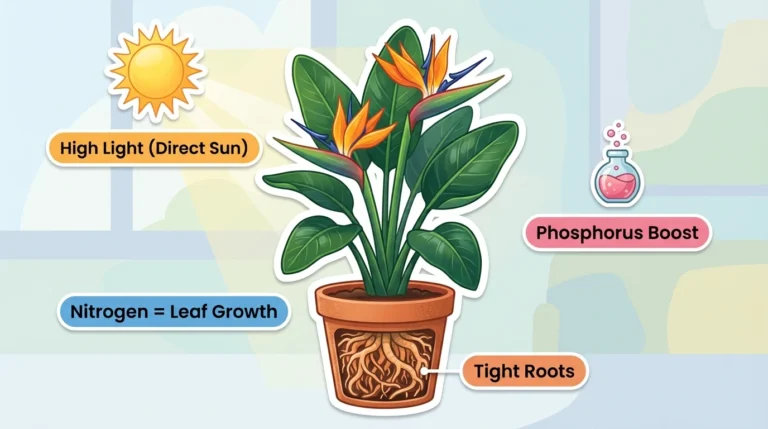
To understand the challenge of repotting bird of paradise plants, you have to look at what is happening underground. Unlike the fibrous, delicate roots of a Peace Lily or the aerial wanderers of a Monstera, the Strelitzia possesses a thick, fleshy, rhizomatous root system. These roots are evolutionarily designed to store significant amounts of water – giving them a succulent nature – and to anchor the plant against coastal gales.
This root system is notoriously aggressive. As the plant matures, the rhizomes coil rapidly, exerting immense pressure on their container. It is not uncommon for a healthy Bird of Paradise to physically lift itself out of its pot or shatter a ceramic planter entirely. While this sounds alarming, it is also a sign of vigor. However, this creates a delicate balance for the indoor gardener: while they tolerate being root-bound (and S. reginae actually blooms better when slightly constricted), there is a fine line between “cozy” and “strangulation.”
A Note on Imperfection
Before we dive into the mechanics of soil and pot sizing, we must address the leaves. New owners often panic when the grand, coriaceous (leathery) leaves of their Bird of Paradise begin to split horizontally. You might look at those tears and think you have failed to provide enough humidity or that you were too rough when dusting.
Relax. This is feature, not a flaw. In botany, this is a morphological adaptation to reduce wind resistance. By allowing the leaf blade to tear along the lateral veins, the plant reduces drag, preventing the entire stem from snapping in high winds. It is an engineering marvel that allows a 20-foot plant to survive a storm. So, when you see those splits, don’t reach for the pruning shears – appreciate the design.
How Bird of Paradise Roots Grow
Joakim’s Science Corner: The Science of Watering
Did you know that overwatering isn’t about the volume of water, but the lack of oxygen? When soil is constantly waterlogged, roots experience hypoxia. Without oxygen, roots cannot convert sugar into energy, causing cell death and eventual rot. Always let the soil breath between drinks!
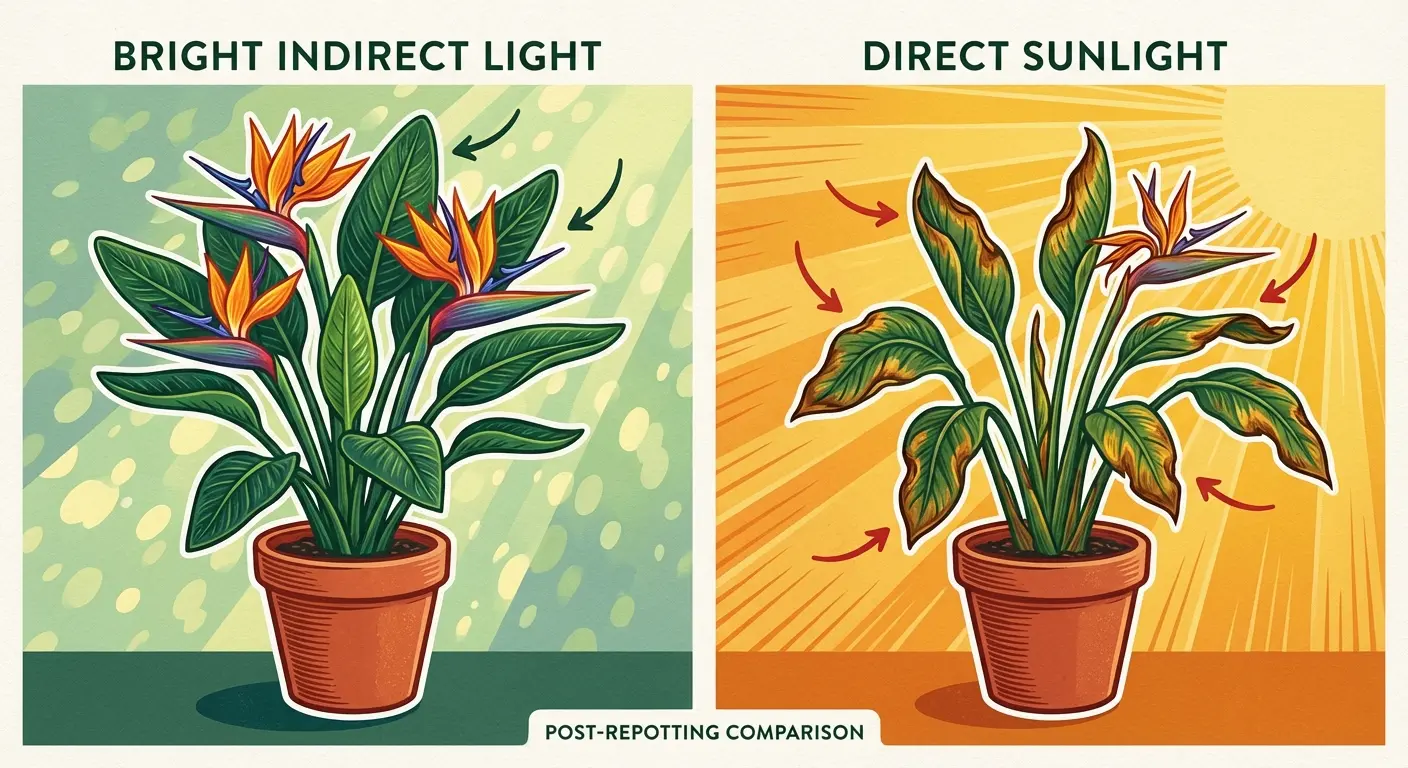
After the roots are disturbed, use bright light after repotting Bird of Paradise carefully: bright indirect light is safer than sudden hot direct sun.
To truly master the long-term care of a Strelitzia, you must stop looking at the leaves for a moment and consider the hidden engineering underground. The primary challenge with this genus isn’t fussy humidity requirements or pest control; it is managing a root system that behaves more like a hydraulic press than a standard houseplant.
For this part of the guide, a researched product option that fits the job is:
Selected because this section is specifically about soil moisture meter use. Check Amazon for current price and availability.
The Rhizome Reality
If you were to X-ray the pot of a healthy Bird of Paradise, you wouldn’t see a delicate fibrous web. You would see thick, fleshy, white structures that look remarkably like parsnips or carrots coiling around each other. These are rhizomes, and they define the plant’s biological imperative.
These roots are designed for the Eastern Cape of South Africa, where they must store significant amounts of water to survive dry spells. This gives the roots a succulent nature. They are brittle, full of moisture, and incredibly aggressive. Because they store so much water, they occupy physical volume rapidly. In a plastic nursery pot, they won’t just circle; they will push outward with enough force to warp a round pot into an oval. In a ceramic pot, they are notorious for creating enough pressure to crack the vessel from the inside out.
The Flowering Trade-Off
Here lies the paradox that confuses many indoor gardeners. While the roots are aggressive, the Strelitzia reginae (Orange Bird of Paradise) has a peculiar physiological quirk: it blooms best when it feels threatened.
When the rhizomes are compressed and the plant is slightly root-bound, it receives a biological signal that vegetative expansion is limited. The plant then shifts its energy allocation from growing new leaves to producing flowers – essentially an urge to reproduce before it runs out of space. If you provide a repotting bird of paradise explanation that focuses solely on giving the plant “room to grow,” you may inadvertently delay flowering for years.
However, there is a limit. While the plant enjoys a “tight hug,” it cannot survive strangulation. The issue is finding the precise moment when the compression shifts from bloom-inducing stress to life-threatening suffocation.
Identifying the Critical Threshold
Because the plant tolerates restriction, we do not repot based on a calendar schedule. We look for structural failure in the containment system. You are facing a critical repotting issue when:
- Physical Uplift: The most common sign is vertical displacement. The sheer volume of the roots growing at the bottom of the pot will physically lift the entire root ball up, pushing the soil surface above the rim of the pot.
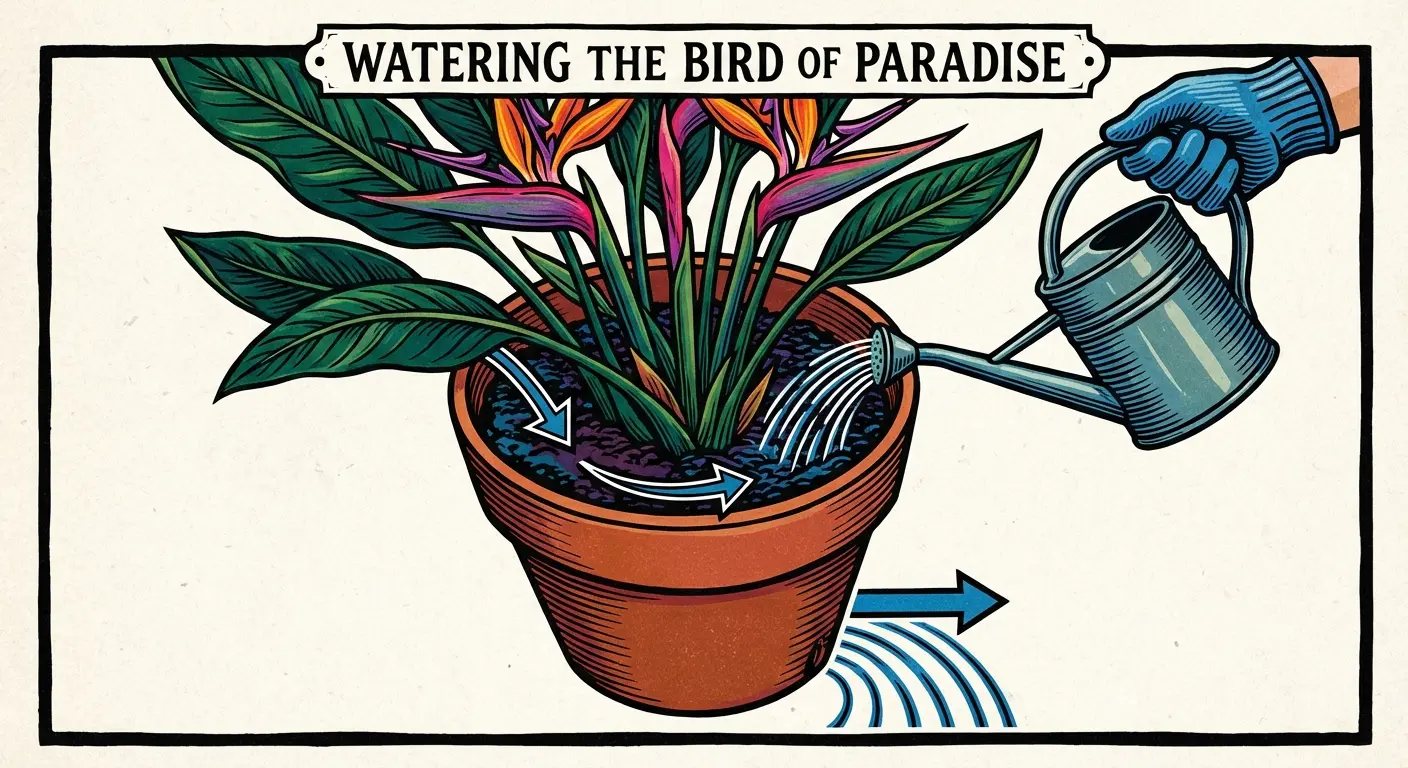
- Water Channeling: When you water, the liquid runs instantly down the sides of the pot without wetting the center. This happens because the ratio of roots to soil has tipped too far; there is physically not enough soil left to hold moisture, leading to root desiccation despite your watering efforts.
- Container Distortion: Plastic pots will bulge or split. If you are using a terracotta or ceramic pot, you might hear the ominous “ping” of a hairline fracture appearing as the rhizomes expand.
The goal is to intervene just as the plant begins to lift out of its pot, but before the lack of soil causes the dense root mass to starve or dehydrate.
Repotting Your Bird of Paradise (Without Root Damage)
✨ Emilie’s Pro Tip: Lighting Reality Check
The “bright indirect light” label is often misleading. For a Bird of Paradise, I always recommend the Shadow Test: hold your hand 12 inches from the leaf. If the shadow is sharp and defined, the light is perfect. If it’s fuzzy or faint, your plant won’t have enough energy to produce those iconic flowers.
Repotting a Strelitzia is rarely a delicate operation; it is closer to a wrestling match. Because these plants grow large, leathery leaves and develop a heavy, water-retentive root system, the physical act of moving them requires preparation and, often, a second pair of hands.
Below are the repotting bird of paradise steps designed to minimize transplant shock (which can pause flowering for a season) while giving those aggressive rhizomes the room they need.
1. Prepare the Substrate Mix
Do not rely on generic, peat-heavy potting soil straight from the bag. Strelitzia roots are susceptible to Pythium (root rot) if they sit in dense muck, yet they require consistent moisture.
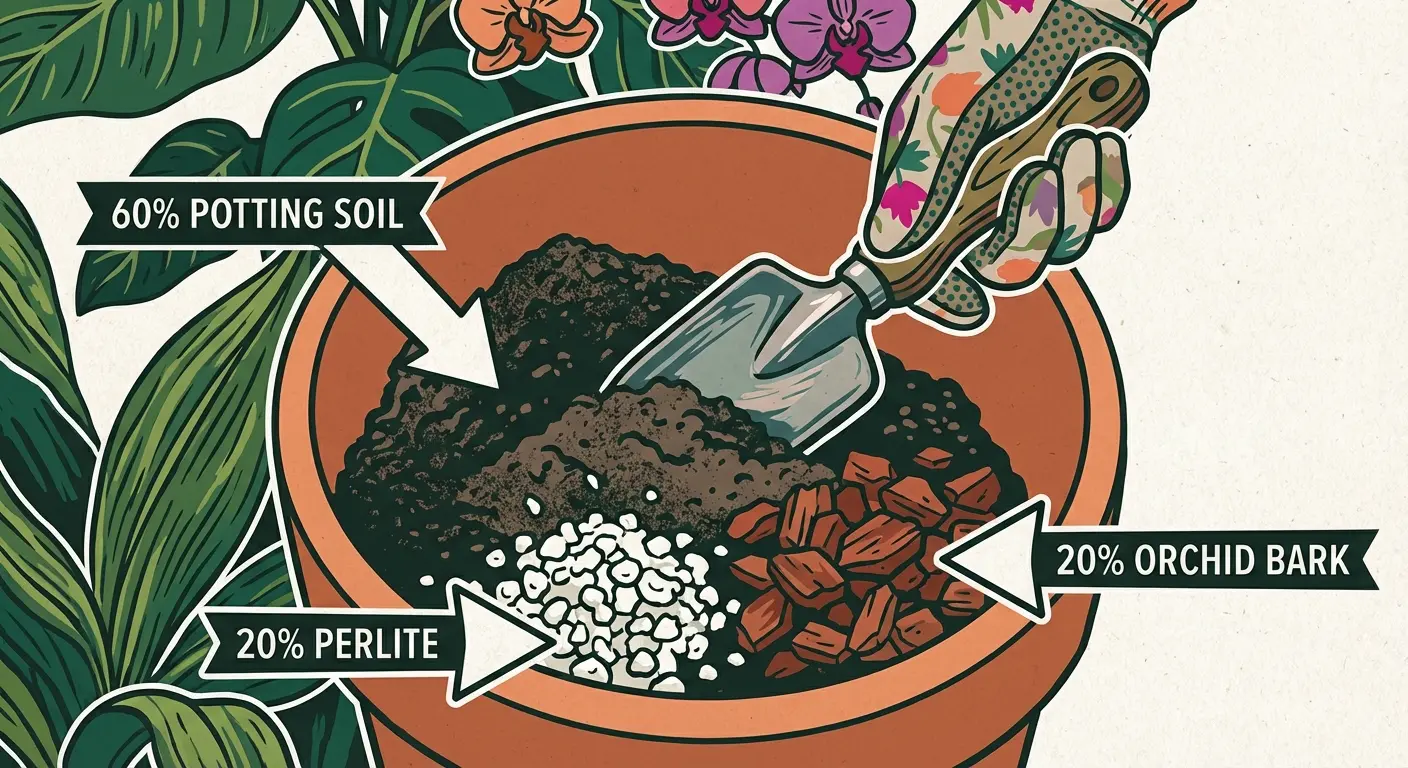
Create a mix that targets a pH of 5.5 – 7.5. Use a blend of:
- 60% High-quality potting soil: Provides the base structure.
- 20% Perlite or Pumice: Essential for aeration. This prevents the soil from compacting under the weight of the heavy root ball.
- 20% Orchid Bark or Compost: Adds organic matter and further improves drainage.
2. Extraction
This is the most difficult stage. Because the roots are rhizomatous and succulent, they exert immense outward pressure. If the plant is in a plastic nursery pot, squeeze the sides firmly to break the seal. You may hear a “crunching” sound – this is the soil separating from the plastic, not necessarily the roots breaking.
A bag of perlite makes any potting soil drain better:
The cheapest upgrade you can make to any potting mix. A handful per pot dramatically improves drainage and aeration.
Turn the pot on its side. While one person holds the pot, the other should firmly grasp the base of the stems (the clump) and pull. If it refuses to budge, do not yank the stems, as this can damage the crown. Instead, use a sterile knife to cut the plastic pot away. If it is in ceramic and stuck, you may have to run a long knife around the inner rim.
3. Root Inspection and Cleaning
Once out, you will likely see a coiled mass of thick, fleshy, white-to-orange roots. These are the plant’s water reservoirs.
- Loosen gently: Use your fingers to tease the bottom roots loose. You don’t need to unravel the whole ball, just the outer inch so they can find new soil.
- Prune with purpose: If you see dark, mushy, or slimy roots, cut them back to healthy tissue using sterilized shears. Healthy Strelitzia roots are firm and snap crisply; rotted roots squish.
- Respect the Rhizome: Avoid damaging the thick, woody base (rhizome). Disturbing this area too aggressively is the primary reason plants fail to bloom the following year.
4. Potting Up
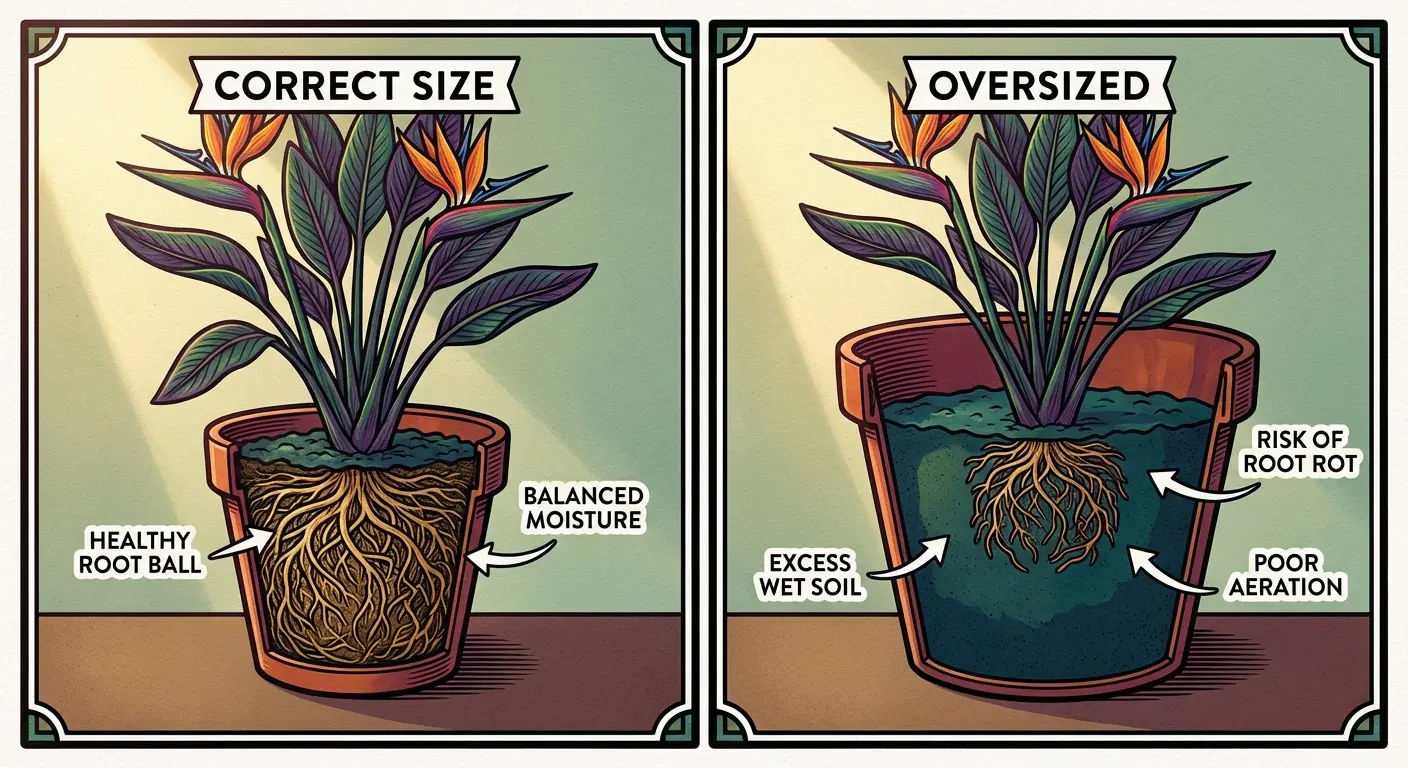
Select a new pot that is only 1 – 2 inches (2 – 5 cm) larger in diameter than the previous one. A common mistake is choosing a massive pot; this leaves too much empty soil, which holds excess water and leads to root rot.
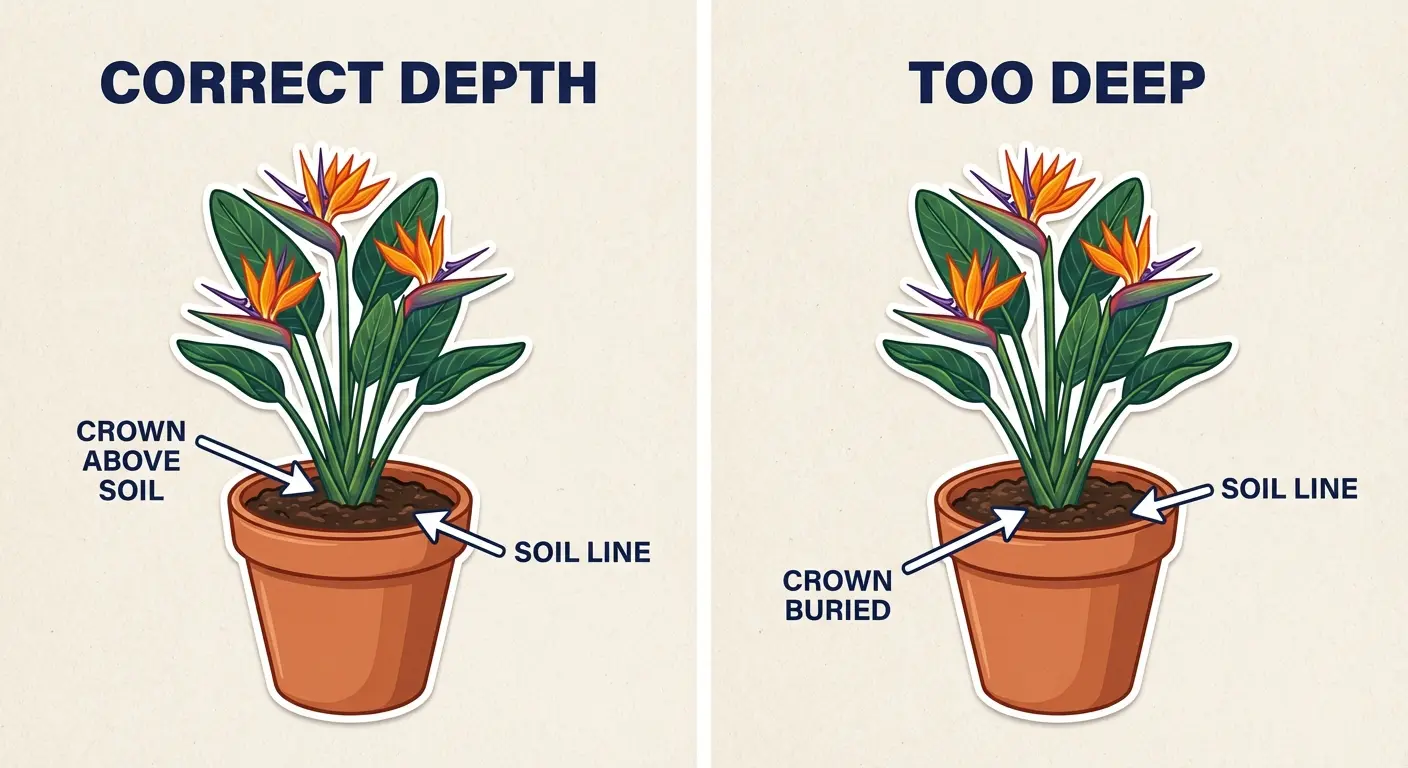
Place a layer of your soil mix at the bottom. Position the plant so the previous soil line sits about an inch below the new pot’s rim. Crucial: Do not bury the stems deeper than they were previously. Planting too deep encourages collar rot where the stems emerge.
5. Backfilling and Settling
Fill the gaps around the root ball with your prepared mix. Because the roots are large, air pockets can easily form between them. Tap the side of the pot vigorously with your palm or use a chopstick to gently push soil into the voids.
We want the plant to feel secure – it shouldn’t wobble – but do not compress the soil so hard that you crush the air channels required for gas exchange.
6. The “Water-In”
Immediately water the plant thoroughly until liquid flows freely from the drainage holes. This serves two functions: it hydrates the roots after the stress of air exposure and physically settles the soil particles around the root system.
Place the plant in a warm spot with bright, indirect light for two weeks. Avoid the intense direct sun (40,000+ Lux) it usually loves until it has re-established, as the roots cannot yet uptake water efficiently enough to cool the leaves through transpiration.
Repotting Mistakes to Avoid
Even seasoned gardeners can stumble when dealing with the heavy, fleshy root systems of the Strelitzia. Repotting is a traumatic surgery for a plant, not a spa day. Avoiding these specific repotting bird of paradise mistakes will prevent physiological shock and ensure your plant returns to its architectural glory.
1. The “Bigger is Better” Trap
There is a temptation to give these large plants a massive home to grow into. Resist this. Strelitzia roots are rhizomatous and water-retentive; if you place a small root ball into a massive volume of soil, the roots cannot absorb the moisture fast enough.
The excess soil turns into a dense, soggy sponge that deprives the roots of oxygen (hypoxia), inviting anaerobic pathogens like root rot. A Bird of Paradise actually blooms better when slightly root-bound. Only upgrade your pot size by 2 inches (5 cm) in diameter. If the roots aren’t pushing the plant out of the pot, it likely didn’t need a new home yet.
2. Burying the Crown
Unlike a tomato plant that can sprout roots from a buried stem, a Bird of Paradise will slowly suffocate if planted too deep. The “crown” – the point where the stems emerge from the root system – must sit slightly above the soil line.
If you bury the base of the stems (petioles) in damp soil, the moisture held against that tissue will cause the stems to rot and detach. When you backfill, aim for the original soil line. You should clearly see the transition from the white/brown root zone to the green or grey stem structure.
3. “Fixing” Split Leaves
During the wrestling match of repotting, you might notice the large, paddle-shaped leaves tearing. Panic often sets in here. New owners often assume this is a sign of damage or low humidity and try to “heal” the leaves or over-water to compensate.
Morphologically, Strelitzia leaves are designed to split. This is a botanical adaptation called fenestration (similar to a Monstera, but mechanical). In their native windy coastal environments of South Africa, these tears allow wind to pass through the leaf blade, reducing drag so the entire plant doesn’t snap. Do not tape them, and do not prune a healthy leaf just because it has ragged edges. That splitting is functional, not a failure.
4. Rushing the Sun Exposure
We know the Bird of Paradise craves high light (up to 80,000 Lux) to flower. However, immediately after repotting, the microscopic root hairs responsible for water uptake have been damaged. They cannot pump water fast enough to cool the leaves through transpiration.
If you shove a freshly repotted plant directly into the blazing noon sun, you will see:
- Leaf Curling: An attempt to reduce surface area and conserve moisture.
- Scorching: Large brown patches where the tissue dehydrated and burned.
Give the plant a “recovery week” in bright, indirect light before moving it back to its sunny throne.
Common Questions About Repotting Bird Of Paradise
Why are the leaves on my Bird of Paradise splitting down the sides?
Splitting is often a natural adaptation that allows wind to pass through the large surface area of the leaves without snapping the stem in the wild. However, excessive splitting indoors can be exacerbated by low humidity or physical traffic brushing against the plant. If the leaf is green and healthy otherwise, this is cosmetic and not a sign of disease.
Why are the leaves curling inward like a taco shell?
Inward curling is a physiological response to moisture loss. It typically indicates that the plant is underwatered, suffering from low humidity, or sitting in a drafty area. Check the soil immediately; if the top 2-3 inches are dry, the plant needs a deep watering. If the soil is moist, the issue is likely lack of ambient humidity or heat stress.
My plant is healthy, so why won’t it produce any flowers?
Indoor blooming is the biggest challenge for Bird of Paradise owners because of light intensity. The plant requires at least 4 to 6 hours of direct, intense sunlight daily to trigger blooming. Additionally, the plant must be mature (usually 4 – 5 years old) and prefers to be slightly root-bound in its pot to flower.
What is causing the edges of the leaves to turn brown and crispy?
Brown, crispy edges are usually caused by ‘tip burn’ from chemical buildup found in tap water (specifically chlorine and fluoride) or salt accumulation from fertilizers. To fix this, flush the soil with distilled or rainwater to remove excess salts, and consider switching to filtered water for regular irrigation.
Why are the stalks turning black or mushy at the base?
Stalks becoming soft, mushy, or black at the soil line is a critical sign of root rot caused by overwatering or poor drainage. The roots are suffocating in wet soil. You must stop watering immediately, remove the plant from the pot to trim away rotting roots, and repot it into fresh, well-draining soil to save it.