Planting bearded iris needs sun, good drainage, and shallow rhizome placement. Normally keep the rhizome at or barely below the surface, roots covered; extreme heat or very light soil allows up to 1 inch (2.5 cm) of cover. Plant bare-root divisions in late summer to early fall, about six weeks before your local hard freeze; rooted nursery pots have a different window. Water after planting, then keep the root area moist, not waterlogged.
This guide covers bearded, rhizomatous irises, including garden hybrids often called German bearded iris (Iris × germanica). It explains what to do with a newly bought rhizome or rooted plant; other iris types can need different planting depths and moisture.
When is the right time for planting bearded iris?
For bare-root rhizomes and newly divided plants, late summer to early fall is the usual planting season. An already-rooted iris purchased in a nursery pot can be planted after purchase. First identify which you have, then check your local growing conditions rather than using one calendar date for the entire United States.
| What you have or where you garden | Planting window | What to check first |
|---|---|---|
| Bare-root rhizome or fresh division | Usually late summer to early fall; July–September is the American Iris Society’s general window. | Allow at least 4–6 weeks before the first hard freeze or killing frost. About six weeks is a cautious planning target. |
| Midwestern garden with cold winters | Illinois Extension recommends July or August for division and replanting. | Use your local freeze date to leave time for roots to establish; September is not automatically safe everywhere. |
| Hot summers and mild winters | Schreiner’s Gardens notes that September or October may be preferable. | Keep the establishment lead time before a hard freeze wherever that applies; mild winters do not guarantee an October window. |
| Already-rooted nursery pot, including a spring purchase | Penn State Extension says potted plants can go into the ground after purchase. | Choose suitable, well-drained growing conditions. A frozen or waterlogged bed is a reason to ask your local Extension office or supplier for advice. |
The timing table combines American Iris Society planting guidance, Illinois Extension’s division and planting advice, Schreiner’s regional planting guidance, and Penn State’s distinction between bare-root and potted plants.
If you are dividing an established clump, let the new rhizomes mature after flowering before lifting them. Illinois Extension describes a separate interval of 4–6 weeks after bloom; that is different from the 4–6 weeks of establishment needed before a hard freeze. For the full lifting and division method, use our guide to dividing irises.
If the usual local planting window has already passed, contact your supplier or county Extension office for a plan suited to your plant and climate. Do not assume an unplanted bare-root rhizome can be stored until spring without consequences.
Where should I plant bearded iris?
Plant bearded iris in a well-drained spot with 6–8 hours of direct sunlight. In extremely hot climates, some afternoon shade can help. Choose a place where water does not stand, and leave enough space to keep nearby plants from shading or crowding the rhizomes.
- Sun: Aim for 6–8 hours of direct sunlight. Some afternoon shade can help in extremely hot climates; a shaded bed elsewhere may produce leaves with few flowers.
- Drainage: Water should not stand in the bed. Start with an existing sunny slope, raised bed, or another better-drained location if you have one. Soil texture alone does not tell you whether the site will stay wet.
- Room to grow: Plan for 12–24 inches (30–60 cm) between rhizomes and keep nearby plants from shading or crowding them.
These light, drainage, and spacing recommendations come from the American Iris Society’s bearded-iris instructions. If you have heavy soil, organic matter may help where needed, but do not assume a handful of grit will fix a persistently wet bed. Check the actual drainage and use a soil test before adding nutrients or adjusting pH.
If an established plant has leaves but no flowers, check light and crowding as well as depth. Our guide on why irises don’t bloom covers that separate troubleshooting task.
Is bearded iris a rhizome or a bulb?
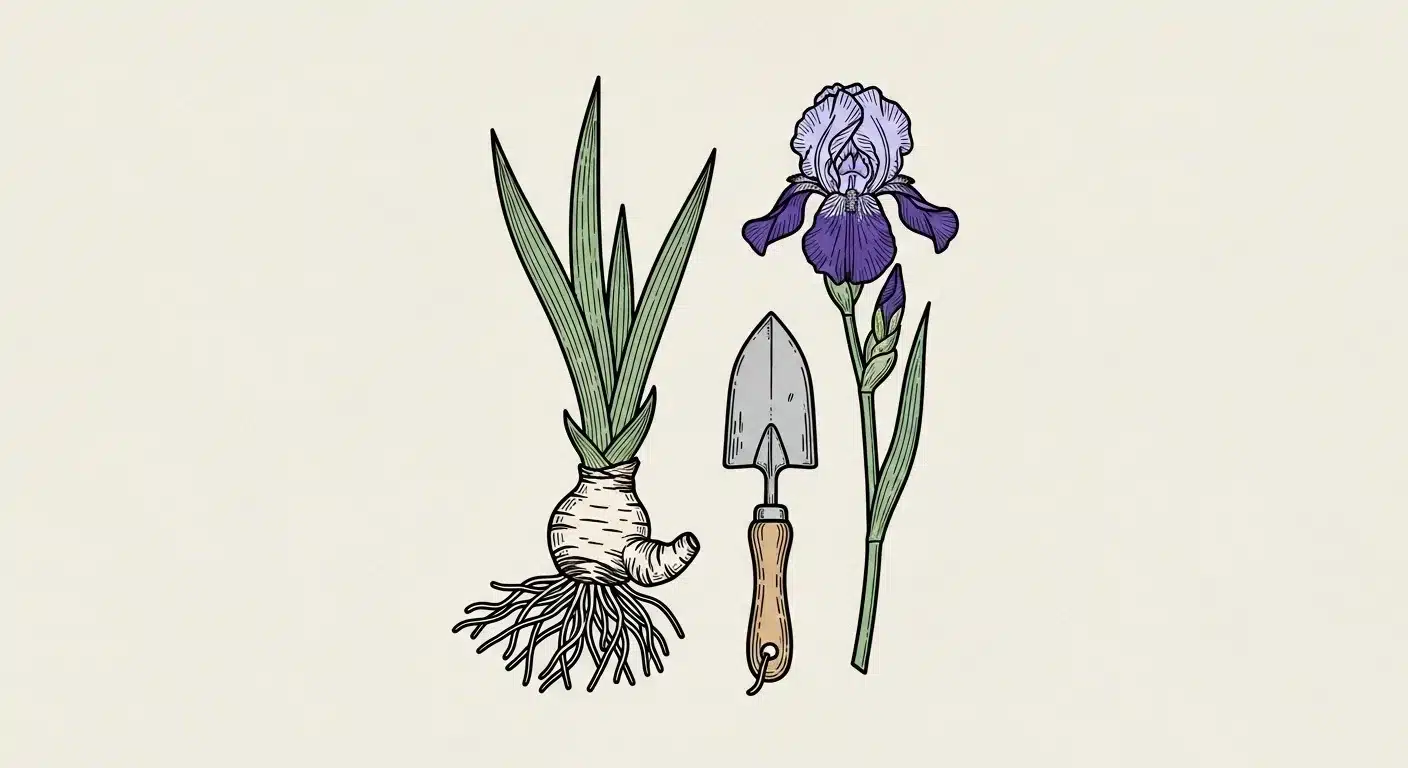
A bearded-iris rhizome is a thick, fleshy, horizontal modified stem that grows at or just below the soil surface. Roots grow beneath it, and sword-like leaves form a fan. It is not a bulb like a tulip, so tulip planting depth and timing do not transfer to bearded iris.
Use this method for bearded irises rather than treating every iris as the same plant. Siberian and Japanese irises, for example, have different depth and watering instructions in the American Iris Society’s separate beardless-iris section.
How to plant iris rhizomes in four steps
For a bare-root bearded iris, use the mound method: support the rhizome near the soil surface and spread the roots down either side. A garden fork, trowel, or shovel you already own is enough to prepare the site; special tools and a starter fertilizer are not automatic requirements.
-
Prepare the soil and decide whether it needs amendments
First, clear the area of any weeds or grass. If your soil is compacted, use a garden fork to loosen the planting area so the roots can spread. Choose firm, healthy planting material; discard divisions that are mushy, foul-smelling, or damaged, as Illinois Extension advises.
Do not add bone meal just because you are planting an iris. A soil test can show whether the bed needs nutrients, compost, or pH correction. If the test indicates enough phosphorus, skip extra phosphorus rather than buying a bloom booster. If it recommends nutrients, follow the lab’s or local Extension’s recommendation and the product label. This applies University of Minnesota Extension’s soil-test guidance to the planting decision; it is not an iris-specific fertilizer-rate trial.
Drainage and nutrition are separate questions: fertilizer will not correct a site that remains waterlogged. When feeding is warranted, the American Iris Society advises avoiding high-nitrogen fertilizer and keeping it around, rather than directly on, the rhizomes.
-
Dig a shallow hole and make a mound
Dig a wide, shallow hole about 4 inches (10 cm) deep, adjusting it to accommodate the roots. Inside this hole, use your hands to form a small mound or ridge of soil down the center. The peak of this mound should be close to the level of the surrounding soil.
The hole gives the roots room; 4 inches is not the amount of soil to put over the rhizome. This mound method follows Illinois Extension’s planting sequence.
-
Place the rhizome on the mound
Now, take your iris rhizome and place it directly on top of the mound, as if you were seating a rider on a horse. Spread the dangling roots out down either side of the mound.
Fill the hole with soil, gently firming it around the roots. Normally, leave the top of the rhizome visible at or barely below the finished surface. In extremely hot climates or very light soils, the American Iris Society permits up to 1 inch (2.5 cm) of soil over it. Keep the roots covered in either case; see the depth comparison below.

Planting cutaway: the mound supports the rhizome near the soil surface while soil covers the roots. The hole accommodates roots; its depth is not soil cover over the rhizome. Space rhizomes 12–24 inches (30–60 cm) apart. Closer planting fills a bed sooner but calls for earlier division. For an already-rooted nursery pot, plant the root ball while keeping the rhizome at the same shallow position appropriate to your site; do not use the pot’s height as a rhizome burial depth.
-
Water well, then check the soil
After planting, water thoroughly to settle the soil around the roots. Let the water drain away, then check that the rhizome remains anchored at the intended depth. Continue to watch moisture during establishment; one watering does not finish the care routine.
How deep should I plant a bearded iris rhizome?
Normally set a bearded-iris rhizome at or barely below the soil surface, with its top visible and roots covered. In extreme heat or very light soil, allow up to 1 inch (2.5 cm) of cover. This limited exception concerns soil over the rhizome, not the depth of the roots beneath it.

Deep placement can contribute to poor flowering or rot; it does not mean every covered rhizome dies. Iowa State Extension recommends placing it at or just below the surface, and notes that accumulating soil or mulch can deepen it over time.
| Part or condition | Correct placement | What to avoid |
|---|---|---|
| Rhizome in typical garden conditions | At or barely below the soil surface, normally with its top visible. | A deep layer of soil or routine mulch over it. |
| Rhizome in extreme heat or very light soil | Up to 1 inch (2.5 cm) of soil cover, according to the American Iris Society. | Turning this limited exception into several inches of burial or using it to compensate for poor drainage. |
| Roots below the rhizome | Spread down the mound and covered with soil. | Leaving the roots exposed because the rhizome should be shallow. |
The heat and soil exception is from the American Iris Society’s Planting Depth section. After watering or adding material around the bed, recheck the finished surface so the rhizome has not been buried inadvertently.
Companion plants that fit an iris border
After planting bearded iris, you can extend the border’s season by choosing companions with different bloom times. Check each plant’s light, drainage, water needs, and mature size; keep its foliage and mulch from covering the iris rhizomes. Matching flower colors is less useful if the combination leaves irises shaded or constantly wet.
For optional design ideas, Gardening Know How’s iris companion guide offers suggestions to assess for your site. For the iris bloom window itself, our guide to summer-blooming iris varieties covers late-blooming and reblooming options.
How do I water newly planted bearded iris?
Newly planted rhizomes need moisture while roots develop, but the bed should not stay waterlogged. Check the soil beside the roots and account for rain instead of following a fixed weekly schedule. New center leaves show progress; they are not a signal to stop all watering during future dry spells.
| What you observe | What to do | What to check next |
|---|---|---|
| Root area drying during establishment, with little useful rain | Water enough to moisten the root area rather than repeatedly sprinkling the surface. | Check that water drains away and reassess moisture as the weather changes. |
| Soil still moist after rain or watering | Hold extra water for now. | Keep checking the root area; do not wait for a calendar reminder to notice a change. |
| Standing water or persistently saturated soil | Hold watering and address the drainage or site problem. | Watch for decline; ask local Extension for help if the cause or remedy is unclear. |
| A new center leaf and a firm rhizome | Continue condition-based care; these are useful progress observations. | Check depth, moisture, and growth. Firmness alone does not rule out every problem. |
| A soft, foul-smelling rhizome with wilting or dying leaves | Remove the entire affected plant, bag it, and put it in the garbage following Penn State’s soft-rot advice. Do not compost it or add water as a cure. | Review drainage and contact local Extension if other plants decline or symptoms are uncertain. |
This checklist combines Illinois Extension’s moist-but-not-wet establishment advice, the American Iris Society’s watering and growth guidance, and Penn State’s dry-spell and soft-rot guidance. It is a practical observation aid, not a guaranteed diagnosis.
Once established, bearded irises need less supplemental water. The American Iris Society uses the top 3 inches (7.5 cm) of soil drying out as a watering guide for established plants; newly planted bare-root rhizomes should not be made to meet that dry-soil threshold. Arid conditions and dry spells can still call for water.
Keep weeds and fallen debris out of the bed. Schreiner’s Gardens recommends leaving healthy green leaves undisturbed through summer. New growth may appear within 2–3 weeks, according to the American Iris Society, but conditions vary. Your new iris may or may not flower in its first spring; sparse first-year bloom alone does not prove the planting failed.
Frequently asked questions about planting bearded iris
Can I plant bearded iris in spring?
Yes, an already-rooted bearded iris bought in a nursery pot can be planted after purchase, as Penn State explains. That differs from dividing a clump or planting shipped bare-root rhizomes, usually a late-summer task. Check local soil and weather conditions, and do not expect planting a spring pot to guarantee flowers that season.
How many bearded irises should I plant together?
You can plant one rhizome; a group is a design choice. Allow 12–24 inches (30–60 cm) between plants under the American Iris Society’s general spacing guidance. Illinois Extension suggests groups of three to seven for different cultivars. Tighter groups fill sooner but need division earlier; you do not need a group for establishment.
How long can irises be out of the ground before replanting?
Replant bearded-iris divisions relatively soon after lifting them. Illinois Extension says waiting a few days is acceptable; it does not establish months of safe storage. Prepare the new location before dividing. For shipped rhizomes or a missed local planting window, follow the supplier’s plant-specific advice rather than assuming storage until spring will work.
Will bearded iris spread, and when will I need to divide it?
Yes, bearded irises form new rhizomes and can develop crowded clumps. Division is commonly needed after three to five years, but growth and spacing change that interval. Watch for crowding and reduced bloom rather than treating the date as a guarantee. Our iris division guide covers the next step.
Do I need to soak iris rhizomes before planting?
The bearded-iris mound method described here plants the rhizome directly and waters it afterward; the cited American Iris Society and Illinois instructions do not require an overnight soak. Follow any plant-specific supplier directions. The American Iris Society’s overnight-soaking instructions are for beardless irises, so do not transfer them automatically to bearded rhizomes.
Should I mulch my new irises?
Avoid routine mulch on top of bearded-iris rhizomes. In cold climates, temporary late-fall straw or pine-needle protection may help limit frost heave, but Illinois Extension says to remove it in early spring so the bed can dry. Use local advice for winter protection; this exception does not justify permanent rhizome-covering mulch.
For broader seasonal tasks and differences between iris types, see our iris care guide.
Sources
- American Iris Society: How to Plant and Grow Bearded Iris — timing, shallow placement and its exception, spacing, watering, and first-spring bloom limits.
- University of Illinois Extension: How to divide and plant bearded iris — mound method, Midwest timing, establishment, division, and temporary winter protection.
- University of Illinois Extension: Planting iris — rhizome identity and the interval after flowering before division.
- Penn State Extension: German Bearded Iris — rooted nursery plants, planting, dry-spell care, and soft-rot signs.
- Iowa State Extension: Why bearded irises stop blooming well — depth, crowding, and shade.
- University of Minnesota Extension: Soil testing for lawns and gardens — nutrient decisions and avoiding unnecessary phosphorus.
- Schreiner’s Gardens: How to plant bearded iris — the hot-summer, mild-winter planting branch.
- Schreiner’s Gardens: How do I care for my Iris Beds? — leaving healthy green leaves in place through summer.